

Part 1: The Anatomy of an Afterthought
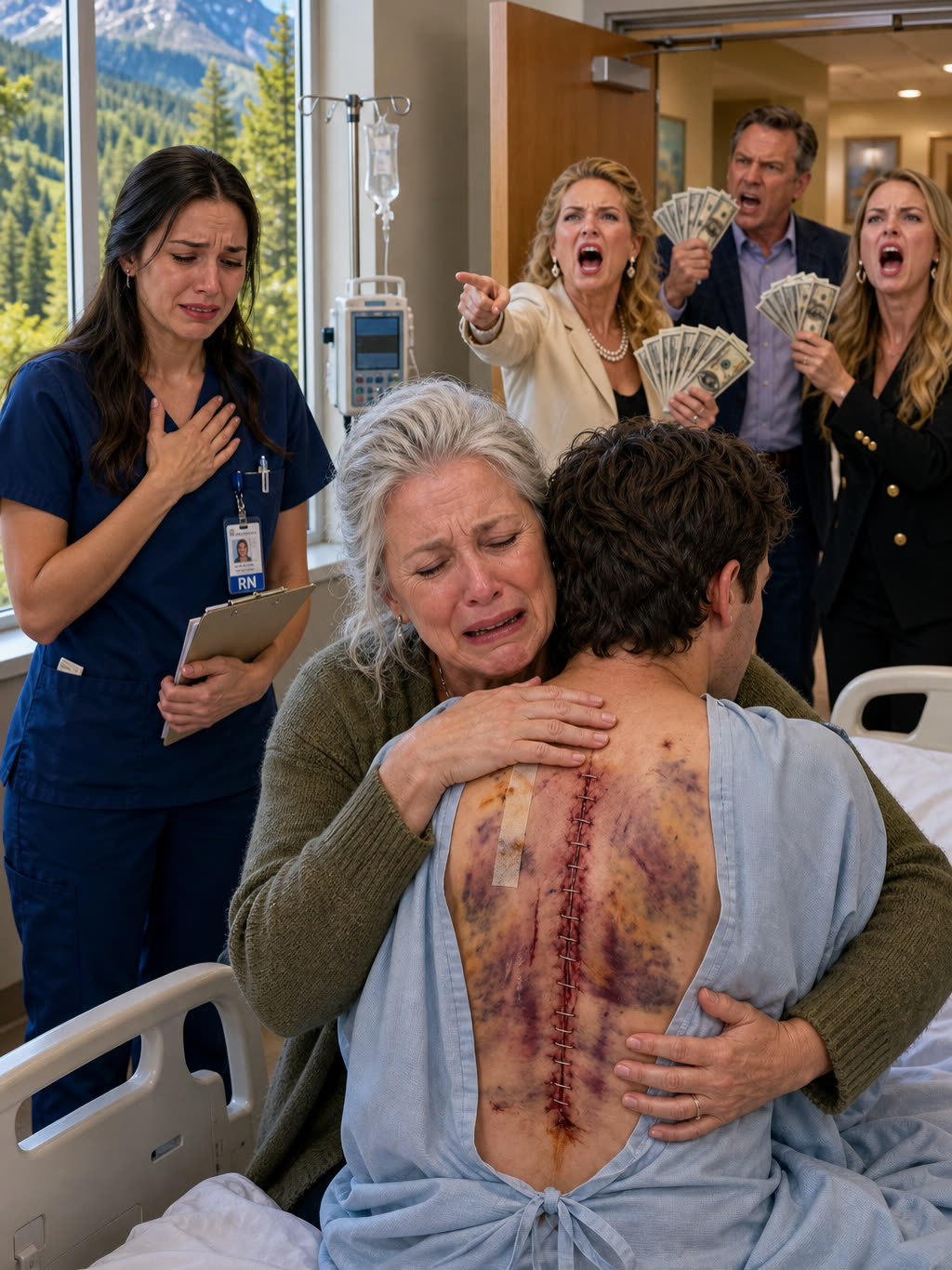
Four days after surgeons drilled into my lumbar spine, scraped away the dead cartilage, and hammered four titanium pedicle screws into my vertebrae, my phone buzzed against the bedside table. Every millimeter of movement felt like liquid glass pouring through my lower back. I clenched the plastic trapeze bar hanging above my rented hospital bed, ground my teeth until my jaw popped, and tapped the glowing screen. It was my mother, Eleanor Monroe.
“Julian, darling,” she began, her voice wrapped in that practiced, trembling martyr tone she had spent thirty years perfecting. “I hope in your heart you understand why we couldn’t be in the surgical waiting pavilion. A mother’s heart tears in two directions at times like these, but Savannah was simply inconsolable about the Scottsdale reservations. You know how delicate her nerves are before a major life transition.”
I lay completely flat, staring at the textured white ceiling of my suburban apartment and listening to the steady hum of my ice-compression machine. My throat still burned from the tube that had breathed for me during six hours of surgery. “I understand with absolute clarity, Eleanor,” I said, the gravel in my voice cutting straight through her honeyed prelude. “My spine was being fused back together, and you were taking photographs in matching sunhats. Don’t call me darling.” A sharp, offended breath whistled over the line. “You have always been so terribly unyielding, Julian. After everything your father and I have sacrificed—” I hung up. I didn’t throw the phone, since throwing things took abdominal strength I didn’t have. I laid it face-down on the nightstand, shut my eyes, and listened to the hollow throbbing of my own nerves.
My name is Julian Monroe. I am thirty years old, a senior forensic accountant, and for as long as I can remember I have been an uncredited extra in the glamorous, high-maintenance melodrama that is the life of Savannah Monroe.
When I was seventeen, an envelope arrived from the state university’s honors college offering me a seventy-five percent merit scholarship. It was the payoff of four years of sixty-hour study weeks and chronic insomnia. My parents took me to a mid-tier steakhouse to celebrate. We hadn’t even gotten our bread basket when Savannah, then fifteen, burst into tears because she had been named alternate instead of head flyer on the varsity cheer team. My father, Arthur Monroe, slid my scholarship letter aside to make room for his napkin so he could dab her tears. My mother spent the next two hours tallying what private tumbling coaches would cost. Before the check came, Dad clapped a heavy hand on my shoulder and asked if I might defer college for a year so the family wouldn’t be “crimped” by the expense of Savannah’s elite athletic circuit. I didn’t defer. I took out private loans in secret, packed two duffel bags, and left on a Greyhound bus. Nobody offered to drive me.
At twenty-three, after surviving college on bulk oats and five hours of sleep a night, I landed my first major auditing position at a prestigious regional firm. I brought a bottle of vintage champagne to Sunday dinner to announce it. My older brother, Connor, gave me a half-hearted fist bump from the sofa without pausing his video game. Before the cork even left the bottle, Savannah stretched her left hand across the table, a two-carat diamond flashing beneath the chandelier. She was engaged to a man she had known for twelve weeks. My milestone vanished within ninety seconds. Dad immediately asked whether I could “gift” eight hundred dollars toward the catering deposit for her engagement brunch. Desperate for a crumb of their pride, I wrote the check. My bank account dropped to forty-two dollars that week, and they spent my rent money on ice sculptures shaped like swans.
The arrangement was a fixed constellation: Savannah was the sun, my parents were the orbiting moons, and I was the dark space between them, expected to absorb the vacuum without a sound.
Then came a rainy Tuesday in November. I was driving home through a residential intersection when a three-ton commercial pickup ran a red light at fifty miles per hour. The crunch of metal on metal was like thunder cracking inside my skull. The impact ruptured three lumbar discs and fractured two transverse processes. When the paramedics cut me out of the wreckage, my left leg was completely unresponsive, as if it were submerged in crushed ice. My neurosurgeon, Dr. Ronald Vance, clipped the illuminated film onto the light board and pointed to the dark indentations crushing my spinal canal. “You have severe mechanical instability and progressive neurogenic compromise, Julian,” he said, his expression grave. “Conservative therapy isn’t going to save the motor function in your leg. If we don’t fuse L4 through S1, you are looking at permanent foot drop and irreversible nerve death within eight months.”
Dr. Vance was one of the premier spinal surgeons in the Pacific Northwest, and his waiting list stretched across seasons. By an extraordinary stroke of luck, a cancellation opened up for June 14th. My girlfriend, Haley Vance, a trauma ER nurse and, entirely by coincidence, the doctor’s distant niece, immediately rearranged her shifts to clear two solid weeks for my bedside care. Her brother, Drew Vance, a ruthless corporate litigator with a mind like an iron trap, offered to handle my disability filings and insurance claims. They rallied around me like a shield. In February I announced the date to my family in our group chat: Surgery confirmed for June 14th at St. Vincent’s. It’s a major multi-level fusion. I’ll need complete assistance for the first three weeks. Mom replied with a prayer-hands emoji. Dad sent a thumbs-up. Savannah didn’t reply at all; she was busy posting blush-toned bridesmaid dress swatches to her stories. Connor simply liked Dad’s thumbs-up.
For three months the date sat on the calendar unremarked. Then came the final Sunday of May. We gathered at my parents’ sprawling Craftsman home for Memorial Day, and I sat in an ergonomic recliner in the corner, shifting every five minutes to manage the electric pain shooting down my calf. Savannah stood in the center of the living room with a chilled mimosa, her eyes sparkling with rehearsed theatricality. “All right, everybody!” she declared, tapping her manicured nails against the crystal flute. “The official itinerary for my destination bachelorette weekend is finalized! Four days of pure bliss in Scottsdale, Arizona! Private villa, poolside cabana reservations, customized robes, and VIP bottle service at the canyon clubs!” She handed out laminated booklets to Mom and two bridesmaids who had dropped by. I glanced at the cover. The dates, printed in gold cursive, read June 13th through June 16th. I felt the air leave my lungs, replaced by a cold metallic taste beneath my tongue.
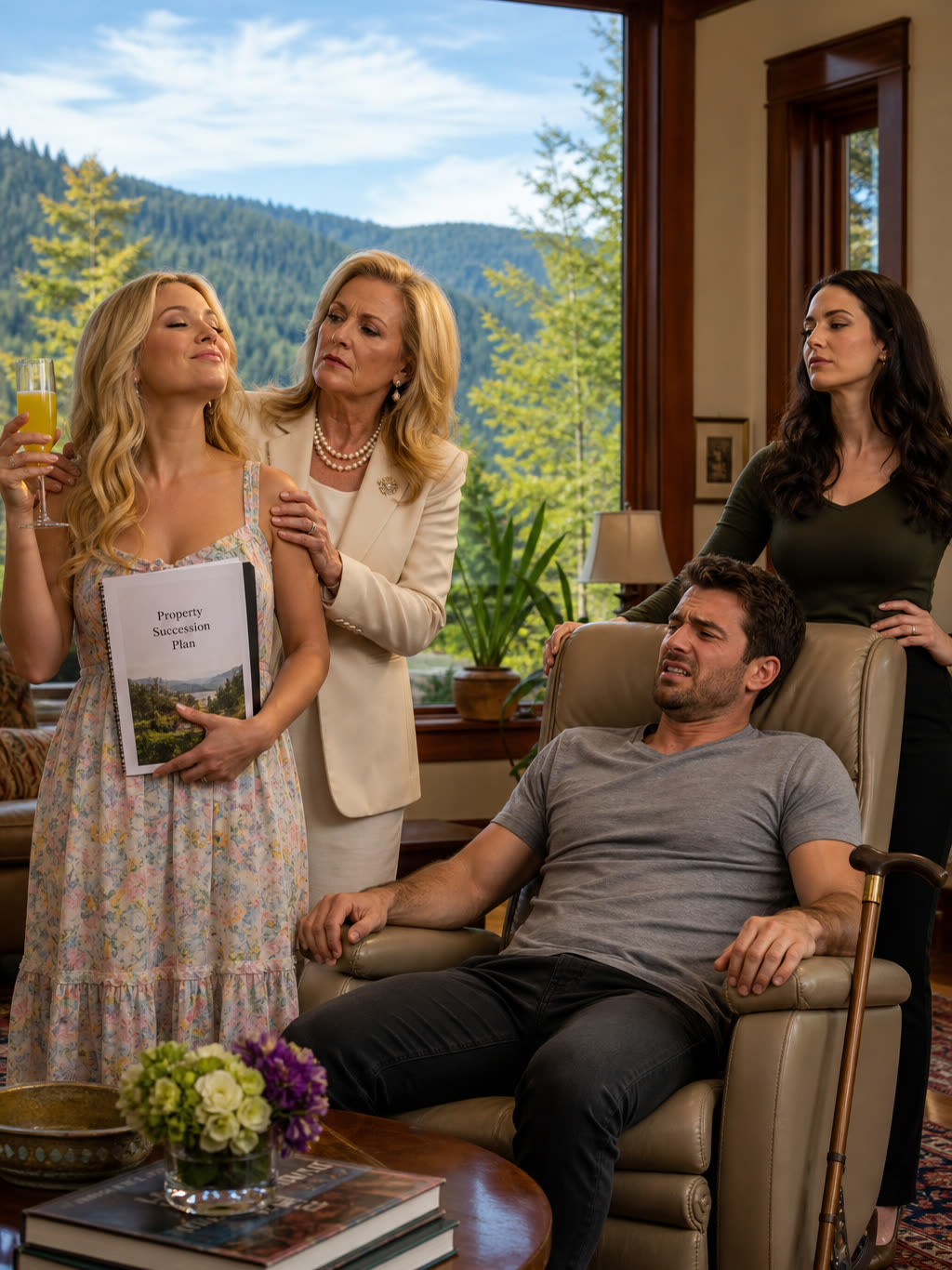
“Savannah,” I said, keeping my voice level though my hands tightened on the armrests. “June 14th is my spinal fusion. You scheduled your bachelorette trip across the exact weekend of my operation.” Savannah rolled her eyes and swirled her champagne. “Oh, please, Julian. Don’t make this dramatic. I’ve had Scottsdale tentatively planned for months! I just forgot to sync the specific weekend with the family calendar. Just call your doctor and bump the surgery back a couple of weeks.”
“It’s not a dental cleaning,” I said, the words dropping like lead weights onto the hardwood. “Dr. Vance had one cancellation slot. The next available opening for a multi-level instrumentation is late December. My nerves are being compressed right now. If I wait until December, the nerve damage in my left leg becomes permanent.” Savannah set her mimosa down with a sharp clatter. “Well, then wait until December and wear a leg brace! I already put down three thousand dollars in non-refundable deposits! My maid of honor booked her cross-country flight! Mom took time off work! You want me to destroy my once-in-a-lifetime pre-wedding celebration because you can’t manage your calendar?”
My mother slid between us at once, placing both hands protectively on Savannah’s shoulders. “Julian, lower your voice,” Mom commanded softly, her eyes narrowing. “Savannah is under an enormous amount of stress. This wedding is a massive undertaking. Surely Dr. Vance has colleagues. Surely there is another surgeon in the city who can squeeze you in during July or August.”
“Did you hear what I just said?” I asked, leaning forward as the fire in my lower back flared. “Permanent. Nerve. Damage. The doctor warned me that waiting means I could lose the ability to lift my foot for the rest of my life. And you are asking me to gamble my spine so you can drink frozen margaritas at an Airbnb?”
Dad came over from the kitchen island holding a craft beer, his face creased with annoyance. “Julian, be reasonable. You’re making a scene out of an administrative conflict. Family means balance. We can’t just shut down Savannah’s major milestone because your hospital paperwork didn’t line up conveniently. Let’s look into alternative doctors tomorrow.”
Haley, who had been sitting quietly beside me, stood. She didn’t yell. Her clinical calm was far more devastating. “There are no alternative surgeons who will take a high-risk multi-level lumbar reconstruction on four weeks’ notice without resetting his insurance pre-authorizations,” she said, fixing my parents with pure contempt. “You are asking your son to risk physical disability to avoid losing an event deposit. That is not balance. That is monstrous.” Mom’s lips vanished into a razor-thin line. “Haley, I suggest you remember your place. You are a guest in our home, not a member of this family.” “Thank God for that,” Haley whispered. She turned to me and offered her arm. “Julian, let’s go. We have nothing left to say here.”
I hauled myself up on the walking stick I had begun to rely on, every vertebra grinding in protest. As we limped toward the front entryway, not a single person moved to open the door for me. Savannah was already back on her phone, complaining to a bridesmaid about the negative energy in the room. But as we reached the driveway, my mother hurried out, her eyes shining with fake maternal urgency. “Julian!” she called. “If you go through with this on June 14th without us, you are making a choice! You are choosing to alienate your sister on the most important journey of her life! If you fracture this family, you will live with the consequences!”
I paused at the passenger door, fingers digging into the roof of the car, and looked back at the woman who had watched me bleed my savings, my pride, and my youth dry to sustain their illusions. “No, Eleanor,” I replied, staring straight into her cold eyes. “You made the choice decades ago. I’m just finally reading the receipt.”
The physical agony of my failing back was nothing compared to the suffocating quiet that followed. Over the next ten days the family group chat became a theater of psychological warfare. Savannah posted daily updates: monogrammed beach towels, links to high-end desert cocktail lounges, and passive-aggressive memes about “toxic people who try to rain on your parade.” Connor chimed in with links to golf courses in Phoenix. Dad posted about booking his rental car. Not one person asked how my pre-operative blood work had gone or whether my numbness had worsened.
Then, twelve days before surgery, my apartment intercom chimed. Haley was finishing a grueling twelve-hour shift in the trauma unit. I dragged myself to the door and peered through the peephole. Standing in the hallway with a rectangular bakery box tied in red twine was my mother. I unlocked the deadbolt and opened the door two inches. “What do you want, Eleanor?” She sighed, rolled her eyes, and pushed past me uninvited. “For heaven’s sake, Julian, let your mother into your home. We are adults. We can speak civilly.” She set the box on the quartz island. Through the plastic window I saw a grocery-store vanilla sheet cake with neon blue frosting that read: Family First – Let’s Start Over! My stomach churned. It was the same cheap, performative gesture she used whenever she needed to sweep emotional violence under the rug.
“I came here to offer an olive branch,” she said, smoothing her linen trousers as she sat on a barstool and pulled an iPad from her leather tote. She spun it toward me, showing a Pinterest board titled Savannah’s Desert Dreams. “We have invested over eleven thousand dollars into this weekend,” she whispered, her eyes wide with frantic intensity. “The private chef is booked. The photographer for the cabana day is booked. Savannah hasn’t slept in three days because your stubbornness is hanging over her head like a dark cloud! If we cancel or leave early, the entire itinerary falls apart.” I braced my left arm against the doorframe to keep weight off my collapsing hip. “My surgery is in twelve days.”
“I found a replacement!” she blurted triumphantly, slamming a crumpled printout onto the counter. “Dr. Kenneth Meyer. He operates out of a clinic down in Tacoma. His office said they can do your decompression and fusion in late August! That gives Savannah her weekend, it gives you your surgery, and it keeps this family whole.” I didn’t need to read it. I had already run state licensing checks on every surgeon within two hundred miles. “Dr. Kenneth Meyer has three open malpractice lawsuits pending with the state medical board,” I said, my voice dead and cold. “His hospital privileges were suspended at St. Joseph’s two years ago. He works out of an outpatient center that isn’t even equipped with an intensive care unit if an artery is nicked during the anterior approach.” Mom waved her hand. “Doctors get sued all the time, Julian! It’s an occupational hazard. You’re just looking for excuses to be difficult.”
Something crystalline settled behind my ribs. The last lingering embers of my childish hope that my mother loved me enough to protect me flickered out into ash. My mind slipped back three years, to when my father’s regional supply company folded overnight in an economic contraction while my mother’s boutique bled inventory costs. They were seventy-two hours from a formal notice of mortgage default, and the bank was preparing to foreclose. Dad had sat on my tiny apartment sofa weeping into his hands while Mom held my wrist, her voice cracking: “Julian, please. If the bank takes the house, our credit is obliterated. Savannah won’t be able to finish her graduate certificate. We have nowhere else to turn. We swear to God, the minute Arthur’s consulting contracts clear, you will be paid back every single penny.”
I had just received my annual bonus and equity disbursement after billing twenty-four hundred hours. It was my life savings, my safety net, the deposit I was building toward a home of my own. I didn’t hesitate. The next morning I wired twenty-two thousand dollars into my father’s delinquent account. I saved their home and their dignity. Within fourteen months Dad landed a lucrative senior consulting role with a national distributor, and Mom closed her boutique and rode the housing boom to six-figure real estate commissions. They remodeled their kitchen in Italian marble, bought a German luxury SUV, and took Savannah to Florence and Venice to celebrate her engagement. Not once did they mention the twenty-two thousand. Not a dime came back. Whenever I raised it, Dad muttered about “tax season adjustments” and Mom steered the talk to Savannah’s venue deposits.
I looked at the cake, then at my mother. “Are you and Dad going to be at St. Vincent’s on the morning of June 14th?” I asked, barely above a whisper. Her eyes hardened into granite. “Julian, I’ve explained the logistics. We are flying to Scottsdale on the morning of the thirteenth. We cannot abandon Savannah. But we will be thinking of you, and we will light a candle at the chapel in the airport.” “Good,” I said. I pulled out a kitchen chair, sat down heavily, and folded my hands on the table. “Then let’s talk about the twenty-two thousand dollars.” Every trace of color drained from her face. For five seconds her mouth opened and closed like a landed fish. “What… what did you just say?”
“Twenty-two thousand dollars,” I enunciated with surgical precision. “The emergency wire transfer I sent on October 14th, three years ago, to prevent the sheriff’s auction of your home. You said it was a temporary bridge loan. You promised to repay it the moment Dad’s consulting cleared.” “That was a family gift!” she shrieked, her voice rattling the glassware. “That was family helping family during an unprecedented crisis! How dare you bring that up now? How dare you hold money over our heads like a weapon!” “It was never a gift,” I said, staring at her unblinkingly. “I have the text messages archived. I have Dad’s email stating, ‘We will repay the principal the moment the consulting retainer clears.’ You have purchased an eighty-thousand-dollar luxury vehicle. You paid for Savannah’s Italian holiday. You are funding an eighteen-thousand-dollar bachelorette itinerary. You have the liquidity.”
“You are disgusting!” she spat, rising so violently that her barstool crashed onto the hardwood. “To throw charity in your parents’ faces while we are trying to plan your sister’s wedding! After everything we gave you! We put clothes on your back! We gave you a roof over your head!” “You gave me a roof until I was seventeen, and then you asked me to defer my college education so Savannah could do backflips in custom skirts,” I said, my voice dropping into chilling certainty. “You abandoned your parental duties a decade ago. If you are not going to show up for me emotionally or physically when my spine is sliced open, you are going to show up financially. I want the money, Eleanor. All of it.” She grabbed her tote, trembling with rage. “You will not see a single penny from us, Julian! Not one cent! You are a cold, ungrateful, vindictive little monster! Don’t you dare contact your sister or your father again until you learn how to apologize!” She stormed out and slammed the door with a boom that sent a jolt of fire through my back.
Haley came home forty minutes later to find me in the dim kitchen, staring at the blue sheet cake. I hadn’t moved. She took in the tipped barstool, the cake, and the printout. She didn’t need to ask. She wrapped her arms around my neck from behind and kissed the crown of my head. “Drew is downstairs in the lobby,” she whispered. “I told him to bring his briefcase. Are you ready for this, Jules?” I ran my thumb over my sweatpants where I couldn’t even feel my own touch. “Call him up. Tell him to bring the heavy stationery.”
Drew Vance, thirty-two, with an encyclopedic knowledge of Oregon civil law and a deep disdain for familial exploitation, arrived ten minutes later with a leather-bound legal pad. “A verbal agreement between family members regarding loan repayment can be tricky,” he said as Haley brewed coffee. “Courts love to presume familial transfers are gifts unless there is explicit documentation indicating an expectation of reimbursement.” “I have the wire confirmation from my credit union,” I said, opening my laptop. “And look at this thread from October 12th of that year.” Drew read my father’s message aloud: ‘Julian, son, the bank has issued the final sixty-day cure notice. Wire the 22k to our Chase account. The second the Western Logistics consulting contract clears in Q1, we will remit the full amount plus five percent. You are saving this family.’ His face slowly twisted into a predatory grin. “Arthur Monroe literally used the word ‘remit,’ acknowledged the principal, and offered a five percent interest structure in writing. That is not a gift. That is an enforceable bilateral contract.”
“Can we collect?” I asked. “We can shatter their world,” Drew said coolly. “I can draft a formal demand letter tonight on firm letterhead, giving them fourteen business days to produce the full twenty-two thousand plus statutory interest before we file an expedited civil suit in county court. It will hit their mailbox by certified delivery.” I looked out at the gathering twilight. “Hold the mailing until the morning of June 13th.” Drew blinked. “Why wait?” “Because on the morning of June 13th, they board their flight to Scottsdale,” I said. “I want them to have the choice in their hands until the last second. If they walk onto that plane and leave me in that hospital, I want the legal hammer to drop the moment their wheels leave the tarmac.” Drew nodded slowly, a dark appreciation in his eyes. “Consider it loaded in the chamber.”
The trap was set. But I had vastly underestimated how low my family was willing to sink before the first drop of blood was drawn.
Part 2: The Empty Waiting Room
On June 12th, forty-eight hours before my operation, I sent one last message to the Monroe family group chat, stripped of all emotion and written like a sterile medical dispatch: Surgery: Tomorrow, June 14th. Arrival: 5:30 AM at St. Vincent’s Surgical Pavilion. General anesthesia begins at 7:15 AM. Operation duration: approximately six hours. Recovery unit visitation permitted after 2:30 PM. I am sharing this information for the record.
Connor replied sixty seconds later: Got a client golf retreat in Sunriver this weekend. Can’t swing it. Good luck bro. Savannah answered with a photo of her luggage piled by her front door, topped by an oversized sunhat that read Future Mrs. across the brim. Peace out Oregon! Scottsdale isn’t ready for us! Dad texted me privately three hours later: Julian, we pray everything goes smoothly with Dr. Vance. We will call you on Sunday when we return from Arizona. Be strong. My mother sent nothing.
That night sleep was impossible. The phantom pain in my leg fired in erratic electrical arcs while my mind raced through every surgical horror Dr. Vance had been legally obligated to detail: dural tears, spinal fluid leaks, spinal cord infarction, hardware failure, paralysis. At 11:30 PM my phone rang. The screen read Colleen Adams. Aunt Colleen was my mother’s estranged older sister, sixty-two, a retired public high school principal from Portland who had spent thirty years dismantling bureaucracy and putting entitled parents in their places. She had stopped attending Monroe holiday dinners five years earlier, saying my mother’s vanity gave her “acid reflux.”
“Julian,” her booming, no-nonsense voice crackled. “I just got a phone call from your hysterically defensive mother, claiming you were ‘blackmailing’ her with ancient financial grievances to ruin Savannah’s weekend. Tell me the absolute truth right now: are you having major spinal surgery tomorrow morning?” “I am,” I said quietly. “St. Vincent’s. Multi-level fusion. L4 to S1.” “And my sister is boarding a commercial flight to Arizona to drink cheap tequila out of plastic coconuts?” “She boarded it three hours ago, Aunt Colleen. They landed in Phoenix at nine.”
A long silence stretched over the line. When Colleen spoke again, her voice had dropped from irritation into a quiet, vibrating fury. “My sister has always been a morally bankrupt peacock,” she growled. “Our parents indulged her until her spine turned into jelly, and she raised your sister in her exact image. But I’ll be damned if a nephew of mine goes under the bone saw without family in that lobby. I am leaving my driveway at 3:30 AM.” “Aunt Colleen, no,” I protested, sitting up against the headboard. “Portland to here is a four-hour drive through the mountain pass in the dark. You don’t have to do that.” “I’m not asking for your permission, Julian. I’m informing you of my transit itinerary. Get some sleep. I will see you in the pre-op bay.” The line went dead.
At 4:45 AM Haley helped me into the passenger seat of Drew’s sedan. The morning air was sharp and damp and smelled of Douglas fir and rain. The drive through the empty streets was silent. St. Vincent’s Surgical Center emerged from the fog like a sterile concrete monolith, its red cross casting long, bloody reflections across the wet asphalt.
By 5:30 AM I was stripped down to a paper-thin gown on a narrow gurney in the surgical holding area. The smell of chlorhexidine and floor cleaner clung to my throat. Nurses bustled past, hanging saline and antibiotics, sticking monitors to my chest, and wrapping compression sleeves around my calves.
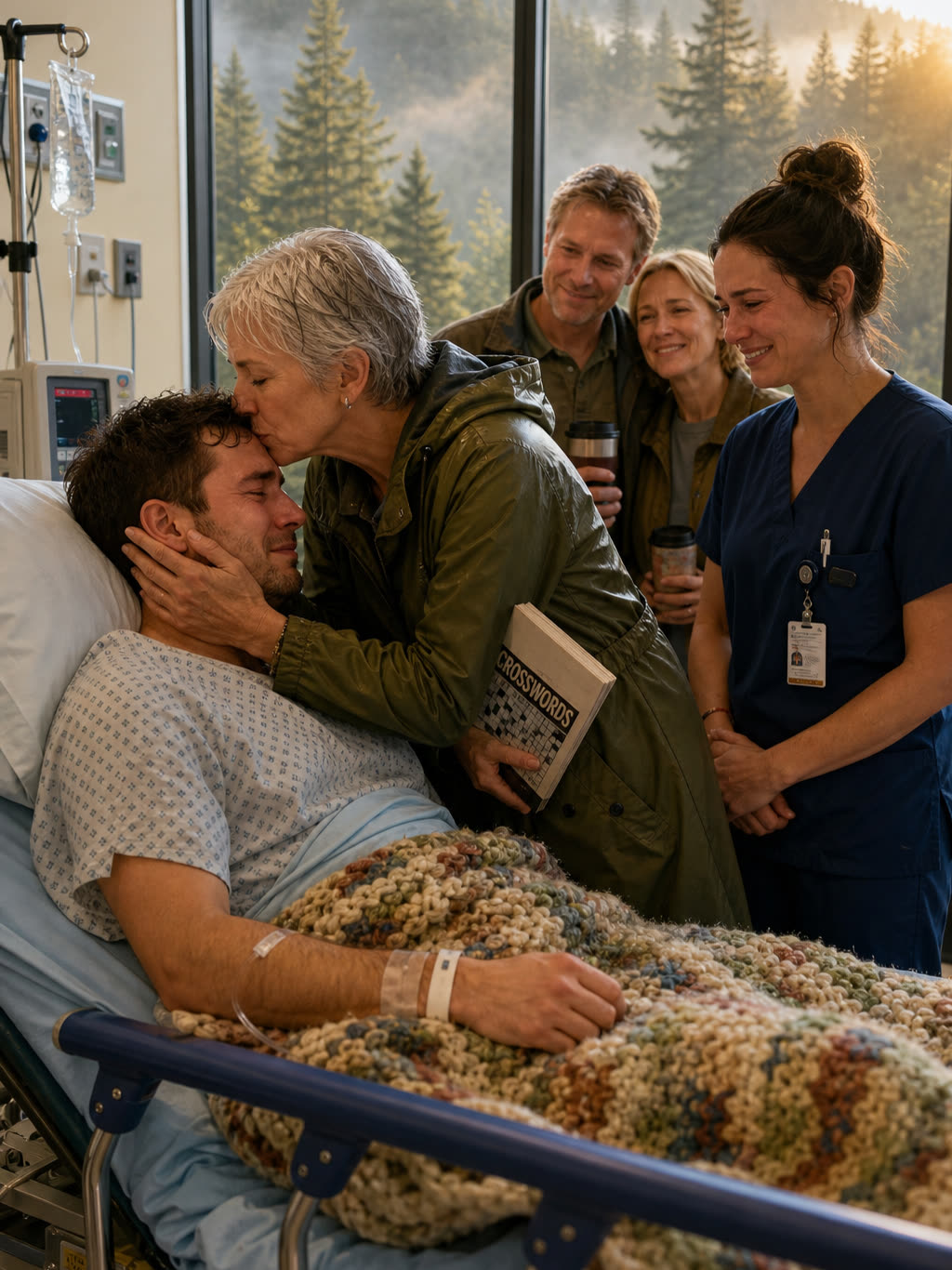
At 6:15 the curtain slid back. Haley’s parents, Mark and Sarah Vance, stepped into the cramped bay. Mark, a retired civil engineer with calloused hands, carried four large thermoses of black coffee. Sarah, a middle school librarian, produced a warm hand-knitted fleece blanket she had spent the previous week making. “You’re going to be cold when you wake up from the deep gas, Julian,” Sarah murmured, draping the soft wool over my trembling legs. “Mark and I will be right outside in the atrium the entire time.”
Before I could choke out thanks, the lobby doors whooshed open and the unmistakable squeak of rubber-soled orthopedic shoes echoed down the corridor. Aunt Colleen marched into the bay in an oversized rain slicker, an umbrella in one hand and a giant book of New York Times crossword puzzles in the other. Her hair was damp, but her posture was that of a general arriving at the front lines.
She walked straight to my gurney, took my face in both weathered hands, and kissed my forehead with fierce, maternal finality. “You look terrible, Julian,” she announced with a tight, reassuring smile. “Which means the only place to go from here is up. I’ve already spoken to the charge nurse. I know the surgeon’s name. If anyone drops a clamp, I will personally file an administrative complaint that will rattle this state.”
A knot of hot grief that had been lodged in my throat for weeks dissolved into tears. I squeezed her hand until my knuckles turned white. “Thank you,” I rasped. “Don’t thank me for basic human decency,” Colleen snapped, though her eyes were shining. “Your bloodline might be defective on your mother’s side, but you’ve got my father’s grit. You wake up on the other side of this and take your life back.”
At 7:00 AM the anesthesiologist injected a milky substance into my IV line. The ceiling lights began to warp and spin into kaleidoscopic rings of white and silver. As they wheeled me toward the double doors and the freezing chill of the operating room, I looked back through the glass partition. My mother was not there. My father was not there. My sister was not there. My brother was not there. Behind the glass, watching over me with unwavering vigilance, stood Haley, her parents, her brother, and my aunt. The people who loved me weren’t bound to me by a shared surname; they were bound to me by choice. Then the blackness took me.
I clawed my way back to consciousness through layers of thick narcotic mud. The pain was not a dull ache; it was a screaming, primordial furnace at the base of my spine, as though a backhoe had dug a trench between my hips and filled it with molten bronze. I groaned, fingernails digging into the mattress. “Julian. Look at me, Jules.” Haley’s face drifted into focus, her hair in a messy bun and dark circles under her eyes, but her smile was the most beautiful thing I had ever seen. “You’re out,” she whispered, stroking my forehead with an ice pack. “Dr. Vance finished thirty minutes ago. All four pedicle screws are anchored perfectly into the bone. The decompression was an absolute success. He said your sciatic nerve root was completely free.” “What time… is it?” I croaked. “It’s 3:30 in the afternoon.”
I lay there for two hours watching the IV pump deliver timed doses of analgesics, while Mark, Sarah, and Aunt Colleen rotated in to squeeze my hand and speak in hushed, reverent whispers. By 7:00 PM the haze had cleared enough for me to reach for my phone on the rolling meal tray. There were no voicemails from Arthur Monroe and no texts from Eleanor. I opened Instagram.
The first post at the top of my feed was a video story Savannah had posted ninety minutes earlier. The camera swept across a sun-drenched resort pool ringed by palm trees. Six women in identical hot-pink swimwear lounged on white daybeds, clinking glasses of pale green margaritas. In the center of the frame my mother, in large designer sunglasses, laughed hysterically as Savannah poured champagne down an ice luge. Savannah turned to the camera, blew a dramatic kiss, and held up an insulated tumbler with the words Bride Tribe in glitter. Across the bottom she had typed in sparkling font: Celebrating pure love and the people who actually show up for what matters! Nothing can ruin this vibe! #FamilyFirst #UnconditionalLove #ScottsdaleVibes #Priorities
I stared at the screen. The brazen cruelty of that hashtag, #Priorities, didn’t shatter my heart. It did something more permanent. It cauterized it. Every lingering shred of sentimentality, every thread of guilt I had carried for wanting their love, evaporated to absolute zero. Haley saw the screen. Without a word she slid the phone from my fingers and clicked it black. “Drew sent the certified packet at noon,” she said quietly, her voice steady. “It was delivered to your father’s corporate email and sent by process courier to their Scottsdale rental villa. It requires a signature on receipt.” I watched rain streak down the window against the falling dark. “Did he include the statutory interest calculation?” “Down to the exact cent,” Haley said.
A nurse came in to check my vitals and adjust my surgical drain. As she clipped the blood pressure cuff around my bicep, my phone lit up. It was my father. I pressed speakerphone and laid it on my chest. “Julian!” Arthur Monroe’s voice boomed off the sterile tiles, thick with the fury of a man whose public veneer had just been cracked. “What in the name of God is this document that was just hand-delivered to our private villa by a uniformed process server? Have you completely lost your mind?”
“Hello, Dad,” I said, my voice barely moving the air in my lungs. “I survived the surgery. Thank you for asking. The titanium is holding my spine together.” “Don’t you play the wounded saint with me!” Arthur roared over faint club music and splashing water. “A process server walked right up to the cabana gate while Savannah’s future in-laws were sitting with us! A demand for twenty-four thousand, eight hundred dollars including interest? A threat of an immediate civil lawsuit? You humiliated your mother in front of the entire party!”
“You had three years to remit the funds,” I said, watching the heart monitor tick steadily on the wall. “You bought an Audi last summer. You paid for a private villa this weekend. You have fourteen business days to wire the balance to my legal representative, Drew Vance. If the funds are not cleared by the twenty-eighth, we file the complaint with the county clerk.” “You are suing your own father?” His voice cracked, swinging between rage and disbelief. “Over a family transaction? No court in this country will entertain this garbage! We will tell the judge you gave us that money out of the goodness of your heart!” “Then you will be committing perjury on the public record, Arthur,” I replied calmly. “Drew has your written acknowledgment of debt, your proposed interest schedule, and your banking deposit receipts. Enjoy Scottsdale.” I tapped the red icon, and the call ended.
The next three months were a crucible of physical and psychological endurance. Physical therapy after a multi-level lumbar fusion is not gentle; it is a brutal, humiliating excavation of basic dignity. Three mornings a week Haley drove me to the clinic. I had to learn to engage my pelvic floor without dislodging the bone grafts, to swing my numb left leg forward with my hip flexors, and to tolerate the blinding fire-ant sensations of regenerating nerves. I sweated through my shirts just to walk twelve feet between parallel bars. When the agony brought me to my knees, Haley was there with ice, electrolytes, and unshakeable clinical firmness. “You survived their neglect for thirty years, Julian,” she whispered one evening as she massaged my spasming calf. “You can survive two titanium rods.”
Meanwhile the legal machinery moved forward with cold precision. My parents did not wire the money on the twenty-eighth. Instead they hired a cut-rate neighborhood attorney who sent Drew a rambling four-page letter claiming the twenty-two thousand was an “informal familial gift” and threatening a countersuit for “intentional infliction of emotional distress” over the delivery of the demand letter in Arizona. Drew laughed out loud. “This isn’t a legal defense,” he told me over coffee. “This is a temper tantrum typed on twenty-pound bond paper. We file tomorrow morning in Multnomah County Circuit Court.”
The filing went public a day later. In my father’s pristine suburban circle, a public court filing was social leprosy. When the dockets appeared online, his country club peers saw his name listed as the defendant in a debt-collection suit brought by his own son. Connor called that evening, dripping with condescending exasperation. “Julian, this is completely unhinged. Savannah’s wedding is in September. Do you know how this looks to her fiancé’s family? They’re old money! Dad is about to lose his mind. Just withdraw the suit, and we can set up an informal payment plan after the wedding.” “Connor,” I said evenly. “Did you attend my surgery?” “I told you, I had a client retreat!” “And I have a legal retainer with an attorney,” I said. “Have a wonderful evening.” I blocked his number.
In late September Savannah’s wedding went off without a hitch. I wasn’t invited, nor did I expect to be. Aunt Colleen attended the church service out of spiteful curiosity and reported that Eleanor had spent the cocktail hour telling anyone who would listen that Julian was “overseas on a confidential international auditing assignment.” The lie was so absurd that Haley and I laughed until our ribs ached.
Four weeks later, in mid-October, the therapy bore its fruit. Haley and I drove to the Columbia River Gorge, where the autumn foliage exploded in crimson, amber, and gold against the wet basalt cliffs. With a lightweight carbon-fiber hiking pole in my right hand, I walked one full unbroken mile along the trail above the rushing water. My leg didn’t drag. The numbness had shrunk to a faint tingling in my two smallest toes. At the crest of the overlook, with the cold wind whipping Haley’s dark hair across her cheeks, I stopped, leaned on the stick, and pulled a small dark velvet box from my windbreaker. Haley froze. “Julian…” she whispered.
“I was going to wait until we could afford a vacation to the coast,” I said, looking into the eyes of the woman who had emptied my surgical drains, cleaned my incision, and stood between me and the people who tried to break me. “I was going to prepare a speech with elaborate metaphors. But the truth is simple: you loved me when I couldn’t even stand up on my own two feet. If my spine works today, it’s because your heart never gave up on it. Marry me, Haley.” She didn’t wait for me to open the box. She launched herself into my chest, wrapping her arms around my neck so hard we nearly tumbled into the ferns, laughing and crying at once. “Yes!” she cried against my neck. “Yes, you idiot, a thousand times yes!” We set the wedding for the following October: fifty guests in an apple orchard near Mount Hood. Haley’s family, Aunt Colleen, my few trusted childhood friends, and Drew. No Monroes.
The civil trial arrived in mid-November, in Multnomah County Courthouse, Room 402, on a gray, cold morning washed with relentless drizzle. I sat at the plaintiff’s table beside Drew in a tailored charcoal suit that hid the rigid posture of my fused spine. Across the aisle sat Arthur and Eleanor with their lawyer, an aging solo practitioner who looked as if he hadn’t updated his research since 1998. Savannah and Connor were absent. The presiding judge was Judge Margaret Chen, sixty, silver hair cut in a severe bob, with a reputation for zero tolerance of domestic theatrics. “Case number 23-CV-18492,” she announced over her half-moon spectacles. “Monroe versus Monroe. We are here on an expedited claim of breach of contract and unjust enrichment regarding a sum of twenty-two thousand dollars.”
My father’s attorney offered a rambling, impassioned opening about how the Monroes were a pillar of the community and how Julian was retroactively turning a parental gift into a commercial transaction out of malice. Drew never raised his voice. He stood, adjusted his cuffs, and handed a tabbed evidence binder to the bailiff. “Your Honor, we do not deal in sentimentality; we deal in documented consideration. On October 12th, Defendant Arthur Monroe explicitly transmitted a digital communication requesting twenty-two thousand dollars to cure a mortgage default. Within that transmission, Defendant Monroe stated, quote: ‘We will remit the full amount plus five percent interest the moment the Western Logistics retainer clears in Q1.’ End quote.” Tab B held the wire confirmation. Tab C held the subpoenaed consulting contract proving a forty-five-thousand-dollar retainer on February 3rd of the following year. Tab D showed the purchase of an eighty-two-thousand-dollar German luxury vehicle six months later.
Judge Chen slowly looked up and fixed her gaze on my father. The temperature in the room seemed to drop ten degrees. “Mr. Monroe,” she said, terrifyingly flat. “Step to the podium. Did you type the words ‘We will remit the full amount plus five percent’?” “Your Honor,” he began, clearing his throat, “you have to understand the family context. We were in a moment of extreme distress. Julian was living at home rent-free during high school—” “I did not ask about high school, Mr. Monroe,” she interrupted, her gavel cracking like a pistol shot. “I asked a simple binary question. Did you compose that transmission?” “…Yes, Your Honor,” he choked out, his face the color of an overripe plum. “And did you receive the forty-five-thousand-dollar corporate retainer in February?” “Yes, but the expenses of running the household—” “Have you remitted the twenty-two thousand dollars to the plaintiff?” “We paid him two thousand, eight hundred dollars in sporadic installments!” my mother blurted from the defense table. “We tried! We are his parents!” Judge Chen turned a searing glare on her. “Counsel, advise your client to remain silent until recognized, or I will have her removed for contempt.” Eleanor sank into her chair as if struck.
Judge Chen closed the binder with a snap. “This is not an ambiguous matter. The documentation establishes a clear meeting of the minds, an offer, acceptance, and consideration. The defendants used their son’s personal savings to salvage their own real estate, enjoyed a financial recovery, purchased luxury property, and disregarded their legal and moral obligation to repay the principal. Judgment entered in favor of the plaintiff, Julian Monroe. The defendants are ordered to pay the outstanding principal of nineteen thousand, two hundred dollars, plus statutory pre-judgment interest of nine percent per annum from the date of default, along with court filing fees and reasonable attorney’s fees. The total judgment stands at twenty-seven thousand, four hundred and sixteen dollars. A mandatory restitution schedule of seven hundred dollars per month will commence on the first of December. If two consecutive payments are missed, this court will issue a writ of execution authorizing direct garnishment of Mr. Monroe’s corporate consulting wages and a lien against the defendants’ real property. We are adjourned.” Bang. The gavel fell. Drew shook my hand. “Clean sweep, Jules.”
In the marbled hallway my mother intercepted us, her face contorted with fury. “You think you won?” she hissed, her nails digging into her purse strap. “You humiliated us in a court of law! You dragged our family name through the dirt! You will die cold and alone, Julian! No child of mine will ever treat me this way!” I looked at her, really looked, and realized I felt nothing. No anger. No hurt. No desire for revenge. “Eleanor,” I said softly, stepping around her as if she were discarded luggage, “first payment is due December first. Make sure the check clears.” Haley took my arm, and we walked down the grand marble staircase into the crisp, clean autumn air.
I thought the courtroom marked the end of the Monroe saga. I thought the law had built a wall so thick they would never dare cross it. I was wrong. Six weeks later, on a freezing Tuesday morning in January, my doorbell rang with the manic, violent intensity of a battering ram.
Part 3: Paper Shields
I looked through the wide-angle lens of our video doorbell. Standing on the welcome mat was Savannah, in an oversized trench coat, her blonde hair tangled and unwashed, her face pale and bare of makeup. She was shivering, not from the thirty-degree chill but from a vibrating, manic energy.
Haley was at the hospital working an emergency room shift. I was alone at my desk, finishing an audit report. I cracked the heavy oak door open, leaving the steel security chain engaged.
“Savannah,” I said through the three-inch gap. “You have no business here. Leave immediately.” Before the last syllable left my mouth, she slammed her whole body against the wood. The chain snapped taut and the brass screws groaned against the jamb.
“Open this door, Julian!” she screamed, her voice cracking into a ragged shriek that echoed down the hallway. “Open this door right now! You ruined my life! You destroyed everything!” “Back away from the door, or I will dial 911,” I said, already pulling my phone from my pocket.
“You ruined my marriage!” she wailed, throwing her shoulder against the door a second time, her eyes wide and bloodshot in the crack. “Marcus left me! He moved out two days ago! Because of your disgusting court judgment! The lien on Mom and Dad’s house showed up on a title search when we tried to co-sign our mortgage! Marcus’s family found out Dad was sued for debt collection! They think we’re white-trash grifters!”
The puzzle pieces snapped together with horrifying clarity. Marcus’s family, an old-money real estate dynasty in Lake Oswego, had found the public judgment against Arthur and Eleanor. They had withdrawn their financial guarantees, looked into Savannah’s personal accounts, and uncovered the mountain of credit card debt she had piled up to finance her lavish lifestyle.
“Your marriage ended because you are a financial parasite, Savannah,” I said, my thumb hovering over the emergency button. “I gave you twelve days’ notice to vacate this property. The timer is running. Sixty seconds.”
“Everything is about you!” she shrieked, kicking the base of the door with her designer boot. “Your spine! Your precious little apartment! Your money!”
“I hope the titanium snaps inside your back! I hope you end up in a wheelchair!” she screamed, her eyes wild and her breath ragged.
I hit the green call button, raised the phone to my ear, and gave our address with absolute forensic detachment. “Emergency dispatch. I have a trespasser attempting forced entry into my private residence. The subject is unstable, screaming threats, and physically assaulting the doorway.”
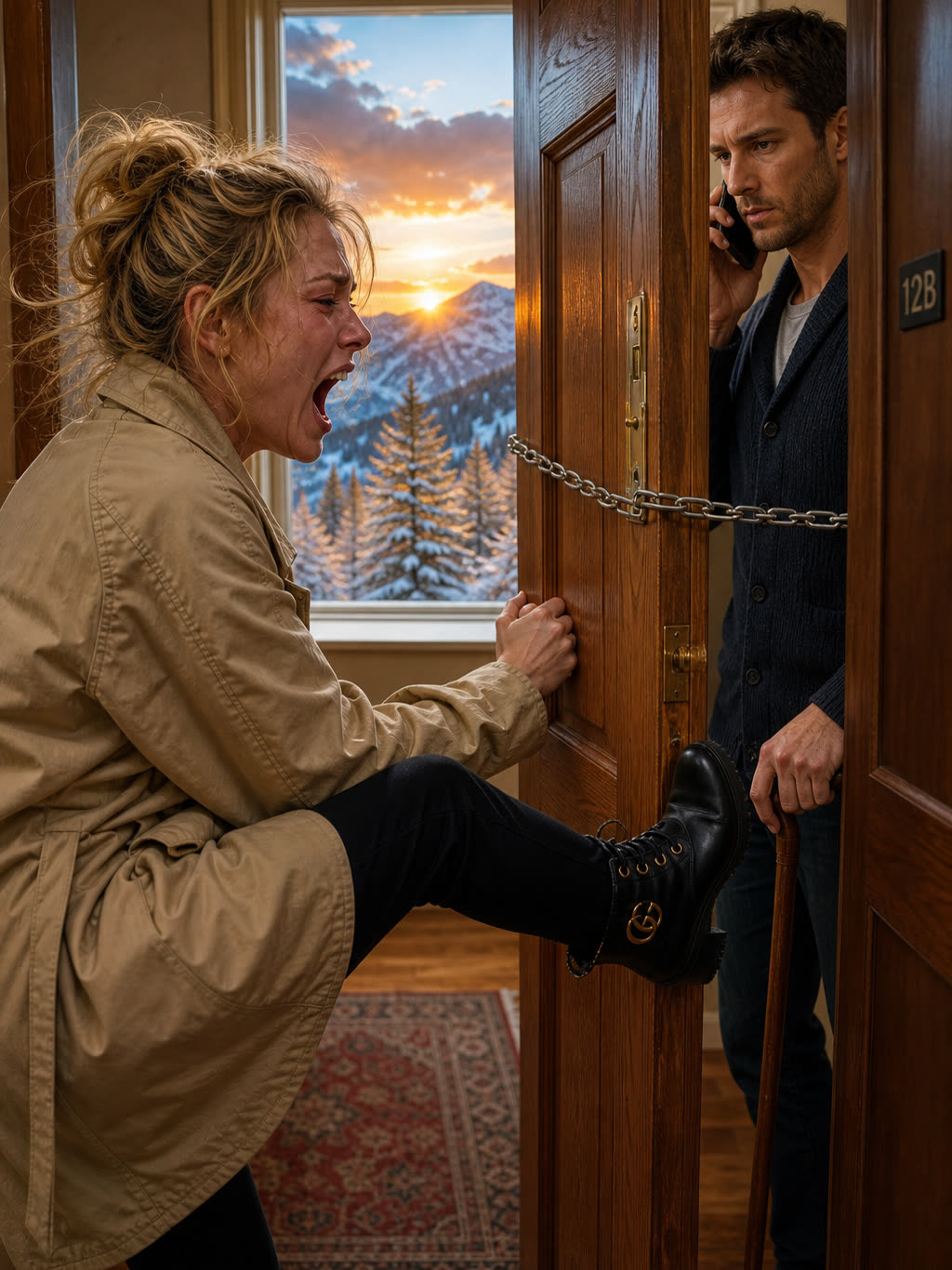
Hearing my calm voice summon law enforcement, Savannah froze. The realization finally pierced her rage that I was no longer the boy who would write an eight-hundred-dollar check to keep her quiet. “You are a sick, heartless monster,” she spat, dropping to a ragged whisper. She turned on her heel and sprinted for the stairwell, her boots pounding the concrete.
The police arrived twelve minutes later. I downloaded the high-definition video from the doorbell camera and handed it to the responding officers on a flash drive. The audio was crystal clear: every threat, every violent kick, every shriek wishing permanent paralysis on me. “Do you want to press criminal trespass charges, Mr. Monroe?” the senior officer asked, closing his notebook. “I want a protective restraining order,” I replied. “And I want it served immediately.”
Drew took the incident report, the video, and two years of archived harassing messages to the courthouse the following morning. But before the emergency hearing could be scheduled, my family escalated the siege. Three days later, while I was visiting a client downtown, Eleanor slipped past reception security at my firm’s headquarters. She walked into the fourteenth-floor executive lobby carrying a framed photograph of me at ten years old and began sobbing hysterically to the receptionist, demanding to see the managing partner to report that her son was “financially starving his elderly parents.”
My managing partner, who had known me for seven years, didn’t summon me to reprimand me. He called building security and had Eleanor escorted through the revolving glass doors onto the rainy sidewalk, banned from the premises under threat of arrest.
That same afternoon Haley walked to her car in the hospital parking garage after a fourteen-hour trauma shift. Tucked under her windshield wiper was a handwritten note from Arthur Monroe on his business letterhead: Haley: A good Christian woman builds her house; a foolish one tears it down with her own hands. When you face the Lord on Judgment Day, you will answer for hardening Julian’s heart against the mother who birthed him. Call us. Fix this.
Haley didn’t cry. She didn’t shake. She photographed the note, sealed it in a plastic evidence bag from the hospital pathology lab, and drove straight to Drew’s office. “We file for an omnibus anti-harassment protective order,” Drew declared, slapping the binder onto his mahogany desk. “All three of them. Savannah for criminal trespass and terroristic threats. Eleanor for workplace harassment and corporate disruption. Arthur for stalking and intimidation of a medical professional.”
The permanent hearing took place three weeks later, and the courtroom dynamic was entirely different. Arthur and Eleanor sat in the back row, diminished and terrified of crossing the legal perimeter. Savannah sat alone at the defense table. Arrogant to the bitter end, she had fired her public defender and announced that she would represent herself because “no lawyer understands family dynamics better than the family itself.” It was an unmitigated catastrophe for her.
Judge Robert Callahan, a no-nonsense former prosecutor, watched the video of Savannah throwing her weight against my door. He listened to the audio of her screaming that she hoped my titanium would snap inside my spine. He read the security log of Eleanor’s hysterical ambush in my firm’s lobby and examined the bagged letter Arthur had left on Haley’s windshield in the restricted parking deck.
“Miss Monroe,” Judge Callahan said, looking down at Savannah with absolute disgust. “Do you believe that sharing DNA gives you the legal authority to commit residential burglary and terrorize citizens in their homes?” “We are a family, Your Honor!” Savannah sobbed, wiping at tears that seemed to produce no moisture. “Julian has isolated himself! He’s being manipulated by that nurse! We just wanted to talk to him! We have a right to our brother!” “You have no rights whatsoever regarding an adult citizen who has repeatedly demanded that you cease contact,” the judge thundered. “What I see before me is not a concerned family. What I see is an organized syndicate of emotional extortion and stalking.”
He raised his gavel. “The court grants a five-year protective stalking restraining order against Savannah Monroe, Eleanor Monroe, and Arthur Monroe. You are prohibited from coming within one thousand feet of Julian Monroe, Haley Vance, their residence, their respective workplaces, and any future medical facilities associated with them. Any electronic communication, third-party contact, or proximity violations will result in immediate mandatory arrest and felony contempt charges. Step down.” Bang. Two armed sheriff’s deputies held my family back for fifteen minutes so Haley and I could leave safely. As the elevator doors slid shut, the silence around us was not tense; it was vast, sweet, and absolute. The paper shield had been raised, and for the first time in thirty years the air tasted clean.
The next twelve months passed in glorious, uninterrupted peace. The restitution payments of seven hundred dollars arrived by automatic wire on the first of every month like clockwork. Arthur had clearly realized that missing a single one meant Drew would seize his consulting income before the direct deposit could hit his account.
In October, Haley and I married in the apple orchard under the shadow of Mount Hood. The sun was warm, the cider crisp, and the laughter real. Mark Vance walked his daughter down the aisle through the falling leaves, his eyes shining with pride, and placed her hand in mine. Aunt Colleen gave the closing toast, raising her glass of pinot noir in the candlelit barn. “To Julian and Haley,” she said, her voice rich and steady. “True family is not an accident of blood; it is an architecture of loyalty, built nail by nail, promise by promise. May your house stand forever.”
Four months after the wedding, Haley walked out of our bathroom one Saturday morning holding a small plastic stick with two bright pink lines. We fell onto the bed, holding each other and weeping with a joy so profound it made my old spinal scars feel irrelevant. We were going to be parents. We kept the pregnancy strictly offline, telling only Haley’s parents, Drew, and Aunt Colleen. But secrets leak through third-party acquaintances. A distant cousin saw Sarah Vance buying baby clothes in Lake Oswego, and within forty-eight hours the extended family knew.
Then came news back through the cousin grapevine. Savannah’s divorce had finalized. Marcus had stripped her of every luxury, their home had sold at a loss, and she had been forced to move into my parents’ basement and work as an entry-level receptionist at a boutique dental clinic. The golden child’s glittering empire had crumbled to dust.
Haley’s pregnancy progressed smoothly until her thirty-fourth week. Her belly was round, her energy fierce and protective. And then, on a rainy Tuesday afternoon in August, the one-thousand-foot perimeter was violently shattered.
Disclaimer: This story is a work of fiction inspired by real-life themes. Names, characters, places and events are fictionalized, and any resemblance to real persons is purely coincidental. Images are for illustration purposes only.
