

Part 1
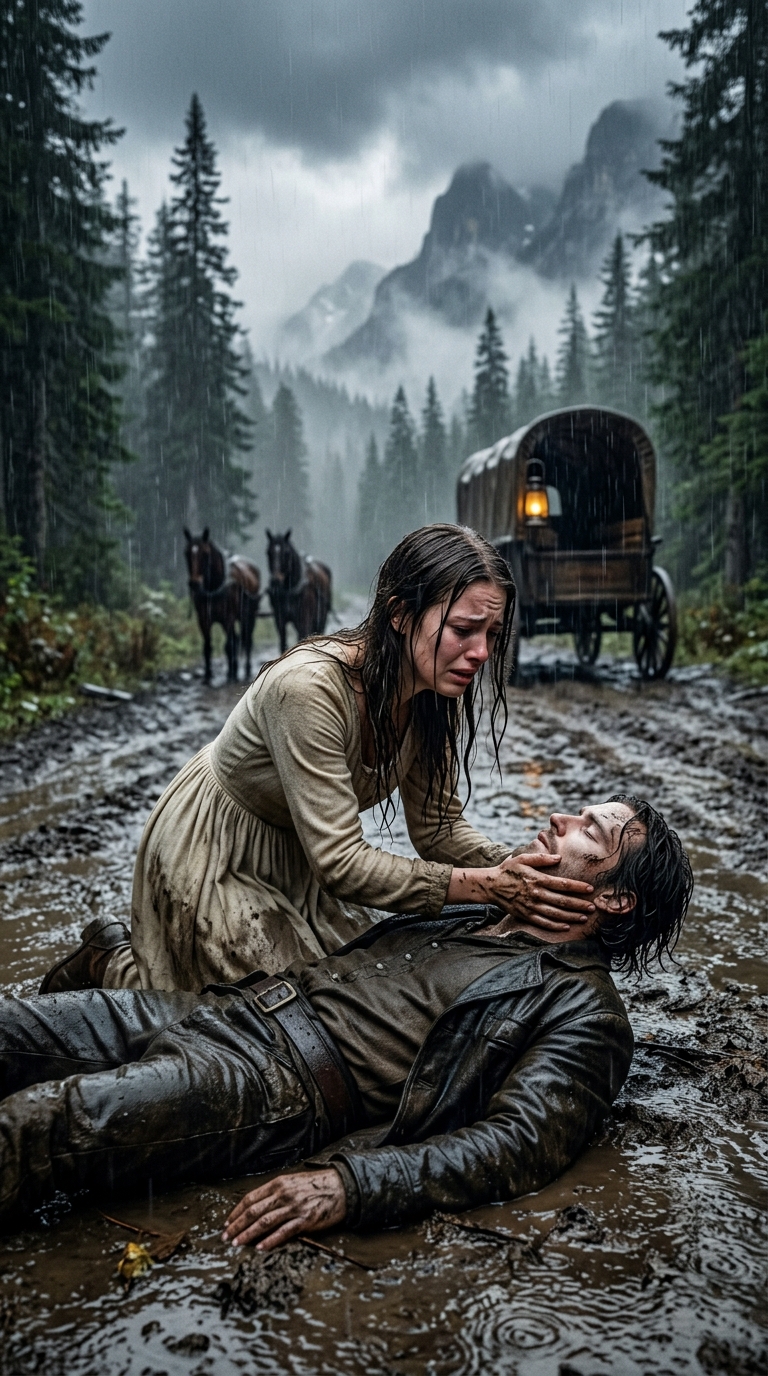
Marisol was thrown out of the house when the rain had already turned the road in San Miguel del Monte into a river of mud. She was almost eight months pregnant, her feet swollen, her back burning, and one hand pressed tightly over her belly as if she could protect her child from the shame that had just been thrown at her.
Her mother-in-law, Doña Remedios, did not raise her voice. That was what hurt the most. She simply placed an old shawl in her arms and said, with a coldness that didn’t seem human:
“If Rafael didn’t come back, that child isn’t this house’s problem either.”
No one defended her. Her brother-in-law opened the door. Her father-in-law looked the other way. Marisol didn’t beg. Since she was a little girl she had learned that pleading doesn’t soften closed hearts; it only gives more pleasure to those who want to see you on your knees.
She had become an orphan at the age of six, raised among tired aunts, borrowed kitchens, and beds where there was always one person too many. When Rafael married her, he promised her a little house, her own table, and a roof where no one could tell her “you’re in the way.”
But Rafael went to work on the railroad construction in Veracruz, promising to return before the baby was born. At first two letters arrived. Then one. Then nothing.
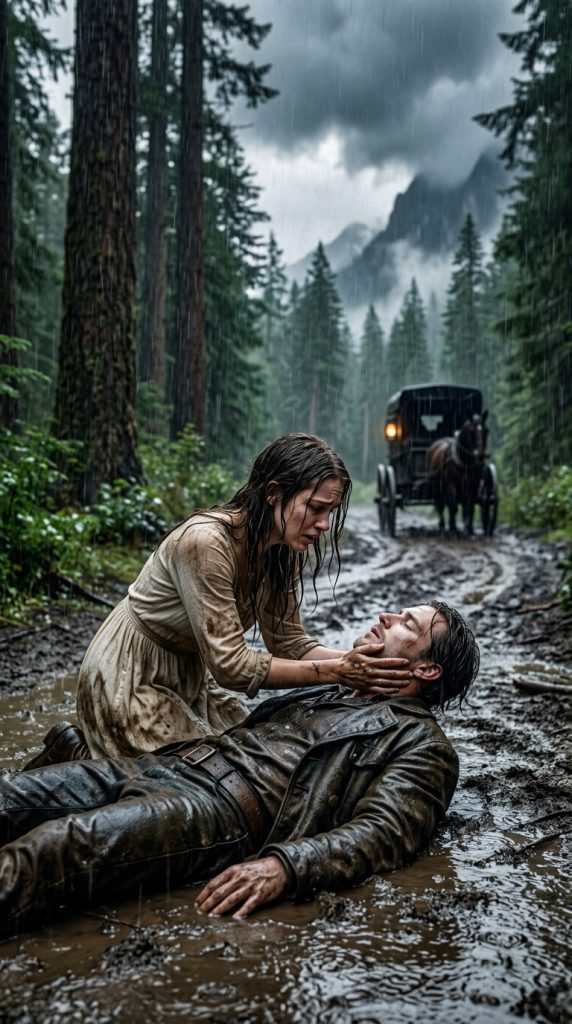
In her in-laws’ house, Rafael’s silence turned into suspicion against her. They looked at her as if her pregnancy was a debt, as if her hunger was disrespectful, as if breathing under that roof was an abuse.
That night, when the door closed behind her, Marisol felt she wasn’t being expelled from a house, but from the entire world. She walked in the rain without knowing where to go. Every step sank her huaraches into the mud. Sometimes the pain shot up her back and she had to stop, breathe, and clench her teeth.
“Hold on, my boy,” she whispered. “Your mother still knows how to walk.”
At the end of the road she saw an old adobe house, dark, with the back door slightly ajar. It didn’t seem abandoned; it seemed like a house that had stopped waiting. Marisol hesitated. Then the baby moved inside her, just a weak little kick, and that was enough.
She pushed the door open and entered. Inside it smelled of dust, dampness, and years of being shut away. There was a table covered in dirt, two chairs pushed aside, an empty jug, and a cold stove in the corner.
Marisol didn’t look for food or open drawers. She only found some dry branches in a basket, took out the last match she carried hidden in her pocket, and lit a trembling little flame. She didn’t do it for herself. She did it for her son.
When the fire began to breathe, she sat next to the stove, hugged her belly with both hands and murmured: “Just tonight. Tomorrow we’ll keep going.”
She fell asleep without knowing that the house belonged to the late daughter of Don Jacinto Morales, an old man who was returning that same night to live there his final days — alone, bitter, and with no desire to love anyone again.
Part 2
Don Jacinto arrived past midnight, with a kerosene lantern in one hand and a rusted key in the other. He had closed that house seven years earlier, the day he buried his only daughter, Lupita, along with the grandson he never got to meet.
Since then no one had lit the stove again. No one was supposed to. That’s why, when he saw smoke coming from the chimney, he stood still under the drizzle as if he had seen a dead person rise.
He entered through the back door and found Marisol asleep by the fire, soaked, pregnant, her shoes full of mud. He wanted to yell at her to leave. He wanted to defend Lupita’s house from that stranger. But when he saw her hugging her belly even in sleep, his voice broke before it came out.
Marisol woke up with a start and sat up frightened.
“I didn’t come to steal, sir,” she said, firm even though she was trembling from the cold. “I only lit the stove because my son was cold.”
Don Jacinto looked at the flame. That small fire hurt him more than an insult. For years he had let the ash cover everything, believing that shutting down the house was a way to honor his daughter. But that woman, without knowing it, had touched the exact heart of his grief.
“This house doesn’t receive people,” he murmured.
“I understand. I’ll leave as soon as I can walk without falling.”
Don Jacinto looked at the rain behind the door. He looked at Marisol’s belly. He looked at the old blanket Lupita used to cover her legs on cold mornings. In the end he took it, shook it out, and left it on a chair.
“Stay until dawn. Only until dawn.”
But at dawn something none of them expected happened. An old dog, with gray fur and tired eyes, scratched at the door. Don Jacinto lost his breath.
It was Canelo, Lupita’s dog, missing since his daughter’s death. The animal entered without barking, walked to the stove, sniffed the warm ash, and lay down by the fire as if he had found his way home after many years.
Marisol put water in a bowl for him. Canelo licked her hand. Don Jacinto, watching that scene, felt something break inside him.
“He was my daughter’s,” he said barely.
Marisol didn’t ask more. She only bowed her head with respect.
That day she didn’t leave. Nor the next. Don Jacinto never said “stay,” but he left cornmeal on the table. Marisol made atole and served him a cup without forcing him to drink. He hesitated, but took it.
Later he left a clean rope so she could hang her cloths without touching Lupita’s hook. Then he took from the storeroom a small pine cradle, covered in dust.
“It was Lupita’s,” he said in a dry voice.
Marisol lowered her gaze.
“You don’t have to…”
“A child shouldn’t sleep on the floor,” he interrupted.
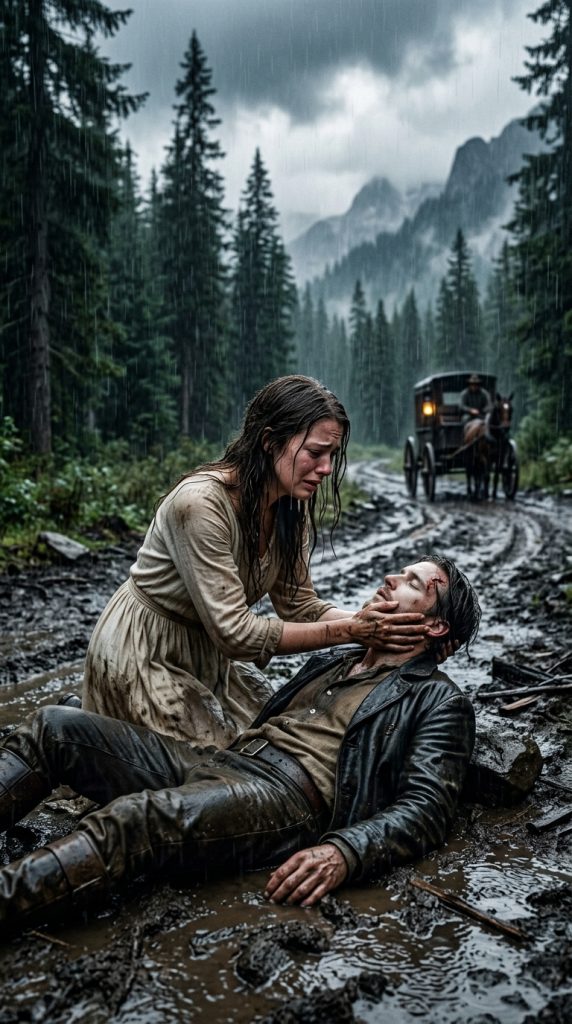
The town began to talk. They said that a pregnant woman without a husband under the roof of an old widower was a shame. They said Marisol was trying to take over the house. They said Don Jacinto had lost his mind.
One afternoon Don Celso arrived, a distant relative of the old man, with poison on his tongue.
“That woman is not your daughter, Jacinto. Don’t confuse someone else’s belly with what you lost.”
Marisol heard from the kitchen and that night she folded her shawl to leave.
“I don’t want to occupy a chair that doesn’t belong to me,” she said.
Don Jacinto took the shawl and placed it back by the stove.
“I came back here because I thought no one would need me,” he confessed, looking at the embers. “Maybe that was what scared me the most.”
Then the storm fell with fury. The roof began to leak. Marisol felt the first strong pain and grabbed the table.
Doña Elvira, the town midwife, arrived soaked and upon seeing her said:
“This child is coming now. He can’t be born here, Jacinto. Everything is getting wet.”
There was only one dry room left: Lupita’s closed room. Don Jacinto shook his head, pale.
“Not that room.”
Doña Elvira looked at him sternly.
“Then tell me where you want him to be born. Under the water?”
Marisol, between contractions, whispered:
“I don’t want to take anything from your daughter.”
Don Jacinto looked at the cradle, the stove, the old dog, the rain coming through the cracks. Then he walked down the hallway, took out the key that had been rusting in his pocket for years, and opened Lupita’s door.
Part 3
The room smelled of closed wood, dried flowers, and ancient sadness. There were yellowish white curtains, a little folded blanket on a chair, and, by the window, a small embroidery with crooked letters that read: “Welcome, my boy.”
Don Jacinto covered his mouth with one hand. For seven years he had thought that opening that door would kill him, but it was the opposite: upon seeing it ready to receive life, he understood that he had kept it closed not out of love, but out of fear.
Doña Elvira didn’t let him stay paralyzed.
“Hot water. Clean cloths. And you, stubborn old man, hold that lamp.”
Marisol was laid on Lupita’s bed. Outside the storm beat against the roof as if the sky wanted to come in. Inside, the stove kept burning and Canelo lay in front of the door, silent guardian of that impossible night.
The labor was long. Marisol screamed, cried, asked for forgiveness without knowing to whom. Don Jacinto held the lamp with trembling hands. In each of Marisol’s cries he heard the echo of the daughter he couldn’t save. But this time he didn’t run. This time he stayed.
At dawn, when the rain began to ease, the cry of a baby filled the adobe house. It was a small boy, red, furious at being alive. Doña Elvira wrapped him in a clean cloth and placed him on Marisol’s chest. She kissed him, crying.
“Mateo,” she whispered. “His name will be Mateo.”
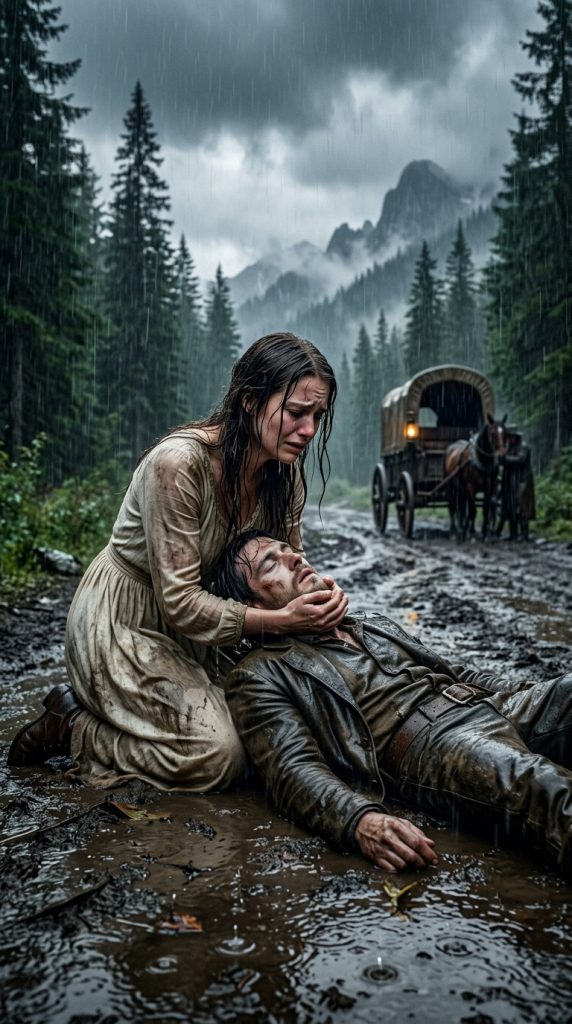
Don Jacinto went out to the corridor and cried without hiding it. He didn’t cry like a defeated man, but like someone finally letting out the water that had been rotting his soul for years.
They thought peace had arrived, but at midday Doña Remedios, Marisol’s mother-in-law, appeared, accompanied by Don Celso and two men from the town. They came with serious faces and dirty intentions.
“That child is my son’s blood,” Doña Remedios said. “We’ve come for him.”
Marisol, weak but awake, hugged Mateo to her chest. Don Jacinto stepped in front of the door to the room.
“No one is taking anyone from here.”
Doña Remedios let out a bitter laugh.
“You are nothing to them. A lonely old man bringing someone else’s shame into a dead woman’s house.”
Then Canelo growled from the hallway. And from behind them all, a broken voice said:
“The shame is yours, Mother.”
Rafael appeared in the doorway, thin, with a grown beard, an old bandage on his arm, and eyes full of guilt. Marisol thought she was dreaming.
Rafael told the truth in front of everyone: he had suffered an accident at the work site, had been sick for months in Veracruz, and had sent letters with money to his mother for Marisol. Doña Remedios had hidden them. She wanted Marisol to disappear before he returned strong and with money, so the family wouldn’t have to carry her and the baby.
Don Celso lowered his gaze. Doña Remedios tried to deny it, but Rafael pulled out three crumpled receipts and a returned letter that had never reached Marisol.
“I failed her by not coming back sooner,” he said, kneeling beside the bed, “but I never abandoned her.”
Marisol cried without knowing whether it was relief or pain. She didn’t forgive him in that moment, because real wounds don’t close out of obligation. But she let Rafael see his son.
Don Jacinto watched the scene from the doorway, his eyes wet. Doña Remedios left without her grandson, without power, and without the false dignity she had arrived with.
The months passed. Rafael worked in the town, repaired the roof of the house, and accepted that he had to earn Marisol’s trust again without demanding it.
Don Jacinto never closed Lupita’s room again. The cradle stayed by the window, where the morning light came in.
Mateo grew up hearing two stories: the one about a mother who didn’t beg in the rain and the one about an old man who opened a door when he was most afraid.
One Sunday, while the stove was burning and the smell of atole filled the kitchen, Marisol placed the child in Don Jacinto’s arms.
“Call him Grandpa,” she asked softly.
The old man pressed Mateo to his chest. Canelo slept by the fire. Rafael stacked dry firewood in the corner. Outside, the town was still the same, with its muddy roads and restless tongues.
But inside that adobe house, absence no longer ruled. Don Jacinto looked at Lupita’s open room and smiled through his tears. He understood that life had not come to replace his daughter. It had come because she, in some way, still knew how to open paths toward love.
