

PART 1
The first sound Claire Bennett heard after her husband shoved her out of the photographers’ view was laughter.
Not loud laughter.
That would have been easier to bear.
This was worse.
It was the quiet, delighted laughter of people who had just watched someone get humiliated and were already thinking about how fast they could share it online.
Camera flashes burst across the red carpet outside the Halcyon Arts Gala in Los Angeles.
Claire stumbled to the side in her silver heels, almost stepping on the hem of her dress.
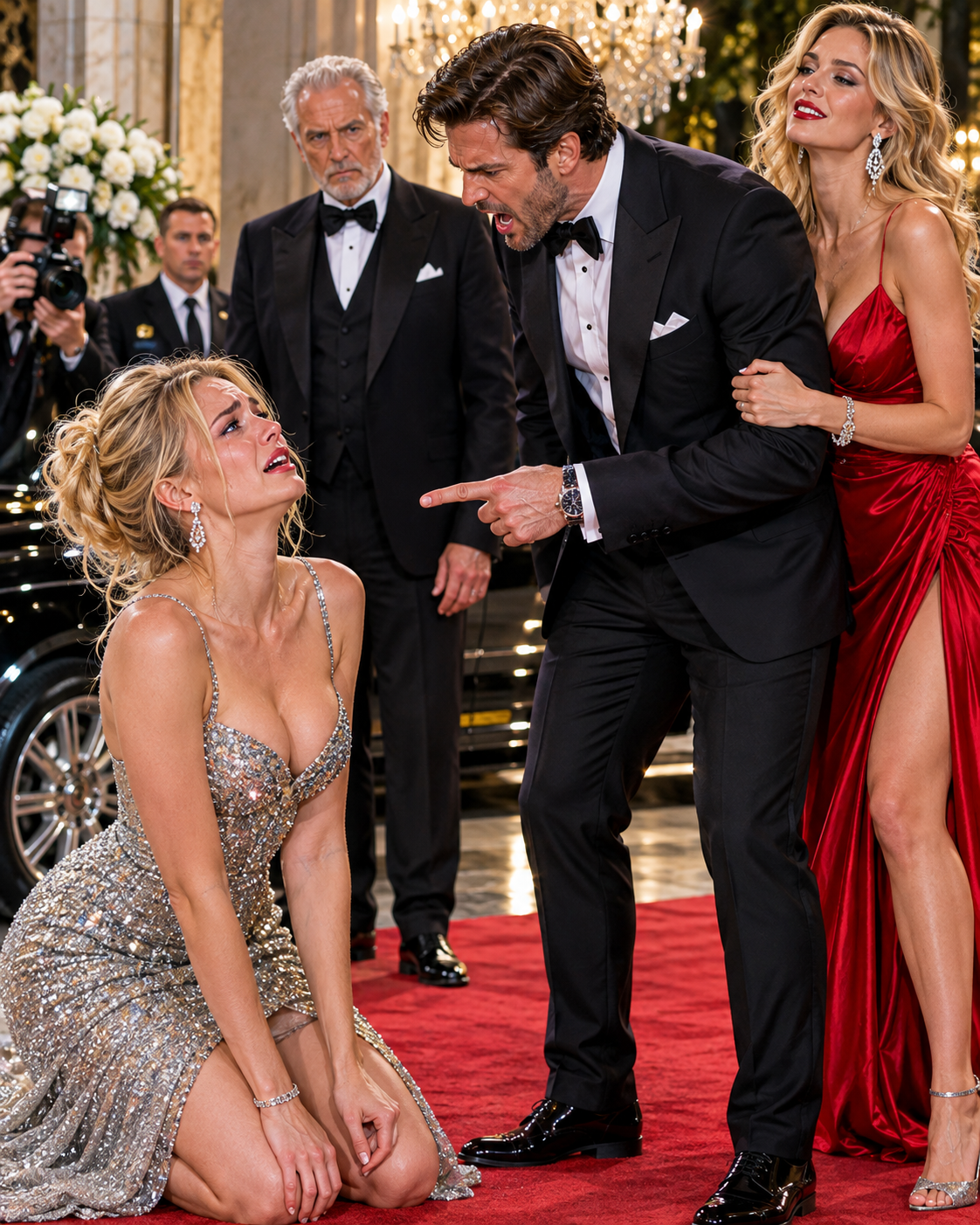
Her husband, Grant Bennett, made no effort to catch her.
Instead, he adjusted his tuxedo and posed for the cameras with a smile.
“Grant?” Claire whispered.
His expression remained unchanged.
“Move, Claire.”
For a moment, she wondered if she had heard him correctly.
“What?”
“You’re blocking the shot.”
Then another woman emerged from the limousine.
Madison Cole.
Twenty-eight years old. Gorgeous. Ambitious. The latest star of a streaming drama that Grant’s investment company had helped finance.
And apparently, the woman Grant wanted beside him that evening.
Madison stepped out in a sparkling ivory gown, wearing the kind of smile women have when they’ve already been assured they’ve won.
She linked her arm with Grant’s.
The photographers immediately went wild.
“Grant! Madison! Look this way!”
“Madison, are you two together?”
“Grant, where does this leave your wife?”
Claire felt her stomach sink.
She looked at her husband.
He had arranged all of this.
She understood now.
The separate limousine plans.
His insistence that she wear the pale blue dress he had chosen.
His unusual silence during the drive.
The text messages he had turned away from her to answer.
This wasn’t an uncomfortable misunderstanding.
It was an execution.
Grant leaned toward Claire, keeping his polished smile for the cameras.
“Don’t make a scene.”
Her breath caught.
“You brought another woman to a gala while I’m standing right here.”
“It’s complicated.”
“It looks extremely simple.”
Madison gave a quiet laugh.
“Oh, Claire.”
That tone wounded her almost as much as Grant’s shove.
Almost.
Claire turned to face her.
Madison tilted her head.
“I assumed he told you.”
“Told me what?”
Grant’s jaw became tense.
“Not here.”
Madison spoke anyway.
“That your marriage is basically over.”
The reporters nearest them fell silent.
Then the camera shutters began clicking even faster.
Claire felt every lens swing in her direction.
She could already picture the headlines.
Investment star abandons wife for actress.
Humiliated spouse watches husband debut new romance.
Mystery wife dumped on red carpet.
Grant looked toward the press and saw an opportunity where Claire could feel nothing but heartbreak.
He spoke more quietly.
“Go inside through the side entrance.”
“You want me to hide?”
“I want you to stop embarrassing yourself.”
Claire looked at him in disbelief.
For seven years, she had stood up for this man.
When friends told her he treated her like furniture, she insisted he was simply focused.
When her sister warned that Grant didn’t love independent women, Claire argued that marriage meant compromise.
When he criticized her clothes, her friends, her career, and even how loudly she laughed at dinner, she convinced herself he was dealing with pressure.
She had spent years making herself smaller so he would no longer complain about her sharp edges.
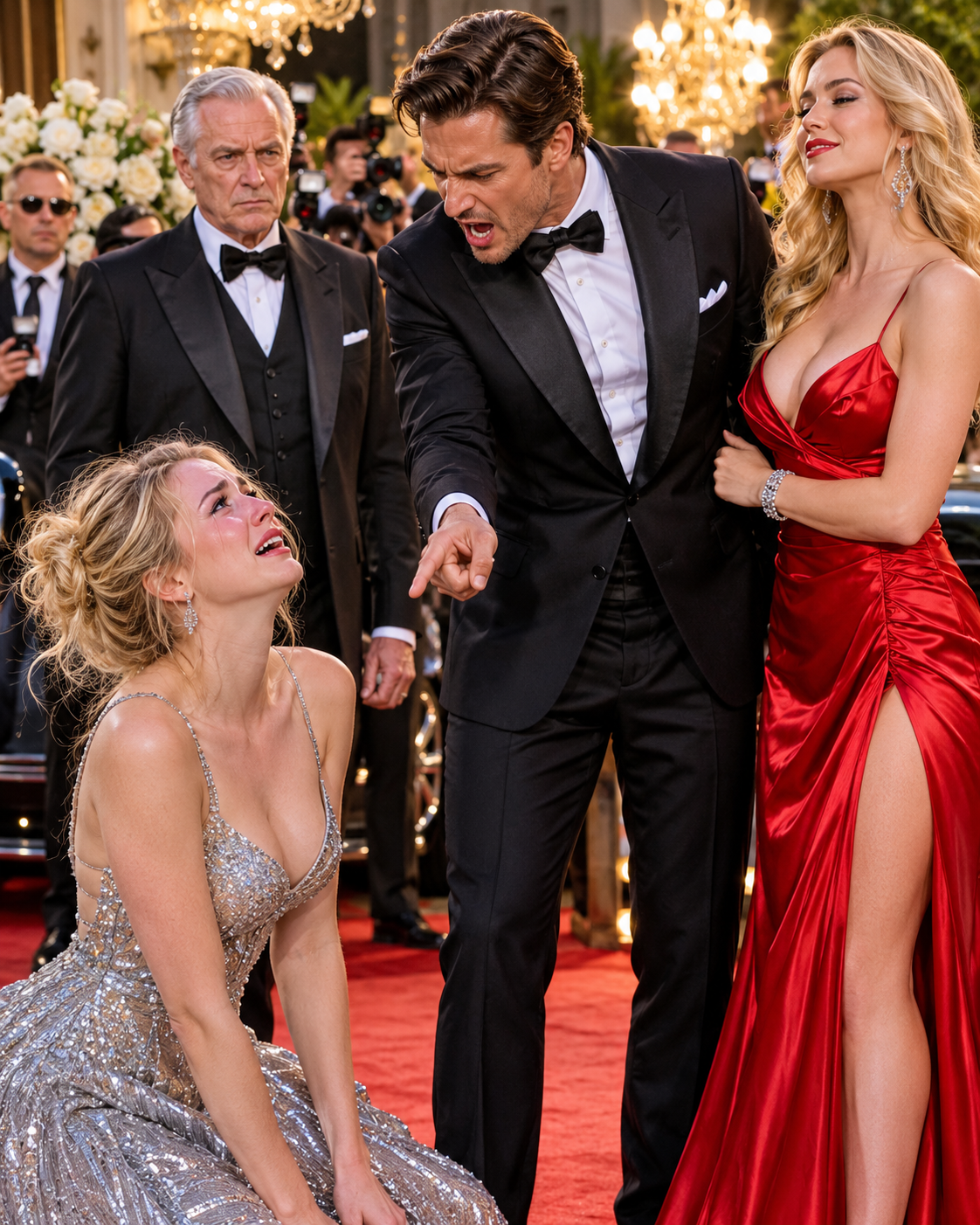
Now he looked at her as if even the quieter version of Claire was unbearable.
Grant gestured toward security.
“Take her around.”
Something inside Claire suddenly became still.
“Excuse me?”
He finally met her eyes directly.
Not with affection.
Not with regret.
With irritation.
“You heard me.”
An event staff member approached, looking uncertain.
“Mrs. Bennett?”
Claire remained where she was.
Grant put his smile back on for the cameras.
“We’re trying to keep tonight positive.”
“Positive?”
Madison moved closer to Grant.
“Come on. They’re waiting.”
And then Grant made the mistake Claire would remember for the rest of her life.
He placed his palm on her shoulder and pushed her backward.
Not violently.
Just enough.
Enough to move his wife out of the photograph so his mistress could take her place.
Enough for every photographer to capture it.
Enough for Claire to see exactly what she had become in his eyes.
Disposable.
The crowd began murmuring.
Grant rested his hand on Madison’s waist.
“There,” he said quietly. “Better.”
Claire stared at the two of them beneath the illuminated archway.
Then something unexpected happened.
The humiliation burning inside her stopped.
It turned cold.
Clear.
Useful.
Grant had no idea who Claire had been before she met him.
Not really.
He knew she had grown up “comfortable.”
He knew her parents were wealthy.
He believed her father had supposedly retired somewhere in Vermont.
That was the story Claire had given him when they met at a small gallery opening in Santa Monica.
Most of it had been intentional.
Because before marriage, Claire’s legal name had not been Claire Dawson, as Grant believed.
It had been Claire Whitmore.
And her father had never retired to Vermont.
PART 2
Samuel Whitmore controlled Whitmore Holdings, a private industrial and real estate empire so enormous that journalists had spent decades attempting to determine its actual value.
Claire had walked away from that world at twenty-four.
Not because she despised her father.
But because she hated what carrying his name did to people.
Men became interested before she even spoke.
Friends became calculating.
Strangers suddenly arrived with business proposals.
Even her college boyfriend had casually suggested that her father could “probably help” with a startup after only three dates.
So Claire left.
She took her mother’s maiden name.
She rented a modest apartment.
She found work at an art restoration studio.
She met Grant when he was still trying to persuade investors to put five million dollars into a struggling private equity firm.
He hadn’t known who she was.
That was what had attracted her.
For once, Claire believed someone wanted her.
Not Whitmore money.
Not Whitmore access.
Her.
What she hadn’t realized was that Grant didn’t need to know she was powerful to resent her.
He only needed to think she wasn’t.
A reporter called out, “Claire, any comment?”
She turned toward the voice.
Grant stiffened.
He was expecting tears.
Instead, Claire smiled.
Not for him.
For herself.
“Yes,” she said.
The microphones rose toward her.
Grant’s expression changed.
“Claire.”
She didn’t acknowledge him.
“My only comment is that tonight has been extremely educational.”
Someone laughed nervously.
The sound died almost at once.
A black town car had pulled to the curb behind the photographers, its arrival so quiet that most of the crowd noticed it only when the rear door opened. Samuel Whitmore stepped out. He was sixty-three, silver-haired, wearing a tuxedo that had been cut in London three weeks earlier and a watch whose face never appeared in any public photograph. He did not look at the cameras. He looked at his daughter.
Claire had not called him. She had not needed to. The gala’s security feed had been routed, for the past four years, through a monitoring contract held by a Whitmore subsidiary. The moment Grant’s hand met her shoulder, an alert had reached the car three blocks away.
Samuel crossed the carpet in six unhurried strides. The photographers parted without being asked. When he stopped, he was close enough that Claire could smell the cedar of his cologne and the faint trace of the cigar he allowed himself once a week.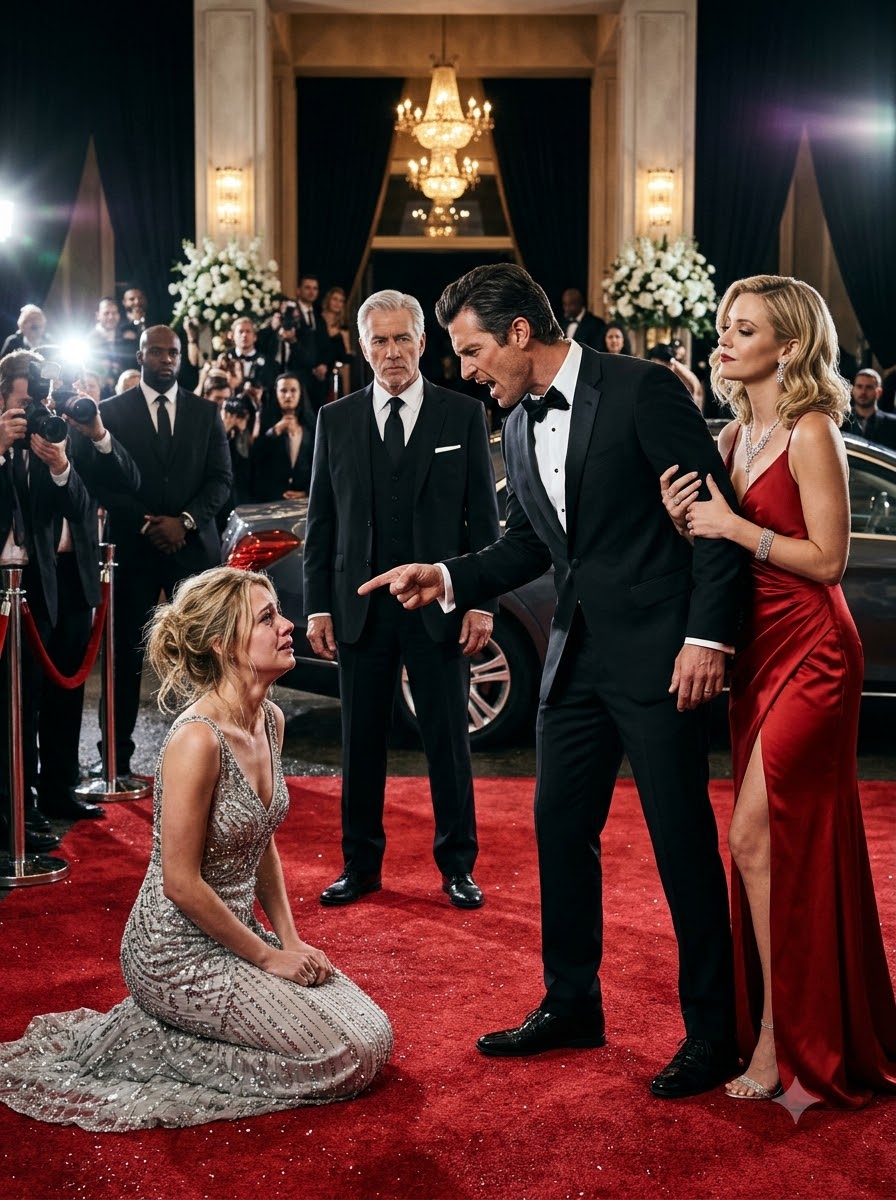
“Claire,” he said. His voice carried without effort. “Are you hurt?”
“No,” she answered.
He nodded once, then turned his head. The movement was small. Every lens that had been trained on Grant and Madison swung toward him instead.
“Mr. Whitmore?” a reporter managed. “Samuel Whitmore?”
Samuel did not answer the question. He addressed the event director who had appeared at the edge of the carpet, pale and already calculating the cost of whatever was about to happen.
“This property,” Samuel said, “the building behind you, the plaza, the parking structure, and the three blocks of street currently closed for your event, are owned by Whitmore Holdings. The gala’s primary sponsor is a foundation whose endowment is managed by the same entity. The streaming platform that employs Ms. Cole signed its distribution agreement with a company in which Whitmore Holdings holds a controlling interest. And the private equity firm that financed her series—Bennett Capital—received its largest single capital commitment eighteen months ago from a limited partner that does not appear on any public filing.”
He paused. The silence was absolute.
“That limited partner is my daughter.”
Grant’s smile had vanished. Madison’s hand was still on his arm, but her fingers had gone rigid.
Samuel continued, still speaking to the event director, though every word was meant for the microphones.
“Effective immediately, Whitmore Holdings is withdrawing its support for tonight’s event and for any future programming associated with Bennett Capital or with Ms. Cole’s production company. The capital commitment will be called. The distribution agreement will be reviewed for breach. And the security team currently employed by this venue will escort Mr. Bennett and Ms. Cole from the premises.”
He looked at Grant for the first time.
“You put your hand on my daughter,” he said. “In public. On property she owns. You will not do it again.”
Grant opened his mouth. No sound came out.
Claire stepped forward. The cold clarity that had settled over her on the carpet had not lifted; it had simply found a direction.
“Grant,” she said, “the prenuptial agreement you signed seven years ago contains a clause you never bothered to read carefully. Any public humiliation of either party, documented by third-party media, triggers an immediate dissolution with full forfeiture of marital assets acquired during the marriage. The photographs already circulating will satisfy that clause. My attorney will file in the morning.”
She turned to Madison.
“You were told the marriage was over. It will be. You were not told that the financing for your series can be withdrawn before the next episode airs. You may wish to call your agent.”
Madison’s lips parted, then closed. The ivory gown suddenly looked less like a victory and more like a costume she had been handed for a scene that had already ended.
Samuel offered Claire his arm. She took it. They walked toward the town car. Behind them the photographers continued to shoot, but the sound of the shutters had changed; it was no longer hungry. It was simply recording.
Inside the car, Samuel waited until the door closed before he spoke again.
“I told you once that leaving the name would not protect you from men who measure women by what they can take,” he said. “You disagreed.”
“I still disagree,” Claire answered. “The name didn’t fail me. I failed to use it when it mattered.”
He studied her for a moment, then nodded. “The lawyers are already drafting. The capital call goes out at nine. By noon Bennett Capital will be in technical default on three other facilities. By the end of the week the firm will be in receivership. Ms. Cole’s series will be shelved. None of that requires your further involvement unless you wish it.”
Claire looked out the window. The gala’s lights were already dimming as security began clearing the carpet.
“I want the divorce finalized before the receivership is announced,” she said. “I want the photographs entered as evidence. And I want Grant to hear, from a judge, that the only thing he ever owned in this marriage was the version of me he invented.”
“Done,” Samuel said.
They rode in silence for several blocks. Claire’s phone buzzed once—an unknown number—then went still. She did not check it.
Three weeks later the divorce was entered. The prenuptial clause held. Grant’s personal accounts were frozen pending the capital call. Madison’s series was pulled from the platform’s fall schedule; the official statement cited “creative differences.” Bennett Capital filed for bankruptcy protection on a Thursday morning. By Friday the firm’s remaining employees had been told to collect their belongings.
Claire did not attend the hearings. She returned to the restoration studio on the Monday after the gala and stayed there. The work was the same: damaged canvases, flaking pigment, the slow patience of matching a color that had faded fifty years earlier. Her colleagues did not ask questions. The internet did. She let it.
On the afternoon the receivership was announced, a single text arrived from an unknown number.
*I didn’t know.*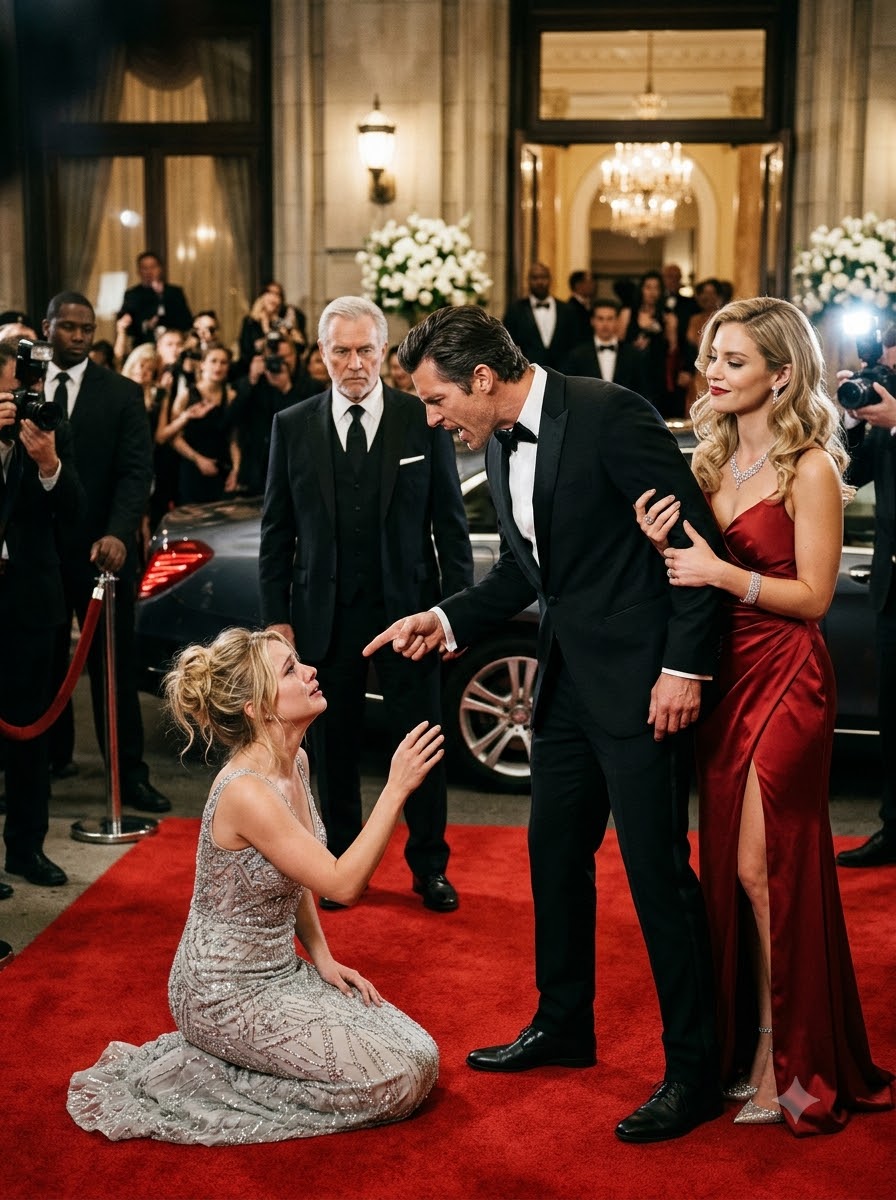
She deleted it without answering.
That evening she locked the studio, walked two blocks to a small restaurant that did not take reservations, and ate dinner alone at the bar. The bartender recognized her from the photographs but said nothing. When she finished, she left a tip large enough to cover the silence and stepped back onto the sidewalk.
The city moved around her—traffic, voices, the ordinary noise of people who had never stood on a red carpet and watched their marriage end in a single shove. Claire adjusted the strap of her bag and kept walking. The cold clarity had not left her. It had simply become something she could carry without effort, the way she carried the keys to a building no one else knew she owned, and the knowledge that the next time someone tried to move her out of a photograph, the ground beneath their feet would already belong to her.
