

Officer Dana Whitlock was already shouting before Mayor Camille Brooks realized the words were meant for her.
“Hey! Stop right there!”
Camille kept walking for another half step, then turned on the sunlit sidewalk of Hawthorne Grove, one of the oldest neighborhoods in Bellhaven, Virginia.
A white patrol cruiser sat crooked at the curb behind her, emergency lights flashing even though there was no traffic, no accident, and no visible emergency.
Dana strode toward her with one hand resting beside her duty belt.
“I said stop.”
Camille looked behind herself, almost expecting another person to be standing there.
She wore tan slacks, a navy polo shirt, comfortable walking shoes, and no jewelry except a small silver watch.
Nothing about her appearance suggested she was on her way to a government building, and that morning she had deliberately left her security detail, city vehicle, and mayoral lapel pin behind.
“Are you talking to me?” Camille asked.
Dana stopped several feet away.
“Who else would I be talking to?”
Camille studied her.
The officer was perhaps forty, blond hair pulled tightly behind her head, shoulders squared with the confidence of someone who expected instructions to become obedience the moment they left her mouth.
Her nameplate read WHITLOCK.
“What seems to be the problem, Officer Whitlock?”
Dana’s eyes narrowed slightly.
“What are you doing in this neighborhood?”
Camille almost smiled because the question sounded so absurdly broad.
“Walking.”
“I can see that.”
“Then I’m not sure what you’re asking.”
Dana stepped closer.
“Where are you going?”
“Down Hawthorne Avenue.”
“To what address?”
Camille looked at her for a moment.
“Why?”
That single word changed Dana’s expression.
“Because I asked.”
Across the street, an elderly man watering hydrangeas lowered the hose.
A woman carrying grocery bags slowed beside a parked Volvo, and somewhere farther down the block a lawn mower went quiet.
Camille noticed all of it.
She also noticed Dana had never asked whether she needed help.
Had never said someone reported a crime.
Had never described suspicious conduct.
The officer had looked at her, chosen a conclusion, and started building questions around it.
“Am I being detained?” Camille asked.
Dana gave a short laugh.
“Here we go.”
Camille’s face remained neutral.
“That’s a simple question.”
“No, it’s something people say when they’ve been watching too many videos.”
“Am I free to continue walking?”
Dana moved into her path.
“Not until I figure out what you’re doing here.”
Camille’s stomach tightened.
For the previous three months, residents in Bellhaven had been telling her office variations of this exact story.
Black homeowners questioned while collecting mail, Latino landscapers ordered to prove they worked at houses they were standing beside, teenagers stopped for walking through developments where officers decided they “looked out of place.”
The complaints were never identical, and most were dismissed individually because each officer could articulate some vague reason for concern.
Camille had spent weeks asking whether the problem was real or whether frustration was making unrelated encounters look connected.
That was why she was walking Hawthorne Grove alone.
The city had recently funded sidewalk repairs, new lighting, drainage work, and a small community center renovation in the area, and Camille liked visiting projects without cameras whenever possible.
More privately, three complaints about selective police stops had come from these six blocks alone.
She wanted to see the neighborhood without everybody performing for the mayor.
Apparently, she was.
“I live in Bellhaven,” Camille said.
Dana looked her up and down.
“That’s not what I asked.”
“I’m walking on a public sidewalk.”
“And I’m investigating suspicious activity.”
Camille’s voice changed slightly.
“What suspicious activity?”
Dana hesitated.
It lasted less than a second, but Camille noticed.
“We received concerns about someone walking around looking at houses.”
“From whom?”
“That’s not information you need.”
“What did the caller say the person did?”
Dana’s jaw tightened.
“You ask a lot of questions.”
“I’m trying to understand why you stopped me.”
“People around here have had problems.”
“What problems?”
“Break-ins. Package theft. Cars being checked.”
Camille nodded toward the row of restored Craftsman homes.
“Was a crime reported today?”
Dana did not answer directly.
“Identification.”
Camille remained still.
“Do you have reasonable suspicion that I committed a crime?”
Dana smiled without warmth.
“You don’t get to run this stop.”
“I’m not trying to.”
“Then give me your ID.”
Camille considered complying simply to end the encounter.
Her driver’s license carried her full name, and there was a good chance Dana would recognize it.
But something inside her resisted the convenience.
Every resident who had complained to City Hall had faced the same choice.
Make it easy.
Answer the extra question.
Hand over identification.
Explain where you live.
Explain why you belong.
Perhaps nothing bad happens.
Perhaps the officer leaves.
Then the report says voluntary contact.
Camille looked toward Dana.
“I’m not carrying identification.”
That was technically true.
Her wallet was back in the city SUV three blocks away with her security officer, who believed she was spending twenty minutes inspecting landscaping work before meeting him at the community center.
Dana’s eyes hardened.
“You’re walking through an expensive neighborhood without ID?”
There it was.
Camille tilted her head.
“Is identification required to walk through expensive neighborhoods?”
“Don’t twist my words.”
“I repeated them.”
Dana stepped closer.
“Where do you live?”
“Bellhaven.”
“Where?”
“Does that determine whether I’m allowed on this sidewalk?”
Dana inhaled sharply through her nose.
“You need to lose the attitude.”
Camille had been called difficult in council meetings, cold during negotiations, aggressive by opponents, and arrogant by at least three newspaper columnists.
She had survived a gubernatorial campaign, two federal investigations into city contracts, one divorce, and enough political insults to make the word attitude almost charming.
Still, hearing it here felt different.
Because Dana did not know who she was.
The officer believed she was talking to an ordinary Black woman.
That made the contempt cleaner.
More useful.
And much uglier.
“I have not raised my voice,” Camille said. “I haven’t insulted you. I haven’t interfered with anything.”
“You’re refusing to cooperate.”
“With what investigation?”
Dana pointed toward a house behind Camille.
“How do I know you’re not casing that property?”
Camille looked at the porch.
“You don’t.”
Dana seemed pleased.
“Exactly.”
“You also don’t know that I am.”
The satisfaction disappeared.
“That’s why I’m asking questions.”
“And I’m answering.”
“No, you’re being evasive.”
Camille shook her head.
“I told you what I’m doing. I’m walking.”
Dana moved even closer.
“People who belong in this neighborhood don’t usually act nervous when police talk to them.”
Camille stared at her.
The elderly man across the street shut off his hose.
“People who belong here?” Camille repeated.
Dana looked briefly toward the witnesses.
“I said residents usually cooperate.”
“No.”
Camille’s voice became quieter.
“You said people who belong here.”
Dana’s face reddened.
“You know what I meant.”
“I would like you to explain it.”
“Enough.”
“Explain what someone who belongs here looks like.”
Dana reached toward Camille’s arm.
“Turn around.”
Camille stepped back.
“Do not touch me.”
“Hands behind your back.”
“For what?”
“Obstruction.”
“Obstruction of what?”
Dana grabbed her wrist.
Camille pulled instinctively.
The officer’s grip tightened.
“Stop resisting.”
“I am not resisting. Let go of me.”
“You pulled away.”
“Because you grabbed me without explaining why.”
Dana twisted Camille’s arm behind her.
Pain shot through Camille’s shoulder.
The woman carrying groceries dropped one bag onto the grass and took out her phone.
Camille heard herself breathe differently.
Slow.
Measured.
She had learned that rhythm decades earlier from her father.
Four counts in.
Four out.
Stay inside the facts.
“Officer Whitlock,” Camille said carefully, “you need to release my arm.”
Dana gave a bitter laugh.
“You really think you’re in charge here.”
Camille looked over her shoulder.
“Yes.”
That answer seemed to infuriate the officer.
Dana pulled her toward the patrol cruiser.
“Hands behind your back.”
Camille planted neither foot.
She did not fight.
She did not make it easy either.
“You are making a serious mistake.”
“I hear that from everybody.”
“You haven’t heard it from me before.”
Dana pulled out handcuffs.
Across the street, the elderly man finally spoke.
“Officer, she wasn’t doing anything.”
Dana turned her head.
“Sir, stay out of this.”
“She was walking.”
“Go back inside.”
The man did not.
Camille recognized him now.
Arthur Bell, retired high-school principal.
He had introduced her at a veterans breakfast two years earlier.
Apparently Dana did not know that either.
Arthur stared at Camille, then at the officer.
His face changed as recognition reached him.
“Officer.”
Dana ignored him.
Arthur stepped toward the curb.
“You need to look at who you’ve got.”
Dana snapped around.
“Stay back!”
Arthur raised both hands.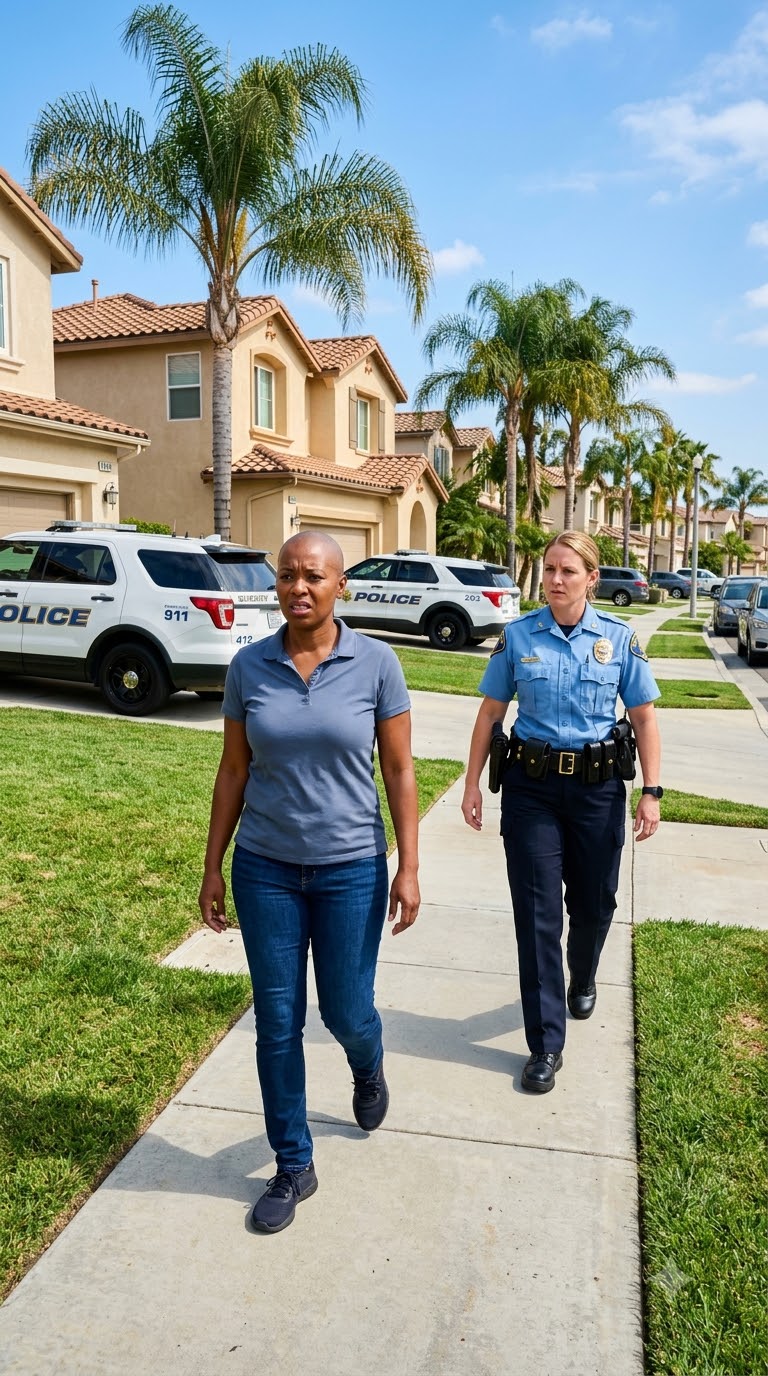
Camille met his eyes and shook her head slightly.
Do not tell her.
Not yet.
Arthur understood.
He remained where he was.
Dana closed one handcuff around Camille’s left wrist.
Metal tightened.
Camille looked down at it.
“Officer Whitlock.”
“What?”
“My name is Camille Brooks.”
Dana barely reacted.
“Great.”
Camille waited.
Nothing.
Interesting.
“You have heard that name before.”
Dana pulled the second wrist behind her.
“Everybody thinks they’re somebody.”
Camille almost laughed.
Almost.
Then Dana tightened the cuff.
Pain replaced humor.
Camille looked directly at her.
“I am the mayor of Bellhaven.”
The street went silent.
Even the lawn mower farther away seemed to stop again.
Dana stared at her.
For perhaps two seconds, there was nothing in her expression.
Then she laughed.
Not nervously.
Dismissively.
“Sure.”
Camille blinked.
“I am Mayor Camille Brooks.”
“You’re the mayor.”
“Yes.”
Dana looked at her polo shirt and walking shoes.
“Of course you are.”
Arthur Bell spoke again.
“She is.”
Dana’s head turned.
“What?”
“That woman is Mayor Brooks.”
The grocery woman stepped closer.
“Oh my God.”
Dana looked from Arthur to Camille.
Then toward the woman recording.
Uncertainty finally appeared.
She reached for her radio.
Camille said, “Before you call anyone, activate your body camera.”
Dana froze.
Arthur looked at her chest.
No light.
Camille’s stomach sank.
“You turned it off.”
Dana’s hand moved toward the camera.
“I must have forgotten to activate.”
“Do not change anything before a supervisor arrives.”
Dana’s face hardened again, but fear had entered now.
“You don’t give me orders.”
Camille looked at the handcuffs.
“No.”
Then she met Dana’s eyes.
“But I do appoint the police chief.”
That was the first moment Dana truly understood.
Her face emptied.
The handcuffs came off so quickly one caught Camille’s watch.
“I—I didn’t know.”
Camille rubbed her wrist.
“No.”
Dana swallowed.
“I had a report.”
“No, you had an assumption.”
“Ma’am—”
“Do not call me ma’am now because you know my title.”
Dana looked as though she had been slapped.
Camille continued.
“Talk to me the way you were talking to me sixty seconds ago.”
Nobody on the street moved.
Dana could not.
That silence answered more than an apology could have.
A second patrol cruiser arrived.
Sergeant Luis Mendoza stepped out.
He saw Camille.
Stopped.
Then looked toward Dana.
“What happened?”
Dana began quickly.
“Sergeant, I received a suspicious-person call involving a woman possibly casing residences, she refused identification, became confrontational, then claimed—”
Camille interrupted.
“Separate us.”
Luis looked toward her.
“Mayor—”
“Separate us and investigate.”
He understood immediately.
Dana did not.
Luis directed another officer to stand with her near the cruiser.
Then he approached Camille.
“You hurt?”
“My shoulder.”
“Medical?”
“Not yet.”
Luis looked toward her wrists.
Red marks were already forming.
“We need EMS.”
Camille nodded.
“Fine.”
“Can you tell me what happened?”
“Yes.”
“And Mayor?”
She looked at him.
“I’m going to treat this like I would any other complaint.”
“That is exactly what I want.”
Luis asked her to sit on a low retaining wall.
Camille refused.
“I’d rather stand.”
He began taking notes.
The first surprise came through dispatch.
There had been a call.
But it did not match Dana’s description.
A resident named Harold Finch had reported seeing “someone unfamiliar walking slowly and stopping near several houses.”
The dispatcher asked whether the person tried doors.
No.
Touched vehicles?
No.
Entered property?
No.
Spoke to anyone?
No.
Harold admitted he was calling because package theft had occurred somewhere nearby the previous month.
The description was a Black woman wearing a dark shirt and tan pants.
That was it.
No burglary.
No active theft.
No aggressive behavior.
Luis listened to the dispatch recording twice.
Then he looked toward Dana.
Her report of “possible casing tied to current burglary activity” had expanded significantly beyond what was actually called in.
A third cruiser arrived.
Then a fourth.
Camille’s security officer, Darren Cole, finally reached the block after hearing her name over radio traffic.
He walked toward her rapidly.
“Mayor.”
“I’m fine.”
He looked at the wrist marks.
“You’re not.”
“Darren.”
His jaw tightened.
Camille lowered her voice.
“Do not make this worse.”
He stopped.
Darren had served eight years as a state trooper before joining the mayoral protection detail.
Every instinct told him to take control.
Camille gave him one instruction.
“Call Chief Lawson.”
Darren nodded.
Police Chief Henry Lawson arrived twelve minutes later.
No sirens.
No lights.
He stepped from an unmarked SUV, took one look at Camille’s wrists, and closed his eyes for half a second.
Then he did something that made her respect him.
He did not apologize first.
He turned to Sergeant Mendoza.
“Status.”
Luis summarized.
Citizen call.
Minimal observed conduct.
Officer contact.
No body-camera activation.
Detention.
Force.
Identity reveal.
Witnesses.
Doorbell video from Arthur Bell’s house.
Cell-phone recording from the grocery woman.
Henry listened.
Then looked toward Dana.
“Relieve her of field duty.”
Dana’s face collapsed.
“Chief.”
“Not terminated.”
Henry’s voice remained controlled.
“Relieved pending investigation.”
She looked toward Camille.
The mayor said nothing.
Dana’s eyes filled.
“I really didn’t know who she was.”
Henry stared at her.
“That may become the worst part.”
Dana’s mouth opened.
Nothing came out.
Camille almost felt sorry for her.
Almost.
Then she remembered the sentence.
People who belong in this neighborhood.
The EMT examined Camille’s shoulder.
No dislocation.
Likely strain.
The wrist marks would fade.
The story would not.
By evening, Arthur’s doorbell footage and the grocery woman’s phone video were online.
The clip everyone shared started too late.
Dana had Camille against the cruiser.
Arthur shouted that she was the mayor.
Dana removed the cuffs.
The footage made the incident look like a spectacular reveal.
WHITE COP HANDCUFFS BLACK WOMAN — FINDS OUT SHE’S THE MAYOR.
Camille hated the headline immediately.
Her communications director, Nina Wallace, found her in City Hall.
“It’s everywhere.”
“I know.”
“National.”
“I know.”
“You need to make a statement.”
“Tomorrow.”
“Tonight would control the narrative.”
Camille looked at her.
“I’m not controlling anything tonight.”
Nina paused.
Camille removed her jacket.
“The officer lost control because she decided controlling the narrative mattered more than gathering facts.”
She sat down.
“I’m not repeating the lesson.”
Nina nodded.
The next morning, reporters packed the City Hall press room.
Everyone expected outrage.
Some expected Camille to announce Dana’s firing.
A few expected resignation demands for Chief Lawson.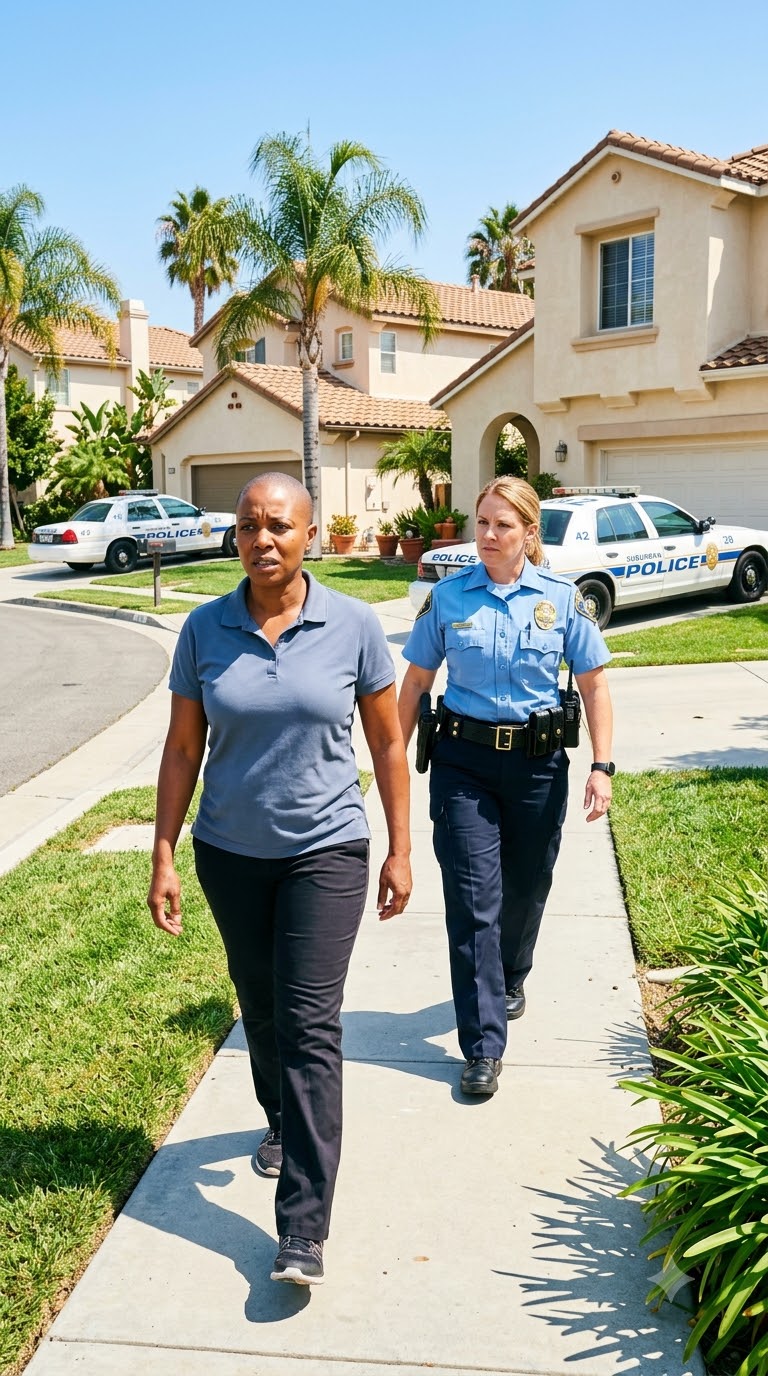
Camille walked to the podium without prepared remarks.
“The officer who stopped me yesterday did not know I was mayor.”
Cameras clicked.
“That sentence is not a defense.”
The room became quiet.
“It is the reason this matters.”
Reporters leaned forward.
“If Officer Whitlock had recognized me immediately, yesterday probably becomes a polite thirty-second conversation.”
Camille paused.
“She did not recognize me.”
“So I experienced the version of policing she believed was appropriate for a Black woman whose name meant nothing to her.”
Silence.
A reporter called out.
“Do you believe the stop was racist?”
“Yes.”
The answer came without hesitation.
Murmurs moved through the room.
Camille continued.
“I do not need to know what is inside Officer Whitlock’s heart to evaluate her decisions.”
“She questioned whether I belonged in a neighborhood because I was walking while Black.”
“She treated questions as attitude.”
“She demanded identification without clearly articulating criminal conduct.”
“She escalated when I asked whether I was detained.”
“And she became polite only after learning my office.”
Another reporter raised a hand.
“Will you fire her?”
“No.”
That surprised people.
“I am the mayor.”
Camille looked toward the cameras.
“I am not the Internal Affairs investigator, hearing officer, police chief, prosecutor, or union arbitrator.”
She paused.
“If I personally order the firing of someone who put handcuffs on me, I make the investigation about my power.”
“This should be about her conduct.”
The quote spread even faster than the original video.
Dana Whitlock was placed on administrative leave.
The investigation began.
Then came the first major twist.
Camille had not been walking through Hawthorne Grove randomly.
Three months earlier, her office had received seventeen complaints alleging selective pedestrian stops across Bellhaven.
Five involved Dana Whitlock.
Camille had not known Dana’s name when the stop began.
The complaints had been anonymized in the mayor’s summary packet because Chief Lawson did not want elected officials interfering in specific personnel matters before review.
But once Internal Affairs opened the full files, the pattern became unmistakable.
A Black nurse stopped while walking from a night shift.
A Latino college student questioned while waiting for an Uber.
A Black father approached while pushing his daughter’s bicycle home.
An interracial couple challenged after walking through an expensive development after dinner.
A sixteen-year-old Black girl questioned outside the library because Dana believed she looked “nervous.”
Five complaints.
None sustained.
Each explained individually.
Dana had reasonable concerns.
Citizen report.
High-theft area.
Officer safety.
Uncooperative behavior.
No single case had been enough.
Together, they looked different.
Chief Lawson called Camille late that night.
“You need to know something.”
“I’m listening.”
“Whitlock appears repeatedly.”
“How repeatedly?”
“Five prior complaints in eighteen months.”
Camille closed her eyes.
“Why didn’t our system flag that?”
“It did.”
She opened them.
“What?”
Henry sounded tired.
“Supervisor review cleared each one.”
“Same supervisor?”
A pause.
“Yes.”
“Who?”
“Captain Roger Delaney.”
Camille knew him.
Delaney had commanded the Central District for six years.
Strong numbers.
Good political instincts.
Respected by neighborhood associations.
Frequently praised for reducing property crime.
Camille sat back.
“Keep going.”
Henry did.
Dana’s pedestrian-contact numbers were among the highest in the district.
Delaney praised them.
Internal emails encouraged officers to “own the sidewalk” and “challenge unfamiliar activity before it becomes crime.”
One email was more specific.
Affluent neighborhoods are being targeted because offenders assume residents are too polite to question outsiders. Be proactive.
Another:
If someone doesn’t look like they have a reason to be there, find out why.
Camille stared at nothing.
There it was.
The sentence had moved from email to sidewalk.
Not literally.
Culturally.
Dana had learned that suspicion itself counted as productivity.
And Delaney rewarded officers who produced it.
The second twist came from Sergeant Mendoza.
He requested an interview with Internal Affairs voluntarily.
He brought records.
Months earlier, he had raised concerns about Dana’s stops.
He emailed Delaney after watching body-camera footage from an encounter involving a Black teenager.
Luis wrote:
We are treating refusal to answer optional questions as escalation. This is going to become a problem.
Delaney replied:
Stop overthinking street work. Whitlock gets results.
Luis saved it.
Why had he done nothing more?
Internal Affairs asked.
His answer was uncomfortable.
“I wanted lieutenant.”
He sat in the interview room staring at his hands.
“Delaney controls recommendations.”
“So you stayed quiet?”
“Yes.”
“Do you believe that contributed to the problem?”
Luis looked up.
“Yes.”
The admission did not make him innocent.
It made the system visible.
A culture does not require everyone to behave badly.
It often needs only one aggressive person, one supervisor who rewards it, and several decent people who decide the cost of objecting is inconvenient.
Camille read Luis’s interview summary three days later.
It bothered her almost as much as Dana.
She requested a citywide audit.
Not of one officer.
Pedestrian stops.
Discretionary encounters.
Body-camera activation.
Complaint patterns.
Supervisor review.
Demographic outcomes.
Chief Lawson agreed.
The police union immediately accused City Hall of exploiting a personal incident.
Camille understood the criticism.
That was why the audit went to an outside firm.
Six weeks later, preliminary findings arrived.
Black residents made up twenty-nine percent of Bellhaven’s population.
They accounted for fifty-four percent of documented pedestrian investigative contacts.
In Hawthorne Grove and two other affluent neighborhoods, the disparity was larger.
Most contacts produced no citation, arrest, weapon recovery, warrant, or stolen property.
They produced names.
Questions.
ID checks.
Body-camera footage.
Official records proving that officers had been busy.
Camille read the report alone.
A terrible possibility entered her mind.
Her administration had celebrated those activity numbers.
At budget hearings, she herself had praised proactive policing.
She had repeated charts showing increased officer-initiated contacts.
She had never asked enough about who was being contacted or what those contacts produced.
That became the twist she could not blame on Dana.
Camille had helped reward the system too.
At the next city council hearing, Councilman Evan Price asked the question publicly.
“Mayor Brooks, did your administration support the metrics that encouraged high officer-initiated contact?”
Camille looked toward the council bench.
“Yes.”
The room shifted.
“Did you approve performance bonuses tied partly to proactive activity?”
“Yes.”
“Then isn’t it convenient to blame one officer now?”
Camille did not flinch.
“Yes.”
Evan stopped.
She continued.
“It would be convenient.”
He stared.
“That is why I’m not doing it.”
Camille looked toward the audience.
“Officer Whitlock owns her decisions.”
“Captain Delaney owns his supervision.”
“Chief Lawson owns department systems.”
“And I own the policies my administration rewarded.”
No one moved.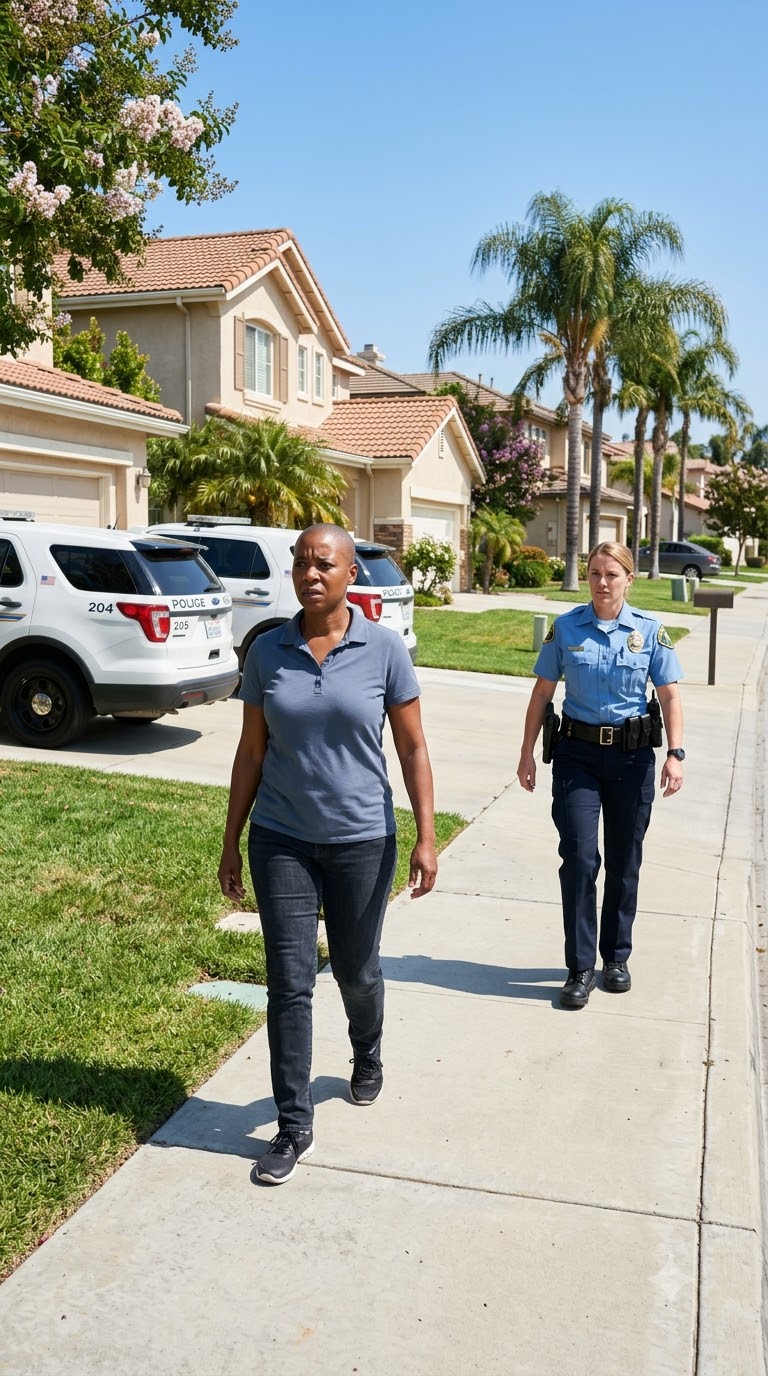
“If I make this story about one racist officer, I protect everybody else who helped create the environment where her behavior looked productive.”
That clip changed the political conversation.
Some supporters hated it.
Admitting responsibility looked dangerous.
Camille believed hiding it was more dangerous.
The final investigation took five months.
Dana was not fired because she embarrassed the mayor.
She was fired because evidence showed repeated unjustified detentions, failure to activate body camera, inaccurate articulation of suspicion, policy violations involving force, and a pattern of conduct inconsistent with department standards.
Her union appealed.
An independent hearing officer upheld the termination.
Captain Roger Delaney was removed from command.
The city found he had repeatedly minimized complaint patterns, rewarded raw contact numbers, and discouraged supervisors from questioning aggressive stops.
He retired before final disciplinary proceedings concluded.
That frustrated Camille.
Legal limits frustrated everybody eventually.
Sergeant Luis Mendoza received formal discipline for failing to elevate concerns.
He lost his lieutenant recommendation for a year.
Some officers called that unfair.
Luis disagreed.
“I wanted the promotion badly enough to stay quiet.”
He told recruits later.
“So losing time on the promotion is probably the cleanest consequence I got.”
Chief Lawson kept his job.
That decision caused controversy.
Camille defended it.
Not because Henry was blameless.
Because he accepted the audit, opened data, changed systems, and did not protect Delaney when evidence became ugly.
Accountability did not always mean removing everyone connected to failure.
Sometimes it meant making people repair what they should have noticed earlier.
Bellhaven rewrote its pedestrian-contact policy.
Officers could still approach people consensually.
They could still investigate crime.
But reports now required specific observed behavior rather than vague phrases like out of place, unfamiliar to area, or did not appear to belong.
Repeated contacts producing no enforcement outcome triggered review.
Body-camera failures during investigative contacts created automatic supervisory flags.
The city also eliminated raw pedestrian-contact volume from performance metrics.
Camille insisted on one more change.
The police academy added a question to every scenario evaluation.
What new fact would make you change your original assumption?
Some instructors thought it sounded philosophical.
Camille thought it sounded practical.
If the answer was nothing, the problem was no longer investigation.
It was certainty.
Months after Dana’s termination, Camille received a letter.
It came through the city attorney.
Dana had written it.
The first page was defensive.
Stress.
Crime concerns.
Poor training.
A demanding supervisor.
Media pressure.
Camille almost stopped reading.
Then the tone changed.
Dana wrote that the disciplinary hearing forced her to watch the full neighborhood footage repeatedly.
Not the viral clip.
Everything.
Camille walking.
Dana approaching.
Question after question.
Camille staying calm.
The word belong.
The handcuffs.
Then the reveal.
Dana wrote:
I keep asking myself why the moment you said you were mayor changed my behavior when nothing else about you had changed.
Camille read the sentence twice.
Dana continued.
I believed I was protecting a neighborhood from someone suspicious. The second I learned you were mayor, I saw the same actions differently. Your questions became reasonable. Your clothes looked professional. Your confidence looked justified instead of confrontational.
Another sentence followed.
That means the problem was not what you were doing. It was who I thought you were.
Camille placed the letter on her desk.
For the first time since Hawthorne Grove, anger loosened slightly.
Not disappeared.
Changed.
Dana ended with no request for reinstatement.
No request for forgiveness.
She wrote:
I do not know whether I deserve another career in public service. I know I should never again need somebody’s title before I treat them like they belong.
Camille answered only once.
Officer Whitlock, the most useful part of your letter is that you identified the moment your interpretation changed. Keep asking why.
She signed:
Camille Brooks.
Not Mayor.
A year after the stop, Camille returned to Hawthorne Grove.
No cameras.
No security visible.
Darren followed at a distance because he had finally accepted that “give me space” did not mean disappear completely.
Arthur Bell was watering the same hydrangeas.
He laughed when he saw her.
“You planning to cause trouble again?”
Camille smiled.
“I’m considering it.”
Arthur pointed toward the sidewalk.
“Looks dangerous.”
“Very.”
They talked for ten minutes.
Then Camille continued walking.
A patrol cruiser came down the street.
Her body tightened before she could stop it.
The cruiser slowed.
Officer inside raised two fingers in greeting.
Then continued.
Camille exhaled.
Arthur had noticed.
“Still gets you.”
“Yes.”
He nodded.
“That’s the part videos don’t show.”
Camille looked toward the disappearing cruiser.
“No.”
They never did.
The shoulder pain vanished within weeks.
The wrist marks disappeared within days.
The reflex lasted longer.
That surprised her.
Camille had spent twenty years in public life.
She believed herself difficult to intimidate.
Yet for months after Hawthorne Grove, seeing a police vehicle approach while she was walking created a moment of calculation.
Did I do something?
Do they recognize me?
Do I have identification?
Then she would become angry at herself.
Eventually she stopped.
Mostly.
Two years later, Bellhaven’s audit showed pedestrian contacts had declined substantially.
Crime did not increase.
That mattered.
Officers still made arrests.
Recovered weapons.
Investigated burglaries.
Stopped vehicles.
Responded to calls.
They simply conducted fewer encounters that began and ended with nothing except someone being forced to explain why they existed in a particular place.
Some officers initially complained that leadership had made them afraid to police.
Then younger supervisors found something interesting.
When they demanded clearer reasons before stops, officers became better at articulating actual suspicious behavior.
Better reports.
Better prosecutions.
Fewer useless arguments.
Sergeant Mendoza eventually became lieutenant.
Not automatically.
Not because Camille asked.
An independent promotion board selected him.
His interview included a question about Hawthorne Grove.
“What did you learn?”
Luis answered:
“That seeing something wrong is not the same as doing something about it.”
The board member asked, “And?”
He paused.
“Career ambition can make cowardice look professional.”
He got the promotion.
Years later, Luis still used the case when training supervisors.
He never described himself as the hero who helped fix the department.
He pointed to his own email.
Then Delaney’s response.
Then months of silence.
“I knew.”
He told new sergeants.
“That’s the uncomfortable part.”
The Hawthorne Grove video remained online.
Camille stopped watching it.
Other people did not.
Every few months, someone reposted the same dramatic moment.
Dana grabbing Camille.
Arthur shouting.
She’s the mayor!
Dana’s expression changing.
Handcuffs coming off.
Millions of views.
People loved the reversal.
WRONG BLACK WOMAN.
SHE PICKED THE MAYOR.
CAREER OVER IN THREE SECONDS.
Camille hated those captions.
At a university forum, a student finally asked why.
“Because they teach the wrong lesson.”
“What lesson?”
“That Officer Whitlock’s mistake was failing to recognize me.”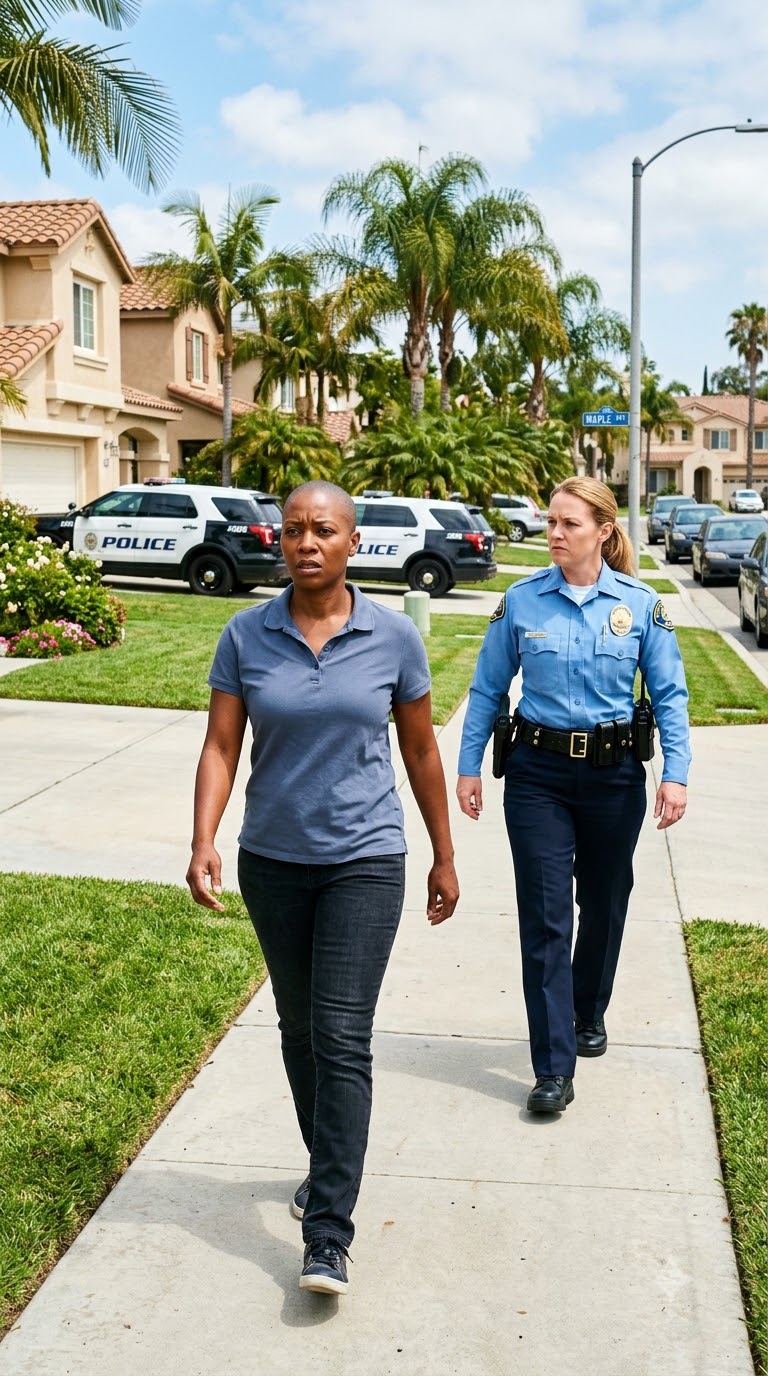
Camille looked around the auditorium.
“That was not her mistake.”
The student waited.
Camille continued.
“Her mistake was believing an ordinary Black woman needed a better reason to be on that sidewalk than an ordinary white resident would have needed.”
Another student raised a hand.
“But being mayor made accountability possible.”
“Faster.”
Camille nodded.
“That should bother you.”
The room became quiet.
“If I had been a home-health aide walking to a patient’s house, the stop should still have required facts.”
“If I had been unemployed, same thing.”
“If I had been visiting a cousin.”
“Delivering food.”
“Lost.”
“Walking because I liked the houses.”
She paused.
“Same constitutional protections.”
A professor asked whether she regretted revealing her identity.
“No.”
“Why?”
“Because it happened.”
Camille smiled.
“I’m not interested in rewriting the scene into a better morality play.”
“What do you regret?”
“That my title worked.”
Several people looked confused.
Camille explained.
“I said I lived in Bellhaven.”
No change.
“I said I was walking legally.”
No change.
“I asked what crime she suspected.”
No change.
“I stayed calm.”
No change.
“Then I said I was mayor.”
Camille snapped her fingers lightly.
“Everything changed.”
She looked across the auditorium.
“That is power.”
“And if we only celebrate power when it rescues the person we like, we never ask what happens to the person without it.”
The applause came slowly.
Camille almost wished it had not come at all.
Some truths sounded better in silence.
Her second mayoral term ended four years after Hawthorne Grove.
She chose not to run again.
People assumed the police incident drove the decision.
It contributed.
Mostly, Camille was tired.
Politics had a way of making every human experience public property.
She wanted mornings that belonged to her again.
After leaving office, she joined a nonprofit working on local government accountability and public-sector leadership.
No security detail.
No city SUV.
No four-year election calendar.
She walked constantly.
Sometimes through expensive neighborhoods.
Sometimes through neighborhoods politicians only visited with cameras.
She discovered walking still taught her more than briefings.
One afternoon, she passed a group of police recruits practicing community-contact scenarios.
The academy director recognized her.
“Mayor Brooks.”
Camille laughed.
“Former.”
“You’re permanent in everybody’s head.”
“That sounds terrible.”
He invited her inside.
The recruits knew the story.
Of course they did.
Camille stood before them.
No podium.
No prepared speech.
“Tell me the most famous line.”
One recruit smiled.
“You said, ‘I’m the mayor of this city.’”
Camille nodded.
“Wrong.”
The recruit looked confused.
“That is the famous line.”
“It is not the important one.”
She looked toward the class.
“The important line happened earlier.”
Silence.
“Officer Whitlock said, ‘People who belong here usually cooperate.’”
Several recruits shifted.
Camille nodded.
“That was the whole incident.”
Not the cuffs.
Not the reveal.
Not the termination.
That sentence.
Who belongs?
Who decides?
What behavior becomes suspicious only because of who performs it?
Camille pointed toward one recruit.
“You’re walking through an expensive subdivision at noon. Somebody says you look unfamiliar. Crime?”
“No.”
“You glance at houses.”
“No.”
“You don’t carry identification.”
“No.”
“You ask whether you’re detained.”
“No.”
“You become irritated.”
The recruit hesitated.
“No.”
“Good.”
Camille smiled.
“Being irritating is still legal.”
The room laughed.
Then she became serious.
“The profession does not require you to trust everybody.”
“It requires you to know the difference between suspicion and proof.”
“Between questions and commands.”
“Between somebody making you uncomfortable and somebody giving you lawful reason to use force.”
A young woman in the front row raised her hand.
“How do you know when bias is affecting you?”
Camille thought.
“You often don’t.”
The recruit looked disappointed.
“That’s why systems matter.”
“Body cameras.”
“Supervision.”
“Partners willing to challenge you.”
“Reports that demand specific facts.”
“Data showing patterns you cannot see from one encounter.”
“And one personal question.”
Camille paused.
What new fact would make me change my mind?
The recruit wrote it down.
Camille smiled.
“If your honest answer is nothing, stop.”
Years later, Dana Whitlock’s name mostly disappeared from public discussion.
Camille did not follow her life.
She heard once that Dana had moved out of state and worked in private insurance investigations.
Someone asked whether that bothered her.
“No.”
“Why not?”
“She lost the authority she misused.”
Camille shrugged.
“I do not need her to suffer forever.”
“Do you forgive her?”
Camille thought longer.
“I don’t know.”
The interviewer seemed disappointed.
People preferred clean endings.
Camille had stopped providing them.
“I accepted her accountability.”
“That is not the same thing.”
“No.”
“Is that enough?”
“Usually.”
Arthur Bell died at eighty-seven.
Camille attended the funeral.
His daughter recognized her.
“He talked about you all the time.”
“That worries me.”
She laughed.
“He always said he almost ruined the story because he wanted to shout who you were.”
Camille smiled.
“He listened.”
“He said you gave him a look.”
“I did.”
“What did it mean?”
“Please don’t rescue me with my title.”
Arthur’s daughter became quiet.
“He understood?”
“Yes.”
“That sounds like Dad.”
After the funeral, Camille walked past Hawthorne Grove again.
The hydrangeas were gone.
New owners had replaced them with small evergreen shrubs.
The sidewalk remained.
So did the place where Dana first shouted.
Hey! Stop right there!
Camille stood there for a moment.
No one recognized the location.
Why would they?
Public memory keeps dramatic frames.
Ordinary pavement disappears.
She looked toward the houses.
Someone had left a bicycle on one lawn.
A delivery driver walked toward a porch.
A Black teenage girl came down the sidewalk wearing headphones and carrying a backpack.
Camille watched her approach.
The girl nodded politely.
Camille nodded back.
A patrol car passed at the intersection.
It kept going.
The teenager never looked up.
Camille smiled.
That was closer to victory than anything that happened the day she was handcuffed.
Not Dana’s shocked face.
Not national headlines.
Not the investigation.
Not policy documents.
A girl walking through a neighborhood without needing anyone to know who her parents were.
Camille continued down the sidewalk.
She had been mayor when Dana Whitlock grabbed her wrist.
That fact made the story famous.
But it was never what made the officer wrong.
Camille had belonged on Hawthorne Avenue before saying her name.
Before Arthur recognized her.
Before the chief arrived.
Before the cameras went viral.
Before a title turned disrespect into panic.
That was the part she spent years trying to make people understand.
A mayor should not have to reveal she is mayor to deserve dignity.
A Black woman should not need status to make her explanation credible.
And authority should never become permission to transform someone’s ordinary presence into a crime simply because they do not look like the person you expected to see.
Dana had believed the neighborhood belonged to one kind of resident.
Camille’s title shattered that assumption.
The better lesson was simpler.
The sidewalk had belonged to Camille all along.
