

My son shouted, “SHUT UP!” at me in front of his wealthy in-laws.
Then he added:
“We’re not at your little hardware store anymore.”
For forty years, that “little store” had quietly paid for his education, his architecture degree, and countless expenses he never even knew about.
I said nothing.
I simply placed my fork on the table, stood up, walked away, and stopped calling him.
Six months later, when his insurance, car payment, club membership, and two other bills suddenly became his responsibility, my son finally opened an old file I had left behind.
That was when he discovered exactly how much of the successful life he was so proud of had been quietly financed by the mother he had been embarrassed to acknowledge.
PART 1
My name is Teresa Martinez.
I am seventy-one years old, and I spent most of my adult life working behind the counter of a neighborhood hardware store in Austin, Texas.
My husband died when Alexander was five years old.
After that, there was no safety net waiting for us.
There was only work.
I sold paint, pipe fittings, lumber, tools, sealant, concrete mix, and thousands upon thousands of boxes of screws.
My hands became rough.
My back began to ache.
I learned how to repair almost anything because paying someone else to do it was usually beyond my means.
But Alexander never went without.
When I discovered his talent for drawing and design, I paid for private school.
When he decided to study architecture, I helped with his university tuition.
And when he eventually opened his own firm, I helped secure his first supplier account because no bank wanted to take a chance on a young architect whose ambition was far larger than his bank account.
I never reminded him of those things.
I never made him feel indebted to me.
I believed that was simply what mothers did.
We helped.
We sacrificed.
We didn’t keep score.
At least, that was what I believed until one Saturday evening.
Alexander and his wife, Valerie, invited me to dinner at their five-bedroom home in a gated community outside Austin.
Valerie’s parents were there too.
Her father, Richard, was a retired banker who spoke with the confidence of a man who believed every opinion he expressed belonged in a law book.
During dinner, Alexander began complaining about water leaking through the joints of his expensive outdoor terrace.
Richard immediately recommended a contractor from Dallas.
“Probably twenty or thirty thousand,” he said.
I knew exactly what the problem was.
I had seen the same thing countless times at the hardware store.
So I spoke gently.
“You may not need to replace anything. Clean the joints, reseal them properly, and use a commercial-grade waterproof coating. I still know suppliers who could save you quite a bit.”
Alexander’s expression changed immediately.
“Nobody asked you, Mom.”
Silence spread across the table.
He leaned back in his chair.
“Just keep quiet. We’re not at your hardware store.”
Valerie stared down at her plate.
Richard took another sip of wine.
Nobody said anything.
And suddenly, I understood.
Alexander wasn’t embarrassed by my advice.
He was embarrassed by me.
He was embarrassed by the store.
By my old pickup truck.
By my rough hands.
By the woman who had spent decades behind a counter selling nails and paint so that he could someday sit at tables like this one.
I slowly placed my fork beside my plate.
“Goodnight.”
Valerie looked uncomfortable.
“Alexander, maybe walk your mother out.”
He didn’t even turn toward me.
“Leave her. She’ll get over it.”
Those words followed me all the way to my truck.
I drove home without crying.
My bungalow in East Austin was small.
There were no marble countertops.
No wine cellar.
No outdoor kitchen.
But it was completely paid for.
And every room belonged to me.
I made myself a cup of chamomile tea.
Then I opened the old ledger I had kept for years to track my retirement expenses.
That was when I saw the complete list.
Alexander’s health insurance.
Part of his luxury SUV payment.
Country club dues.
Landscaping.
A professional membership.
Several smaller expenses I had quietly covered whenever he told me his firm was “temporarily tight.”
Altogether, I was spending thousands of dollars every month helping maintain a lifestyle he had apparently become too embarrassed to associate with me.
He wanted me to stay out of his life.
So I decided to respect his wishes.
The next morning, I called the bank.
One by one, I canceled every automatic payment connected to Alexander.
There was no argument.
No warning.
No threat.
Then I went into his old bedroom.
For fifteen years, I had kept it almost exactly as he had left it.
Architecture models.
Old trophies.
College books.
Photographs.
I had preserved that room because some part of me believed it meant my son would always have a place to return to.
That morning, I brought in cardboard boxes.
By lunchtime, the room was empty.
I stood in the doorway and watched sunlight stretch across the wooden floor.
For years, I had dreamed about restoring antique furniture.
I had always told myself there simply wasn’t enough room.
Now there was.
I smiled.
Alexander probably believed his elderly mother was throwing a temporary tantrum.
He had no idea three automatic payments had already been canceled.
And he had no idea the largest one would come due at the end of the month.
PART 2
The first call came four days later.
I was sanding an old oak table in the room that had once belonged to Alexander when my phone rang.
I looked at the screen.
Alexander.
I let it ring.
A minute later, he called again.
Then again.
On the fourth call, I answered.
“Hello?”
There was a pause.
“Mom, what did you do?”
I continued sanding.
“What do you mean?”
“My insurance payment didn’t go through.”
I looked at the table in front of me.
“I see.”
“Mom, don’t play games.”
“I’m not playing anything.”
“Why was the payment canceled?”
I put down the sandpaper.
“Because it was coming out of my account.”
Another silence.
“Why would you cancel it without telling me?”
I almost laughed.
“You told me to stay out of your business, Alexander.”
“That doesn’t mean you stop helping me.”
I closed my eyes.
There it was.
Not an apology.
Not an acknowledgment.
Just an expectation.
“You said you didn’t need me.”
“I never said that.”
“You told me to shut up.”
“I was angry.”
“You told me you weren’t at my hardware store anymore.”
Another silence.
Then his voice softened.
“Mom, I was embarrassed. I didn’t mean it like that.”
I looked around the room.
The old bedroom was now filled with pieces of furniture waiting for restoration.
“I think you meant exactly what you said.”
“Can we just talk about the insurance?”
“No.”
“Mom—”
“Alexander, you’re a grown man.”
I ended the call.
That evening, I expected to feel guilty.
Instead, I felt strangely calm.
The following weeks were quiet.
I went to the hardware store, although I no longer worked full-time.
I visited an antique furniture workshop twice a week.
I started restoring the oak table.
I even joined a local group for retired craftspeople.
For the first time in decades, my life wasn’t organized around Alexander’s needs.
Then, about three weeks later, another call came.
This time it was Valerie.
“Teresa, can I ask you something?”
“Of course.”
“Did you stop paying Alexander’s car?”
“Yes.”
She breathed out slowly.
“Why?”
“Because I decided it was time for him to pay his own bills.”
“You know things have been difficult with the firm.”
“I know.”
“You could have warned us.”
I stared at the unfinished table.
“Valerie, I have been paying those bills for years.”
“I know.”
Her voice became quieter.
“I didn’t realize how much.”
“I don’t think Alexander did either.”
She didn’t answer.
Then she said something I hadn’t expected.
“I’m sorry about dinner.”
I stopped working.
“For what?”
“For not saying anything.”
Her voice cracked slightly.
“I should have said something when he spoke to you that way.”
I appreciated the honesty.
“Thank you.”
After we hung up, I returned to the table.
But something had changed.
For the first time, I wondered whether Valerie knew more than she had ever told me.
A month passed.
Then another.
Alexander stopped calling.
I heard through mutual acquaintances that his firm was struggling.
The luxury SUV was gone.
The landscaping service had been canceled.
His country club membership was suspended.
The expensive contractor Richard had recommended was never hired.
Alexander had finally discovered what monthly expenses looked like when someone else wasn’t quietly covering them.
Still, I didn’t call him.
I didn’t want revenge.
I wanted distance.
Then one afternoon, an envelope arrived at my house.
It was from Alexander’s firm.
Inside was a photocopy of an old document.
At the bottom was my name.
Teresa Martinez.
I stared at the page for a long time.
It was the original supplier guarantee I had signed fifteen years earlier.
The same guarantee that had helped Alexander secure materials when he was starting his company.
But beneath it was something else.
A handwritten note.
I recognized my husband’s handwriting.
I hadn’t seen it in years.
My hands began to tremble.
The note was short.
“Teresa, if Alexander ever forgets where he came from, remind him that success means nothing if you have to be ashamed of the people who helped you get there.”
I sat down.
My husband had written that shortly before he died.
I had forgotten about it completely.
Then I noticed something else.
There was a second page.
It was an old financial statement.
I had transferred money into Alexander’s account again and again over the years.
Tuition.
Rent.
Insurance.
Business expenses.
Medical bills.
Vehicle payments.
Professional fees.
Emergency transfers.
The list went on for pages.
At the bottom was a handwritten total.
I stared at the number.
I had never calculated it.
Not once.
I had always thought of each payment as a small act of love.
Together, they represented hundreds of thousands of dollars.
Money I could have used to travel.
Money I could have saved.
Money I could have spent on myself.
Instead, I had spent it on my son.
And I had never once regretted it.
Until now.
The next morning, someone knocked on my door.
It was Alexander.
He looked different.
Not poor.
Not broken.
Just tired.
He stood there without the confidence I remembered.
“Can I come in?”
I stepped aside.
He walked into the living room.
His eyes moved toward the doorway of his old bedroom.
“What happened to my room?”
“I changed it.”
“You turned it into a workshop?”
“Yes.”
He nodded slowly.
“I guess I deserve that.”
I said nothing.
He sat down.
For several seconds, neither of us spoke.
Then he pulled a folder from his briefcase.
“I found this.”
He placed it on the table.
I recognized it immediately.
The financial records.
“I didn’t know,” he said.
I remained silent.
“I knew you helped me.”
He looked at the papers.
“I didn’t know you helped this much.”
“You never asked.”
“I was ashamed.”
I looked directly at him.
“Of what?”
He swallowed.
“Of where I came from.”
That was the first honest thing he had said.
He continued.
“When I became successful, I thought I had to become someone completely different. I thought people like Richard would respect me more if they thought I had always belonged in their world.”
“And did they?”
He shook his head.
“No.”
“Did you?”
“No.”
His eyes became wet.
“I was trying so hard to look successful that I forgot who helped me become successful.”
I sat quietly.
He looked down at his hands.
“Mom, I’m sorry.”
I didn’t answer immediately.
He continued.
“I’m sorry for what I said at dinner.”
I nodded.

“Thank you.”
“I know that isn’t enough.”
“No.”
He looked surprised.
“No?”
“No. An apology doesn’t erase what happened.”
“I know.”
“You embarrassed me in front of people who had done nothing to earn the right to judge me.”
He lowered his head.
“I know.”
“You didn’t just tell me to be quiet.”
I paused.
“You told me the place where I had spent forty years working was beneath you.”
He wiped his eyes.
“I know.”
“And then you expected me to keep paying for the life you were so proud of.”
He nodded.
“I know.”
The room became quiet.
Finally, he asked:
“What do you want me to do?”
It was the first time in his life he had asked me that question without expecting me to solve the problem for him.
“I don’t want your money.”
He looked confused.
“I don’t want your house.”
“I know.”
“I don’t want an apology every week.”
He gave a small, sad smile.
“Then what do you want?”
“I want you to understand.”
“Understand what?”
“That your mother isn’t an embarrassment.”
His face crumpled.
“I know that now.”
“No. I need you to understand it when nobody is watching.”
He nodded.
“I will.”
I didn’t hug him.
Not yet.
I needed him to understand that forgiveness wasn’t something he could demand because he had finally become uncomfortable with his own behavior.
He stood.
“I’ll pay everything myself from now on.”
“Good.”
“And I’ll repay you.”
I shook my head.
“You don’t owe me money.”
“But—”
“You owe yourself the chance to become a better man than you were at that dinner.”
He stared at me.
Then he nodded.
Before leaving, he stopped at the doorway.
“Can I come back?”
I looked at my son.
The little boy who once followed me around the hardware store.
The teenager who drew buildings on the backs of receipts.
The young man who dreamed about becoming an architect.
The adult who had forgotten how he got there.
“You can.”
His eyes filled with tears.
“But call first.”
He smiled.
“I will.”
After he left, I returned to my workshop.
I expected to feel triumphant.
I didn’t.
I felt peaceful.
Months passed.
Alexander kept his word.
He sold the luxury SUV.
He left the country club.
He cut unnecessary expenses.
He rebuilt his firm’s finances without asking me for another dollar.
But more importantly, he began coming by the house every Sunday.
Sometimes we talked.
Sometimes we didn’t.
Sometimes he helped me sand furniture.
Once, he spent three hours repairing a cabinet while I watched.
Eventually, I asked him why.
He shrugged.
“You taught me how to build things.”
I smiled.
“No. Your father taught you that.”
He looked at me.
“You taught me how to keep building after things fall apart.”
That sentence stayed with me.
A year after the dinner, Alexander asked me to attend an event at his architectural firm.
I almost declined.
But I went.
There were dozens of people there.
Clients.
Architects.
Investors.
Business owners.
And Richard was there too.
Alexander stepped onto a small stage.
He thanked several people.
Then he looked directly at me.
“My mother taught me that buildings aren’t made strong by what people see on the outside.”
The room became quiet.
“They’re made strong by what holds them together underneath.”
He paused.
“My mother worked for forty years in a hardware store. She raised me after my father died. She paid for my education. She helped me start my firm. And for years, I was too ashamed of my own success story to admit where it came from.”
I looked down.
He continued.
“I thought success meant proving you belonged somewhere better.”
He took a breath.
“Now I understand that success means remembering who helped you get there.”
Nobody clapped immediately.
Then one person did.
Then another.
Soon the entire room was applauding.
I looked at Alexander.
He wasn’t looking at the audience anymore.
He was looking at me.
And for the first time in a very long time, I wasn’t embarrassed to be his mother.
I was simply proud to be Teresa Martinez.
A few weeks later, I sold my old pickup truck.
Not because Alexander had ever been ashamed of it.
Because I wanted something different.
I bought a smaller truck and used the money from the sale to expand my workshop.
The room that had once held Alexander’s childhood belongings became my favorite place in the house.
I restored antique tables.
Chairs.
Cabinets.
Old wooden boxes.
Things people had thrown away because they believed they were no longer useful.
I understood those things.
They reminded me of people.
Sometimes something isn’t worthless because it is old.
Sometimes it simply needs someone willing to see what is still there.
One Sunday, Alexander brought Valerie with him.
She carried a box.
“What is this?” I asked.
She smiled.
“A peace offering.”
Inside were old photographs.
Pictures of Alexander as a child.
My husband holding him.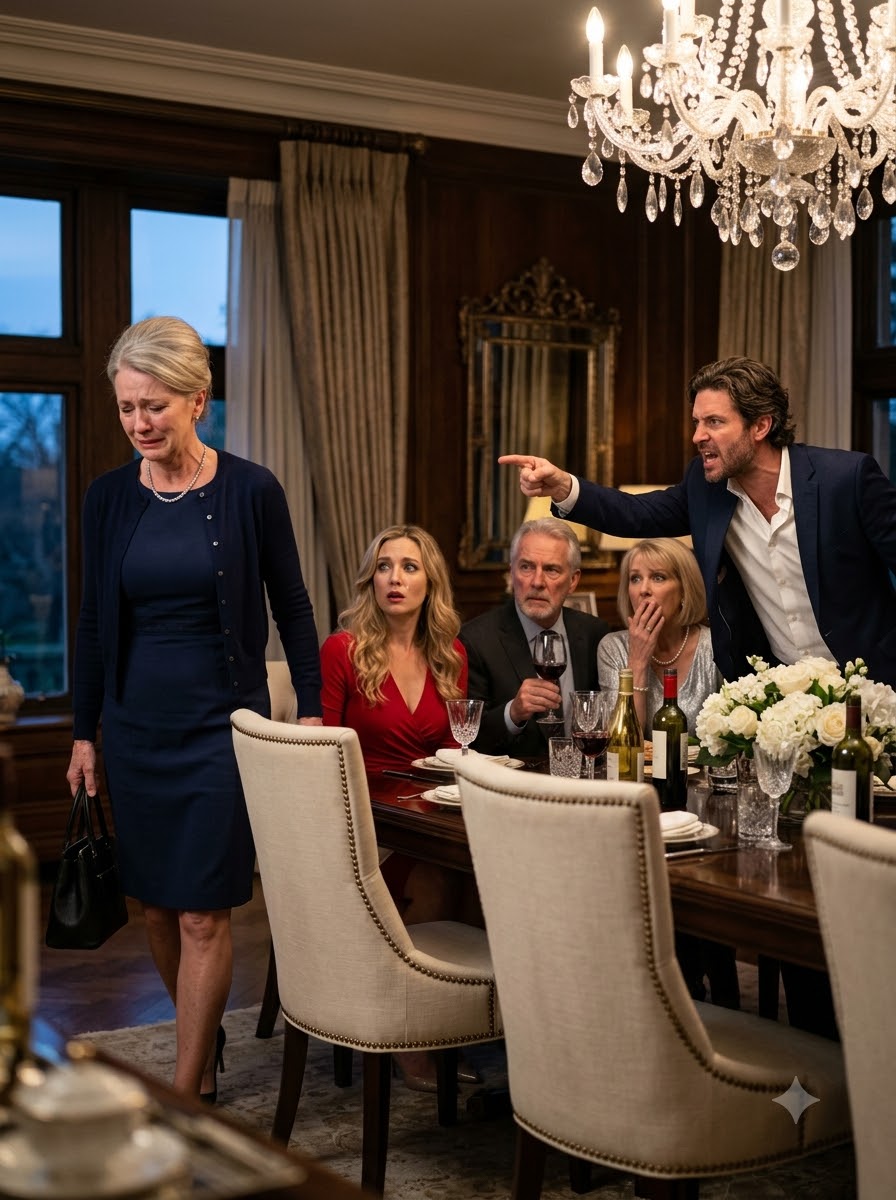
Me behind the hardware store counter.
Alexander sitting on a stack of lumber, drawing a building.
I laughed when I saw that one.
“I remember that day.”
Alexander smiled.
“You were angry because I was drawing on the inventory sheets.”
“You ruined three sheets.”
“I was five.”
“You were eight.”
He laughed.
For a moment, we were simply a family again.
Not a perfect family.
Not one without mistakes.
But one that had finally learned something important.
Love should never be confused with permission.
And sacrifice should never be mistaken for weakness.
I had spent forty years believing that being a mother meant giving everything I had.
Eventually, I learned that being a mother also meant knowing when to stop giving someone the opportunity to take you for granted.
Alexander didn’t need me to pay his bills anymore.
He needed to learn how to stand on his own.
And I needed to learn that my life could belong to me too.
Years later, whenever someone asked how I managed to raise a successful architect as a single mother, I always gave the same answer.
“I sold a lot of nails.”
Then I smiled.
Because that little hardware store my son once considered embarrassing had given us far more than money.
It had given me a life.
It had given him a beginning.
And eventually, it gave both of us the chance to understand what family was supposed to mean.
Not who pays the bills.
Not who lives in the biggest house.
Not who sits at the most expensive table.
But who remembers the hands that helped build the table in the first place.
