

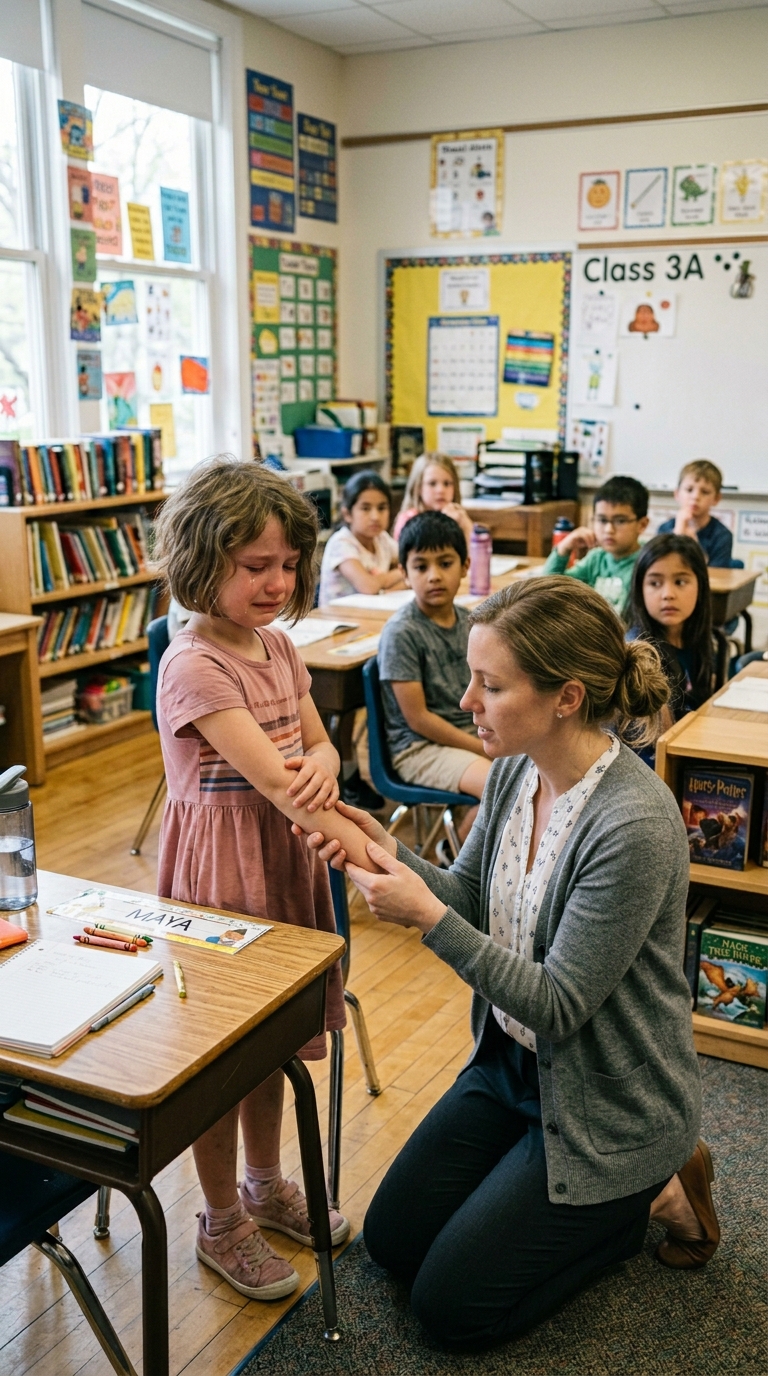
The Morning Ms. Rowan Stopped Looking Away
Naomi Whitaker had been teaching first grade in the small Ohio town of Millfield for nineteen years, and in all that time, she had learned to recognize the usual rhythms of childhood almost by instinct.

She knew the difference between tears caused by a scraped knee and tears caused by a bruised heart. She knew when a child was simply tired, when one was hungry, and when one was carrying something too heavy to name. Still, nothing in all those years prepared her for the morning when Room 14 went completely still.
What she remembered most was not the silence itself, but her own hands refusing to stop trembling no matter how tightly she pressed them together.
She had seen children arrive with messy hair, missing lunches, and sadness they could not explain. But that morning felt different, as if the air itself had changed before anyone spoke.
Twenty-two six-year-olds were usually full of noise at that hour. Yet one by one, their voices faded. Naomi followed their gaze toward the back corner of the classroom.
There, at a horseshoe-shaped table near the reading shelf, sat a child so still she looked as if she were trying to disappear.
Her shoulders were drawn inward. Her head was lowered. No one had chosen the seat beside her.
Naomi rose slowly. Something in her chest tightened before she even reached her.
The Child in the Back Corner
The girl’s name was Ivy Callahan. She had transferred into Naomi’s class at the start of fall. She was small for her age, with sandy brown hair that never seemed fully brushed and sweaters that hung too large on her frame. There was often a faint tired smell around her clothes—subtle, but noticeable in the quiet way children notice everything.
Naomi had noticed. Teachers always did. But she also noticed what mattered more.
Ivy rarely asked for help. She never pushed forward. She ate carefully at snack time, as if food might not always be available. More than once, Naomi had seen her quietly slip an extra cracker into her pocket.
Naomi had pretended not to see.
Not out of indifference, but because dignity sometimes mattered in the beginning.
That morning, however, dignity was no longer the question.
Naomi crouched beside Ivy’s chair.
“Hey, sweetheart,” she said gently. “Can you look at me for a second?”
Ivy lifted her face.
What Naomi saw made her stomach drop.
There was fear in her eyes—but not the ordinary kind. This was older. Learned.
Before Naomi could speak again, Ivy whispered, barely audible:
“Please don’t tell anybody.”
Tears slipped down her face without changing her expression.
A Secret No Child Should Carry
Naomi kept her voice steady, though her pulse quickened.
“You’re not in trouble,” she said. “I just want to help.”
Ivy shook her head, still looking down.
Naomi noticed then that she was holding her left arm tightly against her side. Carefully. Deliberately. Earlier flinches now made sense in hindsight.
Naomi gently touched her sleeve.
“May I see your arm?” she asked.
Ivy tensed.
Then, slowly, she nodded.
Naomi lifted the sleeve.
What she saw stole her breath.
A deep, swollen wound marked the child’s forearm, clearly untreated for far too long. Redness spread around it. This was not a recent injury.
Naomi’s voice broke slightly.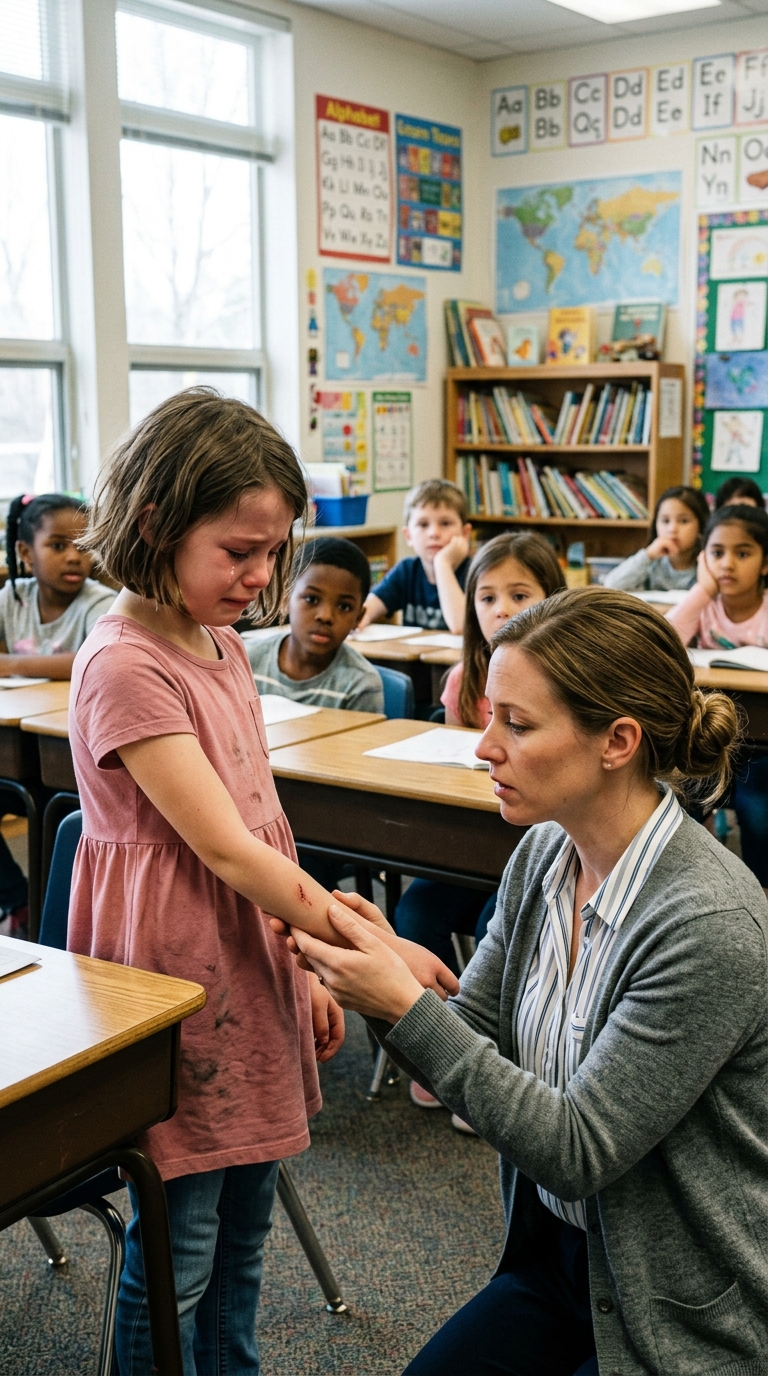
“Oh, honey… how long has this been here?”
“A while,” Ivy whispered.
Naomi stood.
“Mrs. Dorsey,” she called, voice controlled, “please stay with the class and call Nurse Bell immediately.”
The room fell even quieter.
The Nurse Who Knew at Once
Caroline Bell arrived within minutes. She had seen almost everything in twenty years—but not this.
She knelt, studied the injury, then looked at Naomi with immediate understanding.
“She needs medical care today,” she said quietly. “Now.”
Ivy began to cry harder.
“My grandma tried,” she sobbed. “Please don’t be mad at her.”
Naomi knelt again.
“No one is mad at your grandma,” she said gently. “We just want you safe.”
Ivy searched her face, uncertain.
Caroline squeezed Naomi’s shoulder.
“Call,” she said softly.
Naomi did.
The First Weeks No One Forgot
As she dialed, fragments of memory returned—small signs she had noticed for months but not fully understood.
Ivy had arrived alone. She avoided attention. She guarded food. She often seemed tired far too early in the day.
Once, she had said:
“Just me and Grandma Lenora.”
“She works a lot. She gets tired. But she says she’s trying.”
Naomi had carried that sentence ever since.
What Love Looks Like When It Is Tired
In the office, procedures began—forms, questions, calm voices. The counselor arrived. Then the principal. Everything moved correctly, but not quickly enough.
Ivy held onto Naomi’s sleeve.
Her story came in pieces: a grandmother working nights, exhaustion, limited resources, constant strain—but also care. Real care.
It was not neglect born of indifference.
It was survival stretched too thin.
And that made it even harder to witness.
The Ride to the Clinic
Paramedics arrived gently. Ivy flinched at first, but Naomi stayed close.
“You’re coming with me?” Ivy asked.
“I’m right here,” Naomi said. “I’m not leaving you.”
That seemed to steady her.
Caroline rode with them. Naomi followed separately.
Inside the ambulance, Ivy sat small and quiet, holding the blanket tightly.
Naomi prayed the only way she could—without words.
At the clinic, the injury was treated. A caseworker arrived. Everything continued, structured and official, but fragile beneath it.
The Question That Stayed Behind
Before Ivy left the exam room, she looked up.
“Did I do something wrong?” she asked.
Naomi felt the question hit her harder than anything else.
“No,” she said firmly. “You did nothing wrong.”
Then Ivy asked:
“Is Grandma going to be okay?”
Naomi chose her words carefully.
“I think people are going to help both of you now.”
Ivy nodded slowly.
The Empty Chair in Room 14
In the days that followed, Ivy’s seat stayed empty.
Children noticed immediately.
Naomi told them only what was necessary:
“She’s getting help. She’s safe.”
They made drawings. Notes. Small gestures of care.
And Naomi looked at that empty chair each afternoon, understanding something she had always known—but never felt so sharply before:
Children can look ordinary while carrying extraordinary pain.
What Remains After the Silence
What stayed with Naomi was not the fear of that morning—but the moment Ivy finally believed an adult might stay.
There are days that divide everything into before and after.
This was one of them.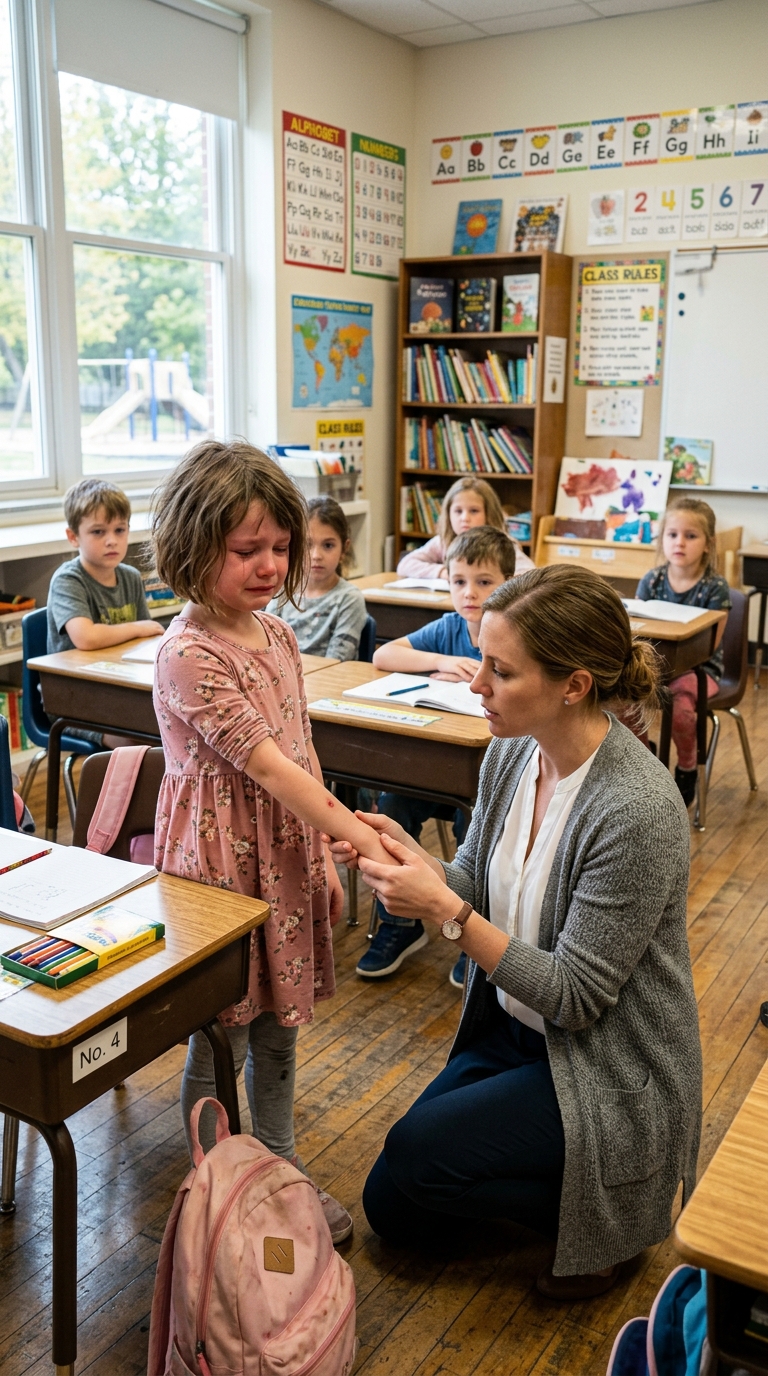
Naomi could not fix everything. But she could notice. She could act. She could refuse silence.
And sometimes, that is where healing begins.
Because in the smallest voices, the quietest signs, and the most overlooked corners of a classroom, there are truths waiting for someone willing to see them.
