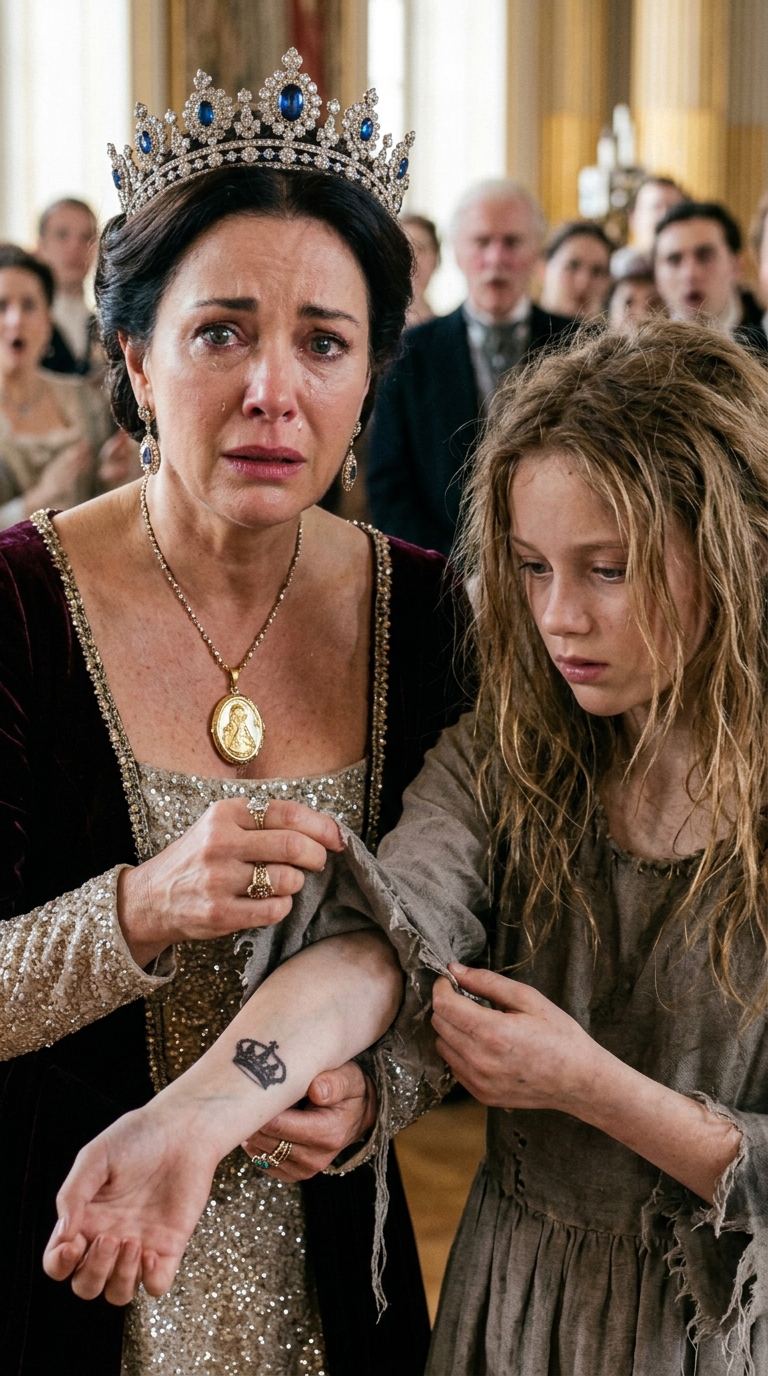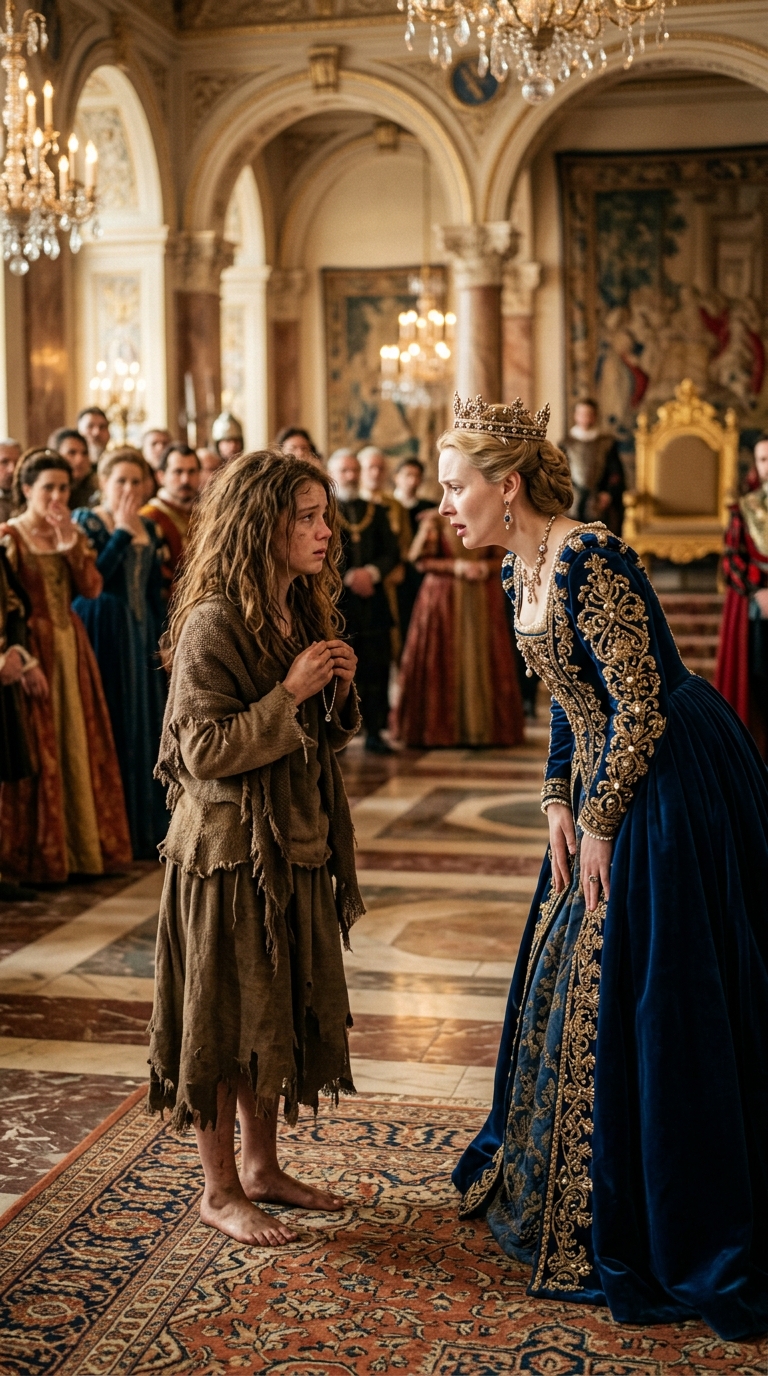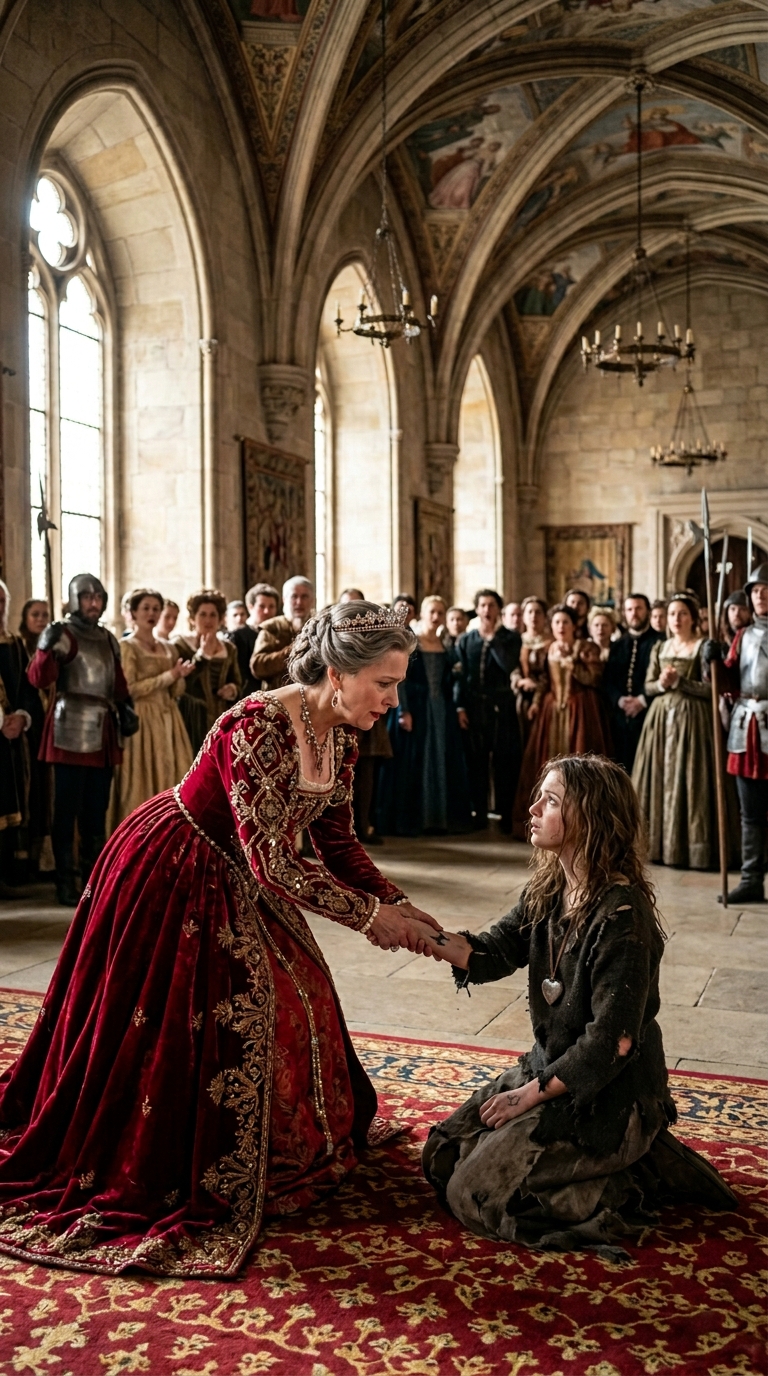
There are losses a palace learns to speak about in hushed tones.
And then there are losses it learns never to name at all.
The queen’s daughter belonged to the latter.
Years ago, when the kingdom still echoed with music and celebration, when the king laughed freely and the queen wandered the gardens without that distant sorrow in her eyes, the little princess disappeared.
Not dead.
Gone.
That was what made it unbearable.
No body was ever found. No ransom was demanded. No enemy claimed responsibility. She simply vanished from the royal chapel courtyard one spring evening while bells rang and servants replaced the candles before prayer.
One moment she had been there, chasing sunlight across the stones, a silver locket bouncing lightly against her chest.
The next—
nothing.
The kingdom searched endlessly.
Roads were closed. Villages questioned. Forests combed by soldiers and hunters. The king sent riders to the borders and offered gold to anyone who could bring news.
But no news ever came.
Only silence.
And over time, silence settles into a palace. It seeps into the walls, into the servants’ eyes, into the careful pauses before certain names are spoken. At first, the queen resisted it. She refused to mourn without proof. She refused to have the child’s chamber cleared. Fresh flowers were placed there every week, as if her daughter might follow their scent back home.
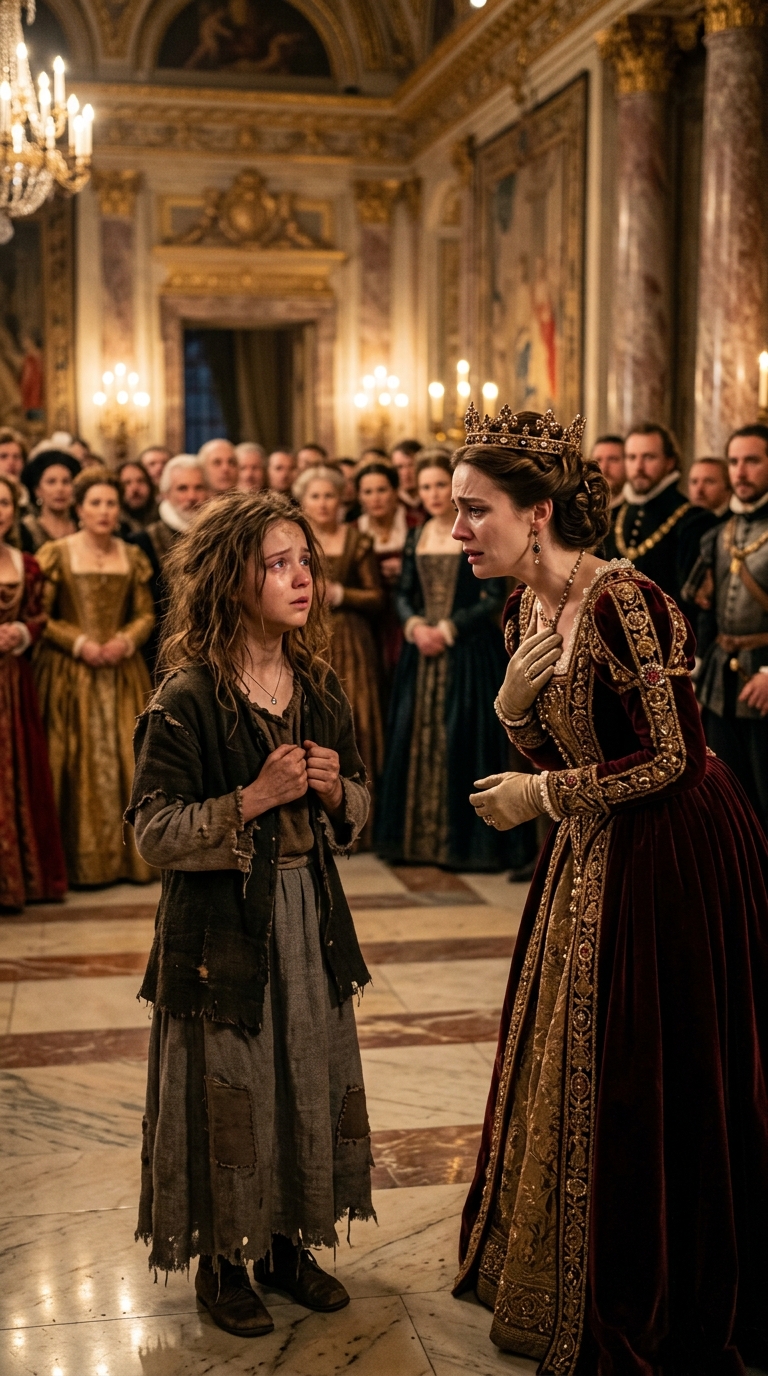
But years passed.
Hope grew smaller.
Quieter.
More fragile.
Eventually, the king forbade the court from speaking of the princess in public. He said it was to protect the queen. In truth, it was because every mention of the child reopened wounds that had never healed.
Still, the queen never forgot the last thing she had seen.
That silver locket.
Small. Oval. Delicate. With a hidden clasp and a tiny star engraved on the back. It had belonged to her mother before her, then to her daughter. On the day the girl vanished, the queen herself had fastened it around her neck.
No one else in the kingdom should have had it.
That was why, when the queen noticed the poor girl near the fountain all those years later, her heart stopped before her mind could catch up.
It was late afternoon. The chapel courtyard rested in soft golden light. The queen had come alone, aside from a few guards, seeking a quiet walk before the evening meal. It was one of the few places she still visited without ceremony.
The fountain stood old and worn, and beside it was a girl—perhaps fourteen or fifteen—wearing a faded dress that had once been blue. Her hair was loosely tied, as if no one had ever shown her how to care for it properly. She looked thin, but not fragile. Careful, but not afraid.
At first, the queen barely noticed her.
Then the sunlight caught the silver at the girl’s throat.
The queen froze.
“That locket…”
The words slipped out before she could stop them.
The girl instinctively raised her hand, fingers curling protectively around the pendant.
“It was my mother’s,” she said softly.
The queen stepped forward.
Then another step.
The guards exchanged uncertain glances.
Tears filled the queen’s eyes before she understood why. It wasn’t reason—not yet. It was something deeper. Memory recognizing what time had failed to erase.
“My daughter wore that,” the queen whispered. “The night she disappeared.”
The girl’s expression shifted—not to recognition, but to fear.
She took a small step back.
The queen saw it immediately and softened her voice.
“No… wait.”
The girl paused.
The queen’s gaze never left the locket. The faint star engraving was still there, exactly where it should have been.
“Where did your mother get it?” the queen asked.
The girl swallowed.
“She never told me.”
“What was her name?”
This time, the hesitation lasted longer.
Then, quietly, she answered.
“Mara.”
The name meant nothing to the guards.
But to the queen—
it meant everything.