

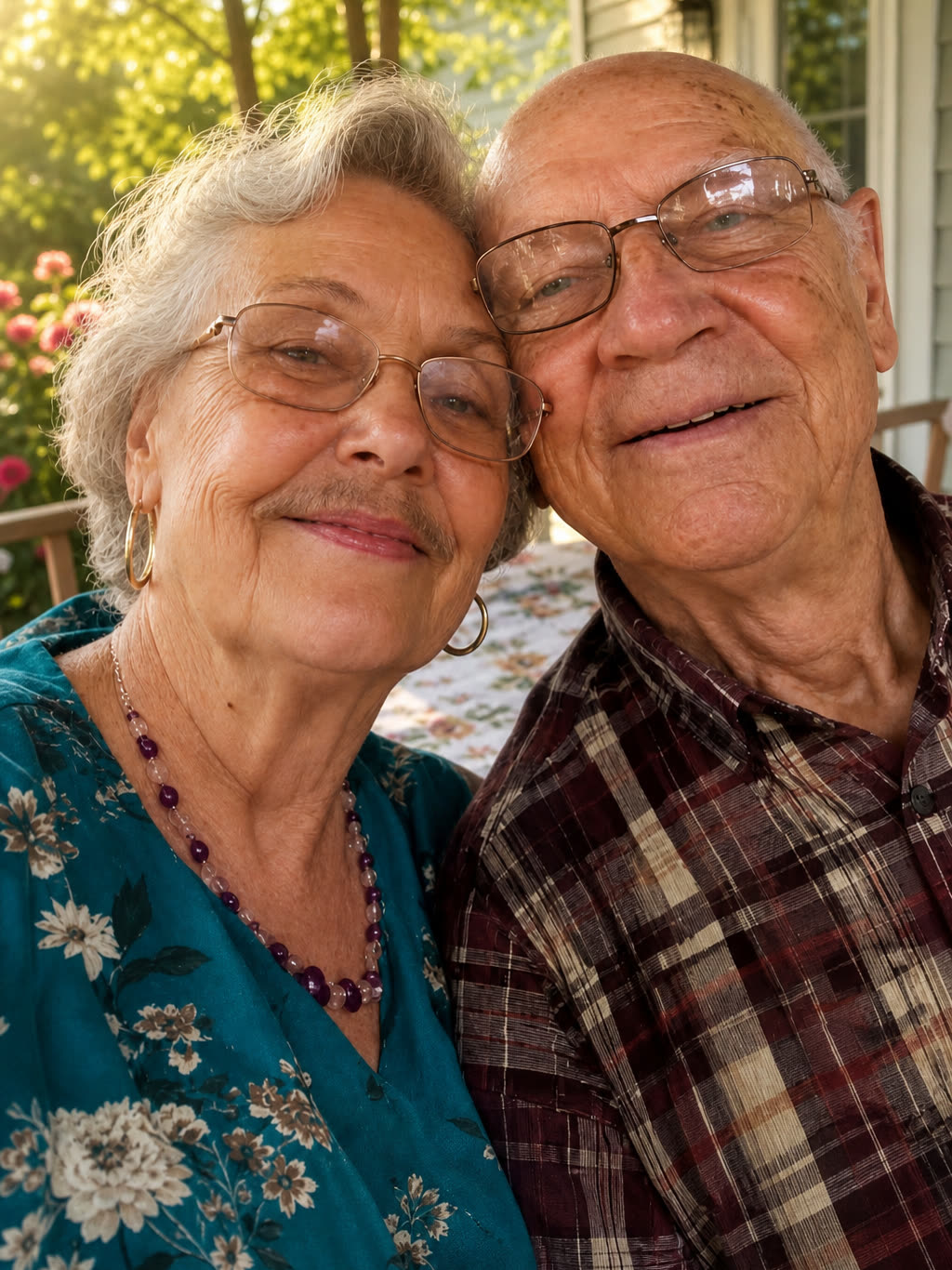
Part 1: The Man Who Wanted My Face
At 78, I truly believed I had finally met a man who could look at the hair on my upper lip and feel no urge to judge me for it. Arthur praised my mustache and kept asking for portraits of my bare face. What began as tenderness slowly turned into something that tightened my stomach. By the time dinner at his house was over, his housekeeper was urging me, “Ma’am, you need to leave… before he comes back.”
The first time Arthur asked for an unretouched photo, I felt flattered, almost giddy. By the fourth request, I had grown suspicious.
“Another picture?” I teased over the phone.
“Please, Holly. I love seeing you as you are.”
“Arthur, you’ve already seen me three times.”
“Not nearly enough.”
At my age, nobody had paid such close attention to how I looked in a very long time, least of all to my upper lip, and the novelty of it left me unsteady. A noticeable mustache had begun to grow in when I was in my twenties. For more than fifty years I had tried to disguise it, and for just as long I had put up with the occasional stranger’s stare. To be noticed for my facial hair before anything else about me had always stung, in a place too deep for a bandage. Even when people tried hard to be polite, I could see the very moment their eyes settled above my mouth and stayed there. I had become skilled at looking away first, as if that might spare both of us an awkward exchange.
My husband Walter never made it an issue. He kissed me every morning, whether I had shaved or not, and he never once seemed to notice the difference. He treated my face as ordinary and dear, the way a man treats the view from his own kitchen window. Once, I nearly skipped a wedding because the hair looked darker than usual under the bathroom light. I stood in the hallway with my hand pressed to my mouth, ready to announce that I felt unwell. Walter simply handed me my coat.
“Holly, the bride invited you because she loves you. Nobody’s hiring you to model lipstick.”
I attended, although I checked my reflection six times. Still, I laughed that evening, and I danced one slow song with him, and for a few hours the hair on my lip mattered less than the hand on my back. That was the sort of man he was. He didn’t cure me of my worry, but he made it smaller, and he never made me feel foolish for carrying it.
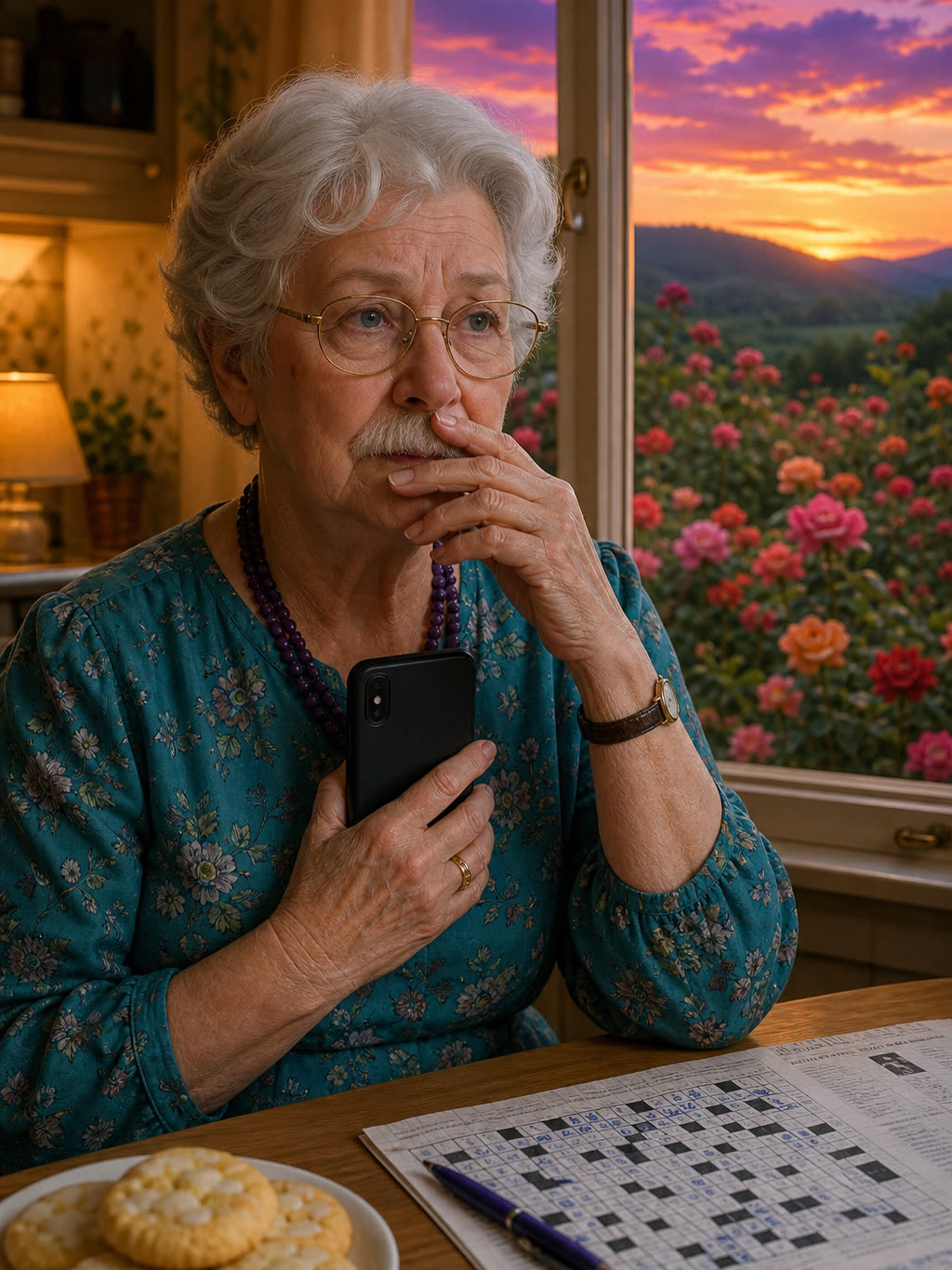
Now, with Arthur’s voice still fading from the phone, I sat at my kitchen table with the dusk turning my rose garden violet outside the window. I held the phone against my chest and let my fingers drift toward my lip before I caught them. The teasing had stayed in my voice, but underneath it something had begun to hum, a thin and nervous note I couldn’t name yet. I sat there a long while, not quite ready to turn on the lamp.
Walter had died nine years earlier. Without him, everyday routines felt painfully different, as though someone had quietly rearranged the furniture of my life and left me to bump into it in the dark. His uncomplicated affection was something I missed as much as his presence, and I doubted I would ever again feel so completely at ease with another person. I learned to tolerate the empty house, its ticking clocks and its extra chair, but I couldn’t face the thought of another man inspecting my features and deciding I wasn’t attractive enough. I had survived that once, many years ago, and I did not want to survive it twice. Then my granddaughter created a dating profile for me.
“Grandma, you deserve company.”
She uploaded my picture with a laugh, ignoring my protests, and pressed the button before I could take the phone back. I told her it was a terrible idea. I told her nobody would write to a woman my age. I even told her I had a perfectly good cat, though I didn’t have a cat. She only kissed my cheek and said to wait and see. Three days afterward, an eighty-year-old widower named Arthur contacted me. His opening question concerned whether I completed crosswords in pencil or pen.
“Pen,” I replied. “I’m old enough to live dangerously.”
“Then we’d get along,” he replied.
I smiled at the screen like a girl. Our evening conversations soon became routine, and I found myself watching the clock as supper dishes dried in the rack. Arthur remembered the roses I’d described and asked about my granddaughter’s new position. He wrote in full sentences with proper commas, which I admired more than I would have admitted. For the first time in nine years, the quiet of my house felt less like an ending and more like a pause. Eventually, trembling a little, I brought up my mustache, bracing for a hurtful reaction. I had my finger over the delete key when I sent it. His reply astonished me.
“Please don’t ever shave it. I think you’re beautiful exactly as you are.”
I read the message three times and cried. The tears surprised me. Walter had always accepted me; I was realizing how long I had refused to believe his reassurance. All those years, I had treated his kindness as a loving exaggeration, something he said because he was my husband. Now a stranger had said nearly the same words, and they reached a part of me that Walter’s had never quite managed to touch, because I had never let them in.
Arthur arrived for our first date with my favorite lemon cookies, wrapped in wax paper and tied with string. He stood on my porch in a plaid shirt, holding the package like a schoolboy. Whenever I caught him studying my face, my hand instinctively rose toward my upper lip, the way it had for fifty years. It was a reflex older than my marriage, and no kindness could undo it in an afternoon.
“You don’t have to do that around me, Holly darling.”
I let my hand fall. It felt like setting down a heavy bag I’d carried for decades. During our second meeting, he took a photograph of me beside a rosebush, framing me carefully, stepping back, then forward again, until he was satisfied. Later, he requested another makeup-free selfie, and I obliged, thinking it sweet. On our third date, he questioned where I’d lived as a child.
“Not always,” I said. “My family moved around when I was young.”
He seemed unusually interested in that answer. His eyes sharpened for a moment, like a man who had heard a song he half recognized, though I didn’t challenge him. I told myself that curiosity was a natural thing between two people at the start of something.
Several days later, he invited me to his home for dinner cooked by his housekeeper, Helen. We were on the phone, and I was pleased by the invitation, already deciding which blouse to wear. Before ending our call, he returned to the same request.
“Would you send me one more picture?”
“Arthur, at this rate you’ll have enough photographs to open a museum!”
“Just your face, darling. No makeup.”
“Why are you so interested?”
“Because I love your natural beauty.”
I wanted to trust him, so I sent it. That night, however, lying awake under Walter’s old quilt, it struck me that he had never once asked to see my garden or my house. Not once had he asked about my roses beyond the pleasant compliments. His interest in photographs was entirely confined to my face. I remembered how carefully he had framed me near the rosebush, and how each later request had narrowed to an image without makeup. I told myself that I was overthinking a kind man’s attention, that a woman who had spent fifty years expecting cruelty might simply have forgotten how kindness looked. Still, the doubt remained, small and stubborn, like a pebble in a shoe.
His home contained old bookcases and pictures of a woman I took to be his deceased wife. The house smelled of lemon oil and warm bread, and the afternoon light fell in long gold bars across the floor. Arthur welcomed me at the door with pink roses.
“For the lady who grows better ones.”
“Flattery will get you everywhere.”
He smiled and examined my face long enough to revive my self-conscious gesture. I felt my hand begin to lift, and I pressed it flat against my purse strap instead.
“Come in, Holly.”
Inside, he introduced the woman approaching with two crystal glasses. She walked carefully, her gray-brown hair pinned low at her neck, her eyes lowered to the glasses.
“This is Helen,” Arthur said.
Helen took one look at me and dropped both glasses. They broke on the floor with a bright, terrible sound while she stood motionless, staring. Shards skittered across the polished boards and came to rest against my shoes.
“Oh, goodness!” I exclaimed.
“Are you all right?” I asked.
“Holly?” she gasped.
“Yes?”
I had not told her my name. I was certain of that, and the certainty prickled along my arms. Arthur immediately moved between us, his back to me, his voice suddenly clipped.
“Helen, please take care of the glasses.”
“Arthur…”
“Now, please.”
His unexpected sternness made me uneasy. I had never heard that tone from him, in all our phone calls and gentle dates. It belonged to some other man entirely. As Helen knelt to clear the shards, I bent to assist, instinctively, the way any woman raised right would.
“No, ma’am,” she said quickly. “Please don’t.”
Arthur steered me toward dinner, his hand light but firm at my elbow.
“She’s been having a difficult week.”
Looking back, I found Helen still watching, a fragment of crystal in her palm. It felt as if she’d recognized someone she wasn’t supposed to encounter. I tried to accept Arthur’s explanation, but the broken glasses, Helen’s startled use of my name, and the severity in his voice were difficult to dismiss. None of it resembled the easy warmth of our earlier dates.
Over chicken and potatoes, which I could barely taste, Arthur questioned me about my upbringing, my parents, and whether I had a sister.
“No,” I said. “Why?”
“Just curious.”
“You’re asking a lot of family questions tonight.”
“Getting to know you, darling.”
I tried dismissing the discomfort, pushing a potato around my plate, until he asked a startlingly precise question.
“Did your mother live in Chicago in 1965?”
The fork stopped halfway to my mouth.
“How do you know that?”
He reached for his wine. His hand was perfectly steady, and that frightened me more than if it had trembled.
“Lucky guess.”
“Arthur, that’s a very specific guess.”
“You mentioned moving around.”
“I never mentioned Chicago.”
His expression changed. The kindness slid off his face like a cloth drawn from a table, and what was underneath looked tired and guarded. For the first time, I considered that we might not have met by coincidence. I thought of the questions about crosswords and roses, the framed portraits, and every careful message, and wondered how much of it had been laid out for me like crumbs.
Before I could press him, his phone rang.
“Excuse me. I need to take this.”
He left me beside my unfinished meal. A door shut down the corridor, followed by quick footsteps that were not his. I gripped the edge of the table, my heart knocking. Helen appeared in the doorway, empty-handed and visibly alarmed, her face the color of the tablecloth.
“Ma’am, you need to leave,” she whispered.
“What?”
“Please. Before he comes back.”
Part 2: The Box on the Desk
“What’s going on?” I asked, and my own voice sounded thin and far away.
“There’s something you should know.”
Helen grasped my hand and guided me into the hallway. Her fingers were cold and damp, and they shook against mine. The corridor was narrow, lined with framed photographs I couldn’t look at properly, and every board underfoot seemed to creak like an announcement. I was seventy-eight years old and being led through a stranger’s home like a child, and I let it happen because her fear was so real that it had crept into me.
“Arthur has been looking for you for years,” she said.
“Why?”
The word came out of me as little more than breath. Looking for me? For years? I thought of everything I had ever done that might attract such attention and found nothing. I was a widow who grew roses and did crosswords in pen. I had never owed anyone money or secrets.
We were interrupted by his voice, sharp as a slammed drawer.
“Helen. What are you doing?”
She kept hold of me, though I felt her tremble. She did not step back, and I admired her for it even as my knees weakened.
“I’m telling her,” she said.
“Not like this.”
“Then how? You’ve had three dates and an entire dinner.”
“Someone had better explain what’s happening.”
He approached cautiously, both palms raised, as one might approach a nervous animal. In the dim hallway his face looked suddenly very old. The warm, easy man who had brought me lemon cookies had gone, and in his place stood someone who seemed to dread being seen.
“Holly, please don’t be frightened.”
“That’s not a reassuring thing to say.”
Helen directed me toward his study, tugging gently, her jaw set. Whatever she meant to show me, she had clearly decided it could not wait another hour.
“There’s something in his study you need to see.”
“Holly…” Arthur panicked.
“No,” I said. “Show me.”
I surprised myself. For fifty years I had looked away first, from stares, from mirrors, from conversations that turned toward my face. Now, with my pulse in my ears, I walked toward the very thing someone wanted to hide. Perhaps I was tired of avoiding. Perhaps being frightened and being angry had become, in that hallway, the same feeling.
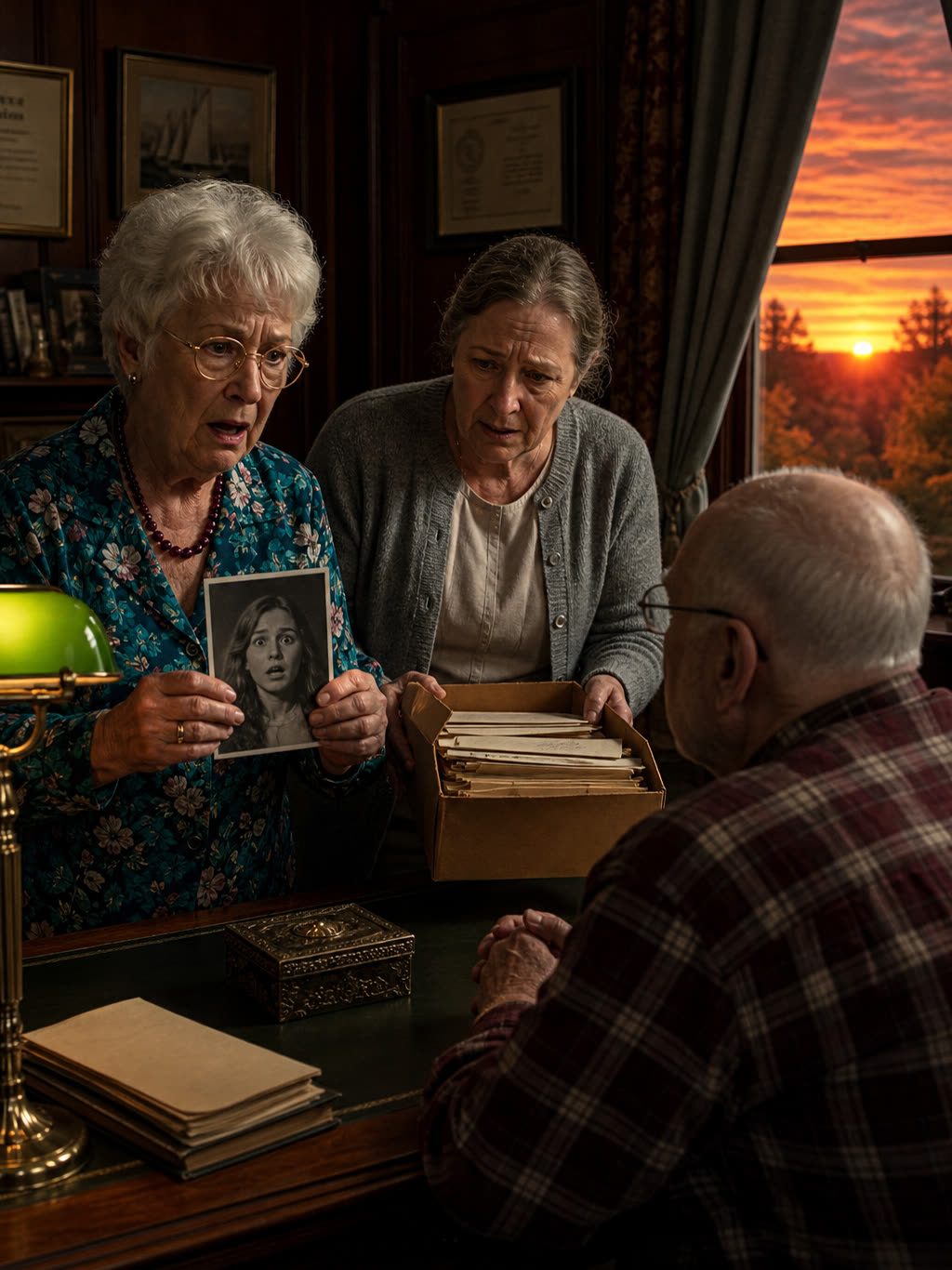
The study smelled of furniture polish and aged paper. Heavy curtains kept out the evening, and a green-shaded lamp threw a small circle of light across the desk. A cardboard box stood in that circle, and Arthur regarded it with obvious dread, the way a man regards a dog that once bit him. Helen opened it, revealing old envelopes, clippings, and photographs, yellowed and soft at the corners. She removed one picture from a protective sleeve and held it out to me with both hands, as though it might break.
The image showed a teenage girl under a bright salon light, hair pinned away from her face, hands folded in her lap. For a moment I did not understand what I was looking at. Then my stomach dropped, as it does when a stair is missing in the dark. I recognized myself at seventeen, in Chicago.
My mother had taken me to a department-store beauty consultation. Someone had promised to make me look “more feminine.” I remembered the powder, sweet and choking, the employee at the camera, and adults discussing my lip hair as though I couldn’t hear. The memory arrived whole, as if it had been waiting behind a door that had never really been locked.
“That much hair will be difficult to conceal.”
“She’ll need regular treatment.”
“Girls are terribly sensitive at this age.”
I had stared at my hands throughout the appointment, counting my knuckles, memorizing the pale crescents of my nails, because it was easier than looking up. Afterward I had sobbed in the restroom, in a stall with a pink door, pressing my sleeve against my mouth so no one would hear. For decades, I’d tried to bury that memory. Yet with the photograph in my hands, I could recall the harsh lighting, my mother’s presence, and how powerless I’d felt while strangers discussed changing my face as if it were a coat that did not fit. I could scarcely believe the evidence had followed me into old age.
My hands shook so badly that the picture trembled between my fingers. Helen quietly drew a chair behind me, and I realized I was swaying. I did not sit. I could not make myself loosen my grip on the girl in the photograph, small and rigid under that glaring lamp.
“Where did you get this?”
Arthur sat opposite me, slowly, like a man lowering himself into cold water. His hands rested on his knees, and he looked at neither the box nor me.
“I worked for the company that produced those consultation photographs.”
“You?”
“I was 19,” he said. “It was one of my first jobs.”
I remembered the young assistant beside the camera who wouldn’t look directly at me. A thin boy with big ears and a clipboard, who kept adjusting a light that did not need adjusting. I had noticed him in the way you notice a kind face in a hostile room, and I had hoped, absurdly, that he might say something.
“You were there.”
“Yes.”
“I remember asking you whether I looked terrible.”
“And I didn’t answer.”
“No.”
His silence had stayed with me. All those decades, it had sat among my other small humiliations, a question without a reply. The consultant, meanwhile, had laughed.
“Well, that’s why we’re here.”
I’d desperately wanted somebody to object. Nobody had. Not my mother, who was trying in her own anxious way to help me. Not the consultant, bright with commission and lipstick. Not the boy with the clipboard. I had left that building convinced that the whole world agreed with what had been said about me.
“Why do you still have this photograph?” I asked.
Arthur fidgeted before explaining, twisting his wedding band around his finger.
“Years later, a former colleague contacted me while clearing out an old storage room. He’d found a box of photographs and consultation cards that should have been destroyed long ago. Your name was written on the back of the photograph. I remembered the appointment when I read it, and I asked to keep it.”
I turned it over and saw my name in faded blue writing, the loops of the letters old-fashioned and neat. He’d held onto evidence of an afternoon I’d spent a lifetime trying to erase. It felt like finding my own handwriting on a stranger’s wall.
“I should have told you I had it, Holly. And I should have asked whether you wanted it back.”
He indicated a consultation card listing my mother’s name and our old Chicago address. Seeing my mother’s name, in a clerk’s hurried script, undid something in my chest. She had been dead many years, and I had forgiven her long ago for trying to fix what she thought would hurt me. But here she was, in ink, standing beside me in that room.
“I recognized the appointment,” he added. “I remembered you.”
“You remembered me for sixty-one years?”
“Not every day. But I never forgot what happened.”
“Then how did you find me?”
“Your full name and your mother’s were on the consultation card. I’d looked for you now and then, but I never found anyone I could be certain was you.”
He looked toward the picture and continued.
“After my wife died, I tried again. I found your name in an old community newsletter online. It mentioned your granddaughter and the roses you grew. Then, months later, I saw a dating profile with the same name and details. I thought it might be you. That’s why I kept asking about your childhood.”
My fingers tightened around the photograph until the edges bent. The room seemed to tilt. Every lemon cookie, every compliment, every crossword question came back to me rearranged, like a familiar room seen after someone has moved every picture an inch to the left. Helen stood by the door with her hands knotted in her cardigan, and I understood that she had watched all of it unfold.
“So you didn’t match with me by chance.”
“No.”
“Why?”
Part 3: The Girl Beneath the Lamp
“My wife struggled with her appearance,” he explained. “She told me how cruel beauty advertisements had been when she was young.”
He flattened a curled edge of the consultation card with his thumb, over and over, as if smoothing it might smooth the past.
“After she died, I began thinking about the work I’d done. The things I’d said. The things I hadn’t said.”
“And you decided to find me?”
“I wanted to apologize. At first, I thought I’d tell you immediately,” he said. “But I enjoyed talking to you. I was afraid you’d never speak to me again.”
“So you dated me instead?”
He flushed, red climbing from his collar to his bald crown.
“I didn’t mean to hurt you.”
“Arthur, you asked me for photographs of my face.”
“I thought you were becoming more comfortable with yourself.”
“Was that your decision to make?”
His eyes lowered. For a long moment, the only sound was the faint tick of a clock somewhere in the house. Helen remained beside the doorway, and when she spoke it was gently, like a woman setting down something fragile.
“I saw him take that box out this afternoon,” she revealed. “He’d been rehearsing what to tell you. I warned him that surprising you with those photographs was cruel.”
“I was going to explain.”
“You’d already had three dates to explain,” Helen replied.
I faced him again. I was surprised to find that my voice was steady. It was the voice I had used with Walter on the rare occasions I needed to be firm, calm and low and without any apology in it.
“Did you ask for those pictures to make sure I was the girl in this photograph?”
“At first, I wanted to be certain.”
“And afterward?”
“I liked seeing you happy. I thought perhaps I could help undo some of what happened.”
I compared the frightened seventeen-year-old in the photograph with the seventy-eight-year-old he’d encouraged not to change. The girl’s hands lay folded and small in her lap. The woman’s hands, my hands, were spotted and strong and had pulled weeds and held a husband’s hand through his last night. Arthur’s compliments, which had melted me so completely, now carried a history he’d concealed. Each sweet word had been standing on a floor I had not been allowed to see.
“You could have told me the truth.”
“I know.”
“You let me think you loved the way I looked without any history attached.”
“I do think you’re beautiful, Holly.”
I rose. My knees ached, but I stood straight, the way I had not in that salon so long ago.
“Then you should have trusted me enough to tell me why you recognized my face.”
He got up too, one hand gripping the edge of the desk.
“Please. I only wanted a chance to make things right.”
“You had a chance. You could have been honest on our first date.”
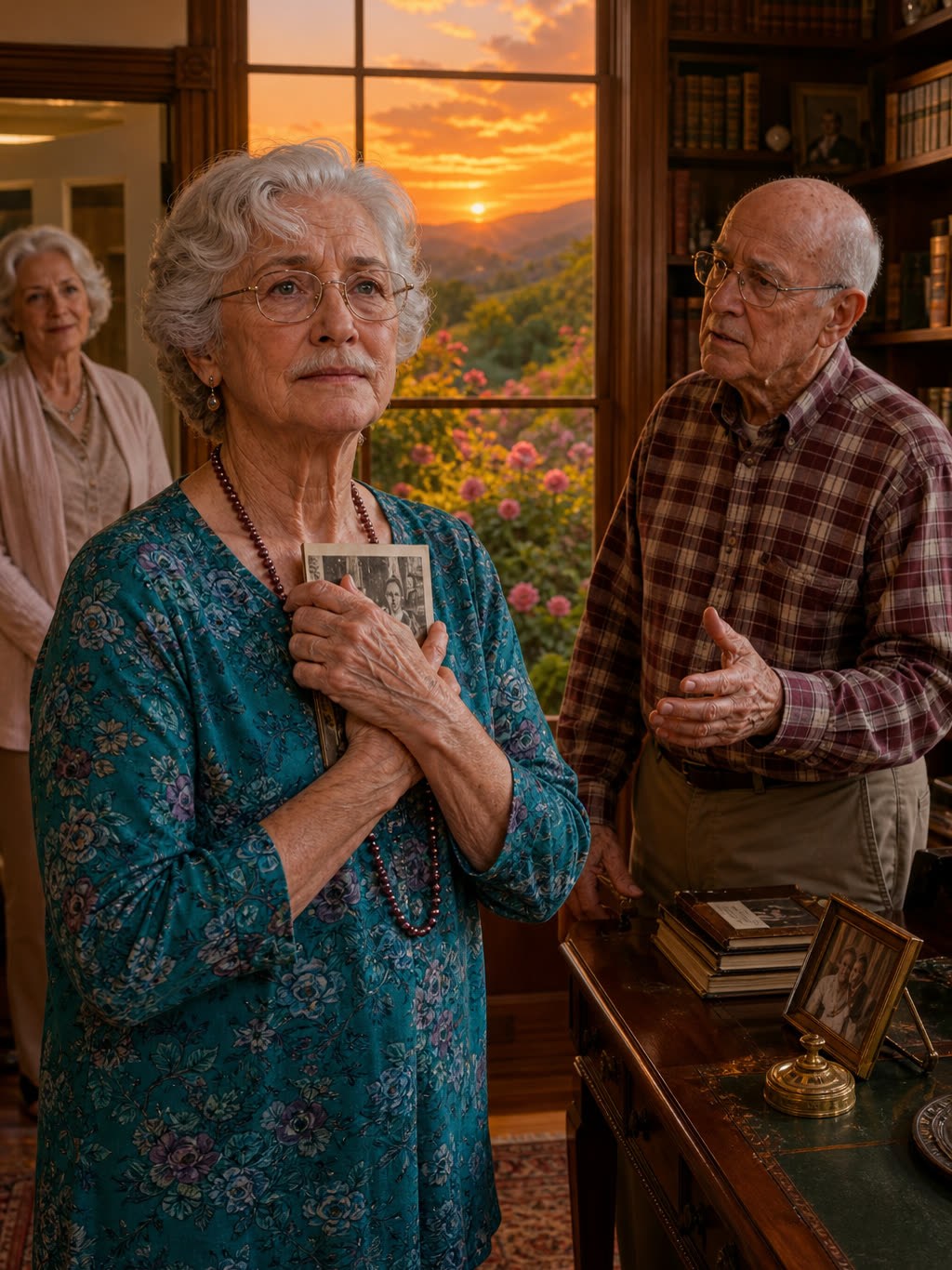
When he reached for the photograph, I drew it away, pressing it against my blouse. It was mine. It had always been mine, even when I had not wanted it.
“Don’t.”
He stopped. His hand hung in the air, then lowered. Helen approached quietly, and I saw that her eyes were wet.
“Would you like me to call you a car, ma’am?”
“Yes, please.”
Arthur stayed by his desk, one hand against the box, as though it were a coffin lid.
“Holly, I’m sorry.”
I couldn’t answer. I wasn’t sure whether he regretted his youthful silence or his recent deception. Both mattered, but only the second had happened after he’d come to know me. The boy at the camera had been nineteen and frightened and had said nothing. The man at the dinner table had been eighty, with years and wisdom and a hundred chances to speak. The difference made his apology harder to understand, not easier. I left the picture on the desk and departed with Helen.
The car smelled of pine air freshener, and the driver asked nothing. I watched the streetlights slide past in long yellow bars and tried to feel something simple. Anger would have been simple. Grief would have been simple. Instead, I felt everything at once, like a drawer of old photographs spilled across the floor.
At home, I sat in Walter’s chair in the dark for an hour without turning on a lamp. The house was quiet. The roses in the garden stood black against the last of the sky. I thought of the girl in the photograph, how she had looked at her hands, and for the first time in sixty-one years, I felt sorry for her. Not ashamed of her. Sorry, the way you feel for a child you could not protect.
Four days later, Arthur mailed a letter apologizing for the salon incident, his requests for photographs, and his secrecy. He didn’t demand forgiveness. His handwriting was careful and slightly shaky. He wrote that he had no right to ask anything of me, and that he wanted only for me to know that he understood what he had done. Enclosed were my old picture and the consultation card showing my mother’s name.
Studying the image, I recognized something I’d overlooked: the girl beneath the lamp wasn’t unattractive. She was scared, and nobody had offered comfort. I had spent my whole life seeing a flaw where there had only been a frightened child. Her eyes were clear and her face was young and open, and what she needed was not powder or treatment, only one adult who would say that nothing was wrong with her.
My granddaughter came upon me crying at the kitchen table. She stood in the doorway with her car keys still in her hand, and her face crumpled with worry.
“Grandma?”
I showed her the photograph.
“That’s me at seventeen.”
She studied it. “You had beautiful eyes.”
“That’s what Walter always said.”
She touched my shoulder, then slipped into the chair beside me, and we sat quietly together for a long while. I told her all of it, slowly, with the tea going cold: the salon, the boy with the clipboard, the dating profile she had made so lovingly. She did not interrupt once. She only held my hand, and when I finished, she said she was sorry she had not known. I told her it was not her fault. This time I didn’t hide the image by turning it face down.
A week afterward, I phoned Arthur. My hand was steady on the receiver, though my heart was not. I had rehearsed nothing, and I think that was why the words came out honest.
“Did you ever wonder what happened to me after that appointment?”
“Not until years later,” he admitted.
“I spent decades trying to fix something that wasn’t wrong.”
“I’m sorry, Holly.”
“I believe you. But I don’t know whether I can trust you again.”
“I understand.”
We agreed not to take the relationship further for now. There was no anger left in the silence that followed, only the space where something might have grown. I said goodbye gently, and he said it back, and I set the phone down feeling lighter and sadder than I had in years.
That evening I set my teenage salon picture beside a recent photograph taken by my granddaughter. In the newer one, I was laughing, with my mustache clearly visible, my glasses crooked, a rose tucked behind my ear. Sixty-one years separated the two faces, and yet I could see in the older woman the same eyes as the girl, only unafraid.
Instead of reaching for cosmetics, I aligned both frames on my shelf and went to the kitchen to prepare tea.
Disclaimer: This story is a work of fiction inspired by real-life themes. Names, characters, places and events are fictionalized, and any resemblance to real persons is purely coincidental. Images are for illustration purposes only.
