

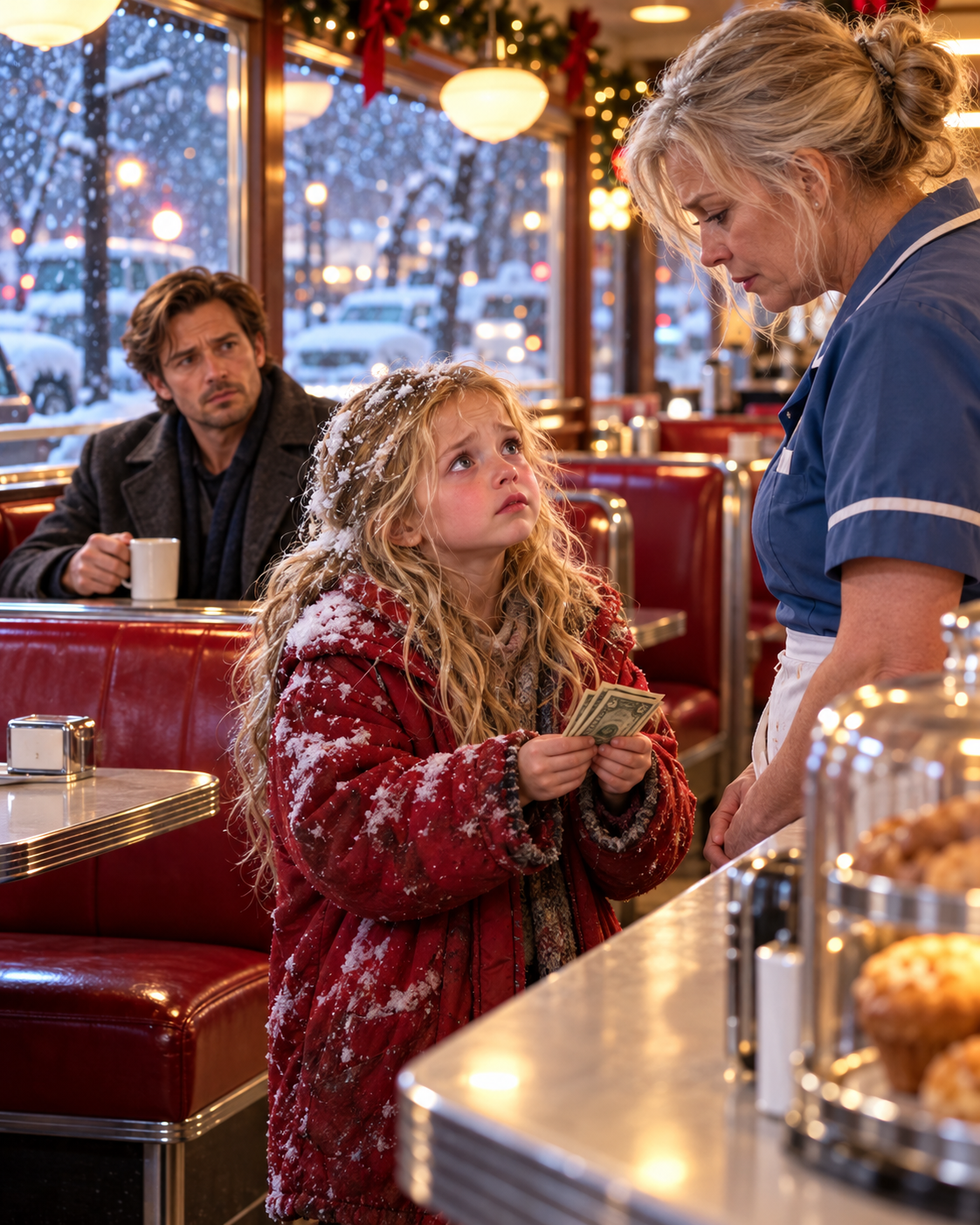
PART 2
And for the first time in five years, I drove home without passing my turn.
That night, I couldn’t sleep.
I kept thinking about Sophie, about Emily’s frightened smile, and about the words Caroline had spoken so often that I had once taken them for granted.
People don’t always need someone to rescue them. Sometimes they just need someone willing to stay.
At two in the morning, I went into my study and opened the cabinet where I kept Caroline’s belongings. Beneath a stack of old photographs lay a leather folder I hadn’t touched since the week after her funeral.
Inside were the original notes for the foundation we had planned together.
There were budgets, lists of potential partners, handwritten letters, and a draft mission statement in Caroline’s familiar handwriting.
Near the back, I found a page folded in half.
Across the top, she had written:
THE BENNETT FAMILY — FOLLOW UP.
I stared at the name.
Bennett.
For several seconds, I convinced myself it had to be a coincidence. Bennett was not an unusual surname, and Caroline had met hundreds of people while volunteering at community centers and family shelters.
But beneath the name was an address.
The same street where Sophie lived.
My hands began to tremble.
I read the notes again. Caroline had written about a young mother who had lost her husband, a child who was struggling with the family’s circumstances, and an urgent need for medical and housing assistance. There were reminders to arrange a meeting and contact a local support organization.
At the bottom of the page was one final sentence.
Andrew, please don’t let this family fall through the cracks. They remind me why we started.
I sat down slowly.
Caroline had known the Bennett family.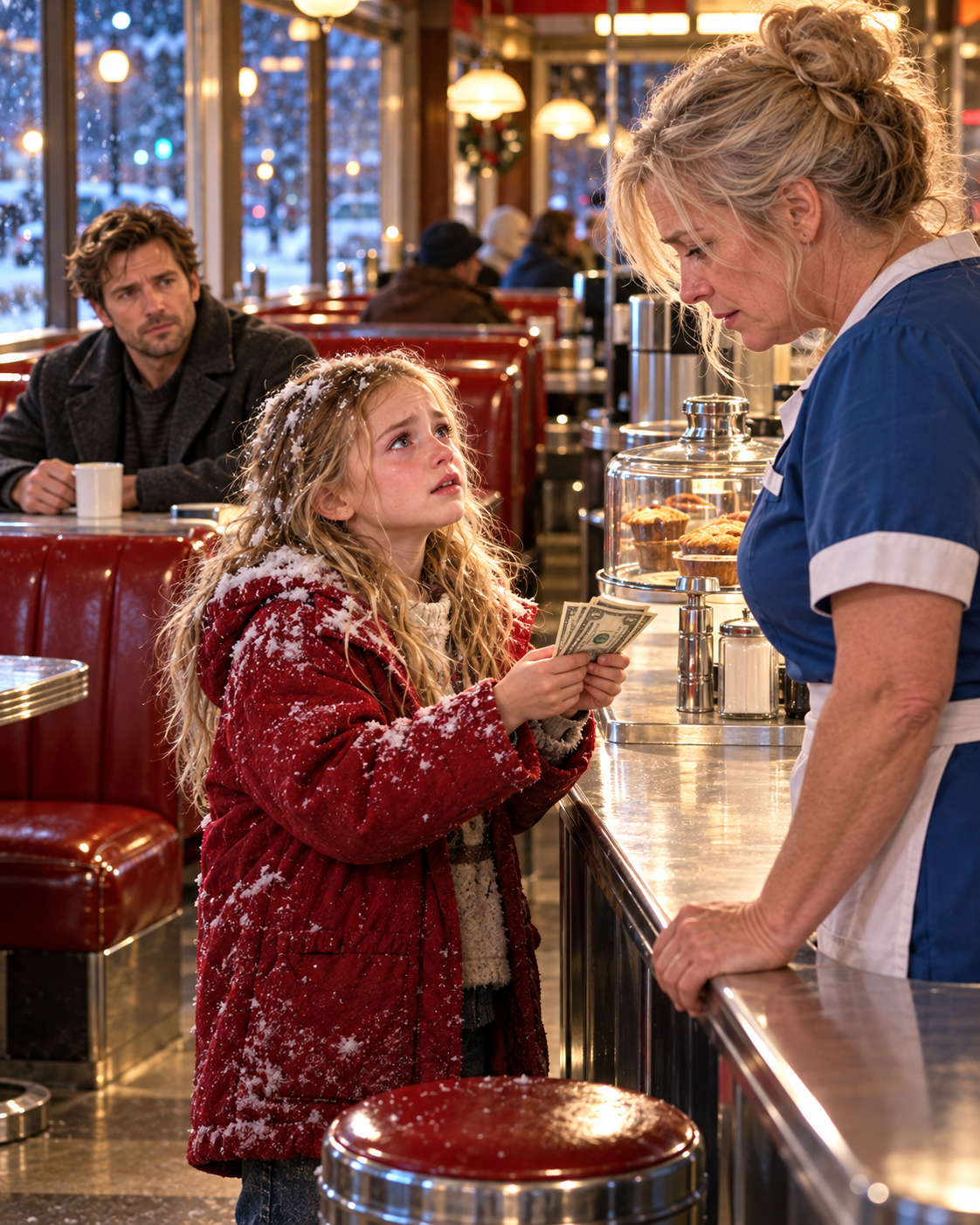
She had intended to help them.
And somehow, five years later, her unfinished promise had found its way back to me through an eight-year-old girl carrying three dollars.
The next morning, I called the number written beside Caroline’s notes. It belonged to a community outreach coordinator who had worked with my wife.
She remembered Caroline immediately.
“She cared deeply about that family,” the woman told me. “Emily’s husband died unexpectedly. Caroline helped them with some emergency expenses, but she was trying to arrange longer-term support when her own health began to deteriorate.”
I gripped the edge of my desk.
“Why was nothing finalized?”
There was a pause.
“Your wife was very ill toward the end. She left several projects unfinished. I believe she intended to speak with you about the foundation’s funding, but she never got the chance.”
After the call, I sat in silence for a long time.
I had spent five years believing grief had taken everything from me.
But Caroline had left something behind besides photographs, memories, and an empty side of the bed.
She had left me a responsibility.
And I finally understood that honoring her did not mean remaining frozen in the moment I lost her.
It meant finishing what she had started.
I called my attorney that afternoon. Then I contacted a local family assistance organization and asked them to assess Emily’s immediate needs, including food, medical support, and housing stability. I made it clear that the assistance should be arranged respectfully, with Emily’s consent, and without conditions attached.
The following day, I returned to the blue house.
Emily opened the door, surprised to see me.
“I spoke with someone who knew Caroline,” I explained. “She had been trying to help your family several years ago. I found her notes last night.”
Emily’s face went completely still.
“Caroline Whitmore?”
“You knew her?”
Emily covered her mouth.
For a moment, she seemed unable to speak.
Then she stepped aside and invited me in.
“She came to see us after my husband died,” Emily whispered. “I was working two jobs, and Sophie was still very little. Caroline helped me find a temporary childcare arrangement and made sure we had groceries when things became difficult.”
She looked down at her hands.
“She told me she and her husband were planning something bigger. A place where families like ours could get help before everything fell apart.”
I nodded, unable to trust my voice.
“She promised she’d come back,” Emily continued. “Then I heard she had died. I never contacted you because I didn’t want to ask a grieving man to fulfill a promise he might not even know about.”
I looked toward the living room, where Sophie was drawing at the kitchen table.
“She would have wanted me to know.”
Emily’s eyes filled with tears.
“I think she would have wanted you to find us when you were ready.”
Those words stayed with me.
Over the following months, I worked with local organizations to turn Caroline’s original plan into a functioning charitable program. We started small, helping families with emergency groceries, transportation to medical appointments, temporary housing expenses, and access to social services.
We named it the Caroline Whitmore Family Fund.
Emily accepted assistance with her medical care and began working with a case manager to stabilize her situation. Recovery was slow, and there were difficult days, but she no longer had to face every problem alone.
Sophie sometimes visited the office after school. She liked the books in the waiting room and insisted on arranging them by size. When we held our first community gathering, she stood beside a table covered with donated supplies and handed out bags of groceries to families who came through the door.
I watched her greet each person with the same seriousness she had shown me at the diner.
She never asked anyone why they needed help.
She simply asked what they needed.
One afternoon, nearly a year after our first meeting, Sophie came into my office carrying a small envelope.
“I have something for you,” she announced.
Inside was a drawing of a little blue house, a snow-covered diner, and three people standing beneath a bright yellow sun. A woman with dark hair stood between a little girl in a red coat and a tall man holding a compass.
At the bottom, in uneven handwriting, were the words:
Thank you for helping my mom. Now she smiles more.
I stared at the drawing until my eyes blurred.
“Did you draw this yourself?”
Sophie nodded proudly.
“It’s for you. Because you looked lonely that night.”
I swallowed hard.
“Do I still look lonely?”
She tilted her head, studying me with the same unflinching honesty she had shown me on the first evening.
“Not as much.”
I laughed, though tears were slipping down my face.
She climbed into the chair across from my desk and swung her feet.
“Mom says you helped her because your wife taught you to be kind.”
“She did.”
“Then I think your wife would be happy.”
I looked at Caroline’s photograph on the shelf behind my desk.
For years, I had believed that moving forward meant leaving her behind. I had mistaken the pain of remembering for proof that I should remain where I was.
Sophie had taught me something different.
Love did not disappear when a person was gone. Sometimes it waited in an unfinished letter, an overlooked promise, or a little girl standing in the snow with three dollars and more courage than most adults could imagine.
I placed Sophie’s drawing beside Caroline’s photograph.
Then I reached into my desk drawer and found the silver compass.
Its needle still pointed north.
For the first time in five years, I understood that knowing where north was mattered only if I was willing to move toward it.
That evening, Sophie and Emily joined me for dinner at the same diner where we had first met. Emily was stronger, her cheeks had regained some color, and Sophie had outgrown her faded red coat.
When the waitress brought our meals, Sophie glanced at the menu.
“I’m getting the chicken noodle soup,” she announced.
“Excellent choice,” I said.
She grinned.
After dinner, I paid the bill, but Sophie reached into her pocket and placed three dollar bills on the table.
They were new and neatly folded.
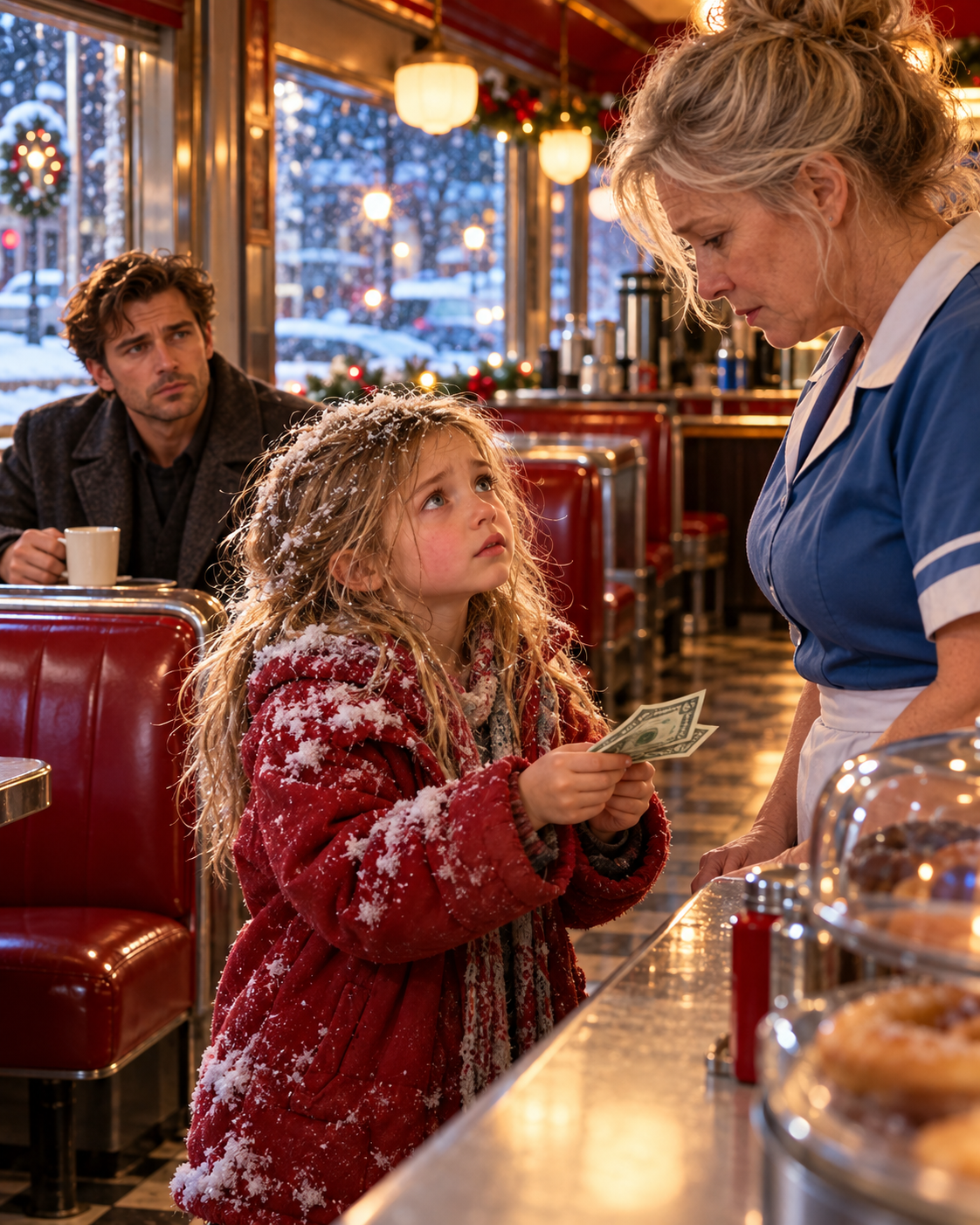
“What are those for?” I asked.
“My share.”
“You don’t owe me anything.”
“I know.” She pushed the money toward me. “But you said someday I could help someone when I had something useful to offer.”
I looked at the three dollars, then at the little girl who had once been afraid to ask for a bowl of soup.
“You’re right,” I said. “You did promise.”
I took the money and placed it in the donation box beside the register, where the diner collected contributions for families in need.
Sophie beamed.
Outside, snow began falling again, soft and quiet beneath the streetlights.
This time, I didn’t feel the need to drive past my turn.
I had somewhere to go. People were waiting for me. And in the small, ordinary acts of kindness that Caroline had taught me to notice, I had finally found a way to keep loving her.
All because an eight-year-old girl walked into a diner with three dollars.
She had come looking for soup for her sick mother.
Neither of us knew she would help me find my way home.
