

PART 2
He had spent his career teaching young officers that integrity was not something you claimed when it was convenient.
It was something you practiced when doing the right thing could cost you.
O’Connor now had that choice.
William closed his eyes.
Then, somewhere down the corridor, a phone rang.
Not a normal office phone.
A sharp, old-fashioned ring.
Once.
Twice.
Three times.
William opened his eyes.
The sound continued.
Then he heard someone shout.
“The red desk phone!”
The ringing stopped.
A moment later, it started again.
William stared through the small window.
An older sergeant hurried down the corridor.
He picked up the red phone.
“County Sheriff’s Office.”
Silence.
Then his expression changed.
“What?”
He stood straighter.
“Yes, sir.”
Another pause.
“Yes, sir. He’s here.”
William’s eyes narrowed.
The sergeant looked directly toward Holding Cell 3.
“Yes, sir. Commander Bradley is in Holding Cell 3.”
Silence.
The sergeant’s face went pale.
“Understood.”
He slowly hung up.
Then he looked down the corridor.
“Where’s Barnes?”
Nobody answered.
The sergeant’s voice became louder.
“WHERE’S OFFICER BARNES?”
A deputy pointed toward the booking area.
“He’s inside.”
“Get him.”
Within seconds, Barnes appeared.
“What?”
The sergeant looked at him.
“Did you arrest William Bradley?”
“Yes.”
“Did you verify his identity?”
Barnes shrugged.
“We’re still investigating.”
The sergeant’s face hardened.
“No. You’re not.”
He pointed toward the red phone.
“That was the Pentagon.”
Barnes froze.
The hallway became silent.
“What?”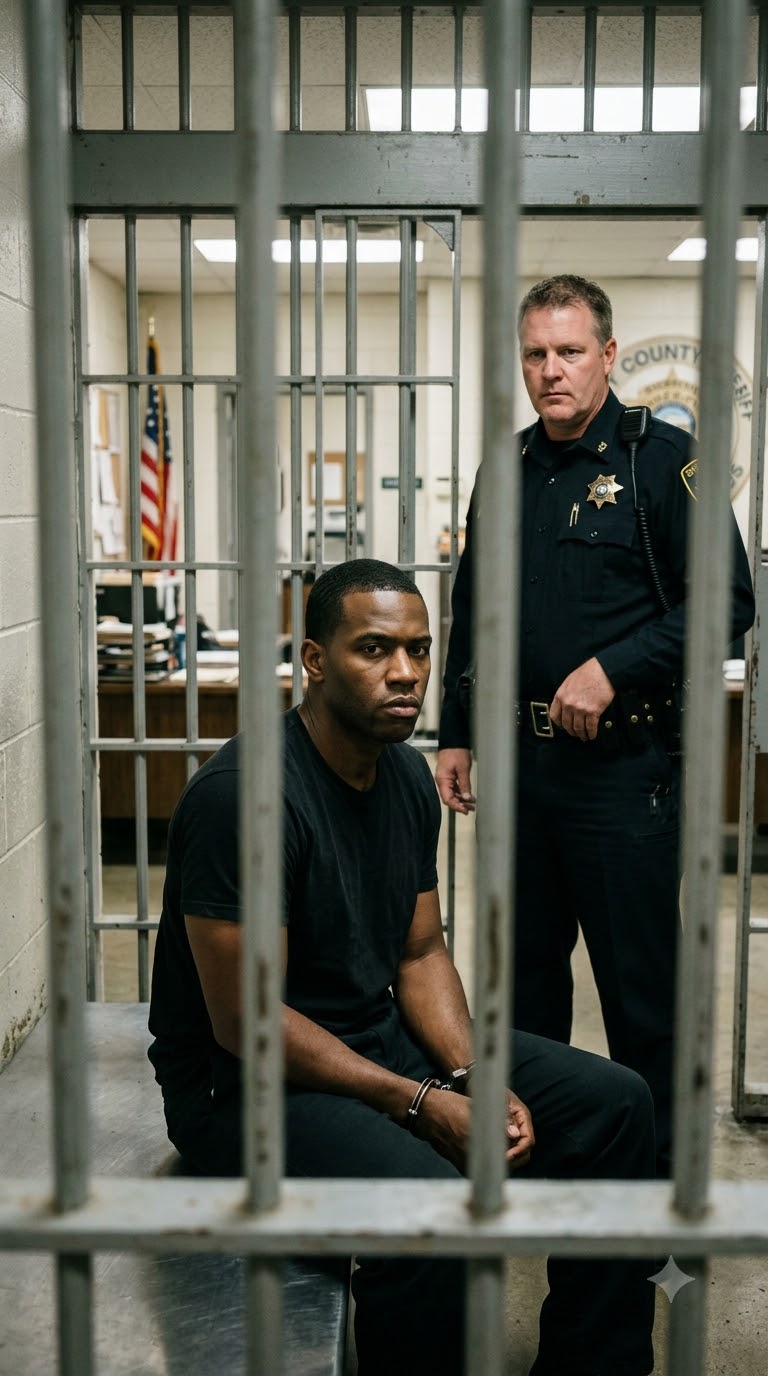
“The Pentagon.”
Barnes stared at him.
The sergeant continued.
“They’ve been trying to reach him for twenty minutes.”
Barnes’s face slowly lost its arrogance.
The sergeant stepped closer.
“You arrested a sitting military commander during an active federal emergency exercise.”
Barnes swallowed.
“He’s really a commander?”
The sergeant looked at him with disbelief.
“Yes.”
Then he added quietly:
“And not just any commander.”
Barnes looked toward Cell 3.
For the first time that night, uncertainty appeared in his eyes.
—
The sergeant unlocked the cell.
William stood.
“Commander Bradley.”
“Yes?”
“I’m Sergeant Davis.”
William nodded.
“Sergeant.”
Davis glanced at the marks around William’s wrists.
“I’m sorry.”
William didn’t respond.
Davis opened the cell door.
“You’re being released.”
William stepped into the hallway.
“On what grounds?”
Davis hesitated.
“Your identity has been confirmed.”
William looked at Barnes.
The officer avoided his eyes.
William’s voice remained calm.
“Then I would like my property returned.”
“Of course.”
“And I want the arrest report.”
Davis nodded.
“You’ll receive everything.”
William looked at the red phone.
“Who called?”
Davis answered honestly.
“Someone from the Pentagon.”
“Who?”
“General Marcus Reed.”
William’s expression changed slightly.
Reed was his commanding general.
A man who rarely called anyone directly unless something had gone seriously wrong.
Davis continued.
“He said the country was in the middle of a classified emergency exercise and you were expected in a secure briefing.”
William glanced at the clock.
3:19 a.m.
He had been in the cell for nearly an hour.
Then he looked at Barnes.
The officer finally met his eyes.
“I didn’t know.”
William’s voice remained remarkably quiet.
“You didn’t know because you didn’t ask.”
Barnes opened his mouth.
Nothing came out.
William continued.
“You had multiple opportunities to verify who I was.”
Barnes stared at the floor.
“You chose not to.”
The words landed harder than shouting would have.
—
At 3:37 a.m., William was finally given his belongings.
His phone contained dozens of missed calls.
His wife had called seventeen times.
General Reed had called nine.
Several other Pentagon numbers appeared repeatedly.
William immediately called his wife.
She answered on the first ring.
“William?”
“I’m okay.”
There was a long silence.
“Where are you?”
“At the county station.”
“What happened?”
William looked down at his wrists.
“I was stopped.”
“Are you hurt?”
“No.”
“William.”
“I’m okay.”
His wife knew him well enough to recognize what he wasn’t saying.
“Come home.”
He closed his eyes.
“I will.”
After the call ended, he stood silently for several seconds.
Then he turned toward Sergeant Davis.
“I need to know what happens next.”
Davis nodded.
“There will be an internal review.”
“Good.”
“Commander.”
William looked at him.
“I’ll make sure your complaint is documented.”
William shook his head.
“Not just my complaint.”
Davis understood immediately.
“You mean Barnes.”
“I mean the conduct.”
Davis nodded slowly.
“Understood.”
William walked toward the exit.
But before leaving, he stopped.
He turned around.
“Sergeant.”
“Yes?”
“The younger officer.”
“O’Connor?”
“Yes.”
William looked at him.
“He told the truth when it mattered.”
Davis nodded.
“I’ll remember that.”
—
The next morning, the truth began spreading through the department.
The vehicle was not stolen.
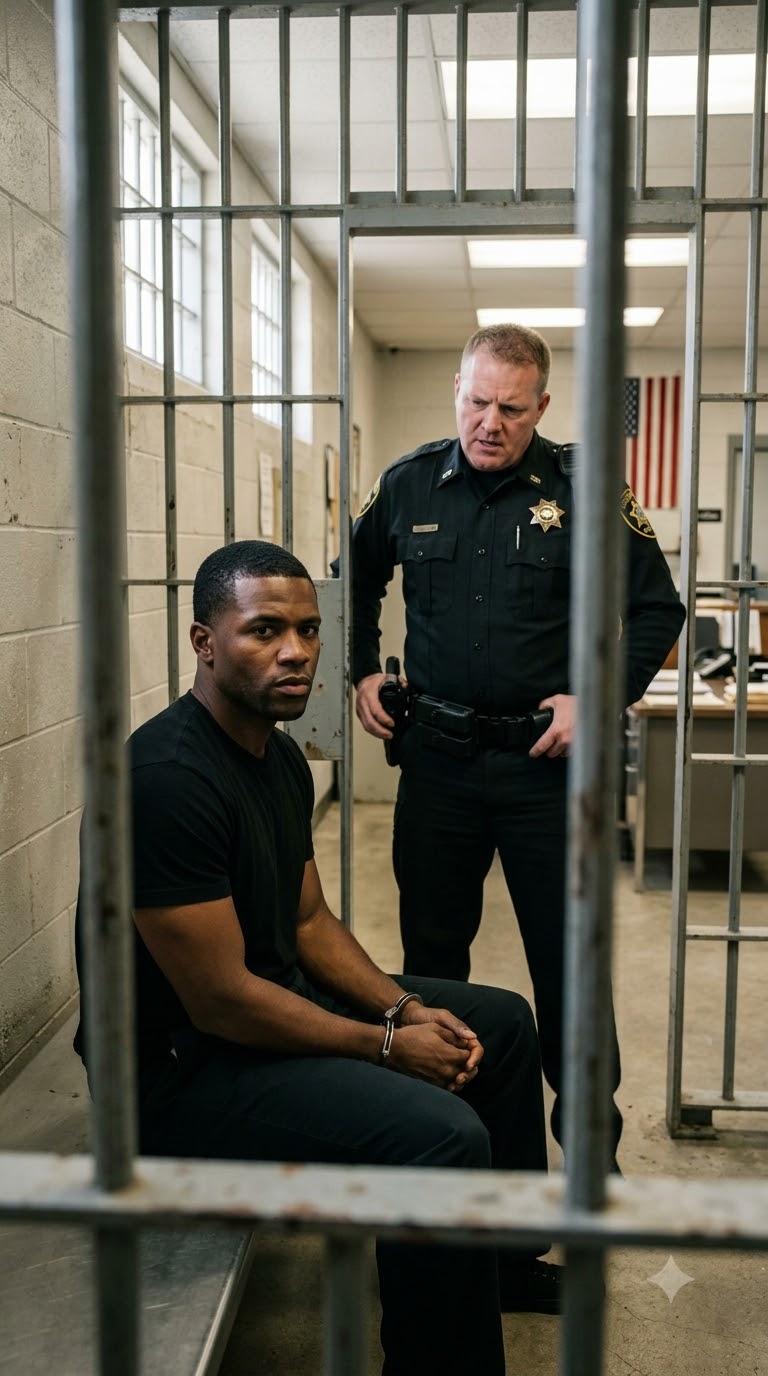
The ID was genuine.
No drugs were found.
William had not resisted arrest.
The alleged basis for the traffic stop did not withstand scrutiny.
And the body-camera footage raised even more serious questions.
Barnes’s comments.
His treatment of William.
The accusation about marijuana.
The unnecessary force used during the handcuffing.
The refusal to accept information that could have immediately verified William’s identity.
