

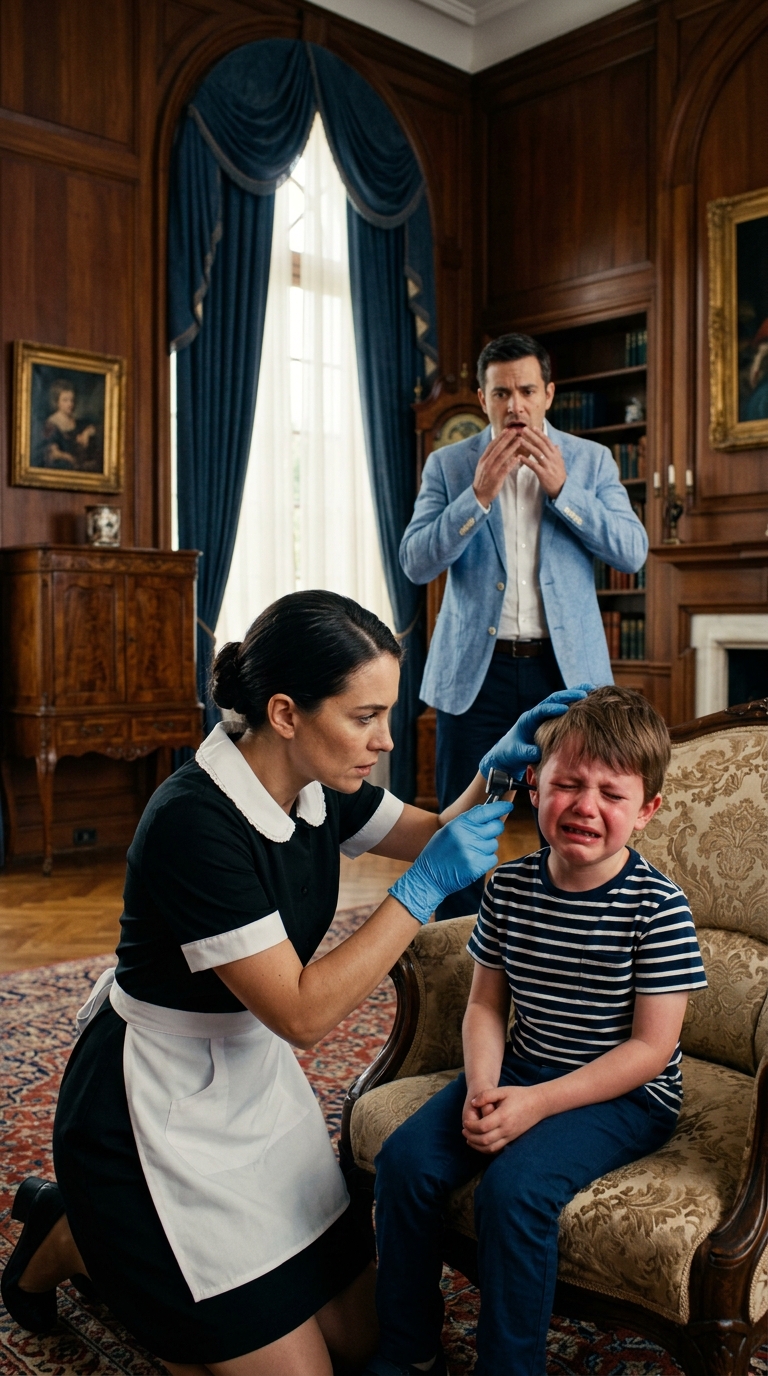
A child born into Mexico’s elite cried endlessly without explanation. His wealthy father eventually hired a humble nurse from a rough neighborhood. What she uncovered revealed a crime no one could have imagined.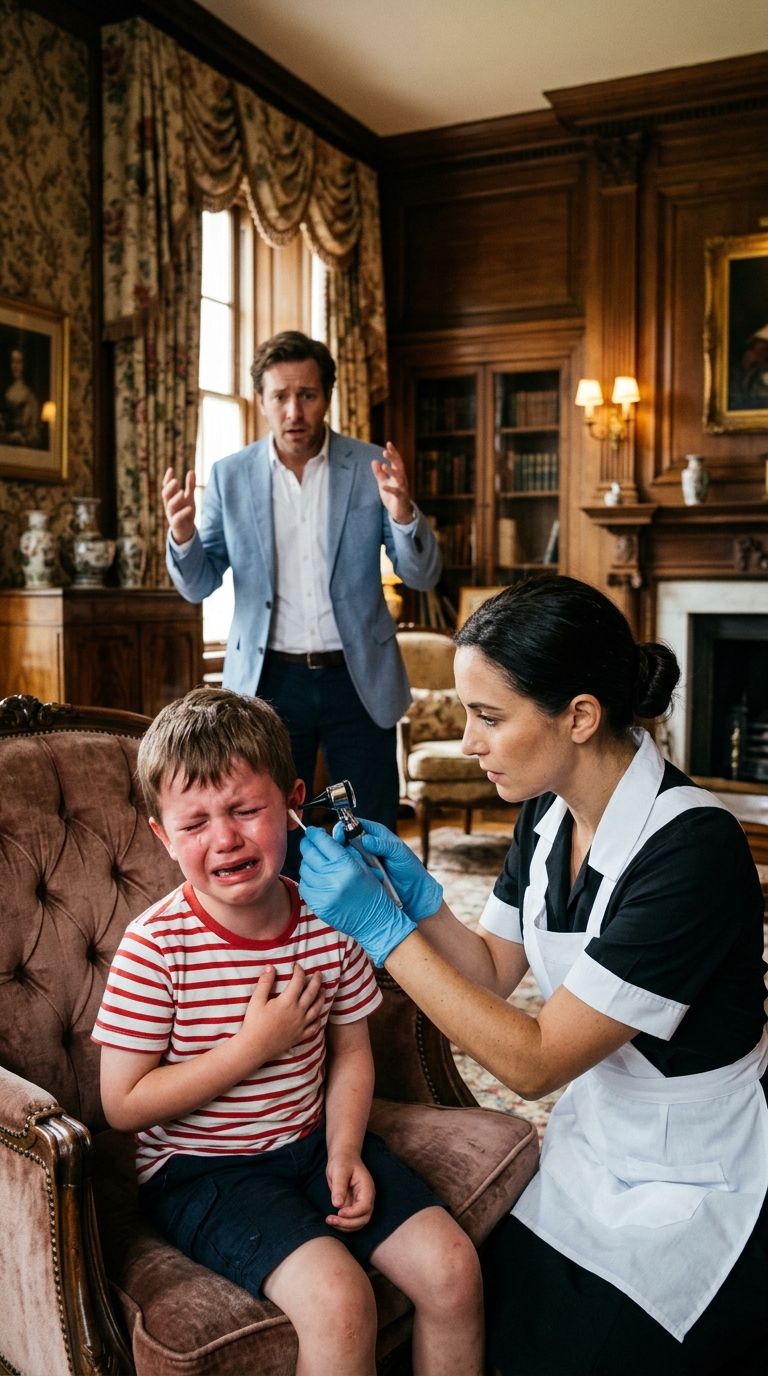
Rain pounded against the windows of a luxury penthouse in Lomas de Chapultepec as Alejandro Salgado crushed his phone in his hand. Outside, Mexico City glowed. Inside, despair filled every corner.
“I don’t care about the cost,” he shouted into the call. “I want the best neurologist here tomorrow. My son hasn’t stopped crying for three weeks.”
He ended the call and pressed his hands to his face. Alejandro had built a real-estate empire worth billions of pesos, yet none of it mattered when he heard seven-year-old Tomás screaming upstairs—raw, constant cries that sounded like pain without a cause.
“That’s fourteen doctors already,” said his wife, Lucía Ferrer, stepping into the study with a glass of wine. Her designer dress was flawless; her eyes were cold. “Maybe you should accept that he’s just weak. Spoiled.”
“He’s in pain,” Alejandro snapped. “I can see it in his eyes.”
At that moment, Don Rafael, the family’s longtime butler, entered quietly. “Sir, the agency sent another nurse. She says she has experience with difficult children.”
Alejandro exhaled. “Send her in.”
Moments later, Marisol Vega stood before them. Mid-thirties, dark braided hair, worn jeans, simple blouse. Her hands showed years of labor. Her eyes were sharp and unwavering.
“I’m Marisol Vega,” she said. “Pediatric nurse. From La Guerrero.”
Lucía scoffed. “From there?”
Marisol didn’t react. “That place taught me how to recognize fear and pain. Your child isn’t misbehaving. He’s suffering.”
Alejandro stood. “Every doctor says he’s fine.”
“May I see him?” Marisol asked. “Pain doesn’t wait.”
They climbed four floors, the crying growing louder. Tomás lay curled on the floor of a room filled with expensive toys, clutching his head.
Marisol knelt beside him. “May I touch your head, campeón?”
Tomás nodded weakly.
She examined his scalp carefully. Then she froze.
“I need strong light,” she said. “And something to magnify.”
Under the lamp, her face lost color.
“There are metal fragments in his scalp,” she said quietly. “Tiny needles. This wasn’t an accident.”
Lucía gasped. “That’s impossible.”
“MRIs don’t catch this,” Marisol replied. “Someone did this on purpose.”
Alejandro felt the room spin. “In my house?”
Marisol removed them slowly. Eighteen pieces in total—needles, tacks, thin wire—placed to cause pain without killing.
When it was over, Tomás whispered, “It doesn’t hurt anymore.”
Alejandro held him, crying. Over his son’s head, he saw Lucía watching—terrified.
Marisol asked who had been caring for Tomás recently.
“The nannies,” Lucía said. “And before them… Clara.”
“Who?” Marisol asked.
“His main caregiver,” Alejandro said. “She disappeared a month ago.”
Three days later, the crying began.
Marisol searched the old service room and found a loose floorboard. Beneath it was a diary.
The final entry read: Tomás is my son. Lucía has been hurting him to punish me. Tomorrow I tell Alejandro the truth.
The truth unraveled quickly. Clara had been seventeen when she became pregnant by Alejandro after a night he barely remembered. Lucía paid her, took the baby, faked a pregnancy, and erased her from existence. Years later, Clara returned under another name—just to be near her child.
Lucía recognized her.
Marisol looked outside at the recently renovated garden. The roses were too perfect. She dug.
Beneath the soil lay Clara’s body.
Lucía appeared with a gun, confessing everything—murder, abuse, lies. She planned to end it all.
Then a small voice spoke. “Mom?”
Tomás stood in the doorway.
Police arrived moments later, led by Inspector Elena Vega—Marisol’s aunt, Clara’s mother. Marisol had come to uncover the truth from the beginning.
Lucía was arrested.
Tomás learned the truth gently—that Clara loved him, that she was his real mother.
A jacaranda tree replaced the rose garden.
Six months later, Tomás turned eight, surrounded by people who truly cared for him.
The crying was gone.
And beneath the purple blossoms, a legacy of pain finally gave way to peace.
