

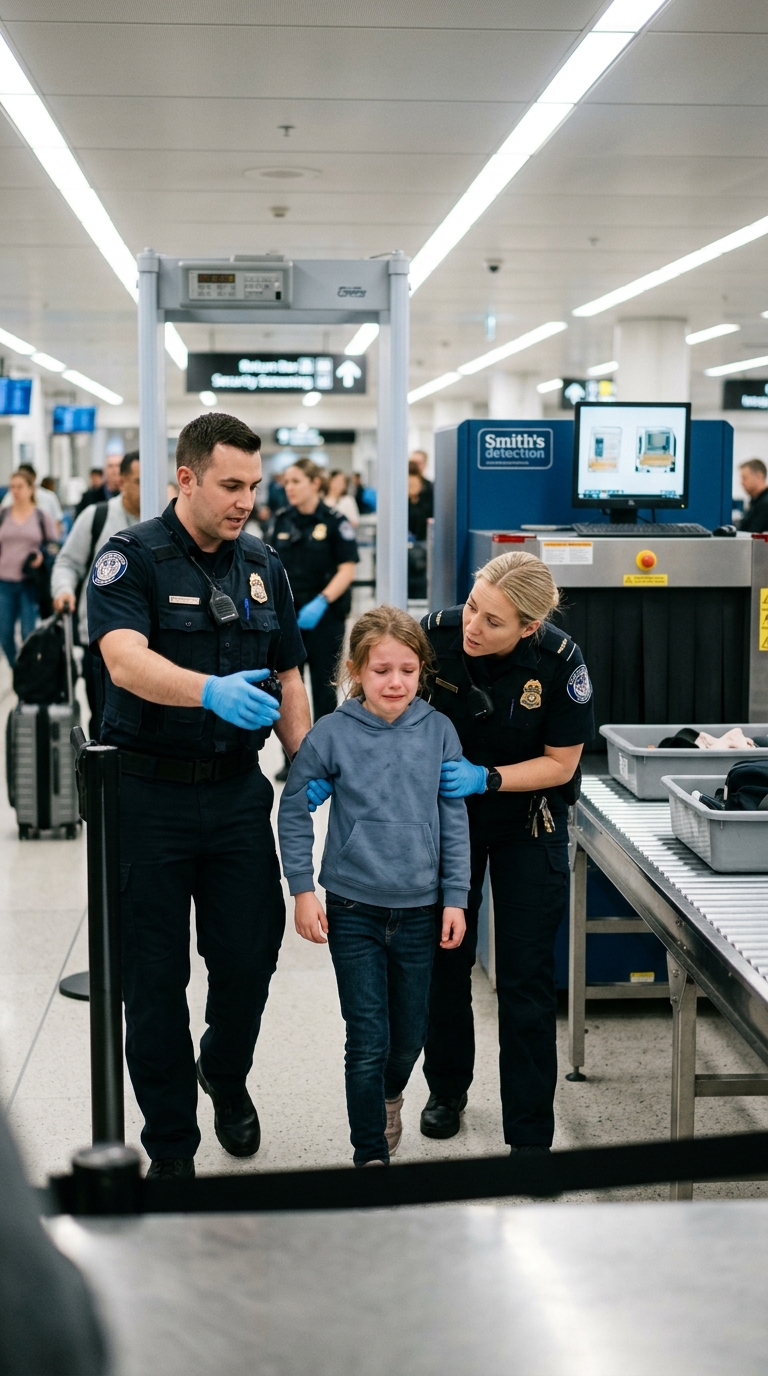
PART 1: THE MOMENT THE AIRPORT NO LONGER FELT SAFEThe terminal at Denver International was packed that morning — business travelers weaving through families, suitcase wheels gliding over tile, toddlers crying as parents clutched overpriced coffee. Everything felt normal. Routine. Safe. I remember thinking how ordinary the day seemed. Later, that thought would feel almost cruel.
My name is Megan Carter. I’ve lived my entire life in Colorado. Divorced for three years. Raising my daughter on my own. My ten-year-old, Ava, walked beside me through the security line, her hand wrapped in mine. She was thoughtful, mature beyond her age, the kind of child adults call “wise.”
“Did you double-check your pockets?” I asked, giving her hand a gentle squeeze.
“Yes, Mom,” she replied with a small eye roll. “Twice.”
That was Ava — careful, precise.
We were heading to Seattle to visit my sister for spring break. Nothing big. Just family dinners and a change of scenery.
Ava stepped into the body scanner first, letting go of my hand at the last second. She stood exactly as instructed, feet on the marks, arms slightly raised.
Then the alarm cut through the noise of the terminal.
It wasn’t a soft beep. It was sharp. Jarring. The kind that makes conversations stop mid-sentence.
A TSA agent raised her hand immediately. “Step back for me, sweetheart.”
Ava blinked, confused, and stepped back. “I didn’t do anything,” she said quietly.
“I know,” the officer said kindly, lowering herself to Ava’s level. “Do you have anything metal? Hairpins? Something in your shoes?”
Ava shook her head firmly. “No, ma’am.”
I didn’t hesitate to believe her. If she said no, it meant no.
They brought over a handheld wand, moving it slowly across her shoulders, down her sides, over her sneakers. A faint beep sounded near her left ribcage, then disappeared. The officer frowned and tried again.
Nothing.
She straightened and exchanged a look with a colleague. “We’re going to run the full scan again. Standard procedure.”
Her tone stayed calm — but something underneath had changed.
Ava glanced back at me. “Mom?”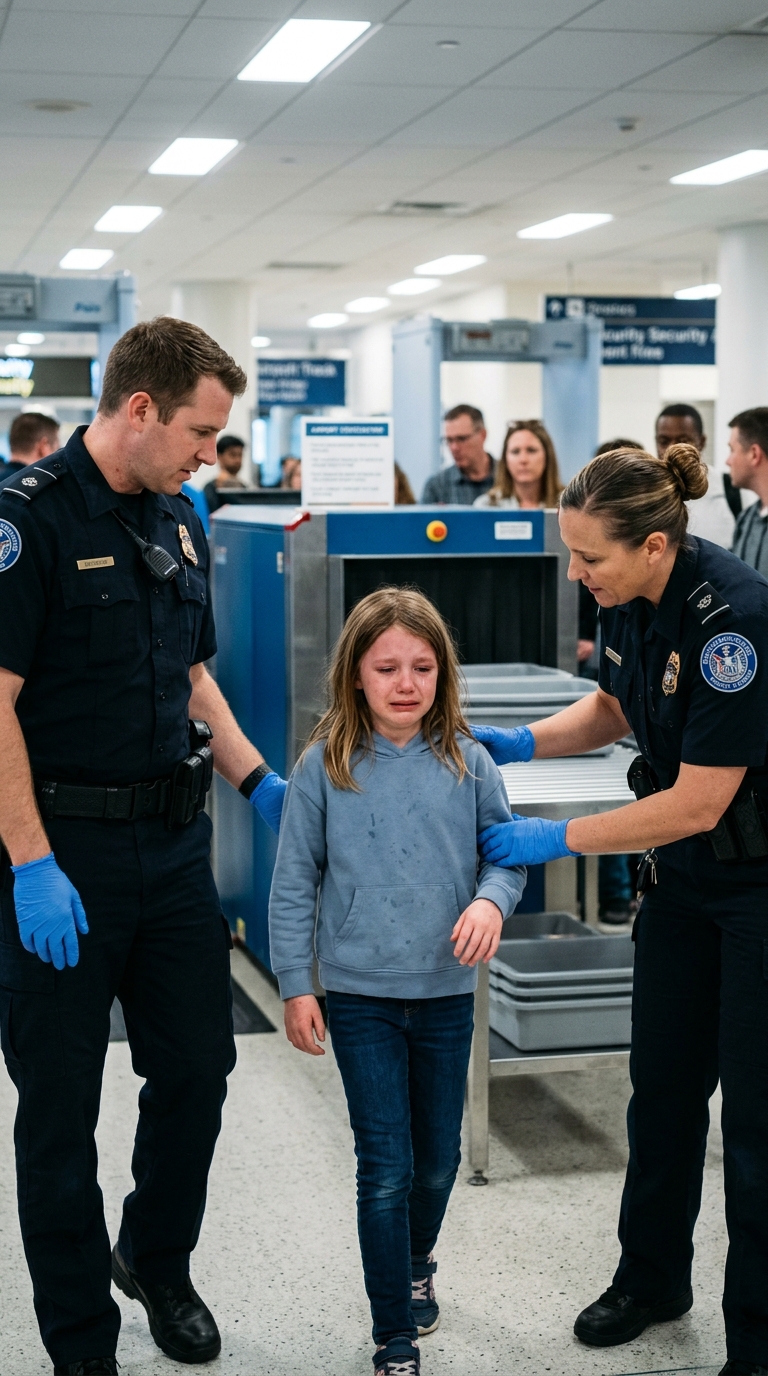
“It’s okay,” I told her, even as my stomach tightened.
The scanner rotated again, tracing her small frame with mechanical precision. Less than a minute passed.
The officer looked at the screen.
And froze.
Her hand stopped moving. Her posture stiffened. She leaned closer, eyes narrowing at what appeared in pale blue outlines.
Another agent stepped beside her. They didn’t speak loudly. They whispered.
Behind me, I heard someone murmur urgently, “Call airport police. Now.”
My heart dropped so fast I felt dizzy.
PART 2: THE KIND OF SILENCE THAT CHANGES EVERYTHING
“Ma’am, please stay where you are.”
The warmth in the agent’s voice was gone. Not unkind — just firm. Controlled.
“What’s happening?” I asked, instinctively moving toward Ava. “She’s ten.”
Ava gripped my jacket sleeve. “Mom, why are they looking like that?”
An officer gently guided her a step aside. Not roughly. Carefully. As if every movement mattered.
Two airport police officers arrived within minutes. Calm. Observant. Professional.
“Megan Carter?” one asked.
“Yes.”
“We’re going to need you and your daughter to come with us for a few questions.”
“About what?” I pressed.
“It’s just precautionary.”
They escorted us to a private room off the main corridor — no windows, beige walls, a metal table bolted to the floor. Time felt stretched and warped inside it.
An officer knelt in front of Ava. “Ava, has anyone given you clothing recently? Maybe a sweatshirt, a jacket, something new?”
She thought carefully. “I got a hoodie for my birthday,” she said slowly. “The blue one I’m wearing.”
My pulse spiked.
“Who gave it to you?” he asked gently.
She looked at me. “Mr. Dalton.”
My throat tightened. Mr. Dalton was our neighbor. He watched Ava after school when I worked late. He brought soup when we were sick. He fixed our fence last summer.
Another officer turned to me. “Has your daughter spent time alone with him?”
“Yes,” I admitted, barely steady. “Many times.”
The officer nodded seriously. “The scanner didn’t detect metal,” he explained carefully. “It detected an irregular density sewn into the lining of her sweatshirt.”
“Sewn?” I repeated, my voice hollow.
Ava frowned. “What does that mean?”
That’s when it hit me — she truly had no idea.
PART 3: WHAT THE SCANNER FOUND
After hours of careful, respectful examination, the truth emerged.
Hidden between the inner layers of Ava’s hoodie was a thin, flexible tracking strip. Non-metallic. Almost invisible. Professionally stitched into the lining. It had once been active, recording location data for months. Movement patterns. Routes. Times.
The airport scanner had detected the abnormal density purely by chance.
If we had driven instead of flown, we never would have found it.
Investigators were contacted. Statements taken. The hoodie sealed into an evidence bag. Mr. Dalton was no longer just a friendly neighbor. He was now the subject of a federal investigation.
That evening, back home, Ava sat cross-legged on her bed, hugging her stuffed bear tighter than usual.
“Mom,” she asked softly, “did I do something wrong?”
I crossed the room and knelt in front of her, gently holding her face in my hands.
“No,” I said firmly. “You did nothing wrong. Someone else did.”
She searched my face for reassurance. I made sure she saw it there.
Later, after she fell asleep, I sat alone in the hallway replaying everything.
The casual goodbye that morning.
The routine walk through security.
The moment the alarm screamed.
If the TSA officer hadn’t looked again…
If the scanner hadn’t caught that detail…
If instinct hadn’t overridden assumption…
We would have boarded that plane without knowing.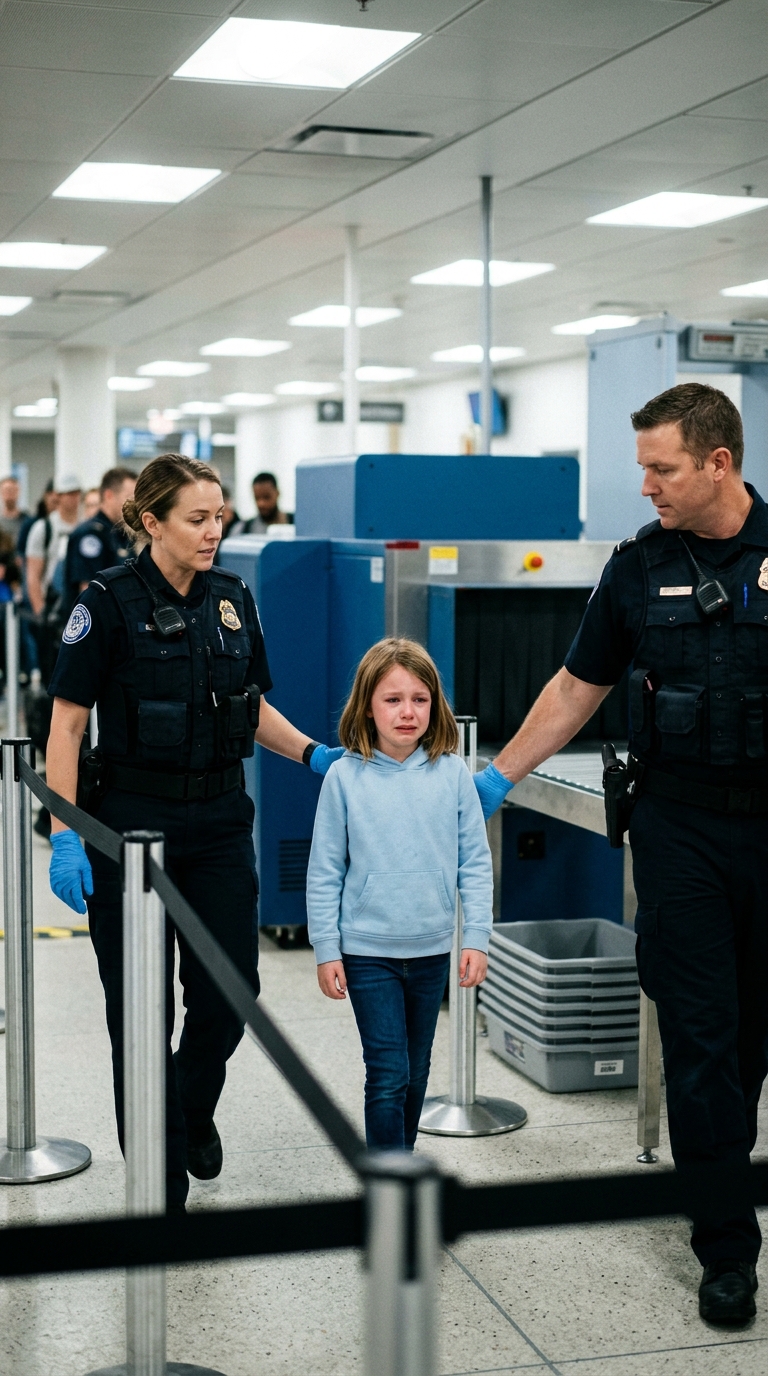
And the person tracking my daughter would still be watching.
That was when I realized something terrifying: danger doesn’t always look like a stranger in the dark.
Sometimes, it looks like someone you thank for helping.
And sometimes, it takes the scream of a machine in a crowded airport to reveal the truth
