

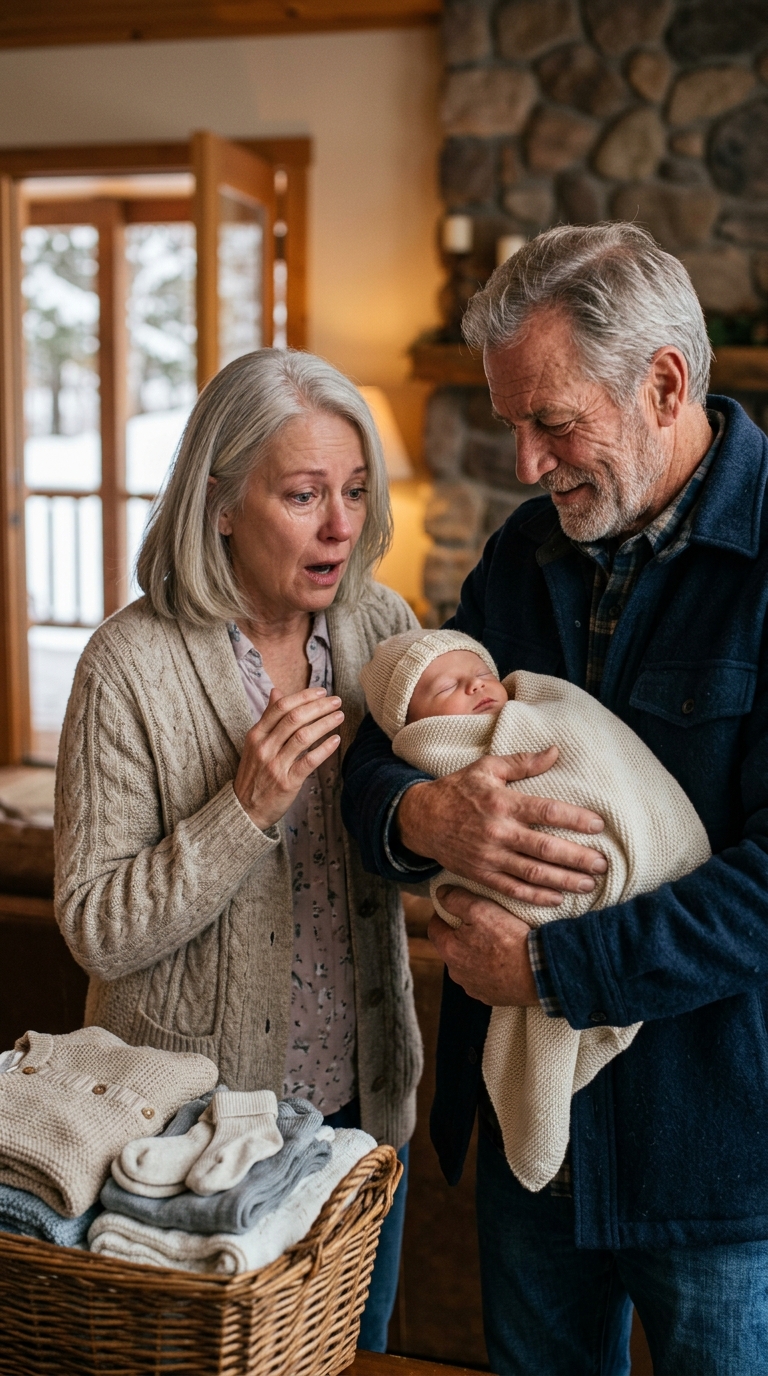
By the time I reached my late fifties, I believed my life had settled—no more big turns, no unexpected changes. But one winter morning, a newborn was left on my doorstep, and I became a mother at 56. Twenty-three years later, another knock on that same door revealed a secret my son had been carrying all along.
I’m 79 now, and my husband Harold is 81. I became a mother for the first time at 56, when someone abandoned a baby outside our home.
Twenty-three years later, a stranger stood at my door holding a box and said, “Look at what your son is hiding from you.” That sentence still echoes in my chest.
When Harold and I were younger, we could barely cover rent, let alone raise children.
We lived on canned soup and cheap coffee, always telling ourselves, “Later. When things get better.”
Then I got sick. What should have been a minor medical issue turned into years of treatments and hospital waiting rooms. Eventually, the doctor told us I would never be able to get pregnant.
We sat in silence in the car afterward. There was no dramatic breakdown—we simply… adjusted. We bought a small house in a quiet town, worked, paid bills, and filled weekends with simple drives. People assumed we didn’t want children. It was easier to let them believe that than explain the truth.
I turned 56 during a harsh winter. One early morning, I woke to a sound. At first, I thought it was the wind—but then I realized it was crying. Faint, fragile, unmistakably a baby.
“Harold! Call 911!”
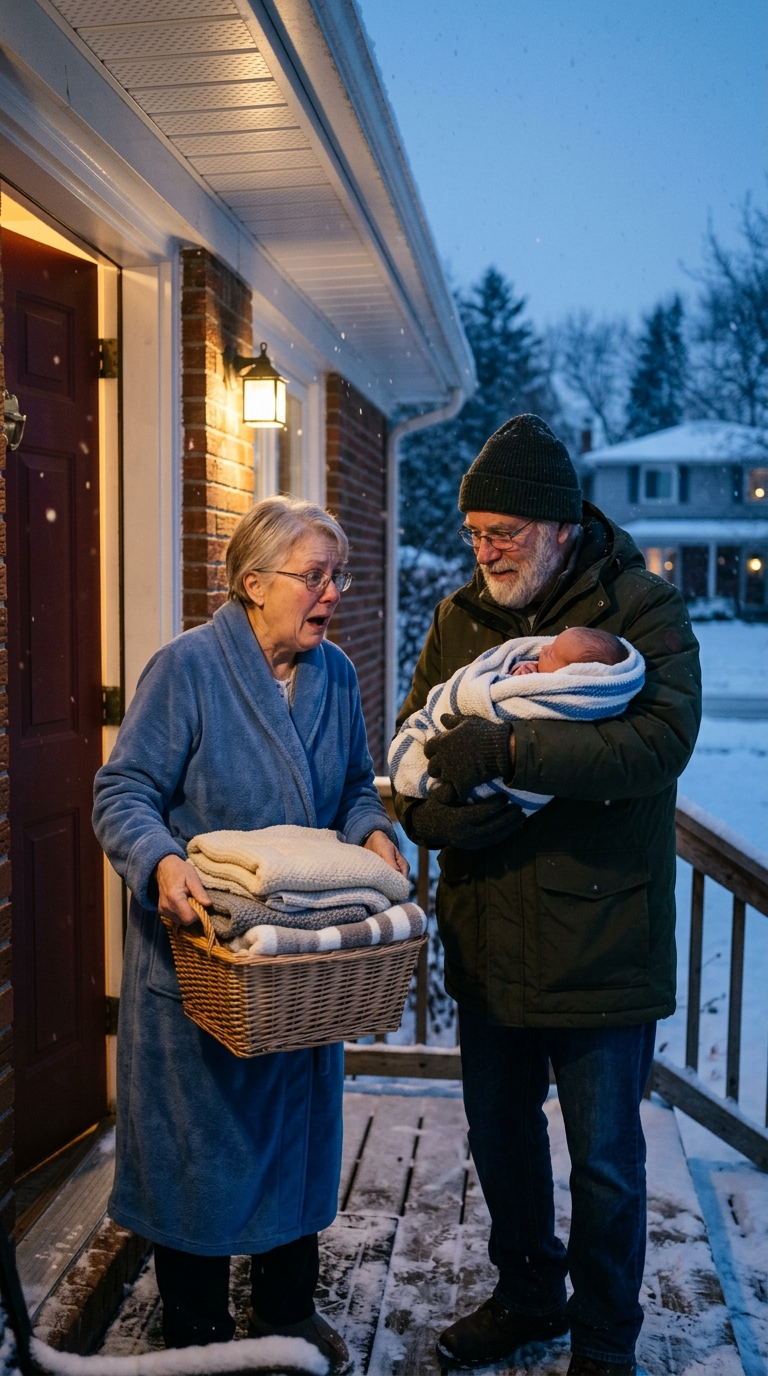
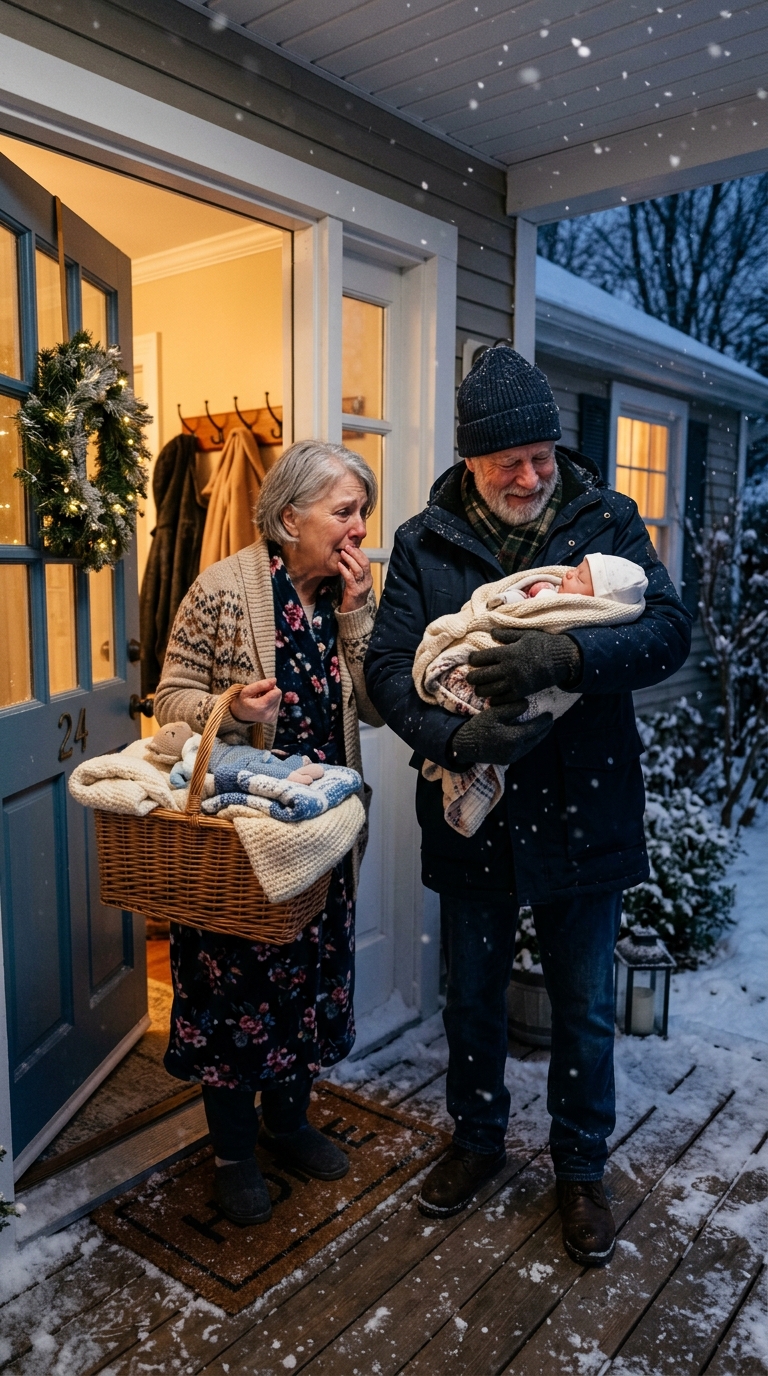
I opened the front door, and the cold air hit me hard. On the doormat sat a basket. Inside was a baby boy, his skin red from the cold, wrapped in a blanket so thin it felt like paper.
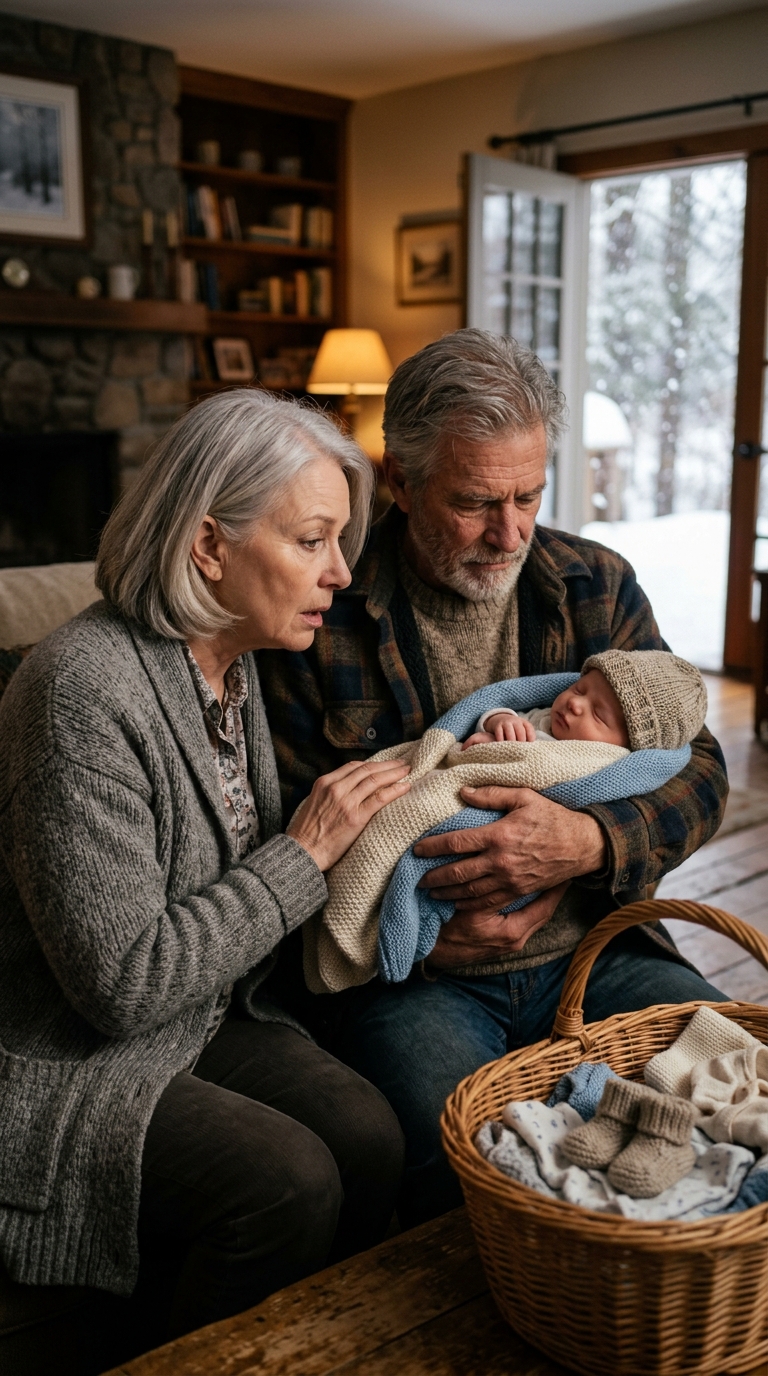
I grabbed the basket and called for Harold again. He rushed over, wrapped the baby in whatever we could find, and held him close while I called for help.
The house filled with flashing lights and serious voices. The responders asked if we had seen anyone—a note, a car, anything at all. But there was nothing.
They took him away. I still remember his eyes—dark, wide, alert in a way that didn’t match how small he was.
That should have been the end of it. Just a sad story to tell now and then. But I couldn’t let it go.
The social worker gave me a number “in case you want updates.” I called that same afternoon. Then the next day. And the next.
“Hi, this is Eleanor, the woman with the baby on the doorstep… is he okay?”
“He’s stable,” she told me. “He’s warming up. He seems healthy.”
No one ever came forward. Eventually, the social worker said, “If no relatives are found, he’ll be placed in foster care.”
I looked at Harold across the table. “We could take him,” I said.
He blinked. “We’re almost 60.”
“I know. But he needs someone. Why not us?”
Harold’s eyes filled with tears. That was enough.
We told the social worker we wanted to adopt. Everyone reminded us of our age. “You’ll be in your seventies when he’s a teenager,” one woman warned.
“We understand,” Harold replied.
After interviews, home visits, and endless paperwork, the social worker finally smiled and said, “If you’re still sure… you can bring him home.”
We named him Julian.
Neighbors whispered. People assumed he was our grandson. “He’s our son,” I would say.
We were exhausted—sleepless nights, aching bodies, Harold dozing off mid-sentence. But every time Julian wrapped his tiny fingers around mine, it felt worth it.
We told him the truth from the beginning: “You were left at our door. No one left a note, but we chose you. You’re ours.”
He would nod and go back to playing. Sometimes he asked, “Do you think my other mom thinks about me?”
“I hope so,” I would say. “But I know I think about you every day.”
Julian grew into a kind, curious young man—loyal, protective, the kind teachers loved. People still assumed we were his grandparents. He’d laugh and say, “No, they’re just old.”
He went to college, got a job in IT, called us every week, and came by most Sundays. Life felt complete.
Then, when Julian was 23, there was another knock at the door. Calm this time. Not urgent.
I opened it to find a woman in her forties, neatly dressed, holding a box.
“You’re Eleanor? Julian’s mother?” she asked.
“Yes,” I said, uneasy.
“My name is Marianne. I’m your son’s attorney. I’ve known him for some time.”
Attorney. My stomach tightened.
“Is he okay?” I asked quickly.
“He’s physically fine,” she replied. “May I come in?”
That word—physically—did not comfort me.
She placed the box on our coffee table. “This is going to be difficult to hear. But you need to see what your son has been keeping from you.”
Inside were documents—and a photograph of a well-dressed young couple standing in front of a large estate.
“These are his biological parents,” Marianne explained.
She told us they were wealthy, well-known, from an old-money family. They had abandoned Julian because doctors warned of possible complications at birth. They panicked, didn’t want a “problem,” and left him in secret. Years later, they died in a car accident. In their will, everything was left to their child—Julian.
Marianne added, “Julian has known about this for years. And you didn’t.”
That evening, Julian came over for dinner, carrying dessert like always.
Halfway through the meal, I said quietly, “She showed us the box.”
Julian exhaled. “I told her not to come. I’m sorry.”
“Why didn’t you tell us?” I asked.
“Because it felt like their mess,” he said. “Their money. Their guilt. Not ours. I didn’t want it in this house.”
Harold leaned forward. “And the money? Is it a lot?”
Julian gave a short laugh. “Yeah. Enough to make my brain shut down when I saw the number.”
I asked, “Do you want it?”
He thought for a long moment. “Sometimes I think about paying off my loans. Helping you two. Doing something good with it. But every time I imagine signing their name, it feels like I’m saying they’re my real parents… and you’re something less.”
Harold shook his head. “We are not going to resent you for taking what’s yours. You didn’t choose to be abandoned. If you want that money, take it. We will still be your parents.”
Julian’s eyes filled. “You brought me inside when I was freezing. They left me out there. That’s the difference. And it’s not just about money. It’s about who I am.”
He took a breath. “I’m going to tell Marianne to close it. If there’s a way to donate it without their names attached, great. If not, I walk away.”
I whispered, “That’s a lot to walk away from.”
He smiled softly. “I already won. I got parents who wanted me.”
After dinner, Julian helped wash dishes, like always. He picked up the box.
“I’ll keep this,” he said. “Figure out what to do. But I won’t keep you in the dark anymore.”
At the door, he hugged us both.
“Family isn’t who shares your DNA. It’s who opens the door when you’re freezing.”
I used to think I failed at motherhood because my body couldn’t give me a child. But I became a mother the moment I opened that door and refused to leave him in the cold.
And twenty-three years later, at our kitchen table, my son chose us right back.
