

PART 1 — Ninety Miles From Home
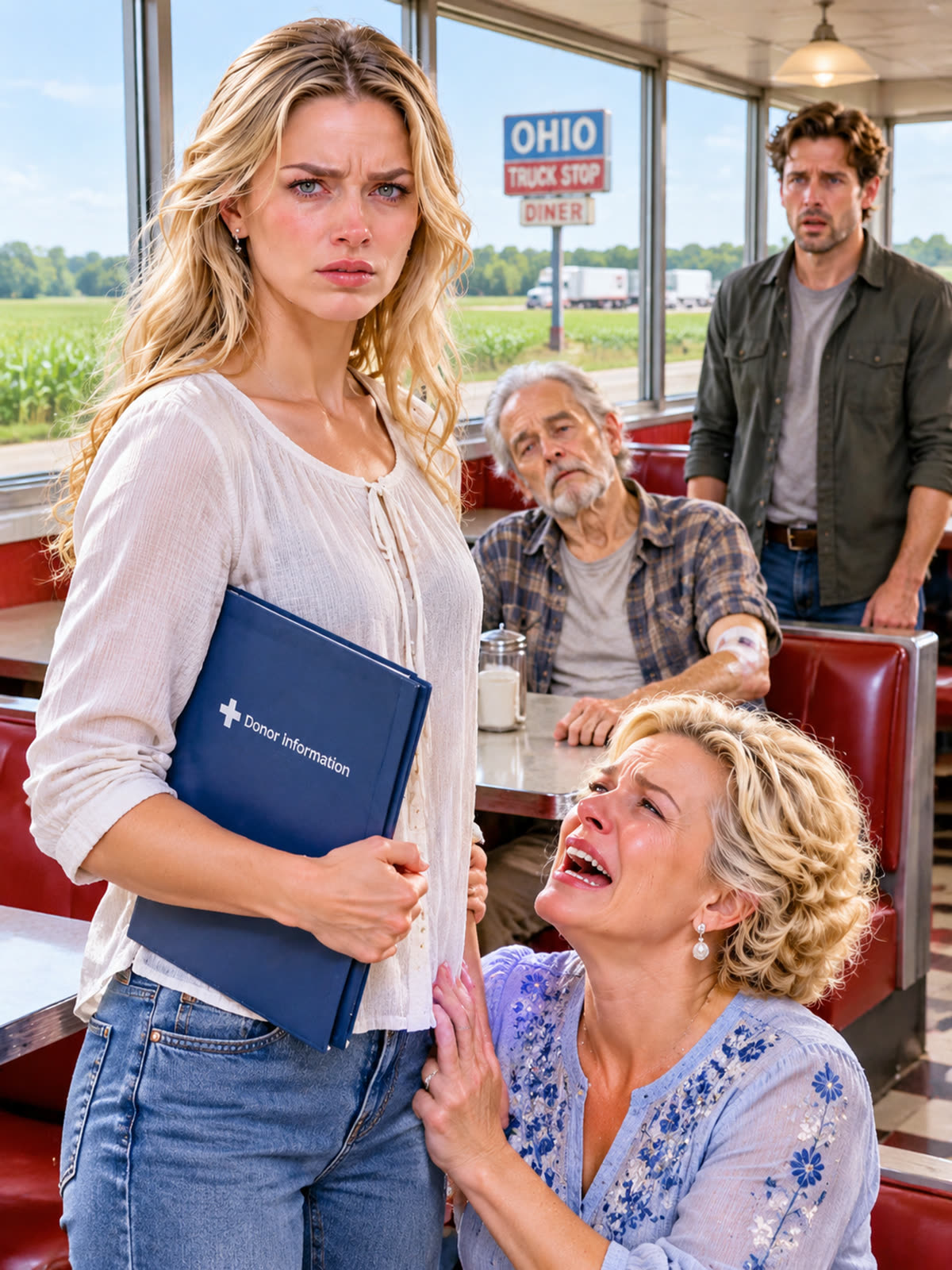
“Your $23,900 belongs to this family, Kelly. And right now, your brother needs it more than you do.” My mother spoke with a calmness that frightened me more than shouting would have. We were in my father’s Chevrolet Equinox, parked behind an isolated truck stop beside Interstate 71 in Ohio. Darkness was approaching, and home was ninety miles away. My parents had just explained that keeping the savings I had spent three years earning would mean losing my place in their lives. I was nineteen. That money was meant for nursing school, not the latest thing my brother wanted.
I had earned it at Willow Creek Senior Living, working punishing shifts, collecting meal trays, helping elderly residents, and taking overtime whenever it was available. Other people my age spent weekends and school breaks enjoying themselves. I spent mine working toward the future I wanted so badly. Now my mother, Carol Lenhardt, wanted that future handed over to Brandon. “He needs the money for his condo down payment,” she explained. “His closing is Tuesday. You can always attend nursing school next year.” I tried to make her understand. “My tuition is due in ten days,” I replied. “Classes start August twenty-fifth.” She dismissed that with a wave. “Brandon is building a career. You’re young, Kelly. You’ve always been resourceful.”
My father, Dale, had said nothing from behind the wheel. Eventually, he broke his silence. “If you won’t help your family, you can learn to survive without us.” The lock on my door clicked open. “Get your bag from the trunk.” I searched his face for a smile, some sign that they were only trying to scare me again. There was none. My mother pushed her own door partly open. “Don’t come begging us to take you back.” I got out, stepped into the summer heat, and retrieved my canvas duffel from the trunk. By the time I turned back, my father was shifting the car into gear.
For a moment, I couldn’t move. They couldn’t really intend to leave me beside a highway so far from home. Then the Chevrolet rolled across the gravel, throwing dust over my shoes, and its red taillights disappeared toward the interstate. I remained there alone, ninety miles from everything familiar. I had sixty-two dollars tucked into my sock, a phone showing thirty-one percent battery, and almost twenty-four thousand dollars my parents believed they could pressure me into giving away. They had made their decision. Refusing to purchase my brother’s future apparently meant I no longer deserved their protection.
Brandon’s position in our family had never been a mystery. Thirteen framed photographs along the staircase celebrated the milestones of his childhood. Pictures of me were tucked behind the hallway coats. When he wanted to take real estate licensing classes, my mother emptied the college savings envelope she had helped me start. His desire for a luxury car was treated as evidence of ambition. My double shifts were treated as something I ought to do. Still, this felt different from every demand that had come before. They were no longer asking me to give up something small. They were holding my entire future against me.
Once the highway had swallowed the last trace of their car, I went inside the truck stop. I bought an inexpensive turkey sandwich and chose a seat near an outlet so I could charge my phone. At 9:12 p.m., my mother sent a message: Your father changed the garage code. Don’t contact us until you’re ready to apologize to Brandon and show some humility. I read it again. They weren’t merely waiting for me to reconsider. They were deliberately removing every way back except surrender. I placed my phone facedown on the table, unable to keep looking at the words.
I stayed in that booth for hours. Eventually, the manager told me I could remain inside, but I wasn’t allowed to sleep there. I kept myself upright and held my bag against me while customers drifted in and out. Each opening of the automatic doors made me tense. Each truck pulling through the lot reminded me of the distance between that booth and home. By morning, I had settled on one promise. My parents might have torn apart the plans I had made, but I would not let them claim ownership of everything that came afterward.
Around 5:20 the next morning, a woman in navy medical scrubs came into the travel plaza and bought two coffees. Passing my booth, she paused. “You were sitting here when I stopped for gas last night,” she observed. I raised my head. She had short gray hair, wire-rimmed glasses, and a hospital identification badge. Her name was Gail, and she worked as a charge nurse at a dialysis center in Delaware, Ohio. “Are you waiting for someone?” she asked. I hesitated before answering. “I’m waiting for daylight.” Her gaze dropped toward the duffel beside me.
Gail asked whether I needed transportation somewhere safe. She couldn’t give me money or offer me a place in her home, she explained, but she could take me to the public library in Delaware. I accepted. During the drive, she asked what work I had done. “I’ve worked with elderly residents since I was fifteen,” I explained. “I became a certified resident assistant at seventeen.” When she asked why I was alone, I answered honestly. “My parents wanted my nursing school savings for my brother’s condo. I refused, so they abandoned me.” She listened, then mentioned that her clinic often hired patient care technicians. Training was included, and the starting pay was $17.50 an hour. “You already know how to work with older patients,” she said. “That matters.”
At the library, Gail wrote a phone number on the cardboard sleeve around her coffee cup. It belonged to Joan Albrecht, a retired English teacher who rented an apartment over her garage. “She has strict rules,” Gail warned. “But she’s fair.” I thanked her and went inside. At a library computer, I signed into my credit union account, ready to work out how much I could spend on shelter without destroying my education fund. Instead, a message appeared: ACCOUNT ACCESS SUSPENDED. My stomach dropped. Even after leaving me at the truck stop, my mother apparently wasn’t finished trying to reach my money.
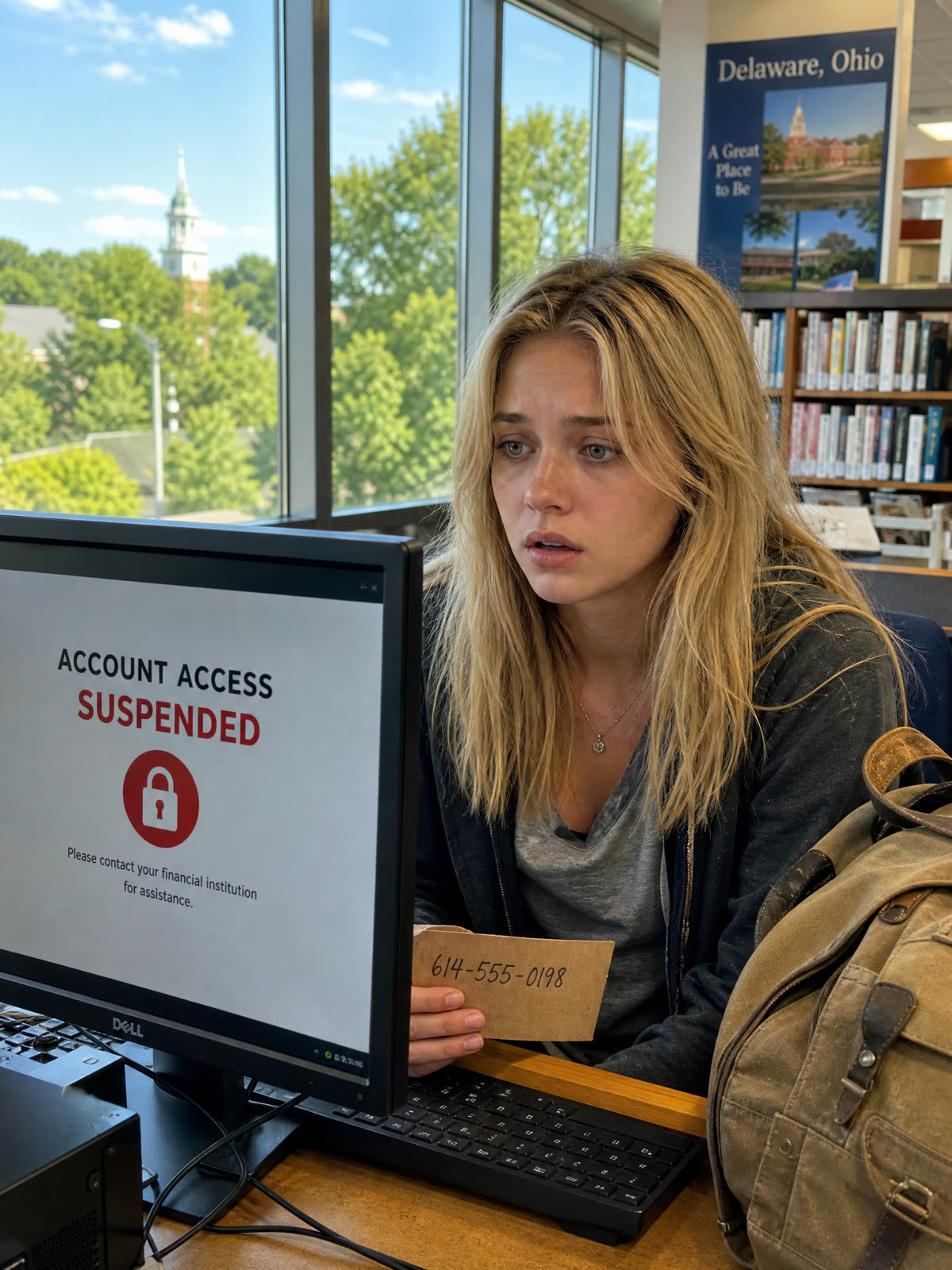
Before leaving home, I had transferred my savings from an old joint account into a certificate of deposit under my control. I suspected Carol had challenged that transfer. At a nearby credit union branch, I explained what had happened. A teller named Martha contacted my original branch and helped verify my identity. After checking the records, she confirmed that my mother had tried to report the transfer as improper. But the money legally belonged to me, and it was still protected. I withdrew enough for immediate living costs and added safeguards against anyone else gaining access. One threat had been contained. Then I discovered that my phone no longer had service.
My father had canceled my place on the family mobile plan. I bought a prepaid SIM card and called Joan. Two hours later, I was standing in her modest Victorian house. At seventy-two, she had sharp gray eyes and the assured bearing of someone who had spent decades keeping classrooms in order. “The apartment costs six hundred dollars monthly,” she explained. “Utilities and internet are included.” She listed her expectations: no noise late at night, no messes left behind, no unannounced visitors, and absolutely no dishonesty. None of those rules frightened me. After the previous night, clear rules sounded almost comforting.
I put twelve hundred dollars on the table to cover the first month and deposit. Joan examined me for a moment. “Where are your parents?” I answered without trying to soften it. “Ninety miles south,” I answered. “Waiting for me to run out of money so they can buy my brother a condominium.” She said nothing for a few seconds, then placed a brass key in my hand. “The lock sticks sometimes. Turn it gently.” That evening, stretched out on a clean bed in the little apartment, I finally felt safe enough to draw a full breath.
Then I checked my nursing school portal. ENROLLMENT CANCELED — TUITION DEPOSIT NOT RECEIVED. While I had been trying to secure a roof and keep my mother away from my account, the deadline had slipped past. My place in the original program was gone. I stared at the notification until I started crying. I wasn’t crying because I wanted my parents to come back. I was grieving the dream I had worked so hard to reach, the dream they had treated as something easily discarded. Before sleep came, I made myself another promise. They had interrupted my education. They would not be the ones who ended it.
By October, my days looked very different. I worked at Gail’s dialysis center in green scrubs, helping care for people with kidney failure. I learned how to prepare equipment, watch patients under supervision, recognize concerning changes, and support people who spent hours connected to machines several times each week. Gail demanded precision, patience, and dignity for every patient. I respected her for it. One of my regular patients was Walt Hennessy, a sixty-eight-year-old retired electrician who had spent six years on dialysis. Treatment had left its marks on his arms and exhausted his body, but not his humor. “Careful, kid,” he’d say whenever I approached. “These veins have survived worse than you.” I would smile. “Then try not to make my job harder.” He always laughed.
As the weeks passed, Walt and I grew close. During a rainy November afternoon, he told me that his adult daughter had offered to donate a kidney. The doctors had assessed her as a possible living donor, and she appeared promising. Walt, however, had refused. “Why?” I asked. He looked out through the window. “She has three little boys. A husband. A whole life ahead of her.” After a pause, he added, “I couldn’t stand the thought of asking her to take a risk for me.” His daughter had been angry. To her, it felt as though he was rejecting something she desperately wanted to give.
Walt admitted he had even tried to give the transplant team a reason to reconsider proceeding. “I wanted her to think it wasn’t possible,” he explained. “That way, she wouldn’t blame herself.” I swallowed before answering. “You were protecting her.” He nodded. “That’s what being a father means to me. You don’t bring children into the world so you can spend their futures keeping yourself comfortable.” I carried those words with me long after my shift ended. They described a kind of fatherhood very different from the one I knew.
Back at Joan’s that evening, I found an old photograph on my phone. Before leaving home, I had photographed medical paperwork my father had left on the refrigerator. At the time, most of it had meant little to me. Now I could recognize what it showed. Dale had chronic kidney disease, a substantially reduced estimated kidney filtration rate, and complications associated with diabetes and high blood pressure. His doctor had prescribed Farxiga to help protect the kidney function he had left. I remembered the pharmacy bag on the kitchen counter, my mother’s complaints about its price, and the swelling around Dad’s ankles after long delivery shifts. Had he kept taking it?
I opened social media and found a photograph Brandon had posted outside his new condominium in Cleveland. He wore an expensive suit and displayed a bright brass key. Beneath it was his caption: Closed and funded! Forever grateful to my incredible parents for helping make this dream possible. Family first. I looked at the photograph for a long time. He had gotten the condo after all. Somehow, my parents had produced the money they had tried to take from me. My father drove deliveries. My mother scheduled appointments at a dental office. They hadn’t had another twenty-four thousand dollars lying around.
The figures refused to fit together. I thought about the prescription bag, the swollen ankles, and the home Brandon was now celebrating. My parents had found a way to finance his dream, but I couldn’t understand what they had given up to do it. For the first time, I began to suspect that the price of that condominium was much higher than any of them had admitted—and that I had only seen the beginning of the consequences.
PART 2 — The Reason They Came Back
By the next summer, I had put much of my life back together. I passed the clinical hemodialysis technician certification examination with a ninety-four percent score, and my pay rose to $20.50 an hour. I bought a dependable used Honda Civic outright and earned a place in an evening practical nursing program beginning in September. Documentation of my family situation also helped me pursue financial aid as an independent student. My savings were secure, my rent was covered, and the career I had wanted since childhood was within reach again. Then, exactly one year after the truck stop, I left work and found my mother waiting near the clinic parking lot.
Carol Lenhardt stood there in expensive sunglasses and an embroidered blouse, looking almost unchanged from the night she had left me beside the highway. “Kelly!” she exclaimed. She came toward me with her arms spread. I didn’t move, but she hugged me anyway. “Oh, sweetheart. Look at you! We always knew you would succeed. You’ve always been our strong girl.” My arms stayed at my sides. “Why are you here, Carol?” Her smile tightened. Instead of answering directly, she gestured toward a silver Chevrolet I recognized immediately. My father’s vehicle. This time, though, he wasn’t behind the wheel.
Dale sat in the passenger seat. When I reached the window and saw him clearly, my breath almost stopped. He seemed to have aged decades. His cheeks were hollow, his eyes ringed with darkness, and his complexion had turned grayish. Then I noticed his left forearm. A prominent dialysis access fistula lay beneath fresh dressing from a recent treatment. I understood what I was seeing: advanced kidney failure. “Hey, Kel,” he whispered. His voice was so faint and unfamiliar that I struggled to connect it to the man who had once ordered me out of his car.
My mother hurried over. “Your father has been receiving dialysis since March,” she explained. “Three days a week. It’s been absolutely terrible.” She moved through a list of medical bills, dietary restrictions, and money problems. Dad had stopped working and was receiving disability. “We want to take you to dinner,” she said. “It’s time to heal this family.” I watched my father, but he wouldn’t look at me. Eventually, I agreed to meet them at a diner the following Wednesday. “One hour,” I said. “I’ll drive myself.” Carol brightened. “Of course, sweetheart.” I knew they hadn’t appeared simply because they missed me. They needed something, and I wanted to know what.
They reached the diner just before six. Dad looked worn out, while Mom launched almost immediately into Brandon’s wedding plans. He was engaged to Lauren Whittaker, whose family had money and influential connections. Their ceremony would be held at an exclusive yacht club near Lake Erie. “Brandon really wants you there,” Carol insisted. “Our family isn’t complete without you.” I stirred my coffee. “Brandon hasn’t spoken to me in over a year.” She passed over that as though I hadn’t said it. Instead of following her into wedding talk, I turned my attention to my father.
“Dale, what happened to your kidney medication?” His body went rigid. “What?” I kept my question specific. “The prescription Dr. Patel gave you last summer. Were you still taking it after I left?” My mother cut in. “Your father’s medical care is private.” I didn’t look away from him. “I’m asking him.” Then, for the first time I could remember, he stopped her instead of letting her speak for him. “Carol, stop.” She looked astonished. Dad lowered his eyes to the tabletop, and I waited.
“We stopped paying for that prescription in October.” A cold feeling spread through me. “Why?” He struggled before answering. “We couldn’t afford everything.” I pressed him. “What couldn’t you afford?” He shut his eyes. “The loan payments.” Carol immediately defended what they had done. “Brandon needed help closing on his property! Your father withdrew money from his retirement account to support him!” I stared at her. To get Brandon into a condo, Dad had drawn down his retirement. Then the financial pressure had helped push them into stopping payment for prescribed treatment. The missing pieces were finally falling into place.
I looked at my father’s exhausted face. “You should have discussed the medication costs with your doctor instead of simply stopping it,” I said quietly. He offered no answer. Mom leaned across the table, angry now. “If you’d shared your savings like a decent daughter, none of this would have happened!” For a moment, I could hardly believe what I had heard. Dad was seriously ill, and she still wanted to make my refusal the cause of it all. The savings had represented three years of work and my chance at school. In her version, protecting them remained the offense that explained everything.
Then her manner changed without warning. “What’s done is done,” she announced. “We need to focus on the future.” She opened her handbag and took out a thick blue folder bearing the name of a major transplant center in Columbus. She set it in front of me. Inside was a living kidney donor questionnaire. My full name had already been entered: Kelly Anne Lenhardt. So had my date of birth and blood type. I stared down at information about my body filled into forms I had never asked to receive. “What is this?”
Carol smiled. “You and your father have the same blood type. That means you might be an excellent donor candidate.” My fingers tightened around the folder. She continued as though she were explaining a simple scheduling adjustment. “The procedure is manageable. You’re young and healthy. You could take a semester off school and recover before January.” I lifted my eyes slowly. “You want me to donate a kidney?” Her answer came without hesitation. “Of course,” she replied. “He’s your father.” Dad kept looking toward the window. Once again, my education was being discussed as the easiest thing in the family to put aside.
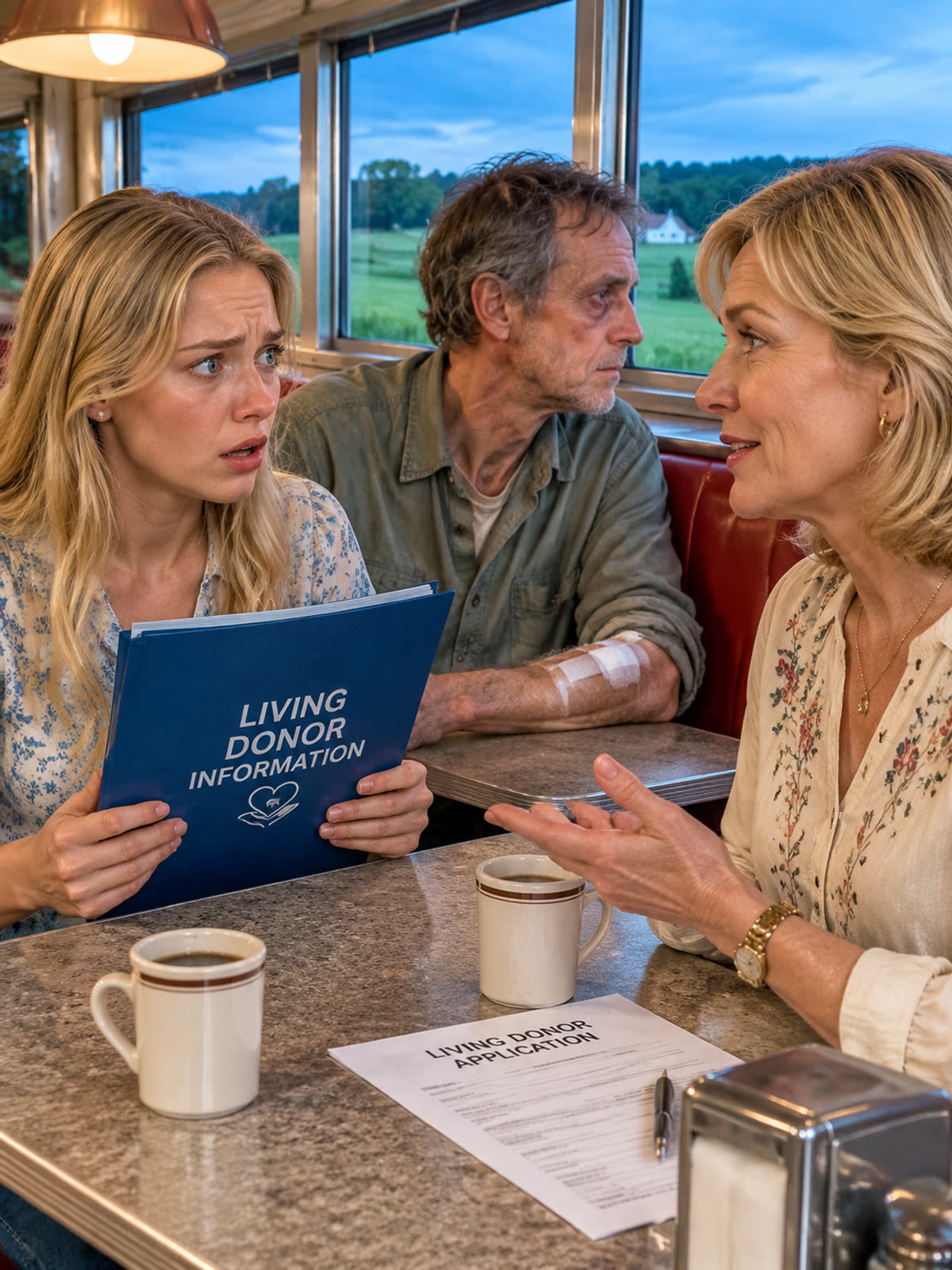
I asked the question I had been holding back. “What about Brandon?” My mother responded at once. “He wasn’t considered suitable.” The answer came too quickly, with a smoothness that felt rehearsed. I looked down at the questionnaire and remembered Walt, his daughter, and the way he had spoken about protecting a child’s future. I slipped the folder into my bag. “I’ll attend an information session,” I said. “That doesn’t mean I’m agreeing to anything.” Carol looked delighted. “I knew you’d eventually remember your responsibilities.” She had mistaken my decision to gather information for another kind of surrender. I intended to discover what they weren’t telling me.
At the transplant center, I met Ellen Brandt, an independent living donor advocate. She explained that donation had to be voluntary. A relative, a clinician, or the intended recipient had no right to force someone into it. Potential donors could stop at any stage, and the team could protect their privacy if they decided against proceeding. I listened closely and asked what happened when someone chose not to continue. Ellen said the medical team could provide a non-specific explanation for ineligibility without revealing confidential details. I held on to that answer. It offered a possibility I hadn’t considered when my mother dismissed Brandon’s suitability.
That evening, I called my brother. The background sounded like an expensive restaurant. “Brandon Lenhardt speaking.” I answered simply. “Hello, Brandon.” He was silent for a long moment. “Kelly?” I went straight to the point. “Were you a possible kidney donor for Dad?” He hesitated. “Who told you that?” I wasn’t interested in discussing sources. “Nobody. I want the truth.” He let out an irritated sigh. “You don’t understand. My business is commission-based. I can’t just disappear for weeks recovering from surgery.” I said nothing and allowed the silence to remain between us.
He kept going. “Lauren and I have an expensive wedding coming up. Her father already put down a huge deposit. If something happened to me, everything could fall apart.” I asked again, more precisely. “So you were evaluated?” He snapped back, “Yes!” I continued. “And you withdrew?” He cursed, then answered. “Dad told me not to do it! He said he’d already sacrificed enough for me!” I felt the meaning of that settle over me. “Then what happened?” Brandon’s reply was short. “Mom said she’d find someone else.”
My chest tightened. He continued before I could respond. “She said you were nineteen, unmarried, and hadn’t started your career. She said you owed Dad for raising you.” I closed my eyes. There it was. Brandon’s work, wedding, and future were too important to disturb. Mine could be rearranged again. The same reasoning that had made my school savings available for his condo now made my body available for Dad. They had not reassessed the way they treated me. They had simply found something else they wanted me to give.
I told Brandon what I had learned at the diner. “Dad stopped paying for his kidney medication because of the debt from your condo.” His response was immediate. “That isn’t true!” I kept my answer brief. “Ask him.” His voice changed; he sounded shaken now. “Mom said insurance was covering everything.” I ended the call. I had heard enough to understand the difference between what my mother had presented and what had actually happened. The explanations they gave each of us had kept the whole picture carefully out of view.
For a long time afterward, I sat by myself in Joan’s garden. First, my family had demanded the money meant for my education. When I refused, they left me far from home and tried to make independence impossible. Now they had returned with forms already bearing my name, expecting an organ. They hadn’t come to find the daughter they had lost. They had come because there was another need they thought I should fill. I considered the truck stop, the locked account, and every assurance that Brandon’s future had to come first. I knew where I wanted to answer them.
I opened a group message addressed to my parents and Brandon. Then I typed: Saturday. Ten in the morning. The truck stop off Interstate 71. I’ll give you my answer there. I set the phone down. If they wanted my decision, they could hear it in the exact place where they had decided I wasn’t worth keeping. This time, I would arrive in my own car, with the truth they had tried to keep separated—and I would not be the one left behind.
PART 3 — What Belonged to Me
The truck stop had barely changed. The booths were still worn, the fluorescent lights still harsh, and diesel trucks still rumbled beyond the windows. I was the thing that had changed. Joan had insisted on coming with me and waited in my Honda Civic with a newspaper. “Someone needs to witness things when people start rewriting history,” she’d told me. Knowing she was outside, I sat down in the place where I had once spent a night wondering whether I could stay awake until morning.
My parents arrived at 9:58. Dad eased himself out of the passenger side while Mom carried the same oversized handbag. Two minutes later, Brandon drove into the lot in his BMW. They came inside together. My mother settled across from me and smiled. “How appropriate,” she said. “We’re finally putting that terrible misunderstanding behind us.” I answered plainly. “It wasn’t a misunderstanding, Carol. You abandoned me.” Her smile became rigid. There would be no beginning this conversation by replacing what had happened with a gentler version.
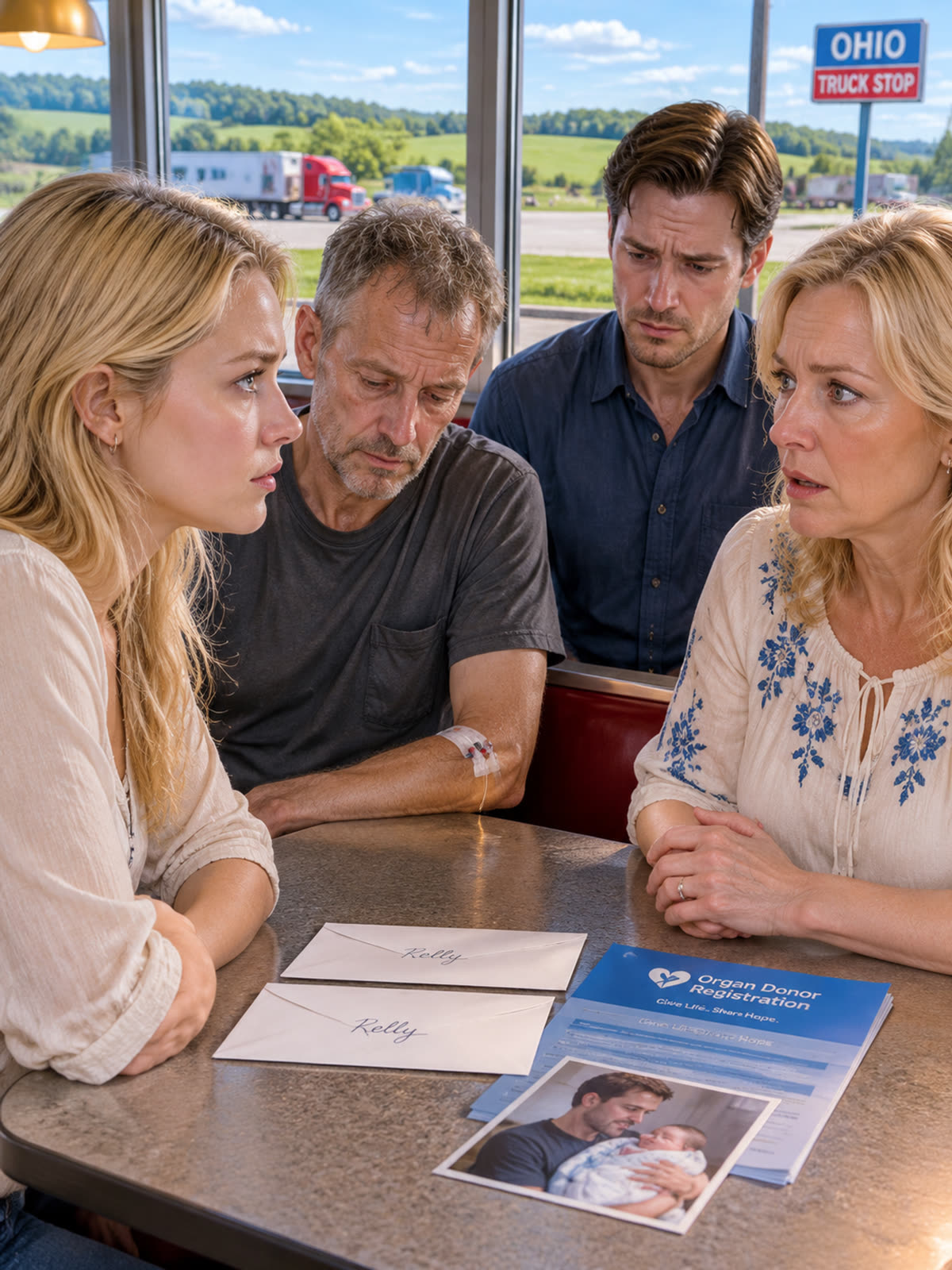
She took out the donor paperwork and placed it on the table. Beside it, she laid a photograph of Dad holding me as a newborn. “He loved you from the moment you were born,” she whispered. “Families take care of each other.” I looked at the picture. Then I turned toward Brandon. The photograph didn’t change the questions I had come to ask, or the answers I already knew. Before anyone could lead us back into another conversation about what I owed, I asked him to explain his own decision.
“Tell Mom what happened during your donor evaluation.” Brandon’s face turned red. “Kelly, not here.” I didn’t let him retreat. “Tell her.” Carol stepped in immediately. “Your brother wasn’t medically suitable!” I kept my attention on him. “Brandon,” I said again, “tell the truth.” He covered his face. The table fell quiet while he struggled with the answer. I waited. After a year of being expected to accept whatever explanation my mother offered, I wanted the people making these demands to hear one another clearly.
At last, he spoke. “I withdrew. All right? I couldn’t risk missing work before the wedding!” Carol went still. “What?” Brandon’s embarrassment spilled into defensiveness. “I have a life, Mom! Lauren and I have commitments. Her family already paid for the reception!” She stared at him, stunned. She had been told he was unsuitable. Now she was hearing that he had chosen not to go forward. The distinction mattered. His refusal had been protected, while mine had been treated as something I had no right to consider.
Then my father spoke. “And Kelly is nineteen.” His voice was so low I could barely hear it. Mom turned sharply toward him. “Dale, stay out of this!” This time he didn’t. “No.” Slowly, he rested the arm with the dialysis fistula on the tabletop. “We left her here with sixty dollars, Carol.” My mother erupted. “She had nearly twenty-four thousand! That money should have helped our family!” Even now, standing between what she had done and what she wanted next, she returned to the money as though it justified everything.
I leaned toward her. “Where are my debit cards, Carol?” Silence followed. She blinked at me. “What?” I made the question specific. “The replacement debit cards mailed to your house after I moved my savings. Where are they?” Her expression shifted. Until then, the papers on the table had all concerned what they wanted from me. Now I was asking about something that had been mine all along, something that should never have required a family confrontation to recover.
My father reached into his pocket and brought out two sealed envelopes. Each was addressed to me. Both had been mailed months before. My hands started trembling as he placed them on the table. “They were hidden in the utility drawer,” he whispered. “Carol said that if you couldn’t access your money, you’d come home within two days.” The envelopes lay between us, proof of what the frozen account and disconnected phone had already suggested. They hadn’t simply expected me to fail. My mother had tried to arrange it.
Brandon stared at her. “You hid her bank cards?” That question finally broke through the composure she had been trying to maintain. Her explanation came out in a rush. “I was trying to keep this family together!” Her voice climbed. “You have no idea how embarrassing this has been! People ask questions about Dale being on disability and Kelly disappearing! Brandon’s business needed support! I did what I had to do!” I listened as she described her embarrassment, my father’s illness, and my brother’s business as reasons I should accept what she had done.
I looked directly at her. “You didn’t keep the family together, Carol.” She stopped speaking. “You sacrificed everyone else to protect Brandon’s lifestyle.” Then I turned toward Dad. “You lost your job. You stopped paying for important treatment. You’re now dependent on dialysis.” Finally, I faced my brother. “And you allowed them to risk their future so you could maintain yours.” No one answered. The truth was on the table now, beside the hidden envelopes, the newborn photograph, and a questionnaire with my name already written across it.
My mother pushed the donor forms toward me. “Please, Kelly. He’s your father.” I picked up the pen. For a brief second, hope returned to her face. She believed that after everything, I had finally agreed. Instead, I turned the questionnaire over. On its blank reverse, I wrote information about the transplant center’s donor programs, patient assistance services, and resources for people receiving dialysis. Then I slid the paper toward my father. I could give him information without giving my mother control over my decision.
“There are medical and financial options you can discuss with your care team,” I told him. “You need qualified advice and a plan that doesn’t depend on forcing another person to donate.” I turned to Brandon. “If you genuinely want to help, you can explore your own choices with the transplant team.” He lowered his head. I stood up. Mom reached toward me. “Kelly, don’t do this.” I moved back, keeping enough distance that she couldn’t turn that gesture into another demand I was supposed to accept.
“You abandoned me because I wouldn’t give you my money.” My voice stayed steady. “Now you’re asking me to surrender part of my body while treating my future as less important than Brandon’s.” Tears gathered in her eyes. I shook my head. “I am your daughter. Not your emergency savings account. Not your backup plan. And certainly not a supply of spare parts.” I left five dollars on the table for my coffee and walked away. No one came after me.
Outside, Joan lifted her head from the newspaper when I got into the car. “Did you tell them everything?” I answered, “Yes.” She nodded. “Good. Then let’s go home.” I started the engine. Before pulling away, I reset the trip odometer. The old numbers vanished, replaced by 0.0. Once, distance had measured how far my parents were willing to abandon me from home. Now that same little display marked the start of a journey I was choosing for myself. I drove away with Joan beside me, not waiting to see whether my family would follow.
Six weeks later, I was seated in a classroom at the Delaware Area Career Center. My first semester of practical nursing school had begun. Around me were classmates at different stages of life. Some were changing professions. Others were returning to school after bringing up children. Some, like me, had fought for years simply to reach the starting line. Inside my pharmacology textbook, I kept a tuition receipt: $4,200 — PAID IN FULL. The money had come from my own account, earned through my own work. This time, my education was not waiting on anyone’s permission.
While we waited for the instructor, my phone vibrated with a message from Brandon. The condo sold on Friday. I transferred $27,000 toward Dad’s retirement-account debt and tax obligations. Lauren and I postponed the wedding. I’ve contacted the transplant center about being evaluated again for possible donation options. I’m sorry, Kelly. For everything. I read it twice. Forgiveness didn’t arrive just because an apology had. Some harm needed more time than that. Still, I recognized that he was finally taking responsibility instead of letting everyone else carry the cost.
I sent a short response: Make sure Dad follows his doctor’s instructions. Then I put the phone away. Three weeks after the truck stop confrontation, Dad had mailed a package to Joan’s house. It contained my birth certificate, my Social Security card, and the little pewter music box my grandfather had given me when I was seven. There was no letter, no justification, and no request to be forgiven. He had simply returned things that should always have remained mine. Perhaps that was the nearest he could come to saying he was sorry.
I put the music box beside my bed. That didn’t mean the past had been forgiven or that every wound had closed. It meant I didn’t have to erase all of my childhood in order to move beyond what my parents had done. At the front of the classroom, our instructor began welcoming us. She spoke about compassion and the importance of respecting personal boundaries when caring for others. I paid close attention. Those ideas belonged together, even though my family had spent years teaching me otherwise.
In our house, love had meant giving up whatever was demanded: my savings, my schooling, my safety, and eventually even my physical health. Gail, Joan, and Walt had shown me something different. They had offered encouragement instead of control. They had helped without claiming the right to direct the rest of my life. Through them, I had learned that caring for someone did not require handing over ownership of myself. The future in front of me had room for kindness and limits at the same time.
I looked through the classroom window at the Ohio countryside. Beyond those fields lay the highway where my parents had left me. I remembered the gravel beneath my feet and the sixty-two dollars in my sock. That night, I had wondered whether I would make it safely to morning. I had believed everything was gone. Now I could see the difference between losing everything and losing people who valued me only for what I could provide. Without their demands filling every space, I had discovered how much I could become.
The instructor opened her attendance sheet. “Kelly Lenhardt?” I sat straighter. My feet were planted on the floor, my textbook lay open, and my tuition had been paid. The future ahead of me belonged to me. “Present,” I answered. The girl abandoned ninety miles from home had finally understood that she had never needed their permission to go anywhere.
Disclaimer: This story is a work of fiction inspired by real-life themes. Names, characters, places and events are fictionalized, and any resemblance to real persons is purely coincidental. It does not represent any person or organization and does not encourage inappropriate behavior. Images are for illustration purposes only.
