

PART 1: Fourteen Missing Days
The hospital ceiling was the first thing I saw when consciousness finally returned. Military training had conditioned me to take stock of my surroundings before responding, so I counted the sixty-four tiles overhead and listened to the measured sounds of the equipment beside me. Before I understood where I was, I was already trying to make sense of the room.
My name is Elena Mercer. I had completed two tours in Afghanistan as an Army logistics and intelligence specialist, but none of that experience made my body easier to move. My thoughts searched for explanations while an overwhelming weakness held me against the mattress. Even shifting my head demanded more effort than I expected.
An IV ran into my arm, and a nearby monitor tracked my heartbeat. Those details seemed important until I looked under the hospital blanket. Then everything else stopped mattering. The pregnant curve of my stomach had disappeared, leaving bandages where my daughter had been growing.
Before I lost consciousness, I had been thirty-four weeks pregnant. Marcus, my husband, and I had been arranging the nursery, selecting furniture, and talking about bringing our little girl home. Now I had no memory of her delivery and no explanation for her absence. My pulse accelerated as I searched the room.
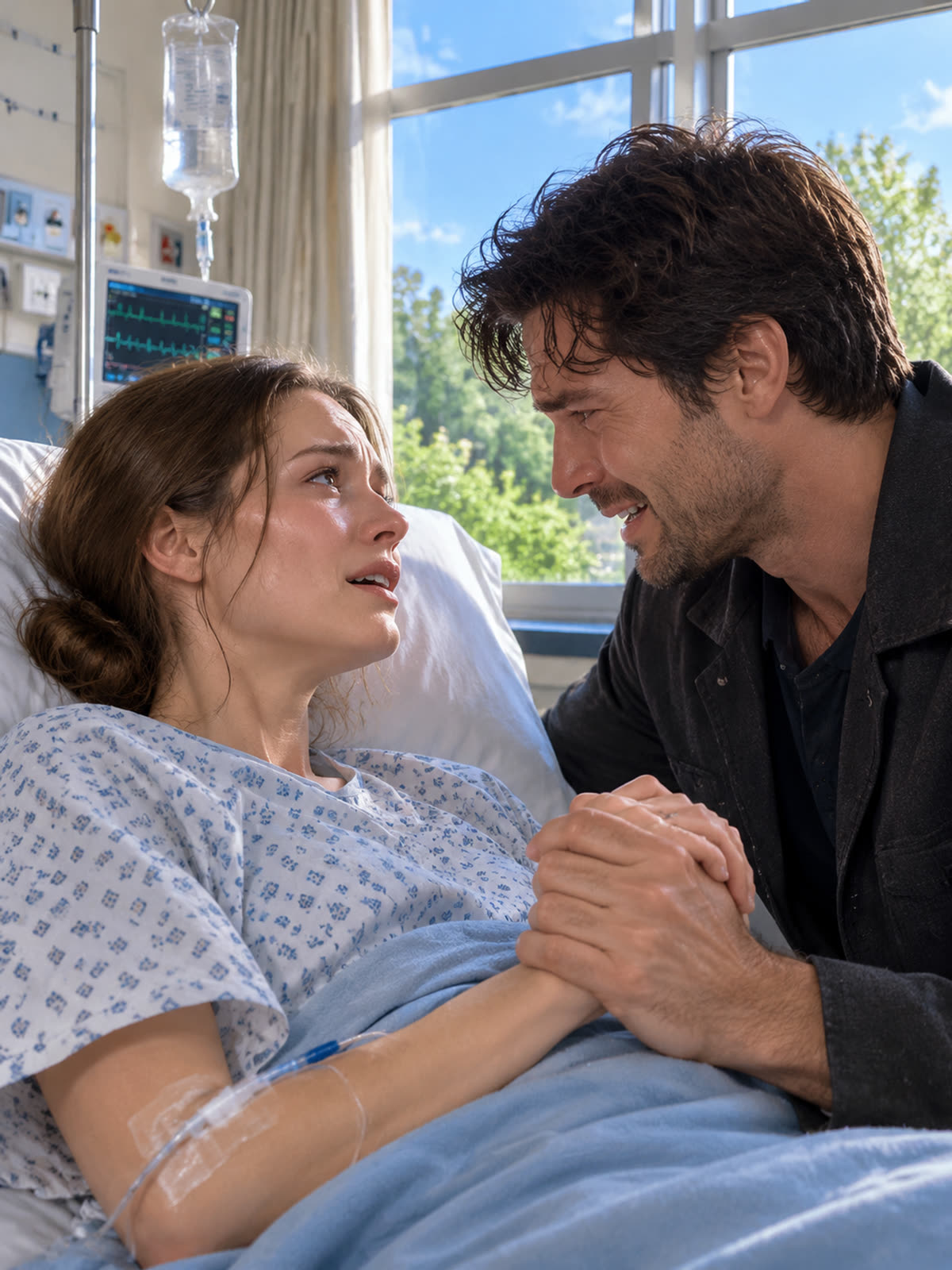
“Elena?” The familiar voice made me turn. Marcus was sitting beside the bed, close enough that I wondered how I could have missed him. His dark hair was unkempt, and the stubble covering his face looked as though it had been growing for two weeks.
Exhaustion had settled into his expression. He looked like someone who had scarcely slept, and when he realized I was looking back at him, he caught my hand and started crying. I had never seen such profound relief and devastation appear together on his face.
“You’re awake. Thank God, Elena. Please, just look at me.” I tried to answer, but my throat was so dry that speaking hurt. There were countless things I needed explained, yet only one question could come first.
“Marcus, where’s our baby?” He needed a moment before he could respond. Then he told me our daughter had been delivered through emergency surgery at thirty-four weeks. She was in intensive care, three floors above the room where I had awakened.
“Her name is Grace. She’s alive, Elena. She’s small, and she’s still fighting.” Relief rushed through me, immediately followed by fear. I wanted to see her, gather her into my arms, and understand why she had arrived before either of us was ready.
Marcus explained that severe injuries and dangerous swelling inside my skull had required doctors to place me in a medically induced coma. They had performed emergency procedures to ease the pressure, but they had been unable to promise I would wake. Fourteen days had passed while he waited beside me and Grace struggled upstairs.
For the first two weeks of her life, my daughter had known medical equipment while I remained unconscious. I had missed every one of those days. The knowledge hurt more deeply than anything else Marcus had told me, and I struggled to absorb it as pieces of memory began returning.
I remembered being alone in our kitchen on the morning everything changed. My father had arrived without warning, furious over a secret I had exposed. Douglas Mercer was sixty-three, a structural consultant whose neighbors regarded him as a dependable, honorable man. I knew how little that public image revealed.
I had learned that Douglas was having an affair with Patricia Holloway, a married attorney. When her husband asked me what I knew, I would not lie to protect them. After that conversation, the respectable life my father had so carefully presented began coming apart.
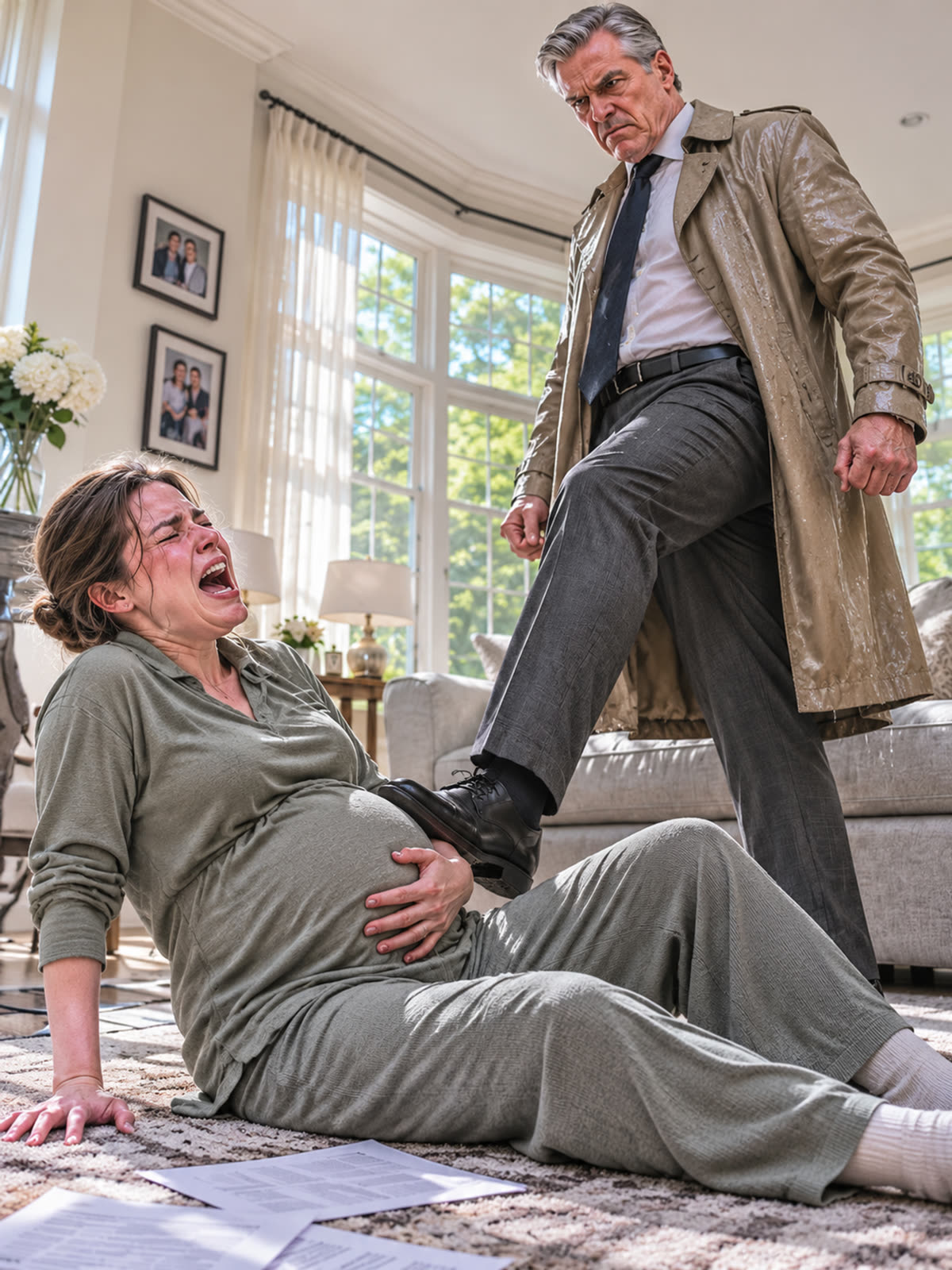
Douglas came to my home insisting that I answer for the consequences of his deception. His anger became a violent assault, leaving me unconscious and putting my unborn daughter in immediate danger. He abandoned me on the kitchen floor without summoning help. Without someone else intervening, Grace and I might not have survived.
Marcus tightened his hand around mine while I struggled with those memories. His expression shifted, and I understood that another terrible piece of news remained. “Elena, before the doctor comes in, there’s something you need to know.” He looked toward the doorway. “Someone has been waiting outside, and I don’t think you’re safe from your family yet.”
Three months before my hospitalization, I had driven two hours north for an urban logistics symposium. My accommodation was an expensive conference hotel, and the trip had seemed entirely routine. Nothing about it suggested that I would uncover something capable of tearing through my family.
One afternoon, as I waited for an elevator, I spotted Douglas walking with an elegantly dressed woman. He was laughing, his hand settled against the small of her back. The ease between them, and the intimacy of that gesture, made them look like far more than business acquaintances.
The moment he noticed me, his expression changed. His hand dropped, his laughter stopped, and he stared as though I were the last person he wanted to encounter. “Elena.” “Father.” Neither of us explained ourselves. I stepped into the elevator without challenging him, but his reaction stayed with me.
Years in military intelligence had taught me to notice behavior that did not fit. Back in my room, I opened my laptop and searched public corporate directories and conference information. Within two hours, I had identified his companion as Patricia Holloway, fifty-one, a managing partner at a prestigious commercial litigation firm.
Patricia had been married for twenty-four years to Edmund Holloway, an architectural historian whose work involved restoring historic buildings. They had two grown sons. Everything available publicly described an accomplished, respected couple, with no indication of what I had just witnessed in the hotel.
At first, I considered confronting Douglas. I also knew how readily he would deny anything I could say. For the time being, I kept the discovery to myself, weighing whether revealing the affair would do more damage than silence. My mother had built her identity around their marriage and social standing.
Eleanor Mercer chaired a garden club, appeared at church functions, and spoke proudly of her honorable husband. For several months, I watched Douglas treat her affectionately over family dinners while secretly checking messages on his phone. Each occasion made pretending not to know feel harder to justify.
When I was thirty-three weeks pregnant, an unexpected call reached me at work. The man introduced himself in a voice strained enough to suggest that he already feared the answer. “Captain Mercer? My name is Edmund Holloway. I’m sorry to contact you at work, but I need to ask you something about your father.”
Edmund had found hotel reservations and restaurant charges in financial records he shared with Patricia. Douglas’s signature appeared on one receipt. Further searching had brought Edmund to my professional contact details, and now he was calling the daughter of the man he suspected.
“Please tell me whether I’m imagining things. Is my wife involved with your father?” I looked at the ultrasound picture beside my computer. He sounded devastated. Knowing what I had seen, I could not leave him doubting his own judgment simply to spare my father the consequences.
“You’re not imagining anything, Mr. Holloway. I saw them together at the hotel on March fourteenth. Their behavior made it clear that the relationship wasn’t purely professional.” He said nothing for several seconds. Then he thanked me and ended the call without requesting anything further.
The conversation left me deeply unsettled, but I remained certain that honesty had been the right choice. Three days later, I learned that Edmund had confronted Patricia and started divorce proceedings. He had also begun taking legal action concerning their shared assets.
Patricia panicked over what the separation could mean for her finances, marriage, and professional reputation. She contacted Douglas immediately. He understood that exposure threatened not only his marriage but also his consulting work. Instead of taking responsibility, he decided I had intentionally destroyed his life.
My mother called soon afterward. She was furious that I had answered Edmund’s questions, showing no concern for my pregnancy or the hypertension I had been managing during my final trimester. “What have you done to this family, Elena?”
“I answered an honest question from a man who deserved to know the truth.” Eleanor called me arrogant and selfish. She accused me of wanting to humiliate the people who had raised me and insisted I had ruined Douglas’s good name.
She warned that I would regret interfering. I reminded her that my father’s decisions, not my honesty, had created the problem, but she refused to hear it. When the call ended, I hoped the anger would eventually settle into an unpleasant family disagreement.
Seventy-two hours after Edmund contacted me, Douglas appeared at my house. I still believed I was dealing with blame, embarrassment, and anger. I had no idea that when I opened the door, my father would put both my life and my daughter’s in danger.
PART 2: The Threat Beside My Hospital Bed
On the morning Douglas came, Marcus had already left to deal with an emergency construction project. I was by myself in our single-story house, getting things ready for Grace. We were expecting the infant car seat we had ordered, so when a firm knock sounded around 8:15 a.m., I assumed the delivery had arrived.
Instead, I opened the door to find my father in a damp trench coat, his expression full of anger. “We have nothing to discuss without Marcus here, Dad.” Before I could shut the door, he pushed inside. He blamed me for jeopardizing his contracts, damaging his standing, and bringing about the collapse of Patricia’s marriage. “You’ve ruined forty years of work, Elena. Do you understand what you’ve done?”
I told him to leave. Whatever he thought I owed him, he had no right to force his way into my home. Rather than listen, he followed me toward the kitchen, continuing to hold me responsible for everything his own affair had set in motion. I tried to reach the telephone so I could call for help.
Douglas caught my wrist before I could make the call. I instinctively moved to shield my pregnant stomach, but he kept attacking until I fell to the floor. At thirty-four weeks pregnant, I could not think of the confrontation as anything separate from the danger to Grace. Protecting her mattered more than anything else.
My military training had prepared me to defend myself in ordinary circumstances. This was different. Instead of concentrating on fighting back, I focused on guarding my daughter. By the time Douglas stopped, I was badly injured and having difficulty staying conscious. Even then, he offered no help and showed no concern for the child I was carrying.
“Keep your mouth shut, Elena. You’re nothing here.” Before leaving, he washed his hands in my kitchen. Then he drove away without contacting emergency services. Our neighbor, Mrs. Gable, had heard the confrontation and noticed his car pulling out. At approximately 8:22 a.m., she called for help and gave the dispatcher his vehicle description and license plate.
Paramedics arrived eight minutes later and took me to St. Jude Metropolitan Hospital. My injuries endangered both Grace and me, so doctors performed an emergency delivery. Our daughter went to neonatal intensive care, while swelling around my brain required extensive treatment and a medically induced coma. Fourteen days passed before I woke. Grace was alive, but months of rehabilitation still lay ahead of me.
On the fifteenth day, Marcus left briefly to shower and collect clean clothing. Not long afterward, Eleanor entered Ward 4B. She wore an expensive cashmere coat, and there was no concern in her expression. After everything that had happened, she had come to my bedside without showing any interest in how I was recovering.
“I see you survived.” She sat down and told me Douglas had been arrested after investigators connected him to the assault. Her complaint was not that her daughter had been left unconscious or that her granddaughter had needed emergency delivery. She was angry that the police had embarrassed her husband in front of their neighbors.
“Your father was under enormous pressure. You provoked him, and now you’re destroying everything we’ve worked for.” I reminded her that Douglas had endangered his own granddaughter. Eleanor brushed that aside, describing what he had done as a family disagreement that had gone too far. In her view, my responsibility was to help him escape prosecution, not to tell investigators what had happened.
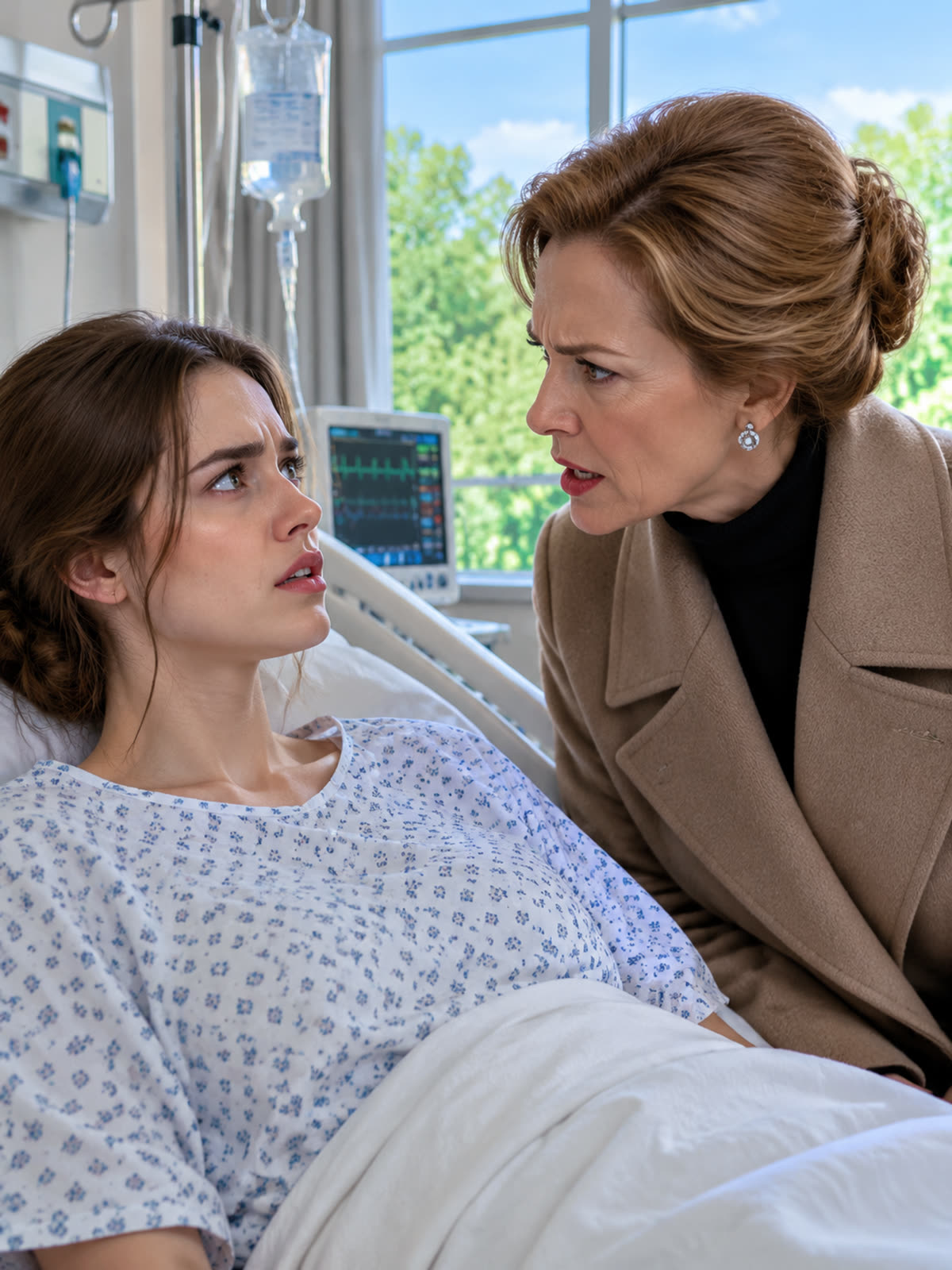
She laid out the account she wanted me to give. I was supposed to say that I had become dizzy and fallen against the kitchen counter. Douglas, according to her version, had merely been trying to assist me when I suffered accidental injuries. “You’ll tell them your father didn’t attack you. Otherwise, you won’t be part of this family anymore.”
I told her to get out. Instead, she became more aggressive, leaning over the bed and spitting directly into my face. Then she threatened to put me back into a coma if I refused to follow her instructions. “Keep your mouth shut, Elena, or next time you won’t wake up.”
After she left, I stayed still while I considered exactly what she had done. My mother had threatened a recovering patient in an effort to influence testimony in an ongoing criminal investigation. I pressed the nurse-call button. My parents thought my injuries had left me helpless, but documenting evidence was something I had spent years learning.
Nurse Diane came in less than a minute later. She noticed my elevated heart rate immediately and looked concerned when I told her not to wipe my face. “My mother just assaulted me and threatened my life. I need you to preserve the evidence and contact the hospital’s legal liaison.” I wanted the incident recorded before anything could be lost.
Diane contacted her supervisor and the hospital’s patient legal liaison, Karen Diaz. Karen brought the appropriate documentation equipment and arranged photographs, a forensic sample, and written records. What Eleanor had apparently expected me to endure in silence was now being carefully preserved through the hospital’s procedures.
I gave Karen my mother’s name, described her clothing, and estimated when she had entered and left the room. I also asked the hospital to retain the relevant hallway security footage. Detective Reynolds, who was already investigating Douglas, needed to be informed. I wanted the records of her visit secured alongside my account of her threats.
“Do you want to file a formal complaint against your mother?” Karen asked. “Yes. I want everything documented.” There was no reason to treat what Eleanor had done as a private matter simply because she was my mother. She had tried to frighten me into changing my testimony about an assault that nearly cost us our lives.
The hospital worked with investigators and supplied records supporting my account. Witness statements, hallway footage, and the evidence collected from my room helped establish the circumstances of Eleanor’s visit. My injuries had not prevented me from reporting her, and her threats had not persuaded me to protect Douglas.
By five that afternoon, authorities had detained Eleanor near an expensive salon. She was subsequently charged with witness intimidation, obstruction of justice, and assault. Douglas was no longer the only parent facing consequences. The attempt to pressure me into silence had become a separate matter for investigators and the courts.
The next morning, Karen introduced me to Rachel Okonkwo, an attorney experienced in civil claims involving serious injuries. Rachel listened while I described the attack in my kitchen, the hospital treatment, Grace’s premature birth, and my mother’s demand that I change my account. When I finished, she explained the distinction between criminal accountability and compensation.
“Your father may face prison, Elena, but we also need to address your medical expenses, lost income, and the care your daughter may require.” Criminal proceedings could address my parents’ conduct, she explained, but they would not automatically compensate us for the consequences. My recovery and Grace’s care had created losses that required a separate legal response.
Rachel proposed a civil action covering my injuries, rehabilitation, emotional distress, and diminished earning capacity. Grace’s neonatal intensive care expenses would also be included, along with any future needs supported by medical evidence. The purpose was to pursue compensation for the harm we had suffered, using claims the available records could substantiate.
She also recommended requesting court orders to stop assets from being improperly transferred while the case moved forward. Douglas’s consulting business, financial accounts, and property interests could be examined through lawful procedures. The financial consequences would no longer depend on whether my parents were willing to acknowledge the damage they had caused.
“Do you want me to proceed?” My father had left me on the floor, and my mother had come to my hospital bed to threaten me into protecting him. Now Rachel was asking whether I wanted to pursue the legal remedies available to Grace and me. “File everything we can legally support.”
PART 3: The Life They Could Not Take
Seven months later, Douglas’s criminal trial began. Lingering injuries and nerve problems meant I still needed a cane, but I went to court with Marcus beside me. Recovery had not restored everything I had lost, and I was still living with the physical consequences of the morning my father entered our house.
Eleanor attended under strict restrictions while her own case remained unresolved. Douglas sat next to his defense lawyer, looking much older than I remembered. The man who had once expected his family to accept his authority now had to sit through testimony about the violence he had inflicted.
His attorney argued that the disintegration of his marriage and consulting business had triggered an unusual psychological crisis. The defense wanted the court to view the attack as an isolated loss of control, rather than a deliberate assault. His personal circumstances were offered as an explanation for what he had done to his pregnant daughter.
When I took the stand, I described seeing him with Patricia, answering Edmund’s telephone call, and facing Douglas in my kitchen. I explained why I had focused on shielding Grace instead of attempting to overpower him. Every part of that morning had involved the same immediate concern: keeping my daughter safe.
During cross-examination, the defense suggested that I might have started the physical confrontation. I rejected that accusation and referred to the medical evidence. “I was thirty-four weeks pregnant. I protected my daughter while my father attacked me, and the medical records show what happened.” My injuries were documented, not a matter of family opinion.
The prosecution supported my account with witness testimony, emergency response records, medical findings, and evidence about Douglas leaving the house. Mrs. Gable’s observations helped establish the sequence of events. She had seen his vehicle depart shortly before emergency services arrived, placing him at our home during the critical period.
When the testimony ended, the case went to the jury. The jurors deliberated for two days before returning to the courtroom. After months of treatment, preparation, and uncertainty, we waited for their decision about the evidence they had heard and the charges submitted for consideration.
Douglas Mercer was found guilty on every charge submitted to the jury, including aggravated assault and related offenses. Watching him stand before the judge, I understood that he could no longer dictate the outcome. The authority he had demanded inside our family did not extend to the verdict or the sentence that would follow.
Before imposing sentence, Judge Sarah Vance addressed him directly. She noted that his statements focused on his reputation and personal difficulties while showing little genuine remorse for our suffering. “You attacked your pregnant daughter in her own home and left her without assistance. Your actions placed two lives in danger.”
The judge sentenced Douglas to nine years in prison, requiring seven years to be served before he would become eligible for parole. Marcus held my hand while the decision was delivered. For the first time in months, I felt some of the weight of uncertainty begin to lift.

Three weeks afterward, Rachel told us the civil court had also ruled in our favor. Grace and I were awarded a total of $2.8 million. The damages reflected the extensive medical consequences of the assault and the other losses the court recognized as resulting from it.
The judgment put enormous financial pressure on my parents. Their family estate, including the home where I had grown up, was seized through the court’s enforcement process and scheduled for public auction. The consequences were no longer something they could dismiss or contain behind the doors of the family house.
Eleanor’s separate criminal case ended with an eighteen-month suspended sentence and two hundred hours of community service. The court also imposed a ten-year protection order prohibiting her from approaching or contacting Grace and me. Her effort to force me into defending Douglas had brought legal restrictions on her own conduct.
Without access to the family estate, she moved into a rented basement apartment about forty miles away. The social standing she had spent years cultivating had fallen apart. People who once admired our family now knew what had happened, and the reputation she had demanded I protect could no longer conceal it.
I took no pleasure in their financial losses or the collapse of their standing. What mattered was that the harm had been recognized and consequences established. My parents could not reduce the attack, the premature delivery, or the threats to a private disagreement that everyone else was expected to overlook.
Through all the proceedings, Marcus remained my strongest support. He accompanied me to medical appointments, helped me through rehabilitation, and devoted countless hours to Grace while I worked to regain my strength. His care made it possible for me to keep recovering while our daughter received the attention she needed.
Grace slowly overcame the difficulties associated with arriving prematurely. Her medical team followed her development closely, and every milestone gave us another reason to hope. The little girl who had begun life surrounded by intensive care equipment continued growing, and we learned to appreciate each sign of her progress.
Eventually, I returned to professional work at a pace my recovery allowed. Some physical limitations remained, but regaining independence mattered deeply to me. I was grateful to resume work without pretending that everything my body had endured could simply be put aside.
Over the following year, Edmund Holloway occasionally reached me through our attorneys. His divorce from Patricia became final. After the scandal became public, her law firm eventually ended its professional relationship with her. The deception that had connected our families had left consequences in his life as well as mine.
Later, Edmund began sending the occasional message directly, usually with news of his architectural restoration projects. He never blamed me for the end of his marriage. I appreciated that quiet understanding, especially after being accused by my own parents of causing damage by answering an honest question.
One spring afternoon, about eighteen months after Grace’s birth, another message arrived. Edmund’s restoration work on a cathedral tower was complete, and its damaged stonework was structurally sound again. After everything he had been through, he was sharing news of something that had been repaired.
“Elena, the cathedral tower is finished. I hope Grace is doing well. The truth was painful, but it gave me the chance to rebuild my life. Thank you.” I smiled at the message. Both of us had faced painful consequences after Douglas and Patricia’s deception came into the open.
I replied that truth was the only dependable foundation for beginning again. Edmund’s words reminded me that exposing what had happened had not been the same as causing it. The pain had been real, but so was the possibility of building a different life afterward.
By then, Marcus and I had moved into a peaceful house with exposed cedar beams, generous windows, and a fenced garden. We wanted Grace to grow up with security and affection, free to explore without fear. That was the kind of home we were working to give her.
That afternoon, Marcus sat on the living room rug while Grace stood holding the edge of our low coffee table. Dark curls framed her face. Her small hands gripped the furniture as she considered the distance between where she stood and where her father waited.
“Elena, come look! I think she’s about to walk!” I set my phone aside and watched. Grace let go of the table. For a moment she hesitated, balancing without its support, before taking one cautious step and then another.
Marcus encouraged her with his arms stretched out. She kept moving toward him, becoming steadier as she went. I watched her make her way over the floor until she had taken eight steps, each one carrying her farther from the furniture she had trusted to hold her upright.
On the last step, she stumbled into his waiting arms. Marcus caught her gently, laughing with delight, and lifted her into the air. The uncertainty of those first movements gave way to the happiness on both their faces.
I reached for Grace and held her close while she smiled proudly at us. For an instant, I remembered the incubator, the fear over whether she would survive, and the fourteen days of her life I had missed. “I saw you, sweetheart. I saw every single step.”
My parents had tried to silence me with violence, fear, and threats, but they had not destroyed the future Marcus and I were building. No judgment could restore the time we had lost. The court decisions had, however, allowed us to move forward without continuing to live under my parents’ control.
I no longer measured my life against the family reputation I had once been expected to defend. I measured it in ordinary happiness: holding my daughter, watching her learn, and seeing her discover what she could do. Those moments mattered more than the appearance of respectability my parents had protected.
Marcus joined us by the window, and I held Grace as afternoon sunlight spread over the garden. The baby who had entered the world fighting to survive had taken her first independent steps. We had finally reached a place where our family could grow in peace—and as I looked at her, I wondered what she would discover next.
Disclaimer: This story is a work of fiction inspired by real-life themes. Names, characters, places and events are fictionalized, and any resemblance to real persons is purely coincidental. It does not represent any person or organization and does not encourage inappropriate behavior. Images are for illustration purposes only.
