

PART 1 — The Things She Left Behind
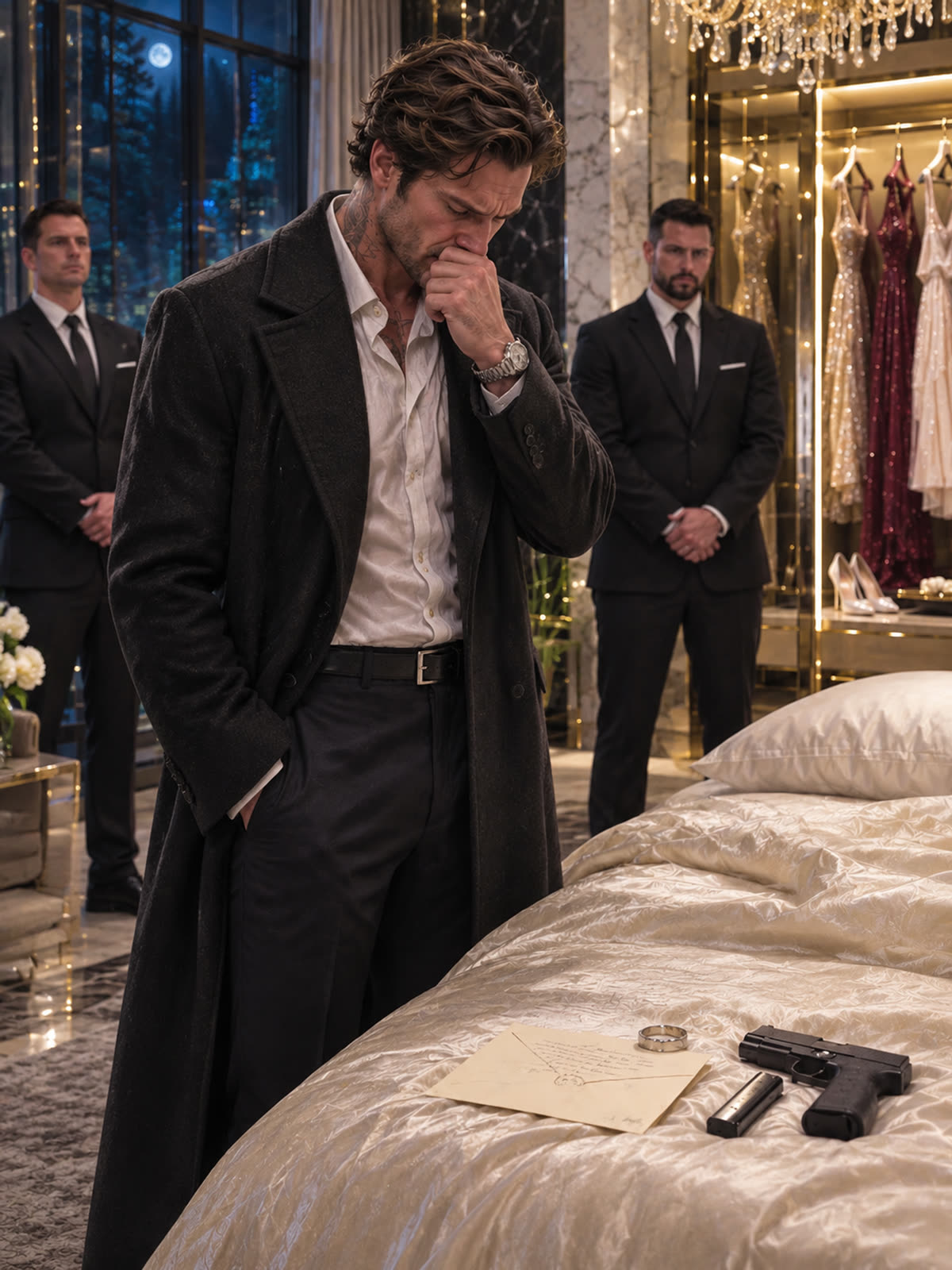
After forty-eight hours hidden in a private penthouse with my mistress, I arrived home at three twenty-six in the morning to find that my wife of eleven years had disappeared. Her wedding band lay on our bed beside the unloaded pistol I had presented to her on our wedding night. A handwritten message accompanied them, telling me not to search for her. Along the Atlantic Seaboard, no syndicate leader inspired more fear than I did. Seventeen hundred men answered when I called. Yet the one woman who had never feared me had walked out of my life without leaving a trail I could follow.
My name is Victor Castellano. At forty-two, I had devoted almost all my adult years to constructing an empire most men would never consider challenging. Twenty-three businesses, some legitimate and others concealed behind respectable fronts, operated beneath my authority. Nine powerful crime families maintained carefully managed alliances with me. A single telephone call could make grown men abandon whatever they were doing. None of that mattered as I wandered through our bedroom that cold morning, breathing the faint perfume still clinging to Camille’s silk pillows. I could command seventeen hundred hardened men, but I had never understood how to care properly for one woman.
Camille had been beside me before my surname became something people whispered fearfully in the street. In our reckless younger years, she cleaned blood from my skin and dressed my injuries in poorly lit kitchens, never pressing me for dangerous explanations. When my father was murdered in a territorial ambush, she lowered herself onto the floor beside me and held my shaking hand for hours. Grief had stolen every word I might have spoken, but she never demanded that I break the silence. “You do not have to pretend to be made of stone when you are alone with me, Victor,” Camille had whispered to me that night as she rested her forehead against my shoulder.
Neither those words nor the warmth behind them ever left me. I also remembered coming home with another man’s blood on my cuffs and watching her approach without the slightest hesitation. “I still know exactly who you are inside, Victor, and nothing out there will ever make me turn away from you,” she told me calmly, taking my stained hands between hers. For eleven years, she had been my wife and my anchor. She understood the weight of my silences and those hidden places inside me that nobody else was permitted to enter. Eventually, and shamefully, I began treating that extraordinary loyalty as something ordinary.
Then Celeste Marlowe entered my life during a negotiation that stretched late into the night in downtown Baltimore. She was twenty-nine, intensely ambitious, and the youngest daughter of an influential Providence family whose shipping alliance mattered greatly to my organization. A drink after a difficult meeting became a hotel suite. Within weeks, there was a luxurious penthouse less than five miles from my own estate. The affair continued for nine months: nine months of invented obligations, unanswered calls after dark, and supposedly urgent meetings that appeared in no business records. Throughout it, I kept returning to Camille and accepting the peaceful home she maintained as though I had done nothing to poison it.
I persuaded myself that she suspected nothing because she never shouted, searched my telephone, or demanded an account of my movements. During the early months, she still asked whether I had eaten and mentioned the small matters that kept our household running. I confused her composure with ignorance. It never occurred to me to question why her replies had become shorter, or why she no longer asked what the next day’s schedule would bring. I saw the quiet she offered and took it for permission to keep lying. The distance growing between us was there every evening, but I refused to examine what it meant.
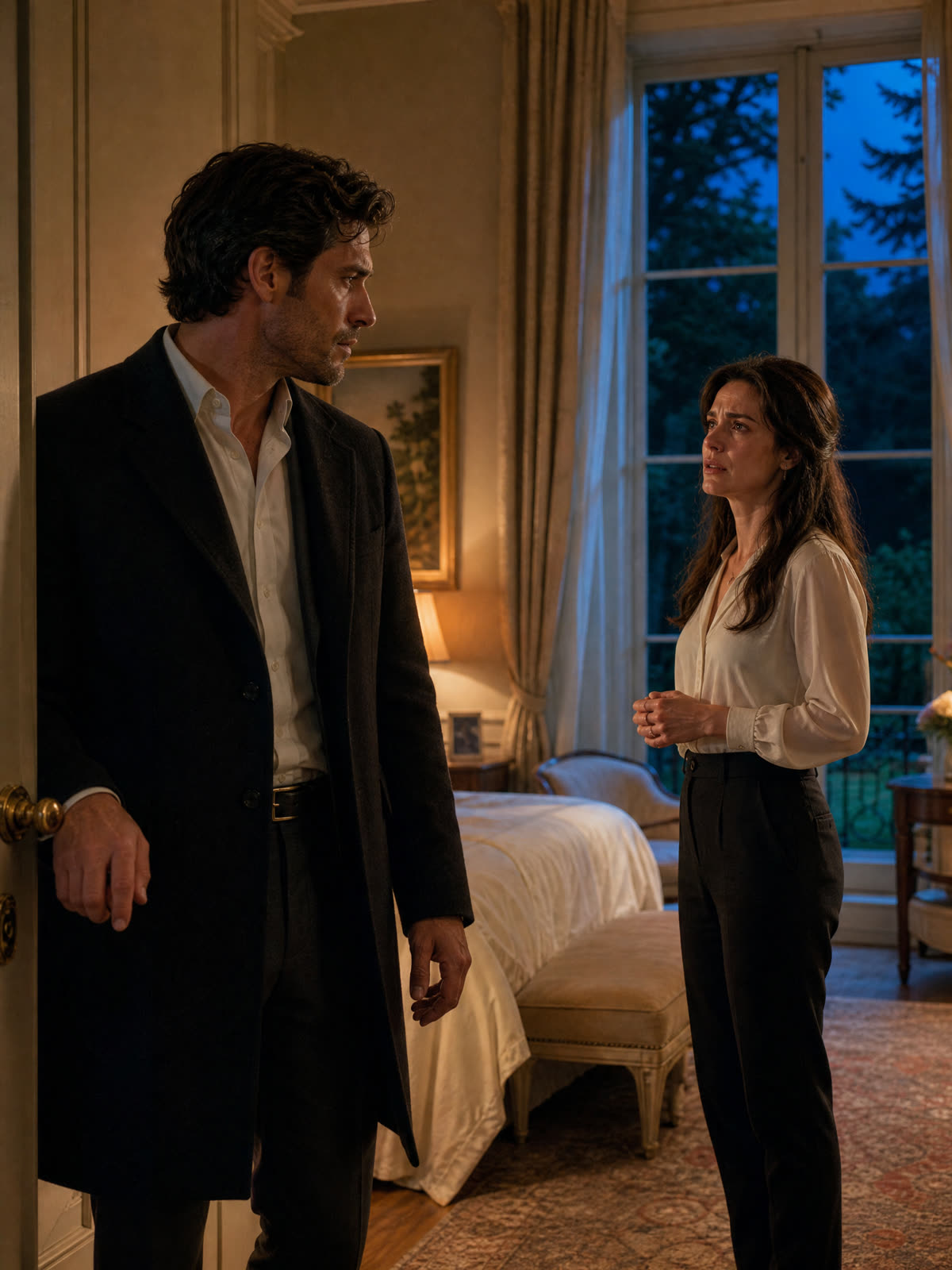
Two days before she disappeared, Camille stood in our bedroom doorway while I fastened my dark wool coat. Her hands rested neatly together, and her attention stayed on me. “Where are you heading off to so late tonight, Victor?” she asked softly. I kept my eyes on the buttons instead of looking at the woman who had shared my life for more than a decade. “I have some urgent business matters to settle downtown, so do not wait up for me,” I replied smoothly. It was an answer I had used often enough that delivering it required no effort. I expected the same quiet acceptance I had mistaken for blindness.
“Are you going to see Celeste again?” she asked, without raising her voice or allowing it to shake. My fingers stopped on the uppermost button. Heat climbed into my neck as I slowly turned around. She was composed, without tears or accusations, asking a question she had clearly carried for far too long. I answered with the cold authority I normally reserved for my lieutenants. “You should not ask questions if you already know you do not want to hear the honest answers, Camille,” I said. Instead of acknowledging what I had done, I tried to make her feel wrong for naming it.
She studied me through several long seconds of silence, then spoke with the same restrained dignity. “Do you love her, Victor?” she asked, meeting my eyes. Rooms filled with armed enemies had frightened me less than that question. I could not answer. I did not know whether I loved Celeste, whether I had any right left to Camille, or why I had imagined two incompatible lives could continue indefinitely. My silence gave her something an explanation might not have. She lowered her gaze and nodded once. “Okay, I understand,” she said quietly. There was no argument in her voice, and that absence unsettled me more than anger would have.
Her simple acceptance irritated me precisely because it offered nothing I could fight. I reached toward the door and hid my shame behind impatience. “Please do not turn this whole situation into some dramatic tragedy, Camille,” I snapped. Tears gathered in her dark eyes, shining without falling. Even then, she refused to let her voice break. “I am not the one turning our marriage into a tragedy, Victor, because you are the one doing that all by yourself,” she replied softly. She stood before me wounded and steady, while I stood there with every opportunity to stop making things worse. I knew I could remove my coat and stay.
I could have sat beside her on our bed and admitted everything: the hotel, the penthouse, the months of deceit, the arrogance that had made me believe I could keep taking without consequence. Instead, I opened the door and left her behind. Cowardice carried me into the cold night, though I would not have called it that then. I spent the following forty-eight hours shut away with Celeste. My personal telephone remained switched off. I deliberately pushed away every thought of the house, the bedroom doorway, and the woman whose calm words had exposed me more completely than any enemy ever had.
When I finally passed through the estate’s iron gates at three twenty-six, the mansion seemed buried beneath an unnatural silence. Camille usually left a hallway sconce burning whenever she expected me late. Our bedroom door would remain slightly open, a small familiar sign that I still belonged there. This time, the hall was dark, and the heavy oak door was firmly closed. I opened it slowly. “Camille, are you awake?” I called into the shadows, waiting for the faint movement of silk sheets. Nothing answered. I reached for the light, and the sight of the immaculate, empty bed sent a chill down my spine.
For a moment, I told myself she had chosen a guest room after our confrontation. Then I noticed one door of the walk-in wardrobe standing open. Only seven evening gowns remained on the brass rail where her clothes had once hung so closely together that individual garments were difficult to distinguish. Her everyday things were gone: the sweaters she loved, the clothes she reached for without thinking, the belongings that mattered to her personally. Empty wooden hangers occupied the spaces they had filled. There was no disorder, no evidence of an intruder. Someone had made careful decisions about what deserved a place in the life ahead.
Turning back toward the bed, I finally saw what she had arranged on the white quilt. Her platinum wedding ring caught the chandelier’s light. Beside it rested the compact handgun I had given her eleven years earlier. My fingers trembled as I lifted it, and its unexpected lightness told me the magazine had been emptied. A folded sheet of cream stationery lay nearby. I recognized her flowing handwriting before opening it. “You once promised me that if I ever disappeared, you would turn this entire city upside down until you brought me back,” the first line said. Beneath a broad stretch of blank paper came her final instruction: “Do not look for me.”
The page stayed in my hand while our wedding night returned with painful clarity. Giving Camille that weapon had been my promise that nobody in my dangerous world would be allowed to hurt her. Such gifts were never entirely innocent in the life I led, and she had understood what I meant. Now the gun was empty, the ring abandoned, the promise rejected. She no longer wanted the protection I had once placed in her hands. I went into the corridor and shouted for our estate manager. Arthur Pendelton hurried upstairs, then stopped when he saw the objects on the bed. “Where is my wife, Arthur?” I demanded, my voice low.
The older man swallowed and lowered his eyes. “Mrs. Castellano left the estate last night, sir,” he answered quietly. I moved closer. “What exact time did she walk out that front door?” I pressed. Arthur did not have to think. “At precisely ten twelve in the evening, sir,” he replied. My attention shifted to the grandfather clock in the hall. More than five hours had passed since ten twelve. While Camille had been leaving our home, I had been pouring wine for Celeste downtown. The precision of that realization made the silence around us feel even heavier. My wife had crossed our threshold alone while I was choosing to remain elsewhere.
“Where did she tell the driver to take her, and which vehicle did she use?” I asked sharply. Arthur’s nervousness became more visible. “She did not share her destination with anyone on staff, and she did not use any of the estate cars, sir,” he explained. I felt my jaw tighten. “Who went with her to make sure she arrived safely? ” I asked. For the briefest instant, he hesitated, and I knew I would not like his answer. “Nobody went with her, sir, because she insisted on leaving completely alone.” No driver from our household, no escort, and no destination anyone could give me.
Anger rose before I could control it, and I stepped toward him again. “You and the security guards simply stood by and allowed my wife to walk out of this house alone in the middle of the night without calling me?” I demanded. Arthur’s voice shook, but he did not retreat from the truth. “Mrs. Castellano gave us strict instructions not to contact you or your lieutenants under any circumstances, and we have always obeyed her orders just as we obey yours, sir,” he replied. The staff’s loyalty to Camille should have reassured me. For the first time, it brought me no comfort whatsoever.
Her authority had held even in my absence. She had understood exactly which instructions to give, and she had trusted the people in our house to honor them. This was not a furious impulse after a painful argument. She had not stormed out expecting someone to follow and persuade her to return. The orderly wardrobe, the carefully selected possessions, the emptied gun, and the deliberate placement of her wedding band all said the same thing. She had made a decision before stepping through those gates. Everything I had first wanted to dismiss as a moment of emotion was beginning to reveal the shape of a plan.
I stood outside our bedroom with her note still burning in my thoughts. My wife had used the loyalty beneath my own roof to protect a departure I had known nothing about. She had chosen what to take, what to leave, and what nobody was permitted to tell me. By the time I discovered the empty bed, she had already been gone for hours. Camille had not simply escaped the house. She had prepared to leave the life we shared, and the man who believed he knew everything happening inside his empire had no idea where her preparations ended—or how long ago they had begun.
PART 2 — One Hundred and Seventeen Days
Within twenty minutes, I had set the Castellano organization in motion. My senior captains received orders to search the coast until Camille was found. They checked thirty-nine private apartments belonging to associates, examined guest lists at seventeen luxury hotels, and questioned dockmasters at eleven private marinas. Flight records from six regional airfields in Maryland and Delaware came under scrutiny. The machinery I had spent two decades building moved at my command, reaching into places ordinary investigators could never enter. Yet every report that came back during the following day contained the same answer: nobody had seen her, identified her destination, or confirmed the vehicle that carried her away.
For twenty years, money and fear had opened almost every door I wanted opened. My informants knew how to find people who believed themselves hidden, and my reputation usually persuaded the reluctant to speak. This time, all of it failed. I was accustomed to pursuing traitors whose panic betrayed them through a hurried telephone call, a careless transfer, or some desperate emotional mistake. Camille had made none of those mistakes. She had not left in panic. As the people investigating her movements worked backward through the months before her departure, they uncovered a version of my marriage I had been too arrogant to notice.
My technical specialists learned that she had retrieved her original birth records and passport documents months earlier. Her inheritance had been moved into offshore accounts that could not be traced through the channels available to my organization. Even her elderly mother was gone from the Annapolis care facility where I believed she still lived, relocated to a private residence none of my men could locate. The dark sedan that collected Camille outside our gates at ten twelve had been hired through a shell company with no connection to my businesses. Each discovery showed another door she had quietly closed before I knew there was anything to stop.
Then my lead investigator spread a reconstructed calendar across my mahogany desk. One number stood out among the dates: one hundred and seventeen days. Camille had devoted one hundred and seventeen days to removing herself from my life. For nearly four months, she had awakened beside me, poured my coffee, and prepared a future in which I had no place. I had been concealing an affair for nine months while congratulating myself on my discretion. During almost half that time, my wife had been building her departure beneath the same roof. The humiliation was not merely that she had hidden it. It was that I had never thought to look.
I had made a career of identifying betrayal before it reached me. Yet night after night, I had eaten dinner across from the person who knew me best without recognizing that she was learning how to live without me. I searched my memories for some changed expression, some conversation I might have misunderstood, some final invitation to repair what I had damaged. Instead, I remembered dismissing her because I was busy and watching my telephone while she spoke about her day. Eleven years of marriage had made me believe I knew her thoughts. I had forgotten how much someone can conceal after losing faith that you will listen.
My captains kept calling to ask what should happen once they located Mrs. Castellano. Should they bring her home? Should they wait for me? Alone in my study, I could offer no clear answer. Part of me wanted to order her return as though marriage were another territory under my control. The other part kept seeing those four words on cream stationery. I had sent hundreds of armed men after a woman who had explicitly asked to be left alone. The contradiction became impossible to ignore. I claimed I wanted to protect Camille, yet I was the reason she had decided our home was no longer somewhere she could remain.
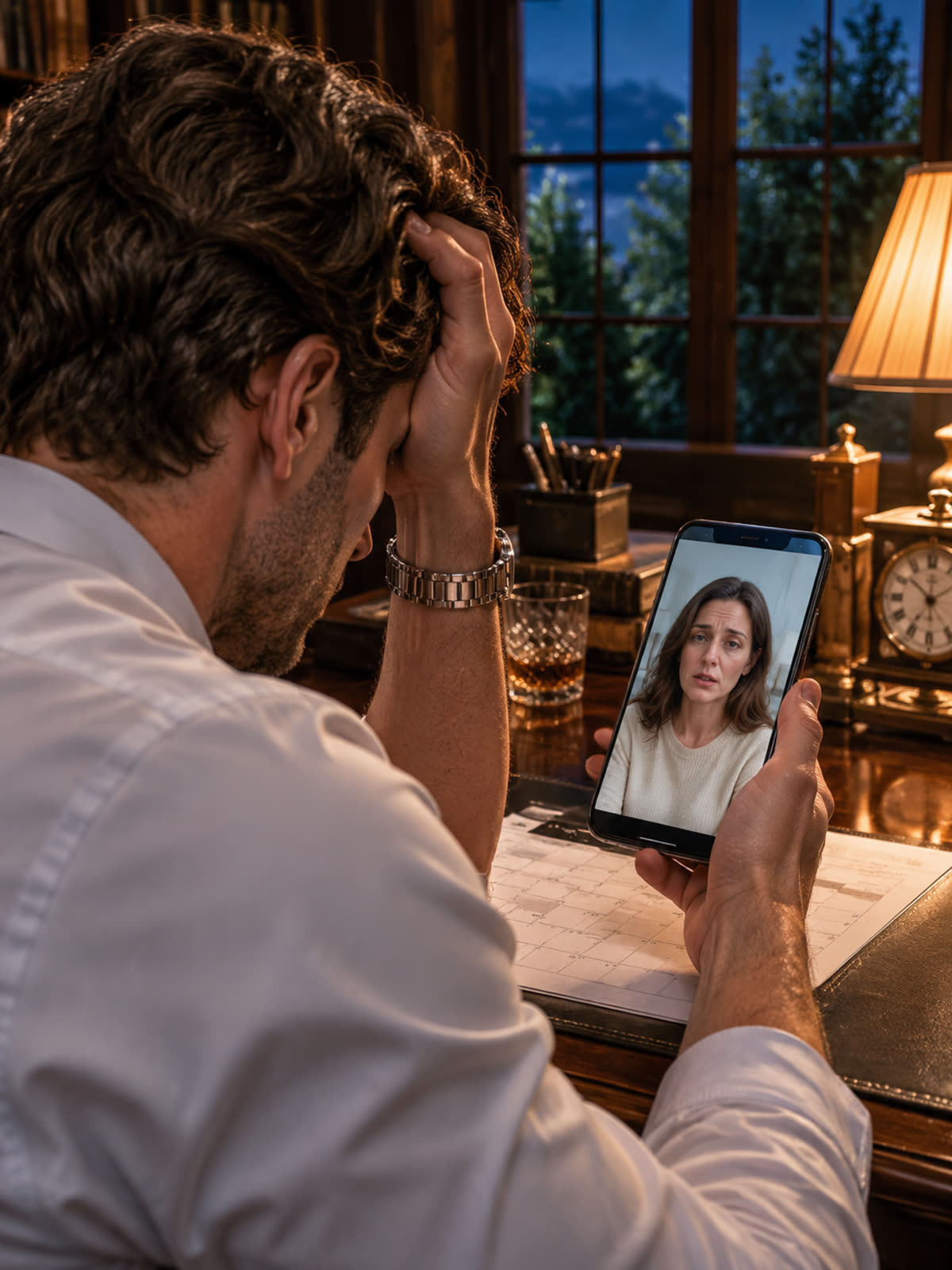
Thirty-one hours into the search, an incoming video appeared on my private encrypted telephone. It came from a burner number my people could not trace. My heart struck hard against my ribs as I opened the file with an unsteady thumb. Camille sat in a bright room I did not recognize, wearing a plain cotton sweater. There were no diamonds, no guards behind her, and no visible sign of the Castellano name. She looked pale and profoundly tired. Shadows lay beneath eyes reddened by tears, but her gaze stayed fixed on the camera without fear. Nothing in the image suggested she was waiting to be rescued.
“Hello, Victor, I am recording this because you deserve to hear the truth directly from me, and the truth is that I have known about Celeste for a very long time,” she began softly. I straightened in my leather chair, feeling cold sweat gather along my forehead. There was no angry introduction, no attempt to make me beg before she spoke. She had already lived with the truth I was only beginning to face. I watched the familiar movements of her mouth and the exhaustion she no longer had any reason to hide from me, unable to interrupt or explain away what was coming.
“I know about the penthouse apartment downtown, I know about room eight-fourteen at the harbor hotel, and I even know about the emerald necklace you bought her last autumn,” Camille continued evenly. “Worst of all, Victor, I know that you looked her in the eyes and told her you would choose her over me if only your life were a little simpler.” I stopped the recording. Her face remained motionless on the illuminated screen while my throat tightened. Those words had been spoken behind a locked bedroom door, miles from home, in a place I had believed entirely beyond my wife’s reach. Hearing them repeated removed every refuge that ignorance might have offered me.
I had said it carelessly, flattering Celeste by making Camille sound like an inconvenience. My wife’s life had become an obstacle in a conversation she had never been invited to hear. After a heavy breath, I made myself resume the video. Camille steadied herself before continuing. “You were the one who taught me years ago that real betrayal only happens once in our world, Victor, and it turns out I followed your golden rule much better than you ever did,” she said quietly. My fingers tightened around the telephone. Hearing my own rule returned in her voice was worse than any accusation I had imagined she might make.
The reputation I carried along the Atlantic Seaboard rested partly on that principle: break my trust once, and there would be no second opportunity. I demanded loyalty with a certainty that allowed no negotiation. Yet when I betrayed the person closest to me, I expected exceptions. I had assumed Camille would endure the lies, absorb the humiliation, and remain at home while I decided what I wanted. The hypocrisy was complete. I had treated the vows she honored as if they protected only me. On the screen, she remained composed, leaving me alone with the meaning of the standards I had so proudly imposed on everyone else.
“I want you to understand that I am not running away because I am frightened of your power or your men,” Camille continued, her voice deepening with quiet sorrow. “I am walking away because I no longer feel emotionally safe living under the same roof as the man I love most in this world.” I turned my eyes away and blinked against an unexpected sting. All those years, I had defined her safety through the defenses surrounding our estate. Armed security, reinforced glass, and surveillance had seemed like proof that I had fulfilled my duty. I had guarded the house against enemies while becoming the person she could no longer trust inside it.
No weapon had to be pointed at Camille for her to feel unsafe. No rival family had to threaten her. She only had to realize that the man sharing her bed could lie without hesitation and then punish her with coldness when she dared acknowledge it. That understanding stripped the word protection of the meaning I had given it. When I returned my attention to the telephone, she had paused, gathering herself before continuing. There was something deliberate in her stillness, as though she knew my first instinct would be to look for somebody else to blame. She was preparing to close that escape as well.
“I also need you to promise me that you will not hurt anyone or start a blood feud over what happened between us,” she said firmly, looking straight into the lens. “Celeste never stood beside me in front of an altar and swore a sacred vow never to betray me.” She had anticipated the habits I had spent a lifetime disguising as justice. I might have called punishment loyalty or claimed that someone had manipulated me. She would not allow it. Even from an undisclosed room beyond the reach of my organization, Camille understood precisely how easily wounded pride could make a violent man invent an enemy.
Her voice finally broke, and a tear passed over her lower lashes. “You did, Victor,” she whispered. Nothing I had ever endured in the street had struck with that kind of force. Every explanation I had assembled during the previous two days became useless. Celeste had not lived through eleven years beside me. She had not held my hand after my father’s funeral or promised faithfulness to Camille before our families and God. I had made those vows. Whatever else was true about the affair, the betrayal of my marriage belonged to me, and my wife refused to let me hand that guilt to a twenty-nine-year-old woman.
“For a long time after I found out, I kept telling myself that I could still sit down and talk to you if I just waited for the right quiet moment,” Camille admitted, brushing away the tear. “Eventually, I realized that I could never force a man to listen when he had already decided his own vanity was more important than our marriage.” I shut my eyes. The conversations I had cut short returned with a cruelty I could no longer dismiss. She had not been silent because she had nothing to say. She had been living with the knowledge that I would not make room to hear it.
One hundred and seventeen days stretched through my mind again. Every morning within that span, she had confronted the distance between the man she once loved and the stranger who now expected her loyalty without offering his own. I had taken her steadfastness as a guarantee that she would never leave. But Camille had never been someone who abandoned what mattered at the first sign of difficulty. If she had reached this point, it meant she had already spent herself trying to find another way. The same strength that sustained her through the darkest years of my life had finally enabled her to step away from them.
I sat listening to her breathe through the small speaker, surrounded by the possessions I had accumulated while losing the person who made them bearable. The search was still moving beyond the walls of my study. Men were waiting for instructions, telephones were ringing elsewhere, and my organization remained ready to impose my will. On the screen, however, Camille needed none of that machinery. She had told me what I had done without raising her voice. She had named the wound and refused to let me rename it. I understood more than I had when the recording began, but she had not yet finished.
She moved closer to the camera. Her face occupied more of the screen, and a new seriousness settled over her expression. “Before I say goodbye, Victor, there is one final truth you need to understand about the real reason I packed my bags and disappeared,” she said quietly. I leaned across the desk, my pulse accelerating. Until that moment, I had assumed I understood the reason, however unwillingly. Nine months of betrayal had seemed more than enough to explain an empty wardrobe and a discarded ring. Her words made me realize that the truth I had finally accepted was still incomplete.
“Tell me,” I whispered to the telephone, though no one on the other side could hear. It was a useless plea addressed to recorded light, nothing like the orders that once made entire rooms fall silent. Camille remained before me, pale and exhausted, gathering the strength to reveal what she had carried alone. I could not call her back into the room, could not interrupt, could not change the expression already captured on the screen. For the first time, I was afraid not merely of losing the life I knew, but of discovering how much of it I had already destroyed without ever noticing.
PART 3 — The Life Beyond My Reach
Camille closed her eyes and took a slow breath. When she opened them again, the vulnerability in her face had given way to an unshakable resolve. It was the expression of a mother protecting something precious, though I had not yet understood why. “Do you still remember the night your father was buried, Victor?” she asked softly. “You held my hands in the rain and swore that our bloodline would never be built on fear, and that if we ever brought a child into this world, it would be conceived out of pure love far away from the shadows of your empire.” The memory stopped my breath.
For eleven years, we had wanted a child. We had visited respected fertility specialists from Philadelphia to Boston, carrying our hopes into appointments and bringing our disappointments home in silence. There were private sorrows between us that neither of us knew how to discuss aloud. In recent years, I had buried that longing beneath expanding businesses, territorial negotiations, and the endless demands of syndicate politics. I told myself the empire would be enough of a legacy. Twenty-three businesses, nine alliances, and all the power attached to my name had become a way to avoid looking directly at something I could not command into existence.
On the screen, Camille lowered a hand beneath the edge of the frame, resting it briefly over her stomach before lifting her fingers toward her collarbone. “Four months ago, I drove alone to a private women’s clinic fifty miles outside the city,” she said. Her lips trembled faintly, but her voice held. “That appointment took place exactly one hundred and nineteen days ago, which was just two days before I began planning my disappearance.” The numbers struck together in my mind. One hundred and nineteen days since the clinic. One hundred and seventeen days spent preparing to leave. The difference between them changed everything I thought I understood.
She had not begun planning simply because she discovered Celeste. Before the suitcases, the documents, and the offshore accounts, she had learned that the child we had wanted for more than a decade was finally coming. That afternoon, she had gone looking for me with news that should have changed both our lives. “I drove straight to that secret penthouse downtown after leaving the doctor’s office, Victor,” she continued, a hollow, bitter smile touching her mouth. “I had the positive ultrasound papers folded neatly inside my purse, and I did not call ahead because I wanted to see your face light up when I told you the news. More than anything, I just wanted to see the good man I fell in love with come back to life.”
I caught the edge of the mahogany desk, gripping it until my fingers hurt. The room seemed to shift around me. Nausea rose as that particular week returned through the blur of stolen afternoons and careless decisions. I remembered moving between my marriage and the penthouse with the ease of a man who believed the people around him existed to accommodate whatever he wanted. While Camille carried news of the child we had prayed for, I had been elsewhere feeding the vanity I would later call confusion. She had gone there hoping to find the younger man who once made promises in the rain. I knew what she had found instead.
“I never even made it past the apartment hallway, Victor,” she whispered, so quietly I brought the speaker closer. “The front door was not locked all the way, so I heard Celeste laughing inside the living room. Right after her laugh faded, I heard you tell her clearly that our marriage had become a suffocating cage you just did not know how to break out of.” A crushing weight settled behind my ribs. Words I had used cheaply, simply to flatter another woman, had reached the one person whose trust gave them the power to ruin everything. I had not even known she was standing outside.
There was no defense that could survive that hallway. I could remember the easy arrogance behind such remarks, the way I made my wife sound like an obligation so that my mistress could feel chosen. I had counted on privacy to keep those lies harmless, as though words stopped being cruel when their subject could not hear them. Now they returned through Camille’s voice, and their real meaning was impossible to escape. She had arrived with a future folded inside her purse. What she heard was her husband describing their life together as something he wanted to escape. The thought left me struggling to breathe.
“I stood frozen in that hallway carrying our unborn child inside me, listening to the man I had given my entire youth to describe me as an obstacle,” Camille said. A tear slipped down her cheek, and this time she left it there. “That was the exact second I realized that if I stayed with you, you would not just break my heart, Victor. You would eventually break our child’s spirit too, pulling an innocent baby into a rotten world of lies, bloodshed, and divided loyalties just like your father did to you.” I stared at her, hearing my father’s legacy spoken in the same breath as the child I had not known existed.
“No, please do not say that,” I choked into the empty study. “Camille, please, I never meant a single word of it.” The recording, filmed days before, could offer no reply. “I did not spend one hundred and seventeen days running away out of spite, Victor,” she continued, her dark eyes fixed on the lens. “I spent every single one of those days building a peaceful sanctuary where my child will never have to wonder if their father’s love is real, and where they will never have to carry a last name that makes decent people flinch in fear.” Every precaution I had mistaken for rejection was part of that sanctuary.
Camille leaned back. Through the speaker came the gentle sound of wind moving through green leaves beyond an open window, so unlike the concrete and steel of the city I ruled. “I left my wedding ring on the bed because I am no longer your wife,” she concluded, her voice settling into final calm. “I left the unloaded gun beside it because I no longer need your protection, and I sent you this video not to punish you, Victor, but because you deserved to know the true price of your choices. Do not look for us, and let the empire you chose be enough to keep you company.”

The screen went black. My study returned to its dim, oppressive silence, and the telephone slipped from my numb hand onto the wooden desk. It landed beside the unloaded pistol and platinum band I had brought down from our bedroom. Everything she had left behind was gathered in front of me, while everything that mattered was somewhere I could not reach. Since I was twenty-one, there had always been an order to give, a threat to answer, or a problem I could force into another shape. Now Victor Castellano had nothing left to command. No instruction could make her unheard words return to the afternoon before that hallway.
Three days later, the Atlantic Seaboard’s criminal world encountered the quietest and most startling reorganization it had seen in modern memory. I did not send my men to scour additional marinas, airports, or border towns. I called the leaders of all nine allied families to my estate library for an emergency meeting at dawn. The resources I had first unleashed in pursuit of Camille were no longer being directed toward bringing her back. I had finally heard what she asked of me. The empire I once treated as an answer to every question had become evidence of how thoroughly I had misunderstood the life I was supposed to protect.
Before noon, legal documents had transferred my controlling interests in all twenty-three businesses to senior captains. I dissolved my personal armed security detail and moved most of my liquid wealth into an untraceable Swiss blind trust. Its instructions were precise: the money could not be touched unless the specific genetic marker belonging to my child came forward to claim it decades later. Those arrangements could not purchase forgiveness, restore our marriage, or place me beside a child whose existence I had learned through a recording. They simply removed my authority from the machinery I had built and set aside what I could without requiring Camille to accept anything from me.
Celeste arrived at the estate gates that evening in an expensive silk dress. She wore the assured smile of someone who believed a vacant throne had become hers to occupy. The wife was gone, the marriage apparently finished, and she seemed to think that meant there was finally room for the future I had described so carelessly in private. She reached the marble foyer and went no farther. I came out of the shadows and stood in her path. Looking at her, I felt none of the anger Camille had warned me not to turn into violence. The person responsible for what I had lost was already standing in front of her.
“You need to turn around and leave this house right now, Celeste,” I told her without anger or feeling. “My organization’s business alliance with your father will remain intact through my former lieutenants, but whatever foolishness existed between us ended the exact moment I realized what I traded away.” There was no comfort in finally speaking plainly. Nine months of lies had once seemed worth preserving because I refused to consider their cost. Now the words I should have said long before came easily, emptied of any power to repair the damage. Whatever she had expected from the house that evening, it was not the man who met her in the foyer.
Her eyes widened as she searched my face for the kingpin who had commanded seventeen hundred men. What she found was a hollow stranger inside an empty mansion. “You cannot be serious, Victor, after everything we shared,” she stammered softly. I offered no argument and no invitation to negotiate. “Goodbye, Celeste,” I replied. Then I turned away and went upstairs. Behind me, she said nothing more. She pivoted and walked quickly back out into the cool evening. The alliance with her father would continue through other men. Whatever had existed between us was finished, and I no longer tried to make that ending sound like anyone else’s fault.
Two years later, thousands of miles from the noise of my former life, a woman sat on a sunlit wooden porch in a quiet town along Maine’s rugged coast. A garden bloomed below her, and a dark-haired little boy chased a yellow butterfly through the grass. His laughter carried none of the weight attached to the last name he would never need to bear. Camille sipped iced tea between giving piano lessons to local children. Her slender hands wore no heavy diamonds. The afternoon breeze moved around shoulders that had finally learned to rest. She looked peaceful in a way I could remember loving but had not known how to preserve.
At the end of the dirt lane, beneath the broad shade of an old maple, a modest dark sedan idled for less than a minute. I sat behind the wheel with both hands resting still, neither opening the door nor calling her name. For two years, I had worked at dismantling the ruthless parts of the man who broke her heart. I had learned to live without making threats, without demanding obedience, and without calling every desire a right. None of that entitled me to forgiveness. I had not come to ask for a reward for becoming someone I should have been while she still shared my home.
Through the windshield, I watched my son stumble over a tuft of clover. He pushed himself upright on sturdy little legs and ran into Camille’s waiting arms. She gathered him into her lap and kissed his forehead. There was nothing for me to correct, arrange, or protect with force. The peaceful life she had described in the recording existed before me, complete without the place I had once assumed would always be mine. She had carried her plan through. The child was laughing, the garden was bright, and the woman I had taught to live without me no longer looked as though she was waiting for another disappointment.
Then Camille glanced toward the tree-lined road, and for one heartbeat our eyes met across the yard. There was no fear in her dark gaze and no remaining anger, only dignified peace and a quiet acknowledgment that I had finally learned to keep my word. I gave her one respectful nod. The only thing left was to pull away down the country road and leave them in the sunlight where they belonged. My hands settled on the wheel. I shifted the car into drive, with the life I had lost still visible through the glass and the road ahead waiting beyond the trees.
Disclaimer: This story is a work of fiction inspired by real-life themes. Names, characters, places and events are fictionalized, and any resemblance to real persons is purely coincidental. It does not represent any person or organization and does not encourage inappropriate behavior. Images are for illustration purposes only.
