


PART 1 — The Promise He Asked Me to Make
After years of nursing, I thought I understood what it meant to care for someone I could not save. Then a dying father asked me to marry him and bring up his little girl, and everything I thought I knew became personal. I believed I understood the promise I was making. Only afterward did I discover how much he had left unsaid. Three days after I became a widow, a woman approached me near his grave and told me that the child holding my hand had a family I had never been told about.
"Are you Lucas’s wife?" I turned toward the stranger. "Yes. I’m Nomi." Her gaze moved to Alicia, whose little hand was enclosed in mine. "I’m Dana. I’m Alicia’s grandmother." For a moment, I could only stare. "Lucas told me she didn’t have any family." Dana’s answer was quiet, but there was nothing uncertain about it. "That’s what he wanted you to believe." I had just buried the man who had trusted me with his daughter. Now someone was asking me to question the very thing that had brought us together.
Dana took an envelope from her purse. "Before you call yourself her mother, you need to know what he hid from you." I moved between her and Alicia. "Whatever this is, she’s just buried her father." Dana did not put the envelope away. "I’ve waited almost five years to see her, Nomi." That did not make Alicia’s grief any less immediate. "Then you can wait until she’s ready." She handed it to me. "Please read it before you decide I’m the enemy." I gave her no answer. A month earlier, I had never even heard Lucas’s name.
At thirty-seven, I had devoted most of my adult life to nursing. I loved the work, though my coworker Tilly liked to say I treated a day off as though it were something to recover from. One evening, an ambulance brought Lucas to our hospital. While the doctors assessed him, I noticed a little girl waiting outside his room. "Where’s your mommy, sweetheart?" She lowered her eyes to her shoes. "I don’t have one." I sat beside her instead of leaving her there alone. "I’m Nomi. What’s your name?" Her answer was small. "Alicia."
"Have you eaten?" She shook her head, so I brought her cocoa, and we watched cartoons on my phone. Later, she showed me an old Polaroid of a woman holding a baby. "That’s my mommy. She died when I was born." I looked at the photograph. "She’s beautiful." Alicia studied me with the serious attention children sometimes give adults. "You look like her a little." I smiled. "Now that’s a compliment, honey. But she had better hair." Alicia giggled, and the brief lightness between us made what she said next harder to answer.
"You’re nice. I wish you could be my mom." I had no ready response. I was a nurse sitting beside a frightened child, not someone who knew how to answer a wish like that without making a promise. An hour later, Tilly found us. When Alicia went in to see her father, she looked at me with familiar concern. "You’re getting attached," she warned. "She’s six, Tilly." To me, that explained why I had stayed. Tilly was not convinced it explained everything. "And you’re supposed to be finishing your shift."
Lucas had an aggressive illness. His doctors did what they could to keep him comfortable, but his condition continued to worsen. One evening, I found him having trouble with Alicia’s coat. "Let me help," I offered. He moved aside. "I used to manage everything. Now I can’t even get her ready for school." There was more in his frustration than a coat he could no longer handle. "Lucas, you’re sick. You can’t do everything." He sat down, worn out by something that should have been ordinary, and asked the question that mattered more than his pride.
"What happens to Alicia when I’m back here?" I asked whether there was anyone who could lend a hand. "Is there someone who could help?" His answer seemed simple then. "Nobody nearby." He looked up at me. "Could you take her to school tomorrow?" I could manage one morning. "Of course. We can start with tomorrow." He told me, "She’s everything to me, Nomi." During the weeks that followed, tomorrow kept becoming another day. With his permission, I took Alicia to school, prepared dinner, and discovered that she hated peas but loved carrots.
Tilly said I was taking on too much. I promised I would consider saying no someday, though Alicia was already spending more and more time with me. Once my involvement became personal, I was no longer assigned to Lucas’s nursing care. He arranged for Alicia to stay with me during his illness and signed documents supporting my guardianship petition if he died. I asked again about relatives. "There’s nobody who can help," he said. "Not even someone who could visit her sometimes?" He looked toward the window. "I’ve been doing this alone for six years. I know what I’m asking of you."
Then, one evening, he asked me to sit beside him. "Can I ask you something crazy?" I answered, "That depends. How crazy?" He did not ease his way toward it. "Marry me, Nomi." I stared at him. "Lucas, we’ve known each other three weeks." He reached for my hand. "I know. But Alicia loves you, and I trust you." His next words made the fear behind the request impossible to miss. "I don’t have anyone else who can care for her. Please, Nomi." This was not the proposal I had ever imagined receiving.

I thought of Alicia asking whether she could leave her toothbrush at my apartment. Such a little question, yet it had carried so much hope that I had not been able to forget it. She was trying to find a place for herself while everything around her father was becoming uncertain. Still holding his hand, I asked the question I needed answered. "Are you asking because you want a wife or because Alicia needs a mother?" Lucas did not pretend there was a romance behind his urgency. "Because I’m scared of leaving her."
I should have asked more questions. I should have taken greater care with the answers I had already received, especially the ones that seemed to close a subject rather than explain it. At the time, though, all I could see was a father who was running out of time and a little girl who needed someone to remain. I had watched his illness take away the ordinary things he used to do for her. Now he was asking me to make sure that losing him would not mean losing every sense of home. I agreed.
Once the paperwork had been arranged, we married in his hospital room. Tilly lent me a plain white dress, and I bought two ordinary rings. Nothing about the ceremony could change what was happening to Lucas. We both knew that. Yet the promises still mattered, because Alicia was there and because the responsibility we had discussed was no longer something waiting in an uncertain future. Lucas smiled when he saw me. "You’re incredibly beautiful." I had spent so much time seeing him frightened or exhausted that the warmth in his face stayed with me.
Alicia clapped and wrapped her arms around us. "Now I really have a mom!" The joy in her voice was uncomplicated in a way nothing else about our circumstances could be. For her, this was a promise becoming real. For me, it was the moment I understood how completely she believed in it. She was not thinking about forms, petitions, or the questions adults ought to ask before making permanent choices. She was happy that I belonged to her now. I wanted to be worthy of the certainty with which she said it.
Two days later, Lucas died in his sleep. There had been so little time between becoming his wife and becoming his widow that one role scarcely seemed to have settled before the other arrived. Alicia stayed with me under an approved temporary guardianship while the court considered my petition for permanent guardianship. The paperwork mattered, but it could not explain to a six-year-old why the father who had always been hers was suddenly gone. I had promised to care for her. Now I had to keep doing it without the man who had asked me.
That was how I came to be standing beside his grave with Alicia’s hand in mine when Dana approached us. Until that conversation, I had believed that whatever else Lucas had left uncertain, he had been clear about his daughter’s family. He had answered me more than once. I had asked about help, about relatives, even about someone who might visit occasionally. Each time, his answer had led me back to the same conclusion: there was nobody. Dana’s presence did not merely raise a new question. It called all those old answers into doubt.
After the funeral, Alicia fell asleep holding her stuffed rabbit. Only then did I open the envelope. I had refused to let Dana press her claim on a grieving child, but refusing her at the graveside was not the same as proving she was wrong. Inside was a letter addressed to me. "Lucas told you Alicia had no family. I understand why you believed him. But look at the photograph before deciding whether to believe me." I read those words knowing that I had already defended Lucas’s version without knowing anything about hers.
Beneath the letter were birthday cards, returned correspondence, and a photograph. The cards and envelopes were not the sort of answer I had expected from a stranger at a funeral. They suggested repeated attempts, not a sudden wish to claim a place in Alicia’s life after Lucas was gone. Still, I could not tell their whole history merely by holding them. I had spent weeks accepting what Lucas told me because his fear for his daughter was real. I did not yet know how to reconcile that fear with the things lying in front of me.
Then I looked at the photograph. "Oh my…" Lucas stood beside Dana, who was holding a baby. He was smiling. I turned it over and read the words on the back: "Alicia’s first birthday." This was not a woman who had merely heard about us and arrived with an unprovable story. Lucas had known her. More than that, there had been a time when she had stood beside him with his daughter in her arms. Whatever had happened afterward, it had not always been the empty family history he had described.
I looked again at the returned letters. Dana had kept trying to reach him, and her address gave me a place to begin asking questions. Until that moment, I had thought protecting Alicia meant carrying out the wishes of a father who loved her. Now I was holding evidence that those wishes rested on something he had hidden. Alicia was asleep with her rabbit, trusting the adults who were supposed to know what was best for her. By the following afternoon, I would have to face the woman Lucas had erased—and ask her why.
PART 2 — The Love He Kept Hidden
The next afternoon, I left Alicia with Tilly and went to Dana’s house. I did not take the child along, and I had made no promise that a meeting would follow. First, I needed to understand why a grandmother who said she had waited almost five years had been kept away at all. The letter and photograph proved Lucas had known her, but they could not tell me what had happened between them. I had been too ready to believe there was no family. I did not want to make the opposite mistake simply because another adult was hurting.
Dana let me inside. Photographs of Alicia’s mother filled a shelf, and another photograph showed Dana holding a quilt. Her daughter was present throughout those pictures in a way Alicia could know only through an old Polaroid and the things other people told her. I had come for answers, not an explanation of grief, yet it was impossible to separate the two. "Why did Lucas keep you away?" I asked. Dana sat down before answering. "Because I said something terrible when my daughter died." I waited for her to explain what terrible meant.
"I blamed him for not getting her help sooner. I accused him of making the wrong choices." I asked the question that would not let me move past that accusation. "Was that true?" Dana did not try to defend it. "No. I wanted someone to blame." She turned her wedding ring as she spoke, then told me what she had said at her daughter’s funeral. "At her funeral, I told Lucas he should’ve been the one who died." I stared at her. The words were cruel even in the retelling.
"You said that to a man who’d just lost his wife?" I asked. "Yes." There was no excuse in that answer, but admitting cruelty did not make it easy to hear. Dana lowered her gaze. "I apologized. He let me visit Alicia during her first year. Then he stopped answering." The photograph made sense now, at least in part. There had been visits after the funeral, a period when Dana still had a place in her granddaughter’s life. Then that place had disappeared, while Alicia grew old enough to notice who was missing.
"But Alicia didn’t say those things," I said. I stood, unwilling to turn one painful confession into permission for immediate contact. "You can’t expect me to bring her here after one conversation." Dana answered, "She’s my granddaughter." I understood that the relationship mattered, but it did not erase the child in the middle of it. "And she’s grieving. I won’t rush her because you’re upset." Dana followed me to the door. "Lucas kept me away for almost five years, Nomi." Her lost years were real. So was everything Alicia had just lost.
I turned back. "You hurt Lucas. But Alicia didn’t hurt you." Dana looked at me and asked, "Then why is she the one who’s lost me?" I had no answer. I had come prepared to judge what Dana had done to Lucas, and what she had done deserved judgment. But her question turned the matter toward Alicia, where it should have been all along. Punishing Dana and protecting Alicia were not necessarily the same thing. I left without promising a visit, carrying an uncertainty I could no longer dismiss as a stranger’s version of events.
That evening, Alicia was dressing her stuffed rabbit in pajamas. "Did you have fun with Tilly?" I asked. "She burned the toast." I answered, "Again? I’m buying her a cookbook for Christmas." Alicia smiled, and for a moment we could stay with something small and familiar. Then she looked up. "Was that lady at Daddy’s funeral really my grandma?" I sat beside her. "Daddy said she didn’t want to see me. He said she didn’t like us." The question was no longer whether Dana had been hurt. Alicia had been carrying an explanation for her absence.
"Your daddy and your grandmother had a serious argument," I told her. Alicia immediately asked, "Was it because of me?" "No, sweetheart." But reassurance did not answer the question that followed. "Then why doesn’t she like me?" I could have told her what Dana had confessed. Instead, I tucked the blanket around her. "Let’s talk about this another time." She nodded and held her rabbit closer. "Did Daddy do something wrong?" I hesitated. "Your daddy loved you." She looked straight through the answer I had chosen. "I didn’t ask about love."
"I need to understand what happened first," I admitted. Alicia nodded, but I knew I had disappointed her. The following morning, while changing her bedding, I found her favorite quilt beneath the bed. As I pulled it out, I noticed a small blue flower stitched into one corner. I had seen it before, in the photograph of Dana holding a handmade quilt. I called her. "Did you make Alicia’s quilt?" She asked, "The one with blue flowers?" "Yes." Her reply made me look down at it differently. "I made it for her fourth birthday."
"Lucas told Alicia he bought it." Dana answered, "He said that about the coats and birthday gifts too." I asked, "Can you prove it?" She said, "I kept his messages." "Show me." When I arrived, she had her phone ready. She opened a conversation from two years earlier. Dana had written, "Did the coat fit Alicia?" Lucas had replied, "Yes. Thank you." Then came Dana’s question: "Will you tell her I sent it?" His answer was unmistakable. "She doesn’t need to know." I stared at words that left far less room for misunderstanding than a returned envelope.
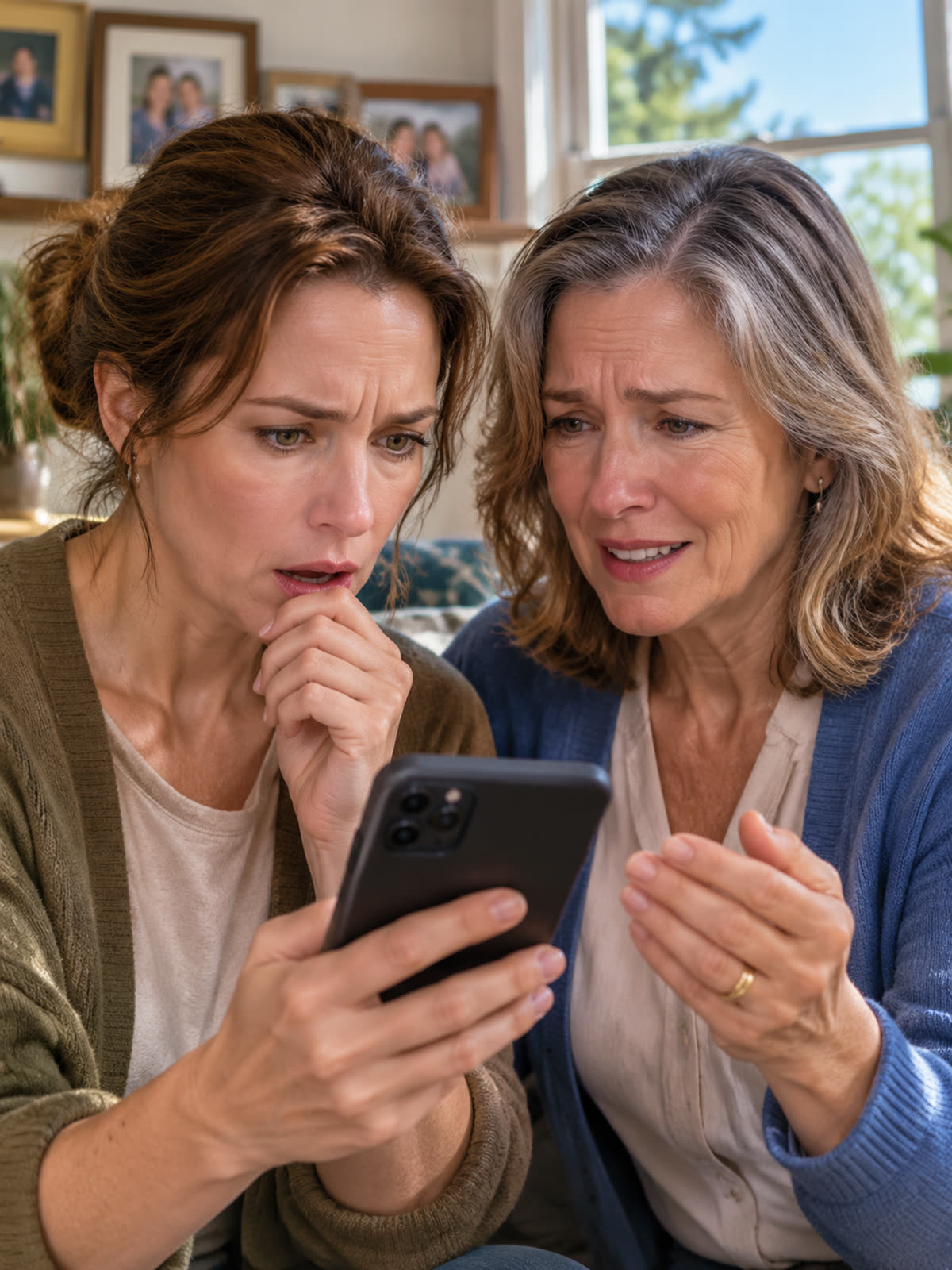
I scrolled further. Dana had sent a photograph of the quilt. Lucas’s reply read, "She loves it. Sleeps with it every night." Dana had asked, "Does she know I made it?" He had answered, "Please stop asking." I handed the phone back. "He told Alicia you didn’t want her." Dana stared at me. "He said that?" I could still hear Alicia asking why her grandmother did not like her. "She thinks she did something wrong." The messages had changed the question. Lucas had not simply kept Dana at a distance. He had hidden the evidence that she cared.
Dana looked away. "I sent those gifts so she’d know she mattered." I said, "Lucas made sure she never knew." Saying it aloud was harder than reading it, because there was no way to keep the meaning safely on a screen. The quilt Alicia slept beneath was part of a relationship she had been told did not exist. I asked Dana, "Why didn’t you show me this yesterday?" Her answer was blunt. "You’d already decided I was a terrible person." I could not honestly deny it. I had heard her confession and let it become the whole of her story.
"Why keep sending gifts?" I asked. Dana’s answer contained neither a demand nor a defense. "I couldn’t bear to ignore her birthdays. I kept hoping he’d change his mind." Lucas had accepted the things she sent. He knew Alicia loved the quilt, knew she slept with it every night, and had told Dana so. Yet he had not allowed Alicia to know who had made it. The more clearly I understood that arrangement, the less I could describe it as a simple consequence of two grieving people falling out. Alicia had been given a story that hurt her.
Dana reached for my arm. "Can I see Alicia now?" I answered, "Not yet." She looked toward the proof she had just shown me. "But you’ve seen the messages." I had, and they mattered. "You have the truth on your side, Dana. That doesn’t mean Alicia is ready to hear it from you." Her disappointment did not surprise me, but the decision could not be made only for her relief. She had waited years. Alicia had just buried her father. Those two facts had to be held together, not set against each other until one erased the other.
Dana looked away. "Does Alicia even know I kept writing?" I told her, "Not yet. But she will." Then she asked the question I had already begun asking myself. "Lucas kept deciding for Alicia. Are you going to do the same?" I picked up my bag. "I’m going to make one he should’ve made years ago. I’m going to consider what Alicia needs." I meant it, though meaning it did not make the next step easy. Knowing the truth and finding a way to tell a grieving six-year-old were not the same task.
Until then, I had thought of secrecy mostly in terms of what Lucas had withheld from me. He had asked me to make an enormous commitment without explaining that a grandmother existed or why she was absent. But the messages made it impossible to stay focused on my own position. Alicia had been told she was unwanted by someone who kept sending her signs of love. She could not recognize those signs because the person she trusted most had given them another explanation. If I said nothing now, I would not simply be leaving his choices untouched. I would be continuing one.
At school pickup the next day, Alicia came running toward me with a drawing. "We made family pictures!" She had placed herself between Lucas and me. My hair was bright purple. "Interesting choice," I said. She explained, "The brown pencil broke." "Then purple was clearly the next best option." She laughed, and I looked at the family she had put on the page. There was affection in it, and the straightforward way she had included me touched the same place her toothbrush question had. Then she pointed to an empty corner.
"My teacher asked if I wanted to draw my grandma." I asked, "What did you say?" "I said no." "Why?" Her answer was the one Lucas had given her. "Because Daddy said she doesn’t like me." I crouched beside her. "Sweetheart, we need to talk about that." The first thing Alicia wanted to know was not why adults had argued or which version I believed. "Did I do something wrong?" she asked. "No, Alicia. You didn’t." She looked back at the drawing. "Then why didn’t she come to my birthdays?"
"Your daddy wouldn’t let her." Alicia frowned. "But she could’ve called." I answered, "She tried." Each reply brought us closer to the question I had been trying to approach gently enough that it might not hurt. But there was no gentle explanation that could make all the facts remain what Alicia believed them to be. Dana had wanted contact. Lucas had prevented it. The gifts had arrived, but their source had been concealed. Alicia had done nothing wrong, yet she had been left to wonder whether she had somehow made herself impossible to love.
"Then why didn’t Daddy tell me?" Alicia asked. I looked at her drawing, at the father she had placed beside herself and the empty space where she had refused to put a grandmother. I could not answer honestly by repeating that he loved her, because she had already told me that love was not what she was asking about. Nor could I explain Dana’s absence without admitting what Lucas had done. The truth was no longer something I could keep examining in private. It was waiting between us, and this time Alicia was asking me to say it.
PART 3 — What Alicia Deserved to Know
That evening, I called Tilly. "I judged Dana too quickly," I admitted. Tilly asked, "Have you told her?" "Not yet. What if Alicia gets angry at Lucas?" That was the fear beneath all my careful pauses. Alicia had lost him so recently. I did not want the truth to feel like another loss, something that took away the father she remembered even while she was still learning to live without him. Yet protecting every part of his memory would mean leaving her with a false explanation for why her grandmother had stayed away.
"She can be angry and still love him," Tilly said. I watched Alicia arranging crayons. The simplicity of the statement did not make it easy to accept, but it made my own thinking harder to defend. "I promised Lucas I’d protect her. What if I’m making things worse?" Tilly did not offer me a way to avoid the choice. "Would you be keeping this secret if Lucas were still alive?" I answered honestly. "I don’t know." She said, "Then maybe that’s what you need to figure out." I looked toward Alicia again.
"I think I already have." After ending the call, I went to sit beside Alicia. I could not make the truth painless by withholding it until some perfect moment arrived. Nor was the choice really between preserving her love for Lucas and destroying it. He had loved her. He had also told her something untrue that made her believe she was unwanted. Both things belonged to the same father. If I insisted on giving her only one of them, I would be asking her to keep living with the consequences of the other without understanding why.
Before having that conversation with her, I met Dana at a café. "I owe you an apology," I said. She raised an eyebrow. "I judged you before hearing everything." Dana did not pretend she had given me no reason for caution. "I gave you plenty of reasons." I answered, "You did. But I should’ve listened." Her confession about the funeral still mattered. Nothing in Lucas’s messages made those words less cruel. But the cruelty of what she had said could not honestly account for every choice he had made in the years afterward.
Dana studied me. "Does that mean I can see Alicia?" I told her, "It means I’m willing to introduce you. Slowly." She leaned forward. "I’ve missed almost five years." I knew the number carried grief for her, but Alicia could not become responsible for repairing it. "And Alicia can’t give those years back. Don’t make her feel responsible for them." Dana looked away. It was a difficult limit to hear when she had waited so long, but it was one I needed to state before hope turned into expectations the child could not possibly meet.
"What happens if Alicia likes me?" Dana asked. "I hope she does." Then she asked, "And if she wants to see me every weekend?" I answered, "Then we’ll talk about it." She studied me again. "You really don’t trust me, do you?" I did not want to replace suspicion with promises I could not support. "I’m trying to. Don’t make me regret it." Trust would have to grow through what happened next. It could not be demanded as compensation for the years Lucas had kept them apart, any more than Alicia could be asked to surrender her own pace.
Dana leaned back. "So what happens now?" There was another boundary I needed her to understand. "I’m still arranging Alicia’s guardianship. I won’t promise anything I don’t have the authority to decide." She nodded. "I understand." I had married Lucas because he feared leaving his daughter without someone to care for her. I was still trying to fulfill that promise, but I no longer believed it required me to treat every decision he had made as something beyond question. My responsibility was to Alicia as she was now, with her grief, her questions, and a grandmother she had never been allowed to know.
That evening, Alicia climbed onto the couch beside me. This time, I did not wait for her to ask the same question again. "Can we talk about Grandma?" She nodded. "Your daddy and Dana had an argument after your mommy died. Dana said something very hurtful." Alicia’s first question was direct. "Did she say sorry?" I answered, "Yes, but Daddy couldn’t forgive her." Alicia pulled her rabbit closer. I could see how easily an explanation about the adults could become another explanation about herself unless I made the distinction clear.
"Is that why she didn’t want me?" she asked. I shook my head. "She did want you. She tried to visit and sent you presents." Alicia had heard something else from the person she trusted most. "But Daddy said she didn’t like me." I could not soften the next part by making it vague. "He told you something that wasn’t true." She looked down at her rabbit, taking in an answer that did not fit the story she knew. Then she put the question in the plainest words possible. "Was Daddy lying?"
"About that, yes." Alicia’s next words came from the other truth she knew. "But he loved me." I answered, "He loved you very much." She asked, "Then why did he say it?" I moved closer. "I think he was still angry with Dana. But he shouldn’t have made you feel unwanted." Alicia wiped her cheek. "Are you mad at him?" I did not give her an answer designed to make my feelings disappear. "About this? Yes." She thought for a moment before saying, "I’m mad too." I put my arm around her.
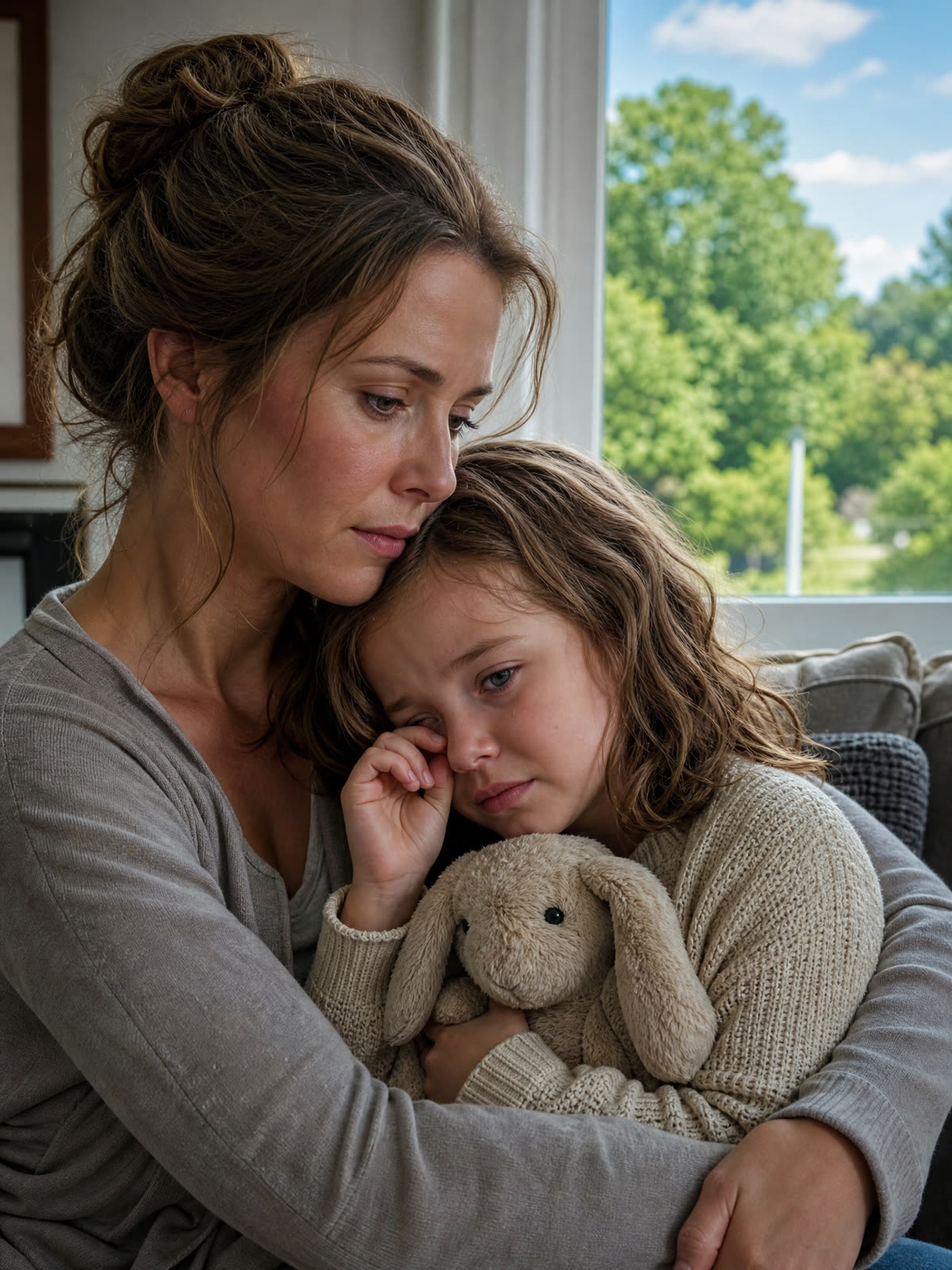
For a while, there was nothing else I needed to explain. She had asked whether her father had lied, and I had answered. She had said she was angry, and I had not asked her to take it back. Tilly’s words stayed with me: anger did not have to cancel love. I could not decide for Alicia how to arrange those feelings, or insist that one wait politely until the other was finished. All I could do was remain beside her while she began making room for something more complicated than the story she had been told.
After a while, Alicia pointed toward her bedroom. "Did Grandma send my quilt?" I answered, "She made it herself." Alicia looked surprised. "Daddy said he bought it." I nodded. The quilt was familiar to her in a way Dana was not. She had already slept beneath it, already chosen it as her favorite, without knowing whose hands had made it. I did not need to persuade her that it mattered. It was the first thing she had asked about after admitting she was angry, a piece of her grandmother’s care she could recognize without having to imagine it.
She picked at the worn ear of her rabbit. "Does Grandma know I sleep with it?" "She does. Your daddy told her you loved it." Alicia asked, "Did she ask about me?" "Many times." I kept my answers clear and no larger than the questions she was asking. Dana had tried. She had wanted to know. The child who had wondered what she had done wrong deserved to hear those facts without having to work through another adult’s resentment to reach them. Alicia thought about what I had said, holding her rabbit as she considered a grandmother who had wanted her all along.
Then she asked, "Would she still want to see me?" "Yes, sweetheart." Even now, Alicia was not assuming that being wanted meant there would be no conditions she might fail to meet. "Even if I don’t know what to say?" she asked. "She’ll understand." She moved closer. "Will you come with me?" My answer was immediate. "Of course." I was not going to tell her the truth and then leave her to face its consequences alone. A meeting could be a beginning, but it did not have to be a test she passed by saying the right thing or feeling enough at once.
Two days later, I took Alicia to a park. She had insisted that her quilt come with us. By then, it was more than a favorite possession, though it had not stopped being that. It was something she knew how to hold while approaching a person she did not know how to speak to. Dana stood when she saw us, but she stayed beside the bench. She did not rush forward or demand the closeness she had missed. For once, the space between them was being left for Alicia to cross at her own pace.
"Is that her?" Alicia whispered. "Yes, sweetheart." We walked over together. There was no way to restore the birthdays they had missed by making this meeting larger than it was. Dana could not recover five years in a greeting, and Alicia could not suddenly remember a grandmother who had been absent for almost all the life she knew. The most I could offer was what I had promised: to be there, to let the introduction happen slowly, and not to ask the child to carry the weight of what the adults had done.
"Hello, Alicia." "Hi." Alicia held out a corner of the quilt. "Did you make this?" Dana answered, "I did." Alicia looked at the stitching. "The flower’s coming loose." It was such a small thing to say after everything that had brought us there. Yet it gave them something neither had to force. Alicia did not have to explain her grief, and Dana did not have to find words large enough for the years she had missed. Between them was something she had made and the little girl who had loved it without knowing.
"I can fix it. My sewing kit is always on me," Dana said. Alicia asked, "Could you show me how?" Dana looked at me. I nodded and sat beside Alicia. The look mattered: she had waited instead of assuming, and Alicia had been allowed to ask for herself. There were still limits, still questions neither a park visit nor a quilt could settle. My guardianship petition was not resolved, and trust was not suddenly complete. But none of those unfinished things required us to refuse the small, ordinary moment Alicia had chosen.
She climbed onto the bench between us and spread the quilt across our laps. Dana showed her where the thread had loosened. I watched the woman Lucas had kept away bend toward the child who had been told she was unwanted. There was no way to make that history disappear, and I no longer thought protecting Alicia meant trying. What mattered here was that she could ask a question and receive an honest answer, reach toward someone and discover that the reaching was welcome. For the moment, the loose blue flower gave all three of us somewhere to begin.
"Can you hold this, Nomi?" Alicia asked. I held the corner while Dana guided her fingers through the first stitch. I had married Lucas because he was afraid of what would happen to his daughter after he was gone. I could not give Alicia back her father, or undo the truth she now knew about him. Beside me, her grandmother was showing her how to mend something she loved. The first stitch was only a beginning. As I held the quilt steady, I wondered whether the new bond between us would hold.
Disclaimer: This story is a work of fiction inspired by real-life themes. Names, characters, places and events are fictionalized, and any resemblance to real persons is purely coincidental. Images are for illustration purposes only.
