

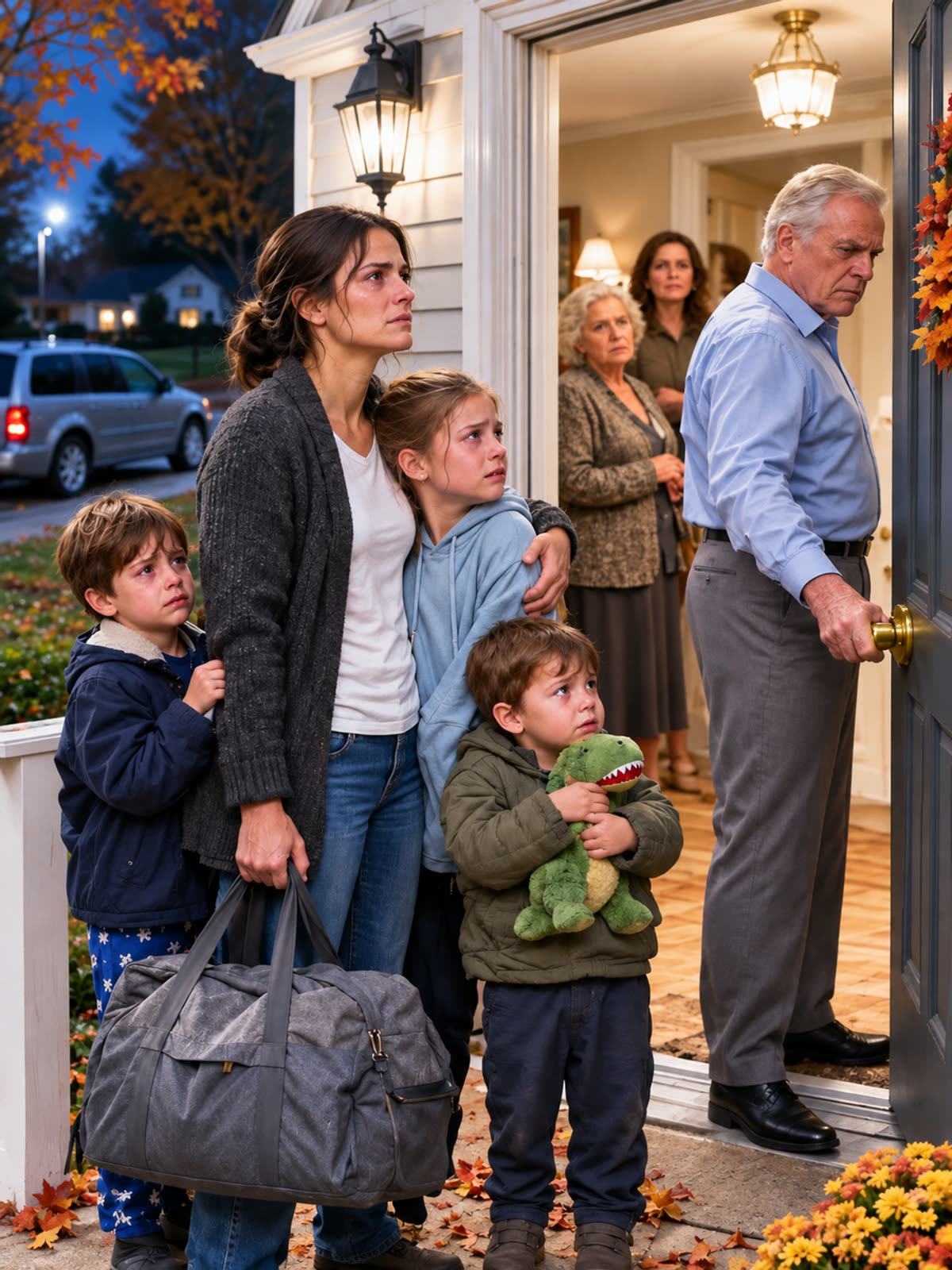
PART 1: The Money Behind the Closed Door
I kept staring at the bank statement on my phone, trying to make sense of the number on the screen. Fourteen days before my father had refused to let my three children and me into his house, $18,000 had moved from our household savings into his personal account. There had been no conversation with me, no explanation attached, and no warning that such a large amount was about to disappear. The date was unmistakable. While I had still believed our savings belonged to the life Grant and I were building together, money had already been leaving that life without my knowledge.
I went back through twelve months of transactions, looking more carefully than I ever had before. There was $2,000 in September, $1,500 in October, and another $3,000 in November. The descriptions were vague: “family assistance” and “temporary advance.” Added to the $12,000 we had already lent my parents for their roof, the amount involved came to nearly $38,000. Yet my children and I were staying in a roadside motel. Neither the husband who had shared those savings nor the father who had received the money had given us somewhere safe to stay.
Across the room, nine-year-old Holly was helping Mason and Eli get dressed. When I asked how she felt, she paused before answering. “I’m scared we’ll run out of money, Mom.” I drew her onto my lap. “Sweetheart, taking care of our finances is my responsibility, not yours.” Her eyes remained anxious. “Did Daddy stop loving us?” I swallowed hard before replying. “Your father loves you. But adults sometimes make terrible choices, and those choices are never their children’s fault.” She put her arms around me, and I held her close. Whatever happened next, I did not want my children believing they were responsible for choices adults had made.
At eight-thirty, Ruth called. We had worked together at the dental office for six years, and she knew what had happened. “I’ve arranged coverage for your shifts,” she explained. “And your appointment with the attorney is still at ten.” I thanked her, uncomfortable with how much help I suddenly needed. “You’re not asking for charity,” Ruth reminded me. “You’re getting the support you need.” I wanted to believe her. Accepting kindness felt strangely difficult when so many people who were supposed to care about us had made me feel that needing help was something shameful.
When I reached the office, Ruth gave me a bag of sandwiches, fruit, and cookies for the children. She had also gathered copies of my employment records, pay statements, and scheduling history. Then she told me there might be a full-time administrative opening with our employer. “You’d still need to interview,” she warned. “Nothing’s guaranteed. But you’ve earned the opportunity.” At the bottom of the grocery bag, I found a handwritten note: You have more options than you think. I folded it and tucked it into my purse. For the first time since leaving Grant, hope felt like something I might be allowed to hold.
Diane Alvarez listened while I described the eleven years of my marriage, Grant’s affair with Celeste, and the hurried departure that had left me trying to find somewhere for three children to sleep. I told her about my father refusing us shelter and showed her the financial transfers I had discovered. Saying everything aloud made the connections feel more troubling, but Diane did not rush me or pretend that one simple answer would solve it all. She studied the documents before asking, “Did you authorize these payments to your father?” “No.” “Did Grant discuss them with you?” “Never.”
She wrote several notes, then explained how we would have to approach the situation. “We need to address your marriage, the children’s stability, your financial situation, and your parents’ involvement. They’re connected, but they may require different legal processes.” I had arrived with everything tangled together: marriage, money, family loyalty, fear for the children. Diane began separating those problems into things that could actually be addressed. It did not make any of them painless, but it made them less impossible to face. There were steps to take instead of only people to plead with.
We discussed temporary parenting arrangements, financial disclosure, support, and possible ways to protect what remained of our assets. Diane made no promise that the process would be quick or that every question would resolve in my favor. Instead, she explained what information mattered and what I could do next. That practical approach steadied me more than reassurance would have. I could not repair my marriage by wanting it repaired, and I could not make my father open his door. But I could keep records, ask questions, and begin making decisions based on something firmer than their willingness to help.
The money remained the part I could not explain. We had already helped my parents with their roof, and I had understood that payment to be a loan. These other transfers had happened without even that basic conversation. Looking at the dates beside Diane, I kept returning to the same question: why had such a large amount moved so shortly before everything fell apart? I did not know whether the timing meant what I feared it might mean. That uncertainty was precisely why I needed someone who would examine evidence instead of simply accepting the explanations my family preferred.
When Diane reached the $18,000 transfer, her expression sharpened. “Why was this payment made fourteen days before you left?” “I don’t know.” She looked back at the records. “We’ll need the supporting records. Meanwhile, preserve every message and avoid confronting your father without understanding the evidence.” I left with a plan rather than a comforting promise. My marriage was still unraveling, our savings were badly depleted, and the children still lacked a permanent home. But the next step no longer depended entirely on Grant changing his mind or my father deciding that we deserved to come inside.

Grant called repeatedly that afternoon. When I eventually answered, he demanded our location. “Somewhere safe,” I replied. “You’ve had enough time to calm down. Bring the children home.” I kept my answer clear. “I’m not returning until we’ve addressed what happened.” His irritation came through immediately. “You’re making this much bigger than it needs to be.” It was painful to hear him reduce everything to my reaction, as though the affair and our departure were merely an argument that would end once I stopped being upset. Then I brought up the missing money.
After a long silence, Grant admitted making the $18,000 transfer because my father needed assistance. “We already lent him twelve thousand dollars,” I reminded him. “Why didn’t anyone tell me about these additional payments?” “I was going to explain.” “When, Grant? Before or after our savings disappeared?” He did not answer that question. I asked another: had my father known about Celeste before I discovered the affair? Again, silence. Then Grant snapped, “Stop investigating everyone,” and I ended the conversation. I asked that future discussions concerning the children happen in writing. I needed clarity, not another exchange that left more unanswered than before.
My mother, Judith, called that evening. She admitted that Dad was furious because I had left Grant. When I reminded her that he had closed his door on three frightened grandchildren, she started crying. “You know how your father gets,” she whispered. I had heard those words for most of my life, offered whenever his anger became everyone else’s burden. “Yes, Mom. I know. But that doesn’t make what he did acceptable.” Understanding his temper had never made it less hurtful. This time, it had not been only me standing outside, trying to earn a gentler response.
When I mentioned the money, her breathing changed. “Your father said it was temporary,” she admitted. “Temporary for what?” She hesitated before answering. “He said Grant needed help with some business arrangement.” That explanation did not settle anything. I asked whether Dad had known about the affair. “Please don’t ask me that,” she whispered. Her refusal was not the direct answer I wanted, but it told me more than I was prepared to hear. I ended the conversation carrying another weight: the possibility that my family knew far more about the collapse of my marriage than I did.
Later, Ruth came to the motel with homemade lasagna. She noticed the children’s clothes stacked near the beds and their backpacks against the wall. “How much longer can you afford this room?” she asked. “Two nights.” Saying it plainly made our situation feel even more precarious. Ruth reached into her purse and handed me a rental listing. Her cousin, Walter Ellis, owned a small two-bedroom duplex near the children’s school. The rent was not cheap, but continuing to pay for a motel would cost more. For the first time, the question of where we would sleep had a possible answer beyond another temporary night.
We viewed the duplex the next morning. It had pale-blue siding, a narrow kitchen, mismatched cabinets, and a small backyard with a tree. Holly spotted the branches at once. “Mom, we could put a swing there!” Mason wanted to know whether dinosaurs were permitted outside. Walter smiled. “Only well-behaved dinosaurs.” Eli lifted his stuffed dinosaur proudly. “He’s good!” Walter laughed, and for a moment the children were simply children looking at a backyard. They were not studying my face to see whether something else had gone wrong. I wanted that ordinary freedom for them more than anything the duplex lacked.
I explained my financial circumstances to Walter, bracing myself for questions that would make me feel smaller. He did not ask them. “Hard times don’t automatically make someone an unreliable tenant,” he said. “Let’s see whether we can arrange something reasonable.” I returned to the motel carrying an application and a feeling I had almost forgotten: genuine optimism. Nothing had been settled, and I knew better than to mistake a possibility for a guarantee. Still, someone had looked at our situation without deciding it proved something shameful about me. That mattered more than I could easily explain.
That night, Holly proposed a bedtime tradition: each of us would name one good thing from the day. “Lasagna!” Mason announced. “Rex!” Eli shouted. “My brothers,” Holly said. When they turned toward me, my answer came easily. “My good thing is that we’re still together.” For a little while, the crowded motel room felt less frightening. At 11:17 p.m., however, an email arrived from my younger sister, Rebecca. She demanded that I apologize and return to Grant, accusing me of embarrassing the family and upsetting Dad. I did not answer. I saved it with the other records.
A few days later, Walter approved the application and agreed to a written arrangement for paying part of the deposit. When I told the children, all three rushed into my arms. We laughed without the fear that had shadowed so much of our time together since leaving. We had somewhere to go. Then, at 9:43 that evening, a message arrived from a number I did not recognize: My name is Celeste. My stomach dropped. “I know you probably hate me, but Grant lied to both of us.” I demanded to know what she wanted. Instead of answering, she sent a photograph. Grant and Celeste were smiling at a restaurant table beside my father. The picture had been taken seven months earlier.
PART 2: What My Father Had Known
I stared at the photograph, trying to reconcile the smiling man at that restaurant table with the father who had refused his grandchildren a place to sleep. Celeste’s next message stripped away any possibility that the meeting had been innocent. “Your father knew about our relationship. He even helped Grant prepare for the day you discovered it.” Seven months. While I had been living inside my marriage, believing I understood its basic shape, my father had known about the woman Grant was seeing. The person I had turned to when that marriage collapsed had not been standing outside the secret. He had been inside it.
I asked Celeste why she was telling me now. “Grant told me your marriage was already ending,” she explained. “He said you knew about us.” As we continued exchanging messages, she acknowledged that she had known Grant was married and had children. She was not asking me to forgive her. What she wanted was for me to understand how much had been concealed. I could recognize that Grant had lied to her without pretending her choices had not hurt me. Both things could be true. What mattered immediately was whether she had information that could help explain what had happened.
When I asked about the money, she sent screenshots of conversations between Grant and my father. They discussed moving funds before a possible divorce, with Dad apparently offering to hold money temporarily. One message stopped me cold: “If she leaves, she’ll come here. I’ll talk sense into her.” It had been sent nine days before I discovered the affair. I read it again, then looked back at the date. My arrival on his porch might not have surprised him at all. He had expected me to come to him. He had already imagined what he would do when I did.
The memory of that night changed beneath the weight of those words. I had thought Dad was reacting with anger to a situation he did not understand. Now it appeared that he had anticipated my need for help and intended to use it to send me back. I saved everything and forwarded the records to Diane. Then I shut myself in the motel bathroom and cried. The grief was no longer only about Grant or the marriage I had lost. It was about the father I had spent my life trying to please, and the terrible distance between who I needed him to be and what he had apparently chosen to do.
Diane reviewed the screenshots the following morning without treating them as a complete answer. “They may be important,” she said. “But we need to verify their context and preserve the original conversations.” I agreed. I wanted the facts established properly, not a version of events shaped only by my anger. That afternoon, we signed the lease on the duplex. Walter placed three silver keys in my hand, and I stood looking at them. For eleven years, a house key had meant the home I shared with Grant. These opened something smaller, but they represented a kind of security I could begin rebuilding for myself.
Ruth brought cleaning supplies. Coworkers offered blankets, kitchenware, and furniture, and a neighbor contributed a bookshelf. When I tried to refuse, Ruth smiled. “You’re allowed to accept help. Someday, help somebody else.” We moved in with four plates, a borrowed coffee maker, and very little furniture. The children were delighted anyway. They were not measuring the rooms against the home we had left. They were enjoying a place where, for once, nobody was threatening to send us away. I was learning to see what they saw: not everything we lacked, but the safety those three keys had put within reach.
Grant, however, continued trying to control the situation. He sought substantial parenting time and questioned whether I could offer stable housing. Dad supported him, describing me as impulsive and unreasonable. Reading that statement devastated me. The same man who had refused to let his grandchildren sleep under his roof was now criticizing the motel stay that followed. It felt as though the consequences of being turned away were being presented as proof that I should never have left. I had worked to find shelter, seek advice, and secure a rental, yet my father was helping cast those efforts as evidence against me.
Then Judith came to the duplex. She looked exhausted when I opened the door. “May I come in?” she asked. I stepped aside. As she looked around the modest rooms, she began crying. “Oh, sweetheart…” I stopped her before pity could define the place we were trying to make our home. “Please don’t look at our home like it’s something shameful,” I told her. “We’re safe here.” She nodded. The narrow rooms did not erase what I had accomplished, and I needed her to understand that. We had very little, but the children were safe, and that was not something to apologize for.
Mom apologized for saying nothing while Dad turned us away. I listened, still hurt by the silence she had allowed to stand between us. Then she opened her handbag and took out a thick envelope. Inside were copies of messages between Grant and my father that she had found on Dad’s tablet. Until then, much of what I knew had come through financial records and Celeste’s screenshots. Now my mother was setting another piece of the story directly on our table. One email had a subject line that made my hands shake before I had even finished reading it: TEMPORARY CUSTODY STRATEGY.
The messages discussed using my temporary housing problems, limited savings, and departure from the marital home to challenge my parenting arrangements. Dad had known Grant was preparing to use those circumstances against me. Worse, he had helped create some of the pressure behind them. “Did Dad know the children might end up without somewhere safe to sleep?” I asked. Judith started crying. “I don’t think he believed you’d actually stay away.” I looked at her. “Mom, he saw all three children standing on his porch. Then he closed the door.” She covered her face. “You’re right.” For once, she did not soften what he had done.
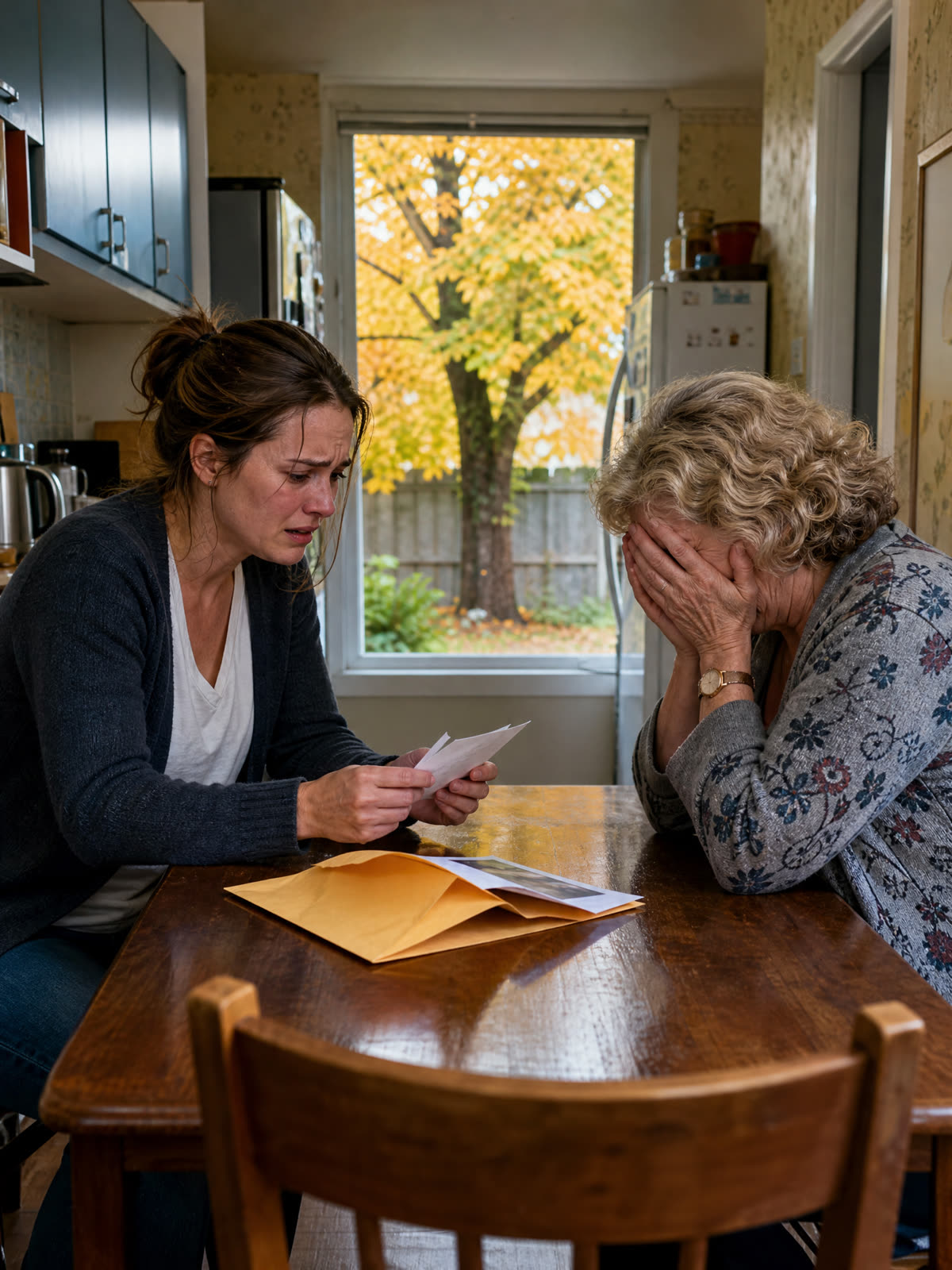
That agreement mattered because it was more than sympathy. Mom was no longer asking me to understand my father at the expense of acknowledging what had happened to us. She agreed to give a truthful statement about the night she had witnessed. For the first time in my life, she stopped defending his preferred account simply because challenging it would make him angry. It did not undo her earlier silence or make my hurt disappear. But it meant I would not have to describe that porch as though nobody else had stood there and seen the same frightened children.
Over the following weeks, Diane collected our financial records, housing documents, employment information, and communications about the children. The process was not dramatic in the way betrayal had been dramatic. It required putting dates in order, preserving messages, and showing what had actually happened. I began to understand why that mattered. Grant and Dad could use broad words like impulsive or unreasonable. Records required something more specific. I could show that I worked, that I had sought legal guidance, that I had found a rental, and that I was trying to protect the children’s stability rather than simply reacting to my own pain.
Their accusations still hurt. Knowing that I had evidence did not make me immune to hearing my father describe me as someone who could not be trusted with sensible decisions. I had spent too much of my life wanting his approval for his words to become harmless overnight. But I was starting to separate the force of his opinion from its accuracy. His certainty did not make his account complete. My fear did not mean I had acted irresponsibly. The children and I had been through instability, and I would not pretend otherwise, but the reason for that instability mattered too.
When we attended the hearing, Grant sat beside his attorney. My father was behind him, with Rebecca and my brother Tyler. Seeing them together brought back the helplessness of standing outside my parents’ house. For a moment, I felt like the daughter who still hoped the right words might persuade her father to be kind. Then Judith took the seat beside me. Her presence did not erase the people across the room, but it interrupted that old feeling of being alone against everyone else’s judgment. This time, someone from inside the family was prepared to tell the truth without asking me to surrender first.
Grant’s attorney focused on the disruption surrounding our separation: the motel, our limited resources, and the changes in the children’s routine. Those details were not invented. We had endured an unsettled period, and I could not deny how frightening it had been. What I feared was hearing that period described without its causes, as though we had simply stepped out of a stable life for no reason. A motel room could be made to sound like the whole story if nobody explained why we had been there or what I had done to move us somewhere better.
Diane presented my employment information, our new lease, the care I had provided, and my efforts to arrange appropriate contact with Grant. She also raised the unexplained transfers. Each document addressed something concrete. The lease showed that the motel was not our permanent situation. My work records showed an established source of employment. The communications showed that protecting the children did not mean erasing their father. I listened as the pieces of our recent life were placed in order. It was not a perfect life or an easy one. But it was far more responsible than the picture Grant and Dad had tried to draw.
Then Judith described the night we came to her house. When asked whether I had been threatening, intoxicated, or unable to care for the children, she answered firmly. “No. She was frightened, but she was protecting her children.” She confirmed that her husband had refused us shelter. I cried quietly while she spoke. For weeks, I had been defending myself against accusations that turned my fear into a character flaw. Now a person who had actually witnessed that fear was explaining what it had been: a mother trying to keep her children safe after discovering that the life she trusted was not what she believed.
I did not need Mom to claim I had been fearless. I had not been. I needed her to stop allowing fear to be confused with failure. Her testimony acknowledged both the distress I had been in and the care I was still giving my children. It also placed Dad’s decision where it belonged. He had not merely disagreed with me from a distance. He had seen us at his door and refused to let us stay. Hearing those facts stated plainly was painful, but it was different from carrying them alone while the people involved insisted that my reaction was the real problem.
The hearing did not end with every issue settled or with an instant, sweeping victory. Financial questions remained open. Parenting arrangements still needed to be established, and records still required examination. I understood that evidence could challenge a false account without making the whole process disappear. There would be more work, more uncertainty, and more decisions. What changed was that Grant and my father no longer had an uncontested story to tell. Their description of me had been met with documents, a lease, employment records, communications, and the testimony of someone who had been there.
I was not merely an emotional wife who had abandoned her marriage. I was a mother who had uncovered betrayal, protected her children, sought professional help, and worked to restore stability. That account did not require me to hide the motel or pretend I had never been overwhelmed. It required the whole truth, including what had brought us there and what I had done afterward. For the first time, I felt that truth had room to stand. But proving that their account was incomplete was not the same as knowing how our finances, our parenting arrangements, or our fractured family would finally be resolved.
PART 3: The Home That Belonged to Us
Over the months that followed, change came gradually rather than all at once. The original $12,000 loan to my parents became part of a separate repayment discussion, while the additional transfers were examined through the appropriate financial process. Eventually, Dad agreed to a documented repayment arrangement. Grant was required to provide information about relevant accounts, and our attorneys continued working through the marital finances. None of it had the clean simplicity I might once have imagined justice would have. There were records to consider and matters to resolve separately. Still, questions that had once been dismissed were finally being addressed instead of left entirely in their hands.
There were difficult meetings, expensive bills, and days when the sheer amount of it all overwhelmed me. A plan did not remove exhaustion. Having support did not make every decision easy. But I began working more hours at the dental office, and our financial position slowly improved. I tried to notice that progress without demanding that it erase every problem. We were not suddenly secure in every possible way. We were becoming more secure through ordinary, repeated effort. After so much of my future had seemed dependent on somebody else’s permission, those gradual changes gave me something real to build upon.
The children began settling into the duplex. We found a secondhand sofa, put curtains in the bedrooms, and covered the refrigerator with their drawings. The rooms became more familiar, less like somewhere we had arrived in an emergency and more like the place where our daily lives belonged. We did not replace everything we had lost. We made use of what we had and accepted what people offered. Looking around, I could see Ruth’s kindness, my coworkers’ generosity, and the practical help that had allowed us to begin again. Our home was taking shape through care rather than appearances.
Walter installed a safe swing under the tree in the backyard. Holly loved it. Mason built elaborate dinosaur adventures beneath the branches, and Eli insisted that Rex deserved a turn on the swing as well. Watching them, I remembered how quickly Holly had noticed that tree during our first visit. Even while I was calculating rent and worrying about the application, she had been able to imagine joy there. Now that possibility was part of our ordinary life. Their play did not mean they had forgotten everything. It reminded me that what had happened did not have to become the only story their childhoods would contain.
I thought often about the difference between what the duplex looked like and what it gave us. Its size had once seemed like something I would have to defend. Now I understood that the important measure was not how it compared with the house we had left. Here, the children could settle into their routines without feeling that their right to stay depended on pleasing someone. I could make decisions without waiting for Grant or Dad to approve them. The place was modest, but the security growing inside it was not a small thing. It was the reason I had kept going when so much else felt uncertain.
Grant gradually stopped approaching every conversation as though it were an argument he had to win. We continued arranging his time with the children. I did not mistake those changes for a repair of our marriage, and I did not need to do so in order to recognize them. Our relationship as spouses had broken in ways I could not ignore. Our responsibilities as parents remained. Learning to separate those truths required more than one difficult conversation, but it mattered that the children could have arrangements centered on their needs rather than every unresolved hurt between their father and me.
After one visit, Grant approached me quietly. “I really did love you,” he said. I looked at him, and part of me believed him. I believed that, in the way he understood love, there had been something real between us. That did not make the dishonesty less destructive. I had learned that someone could speak about love while making choices that caused terrible harm. Accepting that complexity was different from using it as an excuse. I no longer needed to decide that every good memory had been false in order to know that returning to our marriage would be wrong for me.
“I loved you too, Grant. But we can’t return to what we were.” He lowered his eyes. “I know.” I let that acknowledgment stand before saying what still mattered. “We can still be good parents.” He nodded. “I want that.” For the first time, our conversation ended without becoming an argument. There was no reconciliation hidden inside it, no agreement to pretend the affair or the money had not happened. We were not rebuilding our marriage. We were beginning to understand that the children should not have to live inside its wreckage every time their parents spoke.
It was a quieter kind of progress than I once might have expected to value. No grand declaration could give us back the life we had before. What helped was the possibility of discussing the children without being pulled immediately into accusation and defense. I could acknowledge Grant as their father without reopening the door to being his wife. I could want him to parent well without surrendering what I had learned about protecting myself. Those boundaries did not make me unkind. They made it possible to consider a future in which our broken relationship did not control every part of our children’s lives.
My relationship with Judith began changing too. She visited the duplex, respected my boundaries, and stopped urging me to return to Grant. Over time, she acknowledged how many years she had spent letting fear of Dad’s anger shape her decisions. Eventually, she consulted an attorney about her own financial circumstances and future. I did not tell her what choice to make. After everything that had happened, I understood too well what it felt like when someone else claimed the right to decide your life. I simply encouraged her to understand her options, just as Ruth and Diane had helped me understand mine.

My father remained the most difficult person to forgive. For months, he insisted that the night he turned us away had been misunderstood. Sometimes the blame belonged to Grant. Sometimes it belonged to me. The explanations changed, but the acknowledgment I needed never arrived. Eventually, I stopped arguing. I could repeat what had happened, but I could not force him to recognize the harm if he was determined not to see it. That realization was painful and freeing at the same time. My life could not remain suspended while I waited for him to approve my memory of a night I had lived through.
Then a letter arrived. Dad wrote that he had tried to control my decisions and had failed to treat me as an independent adult. He admitted placing his own beliefs about marriage above my children’s immediate needs. I read slowly, cautious about hoping too much from words after so many excuses. Then I reached a sentence that stopped me: I was wrong to make your children feel unwanted. I pressed the letter to my chest. For the first time, he had named what he had actually done instead of describing my response to it. He had finally put the children’s experience ahead of his defense.
He did not demand forgiveness. He asked whether he might eventually have a chance to apologize to the children. I did not answer immediately. An admission mattered, but it could not erase the porch, the fear, or the choices that had followed. I needed time to consider what his words meant and what rebuilding trust would require. Several weeks later, we met at a quiet café, just the two of us. Grant was not there. Neither were the children. There was no family audience to persuade and no one else whose reaction either of us had to manage.
Dad looked older than I remembered. We talked about ordinary things before I finally brought up his letter. “I read what you wrote.” He looked down. “I know I hurt you.” “Yes, Dad. You did.” His eyes filled. “I can’t undo that night.” “No. You can’t.” There was no comfort in pretending otherwise. I explained that rebuilding trust would take consistent behavior, not just a single apology. He nodded. “I understand. I’ll do the work.” For once, he did not argue with the boundary I placed before him or insist that being my father entitled him to move past it.
We did not embrace and declare everything repaired. We finished our coffee and agreed to proceed carefully. For that moment, it was enough. I had once thought peace with my father meant finding a way to make him stop being angry with me. Now it meant being honest about what had happened and allowing trust to depend on what he did next. There was room for the possibility of change without pretending change had already been proven. I could leave the café without either rejecting his apology outright or handing him the power to decide when my hurt should be over.
By the following spring, the duplex was full of warmth and laughter. Holly was ten, Mason was seven, and Eli had turned four. The kitchen remained narrow, the cabinets still did not match, and the backyard had not grown any larger. But the place was ours. Its imperfections had become familiar rather than embarrassing. We lived there, made memories there, and came back to it at the end of the day. I no longer saw the rooms primarily as evidence of how far we had fallen from our old life. They showed how much we had managed to build after leaving it.
Every evening, we kept Holly’s tradition of sharing one good thing from the day. Mason sometimes chose pizza. Eli almost always chose dinosaurs. Holly talked about a friend, a school project, or something new she had learned. Often, my answer stayed simple. “I’m thankful we’re together.” Repeating it did not make it less true. There had been a time when being together in a motel room was the only certainty I could offer them. Now the same words belonged to a different kind of evening, one shaped less by immediate fear and more by the ordinary details of a home that was becoming steady.
One Saturday morning, I found Holly preparing cereal for her brothers. She glanced around the kitchen. “Mom, can we stay here forever?” I smiled. “We might move somewhere bigger eventually.” “With our own bedrooms?” “Hopefully.” “And another swing?” “Absolutely.” She hesitated before asking the question beneath all the others. “But we won’t have to leave because somebody gets angry with us, right?” My throat tightened. The duplex had given us stability, but that question showed me how carefully she still remembered the uncertainty that had come before it. A child could enjoy a swing and still wonder whether safety might be taken away.
I knelt beside her and took both her hands. “I promise I’ll keep making decisions to protect you. And whatever difficulties come, we’ll face them together.” She wrapped her arms around my neck, and I held her tightly. I could not honestly promise that life would never become difficult again. I could promise that protecting them would guide my choices, and that difficulty would not mean facing it alone. I wanted Holly to understand that she did not have to manage everyone’s feelings to earn a place in our home. Love was not supposed to make a child wonder whether one angry adult could leave her outside.
Later that afternoon, Ruth brought groceries, and Walter came to check the backyard gate. The children ran around laughing while I watched from the kitchen window. Looking at them, I understood something I had spent much of my life trying to learn. Family was not simply a matter of blood or a shared surname. It was found in the people who showed up, who listened, and who offered help without demanding obedience in return. It was the people who made room for you when life became difficult, rather than using your need to insist that you live according to their wishes.
After the children fell asleep that evening, I stood by the front entrance. I remembered Dad’s porch, the darkness, the children’s frightened faces, and the sound of the door closing. At the time, I had believed my whole life was coming apart. Yet that closed door had forced me to discover what I could build without his approval. I did not need Grant’s permission to protect my dignity. I did not need someone else’s idea of a perfect family to decide what ours should become. The memories still hurt, but they no longer held the same power over the life waiting inside our own door.
I turned the lock gently and switched off the hallway light. My children were sleeping safely, and our small home was peaceful. For the first time in a long while, tomorrow did not frighten me. The night Dad turned us away, I thought I had lost everything. What I had finally lost was the belief that loving people required me to remain silent while they hurt us. In its place, I had found my voice, my independence, and a home where my children would never have to beg to be let inside. What came next was still unwritten—but this time, the choices would be mine.
Disclaimer: This story is a work of fiction inspired by real-life themes. Names, characters, places and events are fictionalized, and any resemblance to real persons is purely coincidental. Images are for illustration purposes only.
