

PART 1 — THE GOWN SHE WAS NEVER SUPPOSED TO SELL
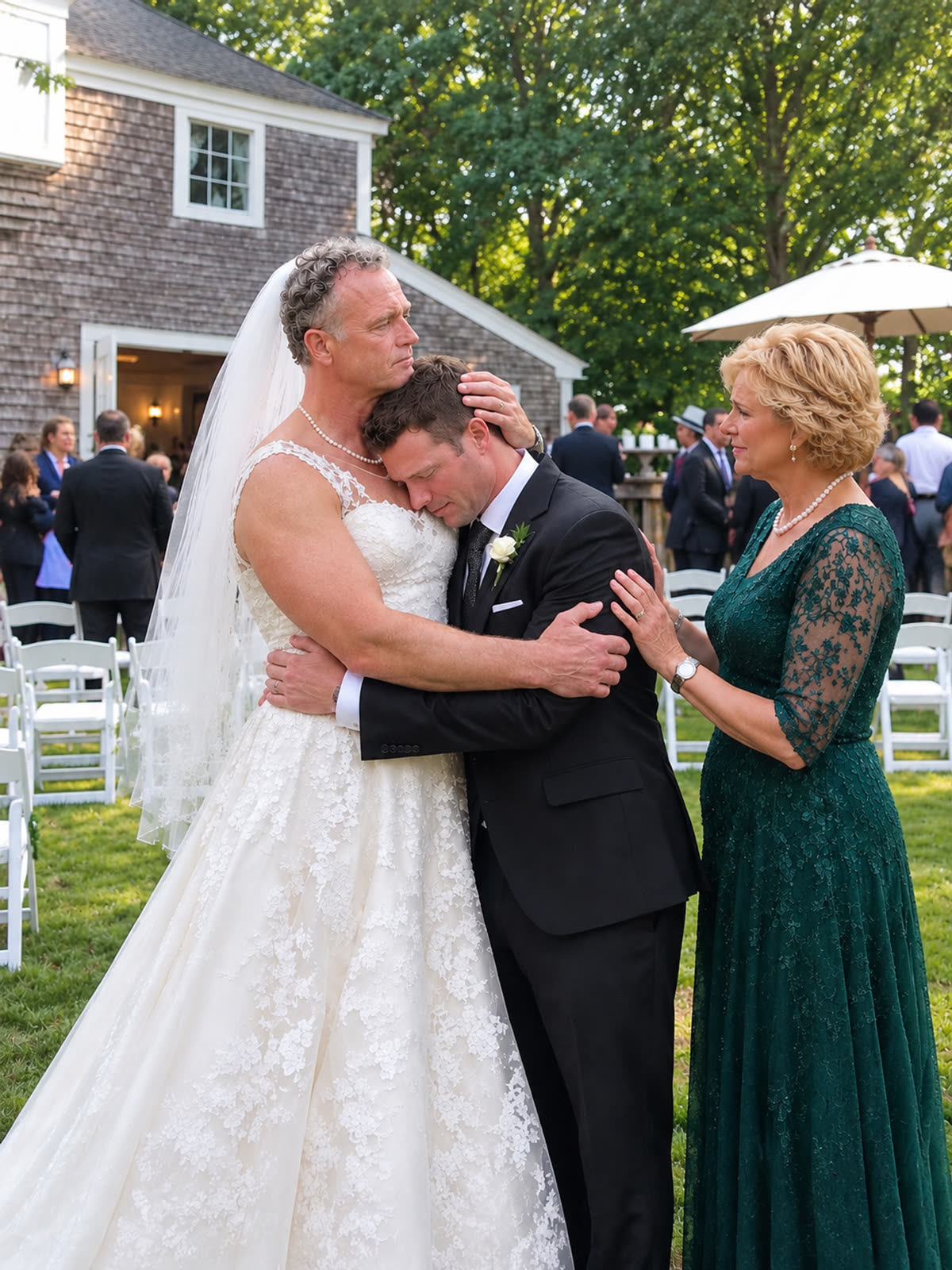
“Robert, have you lost your mind? Take off my wedding dress!” The words escaped before I could stop them. My sixty-year-old husband had arrived at our son’s wedding wearing the white bridal gown I had worn thirty-four years earlier, complete with my pearl necklace and veil. Nearly one hundred people turned toward him. Somewhere near the back, a guest started laughing, and the sound quickly traveled through much of the room. It was such an extraordinary sight that people seemed to respond before considering what might have brought him there. But Jessica, standing beside our son at the altar, showed no trace of amusement. Her fingers tightened around her bouquet until the stems pressed into her hands.
Then Robert reached into the side of the gown and brought out a brown envelope. Jessica’s face appeared to lose its color. “Take that ridiculous thing off!” she snapped. My husband adjusted the veil. “Interesting, Jessica. That’s remarkably close to what you told a man at the Jefferson Hotel last Thursday.” The laughter stopped. Crispin stepped toward his father, looking both distressed and embarrassed. “Dad, what on earth are you doing?” Robert looked at him with an expression I could not recall seeing in all our years together. “Trying to stop you from making a decision you might regret for the rest of your life.” I recognized the envelope. He had carried it for three days without telling me everything inside it. Now our friends and relatives were about to learn why.
My name is Margaret Bennett. I am fifty-eight, and Robert and I have lived near Richmond, Virginia, for almost our entire marriage. We raised our two children in a four-bedroom house that once seemed too small for two teenagers and later felt much too quiet without them. Our daughter, Emily, now lives in North Carolina with her husband and little boy. Crispin, our son, is thirty-one and manages construction projects. He has always been reliable and hardworking, with a generosity that occasionally worried me. It was not his willingness to help others that concerned me, but the possibility that someone might accept that kindness without caring how much it cost him. When he introduced Jessica Vance three years earlier, however, I had not imagined she would become the person who made that concern feel justified.
Jessica was twenty-nine then and worked in event planning. She had an effortless way of making the person in front of her feel noticed and valued. On that first visit she brought flowers; afterward, she remembered Robert’s birthday and offered to help clean up after Thanksgiving without waiting to be asked. I found those gestures thoughtful. Robert remained polite, but his enthusiasm never matched mine. “She certainly knows how to say exactly what people want to hear,” he commented after one gathering. I lifted my eyebrows. “Or perhaps she’s simply a thoughtful young woman, Robert.” “Perhaps.” He let the matter rest. Because he rarely offered careless judgments about people, his reservations would ordinarily have made me pause. This time, I decided he was being unnecessarily cautious.
For thirty-five years, Robert had worked in building inspections and code enforcement. His professional life had taught him that a detail other people dismissed could eventually become a serious problem. I knew that habit followed him home, yet I did not think every concern needed to be examined as though it were a structural defect. When Crispin proposed, Jessica cried with happiness. She called that evening to show me her ring, and soon we were both wiping away joyful tears. They chose a beautiful country estate near Richmond, and the guest list grew to almost one hundred. Jessica took charge of nearly every arrangement. Flowers, music, catering, and seating were organized well ahead of time. Crispin seemed relieved to leave the planning with her while he finished a demanding construction assignment.
Alongside the wedding, they were preparing to buy their first house. Crispin had saved for years and found a four-bedroom colonial in Chesterfield County. Jessica spoke enthusiastically about the large kitchen and backyard, imagining Christmas gatherings and children growing up there. I could picture the future she described. Robert was more interested in how the purchase was being handled. At Sunday dinner he asked, “Crispin, have you personally looked through the closing paperwork?” Our son laughed. “Dad, Jessica is taking care of the documents. She understands all of that.” Robert did not smile. “It’s money you’ve worked hard to save. You should know precisely where it’s being sent.” “I already know.” “Then reviewing it shouldn’t be a problem.” Crispin sighed. “Could we please enjoy one family dinner without treating everything like a building inspection?” Robert said nothing more.
About four weeks before the wedding, Jessica asked whether she could borrow my bridal gown. It was ivory satin, with a delicate lace neckline and a long veil, made by a local seamstress in 1992. My mother had helped me choose the fabric. She had also sewn the small pearl buttons down the back herself. Twelve years had passed since her death, and the dress remained one of the things that made me feel closest to her. It was not simply a garment I had worn for a few hours. Its fabric and careful finishing held the memory of preparing for my own marriage with my mother beside me. I had kept it safely stored because those associations mattered far more than whether I would ever have a practical use for it again.
“I’d love to incorporate a little of its lace into something meaningful for the ceremony,” Jessica explained. “Perhaps a special keepsake for Crispin.” The thought touched me deeply. “Of course, sweetheart. Just promise you’ll look after it carefully.” She hugged me. “I promise.” Robert brought the box down from the attic and helped her place it in her car. After she drove away, he remained standing beside me. “That gown is very precious to you,” he said. “I know. Isn’t it lovely that she wants to make it part of their wedding?” He nodded without adding anything. At the time, his quietness did not seem important. I was thinking about the dress becoming part of our son’s ceremony, not about any reason I should hesitate to trust the woman he intended to marry.
Three weeks later, on the Thursday before the wedding, Robert came home carrying a brown envelope and looking unusually tired. I was working on floral decorations for the rehearsal dinner when he asked, “Margaret, has Jessica brought your wedding gown back yet?” “Not yet. Is something wrong?” Instead of answering, he asked another question. “Did she mention which alterations business she planned to use?” I gave him the name. He sat at the kitchen table and wrote it on the back of an envelope. His manner made it impossible to return comfortably to what I had been doing. “Robert, will you please explain what’s happening?” He looked troubled. “There’s something about the house transaction that doesn’t seem right.” I put down my scissors. “And how does that involve my wedding gown?”
Robert rubbed his forehead. “I haven’t figured that out completely.” With the wedding only days away, his incomplete answers were wearing on my patience. “Our son is getting married in three days. If something concerns you, speak with him.” “I already have.” “Then speak directly with Jessica.” He looked up at me. “I did. She told me to stay out of her affairs.” That surprised me. Whatever Robert’s private reservations, Jessica had always been courteous in front of us. I wanted to know exactly what he had said to her, but he remained reluctant to explain. “I want to verify a few details before suggesting anyone has done something improper.” I told him that withholding information from me was unfair. He apologized, yet the envelope stayed closed. I was left with his concern, my frustration, and no clear way to connect the house paperwork to my mother’s pearl buttons.

Robert left before breakfast the following morning. When he returned, he asked me to sit with him at the table. “Margaret, has Jessica ever mentioned having a previous husband?” I stared at him. “No. Why are you asking?” “Because I’ve located a marriage record.” He placed a printed page in front of me. It recorded the marriage of Jessica Anne Vance and Mark Daniel Caldwell in Las Vegas four years earlier. I read it, then went back over it a second time, trying to understand what it meant for the wedding we were about to attend. “Perhaps they got divorced.” “That’s possible. But she told Crispin she’d never been married.” I looked again at the date. The existence of a previous marriage did not prove anything about its present status, but the difference between that document and what we had understood was difficult to dismiss.
“Are you positive this refers to our Jessica?” I asked. “Her birth date and the identifying details are consistent. I’ve verified everything I reasonably could.” Robert explained that a name in the house paperwork had led him to investigate further. One document Jessica supplied named an account holder as J. Caldwell. That name did not match the title company, and the discrepancy had bothered him enough to look into it. I asked whether he had found a divorce record. “Not through the sources I’ve checked. That doesn’t mean a record doesn’t exist elsewhere, but Crispin should certainly ask about it.” He was careful about the distinction. He had found evidence of a marriage, not conclusive proof that it continued. Even so, it was information our son needed before making another legal commitment.
I reached for my phone. “Then we need to call him.” Robert hesitated. “Margaret, I’d prefer that he not confront Jessica until we’ve established more facts.” “He’s our child, Robert. He has every right to understand what you’ve discovered.” I called Crispin. He answered from work and sounded distracted. “Mom, is something wrong?” “Your father noticed something concerning Jessica’s documents. Could you visit us tonight without her?” He paused. “What documents are you talking about?” “Information about an earlier marriage.” For a moment there was silence. Then he said, “Mom, Jessica already explained that to me. She was married briefly several years ago. It’s finished.” I looked at Robert. Our son did not sound shocked by the marriage record. He sounded unhappy that we were asking about something he believed had already been settled.
“But you told us she’d never had a husband.” “I didn’t believe it was relevant. She said the marriage had been annulled.” Robert leaned toward the phone. “Crispin, have you actually seen the annulment documents?” “No, Dad. I believe Jessica.” “Then request a copy.” Crispin’s frustration became unmistakable. “Are we really having this conversation two days before my wedding?” “I’m simply asking you to confirm something that matters.” “I’m dealing with enough already. Please don’t turn this into another disagreement.” The call ended without any agreement that he would ask for proof. Robert stared at the phone. “He isn’t going to ask her.” I did not answer. Until then, I had wanted to believe that Robert’s caution was excessive. Now my confidence was giving way to genuine concern, and I no longer knew what reassurance would be justified.
Later that afternoon, Robert finally told me what had happened the previous day. He had visited the alterations business Jessica named when she borrowed my dress. The proprietor said Jessica had never brought the gown there. She did, however, remember a telephone inquiry about whether older wedding dresses could be sold. That distinction changed the meaning of the visit entirely. Jessica had asked me for the gown because she supposedly wanted to make something meaningful for our son. An inquiry about selling bridal garments had nothing to do with the keepsake she had described. Robert had not stopped with that first conversation. He contacted another business nearby, still trying to discover where the dress had actually gone and why no one at the original shop had ever received it.
The owner of the second shop recognized my name from the label sewn into the gown. She confirmed that Jessica had brought it in to find out what it might be worth. My stomach tightened as Robert explained. “She was considering selling the dress my mother helped make?” “That appears to have been her intention.” I had willingly let Jessica borrow it. I had even agreed that some lace could become part of something for Crispin. Neither permission came remotely close to allowing her to sell it. The distinction felt so obvious that I struggled to understand how the woman who had embraced me and promised to be careful could have treated my trust in that way. Still, Robert was describing what he had learned, and I needed to hear the rest before deciding what it all meant.
He said he had gone downtown hoping to speak with Jessica directly. Instead, he saw her coming out of the Jefferson Hotel with a man carrying a garment bag. When Robert approached, her reaction was angry rather than welcoming. “She told me I had no business getting involved,” he recalled. “Then the man unzipped the bag, and I recognized your gown.” I gripped the table. “Why did he have it?” “He made a joke about putting it on. Jessica immediately told him to remove it before anyone noticed.” Robert was plainly uncomfortable repeating the encounter. The dress that had remained safely stored in our attic had somehow become part of a hotel exchange involving Jessica and a man we did not know. Nothing about that resembled the careful preparations for a family keepsake she had promised me.
“I walked away rather than continue arguing. But the man came after me outside.” Robert then told me his name: Mark Caldwell. He was the same man identified as Jessica’s husband in the marriage record. That connection made the conversation more troubling, although it did not make everything Mark said trustworthy. According to Robert, Mark claimed that Jessica wanted his help selling the dress. He also said she intended to go abroad shortly after the ceremony and alleged that some of Crispin’s savings had been used toward outstanding financial obligations. Those were serious claims, coming from someone whose own relationship with Jessica we did not understand. I could believe Robert had heard them without assuming that Mark had told him the whole truth or had shared the information for an honest reason.
“He’s her husband, Robert. We don’t know what their situation is or what reason he might have for sharing these claims.” “I understand. That’s precisely why I’ve been verifying the details.” Robert showed me an email from the title company. It confirmed that the account information Jessica had supplied was not an authorized account for the closing. This was different from Mark’s accusations. The company could speak for itself about where a legitimate payment should go, and its answer gave us an independently checkable reason to worry. I called Crispin immediately, but he did not answer. I left a message asking him to contact me before transferring any more money. I could no longer treat the paperwork as a disagreement between an overly cautious father and a son who wanted his wedding preparations left alone.
Next I called the wedding coordinator and asked whether she could help arrange a private conversation with Crispin before the ceremony. She promised to try. I did not want a confrontation in front of guests. I wanted our son to have the information, ask the necessary questions, and make his decision with a clear understanding of what remained unresolved. The problem was that our calls had not reached him in a way he was willing to hear. Robert had documents, Jessica had explanations we had not yet obtained, and the wedding was almost upon us. We knew the payment instructions were wrong. We knew the dress had been offered for sale. But the most important answers still belonged to Jessica—and we were running out of time to get them.
PART 2 — THE ENVELOPE THAT STOPPED THE CEREMONY
On Sunday morning, Robert was gone. He had left a handwritten note saying he needed to collect something important and would meet us at the venue. I called several times without reaching him. By midday, concern had become tangled with frustration. The florist needed last-minute instructions, the photographer wanted relatives assembled for pictures, and Crispin was pacing near the groomsmen’s room. “Where’s Dad?” he asked. “I wish I knew, sweetheart.” “He isn’t answering my calls either.” It was difficult to explain his absence when I did not understand it myself. After everything we had discussed, I had expected us to face the morning together. Instead, I was trying to manage ordinary wedding demands while carrying questions that made the celebration feel increasingly uncertain.
I tried to draw Crispin aside, but Jessica arrived before we could begin. “Is everything all right?” she asked. I turned toward her. “We need to discuss something before the ceremony starts.” Her expression became guarded. “Discuss what?” “The financial paperwork for the house. And your marriage to Mark Caldwell.” She went still. Then she gave a nervous laugh. “Margaret, Robert has been investigating matters he doesn’t fully understand. Crispin and I have already discussed my history.” “Then perhaps you can explain the situation to me as well.” Jessica glanced along the corridor. “Could we please handle this after the ceremony? We’re running late already.” Her answer did not resolve either subject. It merely moved the conversation toward the very point after which those unanswered questions would become harder to separate from a marriage.
Before I could insist, the best man arrived to collect Crispin for photographs. Jessica slipped her arm through his. “Come on, honey. Everyone’s waiting for us.” I watched them leave together. I knew there was a problem, but still could not measure its full seriousness. At two-fifteen, the ceremony music began. Sitting in the front row, I kept turning my eyes toward the entrance. Then the doors opened, and Robert appeared in my wedding gown. The dress explained what he had collected, but not why he had chosen to wear it. When Jessica saw the envelope, however, her reaction told me that his entrance meant something more to her than an embarrassing interruption. My husband had found a way to command the attention our private attempts had failed to secure.
“Dad, you’re humiliating me!” Crispin cried, moving between Robert and Jessica. Robert stopped several feet from the altar. The ivory satin sat awkwardly across his broad shoulders, and the pearl buttons my mother had stitched looked strained. Under almost any other circumstances, the sight might have seemed comical to me too. But his hands were shaking. “Son, I attempted to explain everything in private. You refused to hear me out.” Crispin stared at him. “So your solution was to put on Mom’s wedding gown in front of nearly a hundred guests?” “I understand how ridiculous this appears.” “Do you really?” Robert nodded slightly. “Yes. And I’m sorry. But there’s something important you must understand before you marry Jessica.” His apology did not remove our son’s embarrassment, but he did not retreat from the reason he had come.
Jessica stepped nearer. “He’s doing this because he’s never approved of me. He wants to spoil our wedding.” I went to stand beside Robert. “Jessica, I tried discussing these concerns with you earlier. You didn’t explain anything.” She looked at me. “Margaret, please don’t support what he’s doing.” I took a slow breath. “I’m not supporting a public scene. I simply want us to establish the facts.” That distinction mattered to me. I was no more comfortable with Robert’s appearance than Crispin was, and I did not want his unusual choice to become an excuse for ignoring the documents. Jessica’s previous marriage and the destination of our son’s money needed answers whether Robert asked about them in a suit or in the gown I had trusted her to protect.
Robert opened the brown envelope with care. “Jessica, are you currently still legally married to Mark Caldwell?” The room seemed to hold still around the question. Several seconds passed before she shook her head. “No. That marriage ended years ago.” Robert held out a document. “Then can you show us the official divorce decree or annulment order?” Rather than take it, she turned to Crispin. “Honey, I’ve already told you about Mark. You know how difficult that marriage was for me.” Our son nodded, but uncertainty had entered his expression. “You told me it had been annulled.” “That was what was supposed to happen.” Robert lowered the page. “Supposed to happen?” What had been presented as a completed legal matter was suddenly sounding like something else.
Jessica’s eyes filled. “The legal process became complicated. Mark wouldn’t cooperate.” Crispin looked straight at her. “Jessica, are you legally divorced or aren’t you?” She did not answer. I had spent the previous days looking for something definite, some fact that would tell me whether Robert had misunderstood. Yet her silence in response to that direct question was more unsettling than any of the pages he had shown me. It did not tell us every detail of her relationship with Mark. It did reveal that Crispin could not get a clear answer about whether the woman beside him was legally free to marry. He had trusted her account of an annulment. Now, with the ceremony waiting, he was discovering that she could not support it.
The officiant quietly suggested that we move into a nearby sitting room. Robert agreed at once. “Crispin, you don’t have to explain anything in front of everyone. We can discuss this privately.” Jessica caught our son’s hand. “No. If we’re going to discuss this, we should do it here. I haven’t done anything wrong.” It was her decision to remain before the guests, not Robert’s insistence. He turned back toward her. “Then there’s one more thing I’d like to ask.” She folded her arms. “What is it this time?” He reached into the envelope again. I watched Crispin, whose attention had shifted from the spectacle of his father’s clothing to the answers Jessica was struggling to give. The embarrassment remained, but it was no longer the only thing he had to confront.
Robert removed a printed airline itinerary. “Why do you have a one-way ticket to Lisbon tomorrow morning under the name Jessica Caldwell?” Jessica’s face changed. Crispin took the page. “What am I looking at?” “An airline reservation,” Robert said. “Mark forwarded it to me yesterday. I haven’t verified who purchased the ticket, but the passenger’s name and travel date are clearly listed.” Again, he separated what he knew from what he had merely been told. The itinerary named Jessica and showed a departure the morning after her wedding. What it did not explain was why she had it, whether she intended to travel, or what role Mark had played. Those answers could not be supplied by a printed page, however alarming the page appeared.
Jessica shook her head quickly. “Mark wants to ruin everything I’ve built. You don’t understand what he’s capable of doing.” I stepped closer. “Then please tell us whether you made that reservation.” She turned toward me. “Margaret, please don’t.” “I’m only asking a straightforward question.” Her answer was barely above a whisper. “Yes. I reserved the flight.” Crispin stared at her. “You planned to leave tomorrow?” “That doesn’t mean I was actually going to board the plane.” “Then why purchase the ticket?” Tears ran down her face. “Because I was frightened. Mark has been putting pressure on me, and I wanted another option.” The envelope was still in Robert’s hand, but the most important confirmation had come from Jessica herself.
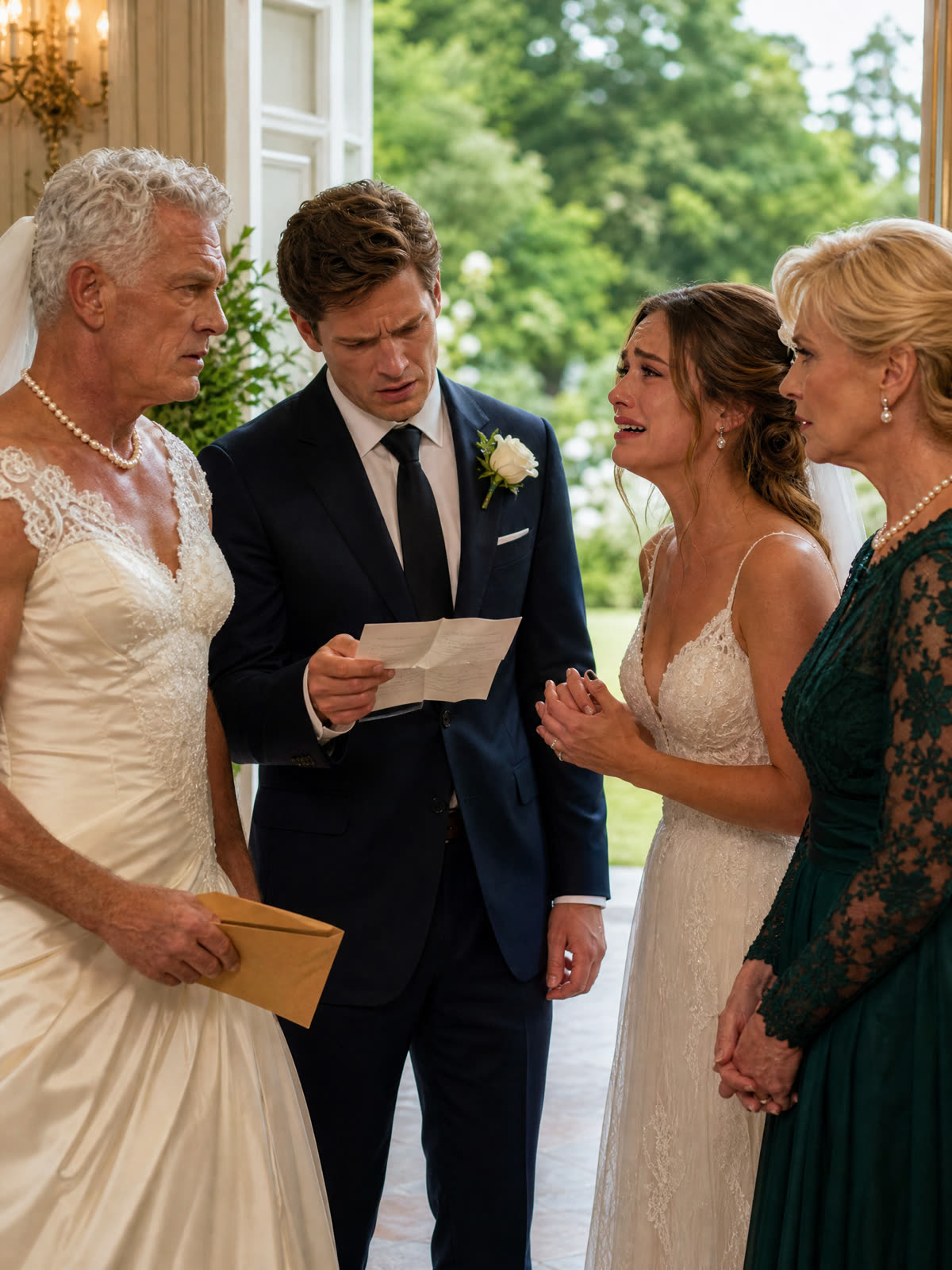
Crispin’s expression tightened. “Another option for what? Leaving our marriage?” “No! I love you!” “Then why did you keep all of this from me?” She reached for him, and he stepped back. It was a small movement, but it showed how much had changed. A few minutes earlier he had placed himself between her and his father. Now he needed distance from her hand. I could almost see his confidence in the future they had planned beginning to come apart. Her explanation might account for fear, but it did not erase the fact that she had arranged a possible departure without telling the man who expected to become her husband that afternoon. Whatever had happened with Mark, Crispin had been excluded from decisions directly affecting his own life.
Robert handed him another document. “There’s another concern, son. The account Jessica instructed you to use for the house payment isn’t registered to the title company.” Crispin frowned. “Which account are you talking about?” “The account listed in the payment instructions she forwarded last week.” Our son took out his phone and opened his banking application. As he looked at the screen, his expression altered slowly. “Jessica, I sent eighteen thousand dollars on Thursday.” She went pale. “I know you did.” “You told me that payment covered the closing costs.” “That was the original intention.” “Then where is the money?” We had reached the question behind Robert’s first concerns at Sunday dinner. This was no longer about whether Crispin had personally read a set of documents. His savings had already been transferred.
Jessica looked toward the guests who remained in their seats. “Could we please have this conversation somewhere private?” This time Crispin agreed. “Yes. That’s what we should do.” He turned to the officiant. “I’m sorry, but we need to put the ceremony on hold.” The officiant nodded with sympathy, and the coordinator guided us to a quiet room beside the bridal suite. Moving behind a closed door did not make the questions less painful, but it removed the audience. We no longer had to struggle through the conversation beneath the eyes of relatives and friends. The music, the arranged ceremony, and the expectations of everyone waiting outside had all become secondary to the facts our son was only now being given the chance to examine.
Once the door closed, Crispin faced Jessica. “Can you explain where my money went?” She sank into a chair. “I used part of it to make a payment to Mark.” “How much did you give him?” “Almost all of it.” He stared at her. “You used eighteen thousand dollars from our house savings to pay the man you’re still married to?” Jessica began crying again. “He said he’d tell you everything unless I paid him. I thought I could finally get him to leave me alone.” “Why didn’t you tell me what was happening?” “Because I thought you’d walk away from me.” The fear she described might have explained why she wanted to avoid that conversation. It did not change whose money she had used or the purpose for which Crispin believed he had sent it.
He lowered his eyes. “You allowed me to organize a wedding while your previous marriage was still unresolved. You used my savings, and you arranged to fly overseas.” Jessica reached for his arm. “I intended to put everything right.” He moved away. “How were you going to do that?” She had no answer. Robert remained near the doorway, my veil now resting across one arm. For the first time that afternoon, he said nothing. There was nothing he needed to add to the question Crispin had asked. The documents had brought us into that room, but our son was no longer relying on his father to interpret them. He was asking Jessica how the life she had promised him could coexist with what she had actually done.
Jessica tried repeatedly to persuade him that the situation had been misunderstood. She said Mark had influenced her choices and insisted she planned to replace the money after the wedding. The flight, she maintained, had only been a fallback, not a settled intention to abandon Crispin. I could not know whether every part of those explanations was false. Some of what she said might have been true. Mark’s willingness to approach Robert did not make him an impartial witness, and his conduct toward Jessica remained something we did not fully understand. But even allowing for that uncertainty, one central problem remained. She had kept crucial information from the person preparing to marry her, then allowed him to proceed as though his trust rested on a complete account of their circumstances.
Eventually Crispin asked the question I had hoped he would ask. “Jessica, if Dad hadn’t discovered any of this, would you ever have told me?” She met his eyes. “Eventually.” “Would that have been before our wedding or afterward?” Her gaze fell to the floor. Crispin nodded slowly. “I think I understand.” Her crying intensified. “Please don’t end things like this. We’ve shared three years together.” He looked at her with a sadness that hurt to witness. “I was prepared to build my entire future with you, Jessica. But you couldn’t even be honest about the person you’re still legally married to.” The three years she invoked mattered to him. That was precisely why what he had discovered hurt so much, rather than serving as a reason to disregard it.
She reached out again. “I love you.” Crispin stepped back once more. “I’m not sure I understand what those words mean anymore.” No one spoke for a while. The stillness in the room felt completely different from the silence that had followed Robert’s entrance. Out there, everyone had been waiting to learn what the spectacle meant. In here, we understood enough to see the damage, and there was no easy sentence that could undo it. Crispin had imagined a home, a marriage, and eventually children with Jessica. He was now having to reconsider those plans while still dressed for the ceremony that was supposed to begin them. I could not make that decision for him, and neither could Robert. We could only remain while he faced it.
At last, Crispin unpinned the boutonnière from his jacket and placed it carefully on a nearby table. “I can’t marry you today.” Jessica stared. “Are you calling off our wedding?” “Yes.” “Because your father told you to?” He shook his head. “Because you weren’t honest with me.” His voice was strikingly calm. “Dad discovered the information, but I’m the one making this decision.” Jessica looked around the room as though hoping one of us would intervene. No one did. Robert’s entrance had forced an interruption, but the choice that followed belonged to our son. Whatever anyone might later say about a father wearing a wedding dress, Crispin had made his decision after hearing Jessica’s own answers to his questions.
I went to her quietly. “Jessica, you’ve been welcome in our home for three years. I trusted you with the wedding gown that reminds me of my mother, and I considered you part of our family.” She started to respond, but I raised a hand gently. “I don’t want to argue. I’m asking you to return whatever remains of Crispin’s money and provide a complete record of how it was used. Then you should consult a lawyer about your marital status.” She wiped her face. “I understand.” I could not tell whether she truly did. I had no more to say, and I did not want our final conversation in that room to become another argument when the necessary requests had already been made.
Jessica gathered her skirt and left through a side entrance with a bridesmaid. Watching her go brought a sadness I had not expected to feel quite so strongly. For three years I had imagined welcoming her officially into our family. I had pictured the gatherings she described in that colonial house and believed that the affection she showed us was part of a future we would share. Now I was left wondering how much I had actually known about her. Her departure did not answer that question. It simply left us in a room with a canceled wedding, our son’s heartbreak, and Robert still standing there in the dress she had borrowed from me under a promise she had not kept.
Crispin sat beside the window. Robert remained opposite him in the ivory satin gown, and only then did the full absurdity of his appearance strike me again. “Robert, honestly, why on earth did you have to put on my wedding dress?” He looked deeply uncomfortable. “I realize it was absurd.” “Absurd hardly describes what you did.” Crispin lifted his head. “Seriously, Dad. Why did you do it?” Robert lowered himself carefully into a chair, trying not to stretch the fabric any further. Our son had finally received the answers he needed from Jessica. But my husband still owed us an explanation of his own—and knowing he had uncovered the truth did not mean we were prepared to excuse the way he had revealed it.
PART 3 — WHAT THE WHITE DRESS COULDN’T REPAIR
Robert began with the encounter at the hotel. “Because Jessica knew I’d discovered what happened to the gown. At the hotel, she told Mark to take it off before anyone noticed him. She seemed concerned that somebody might recognize it.” He looked toward me. “I returned to the shop yesterday and collected it. The owner had been keeping it there after Jessica asked her to locate someone interested in purchasing it.” Hearing the purpose stated so plainly brought back my anger. “She really intended to sell my dress?” He nodded. “Yes. The shop owner was able to confirm that.” There was no longer any uncertainty about whether the inquiry had been an innocent misunderstanding. Jessica had not merely asked a general question about older dresses. She had left mine with someone she wanted to find a buyer.
Robert turned back to Crispin. “I believed that appearing in the gown would show Jessica that I knew what had happened. I thought she’d recognize it, notice the envelope, and finally explain everything.” Our son stared at him. “You could have simply handed me the documents.” Robert nodded in agreement. “I should have done exactly that. I kept trying to gather enough information, and when I finally understood that you weren’t prepared to listen, the ceremony was already beginning.” He looked down at the satin stretched across him. “I handled the entire situation terribly.” For the first time that afternoon, he sounded entirely like the man I had known for decades: not someone performing an outrageous interruption, but a husband and father acknowledging that his attempt to help had also caused pain.
Crispin leaned back. “Dad, you made me feel embarrassed in front of everyone.” “I know, son. I’m truly sorry.” Robert did not try to argue that uncovering Jessica’s secrets made the public humiliation irrelevant. Crispin had been forced to process both at once, and one did not cancel the other. Then our son spoke again. “But you also helped me discover things I needed to know before marrying someone who hadn’t been truthful with me.” Robert swallowed. “I wish I’d approached it differently.” I wished that too. There had been a private conversation we had failed to have, documents Crispin had not wanted to examine, and an approaching ceremony that had made everything feel urgent. None of it made the dress a sensible choice. It did help explain how Robert had reached such an extraordinary one.
For a moment, neither man moved. Crispin had every reason to be hurt, and Robert had finally stopped trying to direct what happened next. The facts were out. Jessica had left. There was no more information in the envelope that could make the afternoon painless, and no apology could restore the wedding our son had expected to have. Yet the difference between them had begun to change. Crispin was no longer defending Jessica from a father he believed was interfering without cause. Robert was no longer struggling to make his son look at evidence he did not want to see. They were facing the same painful reality now, even though they had reached it in a way neither would have chosen if the day could somehow have been handled again.
I stood with them, still carrying my own anger about the dress and my sorrow for Crispin. The gown had become the most visible thing in the room, but it was not the most important. Its strained seams could eventually be repaired. My son’s trust was not something anyone could put back into place so neatly. I had welcomed Jessica, defended her thoughtfulness, and believed in the future she described. Robert had doubted her sooner, but even he had not understood everything until the wedding was almost underway. We had each seen different pieces of the situation. Now all three of us had to live with what those pieces revealed, including the ways we had failed to reach one another before the ceremony began.
Crispin rose. For an instant, I thought he might leave us alone in the room. After everything he had just heard, I would have understood if he needed distance from both his parents and the dress that had made the afternoon unforgettable. Robert stayed seated, looking up at him. There was nothing theatrical left in his manner. The veil lay across his arm, and the satin still fitted awkwardly around the shoulders of a man who had never belonged in it. The ridiculousness that had made strangers laugh earlier now seemed inseparable from how exhausted he looked. He had wanted our son to listen. At last Crispin had listened, but what he had learned had cost him the future he thought he was about to begin.
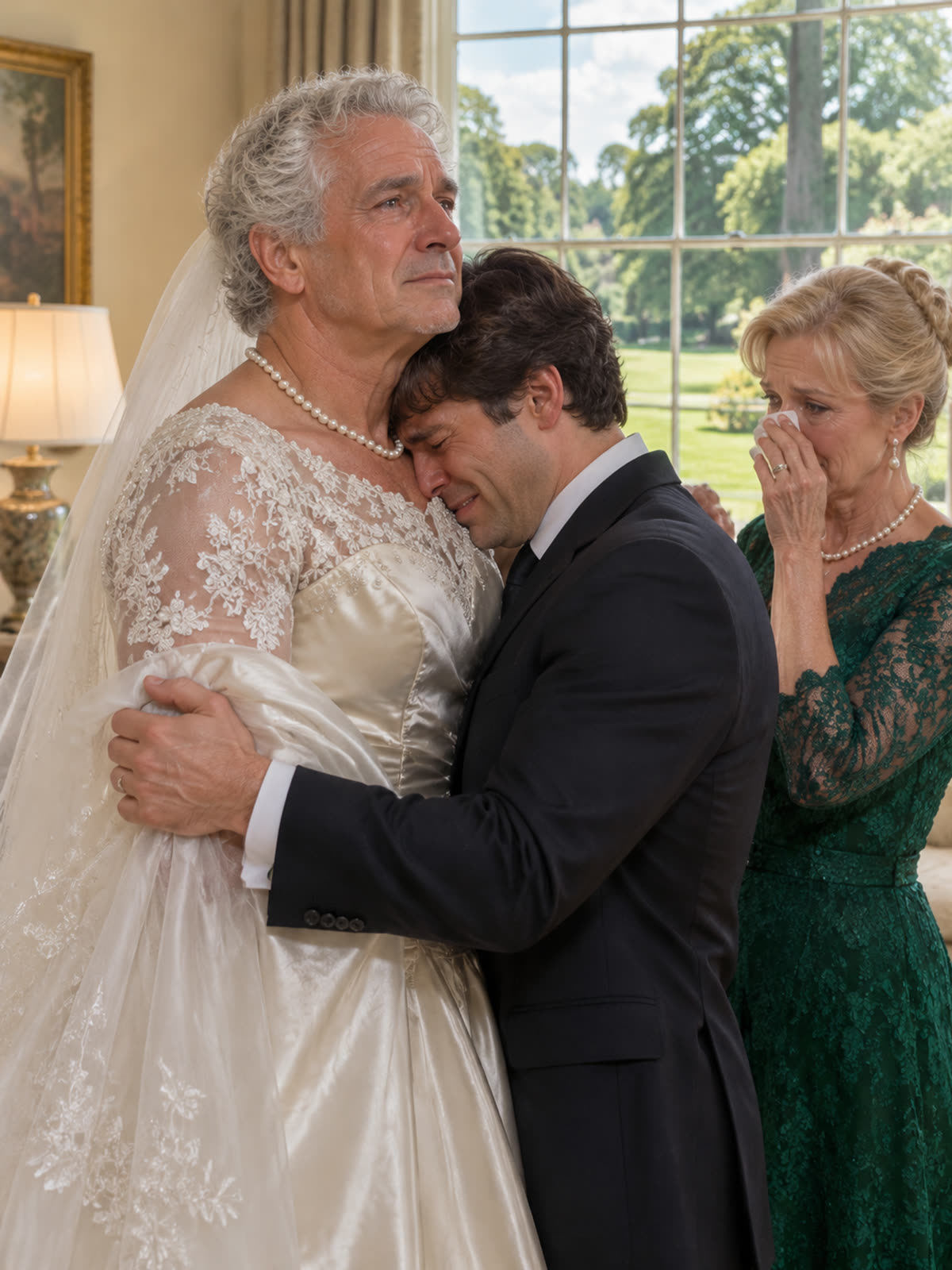
Instead of going to the door, Crispin walked toward his father. He put his arms around him, and Robert returned the embrace, keeping hold of the veil so it would not slip. “I’m sorry, son,” he murmured. Crispin moved his head gently. “I know, Dad.” I turned away and wiped my eyes. Their embrace did not suggest that either of them had forgotten what had happened. It was not an endorsement of Robert’s method, nor a sign that Crispin’s heartbreak had suddenly passed. It was simply the first moment since the ceremony stopped when they were no longer standing on opposite sides of the afternoon. Robert had hurt and helped him at the same time, and our son was making room to acknowledge both.
Being a parent sometimes brings moments when the right course seems obvious. Other times, you act from love and fear without knowing whether your child will ever understand the choice you made. Robert had taken an exceptionally unusual path to reveal what he found. He had also admitted that it was the wrong way to deliver information our son needed. I could hold those truths together without pretending the afternoon had been handled well. What mattered now was that Crispin had learned enough to make his own decision before entering a marriage built around facts he had not been allowed to see. The knowledge had arrived painfully, but it had arrived before the vows. That was the one thing none of us could wish away.
I watched them remain together in the quiet room, my husband in the old gown and our son still wearing the suit in which he had expected to marry. The contrast was as strange as ever, but no one was laughing now. Crispin’s boutonnière rested on the table where he had placed it. Jessica was gone, and outside the room our guests were waiting for news. There were practical decisions to make and explanations we would have to manage carefully. For that moment, though, I let myself stay with the sight of my son accepting his father’s embrace. It did not resolve the missing money, the broken trust, or the embarrassment. It did show that those things had not broken the bond between them.
Robert held Crispin close while I stood beside them, brushing away the tears I could no longer contain. The afternoon had stripped away every version of the wedding we had imagined, leaving us with something much harder to organize than flowers or seating: how to care for our son without pretending his loss was small. Robert had wanted to protect him, and Crispin now understood that, even while knowing the protection had arrived in a form that humiliated him. I could not make the pain disappear by finding a reassuring phrase. I could only remain with them. At last, after days of missed conversations and withheld answers, the three of us were together without another secret standing between us.
The ceremony was formally canceled. The coordinator told the guests that our family had a private situation to address. We did not disclose the details of Jessica’s previous marriage, and I specifically asked relatives not to spread rumors. There had already been more public exposure than I wanted. Whatever our feelings about Jessica, I did not think turning the afternoon into a collection of competing stories would help Crispin. The food was prepared and the venue paid for. Our son saw no reason everyone should leave without eating. So the wedding reception became a family gathering instead. It was not a celebration of what had happened. It was simply a way to remain together and make use of arrangements that could not be undone.
Robert finally changed into his ordinary suit. Later, the photographer admitted she had taken one picture of him in the gown before he reached the changing room. “Please promise me that picture won’t appear online,” I said. She smiled reassuringly. “Absolutely not, Mrs. Bennett.” I was grateful for that promise. Our son’s canceled wedding did not need to become entertainment for people who had not been there and knew nothing about what it had cost him. Emily came from the bridal suite and wrapped her arms around her brother. He held himself together until she whispered something to him. Then the feelings he had been containing finally surfaced. I did not need to hear her words to understand that being held by his sister had given him permission to stop looking composed.
I sat beside Crispin when dinner arrived. “You don’t need to act as though everything is fine,” I told him quietly. He looked at the empty chair next to him. “I keep thinking about those three years, Mom. Everything I thought I understood.” I took his hand. “You believed in someone you cared about. That doesn’t mean you were foolish.” He shook his head slowly. “I trusted her with access to my savings.” “And we’ll work through that together. We can handle one problem at a time.” He nodded. I knew a promise of help could not return the money immediately or make the memories easier to sort through. Still, I wanted him to know he would not have to solve every consequence alone, or decide that being deceived meant there was something shameful about having trusted.
Across the table, Robert was cutting his chicken into small pieces and looking completely spent. Crispin turned toward him. “Dad?” Robert looked up. “Yes, son?” “Did you really walk the entire aisle wearing Mom’s wedding dress?” My husband closed his eyes. “Please don’t ask me to experience that moment again.” For the first time that afternoon, Crispin laughed. It was not loud, and it did not erase what had happened, but it was genuine. Hearing it brought a little relief to all of us. The dress had been a source of shock, anger, and embarrassment. For a brief moment at dinner, it became something our son could laugh about with his father rather than another part of the day he had to endure in silence.
The months afterward were not easy. Crispin contacted his bank and the title company, then consulted an attorney. He pulled out of the house purchase before closing and put together records of the transfers involving Jessica. Those practical steps could be described simply, but they belonged to the same broken plans as the canceled wedding. The colonial house in Chesterfield County would not become the home Jessica had described to me. The savings Crispin thought he had directed toward closing costs had to be traced as money used for another purpose. He approached what needed doing without wanting to make the dispute public. We respected that. After the exposure of the ceremony, he had every right to decide which parts of the aftermath he would keep to himself.
Jessica eventually returned part of the eighteen thousand dollars through her legal representative. The remainder became a civil disagreement, and Crispin preferred not to discuss it openly. We also established that her marriage to Mark had never been legally dissolved. That answered the question Robert’s first document had raised, though it did not give us a complete account of their relationship. I never learned whether Jessica genuinely intended to board the flight to Lisbon. She continued to say she had bought the ticket because she felt threatened by Mark. I had no way to know everything that had happened between them, and I did not pretend otherwise. Her admission that she reserved the flight was certain. The intention behind it remained something I could not independently establish.
What I did know was enough. Jessica had concealed important information from our son and used money entrusted to her for a purpose he had not authorized. I did not need to settle every uncertainty about Mark or the airline ticket to understand why Crispin had ended the engagement. There were parts of the story we could verify and parts that remained disputed. Keeping that distinction mattered, just as it had when Robert first warned me that a missing divorce record did not prove none existed. But caution about what we could not know did not require us to ignore what Jessica herself had admitted. Crispin had made his decision on those admissions, not simply on a man’s accusations or his father’s suspicions.
Our son rented a small apartment near his workplace and gradually began rebuilding his daily life. Robert never scolded him for trusting Jessica or suggested that he should have recognized the problems sooner. Instead, he helped him restore an old dining table, invited him fishing on Saturday mornings, and listened when Crispin felt like talking. Sometimes they spent hours together without mentioning Jessica at all. I noticed their relationship growing stronger than it had been in a long time. The closeness did not depend on repeating the story of how Robert interrupted the ceremony. More often, it grew through the ordinary company they gave each other afterward. Our son needed more than a warning about whom to trust. He needed room to recover without being continually reminded that someone else had seen a problem before he did.
About six months after the canceled wedding, Crispin joined us for Sunday dinner. He had recently been promoted and seemed happier than he had in months. That change was not the same as declaring everything behind him, but it was good to see him with something hopeful to discuss. After dessert, he went upstairs with Robert to move boxes in the attic. I followed a little later. Crispin was standing beside the storage box containing my wedding dress. I had sent it to be professionally cleaned and restored. The seam stretched by Robert’s shoulders had been carefully repaired, and the long veil lay neatly folded inside. For all the strange events that had surrounded it, the gown was once again where I had intended it to be: kept safely as something precious, not offered to a stranger for sale.
“You decided to keep it?” Crispin asked. I smiled. “Of course I kept it.” He looked at Robert. “I still find it unbelievable that you actually wore Mom’s bridal gown.” My husband gave a tired smile and shook his head. “Believe me, son, I can hardly believe it myself.” Crispin laughed, then grew thoughtful. “Dad, I know I was really upset with you that afternoon.” Robert nodded. “You had every reason to feel that way.” There was no attempt to rewrite the memory into something entirely noble or amusing. Robert had apologized then, and he still accepted that our son’s anger had been justified. I was glad they could speak about it without either of them having to deny the hurt in order to acknowledge the love.
“But I’m grateful you helped me understand what was happening before I went through with the wedding.” Robert looked at him for several moments. “There’s nothing I wouldn’t do to look after you, son. Although I promise that next time, I’ll choose something more appropriate to wear.” Crispin laughed again and slipped an arm around his father’s shoulders. “I’m glad you did what you did, Dad.” I watched them head downstairs together. The gown remained folded in its box, the fabric repaired and the veil safe beside it. The conversation had given them a gentler way to remember an afternoon that had begun in laughter and ended in heartbreak. It had not changed the facts of what happened, but it showed how differently they could carry those facts now.
I stayed for a moment beside the dress before following them. It still reminded me of my mother and the beginning of my own marriage, even after becoming part of the day our son’s wedding stopped. Those memories did not cancel one another. Neither did the relief of seeing Crispin happier cancel the consequences he was still working through. Downstairs, he and Robert were together, their relationship steadier than it had been before. Up in the attic, the gown was safely put away. But not every part of that Sunday could be folded neatly out of sight: some of the eighteen thousand dollars remained outstanding, and that part of Jessica’s story with our family was still unresolved.
Disclaimer: This story is a work of fiction inspired by real-life themes. Names, characters, places and events are fictionalized, and any resemblance to real persons is purely coincidental. Images are for illustration purposes only.
