

PART 1 — No Room for Us
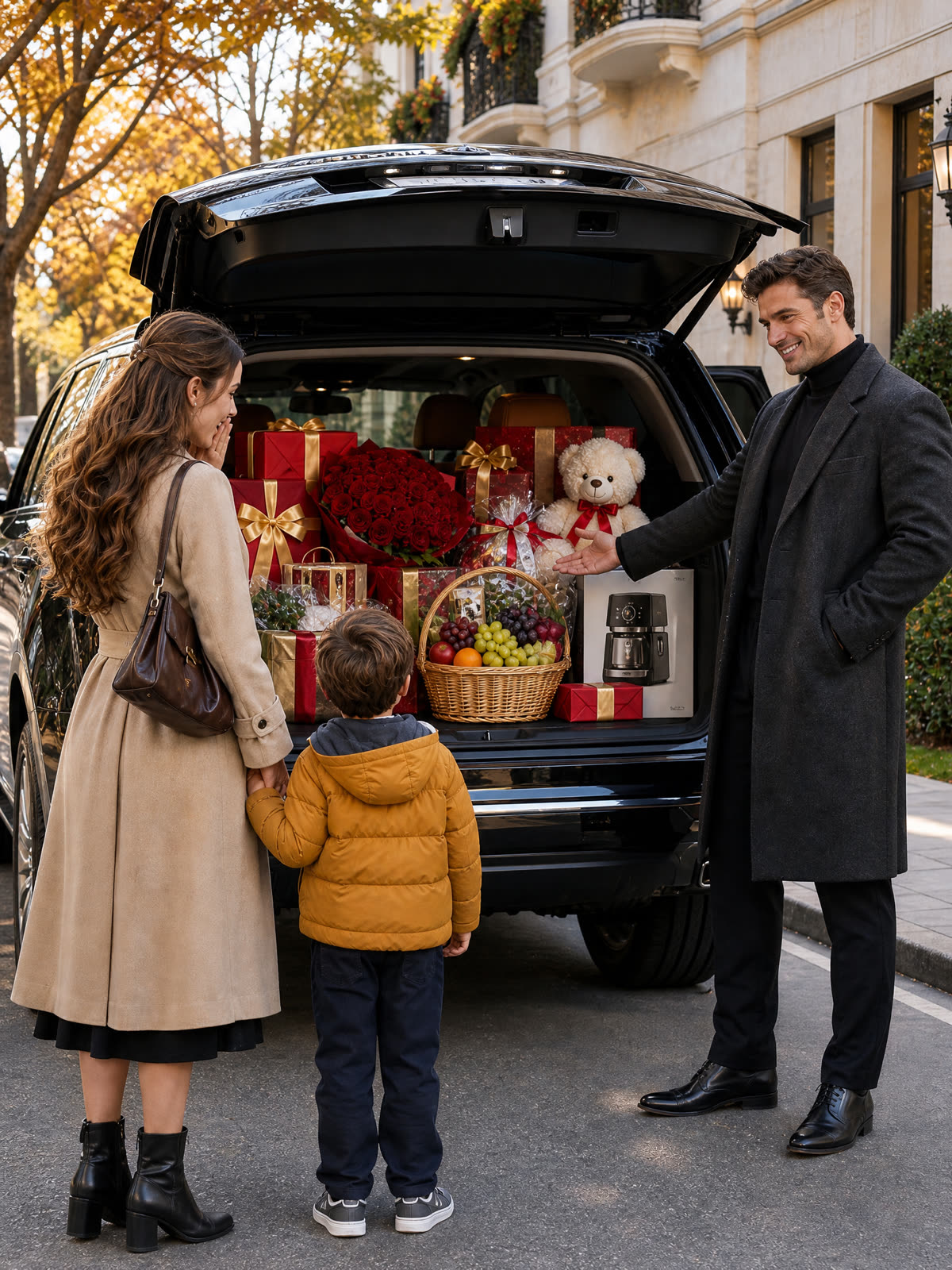
On the morning we were meant to spend the holidays with my husband’s parents, Grant filled our car with presents until every available seat had vanished beneath them. Then he turned toward our four-year-old son and me and said, without the slightest agitation, “There’s too much stuff. You’d better take the boy on the bus.”
I didn’t protest. I didn’t cry, and I didn’t ask whether he actually meant it. Instead, I took my son’s hand, ordered a cab, and headed directly to Disneyland. Afterward, I silenced my phone. Some choices don’t require a sleepless night or hours of weighing possibilities. Sometimes one sentence makes the truth impossible to ignore: you have spent years occupying the very last place in someone’s life. After six years of marriage, that was the morning I finally understood.
“Hurry up, Ellen!” Grant called from the driveway outside our Anaheim home. “If you keep this up, we’ll be hours late!” Upstairs, I was fastening the buttons on Toby’s coat while he bounced with anticipation. “Are we seeing Grandma and Grandpa today?” he asked. “Yes, sweetheart.” His next question came immediately. “Will Grandma give me a present?”
I smiled at him, although I knew our holiday visits never quite resembled the lovely occasions he imagined. For six years, the pattern had barely changed. Barbara, my mother-in-law, prepared the food Grant and his nephews loved, somehow always overlooking Toby’s favorites. Walter, my father-in-law, scarcely addressed me. And the husband who could challenge practically anything I said at home became an unfailingly obedient son the moment he stood before his parents.
Whenever I attempted to discuss it afterward, Grant returned to the same answer. “They’re my parents, Ellen. We only see them a few days a year. Is it really that hard to make a little effort?” A little effort. That was his description of my cooking for twelve while everyone else rested, clearing away the meals afterward, and sharing an icy room with Toby because warming the guest room “ran up the bill.” It also meant smiling through Barbara’s questions about why we hadn’t produced another baby.
That particular morning, I had allowed myself to hope things might go differently. I was mistaken. When Toby and I came downstairs, boxes surrounded our black SUV. Among them were a deluxe espresso machine for Walter, a gold necklace for Barbara, a video game console for Grant’s nephew, and several baskets of gourmet food. Grant had already devoted almost an hour to arranging everything.
“Set that box down carefully,” he instructed. “It’s Mom’s present.” I placed our two little suitcases beside the open trunk. “Where do these go?” I asked. “We’ll see.” That was the whole answer. Within another ten minutes, the trunk could hold nothing more, but Grant wasn’t finished loading.
He opened a back door and began putting boxes directly onto the seats. One went in, then three, followed by five more. I stood watching the space intended for Toby’s car seat disappear beneath the packages. “Grant, our son has to sit there.” “I know that.” His hands kept moving anyway.
Finally, he pushed the door closed and surveyed the packed vehicle with satisfaction. “Perfect. Now we won’t need two trips.” I looked at him. “What about us?” “What?” “Where are Toby and I supposed to sit?” Only then did he examine the car as though this were a difficulty that had somehow escaped his notice.
He shrugged. “Take the bus. There’s too much stuff, and I’m not unloading it now.” For a moment, I assumed he had to be joking. “You want me to travel for hours with a small child, two suitcases, and all our things?” “Don’t exaggerate. Buses have heat.” “And his car seat?” “You don’t need one on a bus.” “Grant…” He stopped me before I could continue. “Ellen, please. My mother is waiting. Don’t start complicating everything.”
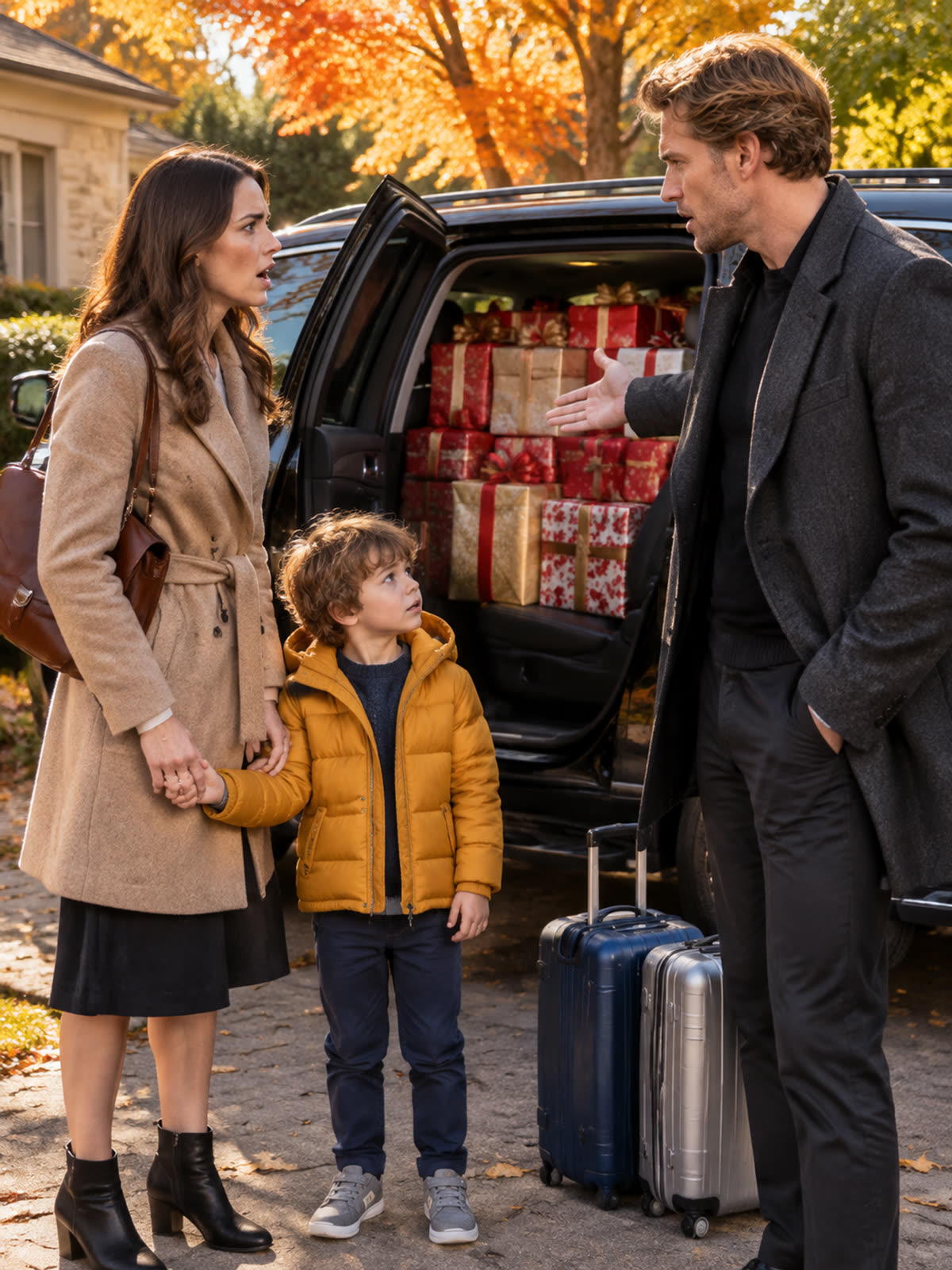
A small hand caught my sleeve. “Mommy, doesn’t Daddy want us to go with him?” The silence afterward was unbearable. Grant didn’t bend down to meet our son’s eyes. “Don’t be silly, buddy. Daddy has to carry some presents.” Some presents. Apparently, they mattered more than his wife’s comfort, more than his little boy’s safety, more than either of us.
I looked again at the back seat, buried beneath gleaming wrapping paper. For the first time, I had no desire to argue. An unfamiliar calm settled over me instead. “Fine,” I said. Grant seemed taken aback. “Fine?” “Yes. We’ll make our own way.” His face immediately relaxed. “I knew you’d come around. I’ll text you the address of the station so you can check the schedules.”
I offered no answer. Gathering our suitcases, I took Toby’s hand and began walking away. Grant was already getting behind the wheel. “Don’t get there too late! And call Mom when you’re close!” I kept going without turning around.
We were two blocks from home when Toby asked, “Mommy, do we have to ride the bus?” I crouched before him. “Remember what you asked for on your birthday?” His face brightened. “Disneyland?” “Exactly.” Then he hesitated. “But Daddy said it was too expensive…” “Well, it turns out Mommy’s been saving.”
Toby became completely still. “Are we really going?” I pulled out my phone, opened the booking app, and purchased two tickets. “Really.” He squealed and threw his arms around me with enough force to nearly send me backward. I called a cab, and while we waited, a message from Grant appeared: Remember to buy something to eat for the trip. I don’t want you saying later I didn’t warn you.
I left the message unanswered and put the phone on silent. That afternoon, as Toby wrapped his arms around Mickey Mouse, he wore a smile I hadn’t seen in months. I lowered myself onto a bench and finally cried. It wasn’t sadness bringing the tears. It was relief.
For six years, I had worked to persuade Grant that his wife and child deserved room in his life. Only a few hours away from him were needed to remind me that Toby and I could experience happiness without first obtaining permission. We didn’t have to convince anyone that our presence mattered before enjoying a day together.
What I didn’t yet know was that, over dinner that evening, Barbara would ask a question that would alter my marriage completely. When she realized we hadn’t arrived, Grant would attempt to embarrass me in front of the family. This time, however, his father would interrupt him.
“Grant, before you criticize your wife, you’d better explain why the money she inherited from her mother is paying for our house.”
I would soon discover that the presents occupying our seats were nowhere near the most serious thing my husband had taken from us.
PART 2 — The Calls I Let Ring
The first time I noticed the unanswered calls, Toby and I were seated in a Disneyland café. Chocolate marked the corners of his mouth, Mickey ears perched on his head, and his face held complete happiness. “Mommy, can we ride the roller coaster again tomorrow?” “A kid-sized one, sweetheart.” Then he asked, “And can we buy Daddy a present?”
The question hurt far more than I had anticipated. My little boy had no idea how to carry resentment. His father was still the man who taught him to ride a bicycle on Sundays and bought him ice cream on hot days. He couldn’t understand that this same father had just granted a stack of packages a more comfortable journey than his own child.
“We can get him one if you want,” I told him. Toby’s grin returned at once. “I’ll get him a keychain!” I turned my phone over on the table. There were forty-one missed calls: nineteen from Grant, nine from Barbara, three from an unfamiliar number, and ten from Walter. In six years, my father-in-law had never called me even once.
I didn’t open a single voicemail. Toby finished his cocoa, and afterward we went on the teacups twice. When he described them as “just like a washing machine, but fun,” I laughed. For the moment, the messages could remain unheard. My son was enjoying himself, and I stayed with him rather than returning to the demands waiting inside my phone.
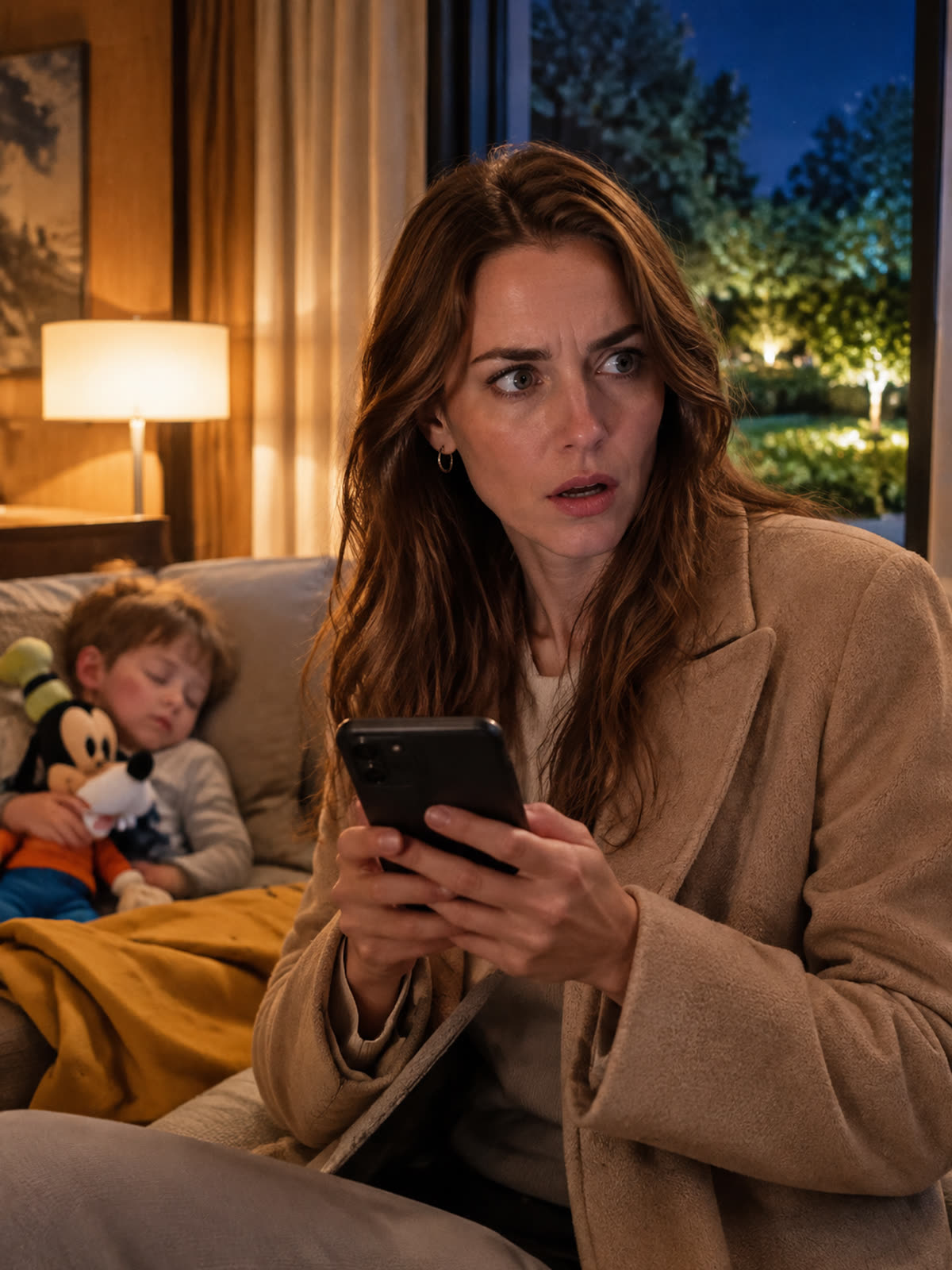
At eight that night, Toby fell asleep in our hotel bed, his arms wrapped around a stuffed Goofy. Only then did I sit beside the window and begin listening. Grant’s earliest message sounded irritated. “Ellen, where are you? Mom’s been asking. Call me.” By the fifth, his voice had risen. “This isn’t funny. You can’t just disappear with my son.”
The ninth message was colder. “Answer your phone, or I swear…” Barbara had begun with an imitation of sweetness before allowing her tone to sharpen. “Dear, everyone’s here and the roast is getting cold. It’s very rude to keep us waiting.” I listened from the quiet hotel room while Toby slept, unaware of any of it.
Then I reached the message Walter had left at 6:52 p.m. His voice was quiet and gravelly, carrying the hesitation of someone who had practiced what he needed to say. “Ellen. It’s Walter. I’d like to talk to you. Not Grant, not Barbara. You. Please call me when you can. It’s about your mother’s money.”
I played it three times. My mother had died four years before, when Toby was still a baby. The inheritance she left me came from selling her small Fresno house: a little more than $200,000. Grant had called it “smart” to use that money as the down payment on a larger family home. His parents, he explained, would co-sign the loan, and the property would therefore carry all our names.
I remembered signing papers in an office, working through a pile of forms I had scarcely read. I had trusted the man beside me. At nine, I called Walter. He answered immediately. “Thank you for calling,” he said softly. “Is the boy all right?” “He’s asleep. He’s happy.” “Good.” He cleared his throat.
“Ellen, I owe you an apology, and I owe you the truth. I’m not proud of how I’ve treated you. I let my wife and my son run things for too long.” I tightened my attention on the only part I could think about. “Walter, what about my mother’s money?” A long silence followed before he answered.
“Tonight at dinner, Grant told his mother he’d ‘handle’ you when you got here,” Walter said. “He said you’d come around, that you always do. And Barbara said something about how it was a good thing that the house had been paid down with your mother’s money, because otherwise they’d never have kept it.”
My fingers closed harder around the phone. “What do you mean, kept it?” Walter answered, “Ellen, we haven’t owned our house free and clear for years. Grant told you we co-signed your loan. That’s not what happened.” His voice sank lower. “Your money paid off our mortgage. Grant moved it. He told me it was an investment in the family. I didn’t ask questions, and I should have.”
The hotel room suddenly seemed very cold. “How much?” “One hundred and ninety thousand dollars.” I shut my eyes. The amount belonged to my mother’s life, her house, and the security I had believed I was putting toward a home for Toby. Yet Walter was telling me it had gone somewhere else entirely.
“The deed to your house,” he continued, “was never in your name, Ellen. Grant said it was easier for taxes, so he held it with his mother. You’ve been paying a mortgage on a home you don’t legally own. I found the paperwork this afternoon while Barbara was out. I’ve been sitting in the garage for four hours, trying to decide what kind of man I’m going to be about it.”
I said nothing. There was nothing in the years of being overlooked that had prepared me for this. The loan I believed his parents had helped us obtain, the house I believed we shared, and the inheritance I believed had secured our family’s future were being explained to me in terms I had never heard before.
“I’m sending you copies,” Walter said. “Please find a lawyer. And Ellen, I’m sorry about the bus. I saw the car when he pulled up. I should have said something. I never will again.”
The call ended. Ninety seconds later, an email appeared in my inbox.
It contained eleven attachments.
PART 3 — A Seat That Belonged to Me
I spent the night reading in the light spilling from the bathroom doorway, careful not to disturb Toby. The attachments included a record transferring money from my mother’s estate account into an account I didn’t recognize. Another record showed that same account paying off the mortgage on Barbara and Walter’s house in Bakersfield. These were not the arrangements Grant had described when he asked me to sign the papers.
There was also a county deed for our Anaheim home. It named Grant and Barbara as owners. My name was absent. Among the documents was Grant’s signed statement to his mother’s lender, identifying himself as “the sole source of funds.” The records laid out what Walter had told me, one document after another.
In the morning, I called the only attorney I knew, Joyce Whitmore, who had dealt with my mother’s estate. She heard the entire account twice. Then she said, “Ellen, don’t come home yet. Stay where you are another day if you can. I’ll meet you the moment you land.”
I remained there for two more days. Toby went on Dumbo four times. I switched off my phone and allowed myself to breathe. He could still enjoy the trip while I began facing what the documents meant.
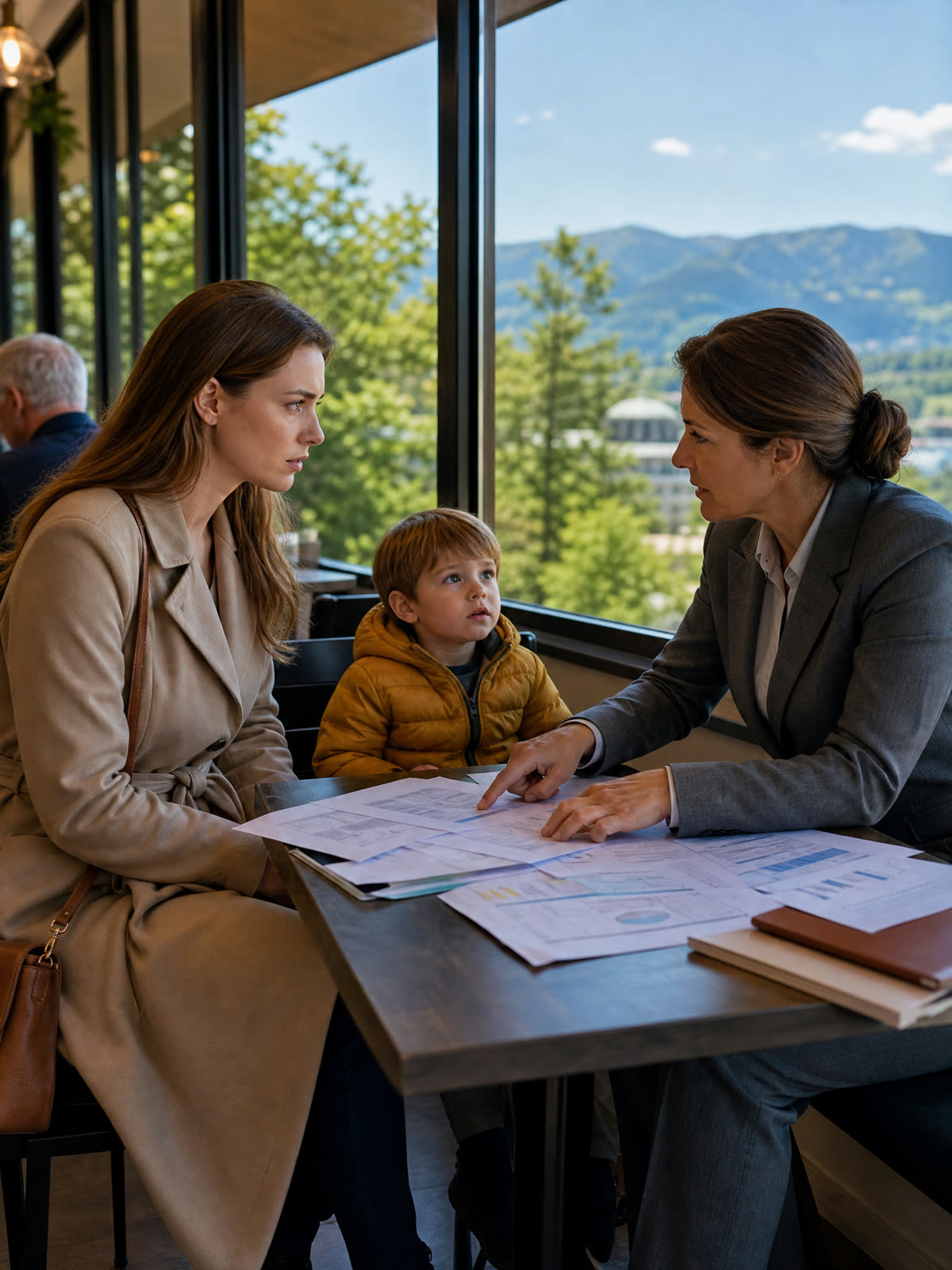
When we flew home, Joyce was waiting at the airport in a gray suit. She brought us to a small café, laid the papers over the table, and examined them with me individually.
“What he did is not simply unkind,” she said. “It’s fraud. Possibly several kinds. He moved inherited funds without your informed consent, and he represented himself falsely to a lender. You have options, and they’re good ones.”
“I don’t want to destroy him,” I said. “I have a son.”
“No one is asking you to destroy anyone. We just document the truth and let it do its work.”
Within a week, Joyce filed for separation and submitted an emergency request to freeze every account connected to the house. She demanded a complete accounting of the money transferred from my mother’s estate. A forensic accountant uncovered two additional transfers I had never known existed, another $31,000 altogether. That money had bought a boat Grant had claimed belonged to a coworker.
The papers and the accounting exposed more than the disregard I had experienced in our driveway. The house, the mortgage, and even the boat had been presented to me as something other than what they were. Joyce’s work was turning those explanations into records Grant would have to answer for.
Grant called on the day he received the papers. For the first time in our six-year marriage, arrogance wasn’t what I heard. He sounded frightened. “Ellen, this is insane. You’re overreacting. We can fix this. Come home and we’ll talk.”
“I’m already home,” I told him. “I’m at my sister’s. And I’d like all communication to go through my lawyer.” His response came at once. “You’re taking my son!”
“I’m keeping my son safe. You can see him every weekend with a mediator present, if you like. I’m not keeping him from you. I’m keeping him from the version of you who puts boxes in his seat.” He had no immediate answer.
Finally, he spoke in a diminished voice. “The bus,” Grant said. “I didn’t mean it that way.” “I know,” I answered. “That’s what scares me. You never think about it at all.”
Four months later, the case settled. Confronted with the property records, the fraudulent lender statement, and an extremely uncomfortable deposition given by his own father, Grant was advised by his lawyer not to proceed to trial.
The Anaheim house was awarded to me outright, and Barbara’s name came off the deed. The full $221,000 removed from my mother’s estate was restored, partly through selling the boat and partly through a lien against Grant’s retirement account. I received primary custody. Grant would have a generous visitation schedule after completing a parenting course and six months of counseling.
Walter testified despite Barbara’s fury. She refused to speak to him for much of the following year. Through Joyce, I learned that he had moved into the guest room and begun attending church again.
That winter, Walter sent a handwritten letter, three pages long. Its final lines read: I watched my son turn into a man who thought love was a transaction. I’m ashamed that I was the model. Please let me try to be a better grandfather than I was a father. I’ll earn it slowly, if you’ll allow it.
I allowed him to try. The next December, he came to Anaheim in a rented minivan with a booster seat secured in the back. Rather than entering without permission, he knocked. “May I take the boy to see the lights?” he asked.
Toby was five by then and already wearing his coat. “Grandpa! Can we get hot chocolate?” “Two,” Walter replied, and I saw him smile for the first time. “One for each of us.” From the doorway, I watched them drive away while the little face in the rear window waved as hard as he could.
After they returned that evening, Toby settled at the kitchen table with his crayons. He lifted his finished picture for me to see: a brightly colored car with all its seats occupied. There was a grandfather, a little boy, and a woman sitting in front, her hair streaming backward. “That’s us,” he explained. “And there’s room for everybody.”
“Is there room for Daddy?” I asked. Toby gave the matter serious consideration. “When he learns to share the seats,” he said. I laughed before pulling him close, resting my chin against his hair.
Grant was learning, though the progress was slow. He had started arriving punctually for visits and attending the mediator’s sessions without sneering. Once, he even brought Toby a stuffed bear accompanied by a note: I’m sorry, buddy. I’m working on it.
I kept returning to what I had understood in that cab to Disneyland, my son’s hand held in mine and my silenced phone tucked inside my coat. For six years, I had waited for someone else to choose me. The change had begun when I finally chose us.
Whether Grant and I would ever become friends, I couldn’t say. Whether I would ever trust him again was a question that remained unanswered.
Disclaimer: This story is a work of fiction inspired by real-life themes. Names, characters, places and events are fictionalized, and any resemblance to real persons is purely coincidental. Images are for illustration purposes only.
