

PART 1 — A Shoulder Above the Clouds
At thirty-four, I had never pictured myself catching an early flight with my eleven-month-old daughter, one battered suitcase, and scarcely enough money for the next week’s groceries. My name is Jenna Carver. Until six weeks earlier, I had still believed my marriage deserved everything I could give it. My husband, Bradley, made that belief easy to defend in public. At gatherings, he was the charming man who remembered birthdays, greeted neighbors with enthusiastic handshakes, and made sure everyone heard how much his family meant to him. Inside our home, his devotion took a different shape. He controlled the accounts, questioned every grocery receipt, and slowly persuaded me that even ordinary decisions required his approval. When I discovered his affair with a woman from his office, the distance between us over the previous two years finally made sense.
I found what courage remained and asked for a separation. “You really think you can survive out in the world without me managing your life?” Bradley said with a mocking sneer, moving our shared money into an account that did not bear my name. “I will figure out a way to raise our daughter without your constant cruelty,” I answered, struggling against tears in our kitchen. He watched me begin packing. “You will come running back to this house the moment you realize how hard reality hits a single mother,” Bradley warned. His words followed me through the night as I folded Maisie’s clothes and chose the few possessions we could take. She could not understand why we were leaving our comfortable house in Boise. She only knew that, while we waited in the cold dawn for the airport shuttle, I held her closer than usual.
My childhood friend Kelly Nelson had offered us a spare room in her small Omaha home. It would give me somewhere to stay while I found work and saved for an apartment. From the boarding terminal, I called her. “Are you certain you have everything packed for Maisie?” Kelly asked. “We have her warm clothes, her medicine, and her documents,” I answered, brushing a tear away while keeping Maisie against me. “Then board that plane and come to Omaha, because you and Maisie always have a safe haven waiting here,” Kelly assured me. This was not the future I had imagined on my wedding day. Still, it was a genuine chance to begin again, and that morning a genuine beginning mattered more than anything.
Every seat on the flight was occupied. Almost as soon as the cabin doors closed, Maisie became fussy. I offered her warm milk, moved her favorite plush bear before her eyes, and tucked her soft yellow blanket around her. Nothing settled her as the engines grew louder. Across the aisle, an elegantly dressed woman sighed with theatrical irritation. “I certainly hope that noisy infant is not going to shriek through the entire journey to Nebraska,” she complained to her seatmate. Heat rushed into my cheeks. “I am terribly sorry about the noise, because she is usually very calm during our morning outings,” I whispered. Before I could offer another apology, the man beside me at the window spoke with quiet authority. “She is only a sweet little child having a difficult morning, so I believe everyone here can afford to grant her some neighborly patience,” he said. The woman closed her mouth and faced her screen.
“Thank you so much for saying that,” I told him, releasing an unsteady breath. “I have not managed to get much sleep over the past few weeks.” He answered with an understanding smile. “Neither have I,” he replied. “Perhaps that means we are both navigating the exact same kind of stormy weather today.” He offered his hand. “My name is Carson Lindwood,” he said. “I am Jenna, and this restless little traveler is Maisie,” I replied. He looked to be in his early forties, with neat dark hair, reflective blue eyes, and a charcoal knit sweater beneath a tailored jacket. Something about his steady presence helped quiet the thoughts racing through my head. He did not question my swollen eyes or the overflowing diaper bag. He simply accepted us as we were.
For the next twenty minutes, Carson entertained Maisie with funny faces and patiently collected the plastic rattles she kept dropping onto the floor. Before half an hour had passed, she was giggling and stretching her fingers toward the silver buttons on his cuffs. I could barely remember the last time a stranger had offered us kindness so naturally. Then his relaxed expression changed. Several rows ahead, two passengers had twisted around to study us. One angled a smartphone toward our seats while the other leaned across the aisle and whispered. I first assumed Maisie’s blanket games had amused them, but Carson shifted uneasily and drew his collar higher. Leaning closer, he spoke beneath the engine noise. “Jenna, would you mind if I asked you for an unusual favor?”
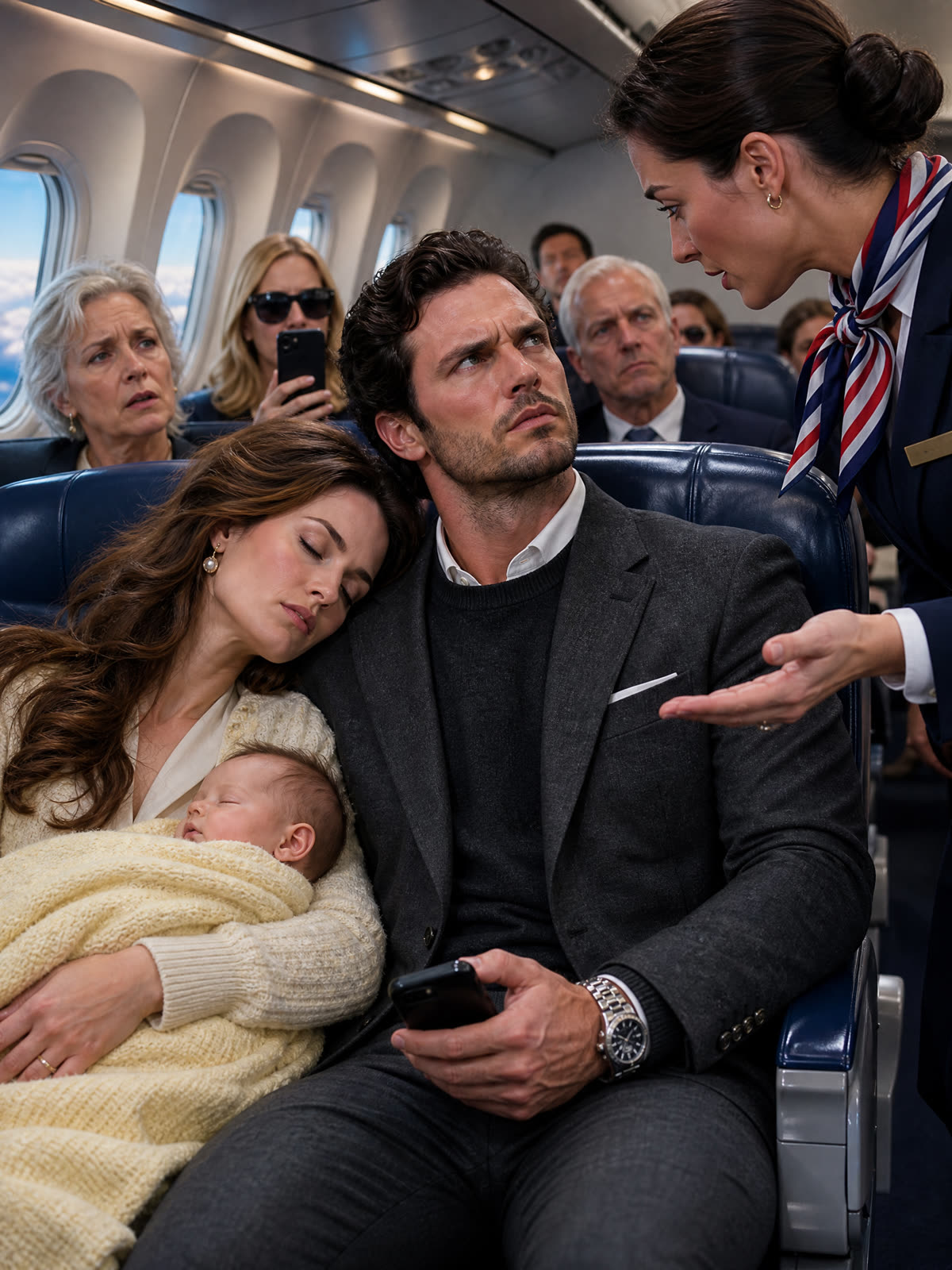
“What kind of favor are you talking about?” I asked, suddenly wary. “Would you be comfortable pretending to fall asleep on my shoulder for just a few moments?” Carson requested apologetically. “You want me to pretend that I am sleeping against your shoulder?” I asked in bewilderment. He kept his face still. “I realize how absurd that sounds, but those passengers recognized me and are trying to snap photos of my face,” Carson explained. “If we look like an ordinary family resting together during a long flight, they will likely lose interest and put their phones away.” Memories of Bradley’s manipulation made me hesitate. Trusting an unfamiliar man after everything that had happened in Idaho felt frightening. Yet Carson neither pressed me nor behaved as though I owed him an answer. His embarrassment seemed sincere, and he carefully respected the space between us.
“Only for a minute or two?” I asked cautiously. “Only if you feel entirely safe doing so,” Carson promised. I settled Maisie firmly against my chest, then lowered my cheek onto the soft wool at his shoulder. The passengers ahead soon lowered their phones and returned to their magazines. “They stopped looking, so thank you very much for helping me,” Carson murmured. I meant to straighten immediately. Instead, the blanket’s warmth, the aircraft’s gentle vibration, and the exhaustion of the previous weeks overcame me. Without noticing the moment my pretending ended, I slipped into a deep, dreamless sleep.
When I opened my eyes, midday light streamed through the oval window. I sat up abruptly, smoothed my creased blouse, and checked Maisie. “Goodness gracious, how long was I asleep on your arm?” I gasped, hiding my flushed face behind my hands. “You were out cold for roughly an hour and a half,” Carson replied with an amused chuckle. “Why on earth did you not nudge me awake sooner?” I asked, mortified. He glanced at my daughter, who remained peacefully asleep. “Because you and your sweet daughter desperately needed some peaceful rest,” Carson said. “Your poor shoulder must be completely stiff and aching right now,” I murmured, indicating his sleeve. “Trust me when I say that I have survived far more painful corporate conferences,” he answered. I laughed, and the sound surprised me. It felt like my first genuine laugh in months.
A senior flight attendant approached before we could say anything more. She bent toward Carson with unmistakable deference. “Mr. Lindwood, your ground transportation team has finalized all gate arrangements,” she stated. “Your private security detail will be waiting right outside the jet bridge upon arrival.” I stared at him, startled. “Why would you need a private security detail waiting at a commercial airport gate?” I asked. Carson sighed apologetically and rubbed the back of his neck. “I suppose I owe you a proper explanation about who I am,” he admitted. He told me he had founded Lindwood Enterprises and served as its chief executive. The multinational logistics and technology company was enormous. I recognized its name from articles about its innovative supply-chain systems. The considerate stranger who had spent the flight entertaining my baby was a renowned billionaire.
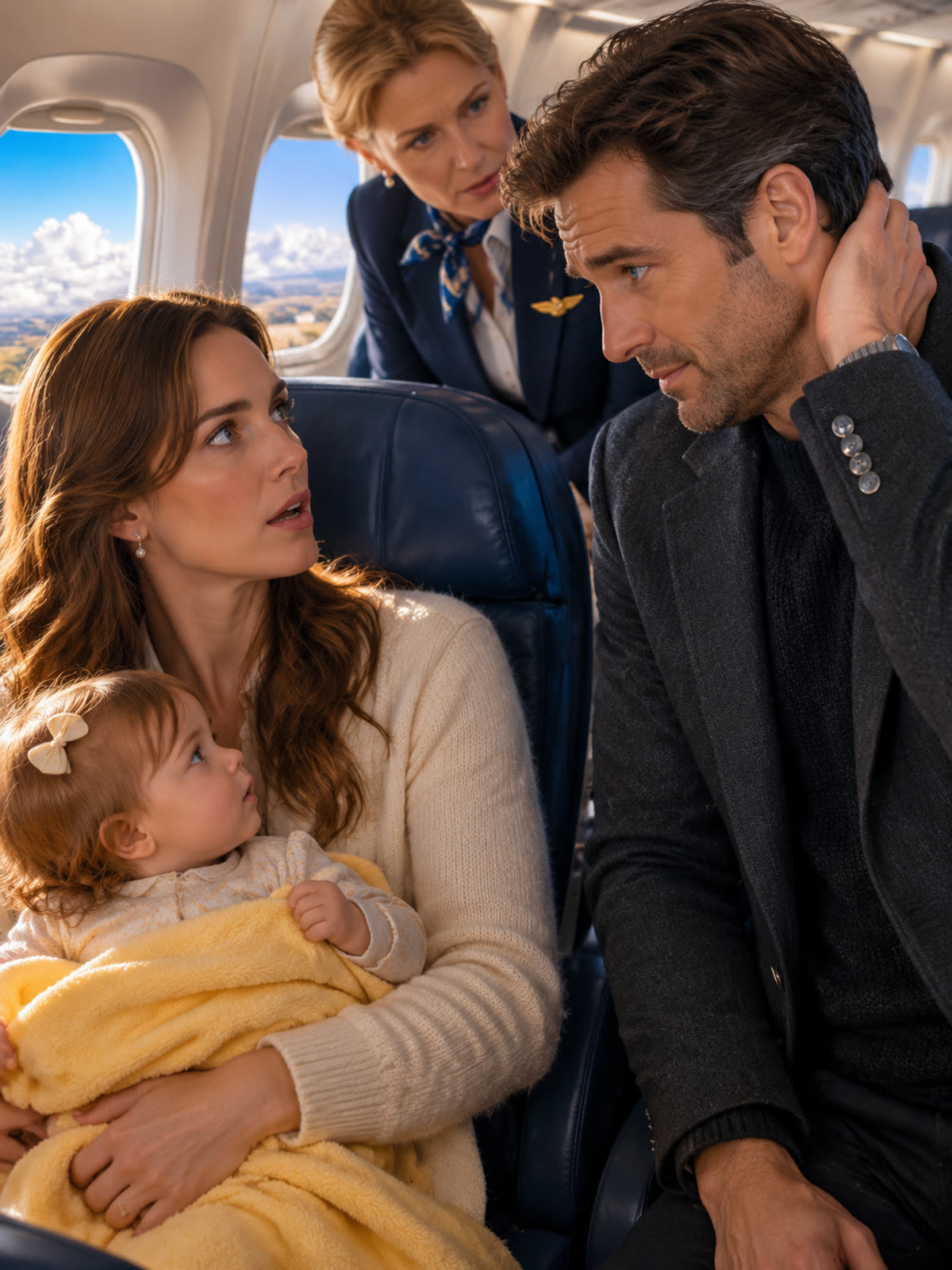
Reporters and photographers regularly pursued Carson’s private life. Meanwhile, I had spent ninety minutes treating his shoulder like a pillow. Suddenly conscious of my worn sweater, I lowered my voice. “You could have mentioned your identity when we introduced ourselves,” I whispered. Carson tilted his head with curiosity. “Would that knowledge have changed how you treated me on this plane?” he asked. “I certainly would not have fallen asleep on your designer jacket,” I admitted. “Then I am very glad that I kept it to myself,” he replied warmly. His answer carried the same easy kindness he had shown before I knew anything about his fortune. For a moment, the awkwardness eased.
Then his phone vibrated sharply against his leg. He looked down, and the humor disappeared from his eyes. I watched his expression tighten, unable to understand how a single message could alter the atmosphere between us so completely. Moments earlier, I had been embarrassed about sleeping on a stranger. Now his concern made my stomach contract. “Jenna, there is a serious issue that you need to be informed about immediately,” Carson said. “What could possibly be wrong?” I asked, dread gathering inside me. He looked at me gravely. “Someone on the ground at the terminal is already asking questions about your arrival,” Carson answered.
PART 2 — The Man Waiting at Baggage Claim
As the wheels met the Nebraska runway, my phone began vibrating with one incoming call after another. Bradley’s name repeatedly appeared on the screen. My fingers shook as I rejected the calls, but messages quickly replaced them. “Where on earth did you take our daughter, Jenna?” the first demanded. Before I could catch my breath, another arrived. “Who is the wealthy man you are cozying up to on that flight?” My hands went cold. Panic tightened my chest. I could not understand how Bradley knew who had been sitting beside me, much less what had happened in our row. I had left Boise hoping for distance, yet his anger had somehow reached the plane before I could even step off it.
Carson noticed my face and leaned toward me. “Is something terrible happening on your phone right now?” he asked gently. I turned the screen toward him. “It is my husband,” I stammered. “We are separated, but he is Maisie’s father, and somehow he knows our exact location.” His expression hardened as he read. “We are going to handle this calmly and legally,” Carson stated as we reached the gate. Three uniformed members of his security team met us on the boarding bridge. Among them was a sharp, efficient woman named Agent Paige, who brought a tablet forward. On its screen was a clear photograph from our flight: my head on Carson’s shoulder, Maisie sleeping beneath her blanket in my arms.
Someone had published the photograph on a celebrity gossip forum. Its headline claimed Carson was secretly traveling with an unidentified companion and child. Worse, a commenter had supplied my full legal name. “Someone commented that Jenna Carver abducted her child from Idaho without spousal consent,” Paige reported. My stomach turned. “That is an absolute lie, because Bradley knew full well that I was leaving after our separation discussion,” I cried. Carson did not hesitate. “I believe your every word, Jenna,” he assured me. “Our immediate priority is discovering who breached your private passenger data.” Then my phone vibrated again. “I am standing right outside the passenger baggage claim area, so bring Maisie out to my car this instant,” Bradley’s message read. I stared in disbelief. He had followed my route and reached Omaha to intercept us.
Carson’s team took Maisie and me to a secure conference lounge within the airport’s executive offices. At first, I tried to refuse so much assistance. After years of Bradley controlling my life, I had promised myself I would never become dependent on another man. But Maisie was crying with hunger, and I needed somewhere safe to think without confronting her father. Carson sat across from me and placed water within reach. “You do not have to share anything that makes you uncomfortable,” he said. “However, if Bradley is harassing or endangering you, my legal team can help you contact the proper authorities.” His offer left the decision with me. That mattered more than I could easily explain.
With tears slipping down my cheeks, I described the marriage I had kept hidden from other people. I told him about the money Bradley withheld, his affairs, the transfers I could not access, and the threats he made before I left. As I spoke, another message appeared. “You had better remember every single document you signed after Maisie was born, because you are legally trapped,” Bradley wrote. I frowned, searching my memory. When Maisie was three weeks old, I had been desperately short of sleep. Bradley had brought home a pile of forms and told me they concerned ordinary updates to our health insurance and life coverage. Until that moment, I had not understood why those papers might matter.
Carson immediately reached for his phone. “I want to connect you with an independent family attorney named Wendy Vance,” he offered. “She does not work for my company, meaning her sole duty will be protecting you and Maisie.” The distinction helped ease my fear. “I would be deeply grateful to speak with her,” I answered. Within half an hour, Wendy appeared through a secure video connection. I opened the online portals I could access and supplied the records available to me. She reviewed them carefully while I waited, trying to keep my thoughts steady. When she examined the credit-monitoring alert associated with my identification, her expression became noticeably more serious.
“Jenna, someone opened an unauthorized commercial line of credit for forty-eight thousand dollars under your personal social security number,” Wendy revealed. “The billing correspondence is directed entirely to your husband’s private consulting firm in Boise.” I could hardly take in the amount. “I never authorized any business loans or credit cards in my entire life,” I insisted, horrified. Wendy continued in a calm, measured voice. “Furthermore, the travel consent forms he prepared contain severe legal irregularities that do not hold up under objective judicial review,” she explained. “Signing papers while under deliberate domestic misrepresentation does not grant him immunity from bank fraud charges.” For the first time in years, I could feel the confusion Bradley cultivated beginning to lift. His certainty no longer sounded like proof.
While Wendy prepared affidavits, Carson’s cyber investigators traced the exposure of our travel details. Bradley’s cousin Megan worked as a regional ticketing agent. She had accessed the airline’s reservation system without authorization and tracked my boarding pass. After she passed along my flight information, Bradley booked a quick connection through Salt Lake City and reached Omaha ahead of me. Megan had also distributed the cabin photograph to online blogs, helping turn a private moment into manufactured outrage. None of it had happened by chance. The picture, my name, and the accusations had given Bradley another way to intimidate me while making his behavior look like concern.
His messages continued. “Stop hiding behind your wealthy new friend and bring our daughter outside,” he demanded. Then came another claim: “You signed those business guarantees willingly, so do not play the innocent victim now,” followed by a final threat. “I have already contacted regional reporters to expose your sudden flight from Idaho,” he wrote. Wendy’s voice remained firm through the monitor. “Do not respond to his bait,” she instructed. “We have documented his harassment, his relative’s corporate privacy violation, and the fraudulent loan activity.” I looked at Maisie and understood that answering his anger would not make us safer. For once, I did not have to accept his version of events simply because he repeated it loudly.
“I refuse to walk out there alone to be bullied by him ever again,” I said. The resolve in my own voice felt unfamiliar, but it was real. Carson looked at me with clear respect. “That is the strongest choice you could possibly make,” he said. “Whatever steps happen next, you are the one steering the wheel of your life.” In that private lounge, with my daughter close and the evidence finally laid out, I began to understand the difference between accepting help and surrendering control. Carson had offered protection without claiming authority over me. Wendy had explained my position without telling me to be quiet. Bradley was still outside, still furious, but his anger no longer filled every available space.
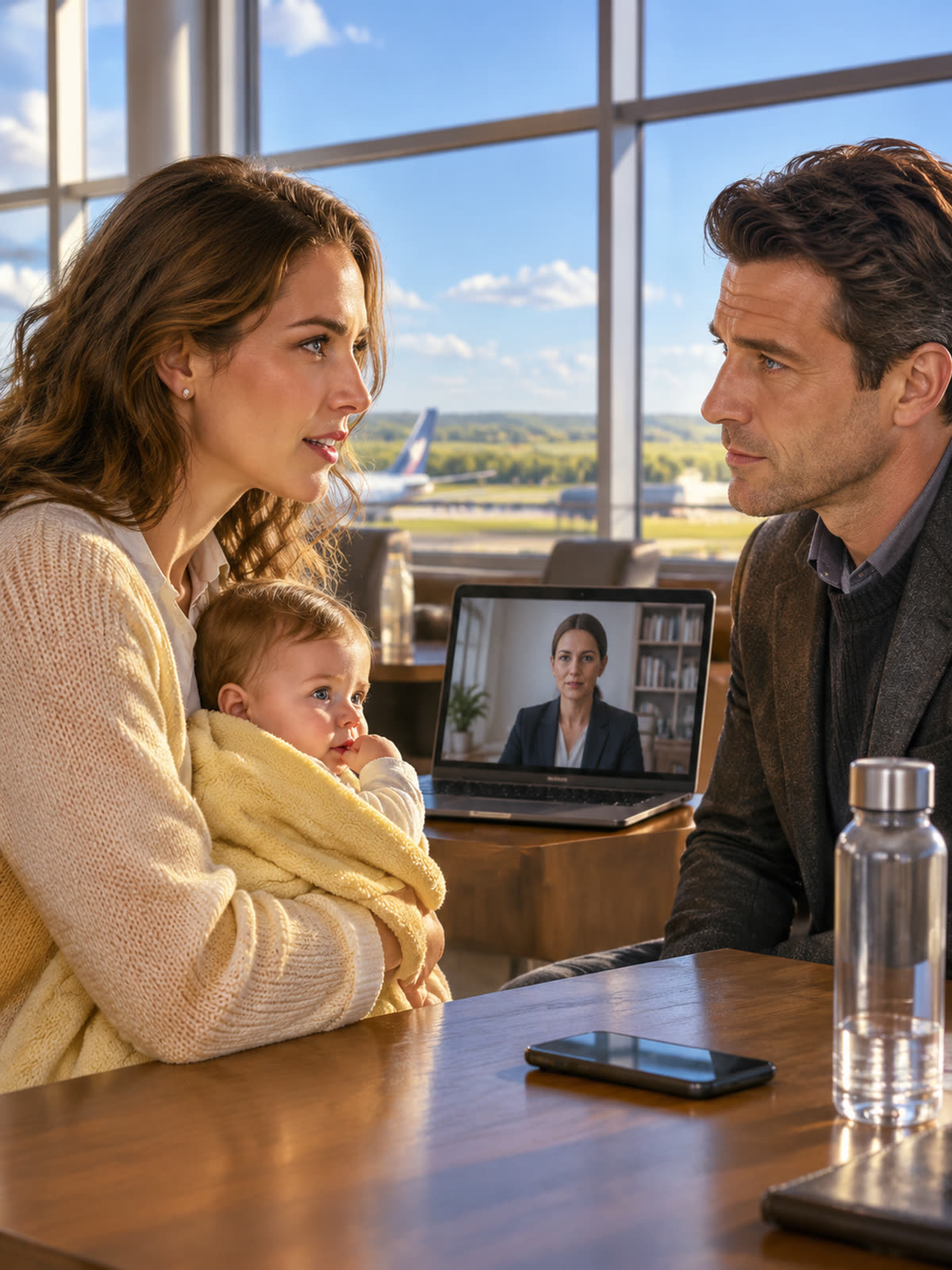
Two hours later, a meeting under legal supervision brought us into an airport administrative boardroom. Bradley entered with his mother, Evelyn Carver. Her wool coat was immaculate, her pearl necklace carefully arranged, and her manner carried the same cold social superiority I knew so well. “Jenna, darling, this entire situation is an embarrassing public spectacle,” she began, adjusting the pearls. “Hand Maisie to her father so we can return to Boise and resolve these private family matters quietly.” I held my daughter securely and kept my voice level. “I am not returning to Idaho, and Maisie stays with me,” I answered. Saying it in front of them was different from practicing courage alone. This time, I did not soften the words to make them more comfortable.
Bradley moved forward with the polished smile that had convinced so many people he was a devoted husband. “Jenna, you have made your dramatic statement, but it is time to act like a sensible mother,” he said. “Are you honestly allowing this billionaire stranger to dictate our parental decisions?” Carson remained at the far corner of the table, deliberately silent. He would not give Bradley the confrontation he wanted or make himself the center of decisions that belonged to me. I met my husband’s eyes. “Carson is not making choices for my daughter,” I replied. “I am making them myself for the very first time.” Wendy’s local associate brought the formal case files forward. Bradley had arrived expecting to take us home. Now the evidence was about to be placed in front of him.
PART 3 — A Life That Belonged to Me
The attorney set the files before Bradley and Evelyn. “Mr. Carver, we have presented formal notices regarding the unauthorized forty-eight thousand dollar commercial credit line opened under Mrs. Carver’s credentials,” the associate stated. “We have also submitted evidentiary preservation demands regarding Megan’s unlawful breach of airline passenger security records.” Evelyn turned sharply toward her son. Her polished composure began to break. “Bradley, what on earth is this attorney talking about regarding credit lines?” she demanded. He shifted beneath the fluorescent lights. “Mother, it was just routine financing for my corporate expansion,” Bradley stammered. The explanation sounded small beside the documents on the table.
Wendy’s associate did not let the excuse stand. “The federal lending regulators will decide whether forging spousal signatures constitutes routine financing,” the attorney countered. “Furthermore, if Mr. Carver attempts to contact Mrs. Carver outside of designated counsel, an immediate restraining order will take effect.” Bradley glared at me across the mahogany table, his familiar handsome face tightening with resentment. “You truly believe you have won some grand victory just because a powerful man offered you his private lawyers?” he sneered. Once, that expression would have sent me searching for something to apologize for. I had spent nearly a decade measuring my words against his temper, doubting my judgment, and trying to avoid his disapproval.
Now Maisie rested peacefully in my lap, and the fear that had followed me into the room gave way to clarity. I could see the man before me without accepting the authority he had claimed over my life. “No, Bradley, this has nothing to do with winning against you,” I answered quietly. “I have simply realized that I do not need your permission to build an honest life for myself.” He stared, unable to produce an answer. I stood with my daughter and walked away. This time, I did not look back.
That evening, I decided against going straight to Kelly’s house. Bradley knew her address from holiday cards, and I did not want our first night in Omaha shaped by the possibility of another confrontation. Wendy arranged temporary accommodation through a reputable family transition foundation in central Omaha while the restraining orders were processed. Carson came with us to the quiet brick residence and carried my suitcase up the steps. At the private suite, he put it beside the door and stepped back, careful not to assume that his help entitled him to enter.
“My legal team will provide Wendy with every digital record we collected today,” Carson told me. “After that is completed, I will step away and give you the total peace and privacy you deserve.” I looked at him, still struggling to understand why someone with no obligation to us had done so much. “Why did you go to such extraordinary lengths to help two strangers from an airplane?” I asked. For a moment, he looked across the quiet street. When he met my eyes again, his expression held a sincerity that made the question feel less simple than it had a moment before.
“When I was just a boy, my own mother had to flee a deeply abusive marriage with nothing more than twenty dollars in her purse,” Carson shared. “A kind stranger helped her secure safe housing and connected her with people who protected our legal rights without asking for anything in return.” He smiled at Maisie, who held her plush bear. “That stranger never asked for payment or recognition, and I made a vow to honor that kind of selfless grace whenever I encountered it,” he added. His generosity had not come from some effortless distance above ordinary suffering. He remembered what it meant to need a safe place.
My eyes filled again. “I honestly have no idea how I will ever repay you for what you did today,” I whispered. Carson shook his head. “You do not owe me a single penny or any repayment whatsoever,” he said firmly. “Just go forward and build the joyful, independent life that you and your daughter deserve.” He gave a courteous nod, walked down the path, and got into the waiting town car. He did not look back. There was no condition hidden in his goodbye, no demand that I remain grateful in a way he could control.
Inside, I settled Maisie into a clean wooden crib beside the small bed. I unpacked her pajamas and arranged her favorite picture books on the nightstand. Later, I sat near the window beneath the Nebraska stars. The room was plain, its furniture modest, and almost nothing around me belonged to me. Yet peace filled it in a way our comfortable Boise house never had. For the first time in my adult life, the next morning did not mean waking to someone else’s anger or judgment. I had very little certainty about what came next, but I could finally breathe without waiting for permission.
The following twelve months demanded more resilience than I had known I possessed. There were repeated hearings, detailed financial audits, and structured custody mediations. The process was exhausting, but the evidence held. Federal bank investigators confirmed Bradley’s forged paperwork, and the fraudulent forty-eight-thousand-dollar debt was removed from my credit history. The airline completed an internal investigation, dismissed Megan, and sanctioned her credentials for violating federal privacy statutes. Most important, the family court awarded me primary physical custody of Maisie and established clear, legally supervised boundaries for Bradley. His anger could no longer rewrite every rule.
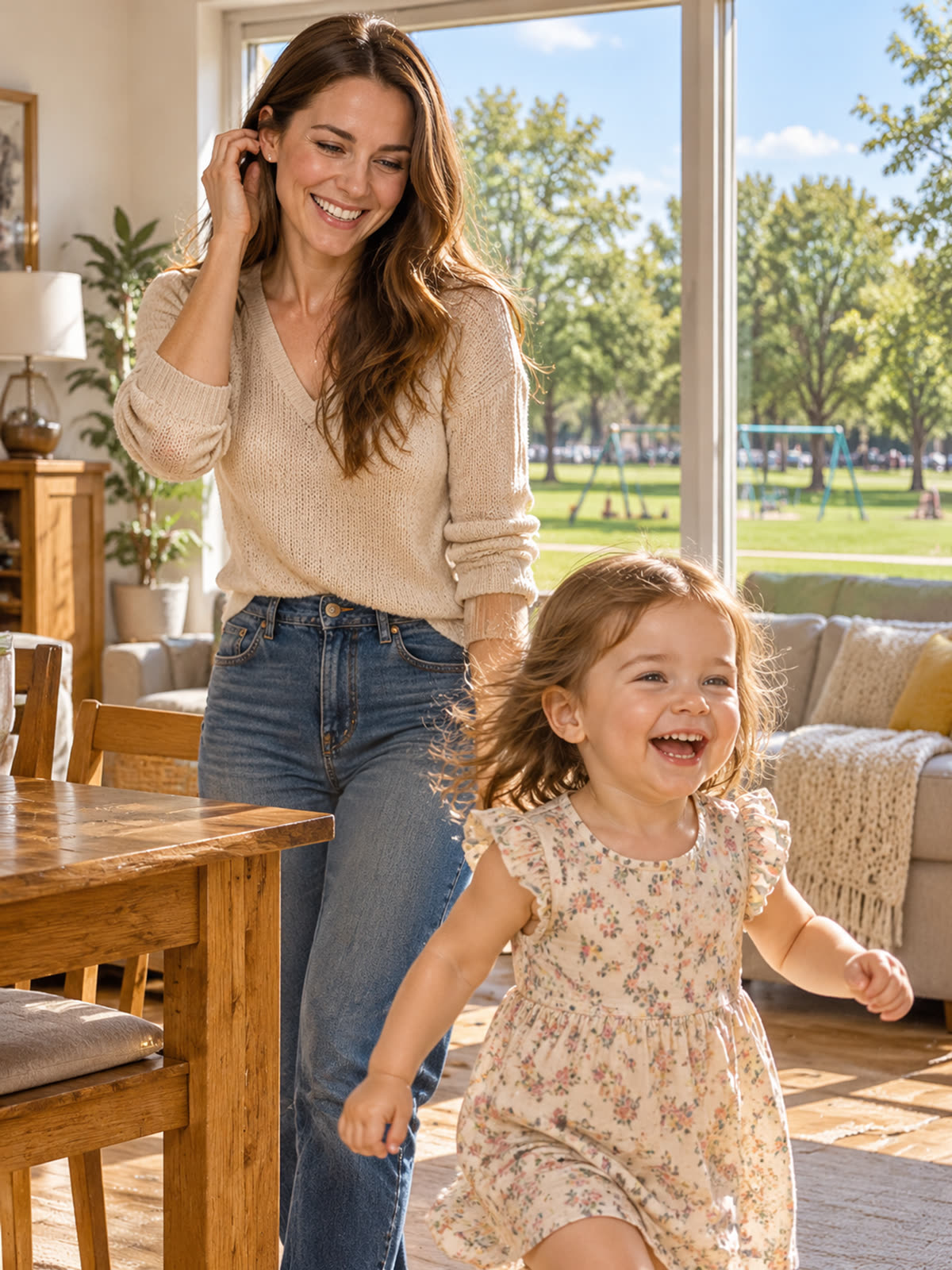
I found full-time work managing logistics for an agricultural shipping business outside Omaha. Bradley had always dismissed the bookkeeping I did for his office, calling my organizational skills worthless amateur work. My new employer saw something different. My care with details earned a promotion, a generous salary, and excellent health coverage. Within eight months, I leased a bright two-bedroom apartment overlooking a public park with swings. I opened an account in my own name, bought a sturdy wooden kitchen table at an estate sale, and paid the utility bills with money I had earned. Each ordinary payment brought a pride I had never experienced before. Maisie celebrated her second birthday running through our sunlit living room, her laughter filling the home I had built for us.
Carson honored his promise throughout that year. He did not call my private number, arrive unexpectedly, or turn his assistance into a continuing claim on my time. Occasionally, Wendy mentioned that he had asked whether we were safe. Otherwise, he let the life I was building remain mine. Nearly a year after the flight, I sat at my kitchen counter and wrote to his private email address. “Would you be open to getting a cup of morning coffee together sometime soon?” my message asked. His response arrived in less than ten minutes. “I would be truly honored to see you both again,” Carson wrote.
We met the next Saturday at a sunny neighborhood bakery in Omaha’s historic district. Carson wore dark jeans and a navy sweater, looking like any other man enjoying a quiet weekend morning. Maisie sat between us in a booster seat. With a mischievous smile, she immediately dropped her shiny spoon onto the wooden floor. Carson laughed, bent to retrieve it, and returned it to her tray after cleaning it. “I can clearly see that Miss Maisie is still running the entire show,” he remarked with a cheerful wink. “Some wonderful things never change at all,” I replied, smiling. The familiar gesture carried me back to the rattles he had collected on the plane, but I was no longer the same frightened woman beside him.
For two hours, we talked about work, the pleasure of watching children grow, and the unexpected turns that bring people toward healing. Nothing about the morning required me to pretend my life had become effortless. I had worked hard for the stability Maisie and I now enjoyed, and I could speak about that work without someone diminishing it. After a pause, Carson looked at me thoughtfully. “I must confess that I picked up my phone to call you dozens of times this past year,” he admitted. “What made you stop yourself?” I asked. “Because you deserved the sacred opportunity to discover your own power without anyone standing in your way,” he answered.
I glanced at my car keys on the table. I thought of our apartment beside the park, my work, and the future I had patiently assembled through decisions that were finally my own. Then I reached across and rested my hand on his. “I have discovered that power now,” I said with certainty. Carson’s eyes held quiet admiration. “And what does your world look like today, Jenna?” he asked. I smiled. “It looks like a life where I hold the freedom to choose exactly who walks beside me,” I answered. He did not make an extravagant declaration or try to turn the moment into a fantasy. He simply smiled and threaded his fingers through mine.
The photograph from our flight never disappeared entirely. Gossip sites still occasionally circulated theories about a calculated romance or a publicity arrangement. Strangers continued to imagine motives neither of us had possessed. They did not know the quiet truth of that morning above the clouds. The picture did not document a scandal, and it did not show a helpless woman waiting for a billionaire to give her a life. It showed an exhausted mother who had felt safe enough to close her eyes for ninety minutes beside a decent man.
Carson had not rebuilt my world. He had held a safe doorway open while I recovered the strength to rebuild it myself. Once I could stand securely on my own, I understood that his fortune and influence had never been the greatest gift. The gift was remembering that my dignity and my future had belonged to me all along. Now, with my hand resting in his and a life of my own waiting beyond that bakery door, one question remained open: what would I choose next?
Disclaimer: This story is a work of fiction inspired by real-life themes. Names, characters, places and events are fictionalized, and any resemblance to real persons is purely coincidental. Images are for illustration purposes only.
