

PART 1
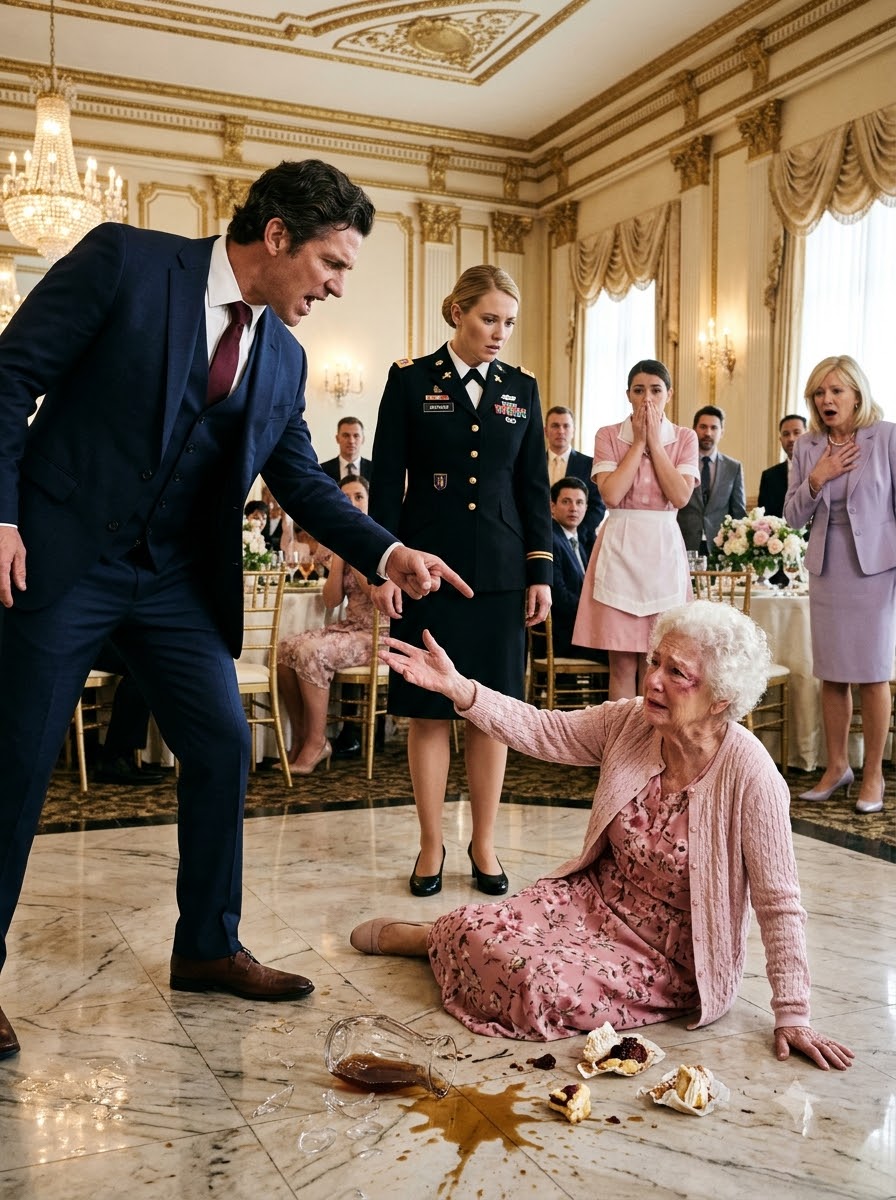
The man who knocked my mother down with a slap held so much power in town that thirty people watched him do it and not one of them stood up.
My mom was seventy-five.
Her name was Rosa Salgado, she was a widow, and for forty-two years she had run Rosa’s Kitchen, a diner in Willow Creek, Texas, where construction workers ate breakfast next to tourists and nobody got treated any differently.
She ended up in the ER with a swollen cheekbone and a split lip.
I got to the hospital from Fort Moore after getting leave from my unit.
I’m Valeria Salgado, I’m thirty-six, and I’m a captain in the U.S. Army.
I command a Ranger company.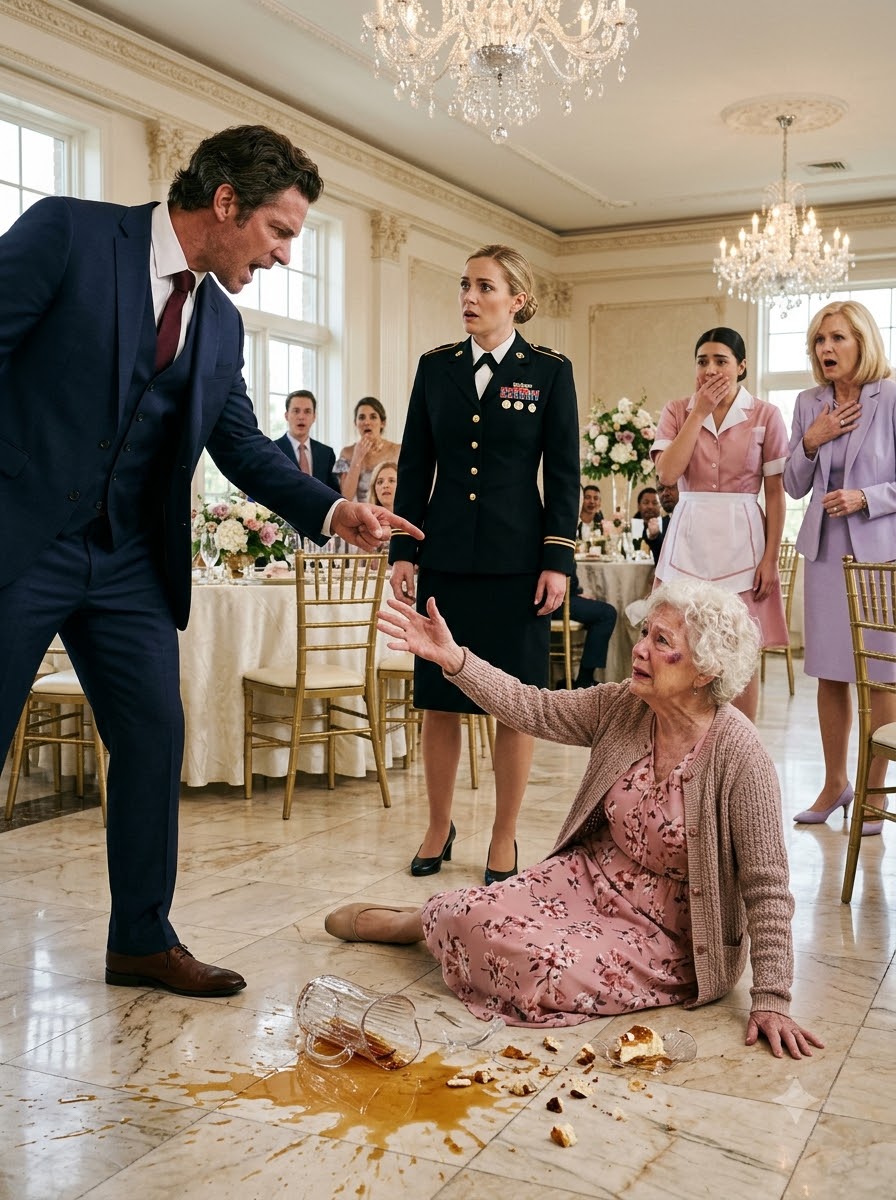
I’ve learned to make decisions when everything around me is falling apart, but no training prepared me for the sight of dried blood on my mother’s mouth.
“Don’t make that face, honey. I can still make today’s stew,” she said when she saw me.
“Who hit you?”
“Brent Kessler. He wanted a table that was taken. I told him to wait.”
She said it as if she were describing a rude customer, not the developer who had spent two years buying up land around the town square.
Kessler built strip malls, threatened to pull contracts from anyone who crossed him, and strutted around city hall as if he owned that too.
“We’re pressing charges.”
My mother glanced at the door.
She didn’t seem afraid for herself.
“Talk to Marisol first. She has two kids and she needs her job.”
Marisol was the waitress who had tried to stop him.
When I stepped out of the exam room, I found her stuffing her apron into a plastic bag, her hands shaking.
“I’m the one who told him to wait,” she whispered.
“He got furious. Your mom stepped in front of me, and he yelled that the diner wouldn’t be hers much longer.”
“Did anyone call the police?”
“Some guy dialed 911. The deputy got there after Kessler left. They asked if we really wanted to get into trouble.”
I wrote down the time of her treatment and asked for a copy of the medical report.
Then I drove slowly to the diner.
Mom insisted on coming along, though the doctor had ordered rest and observation for the blow to her head.
I talked her into staying home with her sister, Aunt Bea.
That night I went alone into the little office behind the kitchen.
The smell of grilled onions had soaked into the walls.
My dad’s photograph was still there.
He’d been gone thirteen years.
So was the notebook where he kept track of customers who sometimes needed to eat on credit.
I pulled up the security recordings from the system I’d had installed after a string of break-ins.
The file was stamped 8:16 a.m.
Kessler barged in with two men.
He pointed at a table where a couple was having breakfast with their daughter.
Marisol explained something to him and he slammed his fist on the counter.
Then my mother appeared, holding a coffee pot.
I watched her point to the waiting chairs.
I knew that calm gesture perfectly: it meant nobody was going to cut the line.
Kessler stepped up to her, said a few words, and without warning backhanded her across the face.
Mom fell sideways.
The pot shattered on the floor.
A woman covered her mouth; a man half rose from his seat and sat back down.
Kessler looked around, smiled, and strolled out.
I froze the frame.
I felt an absurd urge to hunt him down that very night.
I knew how to defend myself, but attacking him would turn his assault into a fight.
I saved three unedited copies of the video, with date and time, and wrote down who had access to the system.
In the last shot, just before the blow, I saw something I hadn’t noticed before: Kessler had left a blue folder on the counter.
Mom had pushed it away from the coffee pot as if she didn’t want to touch it.
I searched through the papers in the office until I found it.
It wasn’t a purchase offer.
It was a copy of a city application to fold several parcels into a commercial development called Live Oak Plaza.
On the site plan, our diner was shaded red.
At the bottom of the application it read: “Owner authorization: Rosa Salgado.”
It even had a case number and a date from three weeks earlier.
I called my mother.
She answered sleepily.
“Mom, did you go to the planning department to authorize a construction project?”
“Never. I told Brent I wasn’t selling.”
I looked at the document again.
The file didn’t just mention our land.
It presented it as if my mother had already given permission to use it.
And then I understood that the slap might not have been a fit of rage.
It might have been the first step in a land grab someone had started filing in my mother’s name.
At seven in the morning I carried the blue folder to the kitchen table.
Mom adjusted her glasses and read every page without a word.
When she reached the site plan, she rested a finger on the red rectangle.
“That’s the door your father used to come through with the sacks of pinto beans,” she murmured.
“They want to take even the sidewalk.”
“I need you to tell me everything you’ve signed for Kessler.”
“Nothing. Two months ago an architect of his came by with an offer. He insisted on preparing a formal proposal, so I showed him a copy of my driver’s license. But when he came back with the contract, I didn’t even accept it.”
I looked at her, surprised.
My mother had always been careful with her documents.
She rubbed her hands together.
“He said it was to prove he was talking to the real owner. I made a mistake, Valeria.”
“The mistake would be letting him use it to take this place from you.”
I asked again whether she’d kept any note from that visit.
We found a slip of paper with the architect’s name, a date, and the phone number of Kessler’s office.
I photographed it.
I wasn’t going to scold my mother for trusting someone.
My first decision was not to put on my uniform.
I didn’t call anyone from my unit or ask for military favors either.
I was on leave and this was a civilian problem.
If I wanted to protect my mother, I needed evidence that would hold up in front of a lawyer, not people snapping to attention when they saw me.
I went with her to the District Attorney’s office.
She filed the assault complaint, we handed over the medical report, and we offered the full video for safekeeping and review.
The staffer explained there would be interviews and further investigation; nobody promised Kessler would be arrested that day.
That suited me.
I wanted a solid case.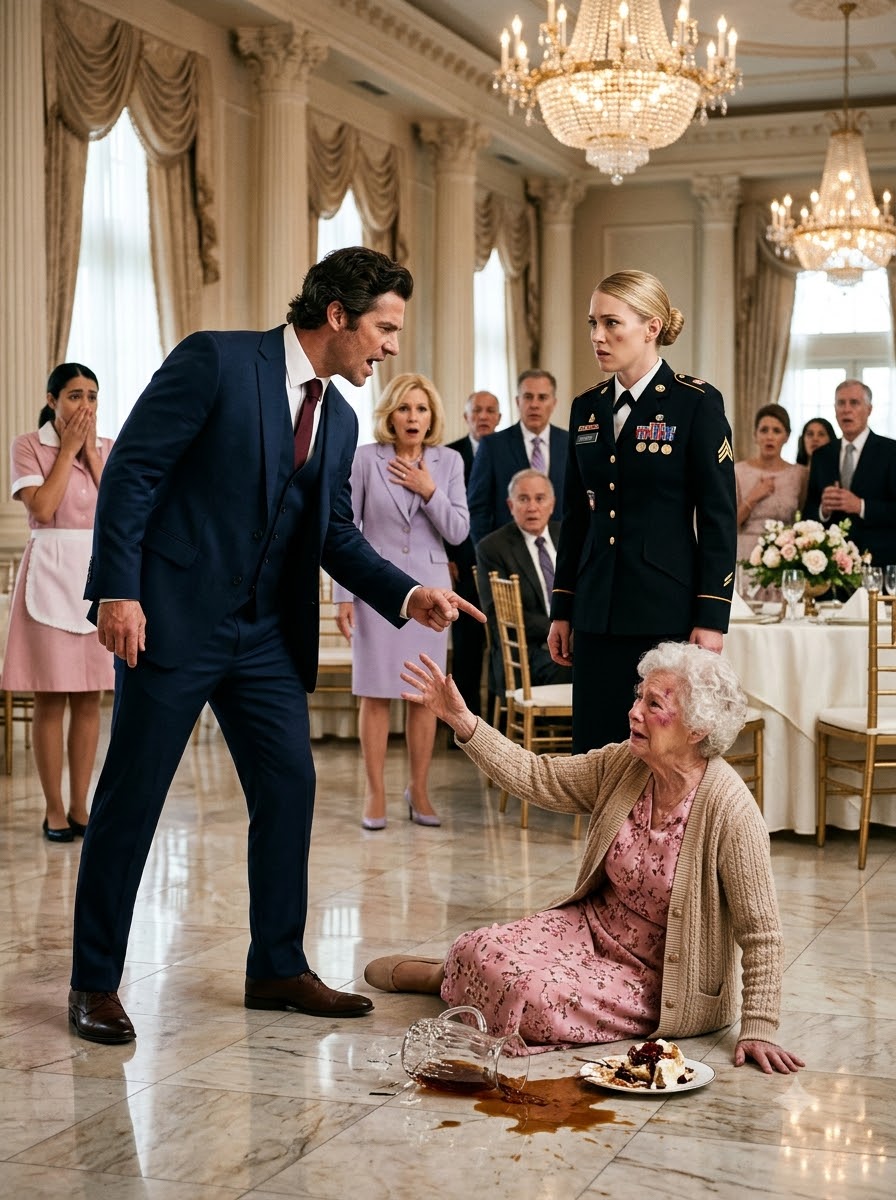
Then we hired Lorraine Pike, an attorney from the next county over whom my mother knew because her father had been a regular at the diner.
Lorraine didn’t start by talking about revenge.
She asked for deeds, property tax receipts, and anything related to the supposed project.
With those documents, Mom requested access to the city file in which she appeared as an involved property owner.
While we waited for the appointment, I spent several mornings at a back table, listening.
Frank, the mechanic down the street, showed me text messages in which one of Kessler’s managers warned him to forget an unpaid invoice of two thousand one hundred dollars if he wanted his shop expansion to get approved.
Joyce, the florist, had photos of her greenhouse’s smashed panes from the night after she complained about construction debris.
Neither of them wanted to file a complaint right away.
“It’s not that we don’t care about your mom,” Frank told me.
“It’s that man knows the people who review our permits.”
“Then I won’t ask you to be brave for a photo,” I said.
“Keep the original messages. If you decide to speak up, you’ll do it for yourself and with legal advice.”
The appointment took several days.
In the meantime, Mom refused to leave the diner unless someone went with her.
She said she still got dizzy, but I could see the fear in her face whenever she looked at the door.
The following week we were able to review the file.
Kessler had applied for a preliminary site review for Live Oak Plaza.
The application included a letter of consent supposedly signed by my mother, along with a copy of her ID.
The letter didn’t transfer ownership, but it let him present the project to investors as though he already had our consent.
I noticed something about the signature: the first letter looked drawn, not written.
Since arthritis had stiffened her fingers, my mother signed with a short, continuous stroke.
We asked for a certified copy so a handwriting expert could compare it with authentic documents.
The real surprise came a few pages later.
The site plan carried a technical note: “Primary access contingent on Parcel 18.”
PART 2
Parcel 18 was the diner.
Without our frontage on the main road, the interior shops in the project wouldn’t have the vehicle access promised in the pre-sale brochures.
Kessler didn’t want our business out of nostalgia or whim.
He had already promised his investors an entrance that wasn’t his.
The deadline to prove he had control of the land was less than a month away.
When I explained it to Mom, her eyes filled with tears, but she didn’t lower her head.
“He hit me so I’d be afraid to say no.”
“And so everyone else would see what would happen to them if they backed you.”
That afternoon Lorraine filed a motion disputing the letter and asking the city not to rely on it while its authenticity was verified.
I went to talk to Marisol.
She agreed to give a statement if her name was handled through the proper legal channels.
She told me Kessler had said something just before he hit my mother: “She’ll sign by Friday, even if I have to shut this place down.”
I ran back to the diner.
A city truck was parked out front.
Two inspectors were taping up a notice suspending operations for alleged structural hazards.
My mother was still inside, next to the lit stove, while Kessler watched from the opposite sidewalk.
When he saw me, he raised two fingers in a mocking salute.
Then he pointed at our sign, as if he were already figuring out where to hang his own.
I didn’t run at Kessler.
I crossed the street and stood next to the inspectors.
One held a clipboard; the other carried the suspension notice so carefully it looked like something fragile.
“I’m the owner’s daughter. May I see the order and the inspection report?” I asked.
The inspector showed me an anonymous complaint about ceiling damage, plus photos of a wall that had been repainted two weeks earlier.
According to the report, the building posed an imminent danger.
I couldn’t prove irregularities on suspicion alone.
I photographed the notice, wrote down their names, and asked them to record our objection.
Then I turned off the stove, got the employees out, and locked up.
Arguing there wouldn’t give us the business back.
Kessler walked over when he saw me pocketing the keys.
“That’s how people learn who keep wasting my time,” he said.
“The authorities will review the decision.”
“Your mother can save herself the expense. My offer’s still on the table.”
“You haven’t understood something, Mr. Kessler. She can say no.”
He laughed and looked at my hands.
“They say you’re a soldier. Let’s see if you know how to follow a civilian order, too.”
A violent heat rose in my chest.
My mother had just appeared behind me, leaning on Marisol’s arm.
The purple mark on her cheek was still visible.
She was the one who answered.
“You don’t need to teach my daughter obedience, Brent. And I’m not selling to you either.”
I held myself in check and walked Mom to the car.
The next confrontation had to happen in front of documents, not in front of Kessler’s men.
That night we spread the deeds from the county recorder, the property tax receipts, the suspicious letter, and the inspection report across the table.
Lorraine went over the dates.
“There are two separate matters here,” she explained.
“An assault, and a possible forgery to gain a business advantage. And then there’s a shutdown order that we have to appeal. They won’t all be resolved with the same complaint.”
Mom stared at my father’s deed.
“He took out a loan to buy this land. It took us seventeen years to pay it off.”
“Do you want to keep fighting?” I asked.
“Not for me. For you.”
“I want to cook again tomorrow. But if I open that door without settling this, Brent will be back the day after. So yes, honey. We’ll go as far as we can.”
Until then I had wanted to decide for Mom.
I understood that the decision to risk her property had to be hers.
I hired an independent engineer.
He checked the beams, measured the cracks, and photographed the building.
He found a repairable leak in the storeroom, but no imminent danger that justified the suspension.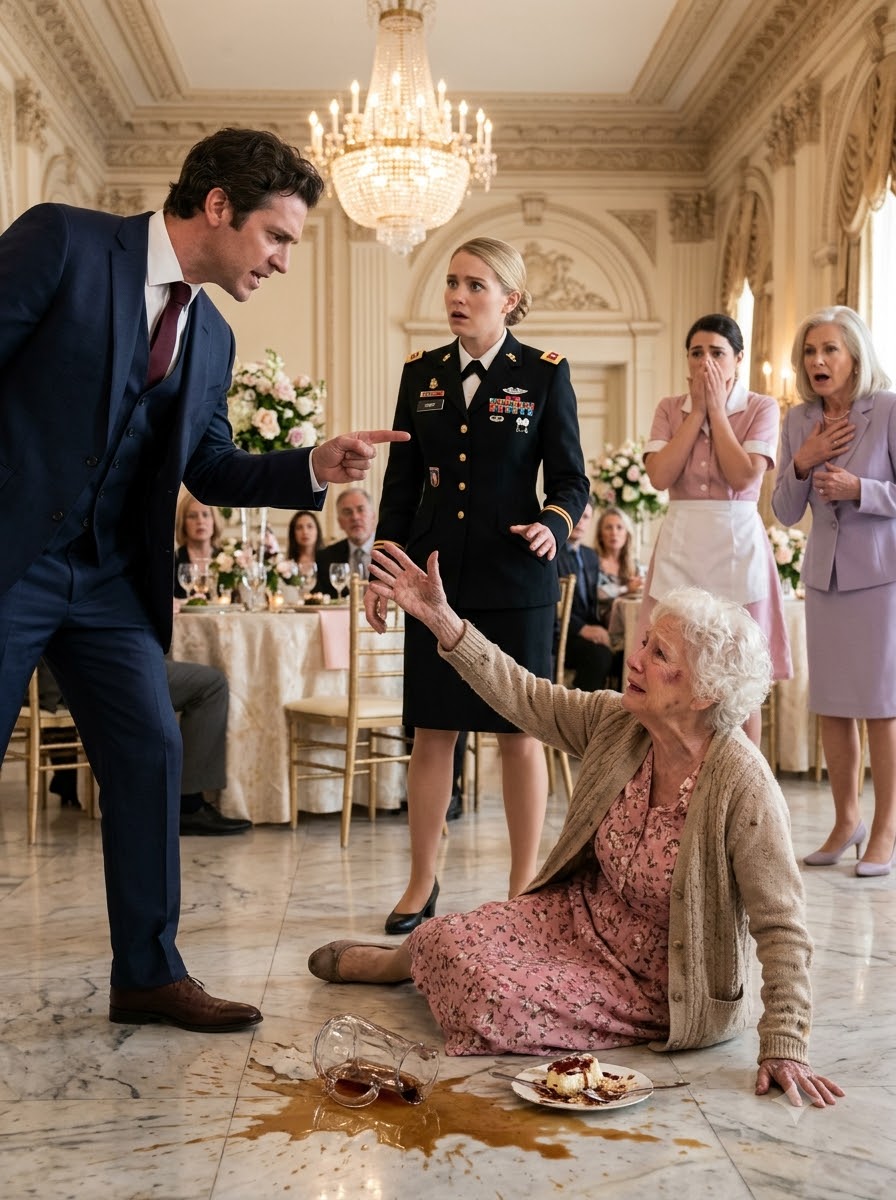
Lorraine appealed the order and asked for an investigation into the inspectors’ conduct.
The diner stayed closed eleven days.
We lost sales and food; we paid wages out of our savings.
One employee had to find another job.
Mom never held it against him.
Frank showed me the unpaid invoice and exported the threatening messages from his phone.
I asked him to talk to Lorraine before deciding whether to file a complaint.
He did, and after learning how the process worked, he agreed to testify.
Joyce handed over dated photographs and report numbers for the damage to her greenhouse.
She didn’t know who had thrown the brick, so we didn’t accuse him of that.
Her case explained the fear; it didn’t prove the assault on Mom.
We got a certified copy of the letter in the file.
It said that Rosa Salgado authorized Kessler Development to use Parcel 18 as an access point for Live Oak Plaza.
It included a copy of her license and a signature.
It wasn’t a sale and it didn’t transfer ownership, but Kessler was using it to convince investors.
A handwriting expert compared the signature with authentic documents and noted significant differences.
The District Attorney would have to conduct its own investigation, but the report justified formally challenging the supposed authorization.
I also examined the timeline.
Kessler had filed the application three weeks before he hit Mom; the day after the slap, he asked to expedite it.
His deadline with the investors was approaching.
It could no longer be called an accidental quarrel over a table.
The copy of her license seemed to come from the architect’s visit.
His name appeared on the filing as the applicant’s agent.
We asked that he be required to testify, without yet attributing the forgery to him: suspecting was not the same as proving.
The city lifted the suspension after reviewing the appeal and ordering a new inspection.
The original action came under review.
There were no apologies.
When Mom unlocked the door again, she had gone eleven days without being able to work.
At the reopening, only seven customers came.
One woman asked for her breakfast tacos without a receipt, afraid someone would find out where she’d bought them.
Mom smiled until she could slip into the kitchen.
I heard her crying in there.
“I thought we’d done something good for this town,” she said between sobs.
“You and Dad did. Other people’s fear doesn’t erase that.”
“But fear can leave you alone.”
I realized that for her, keeping the deed wasn’t enough.
She also needed to win her neighbors back.
I proposed we meet at the diner after closing.
Fifteen people came.
We shared the video and the documents we could show.
Lorraine explained that testifying was voluntary, that there were risks, and that no one could promise absolute anonymity.
There was a long silence.
Then a customer named Teresa raised her hand.
“I was eating breakfast when he knocked her down,” she said.
“I didn’t do anything because my husband works for Kessler. I haven’t slept in days, thinking about how I left her on the floor.”
My mother walked over to her.
“I was afraid too, Teresa. I still am.”
They hugged.
Other neighbors stayed quiet or left.
Four customers, Teresa among them, decided to go to the District Attorney.
Marisol had already given her statement.
At last there were witnesses willing to stand behind their words.
Kessler came back three days later, at lunchtime.
He walked in with his attorney and stopped in the middle of the aisle, looking at the full tables.
“Rosa, let’s talk like reasonable people. I can improve my offer,” he announced.
I was close by, but I let Mom answer.
“I already answered you,” she said.
“I’m not selling.”
He gestured at the walls.
“This old building isn’t worth what I offered you. And your daughter will be back at her base soon. When she leaves, who’s going to defend you?”
The question stung.
I only had a few weeks of leave; she would live here after I went back to base.
“I will,” Marisol answered from the counter.
Frank set his spoon down on his plate.
“And I can testify to what I know. I already have.”
Teresa said she’d already testified, too.
Kessler looked at the people who had spent years keeping their heads down.
His expression hardened: he hadn’t expected them to speak up in front of him.
“If you threaten anyone again, it’ll be added to the complaints,” I told him.
“And if you want to discuss anything about the property, do it through the attorneys.”
His lawyer touched his arm.
Kessler walked out without ordering anything.
Nobody followed him.
Mom sat down, trembling, and I poured her a glass of water.
For months, the District Attorney took statements and reviewed documents.
A judge ordered Kessler to stand trial on assault and threat charges, with conditions barring him from approaching Mom while the case went forward.
The forgery was still being investigated separately.
He wasn’t jailed right away: he kept his defense and his resources.
The city voided the application that included our land without documented consent and opened an internal review of the inspection.
The investors put Live Oak Plaza on hold until the access issue was cleared up.
Kessler could no longer promise them property that belonged to someone else.
We sought damages and the losses from the shutdown through the proper channels.
There was no instant fix: legal fees and lost income forced us to cut back.
Mom insisted on paying part of them from her savings.
“You’re not rescuing me, Valeria,” she reminded me.
“We’re defending my home together.”
Six months later, the customers came back.
Frank brought his crew on Fridays and Joyce filled the windows with flowers.
Teresa came in with her husband, now employed by another contractor.
Marisol learned to keep the books so Mom could rest.
I went back to my unit before the investigations ended.
I worried about leaving her alone.
Mom came with me to the bus station and squeezed my fingers.
“You protect a lot of people, honey. I have to learn to let others stand with me here.”
Before boarding, I asked her whether it would have been easier to accept Kessler’s offer and move to a quiet house.
“Maybe,” she said.
“But it’s one thing to sell because I decide to, and another to be hit until I sign.”
Months later I came back for a visit.
I found her pouring coffee, her white hair pinned up, a small scar beside her lip.
Beside the cash register hung a sheet of paper in her handwriting: “Nobody here is worth more for having more money.”
I asked why she kept that reminder up when everyone already knew the story.
“Because next time, maybe they won’t hit the owner,” she answered.
“Maybe they’ll hit someone who doesn’t have a daughter who can come.”
I bused tables in silence.
Justice was still taking its course, and the fear hadn’t disappeared completely.
But I understood that the slap wasn’t answered by knocking a man down.
It was answered by making it possible that, if something like it ever happened again, someone would find the courage to stand up.
