

PART 1
The night my parents threw me out started with one word.
No.
I was twenty-eight, between freelance contracts, temporarily staying at my parents’ house, and handing them money every month for groceries, utilities, and rent.
That had never stopped my father from treating my earnings as if they belonged to the whole family.
At 9:07 that Thursday evening, he held out his hand and said, “Open your banking app. I want to review your contributions.”
I looked at him across the kitchen table.
“No.”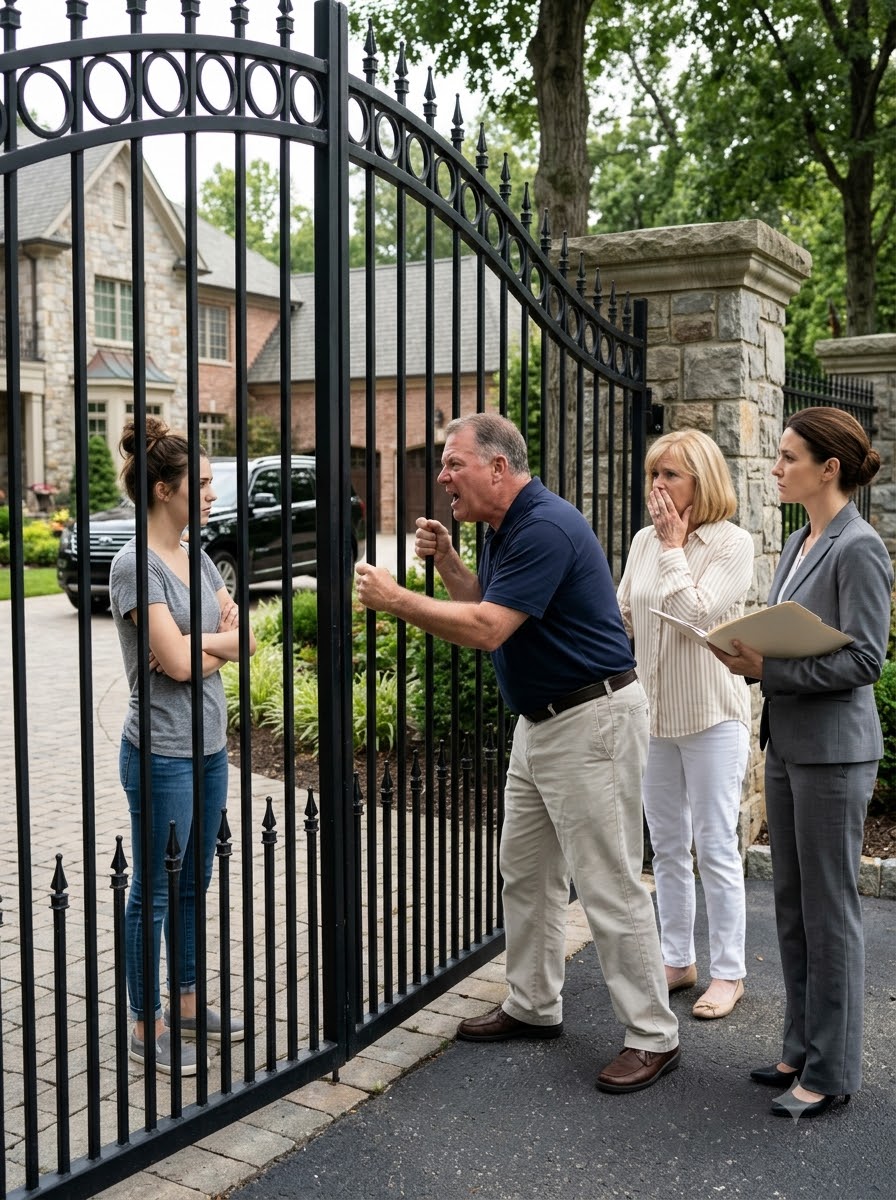
His expression changed at once.
My mother stopped wiping the counter.
“Excuse me?” he said.
“You don’t need access to my accounts.”
My mother gave a short laugh. “Then maybe you don’t deserve the privileges this family gives you.”
My father reached for his phone.
A few seconds later, my own phone began to buzz.
Card blocked.
Recovery access changed.
Security permissions updated.
Years earlier, when I was in college, he had helped me open a bank account. I had never completely removed him from a few of the original recovery settings.
He knew precisely which openings to use.
My mother went into the mudroom and came back with my purse. She dumped its contents across the table.
Then she started gathering my cards.
Debit.
Credit.
Emergency card.
Even the store card tucked behind a folded receipt.
She pushed my driver’s license and forty-three dollars toward me.
“Out.”
For a moment I thought they were only trying to scare me.
Then my father opened the front door.
The cold March rain swept into the entryway.
I reached for the sneakers beside the bench.
My mother stepped in front of them.
“Leave those.”
My father did nothing to stop her.
I stepped outside in nothing but my thin house socks while both of them stood watching.
The wet concrete made my feet go numb before I even reached the sidewalk.
Behind me, the front door slammed shut.
A moment later, the porch light went out.
They believed fear would make me turn around and come back.
Instead, I kept walking until I reached a gas station half a mile away.
By then my socks were soaked gray and stuck to my feet. A cashier noticed me shivering near the restroom and quietly offered paper towels and a bottle of water.
A complete stranger showed me more compassion in thirty seconds than my parents had shown me all evening.
My phone battery was down to 18 percent.
I called Naomi Vega, a former client whose number I still remembered without looking it up.
A few months earlier, after we finished a campaign together, she had told me, “If you ever need somewhere safe, call me.”
That night, I finally took her up on it.
Twenty minutes later, Naomi arrived with a coat, a blanket, and a pair of inexpensive flip-flops that still had their plastic tag attached.
She didn’t ask why my own parents had sent me out into the rain without shoes.
She simply said, “First you get warm. Then we figure out what they touched.”
At 5:12 the next morning, I sat at Naomi’s kitchen table, changing every password, recovery email, and security question I could reach.
That’s when I noticed three unread emails in an old account.
Every one of them came from a probate attorney in Dallas.
FINAL ATTEMPT TO CONTACT BENEFICIARY.
VERIFICATION PENDING.
DISTRIBUTION ON HOLD.
The name in the documents was my grandmother’s.
The same grandmother my mother had always described as broke, bitter, and gone without leaving anything worth mentioning.
Naomi helped me contact the attorney.
Her name was Evelyn Mercer.
The following morning, Evelyn placed a thick folder in front of me. My full legal name was printed across its cover.
“We’ve been trying to reach you for months,” she said.
My stomach tightened.
“I never received anything.”
Evelyn turned the folder toward me.
Several certified notices had been sent to my parents’ home.
Somebody had signed for them.
My grandmother had not died penniless.
She had left me a trust that became available when I turned twenty-eight, as well as a house on a gated property outside the city.
The wording in the documents was perfectly clear.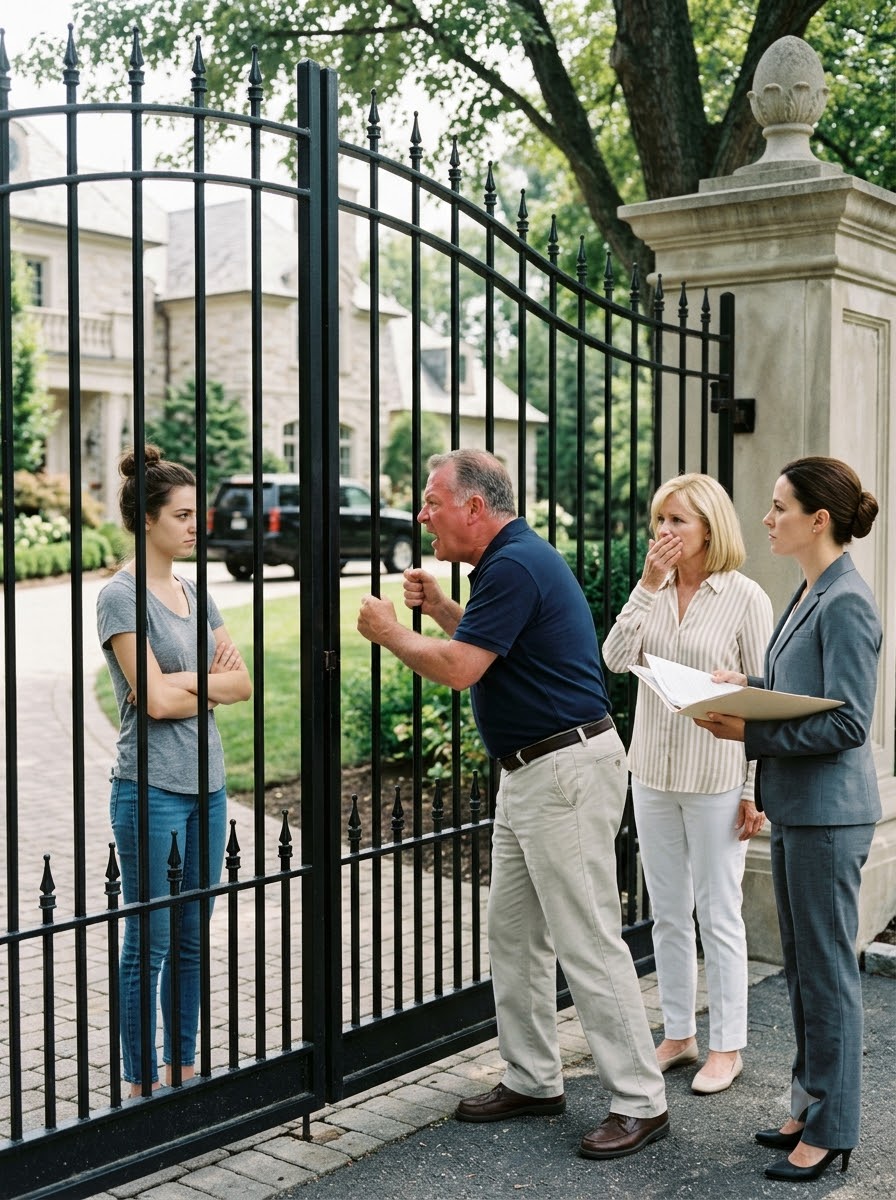
My parents were expressly forbidden from controlling, managing, redirecting, or supervising anything she had left to me.
Then Evelyn revealed something even more disturbing.
Someone had contacted the estate repeatedly, claiming I was unstable, dependent on others financially, and easily manipulated.
They had tried to delay the distribution.
Suddenly, my father’s demand to examine my banking app made complete sense.
He hadn’t been interested in what I contributed toward groceries.
PART 2
He wanted proof that the inheritance had reached my accounts.
When I refused to give him access, he panicked.
Two days later, Evelyn arranged temporary access to the property while the final transfer documents were processed. I opened a new bank account beyond my parents’ reach and updated every remaining security setting.
I thought I had gained some breathing room.
I was wrong.
My father still had an outdated location permission connected to one of my devices.
On Saturday afternoon, a black SUV pulled up outside the iron gate.
My father stepped out first.
My mother followed in a neatly pressed coat, looking annoyed rather than concerned.
They had expected to find their desperate daughter living in some inexpensive temporary rental.
Then my mother noticed the stone marker beside the entrance.
My grandmother’s surname had been carved into it.
All the color seemed to leave her face.
My father looked through the gate, toward the long driveway and the house standing beyond it.
For the first time I could remember, neither of them said a word.
I stood farther up the driveway beside Evelyn.
She held the same folder.
My mother was the first to recover.
“Open this gate,” she snapped toward the guard. “That’s our daughter. This is a family matter.”
Evelyn continued walking toward them.
“Actually,” she said, “that’s precisely why the gate is staying closed.”
My father’s jaw tightened.
“Who are you?”
Evelyn reached the gate, opened the folder, and pulled out a certified-mail receipt.
Then she took out another.
Then a third document I had never seen before.
My mother’s eyes fixed on the page.
Her hand gradually fell away from her handbag.
Evelyn looked straight at her.
“Before anyone opens this gate,” she said, “there’s one signature you need to explain.”
The rain had stopped hours earlier, but the air still carried the damp chill of early March. My mother’s coat hung open now, the neat press already ruined by the wind coming off the open fields beyond the property. She stared at the certified-mail receipt Evelyn held against the iron bars. The signature on the green card was clear even from where I stood: my mother’s looping script, dated four months ago, accepting delivery of a notice addressed solely to me.
Evelyn turned the page so the guard’s body camera could capture it as well. She had requested the private security detail record the entire interaction once she learned my father had tracked my location. “This receipt was signed by you,” Evelyn said, her voice even. “The notice inside informed the beneficiary that the trust had vested on her twenty-eighth birthday and that distribution was ready pending identity verification. You signed for it. You never forwarded it. Then, two weeks later, someone using your husband’s email address contacted my office claiming the beneficiary was financially incompetent and requesting a temporary hold.”
My father’s face had gone the color of the wet gravel under his shoes. “We were protecting her,” he said. “She was living with us. She didn’t have stable work. We thought—”
“You thought you could keep the assets under your control,” Evelyn finished. “The trust instrument specifically bars both of you from any role. Your mother-in-law wrote that language herself after reviewing the pattern of financial control in your household. She left a recorded statement with the prior trustee. Would you like me to play it?”
My mother made a small, choked sound. She looked past Evelyn to me for the first time. “You went to her. After everything we did for you, you went to her lawyer behind our backs.”
“I didn’t know she had a lawyer,” I said. My voice came out steadier than I felt. “I found the emails after you locked me out of my own accounts and put me on the street in socks. Naomi drove me here. Evelyn has been trying to reach me since October.”
The guard shifted his weight but kept his hands visible. My father took one step closer to the gate. “Open it. We’re not leaving until we talk to our daughter without an audience.”
Evelyn closed the folder. “The property is under temporary court order pending final transfer. No one enters without the beneficiary’s written consent or a warrant. You are currently on private property beyond the public easement. If you refuse to leave, the guard will call the county sheriff. In the meantime, I am prepared to file a motion Monday morning documenting the intercepted notices, the false competency claim, and the unauthorized use of recovery credentials on her bank accounts. Those actions may constitute both civil fraud and criminal interference with an inheritance.”
My father’s mouth opened, then closed. He looked at my mother. She was staring at the stone marker again—my grandmother’s surname cut deep into the granite, the dates beneath it. For a long moment the only sound was the wind moving through the iron bars.
“We signed because we thought it was a mistake,” my mother said finally, the words thin. “She never told us she had anything. We thought the notices were errors. We were going to tell you once we understood what they meant.”
“You had four months,” Evelyn said. “You used them to contact the estate and describe your daughter as unstable. You also retained a locksmith last week and inquired about changing the locks on this house. The property manager logged the call.”
My mother’s hand tightened on the strap of her handbag until the leather creased. She turned to my father. “You said they wouldn’t find out.”
He didn’t answer her. His eyes stayed on the long driveway behind me, on the house whose roofline was just visible past the trees. I had walked through it that morning with Evelyn. The rooms still held the faint scent of the lemon oil my grandmother had used on the furniture. A single envelope with my name on it had been waiting on the kitchen counter, written in her hand: *If they try to keep this from you, remember you were never the one who needed fixing.*
Naomi’s car was parked farther up the drive, out of sight of the gate. She had offered to stay, but I had asked her to wait inside. Some conversations needed to happen without an extra witness.
I stepped closer to the gate so my parents could hear me without Evelyn repeating every word. “I’m not opening it today. The transfer finishes next week. After that, if either of you wants to speak to me, you can send a letter through Evelyn’s office. I will read it. I will not meet you at your house, and I will not give you access to any account, device, or location setting again. The forty-three dollars and the driver’s license are the last things I took from that kitchen table. Everything else stays where you put it.”
My father’s shoulders dropped a fraction. “You’re really going to do this. Cut us off over a house.”
“I’m doing this because you put me in the rain without shoes and then drove here expecting to find me desperate enough to hand you the keys,” I said. “The house is only the part you can see.”
Evelyn slid the receipts back into the folder. “The sheriff’s non-emergency line is already on hold with the gatehouse. You have five minutes to return to your vehicle and leave the property. After that, the guard will request a trespass citation. Any further contact with the beneficiary outside of counsel will be documented for the motion.”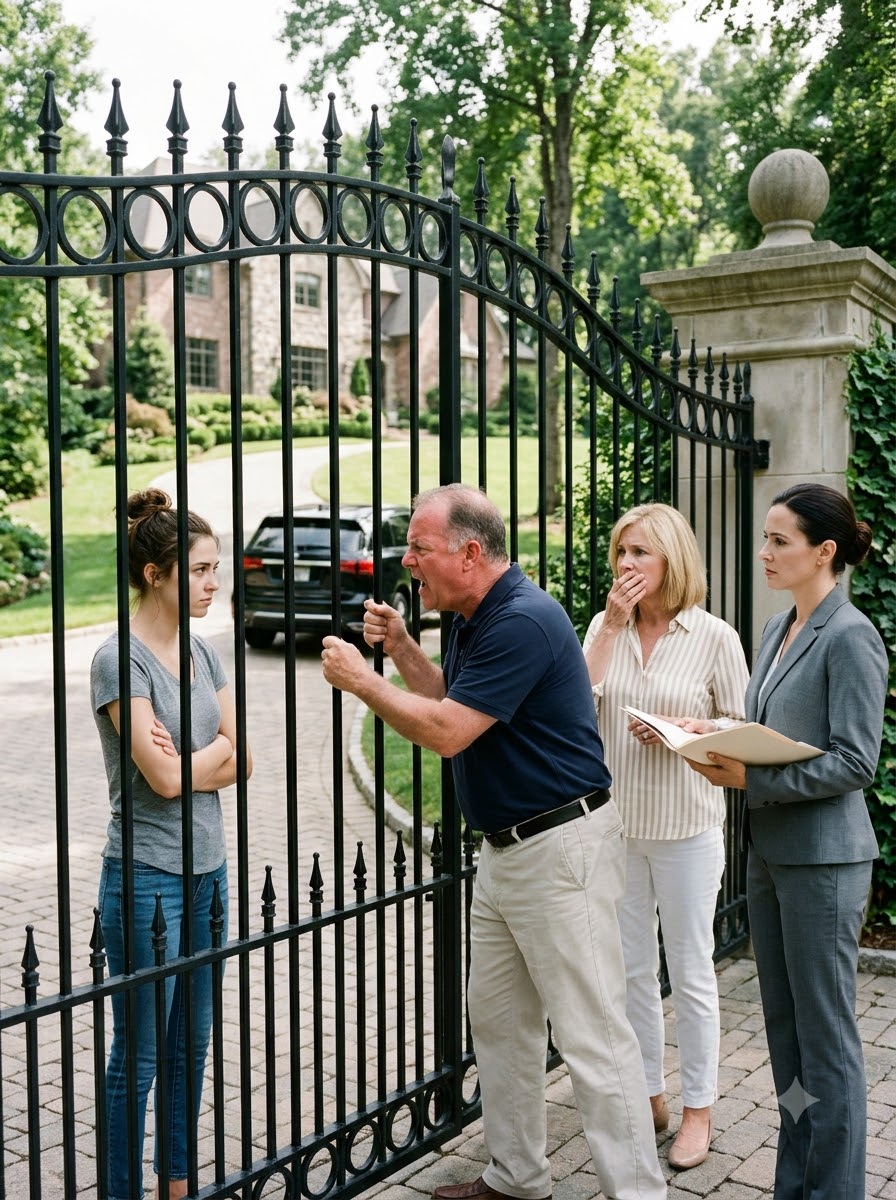
My mother looked at me one last time. The annoyance had drained out of her face, leaving something smaller and older. She opened her mouth, closed it, then turned and walked back to the SUV. My father stayed a moment longer, his hand resting on the cold iron. Then he followed her. The engine started. The vehicle reversed onto the county road and disappeared behind the line of cedars.
The guard lowered his radio. Evelyn waited until the sound of the tires faded before she spoke again. “They’ll try again. Probably through a relative or a letter that pretends to be an apology. You don’t have to answer any of it.”
“I know,” I said. The adrenaline that had kept my hands steady was starting to ebb, leaving a fine tremor in my fingers. “Can we go inside? I want to read the letter she left.”
We walked up the driveway together. The house was larger than I had expected from the photographs in the trust documents—two stories of pale stone with deep porches and windows that caught the late-afternoon light. Inside, Naomi had already started a pot of coffee. She looked up when we entered, read whatever was on my face, and simply set an extra mug on the counter without asking questions.
I carried the envelope to the kitchen table. My grandmother’s handwriting was smaller than I remembered, the lines careful. The letter was only one page. She wrote that she had watched the way my parents managed money and decisions for years, that she had tried speaking to my mother and been told to mind her own affairs, and that she had chosen the trust structure so the assets could not be redirected. She had set the vesting age at twenty-eight because she wanted me to have time to build something of my own first. At the bottom she had added a single line: *You do not owe them the version of yourself that keeps them comfortable.*
I read it twice. Then I folded it and slid it back into the envelope. Naomi pushed the coffee toward me. Evelyn sat across the table and opened her laptop to begin the final transfer checklist—new deed, updated beneficiary forms, removal of the temporary order. Outside, the light was fading across the fields. The iron gate remained closed. For the first time in months, the quiet in the house felt like it belonged to me.
