


PART 1
My name is Anna Bennett Moretti, and the moment Vincent Moretti underestimated me became the moment he set his own downfall in motion.
The alarm continued shrieking as Vincent turned in my direction.
For one brief second, I believed he was reaching for my hand.
But then Sophia Carter seized his arm.
“Vincent, I’m scared.”
Sophia was the woman Vincent had loved before me. She had never been part of our plans for this private vacation.
When I spotted her standing beside our jet that morning, I immediately questioned Vincent about her presence.
“She needs some time away,” he’d said.
When I demanded to know why he hadn’t spoken to me beforehand, his response was even more dismissive.
“Don’t turn this into an argument.”
Now arguing was no longer an option.
The aircraft shook with terrifying force. Sophia stumbled against the cabin divider, striking her temple. Blood appeared on her fingers as she touched the injury. Her legs gave way, and Vincent caught her before she fell.
Meanwhile, I remained strapped into my seat, protecting our unborn baby with both hands.
The flight attendant had instructed everyone to brace for an emergency landing. Something was wrong with the engine, and violent vibrations traveled through the floor beneath us.
Vincent glanced at Sophia, then turned his eyes toward me.
I watched the decision form on his face.
“What about me?” I asked.
“I’m taking Sophia out first.”
I was speechless for a moment.
“I’m your wife.”
“I know.”
“I’m carrying your baby.”
“I know that, Anna.”
“Then why are you leaving me here?”
He extended his hand toward mine.

His touch was warm, painfully familiar.
“Because I can get Sophia out quickly and come back for you.”
There was absolute confidence in his voice.
He spoke like someone who had never imagined that even a short delay could destroy a promise.
“What if there isn’t time?”
“There will be,” he said. “I promise.”
I desperately wanted his words to be true.
I nearly pleaded with him not to leave.
But I was his wife, carrying his child. I should never have needed to beg him to choose us.
Then the aircraft suddenly plunged.
The landing impact was so violent that the air vanished from my lungs. The wheels shrieked against the emergency runway, and the acrid odor of burning metal filled the cabin.
Vincent guided Sophia toward the open aircraft door.
I fought to release my seat belt, but the buckle had twisted against my coat.
A sharp pain tore through my shoulder.
When I raised my head, Vincent was looking back.
“Anna! Stay there. I’m coming back!”
Then he vanished through the exit with Sophia.
I stared at the doorway he had left empty.
The same man who had assured me that our baby would always be his priority had just abandoned us to escort another woman to safety.
I tugged frantically at the buckle.
It refused to move.
Beyond the aircraft, people were shouting instructions and rushing around. Inside, the atmosphere grew increasingly suffocating.
Finally, the buckle released with a click.
I pushed myself upright, only to feel a violent cramp tighten across my abdomen.
I grabbed the wall for support.
From somewhere outside, Vincent shouted my name.
For one awful instant, I wanted to move toward his voice.
Perhaps he truly intended to return.
Perhaps his promise still meant something.
But another wave of pain struck, reminding me of the little life moving inside my body.
I could not afford to wait while Vincent made another decision.
I stepped toward the front of the cabin.
That was when a mechanic I hardly knew caught my elbow.
“Not that way,” Daniel Reyes said.
Smoke was seeping from an access panel nearby.
He gestured toward a service hatch I had never noticed.
“There’s another exit.”
Another violent tremor ran through the aircraft as Daniel tightened his hold on my arm. His voice remained steady, but the urgency beneath his composure was unmistakable.
“Stay close to me, Mrs. Moretti, because the service hatch opens onto the opposite side of the fuselage, away from the emergency crews.”
I nodded, unable to gather enough breath to respond.
The cramping in my abdomen had settled into a heavy pressure, but my fear made every other sensation painfully distinct. I could hear a faint crackling noise behind the wall and the irregular sound of my own breathing.
Daniel moved ahead, crouching beside a narrow hatch concealed behind the galley partition. He gripped a red lever and pulled it downward.
The hatch remained shut.
He tried again.
“Is it stuck?”
“It’s pressurized against the frame.”
His carefully controlled answer told me he was trying to keep me calm.
I supported my stomach with one hand and leaned against the wall while Daniel pressed his shoulder against the hatch.
My thoughts returned to Vincent.
I pictured him outside, carrying Sophia toward the waiting paramedics, perhaps handing her over before immediately turning back toward the jet.
Maybe he was already on his way.
Maybe he had truly intended to keep his word.
But something fundamental had shifted inside me.
It was not hatred.
Not yet anger, either.
It was the devastating realization that when our marriage faced its most important test, Vincent’s first instinct had not been to protect me.
Suddenly, the hatch flew outward.
Cold air swept through the opening.
Daniel immediately turned and extended both hands.
“There’s a drop of about three feet.”
“I can do it.”
“No.”
The firmness of his response caught me off guard.
Then his expression softened.
“You’re seven months pregnant, and you nearly fell thirty seconds ago, so just this once, allow somebody to help you.”
On another day, I might have laughed.
Instead, I accepted his hands.
Daniel climbed down ahead of me, then carefully helped me descend until my feet reached the damp grass beside the runway.
Rain was beginning to fall.
Across the open field, red and white emergency lights flickered through the mist.
The aircraft’s main exit was somewhere on the opposite side.
Voices carried through the rain.
Then one voice rose above the others.
“Anna!”
My entire body reacted.
Daniel turned toward the shouting.
“He’s coming.”
I looked around.
Vincent appeared from behind the aircraft’s nose, running toward us. His jacket was missing, and dirt marked his once-pristine white shirt.
His expression was unlike anything I had ever witnessed.
Terror.
Not the restrained concern of a billionaire accustomed to fixing every problem with influence, wealth, or meticulous arrangements.
Genuine terror.
He reached us and stopped abruptly, sending water splashing around his shoes.
“Anna.”
He stared as though he had been preparing himself for a horrifying discovery.
Then he stretched out his arms.
I retreated a step.
I had not consciously decided to move.
My body simply responded before I could think.
Vincent noticed.
Daniel noticed too.
For a moment, silence surrounded us.
“I came back,” Vincent said.
He was struggling to catch his breath.
I glanced toward the damaged aircraft.
“How long?”
“What?”
“How long after you carried Sophia out did you come back?”
“Anna, this isn’t the time.”
“How long?”
His expression tightened.
“Maybe two minutes.”
Daniel remained quiet.
I turned toward him.
He avoided my eyes.
That small reaction told me everything.
“Daniel?”
Vincent immediately looked at him.
Daniel paused before answering.
“Closer to six.”
Vincent clenched his jaw.
“You weren’t outside.”
“I was checking the rear section when I found Mrs. Moretti.”
“I was getting Sophia to the ambulance.”
“For six minutes?”
Vincent advanced toward him.
I stepped between them.
The movement triggered another painful contraction low in my abdomen.
This one was worse.
I drew in a sharp breath.
Vincent’s anger disappeared immediately.
“What is it?”
“I don’t know.”
He reached out again.
This time, I let him support me.
Only because I was frightened.
Only because our baby’s safety mattered more than the damage spreading through our marriage.
Two paramedics rushed toward us.
Minutes later, I was stretched out inside an ambulance while one medical worker fastened a blood-pressure cuff around my arm and another placed monitoring equipment beneath my coat.
Vincent climbed inside after me.
I looked past his shoulder.
“Where’s Sophia?”
His expression shifted.
“She’s in the other ambulance.”
“Is she badly hurt?”
“They think she has a concussion.”
The paramedic beside me adjusted a monitor.
“Mrs. Moretti, I need you to focus on me.”
I turned toward her.
“Are you having regular contractions?”
“No.”
“Any bleeding?”
“No.”
“Has the baby been moving?”
“Yes.”
As though responding to the question, my son moved beneath my ribs.
Relief nearly overwhelmed me.
I pressed my palm against the spot.
Vincent noticed.
Something changed in his face.
For the first time since he had escorted Sophia toward the exit, I recognized the husband I had married.
He reached toward my hand.
I withdrew it.
His expression closed.
The doctors insisted I remain in the hospital overnight.
Thankfully, our baby was unharmed.
I had sustained a shoulder strain, bruises along my hip, and what the obstetrician described as uterine irritability resulting from the impact and stress.
The medical terminology sounded strangely detached from what I had experienced.
Vincent stayed beside my hospital bed until almost midnight.
He attempted to explain himself three separate times.
First, he insisted Sophia had been bleeding badly and could barely stand.
Next, he explained that he believed I would remain safely secured in my seat until he returned.
On his third attempt, he finally abandoned his excuses.
“I made the wrong choice.”
I turned toward the darkened window.
Rainwater traced pale silver streaks across the glass.
“You made your choice.”
“There’s a difference.”
“Is there?”
“Yes.”
I finally faced him.
Exhaustion had reddened his eyes.
Vincent Moretti had never been comfortable asking anyone for forgiveness.
He was a negotiator.
A persuader.
A man who rearranged circumstances until they produced the results he desired.
But now he sat helplessly beside my bed, with nothing left to offer in exchange for absolution.
“I thought I could save both of you,” he said quietly.
“You weren’t choosing between saving two people.”
He frowned.
“You were choosing who you went to first.”
His eyes dropped.
Neither of us could deny that truth.
The following morning, Sophia came to see me.
A small dressing covered the injury on her temple.
She appeared pale and uncomfortable, somehow younger than the sophisticated woman I had seen at the airport.
Vincent was downstairs speaking with insurance investigators.
Daniel had already departed after submitting his statement.
Sophia stopped at my doorway.
“Can I come in?”
My first instinct was to refuse.
Instead, I nodded.
She approached slowly.
“I’m sorry.”
“For what?”
“For being there.”
I had not expected that answer.
I examined her expression.
“Vincent said you needed time away.”
Sophia glanced into the corridor before looking back at me.
“That isn’t why I came.”
A cold sensation spread through my chest.
“Why did you come?”
She lowered herself into the chair where Vincent had spent the previous night.
For several moments, she appeared to be searching for the courage to speak.
“Vincent asked me.”
I stared at her.
“He told me you asked him.”
“No.”
“When?”
“Three days before the trip.”
The room suddenly felt unnaturally quiet.
“Why?”
Sophia interlocked her fingers.
“He said there was something he needed to talk to both of us about.”
“What?”
“He never told me.”
I remained silent, waiting.
She lowered her eyes.
“There’s something else.”
Naturally.
There always seemed to be another complication whenever Sophia and Vincent were involved.
“He asked me not to tell you he invited me.”
An almost ridiculous calm settled over me.
Perhaps there was a point beyond shock where the mind could no longer produce surprise.
“Why would he do that?”
“I don’t know.”
“You expect me to believe that?”
“No.”
She met my gaze.
“But it’s true.”
Sophia had left by the time Vincent returned twenty minutes later.
I kept her revelations to myself.
For now.
Instead, I watched Vincent place a cup of tea on my bedside table, prepared exactly as he had made it throughout our marriage.
Two sugars.
No lemon.
He remembered every tiny preference.
How I liked my tea.
Which flowers I loved.
My dislike of hotel rooms connected by interior doors.
Even my habit of removing the crust from toasted bread.
Yet somehow, he had neglected to tell me that he had personally invited his former girlfriend on our private holiday.
“We can go home this afternoon,” he said.
I studied his face.
“Can we?”
He misunderstood my meaning.
“I spoke with the doctor, and she said—”
“I wasn’t talking about the hospital.”
Vincent fell quiet.
I rested a hand against my abdomen.
Our son moved gently.
“Why was Sophia on the plane?”
“I told you.”
“No.”
I refused to look away.
“You told me she needed time away.”
His expression altered almost imperceptibly.
But six years together had taught me to recognize those subtle changes.
I knew when Vincent was calculating his response.
I knew when he was determining which parts of the truth to reveal.
For the first time, I realized how frequently I had confused that calculation with calmness.
“Anna.”
“Did you invite her?”
He said nothing.
The silence answered my question.
“Yes.”
I released a slow breath.
“Why?”
He crossed toward the window.
“That’s complicated.”
“So simplify it.”
“I was going to.”
“When?”
“During the trip.”
“Tell me now.”
Vincent dragged a hand over his face.
“There was a business matter involving her father’s foundation.”
I nearly smiled.
Not because I found anything amusing.
Because his explanation was such a disappointment.
“Sophia said you wanted to talk to both of us.”
His hand froze.
He turned abruptly.
For the first time, he appeared genuinely shocked.
“She came here?”
“Yes.”
“What else did she tell you?”
And there it was.
No denial.
No bewilderment.
Only anxiety about how much information I possessed.
I pushed myself higher against the pillows.
“My doctor said I need rest.”
“Anna—”
“I’m going to my mother’s house.”
He stared in disbelief.
“For how long?”
“I don’t know.”
“You’re seven months pregnant.”
“I’m aware.”
“You should be home.”
“I will be.”
“Our home.”
I studied him for several seconds.
When I answered, my voice was quiet.
“That depends on what you’re hiding.”
Vincent had nothing to say.
My mother lived in the stone house where my brother and I had spent our childhood, approximately forty minutes outside the city.
When I reached her home that evening, she did not demand an explanation.
She opened the door, saw my expression, and wrapped her arms around me.
That was when I finally cried.
There were no dramatic screams.
I stood in the same kitchen where I had completed school assignments at twelve and planned my wedding at twenty-eight, sobbing against my mother’s shoulder until my tears were exhausted.
Vincent waited three days before calling again.
I ignored his first two calls.
On the third attempt, I answered.
“Anna.”
The relief in his voice was obvious.
“What is it?”
“I need to see you.”
“I’m not ready.”
“It’s about Sophia.”
I closed my eyes.
“Then I’m definitely not ready.”
“No.”
Something shifted in his voice.
“Anna, please listen.”
His tone made me sit down.
“What?”
“There was a reason I invited her.”
“I know.”
“No, you don’t.”
I waited for him to continue.
Vincent took a breath.
Then he spoke the words that would overturn everything I thought I understood about our marriage.
“Two weeks before the trip, Sophia brought me a letter written by my father before he died.”
I remained silent.
Lorenzo Moretti, Vincent’s father, had died unexpectedly eighteen months earlier.
He had been a formidable businessman, both brilliant and difficult, who had created the foundations of the Moretti fortune before Vincent expanded it.
“What did the letter say?”
Vincent hesitated.
“It said there was something he had kept from me for more than thirty years.”
“About what?”
“About Sophia’s family.”
My grip tightened around the phone.
His next words were barely audible.
“And about mine.”
Later that afternoon, a courier appeared at my mother’s house with a sealed envelope.
There was no business logo.
No return address.
Inside, I discovered a photocopy of Lorenzo Moretti’s letter.
I read it twice.
Then once more.
Much of the document described an old business partnership between Lorenzo and Sophia’s father, Henry Carter.
But its final paragraph left my hands trembling.
Lorenzo had written that if Vincent ever discovered the truth, he needed to understand that Sophia bore no responsibility for events that occurred before either of them was born.
Beneath those words, one sentence had been underlined.
Anna must never be drawn into this until the Bennett records have been located.
Bennett was my maiden name.
Until that afternoon, I had never imagined that Vincent’s father had any connection to my family.
I kept rereading the letter until the words began to blur together.
Across the kitchen, my mother watched me with an expression that revealed something before she said a word.
She recognized the name.
“Mom?”
She slowly sat in the chair opposite me.
“Where did you get that?”
“A courier delivered it.”
Her gaze returned to the document.
“Who sent it?”
“I assumed Vincent.”
“That isn’t what I asked.”
A shiver moved through me.
“You know what this is about.”
For a moment, she said nothing.
Outside, autumn wind stirred the trees in the garden. Upstairs, the old heating pipes clicked as warmth began circulating through the house.
Everything around us remained ordinary.
That was the strangest part.
My world was beginning to unravel while the familiar sounds of home continued unchanged.
“Your father once worked with Lorenzo Moretti,” she finally said.
I stared at her.
“My father was an accountant.”
“He was many things.”
“Why have I never heard this?”
“Because after he died, I believed it was finished.”
My father, Thomas Bennett, had died suddenly when I was nineteen.
A heart condition.
No warning.
One morning, he had been joking about my university applications. Three days later, I stood beside my mother in a black dress while rain fell over his grave.
“What did he do for Lorenzo?”
My mother clasped her hands.
“He reviewed acquisitions.”
“For Moretti Holdings?”
“Before it was called Moretti Holdings.”
I tried to piece together the history.
Lorenzo had started with commercial real estate before moving into manufacturing, logistics, and investments.
By the time Vincent assumed control, the Moretti name was attached to properties across three continents.
“My father never mentioned any of that.”
“He was proud of his work.”
“Then why hide it?”
“Because he stopped being proud.”
My mother stood and approached the cupboard above the refrigerator.
From it, she retrieved an old biscuit tin I remembered seeing throughout childhood.
Inside were photographs, birthday cards, and letters bound together with string.
Beneath them, she found a brass key.
“I promised your father I would never use this unless someone from the Moretti family came asking questions.”
I stared at the small object in her palm.
“What does it open?”
“A deposit box.”
“Where?”
“At a bank in Boston.”
A disbelieving laugh escaped me.
“You’ve had this for seventeen years?”
“Yes.”
“And you never wondered what was inside?”
“Every day.”
Her honesty left me speechless.
“Why didn’t you open it?”
“Because your father asked me not to.”
There was no theatrical emotion in her explanation.
Just unwavering loyalty to a man who had been gone for seventeen years.
I looked down at Lorenzo’s letter.
“Did Dad know Henry Carter?”
My mother’s expression changed.
“Yes.”
Vincent appeared at the house that evening.
Nobody had invited him.
Shortly after seven, my mother discovered him standing beneath the porch light.
Despite the cold, he wore no overcoat.
Throughout our six-year marriage, I had rarely seen Vincent unsure whether he would be welcomed somewhere.
Now he remained outside until I instructed my mother to let him enter.
He stepped into the living room and stopped when he noticed the brass key beside Lorenzo’s letter.
“Your mother told you.”
“Some of it.”
Vincent turned toward her.
Mrs. Bennett held his gaze.
“You should have told my daughter before putting Sophia Carter on that aircraft.”
He bowed his head.
“You’re right.”
His immediate agreement surprised both of us.
Vincent almost never conceded an argument so readily.
My mother left us alone.
I stayed seated on the sofa while Vincent stood beside the fireplace.
“Did you send the letter?”
“Yes.”
“Why not give it to me yourself?”
“Because I thought you might refuse to see me.”
“I might have.”
“I know.”
He seemed different.
Not defeated.
Vincent had never learned how to accept defeat.
But perhaps humbled.
It was unfamiliar territory for him.
“What are the Bennett records?”
“I don’t know.”
“Stop.”
“I’m not lying.”
He sat across from me.
“Sophia found Lorenzo’s letter among documents Henry Carter left in a private archive.”
“Her father is still alive.”
“Yes, but he had a stroke last year, and Sophia has been managing his affairs.”
I remembered hearing about Henry’s illness.
“What was she searching for?”
“She was selling one of his old properties.”
“And found a secret letter from your father?”
“Along with correspondence between Lorenzo, Henry, and your father.”
I froze.
“What correspondence?”
Vincent removed a slim folder from inside his coat and passed it to me.
The pages contained photocopied letters spanning almost thirty years.
The earliest had been written before Vincent was born.
Most concerned a business named Northbridge Development.
I had never encountered the name.
“Northbridge was Lorenzo and Henry’s first major partnership,” Vincent explained.
“They developed industrial land, sold it at a huge profit, and used the money to build their separate companies.”
“And my father?”
“He became their financial controller.”
I examined the documents.
Several carried Thomas Bennett’s signature.
My father’s handwriting.
Emotion tightened my throat.
“What happened?”
“Northbridge collapsed after an investigation.”
“For what?”
“False valuations.”
“Fraud?”
Vincent nodded.
“No one was prosecuted.”
“Why?”
“The records disappeared.”
My eyes moved toward the brass key.
Vincent followed my gaze.
“You think they’re in the deposit box.”
“I think my father did.”
We traveled to Boston the following morning.
I refused to board Vincent’s private jet.
For once, he did not argue.
That small concession mattered more than I wanted to admit.
We flew commercially, sitting among passengers who had no idea that the man beside the window controlled a multibillion-dollar business empire, or that his pregnant wife was questioning whether she wanted to remain married to him.
Most of the journey passed in silence.
Then, somewhere above New York, Vincent spoke.
“I was afraid.”
I turned toward him.
He continued staring through the window.
“On the jet?”
“No.”
He paused.
“When Sophia showed me the letter.”
I waited.
“I thought my father had done something criminal.”
“Maybe he did.”
“Yes.”
He finally faced me.
“But that wasn’t what frightened me most.”
“What was?”
“That your father might have known.”
The words hurt more than I expected.
“Why?”
“Because you worshipped him.”
“I loved him.”
“I know.”
“Those are different things.”
Vincent nodded.
“You’re right.”
Months earlier, his repeated admissions would have astonished me.
Now I understood that his confidence had become something he could no longer afford.
At the Boston bank, an elderly manager accompanied us downstairs.
The deposit box belonged to my father, with my mother listed as his successor and me as a secondary beneficiary.
After signing three forms, I was allowed inside.
The manager left us alone.
My mother’s brass key turned without resistance.
Inside lay a brown-paper-wrapped bundle.
There were accounting ledgers.
Legal contracts.
A small cassette tape.
And a handwritten letter bearing my name.
Anna.
I sat down immediately.
Vincent remained beside the door.
“You should read it alone.”
For the first time since the accident, he offered me privacy without waiting for me to demand it.
He stepped outside.
I unfolded the letter.
My father had addressed me with the familiar tenderness I remembered, explaining that if I was reading his words, something he had hoped would remain buried had resurfaced.
Before anything else, he wanted me to understand that children did not inherit the guilt of their parents.
Whatever mistakes earlier generations had made, those mistakes were not mine to carry.
Nor were they the responsibility of the other families’ children.
Tears blurred the page.
I continued.
Lorenzo Moretti and Henry Carter had once been my father’s closest friends.
Together, the three men had created Northbridge.
Together, they had also made compromises.
Some were reckless.
Others were dishonest.
When the consequences began approaching, Henry wanted the evidence destroyed.
Lorenzo wanted to acknowledge the wrongdoing and repay what was owed.
My father chose another course.
He preserved every document.
Not to seek revenge.
But because he believed someone might someday need proof of what had actually happened.
I glanced toward the closed door.
Four more pages remained.
My father described exaggerated property valuations, questionable loans, and financial arrangements that could have ruined all three men if the truth had emerged.
Then the account shifted.
It described a betrayal.
Henry Carter had secretly transferred several assets before Northbridge failed.
Lorenzo discovered the transactions too late.
He believed Henry had stolen from both of his partners.
My father possessed the evidence.
But before they could confront Henry, Sophia’s mother became seriously ill.
Henry pleaded with them not to expose him.
Lorenzo agreed to remain silent under one condition.
Henry would repay everything gradually.
My father retained custody of the records.
Then I reached the final paragraph.
My father revealed that Henry’s repayments had not come from his own fortune.
Instead, he had used an account established in Sophia’s name when she was a child.
I stared at the page.
Her trust fund.
Her inheritance.
Sophia had apparently spent her life believing the money had vanished because of unsuccessful investments.
In reality, her father had used it to repay the assets he had stolen.
Now Lorenzo’s insistence that Sophia was innocent finally made sense.
I opened the door.
Vincent was waiting outside.
I handed him the letter.
He read every page without speaking.
When he finished, his face had lost its color.
“Sophia doesn’t know this.”
“I assume not.”
“She thinks my father stole from hers.”
“Why?”
“Because Henry told her that.”
Suddenly, the pieces connected.
Sophia had approached Vincent because she believed Lorenzo Moretti was responsible for destroying her family’s fortune.
Vincent had invited her on our trip because he intended to reveal whatever truth he discovered to both of us.
His secrecy had still been arrogant.
Still hurtful.
Still wrong.
But it was not the romantic betrayal I had imagined.
“Why didn’t you tell me before the trip?”
Vincent responded without hesitation.
“Because I wanted certainty first.”
“That’s what you always want.”
“Yes.”
“And when certainty isn’t available, you decide for everyone else.”
He offered no denial.
I rested my hand against my stomach.
Our son moved beneath my coat.
Vincent noticed, and his expression softened.
“Anna, I need you to know there was never anything between Sophia and me.”
“I believe you.”
Relief briefly appeared in his eyes.
“But that isn’t enough.”
His relief vanished.
“I know.”
We examined the remaining contents of the deposit box.
The next item was the cassette tape.
The bank manager located an old player in storage.
When the recording began, static crackled through the speakers.
Then I heard my father’s voice.
Seventeen years had passed since I last heard him speak.
For several seconds, breathing became difficult.
Thomas Bennett had made the recording shortly before his death.
He repeated much of what he had written in the letter.
Then his tone changed.
“There is one final matter.”
Vincent and I exchanged a glance.
“If Lorenzo’s son ever becomes involved with my family, someone must tell him what his father asked me to do.”
My fingers turned cold.
Vincent moved closer to the recorder.
My father continued.
“Lorenzo was afraid Henry would someday use the past to manipulate Vincent.”
Static hissed during a brief pause.
“So he transferred a portion of his original Northbridge interest into a protected trust.”
Vincent frowned.
“I never knew about a trust.”
The recording continued.
“The beneficiary is not Vincent.”
I stared at the machine.
“The beneficiary is my daughter, Anna Bennett.”
The room seemed to shift around me.
Vincent slowly turned his head.
But my father’s message was not finished.
“The trust was designed to activate only if Vincent Moretti married Anna.”
A long burst of static followed.
Then came his final sentence.
“And if that marriage ends because Vincent knowingly places the Carter family’s interests above Anna’s, control of the trust passes entirely to her.”
Neither of us moved.
Beyond the thick vault walls, a telephone began ringing.
It sounded as though it were coming from another world.
I turned toward Vincent.
Only days earlier, he had carried Sophia Carter to safety while leaving his pregnant wife inside a damaged aircraft.
Now we had uncovered evidence that his father had created a legal condition decades before that terrifying morning.
Vincent finally whispered the question neither of us could escape.
“How could my father possibly have known?”
PART 2
The trust had not suddenly turned me into a wealthy woman.
That was the first thing our lawyer explained.
By ordinary standards, I already lived an extraordinarily privileged life because I was married to Vincent. But the Bennett-Moretti trust was not some hidden fortune containing billions of dollars waiting to be discovered.
Its contents were considerably more complicated.
Voting shares.
Twelve percent of the original holding company responsible for several of the Moretti family’s oldest properties.
Those shares had remained inactive within a legal arrangement established before Vincent took control of the business.
Activating them would not give me ownership of Moretti Holdings.
But it would provide me with a meaningful voice in its decisions.
That realization unsettled Vincent far more than a financial loss ever could.
Not because he thought I intended to turn the shares against him.
He simply could not understand why his father had created such an arrangement.
Two days later, we returned to the city.
But I did not accompany Vincent to our penthouse.
I went back to my mother’s house.
He returned to our home alone.
For the first time in six years, our daily lives no longer revolved around each other.
Strangely, however, we began communicating more honestly than we had in years.
Vincent called every evening.
He did not pressure me to return.
He did not question my plans for the trust.
Instead, he asked how I was feeling.
Some nights, I picked up.
Other nights, I let the calls go unanswered.
When we spoke, our conversations remained cautious.
We discussed our unborn son.
My medical appointments.
The nursery.
Vincent’s work.
Eventually, we began talking about our marriage.
One evening, he admitted something I had never heard him acknowledge before.
“I always thought taking care of you meant making sure nothing could reach you.”
I was sitting beside my mother’s fireplace, a blanket covering my legs.
“That sounds romantic until you realize it also means deciding what I’m allowed to know.”
“I know that now.”
“Do you?”
“Yes.”
He did not sound defensive.
“I protected you so thoroughly that I stopped treating you like an equal.”
His words hurt because I recognized their truth.
“And Sophia?”
“She called me.”
My fingers tightened around the telephone.
“What did she want?”
“The truth.”
“Are you going to tell her?”
“I think we have to.”
I glanced at my father’s letter lying on the coffee table.
“She deserves to know.”
“I agree.”
The following week, we arranged to meet Sophia.
We did not gather at Moretti headquarters.
Nor did we choose an imposing marble boardroom where Vincent’s position would automatically give him authority.
Instead, we reserved a small private room inside a library where Sophia’s mother had once volunteered.

The location had been my idea.
Vincent agreed without hesitation.
Sophia arrived holding the same folder she had originally shown him.
Her first glance went toward me rather than Vincent.
“How are you?”
“Better.”
“And the baby?”
“Healthy.”
Visible relief softened her expression.
“I’m glad.”
We sat together.
Vincent placed my father’s letter on the table.
Sophia began reading.
Initially, she appeared confused.
Then she reached the section describing the money her father had taken from her trust.
All the color drained from her face.
“No.”
Vincent remained silent.
Sophia looked directly at me.
“This isn’t true.”
“I wish I could tell you that.”
“My father said Lorenzo took everything.”
“My father kept records.”
She shook her head.
“He wouldn’t.”
There was such raw grief in her voice that the atmosphere changed.
Until that moment, I had found it easy to define Sophia through her connection to Vincent.
His first love.
The unwanted guest.
The woman he had carried out of the aircraft.
But grief does not fit neatly into those labels.
She was a daughter discovering that a story she had believed throughout her childhood might have been fabricated.
I was beginning to understand that feeling myself.
“There are bank documents,” I said gently.
Sophia shut her eyes.
“My mother spent years believing we lost that money because of Lorenzo.”
Vincent leaned toward her.
“I’m sorry.”
She opened her eyes.
“You knew?”
“Not until after the crash.”
“You suspected.”
“I suspected our fathers had hidden something.”
“And that’s why you invited me.”
“Yes.”
“Without telling Anna.”
“Yes.”
Sophia looked from him to me.
“That was a terrible idea.”
Despite everything, I laughed.
Sophia laughed too.
Vincent remained silent.
Perhaps he understood that he had earned the criticism.
Then Sophia said something unexpected.
“He wasn’t trying to restart anything with me.”
I turned toward her.
“I know.”
“No.”
She shook her head.
“I need to say it because I should have said it years ago.”
Vincent frowned.
“Sophia.”
She continued without acknowledging his interruption.
“When Vincent and I were twenty-two, we thought we were going to get married.”
That was hardly a secret.
Everyone knew about their relationship.
The society pages had practically organized their wedding before either of them had proposed.
“But the relationship had already ended long before either of us admitted it.”
A faint smile touched her lips.
“We were good at remembering who we had been together and terrible at noticing who we had become.”
Vincent turned his attention toward the window.
Sophia continued.
“When he met you, Anna, I hated you for approximately six months.”
“I suspected longer.”
“Eight.”
I smiled in spite of myself.
Her expression became serious again.
“But after that, I understood.”
“Understood what?”
“That he listened when you spoke.”
Something about that simple observation unsettled me.
Sophia looked at Vincent.
“With me, he was always preparing his answer.”
Then she turned back to me.
“With you, he actually listened.”
I thought about the marriage we had shared.
Had Vincent truly listened?
Perhaps in the beginning.
Before his business responsibilities multiplied.
Before Lorenzo’s death.
Before Vincent began confusing attentiveness with control.
“What happened to us?” I asked quietly.
Vincent answered.
“I stopped listening.”
Sophia collected the papers.
“There’s something else you both should see.”
She opened her folder and withdrew an envelope I had not noticed.
“This was with Lorenzo’s letter.”
She passed it to Vincent.
Four handwritten words appeared across the front.
For Vincent, when ready.
Vincent opened the envelope.
A single sheet of paper lay inside, covered in Lorenzo’s handwriting.
He read it without speaking.
Then he handed it to me.
The letter had nothing to do with financial assets.
It concerned marriage.
Lorenzo explained that for most of his life, he had believed love was demonstrated through protection.
He had made decisions for Vincent’s mother because he assumed he understood which dangers she should avoid.
Eventually, she had walked away.
Not because her love had disappeared.
But because she no longer recognized herself within the life Lorenzo had arranged for her.
My breath caught.
Vincent’s mother had died before I met him.
He almost never discussed the separation between his parents.
Lorenzo’s letter continued.
Vincent has inherited my greatest strength and my greatest weakness.
He believes responsibility gives him the right to decide alone.
If he ever loves a woman enough to fear losing her, that instinct will become dangerous.
I looked toward Vincent.
His gaze remained fixed on the floor.
Lorenzo had not foreseen an aviation emergency.
He had understood his own son.
The trust’s unusual condition had never been created specifically around Sophia.
Its actual legal provisions were broader than the description on my father’s recording.
They addressed repeated concealment of important information and the prioritization of obligations arising from the Carter dispute over a spouse’s welfare or legal interests.
The accident had simply exposed that longstanding pattern.
Vincent had not forfeited anything merely because he had helped Sophia escape.
The trust could become active because he had repeatedly concealed the Carter situation from me.
That difference was important.
It was not some impossible punishment designed by a father who could see the future.
It was the natural consequence of behavior Lorenzo recognized because he had once behaved the same way.
Sophia was the first to leave.
Before departing, she turned toward me.
“I’m sorry I held onto his arm.”
I knew exactly what she meant.
The aircraft.
Her frightened plea to Vincent.
“You were injured.”
“I was scared.”
“You don’t have to apologize for being scared.”
Her eyes filled with tears.
“Neither did you.”
After Sophia departed, Vincent and I remained seated in the library.
Late-afternoon sunlight spread across the wooden table.
“I’m going to resign as trustee of the family foundation,” he said.
“Why?”
“Because I don’t trust my judgment right now.”
“That sounds dramatic.”
“It isn’t.”
He looked directly at me.
“I made a decision that nearly cost me my marriage, and the worst part is that I still understand why I made it.”
That was the first time he had spoken about the accident with complete honesty.
He was not claiming that he had lost his senses.
He was not pretending he had briefly become someone unrecognizable.
He had acted according to his own instincts.
“That’s what frightens me too,” I said.
He nodded.
“I know.”
We departed separately.
During the next two months, an unexpected change began taking place.
Vincent started changing.
There were no grand performances.
No extravagant attempts to impress me.
He did not send expensive jewelry.
He did not stand outside my window.
He did not buy an enormous property and give it my name.
Instead, he began attending therapy.
He scaled back his working hours.
He stopped contacting my physician directly and waited until I chose to share information about my health.
Whenever we discussed our son, he asked what I preferred instead of presenting decisions he had already made.
The changes were small.
Almost painfully ordinary.
But I was beginning to realize that marriages rarely collapse because of one isolated catastrophe.
Even the aircraft emergency had not created our problems.
It had merely exposed the cracks that had existed for years.
Six weeks later, our son arrived.
We named him Thomas Lorenzo Moretti.
Thomas, after my father.
Lorenzo, because despite his own mistakes, Vincent’s father had tried to keep his son from repeating the patterns he regretted.
I permitted Vincent to be present during the delivery.
When the nurse placed our newborn in my arms, tears rolled down Vincent’s face.
He attempted to conceal them.
I pretended not to see.
Then I placed our son in his arms.
“Support his head.”
“I know.”
“You look terrified.”
“I am.”
I smiled.
Vincent gazed at the tiny baby.
“Hello, Thomas.”
The gentleness in his voice almost weakened my resolve.
But a tender moment could not instantly restore broken trust.
After being discharged, I returned to my mother’s house.
Vincent visited every afternoon.
He struggled with diapers.
He learned how to prepare bottles.
Once, he fell asleep in the rocking chair with Thomas resting against his chest.
I stood quietly in the doorway, watching them, until my mother came up beside me and touched my shoulder.
“You still love him,” she said.
“Yes.”
“That doesn’t mean you have to go back.”
“I know.”
“And not going back doesn’t mean you stopped loving him.”
I turned toward her.
She offered a sad smile.
“Sometimes adulthood is discovering that two opposite things can both be true.”
Three months later, I formally activated the trust.
I was not looking for a weapon to use against Vincent.
I simply wanted to understand the business my father had helped establish.
I began attending several board meetings as an observer.
Vincent made no attempt to interfere.
Then, while examining historical Northbridge property records one afternoon, I noticed an unusual entry.
A parcel acquired forty-one years earlier had never been sold.
It was registered beneath a subsidiary called Bracken Holdings.
I did not recognize the address.
But one of the attached documents immediately caught my attention.
My father had signed it.
Lorenzo’s signature appeared beside his.
The third signature did not belong to Henry Carter.
It belonged to Margaret Bennett.
My grandmother.
I stared at the document.
My grandmother had been a schoolteacher.
At least, that was the history I had always known.
I called my mother.
When I mentioned Bracken Holdings, she became silent.
“Mom?”
“You found it.”
My pulse quickened.
“Found what?”
“The reason your father made me promise never to open the deposit box.”
I lowered myself into a chair.
“What was my grandmother doing with Northbridge?”
My mother answered slowly.
“She wasn’t just involved with Northbridge.”
She paused.
“She was the person who gave Lorenzo Moretti the money to start it.”
My grandmother had died when I was eight years old.
My memories of Margaret Bennett were filled with gentle, familiar details.
The scent of lavender soap.
Cardigans decorated with pearl buttons.
Lemon candies stored in a small tin beside her favorite chair.
She had taught me chess, although she never deliberately allowed me to win.
She volunteered at the library and frequently complained that television news presenters spoke too quickly.
Nothing about her suggested she had provided the original funding for one of the country’s largest private business empires.
But the documents left no room for doubt.
Margaret had inherited considerable wealth from an aunt.
Instead of buying a larger property or investing in conventional assets, she had chosen to finance three ambitious young men.
Lorenzo Moretti.
Henry Carter.
And her own son.
Thomas Bennett.
My father.
My mother explained the history while we sat at the kitchen table.
“Your grandmother never wanted recognition.”
“Why?”
“Because she didn’t trust recognition.”
“That sounds like her.”
My mother smiled.
“She believed attention made people foolish.”
I examined the financial records.
“How much did she invest?”
“In today’s money?”
“Yes.”
“About four million dollars.”
I almost let the document slip from my hands.
“She had four million dollars?”
“Not for long.”
“What happened?”
“She invested almost all of it.”
“In Northbridge?”
My mother nodded.
“Your father begged her not to.”
“Why?”
“Because he thought Lorenzo and Henry were too young.”
“They were.”
“They were also talented.”
Margaret had apparently recognized potential in the three men.
But she had arranged her investment in an unusual way.
She did not demand annual dividend payments.
Instead, she secured an ownership stake through Bracken Holdings.
When Northbridge collapsed, everyone believed Margaret’s investment had become worthless.
However, before the collapse, Lorenzo had quietly transferred several valuable properties into Bracken.
He had not done so to steal them.
He wanted to preserve Margaret’s investment.
My father had assisted him.
“Why hide it?”
“Because Henry wanted the properties liquidated.”
“And Lorenzo?”
“He believed Margaret deserved them.”
I continued studying the documents.
“Then technically some of the Moretti fortune came from her.”
“More than some.”
My mother sighed.
“The first warehouses, the first industrial properties, the land that eventually became the Moretti logistics division, all of it grew from those assets.”
I leaned back in my chair.
The discovery did not fill me with triumph.
Instead, I felt strangely disoriented.
My marriage had unfolded beneath a history that neither Vincent nor I had understood.
Our families had been connected long before we ever met.
The following afternoon, I presented the documents to Vincent.
He read them in silence.
Then he laughed.
It was the first genuine laugh I had heard from him in a long time.
“What?”
He raised his head.
“My father used to say he owed everything to a woman who was smarter than all three of them.”
“Your father talked about my grandmother?”
“Never by name.”
He smiled faintly.
“He called her the librarian.”
“She wasn’t a librarian.”
“I know that now.”
We laughed together.
For a few seconds, we felt like Anna and Vincent again.
Then the silence reminded us that our problems had not vanished.
Vincent closed the folder.
“What do you want to do?”
The man I had married would once have told me exactly what needed to happen.
This question was different.
“I want to leave the company exactly as it is.”
He nodded.
“And Bracken?”
“I want to turn it into something useful.”
“What?”
“I don’t know yet.”
He waited patiently.
That was new as well.
Three years passed.
There was no dramatic transformation.
Life has a remarkable ability to become ordinary again, even after extraordinary upheaval.
Thomas learned to walk.
Then he learned to run.
Soon he was asking why about practically everything.
My mother insisted that his stubbornness came from Vincent.
Vincent claimed it was a Bennett family trait.
Sophia relocated to Seattle, where she became director of an arts foundation.
Her father died the following spring.
Before his death, Henry Carter dictated a letter admitting what he had done.
Sophia forwarded a copy to me.
She requested nothing in return.
Beneath the letter, she had written a single sentence.
I think all of us deserve lives larger than our parents’ secrets.
I kept those words.
Vincent and I never divorced.
But we did not rush back into marriage as though nothing had happened.
For nearly a year, we continued living separately.
Eventually, we started meeting for dinner once a week.
They were not elaborate romantic occasions.
There were no candles or exclusive private dining rooms.
We chose small restaurants where nobody cared about the Moretti family name.
And we talked.
Sometimes the conversations were awkward.
Sometimes they were painful.
But slowly, we began discovering each other again.
One evening, Vincent spoke while we sat across from each other over pasta.
“I don’t want our old marriage back.”
I looked up.
“That’s encouraging.”
He smiled.
“I mean it.”
“So do I.”
“Our old marriage looked better than it was.”
“Yes.”
“I think I loved being needed more than I loved being known.”
I thought about his admission for a long time.
“What do you love now?”
He considered the question.
“Being trusted.”
“That’s ambitious.”
“I know.”
“But possible.”
He held my gaze.
“I hope so.”
The following spring, Thomas and I moved back into our home.
Not because Vincent had convinced me.
Because I had decided I wanted to return.
We transformed the house.
Not only emotionally, but physically.
The enormous formal dining room became Thomas’s playroom.
Vincent complained once about toy trains scattered beneath a nineteenth-century painting.
Thomas paid no attention.
Neither did I.
Bracken Holdings was transformed into the Bennett Foundation for Emergency Family Support.
The idea had grown from my experience after the aircraft emergency.
During my overnight hospital stay, I had encountered a woman whose husband had suffered an industrial accident.
Throughout the night, she worried about parking charges, missing work, and finding someone to care for her children.
Our circumstances were separated primarily by wealth, not by the fear we were experiencing.
I had never forgotten her.
The foundation provided practical financial assistance to families dealing with sudden medical emergencies.
Transportation.
Temporary housing.
Childcare.
Compensation for lost wages.
Nothing glamorous.
But every service was necessary.
Daniel Reyes became one of our earliest advisors.
I located him six months after Thomas’s birth.
He had left aircraft maintenance and begun teaching safety systems at a technical college.
When I contacted him, he assumed I was calling to express my gratitude again.
Instead, I offered him a role helping develop grants for emergency preparedness.
“You know I’m not a charity executive,” he said.
“That’s why I’m asking.”
He initially accepted a part-time position.
Later, he joined full-time.
Daniel never treated me as a helpless woman whose life he had saved.
He treated me as someone who had survived the same frightening event he had.
I valued that distinction.
Vincent did too.
There was no jealousy between them.
No artificial rivalry.
Perhaps we had all grown enough to leave those things behind.
On the third anniversary of the accident, an invitation arrived.
Moretti Holdings was preparing to open a new aviation-safety research facility.
Vincent had financed the project discreetly.
The institute did not carry his name.
Nor did it carry mine alone.
It was named the Reyes-Bennett Safety Institute.
Daniel almost refused to attend the opening.
I threatened to send my mother after him.
He attended.
Sophia came as well.
For the first time since everything had happened, all four of us stood together.
Sophia embraced me.
Then she embraced Vincent.
There was no lingering romantic tension.
No unresolved love story.
Only shared history.
And I finally understood that history was all they had truly possessed.
During the ceremony, Vincent delivered a brief speech.
He did not recount the accident in detail.
Instead, he discussed how people make decisions under pressure.
“People like to imagine that character appears during a crisis,” he said.
“I have learned that crisis usually reveals habits we created long before it arrived.”
I watched him from the front row.
Thomas sat beside me, swinging his feet.
“The decisions we make every ordinary day determine what we do when there is no time to think.”
Vincent glanced in my direction.
He did not prolong the look.
He did not attempt to turn his speech into a public apology.
He simply continued.
“That is why safety is not merely a system.”
“It is a culture of preparation, accountability, and humility.”
When the applause finally ended, Thomas climbed onto my lap.
“Daddy talks too much.”
Daniel disguised his laughter with a cough.
Sophia made no effort to hide hers.
After the ceremony, guests began moving toward the reception.
That was when an unfamiliar man approached me.
He appeared to be around sixty.
Silver hair.
A quiet, understated suit.
He introduced himself as Dr. Elias Ward.
“I knew your father.”
By then, I had become accustomed to hearing those words.
“You worked with Northbridge?”
“No.”
His response surprised me.
“I was your father’s physician.”
My smile disappeared.
My father had died because of a heart condition.
Or at least, that was the explanation I had believed all my life.
Dr. Ward glanced toward Vincent before returning his attention to me.
“I’ve been trying to decide for three years whether I should contact you.”
My stomach tightened.
“Why three years?”
“Because that was when I saw your name in the news after the aircraft accident.”
“What does that have to do with my father?”
“Nothing directly.”
He lowered his voice.
“But it reminded me of a promise I made him.”
The noise of the reception seemed to fade around us.
“What promise?”
Dr. Ward reached inside his jacket and produced a small envelope.
“He asked me to give this to you if you ever became involved in reviewing the old Northbridge records.”
I stared at it.
“Why didn’t he leave it with my mother?”
“He didn’t want your mother carrying another secret.”
Another secret.
I was becoming exhausted by those words.
I accepted the envelope.
Inside lay a medical report.
Thomas Bennett’s name appeared at the top.
I began reading.
Then I stopped.
My father had not discovered his heart condition shortly before his death.
He had known about it for six years.
Six entire years.
My hands began to tremble.
“He knew?”
Dr. Ward nodded.
“He knew his condition could become fatal.”
“Why didn’t he tell us?”
“He wanted you to have a normal adolescence.”
A sudden surge of anger rose inside me.
“That wasn’t his decision.”
Dr. Ward answered gently.
“No.”
His agreement left me momentarily speechless.
“He believed he was protecting you.”
I almost laughed.
Of course.
The same mistake.
Another man.
Another generation.
“He left something else,” Dr. Ward said.
He gave me a second page.
It was not a medical document.
It was a handwritten statement.
My father had written it two weeks before his death.
Anna,
One day you may meet a man who loves you enough to want to protect you from everything.
Be careful.
Love becomes lonely when protection replaces trust.
Tears filled my eyes.
At the bottom, he had added another sentence.
I made that mistake with your mother and with you.
I hope you learn sooner than I did.
I looked across the reception room.
Vincent was kneeling beside Thomas, carefully tying our son’s loose shoelace.
For three years, I had believed the greatest lesson from the crash was something Vincent needed to learn.
Now I faced a more difficult realization.
The same pattern had existed inside my own family.
Men who loved their families deeply.
Men who concealed the truth.
Men who believed their affection justified making decisions for the people closest to them.
I had recognized Vincent’s flaw because it had hurt me directly.
But I had never identified that same flaw in the father I adored.
Dr. Ward gently touched my arm.
“There is one more thing.”
I turned back.
“What?”
“Your father didn’t create the Bennett-Moretti trust condition.”
I stared at him.
“But his recording—”
“He knew about it.”
“Yes.”
“Then who created it?”
Dr. Ward glanced toward the historical foundation documents displayed behind the reception area.
“Margaret Bennett.”
My grandmother.
The woman I remembered for lavender soap and lemon candies.
The woman who had quietly helped create a business empire.
I had believed I was finally finished discovering her secrets.
But I was wrong.
Dr. Ward offered an almost apologetic smile.
“Your grandmother wasn’t trying to protect you from Vincent.”
My heart began pounding.
“She was trying to protect both of you from becoming your fathers.”
PART 3
That evening, after Thomas had fallen asleep, Vincent and I sat together on the balcony outside our bedroom.
Thousands of lights illuminated the city below.
Three years earlier, I would have looked across that skyline and believed it symbolized something permanent.
Our home.
Our marriage.
The future we had planned.
Now I understood that permanence was not something anyone simply owned.
It was something people had to keep creating through their actions.
I handed Vincent the final letter my father had written.
He read it carefully.
When he finished, he leaned back in his chair.
“So your father did the same thing I did.”
“Not exactly.”
“No.”
He looked down at the page.
“But close enough.”
“He hid his illness because he thought knowing would hurt us.”
“And I hid the Carter situation because I thought knowing would hurt you.”
“Yes.”
Vincent released a long sigh.
“Our fathers were exhausting.”
I laughed.
“They would probably say the same thing about us.”
“Definitely you.”
I nudged his foot with mine.
He smiled.
Then his expression grew serious.
“Anna, do you ever think about what would have happened if Daniel hadn’t found you?”
“Yes.”
The answer came without hesitation.
For years, that question had filled me with terror.
But eventually, I had learned that fear could lose some of its power when I allowed myself to speak about it.
“Do you hate me for it?”
I looked directly at him.
“No.”
He seemed surprised.
“I hated what you did.”
He nodded.
“I hated that you made me feel secondary during the one moment when I most needed to know I wasn’t.”
His eyes dropped.
“But I don’t hate you.”
“I don’t deserve how generous you’ve been.”
“That isn’t what this is.”
He looked up again.
“Then what is it?”
“Choice.”
The word remained between us.
“I chose to leave after the crash.”
“Yes.”
“I chose to stay away.”
“Yes.”
“I chose to come back.”
Emotion tightened his expression.
“Yes.”
“And you chose to change.”
“I’m still trying.”
“So am I.”
Vincent reached across the little table separating us.
But he did not immediately take my hand.
He simply turned his palm upward.
Offering.
Waiting.
Not assuming.
I placed my hand in his.
Three years earlier, inside the aircraft, Vincent had reached toward me after making a decision for both of us.
Now even the smallest difference meant something.
He waited.
I decided.
The following week, I traveled to the old Bracken property.
The mysterious parcel mentioned in the Northbridge documents was located two hours outside Boston.
I expected to find another industrial warehouse.
Instead, the address led us to a modest brick house surrounded by towering maple trees.
My mother accompanied me.
Thomas came too.
Vincent offered to join us.
I asked him not to.
He replied, “All right.”
Nothing else.
There had been a time when accepting my decision so easily would have been almost impossible for him.
Inside the house, a layer of dust covered most of the furniture.
Margaret Bennett had apparently used the property as an office.
A lawyer was waiting with the remaining family archive.
There were boxes containing journals.
Contracts.
Old photographs.
And one remarkable ledger.
Margaret had recorded every significant decision involving Northbridge.
Not only the financial transactions.
She had documented the personal decisions too.
She wrote about Lorenzo.
About Henry.
About my father.
Her observations described three highly intelligent men who repeatedly confused being decisive with being wise.
One particular entry made me laugh aloud.
Lorenzo entered my office today and informed me he had solved the entire financing problem.
This usually means I must spend tomorrow solving whatever problem he has created.
Another entry was considerably more serious.
Thomas is becoming too much like Lorenzo.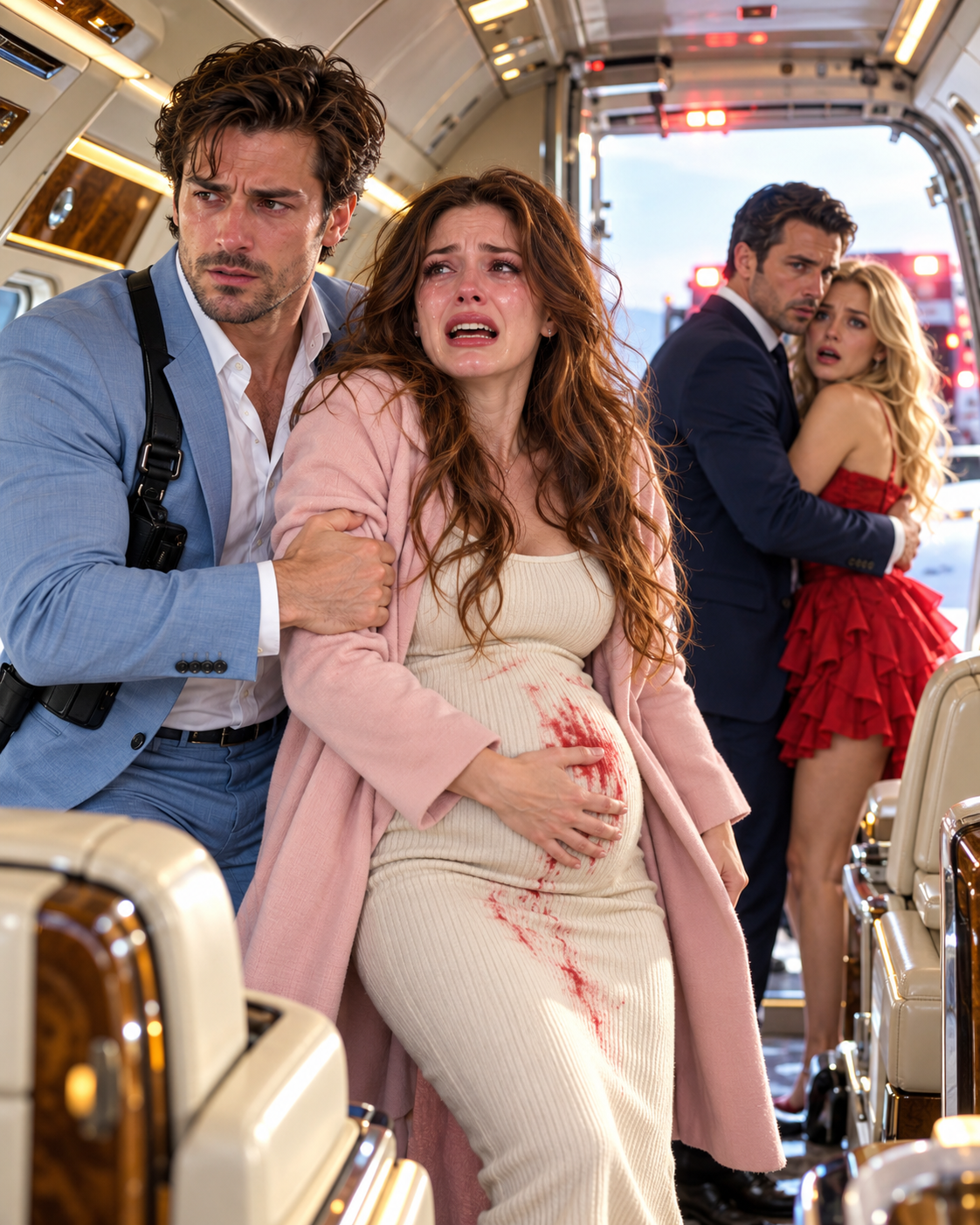
He keeps information from Eleanor because he says he does not want to worry her.
Someday these men may discover that love is not a license to manage another person’s reality.
My mother read those words twice.
Then she lowered herself into a chair.
“She knew.”
“Knew what?”
“What your father was doing.”
Her expression held sadness, but there was no bitterness.
“I used to think Thomas kept things from me because he didn’t trust me.”
I sat beside her.
“Maybe he trusted you and didn’t trust himself to watch you worry.”
“That sounds exactly like him.”
We held hands.
On the other side of the room, Thomas was attempting to construct a tower using archive boxes while the lawyer watched with growing alarm.
Then I discovered Margaret’s final journal.
Its last entry had been written eleven months before her death.
Anna is eight now.
She beat me at chess yesterday.
I told her I was distracted.
This was not true.
I smiled.
Beneath those words, Margaret described Lorenzo’s proposal to reorganize the remaining Bracken shares.
She had agreed, but only under one condition.
No descendant would automatically inherit control.
The shares would become active only when their existence could help restore balance within a relationship damaged by secrecy or unequal financial power.
The purpose was not punishment.
It was not even specifically about marriage.
Margaret had designed the trust to provide a counterbalance.
If one family possessed overwhelming financial authority while repeating Northbridge’s old pattern of concealment, another beneficiary could acquire enough influence to demand transparency.
It was a system of corporate governance hidden within an inheritance.
Brilliant.
Infuriating.
Entirely Margaret.
When I explained it to my mother, she laughed.
“She never trusted anyone with absolute control.”
“She didn’t even trust herself.”
“That was probably why she deserved it.”
The final page contained a message addressed to whoever eventually activated the trust.
Power will tempt you to believe you have become more important.
You have not.
Money magnifies choices.
It does not improve them.
Use whatever authority comes to you to make rooms larger, not smaller.
Let people speak.
Let them disagree.
Do not confuse being responsible with being in charge.
I thought about the boardrooms at Moretti Holdings.
About my marriage.
About the aircraft.
Then I remembered Daniel forcing open a service hatch that nobody else had noticed.
Sometimes the difference between survival and disaster was simply knowing that another way out existed.
I returned home late that night.
Vincent was asleep on the sofa with Thomas curled against him.
Apparently, our son had refused to go to bed until his father agreed to let him watch one cartoon.
A bowl of popcorn rested on the floor.
I stood quietly in the doorway.
This was not the future I had imagined when I married Vincent.
It was better.
Not because we had endured suffering.
Pain does not automatically make people better.
Sometimes pain is simply painful.
Our lives had improved because of the choices we made afterward.
I gently woke Vincent.
“You’re home.”
“Yes.”
“How was it?”
“Complicated.”
“Of course.”
He sat upright.
Thomas remained asleep against his chest.
I handed him Margaret’s final message.
Vincent read it.
Then he smiled.
“I think I would have been terrified of your grandmother.”
“She would have enjoyed that.”
“I believe you.”
Six months later, Vincent proposed to me again.
We were still legally married.
That was precisely the point.
He took me to the small park where we had first met.
Thomas was spending the afternoon with my mother.
There were no photographers waiting.
No musicians hiding behind the trees.
Vincent did not get down on one knee.
Instead, he stood beside me beneath the same elm tree where we had once debated whether dogs could understand sarcasm.
“Anna Bennett.”
I raised an eyebrow.
“You forgot Moretti.”
“No.”
His eyes were warm.
“I didn’t.”
I waited.
“I asked you to marry me once when I thought marriage meant promising to protect you forever.”
My throat tightened.
“I was wrong.”
He drew a breath.
“So I’m asking something different.”
“What?”
“Will you keep choosing a life with me as long as that life remains worthy of both of us?”
Some moments become romantic precisely because they are quieter than expected.
This was one of them.
There was no extravagant declaration.
No impossible promise that our lives would never go wrong again.
We both understood too much for that.
I looked at the man I loved.
The man who had failed me.
The man I had also failed in smaller, less obvious ways, by confusing silence with harmony and accommodation with genuine intimacy.
The man who had changed.
Not flawlessly.
But deliberately.
“Yes.”
He smiled.
“That sounded dangerously easy.”
“Don’t ruin it.”
“I won’t.”
Then, because neither of us had become entirely serious, I added, “Besides, divorce paperwork looks exhausting.”
Vincent laughed.
People often asked what happened to Vincent after he left me behind inside the aircraft.
They expected some spectacular consequence.
They wanted to hear that he lost his business empire.
He did not.
They expected me to reveal that I had taken half his wealth.
I did not.
They assumed Sophia eventually betrayed him.
She did not.
They imagined some enormous public humiliation in which a powerful billionaire finally learned that his money could not rescue him.
Nothing like that occurred.
The real consequence was far quieter.
Vincent lost his certainty.
For a man who had constructed his entire identity around being certain, that loss was enormous.
He learned that intelligence did not prevent him from being wrong.
That he could love someone and still hurt them.
That protection could become control.
That good intentions did not automatically produce fair decisions.
He discovered that remorse could never undo what he had done.
Only his future behavior could demonstrate whether he had truly learned anything.
I faced consequences of my own.
I lost the simple, uncomplicated image of my father that I had carried since childhood.
I lost my belief that genuine love made difficult conversations unnecessary.
And I lost the woman I had been before the accident.
I no longer grieve for her.
She had believed strength meant quietly enduring pain without making anyone else uncomfortable.
I understand strength differently now.
Sometimes it means walking away.
Sometimes it means choosing to return.
Sometimes it means asking questions even when the answers could transform everything you believe.
It can mean forgiveness without pretending the past never happened.
It can mean loving someone while refusing to surrender your identity.
Daniel continued working with the foundation.
Sophia visited us twice each year.
Eventually, Thomas became old enough to ask why Aunt Sophia was not actually related to him.
We explained that some families were formed through shared history rather than blood.
He accepted that answer for approximately three minutes.
Then he asked for ice cream.
The Reyes-Bennett Safety Institute grew, establishing emergency training programs in several countries.
Moretti Holdings also introduced new governance policies inspired partly by Margaret Bennett’s principles.
Certain family-related business transactions could no longer be authorized by a single executive.
Independent reviews became compulsory.
Vincent joked that my grandmother had managed to start running his company forty years after her death.
He was not entirely mistaken.
On the fifth anniversary of the aircraft accident, we returned to the airport.
There was no ceremony.
No media coverage.
The visit was private.
The old emergency runway had been resurfaced.
The grass beside it had grown taller than I remembered.
Daniel joined us.
Thomas came too.
We stood near the place where the service hatch had opened all those years earlier.
Thomas ran through the grass while Daniel watched him.
“That hatch shouldn’t have worked,” Daniel said.
I turned toward him.
“What?”
He smiled.
“The mechanism had been listed for replacement.”
“You never told me that.”
“You had enough surprises.”
“How did you open it?”
“I didn’t.”
I stared at him.
“What do you mean?”
“The pressure equalized when the rear panel failed.”
“So we were lucky.”
Daniel thought about that.
“Yes.”
Then he looked at me.
“But luck only matters if someone uses the door.”
His words stayed with me.
A little later, Vincent approached from behind.
Thomas was sitting on his shoulders.
“Daddy says Grandma Margaret owned him.”
Vincent sighed.
“I said she owned shares.”
Daniel burst out laughing.
I looked up at my son.
“Grandma Margaret would have liked you.”
“Was she bossy?”
“Extremely.”
“Like you?”
Vincent suddenly became very interested in the distant horizon.
I smiled.
“Exactly like me.”
Thomas seemed satisfied.
We began walking toward the terminal.
Vincent matched his pace to mine.
After a few moments, he moved his hand toward mine.
Then he stopped.
His fingers hovered close to my own.
Waiting.
Five years earlier, I had watched him turn away from me inside a smoke-filled aircraft.
For a long time afterward, I believed that moment had destroyed our marriage.
But I had been wrong.
It had destroyed our illusions.
The marriage we built afterward required conscious effort.
There were no inherited rules.
No hidden conditions.
No promises that one of us would always understand what was best for the other.
There were only choices.
Everyday choices.
Some difficult.
Some ordinary.
I slipped my hand into his.
Vincent looked at me.
“You all right?”
“Yes.”
Ahead of us, Thomas impatiently called for his father to hurry.
Daniel waved from the parking lot.
Sunlight stretched across the damp runway, turning the pavement silver.
I remembered the woman I had been on that aircraft.
Seven months pregnant.
Both hands pressed protectively over her unborn child.
Waiting for the man she loved to return.
I wished I could speak to her.
I would not promise that everything would turn out perfectly.
That would simply be another promise nobody could guarantee.
Instead, I would tell her something far more valuable.
There is another exit.
You have not discovered it yet.
You may have to move toward it while terrified.
You might need another person’s help to open it.
The person you expected to protect you might let you down.
Someone you barely know might be the one who extends a helping hand.
The truths waiting afterward may be difficult to accept.
Some may involve the people you trusted more than anyone.
Others may force you to confront yourself.
But once that door opens, you will realize that surviving is not where your story ends.
It is where the part begins in which you finally decide who you want to become.
Vincent gently squeezed my hand.
This time, I squeezed his in return.
Then we continued walking together toward our son.
Not because either of us had promised never to make another mistake.
Not because our past had somehow disappeared.
We walked together because everything we had experienced had finally taught us the lesson our parents and grandparents had spent decades trying to understand.
Love is not proven by choosing for someone.
Love is proven by continuing to choose with them.
