


Part 1: The Call That Shattered the Night
Nothing good tends to arrive with a phone call at 2:14 in the morning. That abrupt ring has a way of slicing straight through ordinary thought and stirring the most primal instincts buried deep in the human mind.
When my phone started buzzing against the glossy mahogany nightstand, its screen flooding my dark bedroom with light, I reached for it with the weary reluctance of a man who had just spent fourteen grueling hours closing a corporate merger. Yet the moment I pressed it to my ear, every last trace of drowsiness was gone.
“Dad…” The voice was so faint I could hardly make it out, quivering with an uncertainty that put me on edge at once. It was Micah, my six-year-old son, and the soft static around his words made the silence behind him feel even more ominous.
“Micah? Buddy, what’s happening? Where’s your mom?” I sat bolt upright, suddenly conscious of my pulse quickening as I waited for his reply.
“Dad… Elsie isn’t waking up properly. She feels really hot. And… and we haven’t had anything to eat for three days.” For several seconds, his words simply refused to sink in. Three days. Three whole days.
“I’m on my way, Micah. I’m leaving right now. Please unlock the front door and stay beside your sister.” My voice came out oddly steady despite the dread climbing inside me as I flung off the blankets, shoved my feet into the nearest pair of shoes, and grabbed my car keys from the dresser.
The drive across Nashville dissolved into a blur of rain-slicked streets and crushing worry. Every traffic light I passed seemed to drag me back to the conversation I’d had with my ex-wife, Delaney, only a few days before. On Monday afternoon, she had stood in my driveway looking every inch the poised, devoted suburban mother she always made herself out to be. Perfectly styled, designer sunglasses perched on her face, she had smiled reassuringly as she explained that she was taking our kids to a friend’s remote lakeside cabin in the Smoky Mountains. The getaway, she said, would last a full week, a chance for the children to enjoy nature, play outside, and briefly step away from their normal routines. She had also made a point of mentioning that the property had no cell reception. If anything important came up, she promised to call me from the cabin’s landline.
At the time, I had taken her at her word without a second thought. Now, with Micah’s terrified voice still ringing in my head, those polished assurances looked entirely different. What I had assumed was an innocent family vacation suddenly seemed to have been hiding something far more disturbing.
I swung my SUV onto the front lawn of Delaney’s rented house, leaving the engine running and the headlights blazing through the sheets of rain pouring across the yard. Without wasting another second, I ran onto the porch and shoved through the unlocked front door. Inside, the house was eerily silent. The air was stale and heavy, thick with the sour smell of spoiled milk and things that had been left untouched for days. “Micah!” My shout echoed through the entryway, and in that instant every thought of my career vanished. Board meetings, financial deals, corporate deadlines—none of it mattered anymore. I was simply a father desperate to reach his children.
I found them in the main bedroom. Micah was huddled against the side of the bed, still dressed in the same clothes he’d been wearing when I said goodbye to him on Monday afternoon. He clutched an empty cereal box tightly to his chest, as if it were the only familiar thing left to comfort him. His three-year-old sister, Elsie, lay motionless on the rumpled mattress beside him. I dropped to my knees next to her at once. Her skin was alarmingly warm, and she barely stirred when I gently touched her shoulder. Her breathing was ragged, her small body worn out after days of struggle. Her lips were cracked and dry, and she couldn’t seem to stay fully awake.
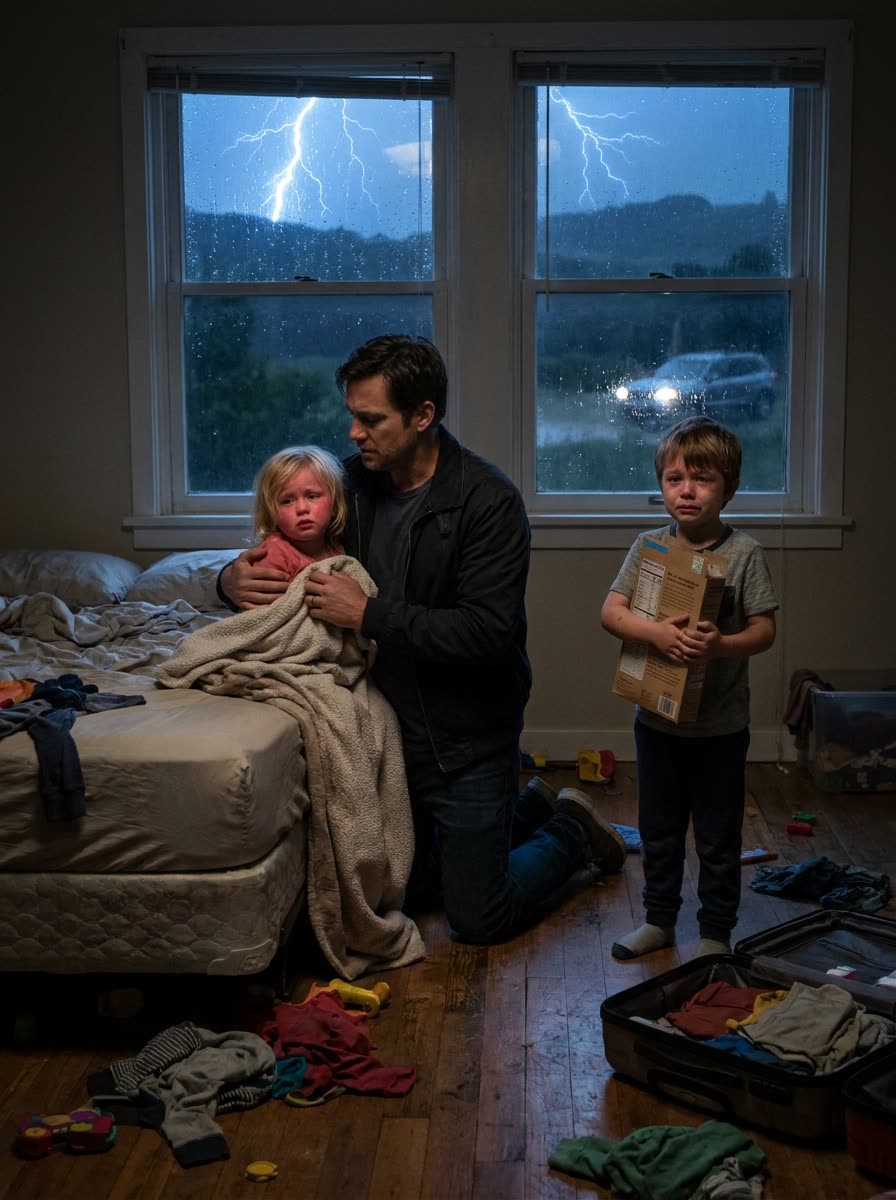
“I tried giving her water, Dad, but she couldn’t keep it down. Then she stopped opening her eyes when I talked to her.” Micah broke into tears as I carefully scooped Elsie into my arms. He pressed himself against my shoulder, gripping my jacket tightly while I tried to calm him.
“You did exactly what you were supposed to do, Micah. I’m so proud of you for calling me. You’re incredibly brave, buddy. We’re going to get help now.”
Fifteen minutes later, the blinking hazard lights of my SUV were flashing across the entrance of Vanderbilt Children’s Hospital. I rushed through the sliding doors with Elsie cradled against my chest and Micah close at my heels, his little hand clinging to the hem of my coat.
“Please, we need someone to help her! She’s barely responding!” My voice rang out across the waiting room, instantly catching the attention of the medical staff nearby.
In a matter of moments, a team of nurses and doctors surrounded us. They gently moved Elsie onto a hospital bed and wheeled her into an emergency treatment room, where specialists began assessing her condition and giving her the fluids and breathing support she so urgently needed.
Some time later, an attending physician found me in the brightly lit hallway. “Mr. Mercer,” he began, speaking with professional composure while making the seriousness of the situation clear. “Your daughter’s temperature is 104.2 degrees Fahrenheit, and her blood pressure is concerningly low.”
He paused for a moment before going on. “Our initial examinations indicate significant dehydration, inadequate nutritional intake, and signs that her kidneys are under considerable strain. Her asthma symptoms also appear to have gone without the management she requires, making her breathing difficulties more complicated.”
I stared at him, struggling to take it all in. “Based on what we’re seeing, she may have gone approximately seventy-two hours without adequate food or fluids. She’s receiving intensive treatment now, and bringing her here promptly was extremely important.”
The doctor gave me a moment to absorb what he had said. I understood that Elsie’s condition had grown serious enough to demand immediate care. I also understood that Micah’s choice to call me might have kept things from becoming far worse.
Standing in that hospital corridor, I felt something deep inside me shift. For years after our divorce, I had worked to keep things peaceful with Delaney. I had brushed aside disagreements, accepted compromises, and told myself again and again that cooperation was what was best for our children. But after seeing Micah so frightened and Elsie needing emergency treatment, I knew our arrangement had to be looked at very carefully.
For the next several hours, I stayed by Elsie’s bed in the pediatric intensive care unit. I held her tiny hand gently, careful of the medical equipment surrounding her, and listened to the steady rhythm of the monitors while the staff kept watch over her. For the first time in years, I found myself quietly praying. I prayed that her fever would break, that her breathing would ease, and that the little girl who adored bedtime stories and insisted on wearing mismatched socks would soon smile up at me again.
Just before dawn, her breathing finally started to steady. The nurse on duty explained that Elsie was responding to treatment, though she would still need close monitoring and further care. Relief swept over me, but it couldn’t wipe away the questions waiting for me outside the hospital walls.
Micah had eventually drifted off in a reclining chair near his sister’s room, drained by everything he had been through. A kind overnight pediatric nurse promised me that the medical team would keep a close eye on both children while I made a quick trip to gather their things. I thanked her and made the silent drive back to Delaney’s rental.
The morning sky was gray, and the downpour had faded to a light drizzle by the time I pulled in. I needed fresh clothes for both kids, along with Elsie’s prescribed nebulizer and any medication details that might help her doctors manage her asthma.
Inside, the silence felt even more unsettling in the daylight. As I walked from room to room, I noticed belongings scattered in places where Delaney normally would have kept everything perfectly in order. Empty makeup bags sat beside the bathroom sink. Bare clothes hangers were strewn across the bedroom carpet, and a half-open drawer held nothing but a few forgotten accessories. The mess told me someone had packed in a serious rush.
I went into the main bedroom and started looking for Micah’s favorite pajamas, hoping something familiar might comfort him when he woke up. That was when I spotted a faint blue glow coming from underneath the king-sized bed. I froze and leaned in for a better look. An older iPad with a spiderwebbed screen had been shoved carelessly toward the back of the bed frame, nearly lost in the shadows. It looked like a device Delaney had simply forgotten to take with her.
As I reached down to pick it up, the screen lit up again with a new notification. I stayed perfectly still for a moment, staring at the small glowing rectangle. I had come back to the house expecting to grab clothes, medicine, and a few comforting things for my kids. I had no idea that what was waiting on that forgotten tablet would soon raise questions reaching far beyond Delaney’s unexplained absence. What had started as a frantic effort to protect Micah and Elsie was about to turn into a much bigger investigation, one that would demand a careful look at digital records, unexpected connections, and everything that had really happened that week.
The silence of the empty house pressed in around me as I sat down on the carpet and pulled the iPad out from under the bed. Thin cracks ran across its screen, making it look like an outdated gadget Delaney had probably decided wasn’t worth bringing. A prompt for a four-digit passcode appeared. Luckily, I already knew what to try. Delaney had always gravitated toward familiar numbers, and I remembered she liked to use Micah’s birthday. I typed in 0412, his birth month and day. The irony was impossible to ignore. She had used our son’s birthday as her password while leaving that very same little boy alone in the house without proper care or supervision. The screen unlocked.
I had expected to find messages hinting that Delaney had driven off to some secluded cabin in the Smoky Mountains. Instead, I found a synced iCloud inbox filled with an astonishing collection of records that contradicted every word she had told me. I started scrolling through the most recent emails. Flight confirmation: Delta Airlines, First Class. Nashville to St. Barts, French West Indies. Right beneath it sat another. Reservation confirmation: Eden Rock Resort, Premium Ocean View Villa. $3,500 per night.
Delaney hadn’t slipped away into the mountains for a quiet nature retreat. She had boarded a first-class flight to the Caribbean. I opened the synced iMessage history and waited for the conversations to load. Several of the latest messages were addressed to a contact saved as “Julian Vance.” I knew the name instantly.
Julian was a moderately successful commercial real estate developer in Nashville, better known for his flashy leased cars and unmistakable cologne than for any genuinely impressive business accomplishments. Apparently, Delaney had been secretly talking with him for months. Throughout their conversations, she had painted me as an unreasonable ex-husband who supposedly tried to control every corner of her personal life.
Then I came across a message that made my stomach clench. Delaney: “Boarding now, baby! I can’t wait to meet you on the island. The children are staying safely with their father all week, so we finally have time to ourselves!”
I read it twice. Delaney had told Julian the children were with me. Meanwhile, she had led me to believe they would be in her care all week. Those two contradictory stories had created a dangerous gap in which neither adult had any reason to check in with the other. No one had been asked to look in on the house. No one knew Micah and Elsie were alone.
But the flights and the flirtatious messages turned out to be only the start of what I uncovered. The most alarming discovery came when I opened her mobile banking app, which was still logged in on the old device. My chest tightened as the transaction history loaded, and for several seconds I could barely make sense of the numbers in front of me. Two weeks earlier, Delaney had approved a large electronic transfer. The money hadn’t come from her everyday checking account. It had been pulled from our jointly managed emergency medical trust. After Elsie was diagnosed with severe chronic asthma, I had set up a dedicated $45,000 fund to cover unexpected medical costs. It was meant for specialized breathing equipment, emergency care, and hospital services our insurance might not fully pay for. Delaney had been given access to the account for one reason only: so she could make urgent payments whenever our daughter needed treatment.
Now the account showed a balance of zero.
Part 2: The Trail of Lies
According to the records, Delaney had submitted an electronic Power of Attorney document to the bank, claiming I was temporarily overseas on business. The authorization bore what looked like a signature I had never given. Armed with that paperwork, she had moved the entire $45,000 into her personal checking account.
I kept scrolling through the transactions. The spending history showed purchases that had absolutely nothing to do with Elsie’s medical needs. $4,200 at Chanel. $1,800 at an exclusive beauty salon. $15,000 transferred to a luxury travel concierge. Further charges covered pricey vacation bookings, designer clothes, and high-end resort services.
I stared at the numbers, trying to square them with the reason that account existed. That money had been set aside for our daughter’s medical safety. It stood for years of careful planning and the comfort of knowing that, if Elsie ever suffered another serious breathing emergency, we would have the means to pay for her care.
Now those savings seemed to have bankrolled Delaney’s tropical escape with Julian. The contrast was almost too much to grasp. While our children had been left without proper supervision, Delaney had apparently been indulging in luxury suites and lavish experiences thousands of miles away.
I felt fury rising, but I refused to let it make my next move for me. I didn’t shout. I didn’t hurl the iPad or smash anything around me.
Instead, the frigh.ten.ed father who had spent the past hours terrified for his children began to think like the corporate strategist I had spent years becoming. There were records to protect. There were professionals to call. Above all, there were two young children whose future safety needed immediate attention.
I pulled out my phone and called Marcus. Marcus was much more than a seasoned attorney. He specialized in complex family law disputes and financial litigation, especially cases involving contested assets and urgent protective orders. Years before, I had helped him through a tricky professional situation involving my corporate firm, and he had told me more than once that if I ever needed legal help, he would be there. That morning, I intended to take him up on it.
“Rowan,” Marcus answered, his voice heavy with sleep. “It’s six in the morning. Please tell me this involves a major corporate acquisition.”
“It’s considerably more personal than that, Marcus,” I replied, speaking quietly in the empty hallway. “Delaney left Micah and Elsie alone in the house for three days while she traveled to St. Barts.”
I paused before going on. “They’re three and six years old. Both needed hospital treatment, and I discovered that she apparently transferred forty-five thousand dollars from Elsie’s emergency medical fund using an authorization I never signed.”
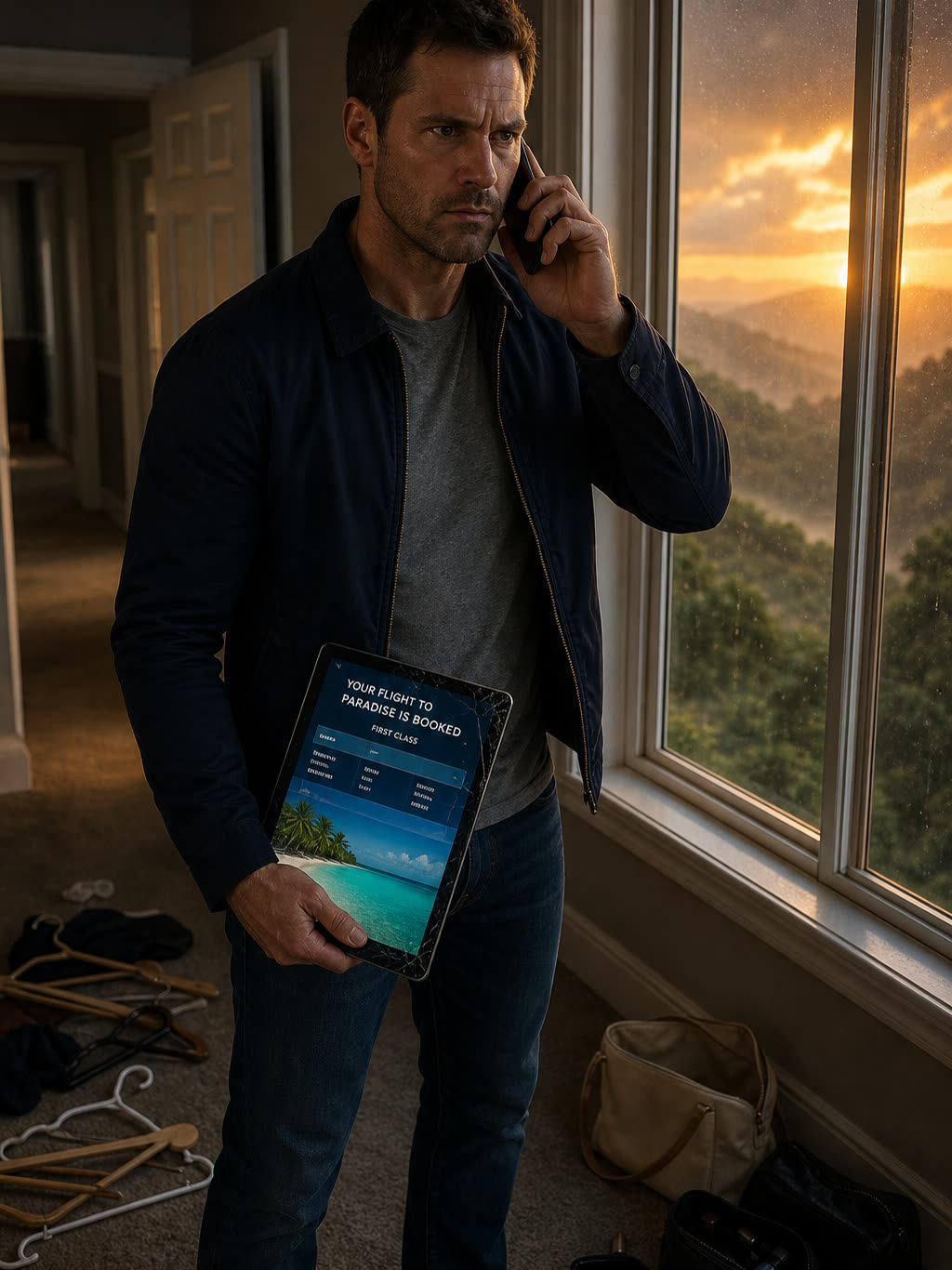
For several seconds, Marcus didn’t say a word. Then I heard movement on the other end of the line: the rustle of bedsheets, followed by the unmistakable clatter of a keyboard. His voice sharpened instantly. “Are the children safe right now?”
“They’re receiving care at Vanderbilt,” I answered. “Both were admitted to intensive care. Elsie’s condition was especially serious, but the medical team is treating her.”
“All right,” Marcus said, his tone turning firm and professional. “First, we need to document everything carefully.”
He kept talking as he pulled up more files. “Send me the hospital admission records, the physicians’ reports, and every banking statement you’ve located. Preserve the original messages and account records as well.”
I glanced toward the bedroom doorway. “What happens next?”
“We’re going to request an emergency court hearing,” Marcus explained. “I’ll prepare an application for temporary protective orders and emergency custody arrangements based on the available evidence.”
He paused briefly. “We can also ask the court to establish appropriate restrictions on contact while the circumstances are investigated. Any longer-term custody decision will depend on the evidence and the judge’s findings.”
For the first time that morning, I felt something like a clear path forward. “That’s our first priority,” I said.
My eyes drifted back to the iPad. A freshly synced photo had popped up from Delaney’s private Instagram account. It showed an elaborate tropical cocktail sitting on a table beside a white-sand beach, with turquoise water stretching to the horizon under a flawless sky. The location tag named the very same Caribbean resort from her booking confirmation. I studied the picture for a long moment. Somewhere across the ocean, Delaney was posting vacation snapshots while our children lay under medical observation.
Marcus broke into my thoughts. “Rowan, is there anything else I should know?”
“Yes,” I answered. “Once the children are protected, I want the financial transactions examined thoroughly.”
“We can address that,” he replied. “I’ll coordinate with the appropriate financial specialists and determine whether the documentation should be referred to the relevant authorities.”
I reopened the banking app and tapped the option to export the transaction records. The statements began to download. “Make sure everything is properly documented,” I told him. “Every transfer, every authorization, and every expense connected to that account.”
Marcus fell silent for a moment. Then he asked, “And what are you hoping to accomplish beyond the custody arrangements?”
I looked once more at the photo of that gorgeous Caribbean shoreline. “I want the truth established,” I replied. “And I want every dollar intended for Elsie’s medical care accounted for.”
The export finished. I saved the files, made copies for Marcus, and set the iPad carefully beside me. For the first time since finding the kids, I realized the next stage of this would play out through medical records, financial evidence, and the courts. Delaney might have thought that flying thousands of miles away would keep her choices hidden. But the records she had left behind told a very different story. And this time, I was going to make sure someone read every single page.
The carefully coordinated financial and legal response took shape in the soft glow of my laptop as I sat beside my daughter’s hospital bed, determined to shield my children and secure their future. By 9:00 AM Wednesday, while Micah dug into pancakes from the hospital cafeteria under the watchful eye of facility security, the carefully curated picture of Delaney’s glamorous life had started to crumble in ways she never saw coming.
Marcus stood before a stern family court judge in downtown Nashville. Rather than leaning on emotional appeals, he laid out extensive documentation backing our emergency petition. The evidence included timestamped hospital admission records, the photos I had taken of the nearly bare pantry, and electronic records pointing to unauthorized financial transfers.
After reviewing everything and weighing the children’s immediate welfare, the judge granted me emergency sole physical and legal custody. The court also cleared the way for further legal action on allegations of child a.ban.don.ment and en.dan.ger.ment, allowing investigators to move forward through the proper channels.
Meanwhile, drawing on my experience as a senior financial executive, I reached out to the bank’s fr@ud investigation department through its official reporting process. I submitted documentation showing that a Power of Attorney may have been misused to approve transactions tied to international travel. After its initial review, the bank imposed temporary restrictions on the accounts linked to the disputed transactions. Several checking, savings, and credit accounts connected to Delaney, including newly issued travel cards, were flagged for additional verification while the institution looked into possible financial misconduct.
Thousands of miles away, among the stunning beaches and exclusive resorts of St. Barts, Delaney was about to find out that her carefully orchestrated vacation had taken a sharp, unexpected turn.
Back at the hospital, I settled into the chair beside Elsie’s bed, holding a cup of coffee that had gone cold long ago. My laptop displayed alerts about the accounts under review, each one confirming that the restrictions were starting to hit Delaney’s travel plans. Alert: Transaction Declined – $850.00 at Eden Rock Spa. Alert: Transaction Declined – $2,400.00 at Louis Vuitton Boutique. Alert: Transaction Declined – $315.00 at La Guérite Restaurant.
Suddenly my phone began rattling across the hospital tray. Delaney’s name flashed on the screen, and I watched it ring without picking up. I could picture her bewilderment as she stood in some upscale boutique, trying to figure out why cards she had swiped so confidently just hours before were suddenly being rejected. I let it go to voicemail. Over the next ten minutes, she called five more times, but I stayed focused on my children and the legal process already in motion.
Still, Delaney wasn’t the only one whose choices deserved a closer look. Julian Vance had played a key role in setting up her lavish getaway, and questions about how much he knew warranted proper attention. Julian had always projected an image of dazzling success, surrounding himself with leased Ferraris, expensive properties, and well-connected business partners. What he seemed to have forgotten was just how tightly knit Nashville’s corporate world could be, especially when major investment firms were funding large commercial developments. Using publicly available business information and established professional channels, I learned which venture capital firm was backing his upcoming projects with substantial borrowed money.
I drafted a carefully worded message to the firm’s board of directors, restricting its contents to information relevant to possible business and reputational concerns. Attached was a publicly releasable summary of the legal proceedings involving Delaney Mercer, with sensitive personal details properly redacted. The message was simple: To the Board of Directors. Information concerning an ongoing legal matter may be relevant to your assessment of Julian Vance’s current business associations. Please review the verified documentation and consider whether any additional due diligence is appropriate.
I hit send and turned my attention back to the hospital room. Roughly thirty minutes later, Julian was no longer relaxing beside Delaney on the balcony of their luxurious resort suite. According to information that later reached me through professional contacts, his investors had demanded an urgent explanation of the situation and what it might mean for their commercial partnership. The threat of reputational damage and stalled financing changed Julian’s attitude almost instantly.
Inside their $3,500-a-night suite, what had started as a glamorous escape reportedly spiraled into an increasingly heated argument about blame, trust, and the fallout from their decisions. Julian, suddenly worried about protecting his business, showed no further interest in standing by Delaney or carrying on with their holiday. Instead, he packed his bags, canceled their shared accommodations, and flew back to the United States on a privately chartered jet.
Delaney was left behind at the resort, suddenly on her own to arrange transportation home and figure out how to pay her bills without her usual cards. Em.bar.ras.sed, frustrated, and short on money, she eventually asked a fellow traveler for help placing an international call. After several tries, she reached her mother and begged for an emergency Western Union transfer so she could buy a cheap economy-class red-eye back to Nashville.
Before boarding, she fired off one last message to me, brimming with anger and accusations. I don’t know what kind of sick game you are playing with my accounts, Rowan, but you have ruined my life. I am coming straight to your office from the airport, and I am going to sue you for every penny you have.
Reading those words, I realized Delaney still believed she could fix everything through confrontation. All through our marriage, hard conversations had a way of turning into fights, and she seemed sure that one more forceful showdown would push me into dropping the legal steps already underway. She apparently planned to storm into my office, demand answers, and pressure me into restoring the comfortable life she had grown used to.
What she didn’t realize was that this had grown far bigger than a quarrel between ex-spouses. By the time her flight was due to touch down, I was sitting in a corporate conference room with three federal investigators, going over the documentation and preparing for the next phase of the official inquiry. Delaney thought she was flying home to confront me, completely unaware that investigators were already coordinating the appropriate legal response and waiting for her to arrive.
My company’s executive offices filled the entire top floor of a sleek glass-and-steel tower overlooking downtown Nashville. Every inch of the space radiated professionalism, influence, and the understated confidence of a thriving corporation.
At exactly 11:00 AM Thursday, the heavy frosted-glass doors of the conference room flew open. Delaney marched in without an appointment, having slipped past the lobby reception desk using an old security badge that no one had ever deactivated after our divorce.
She looked completely frazzled. Her skin was badly sunburned, with patches peeling around her shoulders. Her expensive vacation outfit was creased and rumpled after the long overnight flight in economy. Exhaustion, frustration, and the strain of her sudden money troubles showed in every move she made.
“Rowan!” she shouted, her voice shattering the hushed calm of the executive floor.
She rushed toward the enormous mahogany conference table and planted both hands firmly on its polished surface.
“Turn my cards back on right this second! You completely ru!ned my trip! Julian left me stranded on an island! I had to beg my mother for a flight home! I am going to take you to court for financial abuse and take every single penny you—”
Her words cut off mid-sentence as she finally noticed the other people seated around the table.
Part 3: The Reckoning and the Road Home
The rage that had propelled her into the room quickly gave way to uncertainty as it dawned on her that this was no ordinary meeting between former spouses.
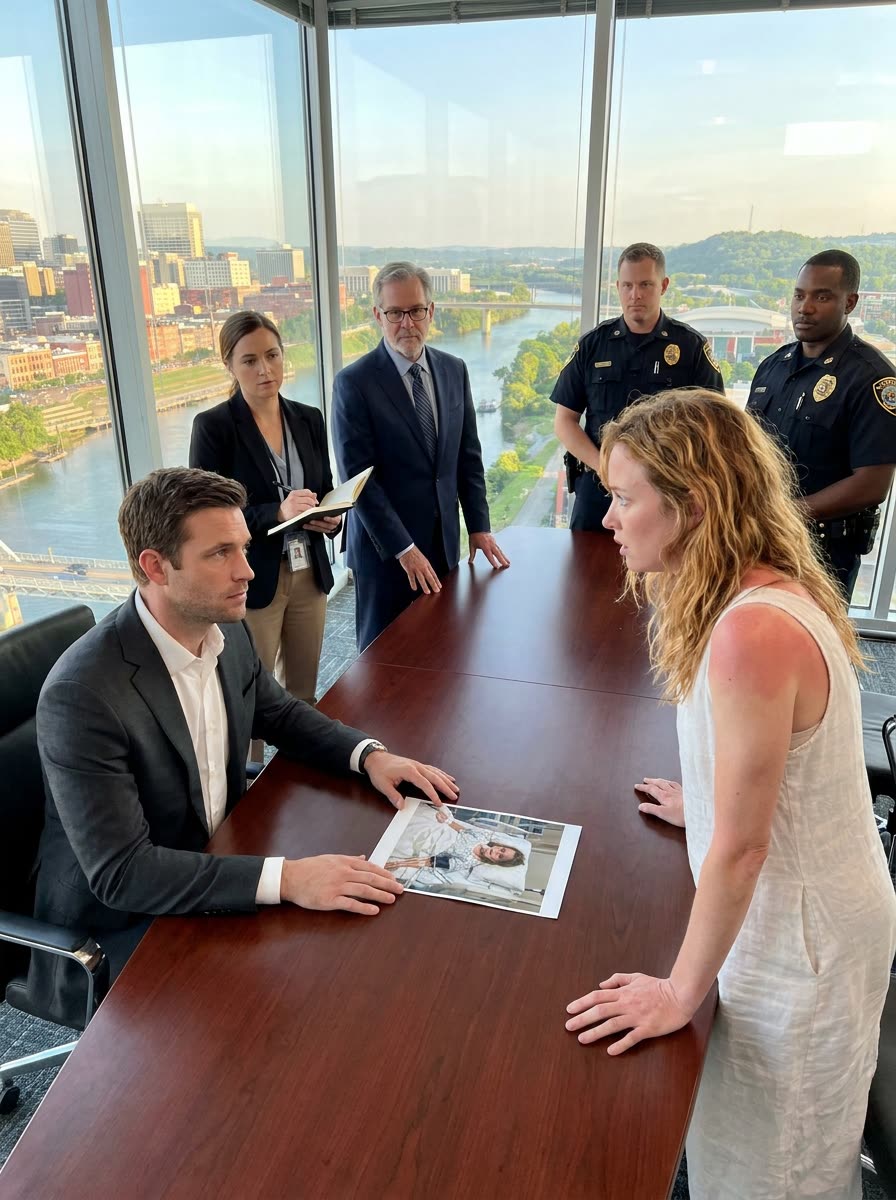
On the left side of the table sat a senior investigator from Child Protective Services, an open notebook in front of her. Next to her was Marcus, my attorney, calm and watchful as he took in Delaney’s abrupt entrance.
Near the doorway stood three uniformed Nashville police officers, there to support the ongoing investigation and make sure things stayed under control.
I stayed seated at the head of the table in my carefully tailored suit. There was no need to raise my voice or react emotionally. The documents, the legal proceedings, and the professionals in that room would speak to the gravity of everything that had happened.
I opened the manila folder beside my laptop and slowly drew out an eight-by-ten photograph. Without a word, I laid it on the table and slid it gently toward Delaney until it rested directly in front of her.
It showed three-year-old Elsie being treated in the Vanderbilt intensive care unit. She lay beneath a hospital blanket, hooked up to monitoring equipment and receiving oxygen while the medical team worked to address her serious condition.
Delaney stared down at the picture, and the confidence she had shown moments earlier slowly drained away. For several seconds, she seemed unable to find any words at all.
“You didn’t go to a rustic lake cabin in the mountains, Delaney,” I said quietly, keeping my voice steady.
“The evidence indicates that you used an unauthorized legal document to transfer forty-five thousand dollars from Elsie’s medical trust. You then traveled to St. Barts while Micah and Elsie remained at home without adequate supervision or sufficient food.”
I paused, giving her a moment to grasp the weight of the records spread across the table. “Both children required immediate assistance, and Elsie was admitted to intensive care. Investigators are now reviewing the financial transactions and the circumstances surrounding your departure.”
Delaney’s face transformed entirely. She took a step back, visibly shaken by what she was hearing and by the presence of the authorities.
“It… it was a misunderstanding!” she replied, her voice growing more and more unsure.
She looked toward the police officers, then turned to the Child Protective Services investigator. “I left them food! I swear I did! Micah knows how to use the microwave! I was only supposed to be gone for a few days, I needed a break, I—”
“Micah told me he was trying to find something for Elsie to eat,” I interrupted, rising slowly from my chair.
“He found a cracker near the back of the pantry because there was almost nothing else available. He was six years old, Delaney, and he was trying to care for his younger sister without an adult present.”
I kept my words measured, but reliving the memory of finding my children like that made every sentence painfully hard to get out.
Delaney dropped her gaze, apparently searching for some explanation that might undo what the investigators had already recorded.
“Julian provided a recorded statement to federal investigators and local authorities earlier this morning, with his attorney present,” I continued.
“He explained what he understood about your travel arrangements and the information you gave him concerning the children. His statement is now part of the official investigation.”
I glanced briefly at Marcus before turning back to Delaney. “Your financial accounts remain under review, and Julian has chosen to cooperate with investigators rather than become involved in the allegations against you.”
I let a short silence settle before sharing the most important development. “Yesterday morning, a family court judge granted me emergency sole physical and legal custody of Micah and Elsie. Any future contact or custody arrangements will now be determined through the appropriate legal proceedings.”
Delaney stood frozen, struggling to process everything she had just heard. The luxury vacation, her romance with Julian, and the money she had been counting on suddenly seemed trivial next to the consequences now staring her in the face.
I turned toward the officers by the door and gave a slight nod. One of the detectives stepped forward, calm and professional.
“Delaney Mercer,” he said firmly, “we have an active warrant for your arrest concerning allegations of felony child endangerment and financial offenses. You will need to accompany us for further processing.”
He walked her through the procedure and asked her to remain calm while the officers did their job.
“No! No, please! Rowan, please! I’m their mother!” Delaney cried, sinking down onto the carpet as the reality of her situation finally crashed over her.
Her voice shook, and tears streamed down her cheeks as she looked up at me, searching for reassurance.
The officers gave her a moment to collect herself before helping her to her feet and preparing to lead her out of the room.
I watched in silence, fully aware that the woman in front of me was still the mother of my children, no matter how serious the choices that had brought us here.
“Being their mother comes with responsibilities, Delaney,” I answered softly. “Right now, my responsibility is making sure Micah and Elsie are safe.”
She kept sobbing as the officers finished the arrest and secured her wrists in line with department protocol. The detective calmly explained what would happen next, while the Child Protective Services investigator noted the final details of the encounter.
Then Delaney was escorted down the executive hallway toward the elevators. Her tearful pleas faded little by little until the elevator doors slid shut, leaving the conference room strangely quiet.
For a long while, no one said anything. I sat back down, looked at the photograph of Elsie, and gently tucked it back inside the manila folder.
The legal process was far from over, and I knew the months ahead would bring hard conversations, court dates, and major decisions about my children’s future.
Even so, something fundamental had changed. For the first time since Micah’s unexpected call, I knew both children were getting the care and protection they needed. I closed the folder and sat in silence, unaware that the most meaningful chapter of our family’s fresh start was only just beginning.
Over the next six months, Delaney Mercer’s name slowly vanished from Nashville’s glittering charity galas and exclusive social circles, turning instead into a cautionary tale of how serious personal choices can carry lasting legal consequences.
The fallout from the boardroom confrontation was sweeping and permanent. Confronted with detailed medical records from Vanderbilt, electronic financial trails tracing the unauthorized trust withdrawals, airport security footage confirming her trip abroad, and Julian Vance’s formal testimony, Delaney’s experienced defense attorney weighed the evidence carefully and urged her to consider a plea deal.
Facing the prospect of lengthy federal and state prison terms if the case went to trial, Delaney finally understood how grave her situation was. Rather than fighting every charge before a jury, she accepted responsibility by pleading guilty, hoping to avoid the harshest penalties the law allowed.
The court ultimately handed down a fifteen-year sentence in a state correctional facility for women.
Her old way of life disappeared entirely. The designer wardrobe, extravagant trips, polished social media persona, and financial perks that had once defined her public image were replaced by the rigid routines and restrictions of life behind bars.
She now lived somewhere her daily schedule, personal choices, and contact with the outside world were all governed by institutional rules. The gap between her former freedom and her new reality was enormous, leaving her with years to reflect on the decisions that had led her there.
Meanwhile, my own life was slowly turning into something I had almost forgotten was possible. It was filled with stability, warmth, and the comforting sounds of two children learning to feel safe again.
Elsie made an extraordinary recovery. Children can show remarkable resilience when they receive proper medical care, steady support, and a secure place in which to heal.
Through the legal recovery process, authorities located Delaney’s remaining assets and arranged for the stolen $45,000 to be returned to Elsie’s medical trust. I made sure those funds were spent wisely, scheduling appointments with top pediatric pulmonary specialists who could provide thorough treatment and long-term management of her asthma.
As time passed, her breathing improved dramatically, and her energy came flooding back. Her bright, bubbly laughter began to fill the spacious new home I had bought in a quiet, gated neighborhood, far from the rental house tied to the darkest days our family had known.
But what meant the most to me was watching Micah rediscover his confidence. The emotional weight of believing he had been responsible for protecting his little sister had affected him far more deeply than I first realized.
There were nights when I sat beside him on the plush carpet of his new bedroom, listening patiently as he tried to put into words the memories that still haunted him. I reminded him again and again that he had shown incredible courage by asking for help. More than anything, I wanted him to understand that looking after his sister did not make him responsible for the choices or duties of the grown-ups around him.
He was a child, and he deserved a childhood free of the burden of circumstances he could never have controlled. With the help of a skilled pediatric play therapist, Micah gradually learned to work through what had happened. The worry that had so often clouded his eyes began to fade, replaced by curiosity, confidence, and the carefree joy of an ordinary six-year-old boy.
One gorgeous Saturday morning, I stood in our sun-drenched kitchen making breakfast. The inviting smell of fresh coffee and warm maple syrup drifted through the room as I flipped another pancake on the griddle. Across from me, Micah and Elsie sat side by side in the breakfast nook, absorbed in a shared coloring book. They were locked in a spirited but completely harmless debate over who got to use the blue crayon next.
I watched them with a quiet smile, realizing how precious these everyday moments had become. The constant uncertainty that had shadowed our old co-parenting arrangement had finally lifted. I no longer spent weekends bracing for sudden arguments, conflicting stories, or wondering whether the kids would come home rattled by another clash between the adults. Our home now had predictable routines, clear expectations, and a sense of emotional security both children could rely on.
For years, through my marriage and the rocky period after the divorce, I had convinced myself that endless compromise was the best way to protect Micah and Elsie. I believed that sidestepping conflict, setting aside my worries, and keeping up a show of cooperation would somehow preserve the peace they needed.
But that unexpected phone call on a rainy night had changed my understanding of what it truly takes to protect a family. It didn’t mark the end of our family. Instead, it laid bare problems that could no longer be ignored and set in motion the intervention needed to build a safer future.
Through medical care, legal protections, professional counseling, and the steady support of people who genuinely cared about us, we slowly rebuilt our lives. I had walked into that hospital a terrified father, unsure whether his daughter would pull through and desperate to understand what had happened. I eventually came home with a renewed sense of purpose, determined to create a steady, welcoming home where my children could grow up without needless fear.
The greatest achievement wasn’t the outcome of the court case. It was the simple knowledge that Micah and Elsie could finally enjoy their childhood in a home built on love, trust, and lasting security.
I glanced at the cheap envelope sitting on the spotless granite countertop in my kitchen. Through the thin paper, I could just make out the faint blue lines of the letter inside, while the return address named a state women’s correctional facility and listed an inmate registration number. I recognized the handwriting at once. It was Delaney’s.
Over the years, several letters like it had arrived, usually filled with long explanations, apologies, and requests for help. Some asked whether I would send money to her institutional account for personal necessities. Others asked for a letter describing family support to be considered during future correctional reviews, and a few asked for a recent photo of Micah and Elsie. Each one seemed to reflect her longing to hold on to some connection with the family whose lives had been so dramatically changed.
I had already worked out appropriate boundaries with my attorney and the children’s therapist, and I remained committed to handling any future contact through established legal and professional guidance.
A year earlier, just seeing Delaney’s familiar handwriting might have stirred up memories of our troubled marriage and the pa!nful questions I had once wrestled with. I might have wondered all over again how our relationship had fallen apart so completely, or how the children had ended up in such a terrible situation. Today, though, the envelope stirred little more than a fleeting moment of reflection. It was simply another reminder of a chapter of my life that no longer shaped how I spent my days.
I chose not to open it. Instead, I set it with the other correspondence earmarked for my attorney’s review, letting the established process handle anything that needed attention. Then I went back to making breakfast, grateful that our daily lives were no longer ruled by the uncertainty of the past.
Three years after the hospital emergency and the scene in the boardroom, those memories felt more and more distant. They belonged to a hard season we had worked hard to understand, process, and leave behind.
That afternoon, I sat in the front row of a packed elementary school auditorium, shifting now and then on a stiff wooden chair. I hardly noticed the discomfort, because I was watching nine-year-old Micah stride confidently across the stage to accept an academic excellence award in science. His smile was huge as the principal handed him the certificate.
I clapped wildly, swept up in a wave of pride I could hardly put into words. Next to me, six-year-old Elsie cheered excitedly for her big brother. She was healthy, full of energy, and having an especially good day, her asthma well under control thanks to the treatment plan her specialists had designed. Her giggles mingled with the applause echoing through the auditorium.
Looking at the two of them, I realized we had arrived at a wonderful place in our lives. We were no longer planning our days around uncertainty or letting painful experiences dictate what our future could be. Instead, we were celebrating school victories, planning weekend adventures, and savoring the everyday happiness that had once felt so far out of reach.
I had learned important lessons about parenting, responsibility, and the difference between keeping up appearances and offering real protection. During my marriage, I often believed that keeping the peace meant overlooking my concerns and dodging hard conversations. I had worried that pushing back would only create more conflict for the children. But I eventually came to see that true cooperation has to rest on accountability, mutual respect, and a shared commitment to the children’s well-being.
No parent should have to ignore real safety concerns just to keep up the image of a peaceful family. Nor should a father’s role be shrunk down to writing checks while staying silent about decisions that affect his children’s welfare. Both parents carry important responsibilities, and children deserve to have their needs taken seriously no matter which adult raises the alarm.
What Delaney and Julian had failed to grasp was that this situation could never be smoothed over with social connections, money, or cleverly crafted stories. Once the children’s circumstances came to light, the doctors, lawyers, and investigators involved had obligations that reached far beyond our personal disputes. The evidence had to be examined, the children’s urgent needs met, and the proper legal procedures followed.
For me, the whole experience redefined what it means to be a protective father. Protection wasn’t about intimidation, revenge, or proving I had more power than someone else. It meant recognizing when my children needed help, finding qualified support, documenting concerns responsibly, and staying present through every step of their recovery.
It meant listening when Micah struggled to express his feelings and sitting beside Elsie at her medical appointments, even when I wished I could make every hardship vanish. It also meant understanding that the truest measure of success wasn’t whether Delaney faced consequences. It was whether our children could eventually feel safe, supported, and free to enjoy the ordinary experiences every child deserves.
As the ceremony wrapped up, Micah bounded down the stage steps and wove through the crowd toward us. “Dad! Look! I got it!” he exclaimed, holding his certificate proudly out in front of him.
I stood and opened my arms. He threw his arms around my neck, and I held him tight while Elsie eagerly stretched up on her toes to see the award.
“You worked really hard for this, buddy,” I told him, smiling. “I’m so proud of you.”
Micah lit up, and Elsie promptly declared that she wanted a certificate of her own someday. I laughed and promised her there would be plenty of chances for both of them to discover what they loved.
As we left the auditorium together, sunlight poured through the entrance, lighting up the colorful school projects lining the hallway. Micah carried his certificate with great care, while Elsie slipped her hand into mine.
For a moment, I looked at them both and thought about everything our family had been through. The terrifying hospital visit, the grueling legal battle, and the long months of healing would always be part of our story. But they were no longer at the center of our lives.
What mattered now was the future unfolding ahead of us, full of possibilities, everyday challenges, and countless moments we would share together. I had once believed that protecting my children meant controlling every circumstance around them. Now I understood that real security came from building a dependable home, making thoughtful choices, and helping them grow the confidence to face the world.
I gave Elsie’s hand a gentle squeeze as Micah walked beside us, proudly describing the science project that had earned him his award. Their voices filled the bright afternoon air, and a deep wave of gratitude washed over me.
We hadn’t erased the past, but we had built something stronger than the uncertainty it once created. We had built a family life rooted in patience, responsibility, and unconditional love.
And as we stepped out into the sunshine together, I knew that the greatest strength a father could offer his children was not the power to defeat another person, but the determination to protect their well-being, guide them with compassion, and give them a future shaped by hope rather than fear.
Disclaimer: This story is a work of fiction inspired by real-life themes. Names, characters, places and events are fictionalized, and any resemblance to real persons is purely coincidental. Images are for illustration purposes only.
