

Part 1: The Pillowcase and the Brass Washer
I was seven when my parents crammed my clothes into a pillowcase and left me at Grandpa’s farm so they could take my little sister to Orlando. When summer ended, Grandpa hammered a number into a brass washer and pressed it into my hand. "Keep it. Don’t lose it. Don’t show your mother." Why she wasn’t allowed to see it was beyond me.
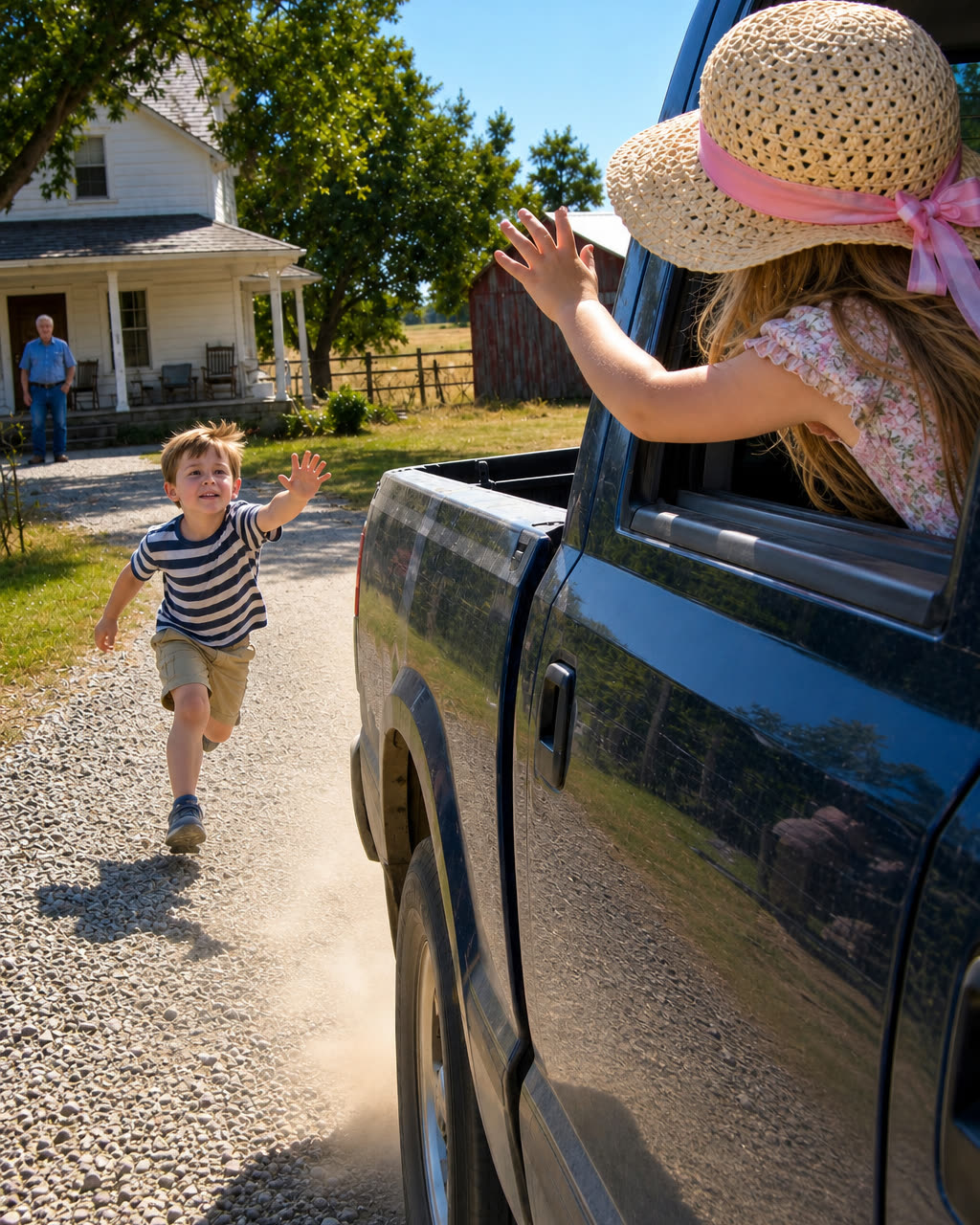
Mom tied a knot at the top of my race-car pillowcase and promised I’d only be with Grandpa a few weeks. Out front, my five-year-old sister, Paige, stood beside the truck in a new sun hat trimmed with ribbon. They were heading to Orlando that afternoon.
I asked whether I could have a hat too.
Mom laughed. "Where you’re going, buddy, you’ll want a real hat." Only then did I understand Orlando wasn’t where I was going.
Dad tossed my pillowcase into the truck. Watching it land, I wondered what I’d done to be shut out of a trip everyone else would get to enjoy.
I’m Cal. My parents, Rick and Donna, lived outside Kansas City. Dad ran a car dealership, and Mom oversaw payroll for a hospital system. She liked her schedules and costs predictable, and parking me on the farm apparently handled both.
Grandpa Walt, Mom’s father, owned six hundred forty acres in central Kansas, three hours west: wheat, milo, pasture, barns, and a farmhouse, all linked by roads I couldn’t tell apart. Mom had grown up there, yet she never looked happy coming back. She left the truck running while she handed over my things. "Mind your grandpa. Don’t make me get a phone call."
She talked with Grandpa briefly on the porch. They both stood with their arms crossed exactly the same way, a likeness I wouldn’t appreciate until years later.
Then she drove off.
I stood beside my pillowcase and watched the dust drift down. Grandpa didn’t promise me wonderful adventures or tell me the weeks would fly by.
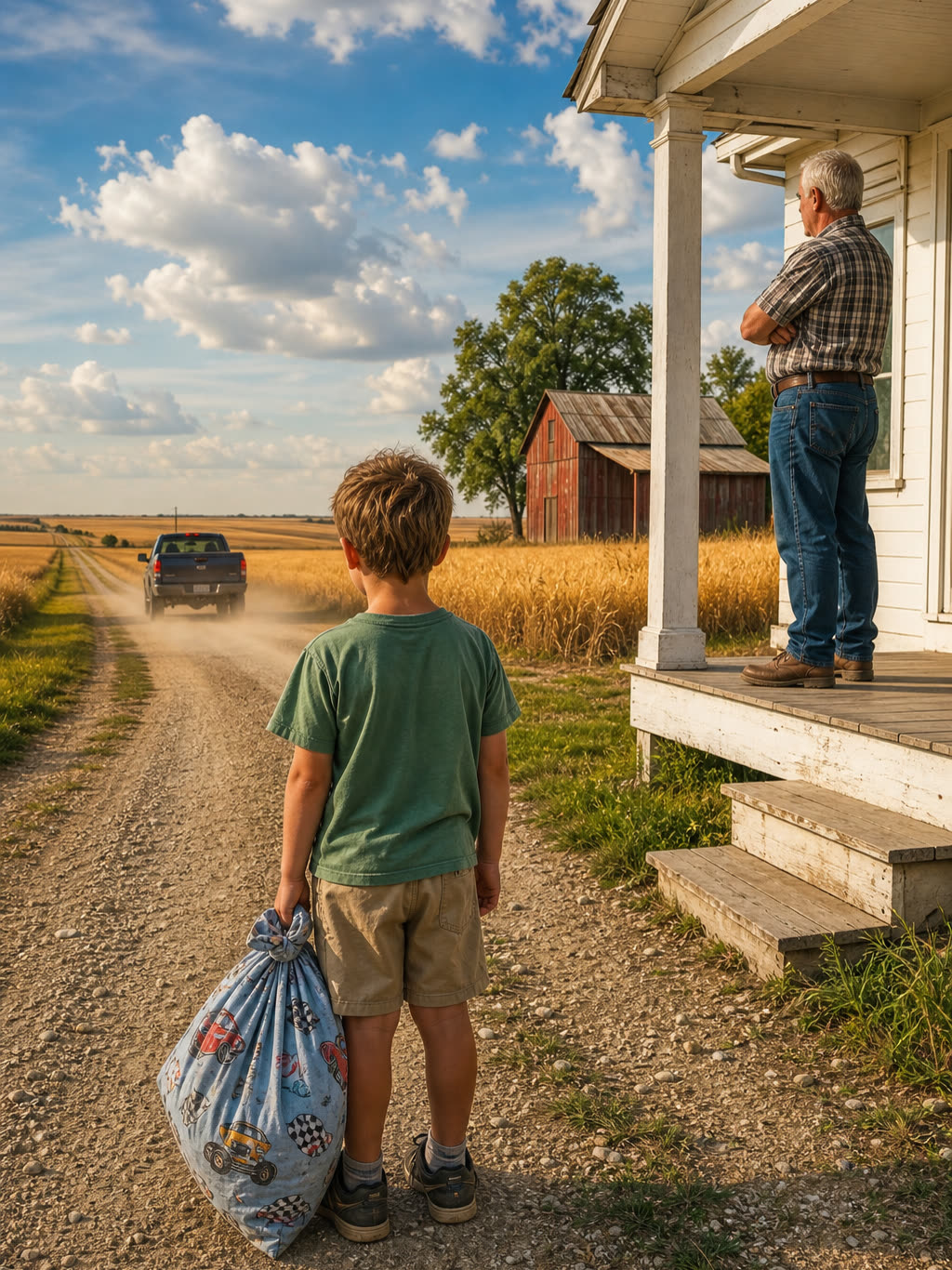
He took me upstairs to a room with a slanted ceiling and a quilt that smelled of cedar. With his wide shoulders, sunburned neck, and huge hands, he seemed like a giant. "Sun comes up at six," he said. "So do we." Then he switched off the light.
I lay listening to unfamiliar night sounds. With no suitcase to unpack, I undid Mom’s knot and laid out my clothes, trying not to picture Paige boarding a plane.
Grandpa had meant what he said about mornings. Calves had to be fed and water hauled, and even half-full buckets were heavy for a seven-year-old. I learned where to step, which gates had to stay shut, and how fast animals noticed carelessness.
I missed home and the feeling of belonging with Mom, Dad, and Paige. At first, each day felt like one more hurdle before someone came back for me.
But Grandpa stayed beside me. Whatever I was doing, he worked nearby. If chores pushed supper late, his supper waited too. He never handed me something hard and then went inside while I struggled alone.
Talking wasn’t his strength. Lots of questions got short answers, and praise was rare. Still, always knowing where to find him became a comfort. If he said something would happen after breakfast, it did. If he told me to stay close, he made sure I did.
At week’s end, he opened a little notebook held shut with a rubber band, penciled in some figures, looked them over, and gave me pocket money. I was disappointed. "That’s it?"
"That’s pocket money," he said. "The real pay comes in August." I imagined August bringing some dazzling prize a kid would recognize.
The promised weeks passed, and my parents didn’t come back. I kept learning the farm’s routines. The upstairs room became mine for the summer, and I knew the sound of Grandpa moving downstairs and where the spoons belonged. I also knew my parents were off traveling with Paige. No amount of talk about fresh country air could make their vacation and my arrangement feel equally good.
Near the end of August, Grandpa drove me into town. After pie at the café, we visited the courthouse for paperwork. Upstairs, Miss Opal gave me a peppermint while Grandpa slid an envelope across her counter. He handled stamped papers and had me sign, calling it handwriting practice. At seven, I focused on neat letters rather than on reading the pages. I assumed it was about the farm, like most of Grandpa’s paperwork.
The evening before Mom was due back, he brought me into his machine shop, which smelled of grease, equipment, and the old dog. From a hardware drawer he picked out a coin-sized brass washer, set it on the anvil, held a punch against it, and struck with a hammer. The number came out slightly crooked. He dropped it into my palm. "One for the can."
He handed me an empty red coffee can. I waited for more. "What does the number mean?" "It means you earned it." "What am I supposed to do with it?" "Keep it. Don’t lose it. Don’t show your mother."
So this was the real August pay. I couldn’t see why ordinary hardware needed to be a secret, or why Mom couldn’t see something I’d earned. Grandpa didn’t explain. I put it in the can anyway.
When Mom finally arrived, a flower lei dangled from the rearview mirror, and Paige slept beside a stuffed dolphin. Their Orlando vacation had somehow stretched into a whole summer that ended in Hawaii. Nobody asked about my summer. I kept the red can hidden beneath my seat.
The same arrangement repeated every year. Each September brought another fridge magnet: a sea lion, a cruise destination, a bison. Those little souvenirs were my only connection to the places my family went without me.
At eleven, I found photos from Paige’s birthday party at a resort. Relatives I hadn’t seen in years smiled beside the pool. I stared at an empty chair until Grandpa quietly closed the laptop behind me. "Storm’s coming. Help me get the equipment under cover." We worked in the rain until we were soaked and exhausted. Inside, he made hot chocolate, something he’d never done before. He didn’t ask me to explain my sadness.
At twelve, we rescued a calf caught in roots in a flooded creek bed. Grandpa’s bad knees kept him from climbing down, so he held the rope while I reached the animal and pulled us both out. Standing in the mud afterward, he put a hand on my neck. "That’s a good hand." He wrote in his notebook again. When I asked what it said, he answered, "Overtime."
The next spring, I rehearsed asking to go on vacation with my family. At dinner, Dad laughed as if my request were adorable. Mom said I loved the farm and Grandpa depended on my help. I suggested Paige could work there instead. Mom said her hay allergy made the farm practically dangerous, and Dad insisted other boys would envy my opportunity. They went to Italy.
That August, I asked about the washer numbers again. Grandpa repeated that I’d earned them and would understand when I needed to. At thirteen, I was too embarrassed by the odd ritual to keep asking. The courthouse trips continued: pie, peppermints, envelopes, signatures. I still thought of it as routine farm paperwork and assumed my handwriting simply pleased Grandpa.
At fourteen, my parents forgot about driver’s ed while planning another trip, so Grandpa taught me in his aging pickup. I drove it into a ditch. He didn’t shout. He fetched Hollis Rucker and a tractor to pull us out. That same week, someone at the feed store asked whether I belonged to Grandpa. "Near enough," he said. Those words stayed with me the whole drive home.
At fifteen, I asked one final time to join a family trip. Mom said there were only four places. When I pointed out that our family had four members, she said Paige was bringing a friend. The girl’s parents were divorcing, Mom explained, and taking the vacation away would be cruel. I packed for the farm without protesting.
That summer, Grandpa admitted Mom had hated growing up there. He’d worked her hard with no wages or praise, even though she was remarkably capable. "The best I ever had," he said. "Before you."
At seventeen, hail wrecked much of the wheat just before harvest. We worked punishing days saving what was left, and some nights I could barely stay awake. One evening, eating cold sandwiches on a tailgate, Grandpa praised my work. "You too," I answered. He laughed.
That August, he held the eleventh washer in his palm longer than usual. It was the last one, he said, the important one, because next summer I’d start my own life. At the courthouse, Miss Opal shook my hand. Grandpa’s attorney, Mr. Barlow, was there, and this time I signed three pages instead of one. Outside, Grandpa looked down Main Street. "That’s done, then."
We went back to the café for pie. I carried the coffee can home, no closer to understanding those mysterious numbers. Something had changed, though: leaving the farm now hurt more than going there ever had. And those eleven crooked numbers were still waiting to be read.
Part 2: Eleven Washers on the Kitchen Table
That fall, Kansas State accepted me into its agriculture program with a partial scholarship. I’d worked hard in school, and Grandpa had always studied my report cards closely.
I brought my acceptance letter to dinner, hoping my parents would see what it meant. I didn’t need them to understand every course. I just wanted them to care. Dad said, "Good for you, pal," without looking up from his phone. Mom said we’d discuss finances.
That conversation didn’t happen until March, when I brought up the approaching dorm payment deadline. She told me my college savings weren’t what I’d imagined. I reminded her of Grandpa’s Christmas envelopes, clearly marked for my education. She said the money had gone into the family account.
There had been household expenses: roof repairs, Paige’s dance company, costumes, travel. With my scholarship and my independent nature, Mom believed I’d manage somehow.
Then Paige walked in with a brochure for a summer dance program in London and Paris. Both parents would go with her. Mom’s face lit up. I stayed in my chair, trying to square their excitement over Paige’s opportunity with their indifference toward my education.
I went upstairs quietly, without slamming any doors. Mom later said I stormed off. What I remember is sitting silently on my bed, no longer pretending the unequal treatment was an accident.
At my high-school graduation, my parents left before my name was called. Dad had a business call, and Mom had to pick up Paige from rehearsal. Grandpa stayed in the top row in his good shirt and boots, and he stood to applaud when I crossed the stage. On the gym floor, he shook my hand and said he was proud.
He arranged to pay my immediate college costs directly and reminded me my room was still there if I wanted to spend the summer on the farm. I moved there once my parents left for Europe. The note I left stayed on the fridge beneath the Pisa magnet. Weeks later, Mom texted from Paris asking where the garage remote was.
College meant coursework, a job, and early shifts at the research farm. Every Sunday at seven, I called Grandpa. We talked about rain, livestock, soil chemistry, and people whose classroom knowledge sometimes outran their ability to fix a broken machine. I came back for holidays and harvests. Over time, Grandpa handed more decisions to me, until Hollis heard "Ask Cal" whenever he wanted Grandpa’s judgment. Only later did I fully grasp what that trust meant.
Once, Grandpa visited campus to look over where I worked. He examined the feedlot, spotted a problem with its bunks, and watched the manager weigh his advice before reaching for a wrench. At dinner, our waitress asked what we were celebrating. Grandpa pointed his fork at me. "Him."
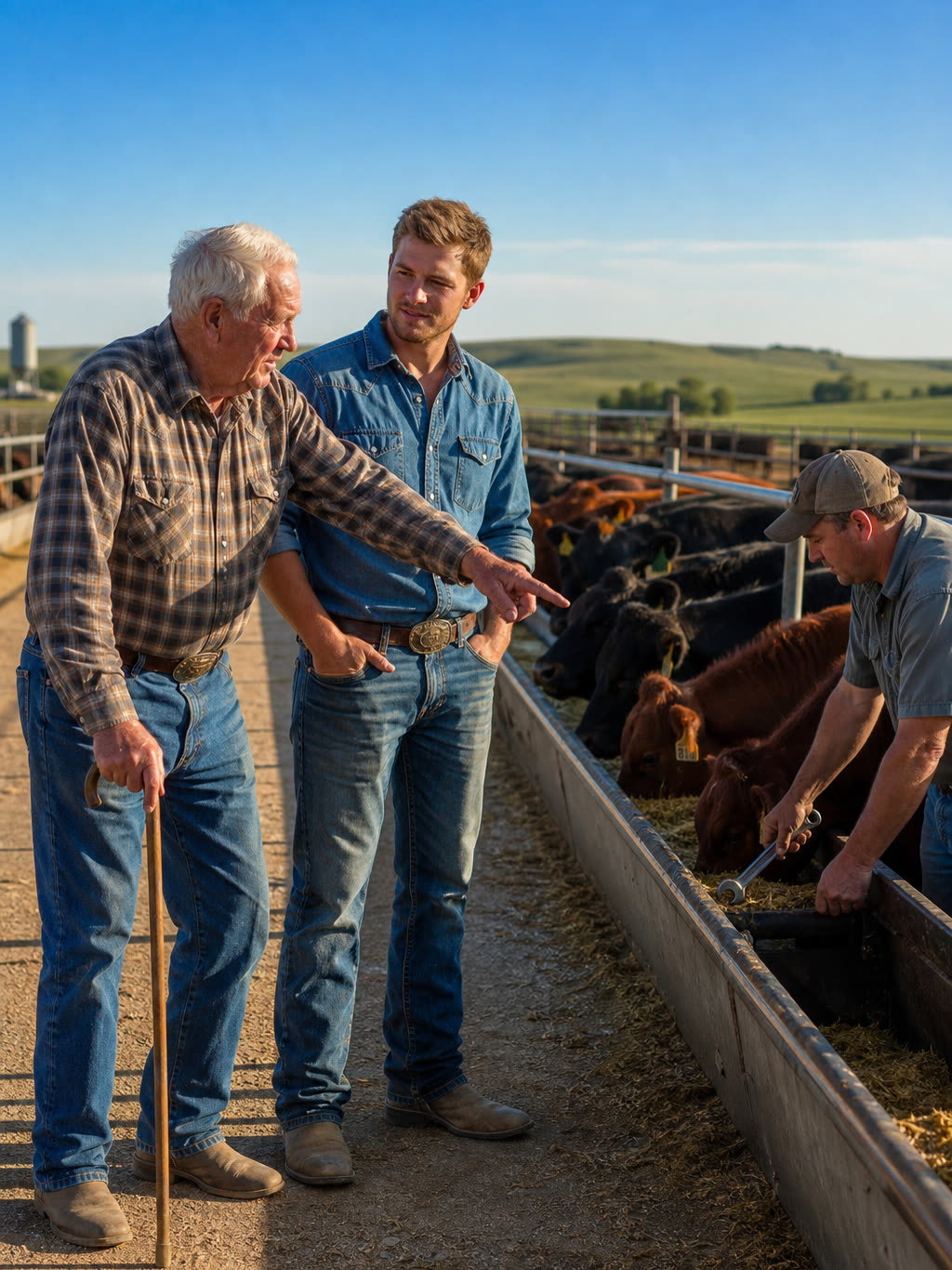
My parents missed my university graduation because Paige had a sorority event. Grandpa came with his cane and stayed on his feet until I crossed the stage.
Afterward, I became a field agronomist for a cooperative and rented a small house close enough to spend weekends on the farm. By twenty-three, I’d built a quiet life I truly enjoyed. Grandpa and I saw each other often, I helped at harvest, and I rarely heard from my parents.
Then, early one March morning, Hollis called instead of sending his usual short text. Grandpa had fallen in the barn and lain there all night. Hollis found him nine hours later, and an ambulance took him to Salina with a fractured hip.
My parents were waiting outside surgery when I arrived. I hadn’t seen Mom in person in nearly five years, and her first question was how I’d gotten there so fast. She held a manila folder containing a durable power of attorney from 2009, signed after Grandma died. Grandpa was eighty-two, she argued, and his confusion after the fall proved he couldn’t take care of himself.
I looked at the operating-room doors. Grandpa had spent nine hours hurt and alone, and my parents were already debating what authority his condition gave them.
When I finally saw Grandpa, he immediately asked whether the cattle had eaten. Hollis had done the morning feeding, I explained, and I’d cover evening chores. He reminded me about the red heifer in the east pen. His eyes were clear. Then he asked whether Mom had brought paperwork. When I said yes, his mouth twitched. "Course she did."
That night, the heifer calved without trouble. I slept on the farmhouse couch and split the following days between my job, the hospital, and the farm. A broken hip hadn’t erased Grandpa’s concern for the land.
On the fourth day, I found strangers surveying the north field. A Prairie Sun Renewables representative said my parents had signed preliminary documents committing the entire section to a solar installation. He showed me the paperwork, signed by Mom as the representative of Walter Kessler.
I called her right away. She said the sale would pay for assisted living, though nobody had asked Grandpa whether he wanted to move. Then she mentioned they’d committed to buying a lake house and called the timing a blessing. I hung up. The care decisions were still assumptions, yet Mom had already pledged land she might not even control.
Paige showed up the next day carrying two iced coffees. In white sneakers, she carefully dodged the mud and admitted she hadn’t known where I lived. Over the years, Mom’s explanations had placed me in different cities. We sat on the pickup’s tailgate. She said she’d questioned my absence every summer. Mom always told her I preferred Grandpa, disliked traveling, and chose to stay behind. Paige had actually envied the separate life she thought I’d picked.
I listened. For years, I’d assumed Paige knew exactly why she got vacations while I was left out. Now she sat beside me, sneezing and upset over a story we’d never been allowed to compare.
While helping with paperwork, Paige had found Mom’s school-fund spreadsheet. It listed eleven Christmas contributions totaling forty-four thousand dollars, along with the expenses charged against them. Her London dance program was one of the entries.
I asked whether she’d like to meet a calf. She followed me into the barn with her sleeve over her nose. When a little bull calf licked her sneaker, she shrieked, then laughed so hard she sat down in the hay.
That evening, our parents were waiting at Grandpa’s kitchen table. A title review had disrupted their plans. Mom shoved a report at me and demanded to know why the records showed I owned most of Grandpa’s farm. The map listed Walter Kessler as owner of only two hundred acres. The other four hundred forty, including the farmhouse, barns, access road, and land bordering the transmission line, belonged to Calvin W. Haynes. Me. I recognized the tract numbers printed across the map.
Before I could answer, Dad accused me of abandoning the family and coming back once Grandpa was vulnerable. I reminded him I’d been there for weekends, holidays, and harvests; they simply hadn’t bothered to come. Mom insisted I’d manipulated a confused old man. She’d already requested an emergency conservatorship hearing for Monday and planned to challenge the deeds.
"You sent me here," I said.
I got the red coffee can, opened it, and poured eleven washers onto the map, matching each stamped number to its piece of land. The north field. The creek bottom. Places where Grandpa and I had worked together. One washer read T1–40. Another read T2–35. The markings I’d thought were meaningless had been land references all along.
The last washer was different. HOME. I set it directly on top of the farmhouse.
Dad stared and called them washers, his voice hollow. Paige explained that Grandpa had given me land and the washers were receipts. Mom gathered her papers and said we’d see what the judge decided.
Paige stayed behind. Later, she asked why Grandpa had never told me. I thought back to being seven, when Mom was the only person I could have told. I would’ve told her immediately, I said. Neither of us had to describe what might have followed. And on Monday, a judge would decide whose word counted.
Part 3: The Last Washer
Mr. Barlow arrived early the next morning. Grandpa had called from the hospital with a nurse’s help and told his attorney to show me the file. An accordion folder bore my name in Grandpa’s unmistakable block letters.
Inside were eleven recorded deeds, each with a signed acceptance. I recognized my own handwriting, growing more mature page by page. The courthouse signatures I’d thought were practice in exchange for peppermints had been legal transactions, prepared and recorded through Grandpa’s attorney.
Barlow explained that Grandpa had carefully documented every gift of land, including my acceptance, so that no future dispute could cloud his intentions. These weren’t promises that took effect when he died. Ownership had already passed to me.
Next, Barlow produced a document revoking Mom’s 2009 power of attorney. Grandpa had signed it during our final August courthouse trip, six years earlier. A certified-mail receipt confirmed delivery to Mom’s address, and her signature was on it.
"She knew," I said. "She signed for the letter," Barlow answered carefully. Deciding what she actually knew was the judge’s job. I looked at the receipt again, reminding myself to separate documented evidence from what I wanted to believe.
Barlow also had copies of Grandpa’s contributions toward my education. Grandpa had kept them, he said, because he knew Mom was an excellent bookkeeper. That understated remark suggested her spreadsheet wasn’t the only ledger she might have expected everyone to rely on.
On Sunday, Bev, a hospital nurse, stopped me outside Grandpa’s room. Mom had come earlier with a notary and documents she wanted Grandpa to sign in private. He read enough to call Bev and ask both visitors to leave. He refused to sign anything until his own attorney had reviewed it. Bev recorded the visit and its exact time.
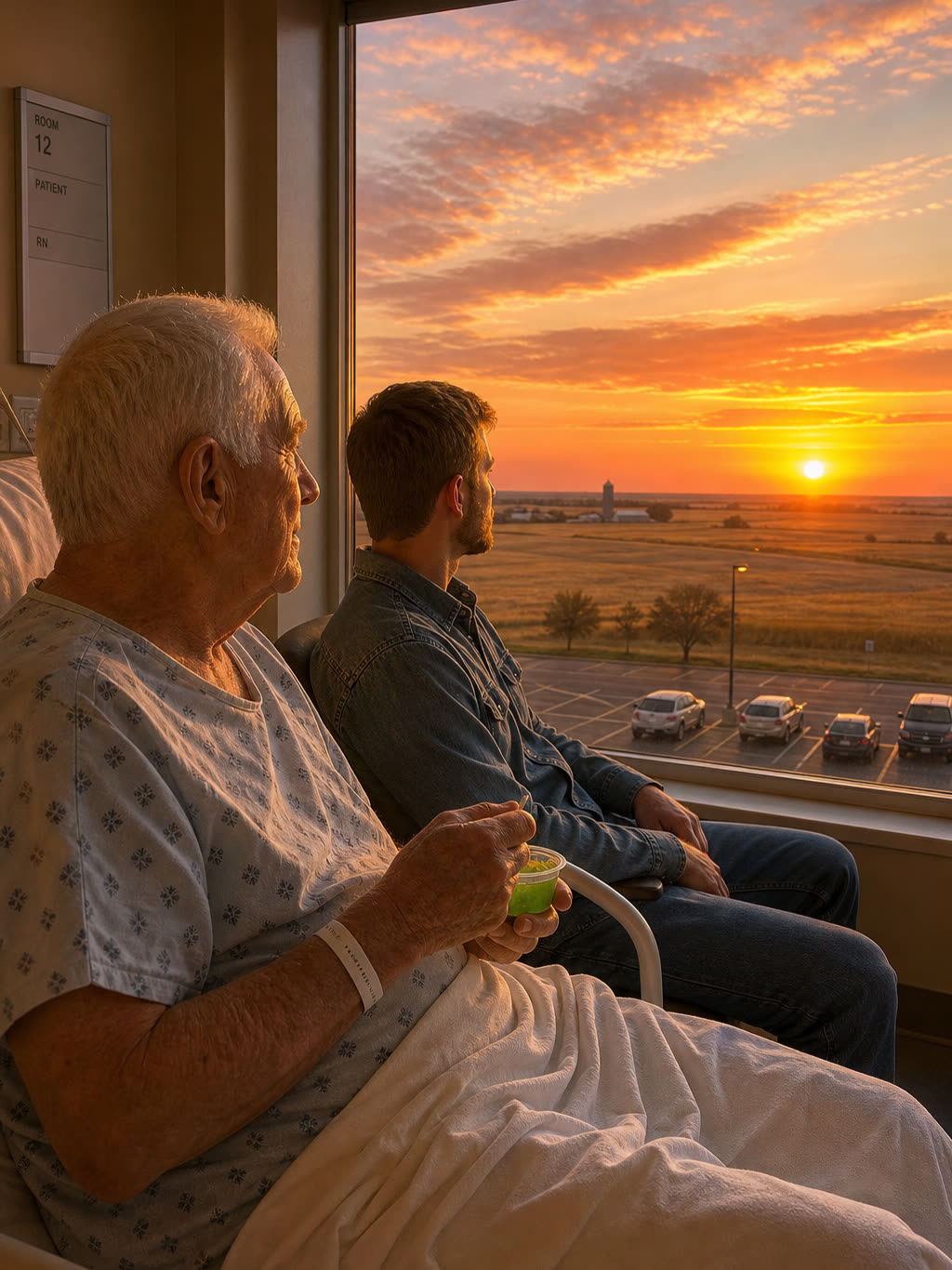
I thanked her and went in. Grandpa was eating green gelatin and knew at once she’d spoken to me. When I asked how he felt, he looked out at the parking lot. Mom had cried in the hallway after she left, he said. As a girl, she’d also cried in the grain truck, thinking the engine hid the sound. Grandpa had heard her but never gone to comfort her.
I sat quietly, unable to find words that could repair either memory.
Eventually, he asked about the newborn calf. I told him it was nursing well. We watched the parking lot until visiting hours ended.
Monday’s hearing took place in the county building. Mom sat beside her attorney with her familiar folder. Dad sat behind her, and Paige sat next to me. Grandpa arrived in a wheelchair with a nurse, a blanket over his legs. He’d sent Hollis for his pearl-snap shirt because he refused to face a judge in a hospital gown. Being injured hadn’t made him any more accommodating.
My parents’ attorney described Grandpa as an elderly man found confused and unable to manage his affairs. He claimed Mom had acted honestly under her legal authority, and he suggested that a grandson who now owned most of the land must have exerted undue influence.
Barlow presented the deeds and acceptances, along with an assessment from the court-appointed physician confirming that Grandpa was alert, oriented, and competent. The confusion noted at admission was consistent with dehydration and prolonged exposure after his fall. Then Barlow produced the revocation and the certified delivery receipt.
Judge Thornberry examined both and asked how Mom had exercised authority that had expired six years earlier. Her attorney turned toward her, visibly surprised. The judge reviewed the property records and noted that Grandpa no longer owned much of the land Mom had proposed selling. After asking Barlow to confirm the arrangements, she addressed Grandpa. "Mr. Kessler, I’d like to hear from you directly, if you’re able."
"I’m able," Grandpa said.
I watched him sitting there in the shirt he’d worn on so many August trips. My parents had spent days deciding what should happen to him. Finally, someone was asking the man whose future they meant to control.
Judge Thornberry asked whether he’d intentionally transferred the farmland to me. "Every acre." When she asked why, he looked at Mom. He said I’d worked eleven summers, often with plenty to complain about. Then he spoke of his own daughter, whom he’d worked just as hard without wages or praise. "She was the best I ever had."
He paused to catch his breath. I’d heard that admission years earlier on the porch, but Mom never had. Her hands trembled against the folder as Grandpa admitted he’d failed her. "I wasn’t going to get it wrong twice."
When Mom began leaving me on the farm each summer, he explained, he saw a second chance. He wanted my labor recognized with something lasting, something no one could later refuse to honor.
The courtroom was silent. I watched Mom, unable to tell whether she was thinking about what the land was worth or remembering herself as a little girl crying in a grain truck. Understanding her pain didn’t excuse how she’d treated me.
The judge asked whether he wished to sell the farm. "No, ma’am. I want to go home. Got a heifer due." Someone behind us chuckled softly. I suspected Hollis.
The judge denied the conservatorship petition. She found Grandpa capable of making decisions and ruled that the evidence didn’t establish undue influence. The deeds had been independently prepared, properly executed, and officially recorded over eleven years, beginning when I was seven. She upheld the revocation, found Mom’s reliance on the expired authority invalid, and ordered my parents to pay Grandpa’s legal costs for the proceeding. The education funds weren’t resolved that day, though she urged their lawyer to settle the matter before further litigation.
I didn’t take the ruling as a verdict on every painful year of my childhood. It answered the legal questions in front of it.
The solar project was abandoned. Prairie Sun withdrew, and my parents’ lake-house purchase fell apart, costing them their nonrefundable commitment.
Two weeks later, forty-four thousand dollars meant for my education came back through Barlow’s office. There was no explanation, only the words "Cal School" in Mom’s careful handwriting. I looked at them and remembered that long-ago dorm deadline and how easily she’d said I would manage on my own.
The outcome didn’t rewrite my childhood. I still remembered the vacation magnets on the fridge and the resort photo with the empty chair. But my parents could no longer decide Grandpa’s future or my property rights by speaking for us.
We brought Grandpa home on Thursday. Paige followed in her crossover. I watched her headlights without wondering whether she really meant to come along. She’d stayed through the hearing and could decide for herself where to spend the afternoon.
Grandpa insisted on seeing the red heifer’s calf before anything else. I pushed his wheelchair to the east pen while he looked over the animal he’d missed. Being home didn’t mean he could take back every chore right away, but he was perfectly able to tell me what needed doing.
Afterward, he directed us to the machine shop. The familiar smell of grease and machinery met me when I opened the door. For eleven summers, this room was where Grandpa had finished our work with a hammer, a stamped number, and a reward I couldn’t understand.
He pointed at the hardware drawer and told me to open it. In the back lay a blank brass washer I’d never noticed. I picked it up and placed it in his palm.
Paige stood in the doorway in her white sneakers, pressing a bandana to her nose. She was still there.
Grandpa studied the washer, glanced at Paige, then looked back at me. "Sun comes up at six. You think she’s any good?"
I looked at my sister. "Only one way to find out."
Grandpa closed his fingers around the brass washer. And for the first time I could remember, his whole face opened into a smile.
