

Part 1: The Ultimatum at the Bedside
I sit beside the hospital bed of my eight-year-old daughter, Emma, watching the ventilator keep its steady rhythm. She has not woken in three days, ever since a severe asthma attack turned into respiratory failure.
My phone buzzes with yet another text from my mother. “Bring dessert for Stephanie’s gender reveal tonight. Don’t be useless like always.”
I take in her words, look over at Emma’s pale face framed by machines, and type my reply. “I’m at the hospital. Emma’s on a ventilator.”
Her answer comes almost instantly. “Priorities: Show up or stay out of our lives forever.”
The lights above Emma’s bed keep up their endless hum. Seventy-two hours have passed since that terrifying Thursday night when everything changed.
I had picked Emma up from her mother Jessica’s house to start my custody week, and she seemed completely fine at dinner. We watched a movie together, and she went to bed around eight-thirty. At two in the morning, though, I woke to the awful sound of her struggling to breathe.
Her inhaler did nothing, and nothing else I tried helped. I had never seen her lips turn that alarming shade of blue. The ambulance ride to Children’s Medical Center felt endless, even though the paramedic told me it had taken only twelve minutes. Emma stopped responding just as we reached the emergency entrance.
Dr. Patricia Williams, the pediatric respiratory specialist, described Emma’s condition in medical terms that are now burned into my memory. She had severe bronchospasm and respiratory failure, and there was a risk of lasting lung problems if the inflammation couldn’t be controlled. The team gave her breathing support right away and put her on a ventilator so her lungs could recover.
“The next 48 to 72 hours are critical,” Dr. Williams had said. Her kind face showed both long experience and real concern. Children with asthma complications as serious as Emma’s can recover completely, she explained, but they need close monitoring and plenty of rest for their lungs.
I haven’t left the hospital since. My supervisor at Peterson Electric understood the moment I asked for emergency leave. Frank has spent thirty years in our trade, and he knows what it means to have a child in intensive care. “Take all the time you need, Monroe,” he’d said.

My crew could handle the work without me, but my family saw things very differently. My mother’s latest text was far from her first. She had been messaging me nonstop since Friday about Stephanie’s gender reveal.
My younger sister had always been the family favorite, the one whose choices nobody questioned. Now she and her husband Derek were about to announce whether they were having a girl or a boy. In my mother’s world, this was apparently the social event of the season.
“You promised you’d bring the chocolate cake from Morrison’s bakery,” she texted Friday morning. I had agreed to bring that cake three weeks earlier, long before Emma’s sudden hospitalization turned everything upside down. “Stephanie specifically requested it because you always pick the good desserts.”
I explained Emma’s emergency again and again, and my mother grew more impatient with every reply. “She’s had asthma att@cks before, Monroe. You’re being overly dramatic. One night in the hospital doesn’t mean you abandoned family commitments.”
That was when I finally saw something I should have recognized long ago. My mother had never truly understood how serious Emma’s condition was. To her, asthma was just another inconvenience and another excuse to accuse me of dodging responsibility or chasing sympathy. The pattern had been there for years, but my need to keep everyone happy had stopped me from admitting it.
Stephanie called me herself on Saturday morning. “Monroe, what’s this nonsense about missing my party?” “Mom says you’re trying to get out of your obligations again.”
“My daughter is on a ventilator, Stephanie. She can’t breathe on her own right now.”
“Come on, you’re exaggerating. Kids bounce back from these things. Derek’s sister’s son had pneumonia last month and she still made it to our engagement celebration. You just need to prioritize better.”
I hung up, but by then the story had already spread through the extended family. Cousins, aunts and uncles were hearing a version in which Monroe was being unreasonable and letting everyone down at an important family occasion. Messages kept arriving from relatives asking whether I truly valued family.
Uncle Paul sent another one. “Your sister only gets one first gender reveal.” “Monroe Emma will understand when she’s older that sometimes we have to make sacrifices for special occasions.”
Dr. Williams noticed how distressed I looked during her evening rounds. “Mr. Garrett, you’ve been here for three straight days. When’s the last time you ate a real meal or changed clothes?”
I looked down at the work shirt and jeans I had been wearing since Thursday evening. “I can’t leave her, doctor. What if something happens while I’m gone?”
“The nurses will call you immediately if there’s any change. You’re no good to Emma if you collapse from exhaustion. At least go to the cafeteria for 20 minutes.”
Even so, I couldn’t bring myself to step out. A ventilator was breathing for Emma, and monitors tracked her vital signs day and night. How could I possibly go celebrate with cake and party games while my daughter needed intensive care?
That was when Jessica showed up unexpectedly. We had been divorced for two years, and we rarely talked about anything except custody schedules and pickups. Yet there she was on Saturday evening, walking into the intensive care unit with a determined look.
“Monroe, we need to talk,” she announced, not even glancing at Emma first. “I’ve been thinking about this situation and I’m not comfortable with how you’ve been handling things.”
“How I’ve been handling things. Jessica, I brought her to the hospital the second she couldn’t breathe.” “What exactly should I have done differently?”
“You should have been monitoring her condition better in the first place. You should have noticed the signs earlier.” “Emma told me her inhaler wasn’t working as well lately. But did you follow up with her doctor? Did you make sure she was taking her preventive medication consistently?”
Her accusations shook me badly. Emma’s prescriptions had always been refilled on time. Since the divorce, I had taken her to her respiratory specialist regularly. I had learned the correct inhaler technique and taught her the early warning signs of an attack.
“Jessica, you know that’s not fair. I’ve been managing her asthma perfectly well.”
“Have you? Because Dr. Williams told me that Emma’s inflammation levels suggest this has been building for weeks.” “Where were you when that was happening?”
I stared at her, trying to understand why the conversation had turned into an accusation. “Are you seriously trying to blame me for Emma getting sick?”
“I’m saying that maybe it’s time to reconsider our custody arrangement. Emma needs stability. She needs a parent who can focus completely on her health needs without getting distracted by work schedules and weekend plans.”
Her intentions were becoming obvious. Jessica was thinking about seeking sole custody and using Emma’s hospitalization to question whether I could care for our daughter. Even more worrying, I suspected she had been talking with my mother, who was already telling relatives that I had neglected my family duties and shown poor judgment.
Standing in that quiet room, surrounded by machines and the familiar smell of disinfectant, I felt more alone than ever. Emma needed steady support from her parents during the hardest ordeal of her young life. Instead of encouragement from our family, I faced one accusation after another about my parenting.
After Jessica left that evening, mentioning that she might consult her attorney, I made an important decision. I blocked my mother’s number. Nobody was going to pressure me into leaving Emma’s room just to attend a party. I refused to apologize for putting my daughter’s medical needs ahead of social obligations, though I had no idea how much more complicated things were about to get.
Sunday morning brought another confrontation I never could have predicted. At six forty-five, Stephanie got around my blocks by calling from Derek’s phone. Her voice was sharp with frustration the moment I answered.
“Monroe Jacob Garrett, how dare you block mom’s number?” “How dare you embarrass our entire family like this?”
I kept my voice low, because Emma was still unconscious and the nurses had said patients might respond to familiar voices. “Stephanie, my daughter is critically ill. I’m not discussing party planning right now.”
“You’re not discussing anything because you’ve decided to be completely selfish and self-absorbed.” “Do you have any idea how humiliated I was yesterday? Do you know what it felt like to have to explain to 35 people why my own brother couldn’t be bothered to show up?”
“I told you exactly where I was and why.”
“You told me you were being overly dramatic about a routine asthma flare up. Emma’s fine, Monroe.” “She’s probably just milking the attention because she knows you’ll fall for it. Kids manipulate their parents all the time.”
I was speechless. My eight-year-old lay unconscious, kept breathing by specialized equipment, and somehow my sister saw it as attention-seeking.
“Stephanie, I’m hanging up now.”
“Wait, before you do, you should know that I’ve been talking to family members about this pattern of behavior. This isn’t the first time you’ve used Emma as an excuse to avoid family responsibilities.” “Remember Christmas 2 years ago when you left early because she had a stomach ache? Remember Fourth of July when you couldn’t stay for fireworks because of her bedtime routine?”
I remembered both perfectly. At Christmas, Emma had run a 102-degree fever. On the Fourth of July, the crowds and noise had overwhelmed her, and I had noticed the anxiety symptoms that sometimes set off her asthma.
“Those weren’t excuses, Stephanie. Those were parenting decisions.”
“Those were you putting a child’s temporary discomfort above family unity.” “And now you’re doing it again. Except this time, you’re hiding behind a medical emergency to justify your antisocial behavior.”
“Derek and I have been discussing this situation,” she continued. “And we think you might benefit from some professional guidance about establishing appropriate boundaries with Emma. It’s not healthy for a child to have that much control over a parent’s social life.”
Derek was a junior partner at a mid-sized law firm downtown. Her mention of him suggested they might take legal action if I didn’t meet their expectations.
“My boundary is keeping my daughter alive. Stephanie, I’m sorry if that interferes with your party planning.”
“Your boundary is using a sick child to manipulate everyone around you into accommodating your social anxiety and need for attention, but it’s not going to work anymore. Monroe, the family has talked and we’re not enabling this behavior.” She hung up before I could answer.
About an hour later, I found out what she meant. She had posted about her gender reveal on social media, presenting it as a day spoiled by disappointment and family disloyalty. One photo showed a beautifully decorated backyard in pink and blue, smiling relatives and a lovely cake from Morrison’s bakery. Someone else had obviously bought the dessert I had promised.
The captions were far less cheerful. “When family members choose drama over love, the rest of us just love each other harder.” “And so grateful for the relatives who show up when it matters.” “and learning to let go of those who always find excuses.”
Aunts, cousins and family friends filled the comments with sympathy for Stephanie. No one mentioned that the man being criticized was sitting in a pediatric ICU beside his seriously ill daughter.
By midday, relatives who had attended began calling me one by one. Aunt Linda, my mother’s sister, asked about Emma briefly before spending most of the call on Stephanie’s disappointment. “I know you love Emma, sweetie, but sometimes we have to trust that children are more resilient than we think. Stephanie only gets one first pregnancy, and family support during these milestones really matters.”
An hour later, my cousin Marcus offered similar remarks dressed up as friendly advice. “Hey man, I heard Emma’s having some breathing problems. That’s rough, but you know, stress affects kids, too.” “And maybe she’d recover faster if she wasn’t picking up on your anxiety about leaving the hospital.”
The most upsetting call came from Uncle Paul, my mother’s younger brother, who seemed to have made himself the family’s spokesman. “Monroe, we need to have a serious conversation about your priorities. Your mother is heartbroken about this situation. Stephanie is questioning whether she can count on you for anything important.” “And frankly, some of us are wondering if you’re using Emma’s medical issues to avoid dealing with your social obligations.”
“Uncle Paul. Emma is on a ventilator. She can’t breathe without machine assistance. This isn’t a social obligation conflict.”
“That’s exactly the kind of dramatic language that makes everyone worry about your judgment. Kids get sick, Monroe. They go to the hospital.” “But life doesn’t stop for the rest of us. Your grandmother survived raising five children without cancelling family events every time someone had a fever.”
His comparison made little sense. My grandmother had raised her children when doctors understood far less about childhood asthma, and some children of her generation suffered terrible outcomes from respiratory illness. But Uncle Paul didn’t care about medical facts. All that mattered to him was whether I would obey.
“We’ve decided that you need some space to think about your priorities,” he continued. “Until you’re ready to apologize to your mother and sister, and until you’re ready to participate in family events without using Emma as an excuse, we think it’s best if you handle your problems independently.”
The message was unmistakable. My relatives planned to withdraw their emotional and financial support unless I gave in.
That afternoon, Dr. Williams came by on her rounds and noticed my exhaustion right away. “Mr. Garrett, you look like you haven’t slept in days. How are you holding up?”
“I’m fine, doctor. How’s Emma doing?”
“Emma’s holding steady, but I’m concerned about you. Are you getting any support from family members? Going through this alone can be overwhelming.”
The irony almost made me laugh. “My family thinks I’m being overdramatic about Emma’s condition. They think she’s manipulating me for attention.”
Dr. Williams looked genuinely concerned. “Mr. Garrett, your daughter has been on mechanical ventilation for 3 days. There’s nothing manipulative about respiratory failure. Has anyone in your family spoken with me or the nursing staff about Emma’s medical status?”
“No, doctor.” “They’re too busy planning parties.”
“I see. Well, for what it’s worth, you’re doing exactly what a good parent should do. Emma needs your presence more than she needs anything else right now. Children in intensive care recover faster when they have consistent, loving support.”
Even her kind words couldn’t fully ease my loneliness. My family had decided that Stephanie’s party mattered more than Emma’s hospitalization, and they saw my devotion to my daughter as selfishness. By Sunday night, Emma’s mother was questioning our custody arrangement, and my own relatives were treating her emergency as proof that I was unreliable. I still had no idea that an even more painful discovery awaited me.
Part 2: The Visitor Nobody Authorized
Monday finally brought hopeful news after days of fear. Emma’s oxygen levels were improving, and Dr. Williams cautiously mentioned reducing the ventilator support if the progress continued. Her fingers moved slightly when I spoke, and her eyelids fluttered now and then, as if she were slowly coming back to awareness.
I had slept barely two hours over four days, and the chair beside her bed had become my home. Cafeteria coffee kept me barely alert, and I lived on vending-machine sandwiches and snack bars with almost no appetite. On Sunday evening, Sarah, a night nurse who had been especially kind to us, brought me a pillow and blanket. “Mr. Garrett, you need to take care of yourself, too. Emma’s going to need you to be strong when she wakes up.” Still, every alarm and every change in her readings made me afraid to leave her, even for a moment.
Then my grandfather called. Grandfather Harold, my mother’s father, was a retired carpenter who had always brought patience and common sense to our tangled family. At eighty-two, he still lived on his own in his modest house across town, tending his garden and working in his woodshop. “Monroe, I just heard about Emma being in the hospital.” “How is she, son?”
Hearing someone ask about Emma without mentioning family arguments filled me with relief. “She’s on a ventilator, Grandpa. Respiratory failure from a severe asthma attack, but the doctors think she might be improving.”
“Good lord, why didn’t anyone tell me how serious this was? Your mother said Emma was having one of her episodes and that you were making a big fuss about routine medical care.”
An uncomfortable realization began to form. “Grandpa, Emma’s been unconscious for 4 days. She can’t breathe without mechanical assistance. There’s nothing routine about this.”
He was silent for a while. “Monroe, I think there’s been some serious miscommunication in this family. Your mother told everyone at Stephanie’s party that Emma had a minor asthma flare up and that you were using it as an excuse to avoid family obligations.” “She said you were keeping Emma home from school to get sympathy and attention.”
“Emma’s been in intensive care since Thursday night. She hasn’t been home at all.”
“That’s not the story we heard. According to your mother, you’ve been playing up Emma’s medical issues for dramatic effect and teaching her to use illness as manipulation.”
It was painfully clear that my mother had been feeding our relatives a deeply misleading account, convincing them that Emma’s symptoms were minor and that I was exaggerating to skip family gatherings. “Grandpa, would you like to speak with Emma’s doctor? Dr. Williams can explain exactly how serious this situation has been.”
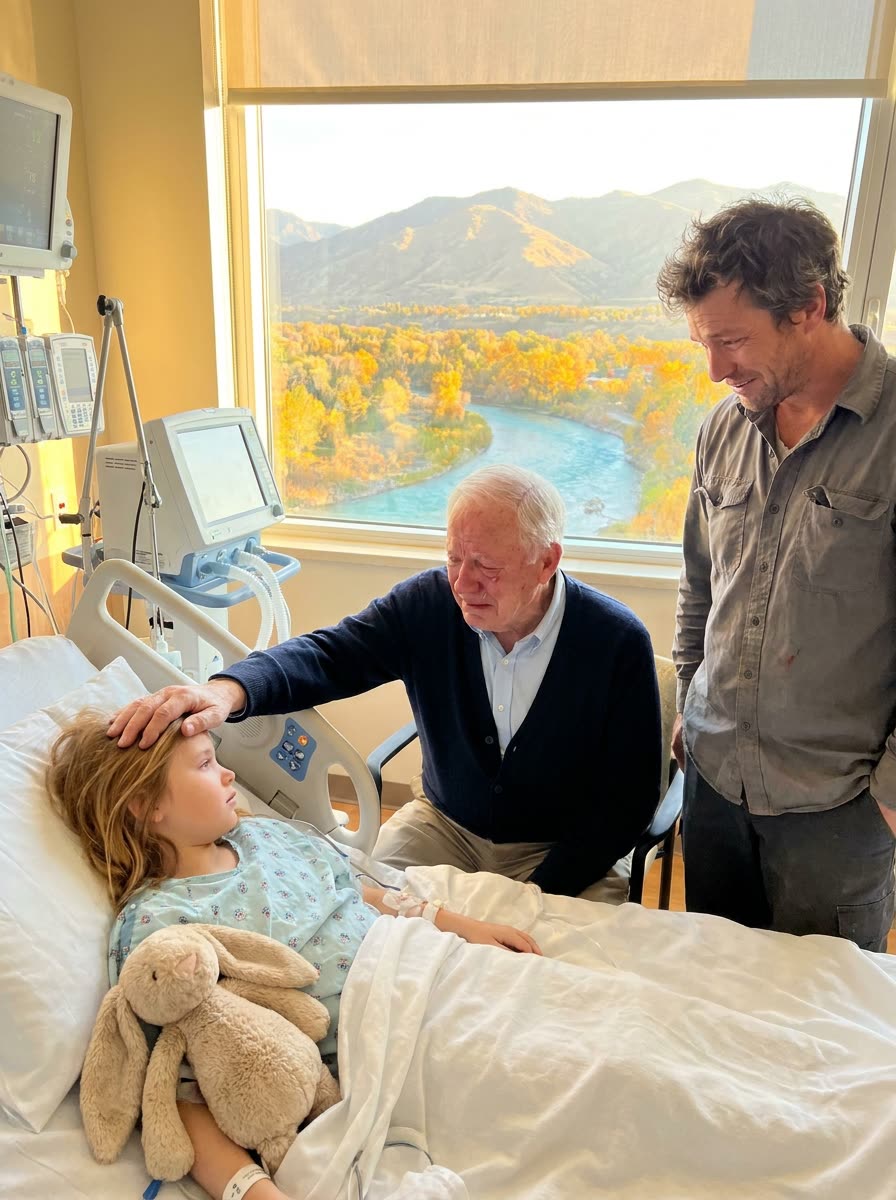
“I’d appreciate that, son. And Monroe, I’m coming to the hospital today. If my great granddaughter is fighting for her life, I want to be there.”
Grandfather Harold arrived around three that afternoon, carrying the familiar scent of pipe tobacco and fresh-cut wood that reminded me of childhood afternoons in his workshop. When he saw Emma surrounded by monitors, he slowly lowered himself into the empty chair. “Oh, sweetheart,” he whispered, reaching out to gently touch Emma’s forehead. “I had no idea.”
Dr. Williams spent about twenty minutes explaining Emma’s diagnosis, treatment and expected recovery. My grandfather grew more serious as he heard details my mother had left out or twisted. “Doctor, is Monroe doing everything right? Is he helping Emma’s recovery by staying here?”
“Mr. Garrett is doing exactly what Emma needs,” Dr. Williams assured him. “Parental presence is one of the most important factors in pediatric recovery.” “Children heal faster when they know their parents are nearby.”
After she left, my grandfather sat quietly for several minutes, watching Emma’s chest rise with the ventilator. “Monroe, I need to tell you something that’s been bothering me. Your mother has been acting strangely about money lately.” “She’s been asking me for help with household expenses, saying you’ve been borrowing from her and not paying her back.” “She’s also mentioned that Emma’s medical bills are putting strain on the whole family’s finances.”
I hadn’t borrowed a cent from my mother in more than three years, and my insurance through Peterson Electric covered Emma’s care. “Grandpa, I haven’t borrowed any money from mom, and Emma’s medical care is covered.”
“I figured as much. Your mother’s been telling a lot of stories lately that don’t add up. I’m starting to wonder if she’s been using family situations to manipulate my help with her own money problems.”
We talked for another hour about family patterns I had never fully understood. He explained that my mother had often cast herself as the victim of other people’s choices, sometimes gaining sympathy and money through false versions of family disputes.
Around six, I told him I needed to call my supervisor about my extended absence. “Go ahead, son. I’ll sit with Emma while you make your calls.” I went to the family consultation room down the hall, updated Frank for about ten minutes, and got permission to extend my leave.
When I came back, my grandfather looked worried. “Monroe, something happened while you were gone. The nurse mentioned that an older woman came to visit Emma during evening visiting hours yesterday.” “She was logged in as a grandmother, but she wasn’t me and she wasn’t Jessica’s mother.” “Did your mother come here?”
My stomach tightened. “When? Yesterday?”
“Yesterday evening around 7:30. The nurse said the woman spent about 20 minutes in Emma’s room and left when visiting hours ended.”
I went straight to Sarah, who had worked the night before. “Sarah, can you tell me about the woman who visited Emma yesterday?”
“Oh, yes. An older lady, maybe 65, short gray hair, very well-dressed.” “She said she was Emma’s grandmother and that you’d given permission for her to visit. She seemed to know a lot about Emma’s condition, so I assumed you’d spoken with her.”
“Did she say anything to Emma? Did she try to wake her up?”
“I checked on them once, and she was talking to Emma very quietly. I couldn’t hear what she was saying, but she seemed very focused on trying to get a response.”
A wave of dread washed over me. My mother had slipped in by claiming I had approved the visit, something I had never done. “Sarah, is there any way to review security footage from yesterday evening?”
“You’d need to speak with hospital security. But yes, all visitor areas are recorded.”
The footage confirmed that she had arrived at about seven-thirty on Sunday evening and stayed for twenty-three minutes. She leaned over Emma’s bed, spoke quietly and touched her hand and arm now and then, as if waiting for a reaction. What troubled me most was how deliberate she seemed. She wasn’t simply keeping her granddaughter company. She seemed intent on getting a particular response.
“Mr. Garrett,” the security supervisor said, “given that this visitor wasn’t authorized by you, we can restrict her access going forward if you’d like.” “Yes, please. No one should be allowed to visit Emma without my explicit permission.”
When I returned, my grandfather was reading quietly, and the room felt somehow different. “Monroe,” my grandfather said quietly. “I think Emma might be waking up. Her eyes have been moving under her eyelids for the past few minutes as if responding to his voice.”
For the first time in four days, Emma opened her eyes. She blinked slowly, confused by the bright lights. Dr. Williams had warned me that she might wake gradually and feel disoriented from her medications. “Daddy.” Her voice was faint and hoarse after her breathing tube had been removed about an hour earlier.
“I’m right here, sweetheart. You’re safe. You’re in the hospital, but you’re getting better.”
She studied the monitors and then found my face. “Daddy, I was scared. I couldn’t breathe and everything went dark.”
“I know, baby, but the doctors helped you and now your lungs are working better. You’re going to be okay.”
My grandfather leaned in with a reassuring smile. “Hello there, Emma. I’m your great grandpa Harold. I’ve been waiting to meet you properly for a long time.”
Emma looked at him with a child’s careful curiosity. “Are you daddy’s grandpa?”
“I am indeed, and I’m so proud of how brave you’ve been.”
Dr. Williams was delighted to find Emma awake during her evening rounds. After checking her vital signs and asking a few simple questions, she smiled. “Emma, you’re doing much better. Your breathing is almost back to normal and we might be able to move you out of intensive care tomorrow if you keep improving.”
As the excitement faded and visiting hours drew to a close, Emma grew unusually quiet. She kept glancing toward the door, as if expecting someone. “Daddy,” she said finally, her voice still weak but heavy enough to make me nervous.
“What is it, sweetheart?”
“Grandma came here last night.”
My grandfather and I exchanged a look. “What do you mean, Emma? Which grandma? Your mommy?”
“Daddy’s mommy came to see me when you weren’t here.”
Alarm shot through me. “Emma, what did she say to you?”
She hesitated, unsure whether telling me would upset me. “She said some things that made me sad.”
“What kind of things, baby? You can tell me anything. You’re not in trouble.”
Tears welled in her eyes. “She said that you don’t really want to take care of me anymore.” “She said you told her that having a sick little girl was too much work and that you wanted to give me to mommy all the time so you could have fun without worrying about my asthma.”
I could barely take it in. “Emma, that’s not true. Not any of it. I love taking care of you. I love having you with me. I would never ever want to give you away.”
“But grandma said you told her that.” “She said you complain about paying for my medicines and that real daddies don’t let their daughters get this sick.”
I was shaken to the core, but I forced myself to stay calm for her. “Emma, look at me. Have I left this room since you’ve been here?”
“No, Daddy. You’ve been here the whole time.”
“That’s because there’s nowhere else I want to be. There’s nothing more important to me than making sure you’re safe and loved. Grandma was wrong to say those things to you.”
But Emma had more to tell. “Daddy. She said something else, too.” My grandfather gently took my hand, sensing how hard the next words might be.
“She said that mommy and her found a new daddy for me, someone with lots of money who can take better care of me.” She said, “You were going to sign papers to let him adopt me because you’re tired of being poor and taking care of sick kids.”
Part 3: The Truth Comes to Court
For a moment, I could hardly grasp what I had heard. My mother hadn’t just damaged Emma’s trust in me. She had revealed what looked like a real plan involving Jessica and an adoption, a deliberate effort to take my daughter from me for good.
“Emma, sweetheart, I will never sign papers to give you to anyone else. You are my daughter and I will always be your daddy.” “No one can change that.”
“But what if the new daddy has more money for better doctors? What if I’d be healthier if I lived with him instead of you?”
The harm was painfully clear. My mother had turned Emma’s natural fears about her health into guilt, leaving my eight-year-old wondering whether she was an unfair burden.
“Emma, listen to me very carefully. You are not a burden. You are not too expensive. You are not too much work. You are the most important thing in my whole world. And I would rather be poor with you than rich without you.”
Dr. Williams walked in at that exact moment and sensed the tension right away. “Is everything all right? Emma, you seem upset.”
My grandfather gave me an encouraging nod. “Doctor Emma just told us that someone visited her yesterday and said some very disturbing things about her medical care and our family situation. Is it possible that emotional stress could affect her recovery?”
Dr. Williams pulled a chair to the bedside. “Emma, sometimes when we’re sick and scared, people might say things that worry us even more.” “But I want you to know that your daddy has been taking excellent care of you. He’s done everything exactly right, and that’s why you’re getting better.”
“Really?”
“Really? Your daddy brought you to the hospital as soon as you couldn’t breathe. He stayed with you every single day. He’s been asking all the right questions about your treatment.” “That’s what good daddies do when their little girls are sick.”
Emma calmed down and soon fell asleep holding my fingers. My grandfather and I sat in the dim light. “Monroe, this is worse than I thought.” “Your mother didn’t just make mistakes or misunderstand the situation. She deliberately used Emma’s illness to try to destroy your relationship with her.”
“Grandpa, she mentioned adoption papers and a new daddy with money. That sounds like she’s been coordinating with Jessica about something specific.”
“I think you need to do some investigating, son, because if there’s a legal plan in motion, you need to know about it before it’s too late to defend yourself.”

That night I researched family law on my phone. Serious failures to provide medical care could matter in cases about parental rights. I knew such cases required strong evidence and a judge’s review, but the possibility still frightened me. If Jessica blamed Emma’s hospitalization on my negligence and argued that a wealthier man could provide better care, a stepparent adoption could become part of her plan. My mother’s visit now looked less like a one-time incident and more like groundwork for a custody fight.
On Tuesday, I called Robert, a friend who ran another crew at Peterson Electric and had been through a hard custody battle three years earlier. “Monroe, how’s Emma doing? Frank told the whole crew about the situation.”
“She’s awake now and improving, but I need to ask you something strange.” “Has anyone called you asking questions about me? About my work performance or stability?”
Robert hesitated. “Actually, yes. Last Friday, someone called claiming to be from child services. They wanted to know about your attendance, your behavior, whether you seemed stressed or overwhelmed by single parenting. I told them you were one of the most reliable guys we had.”
“What exactly did they ask?”
“Weird stuff. Whether you talked about Emma’s medical expenses being a financial burden, whether you ever mentioned feeling like you couldn’t handle her health problems alone, whether you seem to resent having custody responsibilities.”
The questions closely matched what Jessica and my mother had been claiming. “Robert, that wasn’t actually child services. I think someone’s building a case against my custody rights.”
“What do you need me to do?”
“Can you document that call? Write down everything you remember about the questions and when it happened. I might need it for court.”
Next, I called Jessica. “Monroe, I hope you’re calling to discuss Emma’s discharge planning. We need to talk about modifying our custody arrangement to ensure she gets proper medical supervision going forward.”
“Jessica, has someone been helping you build a case against my parenting?”
“I don’t know what you mean.”
“Has anyone been encouraging you to file for custody modification? Anyone been providing you with legal advice or support?”
Her silence lasted long enough to unsettle me. “Monroe, I’ve been consulting with an attorney about Emma’s best interests. That’s my right as her mother.”
“Which attorney?”
“That’s confidential.”
“Is it Derek’s law firm?”
Another pause. “Derek mentioned that his firm sometimes handles family law cases and they’ve offered to provide consultation services at a reduced rate.”
“Jessica, who else have you been talking to about this custody modification?”
“I don’t have to answer your questions, Monroe.”
“Have you been talking to my mother?”
“Your mother called me Sunday morning to express concern about Emma’s care. She mentioned that you’ve seemed overwhelmed by the medical responsibilities and that you’ve been borrowing money from family to cover expenses.”
“Jessica, I haven’t borrowed money from anyone. My insurance is covering Emma’s medical care. And the reason I’ve seemed overwhelmed is because our daughter has been unconscious on a ventilator.”
“Your mother says you’ve been exaggerating Emma’s medical needs for attention and that you use her asthma as an excuse to avoid family obligations.”
My mother’s stories contradicted each other. She told relatives I was exaggerating, while telling Jessica I lacked the resources to cope. “Jessica, did my mother suggest that you file for custody modification?”
“She mentioned that Emma might benefit from a more stable home environment with better resources for managing her medical needs.”
“Better resources like what?”
“Like a stepfather who’s financially established and can provide private medical care instead of relying on emergency rooms.”
Afterward, I contacted the hospital’s patient advocate. “Mr. Garrett, unauthorized visitors can absolutely impact a child’s recovery, especially if they’re causing emotional distress. We can implement strict visitor restrictions that require your explicit approval for anyone to see Emma.”
“I’d appreciate that.” “And is there any way to document the emotional impact of my mother’s unauthorized visit?”
“Dr. Williams can note in Emma’s chart that she experienced distress related to inappropriate visitor behavior. That documentation can be important if there are custody concerns.”
That afternoon, my grandfather filled in more of the picture. “Monroe, I’ve been thinking about our conversation yesterday. Your mother has asked me for over $3,000 in the past 6 months, claiming you were borrowing from her and not paying her back.”
“Grandpa, I’ve never borrowed money from mom. Where did she say that money was going?”
“Emma’s medical expenses, your rent when work was slow, car repairs when you couldn’t afford them. She made it sound like you were constantly struggling and that she was enabling your irresponsibility by continuing to help.”
“How much money has she borrowed from you total?”
“Nearly $8,000 since last Christmas. She always promised to pay me back when you paid her back.”
“Grandpa, I need you to document all of those transactions, dates, amounts, what she said the money was for. I think she’s been committing financial fraud.”
“Monroe, there’s something else. Derek called me last month asking questions about your financial situation. He said he was trying to help the family understand how to support you better during difficult times.”
That evening, I called Derek’s firm directly. “I’d like to speak with Derek Patterson about a potential conflict of interest involving family law representation.”
“Mr. Patterson is out of the office. Can someone else help you?”
“This is regarding his representation of Jessica Martinez in a custody case while also providing financial advice to my mother, Patricia Garrett, about the same family situation.”
“Sir, I’ll need to have someone from our ethics department call you back.” Within two hours, the firm told me it would withdraw from representing Jessica because of potential conflicts of interest.
On Wednesday, as Emma prepared to move out of intensive care, I called Linda Morrison, a family law attorney Robert recommended. “Mr. Garrett, based on what you’ve described, this sounds like a textbook case of parental alienation combined with potential elder financial abuse. The good news is that most of their strategy depends on your passivity. If you’re willing to be proactive, we can turn this situation around.”
“What do you mean?”
“Your mother’s unauthorized hospital visit and her statements to Emma constitute interference with the parent child relationship.” “Jessica’s coordination with your family members to build a custody case could be seen as bad faith litigation. And if your grandfather is willing to document the financial fraud, your mother could face criminal charges.” “Save every text message, every voicemail, every social media post.” “Get written statements from your work supervisor, Emma’s doctor, and anyone who witnessed their behavior. Document the financial fraud with your grandfather’s bank records. We need to build a comprehensive record before they have a chance to cover their tracks.”
Robert wrote up the phone call, Dr. Williams documented Emma’s distress and my care, and hospital security provided records of the visit. My grandfather brought the most damning evidence. “Monroe, I went to the bank this morning and got copies of all the transactions your mother requested. I also found something else disturbing.” “Your mother has been using my account to make payments to Derek’s law firm. Small amounts, but regular payments since last month.”
“Grandpa, she’s been paying Jessica’s attorney with money she stole from you by claiming it was for my emergencies.”
“That’s exactly what happened. And look at this.” He showed me checks written to a Dallas private investigator, marked “Child custody research.” “Monroe. Your mother hired a private investigator to dig up information about your personal life. She’s been planning this custody attack for months.”
On Thursday, Derek called me himself. “Monroe, I think there’s been some miscommunication about the family situation.” “I want you to know that my firm is no longer involved in any legal matters concerning Emma’s custody.”
“Why the sudden change, Derek?”
“We’ve discovered some ethical conflicts that make it inappropriate for us to represent Jessica in this matter. Additionally, some of the information we were provided about your financial situation appears to have been inaccurate.”
“You mean the information my mother provided was false?”
“I can’t discuss specifics, but I can tell you that our preliminary research didn’t support the claims that were made about your economic instability or parenting adequacy.”
Then I called the protective services agency. “I’d like to report suspected parental alienation and elder financial abuse,” I told the intake worker. “I have documentation of coordinated efforts to interfere with my parental rights and evidence of financial fraud against my elderly grandfather.” “Mr. Garrett will be interviewing Emma about her grandmother’s visit and assessing whether there’s been psychological manipulation. We’ll also be referring the financial abuse allegations to adult protective services and potentially to law enforcement.”
That afternoon, I made the hardest call of all. “Patricia, this is Monroe. I’m calling to inform you that you’re no longer welcome to have any contact with me or my daughter.”
“Monroe, don’t be ridiculous. Emma is my granddaughter.”
“Emma is my daughter. And you used her medical emergency to try to poison her against me. You told an unconscious child that I didn’t want her and that I was planning to give her away for adoption.”
“I was trying to help Emma understand the reality of her situation.”
“The reality is that you’ve been stealing money from Grandpa Harold by lying about my financial needs. The reality is that you’ve been coordinating with Jessica to build a false custody case against me. The reality is that you’ve been manipulating everyone in this family for your own purposes.” “Patricia CPS is investigating your unauthorized hospital visit and your statements to Emma. Adult Protective Services is investigating the financial abuse of Grandpa Harold and I have documentation of everything you’ve done over the past week.”
“You’re making a mistake, Monroe. Family doesn’t turn on family.”
“You’re right about that. Family doesn’t turn on family, which is why what you did isn’t family behavior.” I hung up and blocked her again. This time it wasn’t about escaping an argument. It was about protecting Emma.
On Friday, Jessica called. “Monroe, I think we should consider mediation instead of litigation for any custody adjustments.”
“What changed your mind, Jessica?”
“Derek’s firm withdrew from the case, and my consultation with another attorney suggested that the evidence for modification might not be as strong as I initially thought.”
“Jessica, let me be clear about something. Any future custody discussions will include documentation of your coordination with my family to build a false case against me. Any attorney you hire will receive copies of the evidence I’ve collected, and any attempt to interfere with my relationship with Emma will result in immediate legal action.”
“I think you’re overreacting, Monroe.”
“Emma was on a ventilator for 4 days and instead of supporting her recovery, you used her medical emergency to try to take her away from me. That’s not overreacting. That’s protecting my daughter from people who would exploit her illness for personal gain.”
That afternoon, Emma was cleared to go home. “Mr. Garrett. Emma is lucky to have a father who prioritizes her well-being above social pressure. That kind of advocacy is exactly what children with chronic conditions need,” Dr. Williams said. But the vindication that mattered most came from Emma. “Daddy, I know what grandma said wasn’t true. I know you love me and want to take care of me forever.”
“How do you know that, sweetheart?”
“Because you stayed with me the whole time when I was scared. and because you got mad at the people who said mean things about us instead of getting mad at me for being sick.”
The following Monday, we went to family court. Jessica’s new attorney had tried to withdraw the petition, but the hearing went ahead because of the report about interference. Judge Patricia Henderson reviewed Dr. Williams’s testimony, the visit records, the bank documents and the messages. “Miss Martinez,” Judge Henderson addressed Jessica. “The court finds that your custody modification petition was based on false information and was pursued in bad faith with assistance from the child’s paternal family members. This represents serious interference with the father-child relationship.”
“Mr. Garrett, the evidence shows that you provided excellent care for Emma during a life-threatening medical emergency while facing harassment and manipulation from multiple family members.” “The court finds no basis for custody modification and significant concern about attempts to alienate Emma from your care.”
I was granted primary physical custody. Jessica was limited to supervised visits for six months and ordered to take parenting classes. Then the judge concluded, “the court is issuing a restraining order prohibiting Patricia Garrett from any contact with the minor child pending resolution of the CPS investigation.”
The financial matters went to law enforcement, and my mother eventually faced allegations of financial exploitation, obtaining money by deception and custody interference. Derek’s firm went through an ethics review, tightened its conflict screening and paid a penalty. Stephanie’s marriage grew strained as she began questioning Derek’s judgment.
My grandfather moved into an apartment three blocks from us, and his workshop became Emma’s favorite place. My crew at Peterson Electric started a fund for her medical needs, and Frank created an emergency family leave policy. Within six weeks, Emma’s lungs were back to normal, and she understood that her asthma never made her a burden.
“Daddy,” she said one evening during homework. “I learned something important when I was sick.”
“What did you learn, sweetheart?”
“I learned that real family takes care of each other when scary things happen. And fake family tries to make scary things worse.”
Emma had reached a truth that took me far longer to learn. Meaningful family relationships are defined not simply by shared blood, but by who stands beside you when it matters most.
