

PART 1
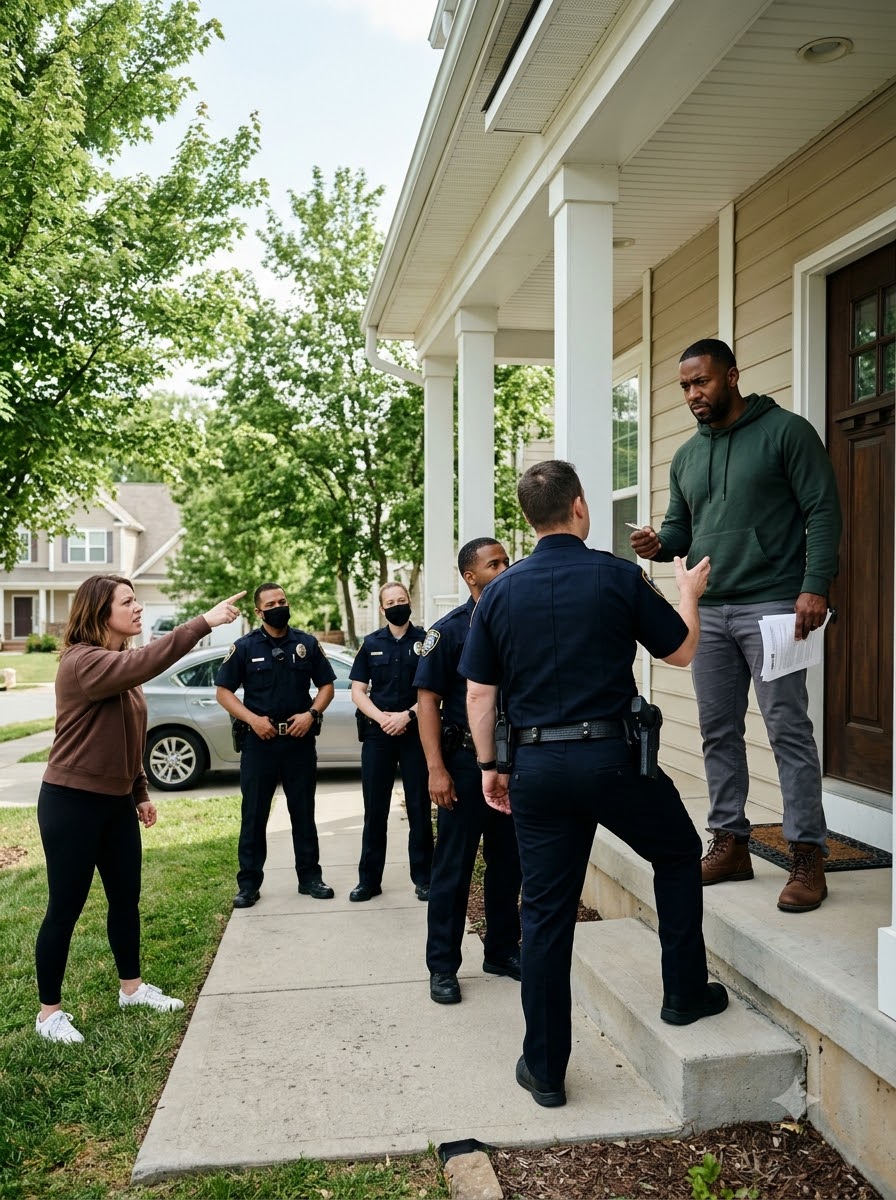
“Okay, sir. You can’t go in there. I’m calling the police if you try that door.”
“Ma’am, I live here now. I’m the new owner.”
“No, I know the Bakers. They’ve owned this place for years.”
“They sold it to me three weeks ago. Paperwork’s right here.”
The woman refused to listen.
She had already convinced herself that the man standing on the porch did not belong there.
What happened next would turn an ordinary afternoon into a national controversy.
On January 18, 2025, at precisely 2:43 p.m., a residential security camera recorded a Black man approaching the front entrance of his own home.
He carried a folder containing the deed and closing documents proving that the property belonged to him.
He had recently been appointed mayor of the town.
Yet within twenty minutes, he would be forced face down onto his own porch, surrounded by police officers, and placed in handcuffs over a crime that had never occurred.
The man was no newcomer to public service.
For more than twenty years, he had dedicated his professional life to municipal government, gradually advancing through city planning departments, economic development offices, and senior administrative positions.
People who worked with him described him as careful, intelligent, and committed to improving the communities he served.
He was known for approaching difficult decisions thoughtfully and for believing that public institutions should treat residents fairly.
In November 2024, following a competitive selection process, he was appointed mayor of an affluent town with approximately 40,000 residents.
It represented a major step forward in his career.
The position offered an opportunity to shape the community’s future, but it also placed him under greater public scrutiny.
The town was known for its peaceful, tree-lined neighborhoods, attractive parks, and well-maintained residential streets.
Residents took considerable pride in their community.
The median household income was above $100,000, property values were high, and crime rates remained relatively low.
Families moved there because they wanted security, stability, and a comfortable place to build their lives.
Those were also the reasons the new mayor decided to make the town his home.
He believed that serving a community meant more than working inside its government buildings.
He wanted to live among the residents whose interests he had been appointed to represent.
In early January, he completed the purchase of a modest two-story colonial house situated on a quiet cul-de-sac.
The property was not extravagant, particularly compared with some of the larger homes in the area.
But it offered everything he wanted.
Over the following week, he arranged utilities, organized the moving process, and prepared to begin what he hoped would be a rewarding new chapter.
By January 18, he had not yet moved into the house permanently.
Most of the rooms remained empty.
That afternoon, he drove over to deliver some final paperwork and check on an expected delivery.
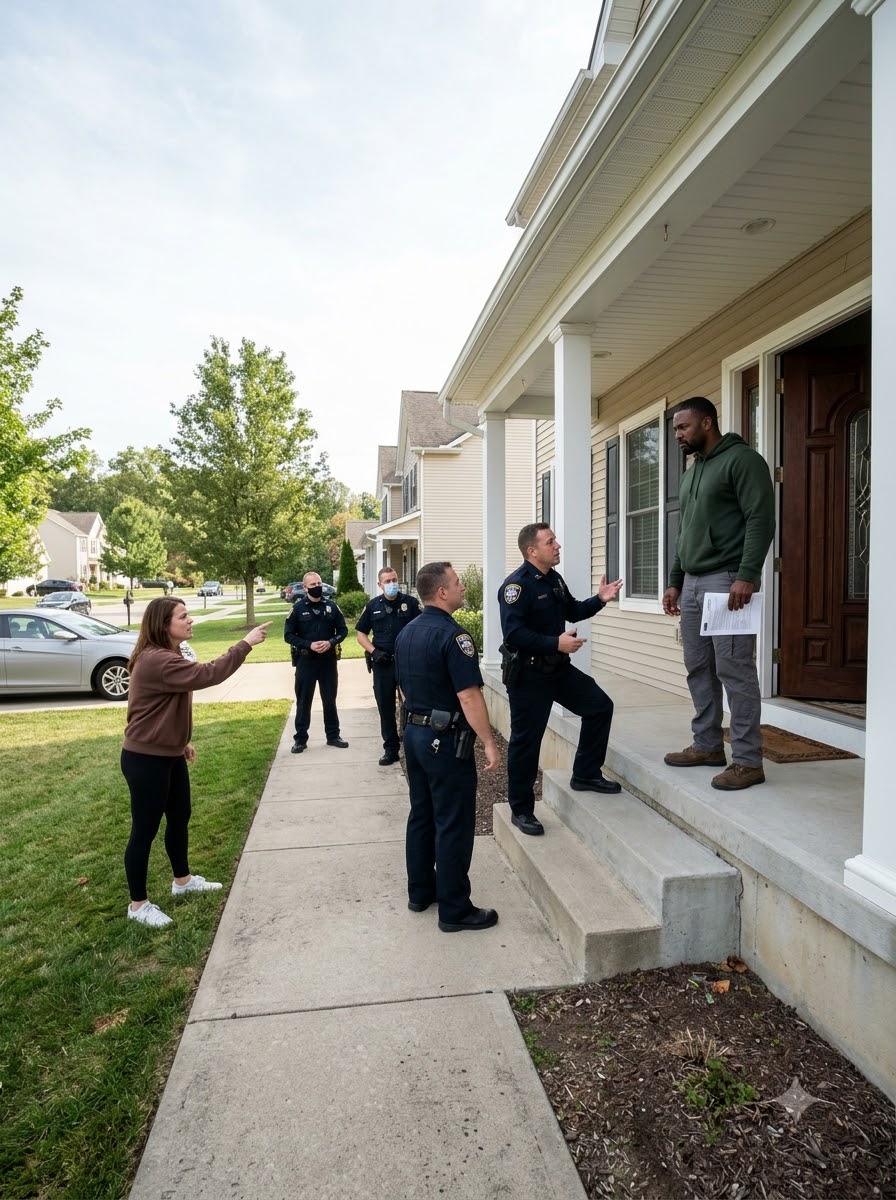
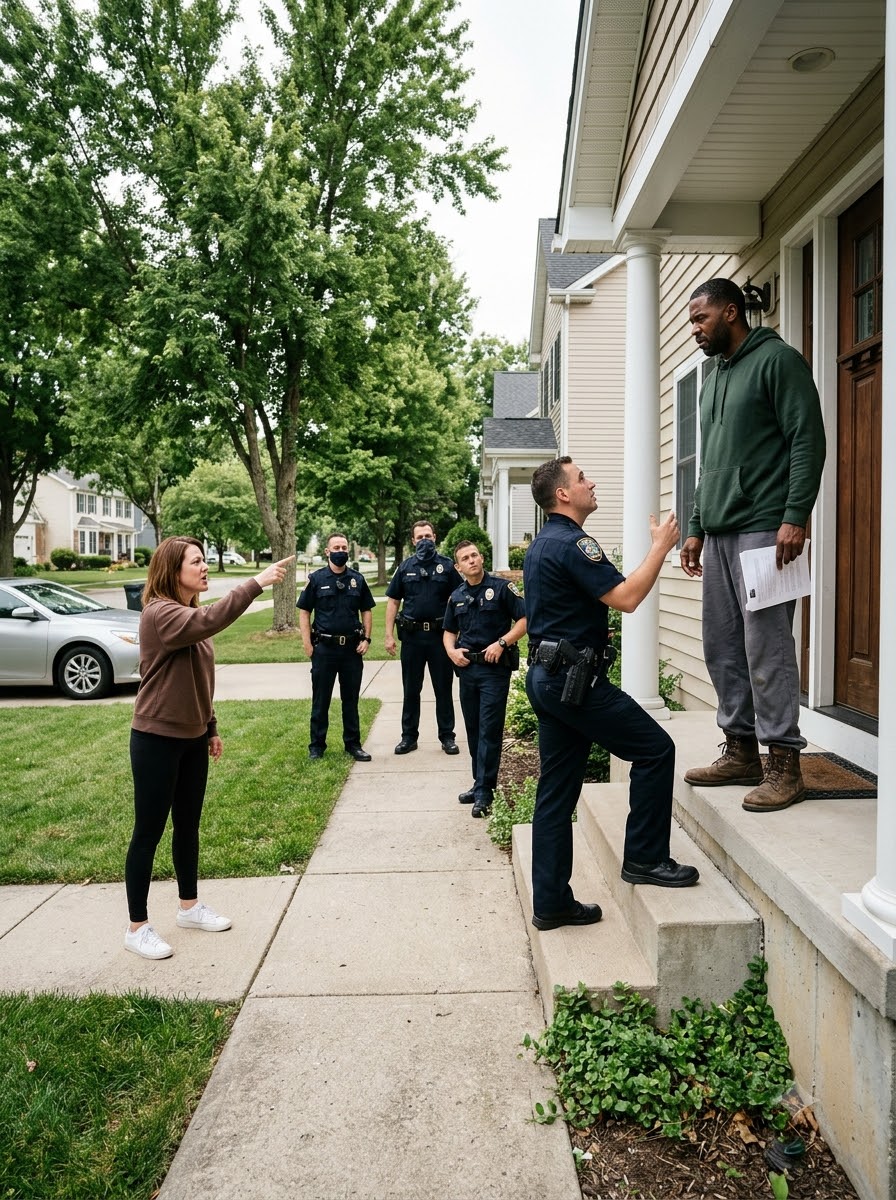
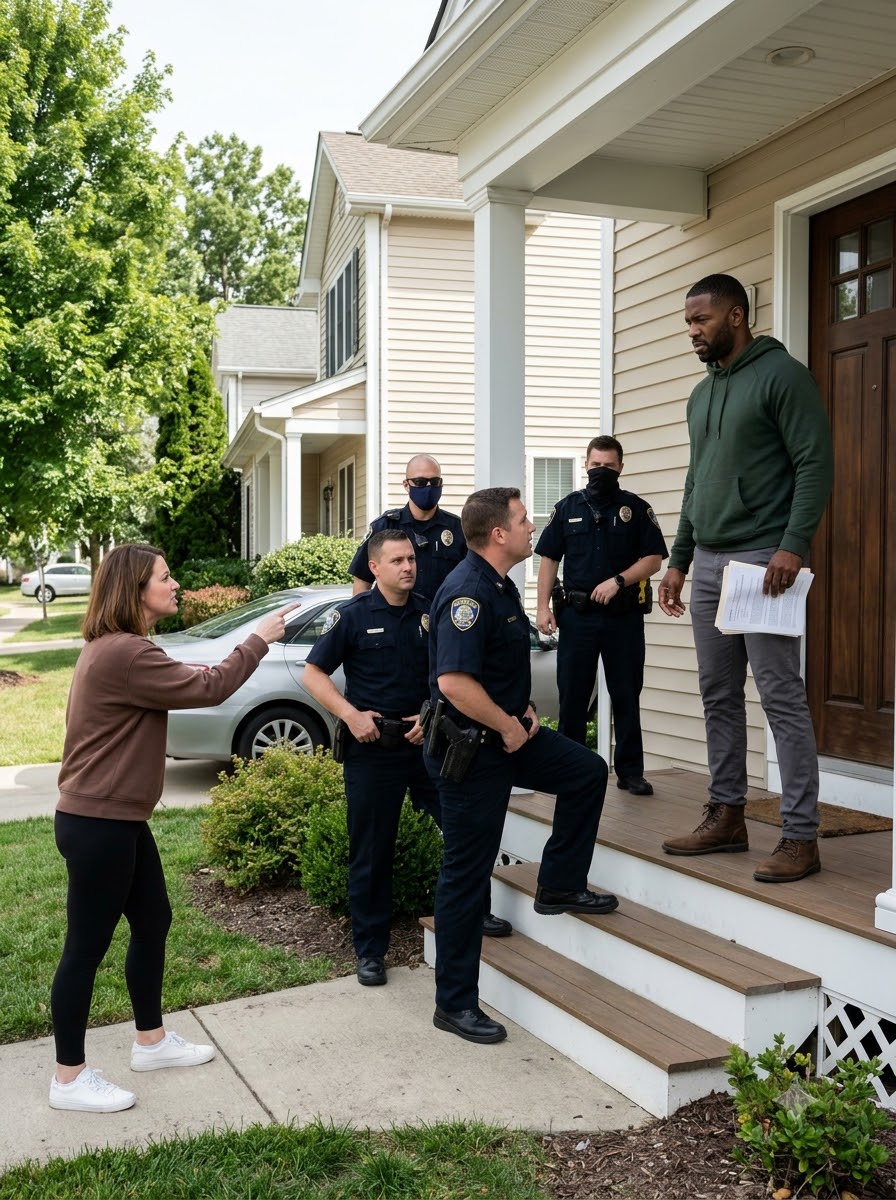
He wore a dark green hoodie, black trousers, and brown work shoes.
Nothing about his clothing suggested his position in local government.
He looked like an ordinary homeowner preparing to settle into a recently purchased property.
In one hand, he carried a folder containing his deed and closing documents.
As he approached the front porch and began searching for his keys, a woman’s voice interrupted him.
“Excuse me.”
He turned.
A woman who appeared to be in her late thirties stood near the steps connecting the sidewalk to the property.
She wore a brown hoodie, black leggings, and white sneakers.
Her expression was stern.
She was clearly watching him with suspicion.
“Can I help you?” she asked.
He was surprised by her tone but remained polite.
“I’m good, thanks. Just heading inside.”
“Do you live here?”
He paused briefly.
Something about the way she asked made him realize that this was not simply a friendly conversation between neighbors.
“I do. Just bought the place. Closed a couple weeks ago.”
“Can you prove that?”
He lifted the folder in his hand.
“I have the deed right here if you want to see it.”
The woman did not step closer.
She made no attempt to examine the paperwork.
Instead, she reached into her pocket and took out her phone.
“I’m calling the police,” she announced.
The homeowner felt the encounter becoming unnecessarily confrontational.
“Ma’am, I’m the owner. I can show you the paperwork. I can call my realtor. There’s no need for that.”
But she had already started dialing.
She turned slightly away and began speaking urgently to the dispatcher.
He could hear portions of her report.
A suspicious man.
Trying to break into a house.
Refusing to leave.
Possibly carrying a weapon.
The accusations were astonishing.
He had not threatened her.
He had not attempted to enter the property by force.
He had not even raised his voice.
He had simply approached his own front door with the keys and documents necessary to enter.
Nevertheless, the woman was describing him as a potential criminal.
He stood on the porch with the folder still in his hand, struggling to understand how such a simple situation had become so dangerous.
Rather than argue, he decided to wait.
He believed that once the police arrived, he could explain the circumstances, show his documentation, and resolve the misunderstanding.
He had worked with law enforcement throughout his career.
He knew that officers regularly encountered uncertain situations and had a responsibility to investigate reports from residents.
Surely, he thought, the officers would verify the facts before taking action.
The emergency call was recorded at 2:46 p.m.
The dispatcher received a report of a possible burglary in progress.
The caller stated that an unfamiliar man was attempting to enter a residence on her street.
She described him as a man in his forties wearing dark clothing.
She also claimed, without any supporting evidence, that he might be armed.
She said she felt unsafe.
Following department procedures, the dispatcher classified the incident as a priority response and sent the nearest available patrol units.
But the woman’s account omitted several essential details.
She did not tell the dispatcher that the man had identified himself as the new homeowner.
She did not mention that he had offered to show his property deed.
She did not explain that he had made no threatening movements.
Nor did she acknowledge that he had remained calmly on the porch rather than attempting to flee.
The information reaching the responding officers was therefore incomplete.
It reflected the caller’s assumptions rather than the full circumstances of the encounter.
And because the report described a possible burglary involving an allegedly armed suspect, the officers approached the scene expecting a threat.
Three patrol officers arrived approximately six minutes later.
Officer Ryan Mitchell had been working patrol for fourteen months.
Officer Jason Parker had graduated from the police academy a little more than a year earlier.
Officer Lucas Bennett had eighteen months of experience.
All three were relatively inexperienced.
Each had previously been the subject of citizen complaints involving allegations of unnecessarily aggressive conduct.
Several residents had described encounters in which the officers appeared more inclined to escalate situations than calm them.
None of those complaints had resulted in formal disciplinary action.
The patrol cars entered the cul-de-sac with their emergency lights flashing.
The woman remained on the sidewalk, pointing toward the house.
The homeowner stood beside his front door.
His hands were visible.
He still held the folder containing proof of ownership.
He made no attempt to run.
He did not hide or behave aggressively.
He simply waited for the officers to approach so he could explain.
But the officers did not begin by asking questions.
They began issuing commands.
“Put your hands up now!”
He immediately complied.
As he raised both arms, the folder slipped from his fingers and landed on the wooden porch.
Inside were the documents that could have established his right to be there within moments.
No officer picked them up.
“Get on the ground! Face down!”
He lowered himself to his knees and then onto his stomach.
The cold wooden boards pressed against his cheek.
He could hear heavy footsteps moving up the porch steps.
Police radios crackled.
Several voices shouted instructions almost simultaneously.
“Do not move!”
“Keep your hands where I can see them!”
Hands pressed against his back.
His wrists were pulled behind him.
Then he felt the cold metal of handcuffs closing around them.
He tried to explain.
“I’m the homeowner. The deed is right there.”
No one reached for the folder.
“I’m the mayor of this town.”
One officer crouched beside him.
“You’re going to stay quiet until we figure out what’s going on.”
The homeowner struggled to remain composed.
“The paperwork is right there,” he repeated. “Just look at it.”
But the officers ignored his request.
They did not examine the deed.
They did not verify his identification through the relevant municipal records.
They did not ask questions intended to determine whether he had legally purchased the house.
Instead, they lifted him from the porch and escorted him toward a patrol vehicle.
The woman who had called the police watched from the sidewalk with her arms folded.
By then, several neighbors had emerged from their homes.
The flashing lights and commotion had drawn their attention.
They watched as the man who had recently purchased the property was placed in the back of a police car.
The door closed behind him.
Through the window, he could see the officers speaking with the woman.
They took notes and gestured toward the residence.
Yet no one entered the house to investigate an actual break-in.
No one checked the property records.
No one contacted the mayor’s office to verify his identity.
The officers had already accepted the assumption that he was a suspect.
Everything that followed appeared to be directed toward confirming that assumption rather than determining whether it was correct.
The drive to the police station lasted approximately twelve minutes.
The mayor remained silent.
He had devoted more than two decades to public administration.
He had participated in public safety initiatives, worked with police departments on municipal budgets, and served on committees intended to improve cooperation between government agencies.
He understood that officers sometimes needed to act quickly.
He also understood that what had happened on his porch represented a serious failure of judgment.
At the station, he was taken to a holding area.
His belongings were collected and cataloged.
His photograph was taken.
He was asked the standard booking questions.
He answered calmly, giving his full identity, explaining his position, and repeatedly stating that the deed proving ownership of the property had been left on his porch.
The booking officer acknowledged his answers without appearing particularly interested in verifying them.
Then a supervising sergeant entered the room.
He began reviewing the intake report.
His eyes moved across the computer screen.
He stopped.
Read the name again.
Then slowly looked toward the man sitting before him.
“You’re the new mayor?”
“Yes.”
The sergeant’s expression changed immediately.
He left the room.
From inside the holding area, the mayor heard raised voices in the hallway.
Phones began ringing.
Officers spoke rapidly to one another.
The entire atmosphere shifted as the department began realizing the seriousness of its mistake.
Approximately twenty minutes later, a lieutenant entered.
He approached the detained man and unlocked his handcuffs.
Then he apologized.
The lieutenant explained that officers were verifying the property records and that the mayor would be released shortly.
The mayor nodded.
He said nothing.
There was nothing he could say that would erase the humiliation of being forced onto his own porch, handcuffed, and transported to the police station for attempting to enter his own home.
Within the hour, the verification process was complete.
The deed was genuine.
The property records confirmed that he owned the house.
The mayor’s office verified his identity.
He had committed no crime.
He was released without charges and without an arrest record.
The department expressed what it later described as its sincere regrets.
But when the mayor finally returned to his house, his hands were still trembling.
The folder containing his property documents remained exactly where it had fallen.
He picked it up.
Unlocked the front door.
And stepped into the empty living room.
Then he sat down.
For a long time, he did not move.
He was a respected public servant, a homeowner, and the newly appointed leader of the town.
Yet only hours earlier, he had been treated as a dangerous intruder because someone had decided he did not belong.
That evening, he called his attorney.
Then he contacted the town council president.
Finally, he called his family.
Each conversation forced him to describe the incident again.
By the time he went to bed, the story was already spreading.
A council member had mentioned the arrest to a reporter.
The reporter contacted the police department.
And the department issued a statement acknowledging the incident and promising an internal review.
By the following morning, what had happened on that quiet residential porch was national news.
PART 2
Three days after the incident, the mayor appeared before reporters at a press conference inside town hall.
His attorney stood beside him.
Several town council members were also present.
Cameras filled the room, and journalists waited for him to explain what had happened on January 18.
He approached the podium with the same measured composure that had characterized his public service career.
He did not exaggerate the events.
He did not attempt to turn the situation into a personal spectacle.
Instead, he described the encounter carefully, explaining how a routine visit to his newly purchased home had ended with him being handcuffed and taken to the police station.
He acknowledged that police officers had a duty to respond when residents reported possible crimes.
But he questioned why the officers had refused to examine the documents he offered.
Why had no one verified his identity?
Why had they failed to check the property records?
And why had an encounter involving no actual criminal activity escalated into an arrest?
“I have spent my entire career in public service,” he told the audience. “I have worked to build trust between communities and the institutions that serve them.”
He paused before continuing.
“What happened to me was not just a personal humiliation. It was a failure of the systems we rely on to protect everyone equally.”
His message was deliberate.
He did not demand that the three officers immediately lose their jobs.
He did not call for the police chief to resign.
He wanted accountability.
He wanted transparency.
And he wanted reforms that could prevent another resident from experiencing the same treatment.
The response throughout the community was immediate.
It was also deeply divided.
Many residents were outraged.
They organized demonstrations, demanded answers from the police department, and called for a federal investigation into possible civil rights violations.
Others defended the officers.
They argued that police had responded to a reported burglary and that the misunderstanding had been corrected once the mayor’s identity was established.
Some residents occupied a position between those extremes.
They were disturbed by the incident but uncertain about what consequences would be appropriate.
Meanwhile, attention turned toward the woman who had made the original emergency call.
Reporters identified her and began speaking with people who lived nearby.
They also examined her social media activity.
As the story spread, she became the subject of intense public criticism.
Through an attorney, she released a brief statement.
She claimed that she had contacted the police because she was concerned about neighborhood safety.
She denied that race had influenced her decision.
But her explanation failed to persuade many observers.
The central facts remained difficult to ignore.
The homeowner had identified himself.
He had offered proof of ownership.
He had not threatened her.
And she had reported a possible armed burglary without evidence supporting that accusation.
Within a week, she faced charges connected to filing a false police report and violating local ordinances concerning discriminatory conduct.
At the same time, the police department launched its own internal investigation.
Officers Ryan Mitchell, Jason Parker, and Lucas Bennett were placed on paid administrative leave while their conduct was reviewed.
Investigators examined the encounter from the moment the officers arrived until the mayor was taken into custody.
They reviewed the officers’ training histories.
They examined previous complaints.
They considered patterns in how the officers had handled other incidents.
The findings raised serious concerns.
The officers had failed to follow fundamental procedures for verifying a person’s identity.
They had ignored the documents the mayor offered.
They had not checked property ownership.
They had not contacted the mayor’s office.
Most importantly, they had accepted the caller’s description as though it established that a burglary was occurring.
Instead of treating the situation as a disagreement about who had the right to enter a property, they approached it as a confirmed criminal incident.
The review concluded that implicit bias had likely influenced the officers’ assumptions.
It also found that their limited experience contributed to their inability to de-escalate the encounter.
The officers were required to complete additional training focused on implicit bias, de-escalation, and community engagement.
Formal reprimands were added to their personnel records.
The police chief publicly apologized for the department’s handling of the incident.
He acknowledged the harm that had been caused and committed the department to broader changes.
Those proposed reforms included updated training procedures, stronger oversight of officer behavior, and the creation of a civilian review board responsible for examining complaints.
The matter did not end with the department’s internal findings.
State civil rights investigators opened a separate inquiry.
Their examination extended beyond the mayor’s arrest.
They reviewed enforcement patterns across the police department to determine whether similar disparities existed in other encounters.
Several months later, the state investigators released their findings.
Their report identified evidence that police responses differed depending on the race of the individuals involved.
It recommended further reforms and continued monitoring.
For the mayor, those findings confirmed that his experience was not merely an isolated misunderstanding.
The incident reflected problems that required institutional attention.
He subsequently filed a civil lawsuit against the town, the police department, and the officers involved.
The lawsuit alleged violations of his civil rights, false arrest, and emotional distress.
The case eventually ended in an out-of-court settlement.
The financial amount was not publicly disclosed.
As part of the agreement, the town committed to implementing the reforms recommended by state investigators.
It also agreed to publish regular reports documenting progress.
The woman who had made the original emergency call pleaded no contest to the false-report charge.
She received a sentence that included probation, community service, and mandatory participation in a restorative justice program.
She also agreed to participate in a public education campaign addressing the consequences of racially motivated false police reports.
The legal outcomes were significant.
But they could not erase the afternoon that had started everything.
The mayor continued serving the town.
However, the experience followed him into nearly every aspect of his public life.
Policy debates carried new meaning.
Public appearances attracted questions about the arrest.
Even routine discussions about policing and community safety were shaped by what had happened on his porch.
The story spread far beyond the town’s boundaries.
Law enforcement training programs began using the incident as a case study.
Civil rights advocates cited it during discussions of racial profiling.
Documentaries examined the encounter.
Podcasts analyzed the decisions that led to the arrest.
The incident became an example of how quickly unsupported assumptions could overwhelm readily available evidence.
For the mayor, the attention brought both clarity and isolation.
He had spent years writing reports about public safety and participating in meetings about community trust.
He understood the language of institutional reform.
He knew the importance of constitutional protections and professional policing standards.
But until January 18, he had never personally experienced the fear and humiliation of being presumed guilty despite having evidence of his innocence.
The difference between understanding a problem professionally and experiencing it physically was profound.
In later interviews, he spoke about the emotional consequences.
He described becoming more watchful in situations that had once seemed ordinary.
He acknowledged moments of unexpected anger.
He discussed the difficulty of feeling comfortable inside a house where he had been publicly humiliated.
The property had been purchased as the beginning of a hopeful new chapter.
Instead, its front porch had become associated with one of the most distressing experiences of his life.
He also spoke about the support he received.
Family members helped him process what happened.
Friends and political allies encouraged him to continue serving.
Community members who believed in accountability offered their support.
Gradually, he became determined to turn the incident into an opportunity for meaningful change.
Over the following months, the town began implementing the reforms that had been promised.
Officers were required to complete additional instruction in constitutional policing.
Training programs placed greater emphasis on recognizing implicit bias and avoiding unnecessary escalation.
Dispatch procedures were revised.
Call takers were instructed to ask questions that could help distinguish genuine threats from misunderstandings or disputes over property access.
Supervisors received additional responsibilities.
Arrests involving alleged trespassing or burglary required closer review to ensure that ownership and lawful access had been properly investigated.
The new civilian review board began holding monthly meetings.
Residents could raise concerns about police conduct in a more transparent setting.
The board provided a forum for complaints and helped strengthen public oversight.
These changes represented meaningful progress.
But the mayor understood that announcing reforms was easier than sustaining them.
Effective oversight required funding.
Training demanded time.
Departments needed consistent leadership.
And elected officials had to maintain their commitment even after the public attention surrounding the original incident faded.
The mayor used his position to advocate for those resources.
He also acknowledged that no single incident, regardless of how widely publicized, could resolve problems that had developed over many years.
The three officers eventually returned to duty.
Their careers, however, had been permanently affected.
Some residents believed they should have been dismissed.
Others argued that the officers had become convenient targets for failures involving the entire department.
The disagreement continued even after the story disappeared from daily headlines.
For the mayor, that debate illustrated a larger challenge.
Accountability was necessary.
But meaningful reform also required examining the procedures, assumptions, and institutional habits that allowed mistakes to happen.
The incident had begun with one woman’s suspicion.
It had escalated because responding officers failed to verify basic facts.
And it had become a national controversy because the person arrested was the mayor himself.
But an uncomfortable question remained.
Would the outcome have been the same if the homeowner had been an ordinary resident without a prominent public position?
That question would become one of the most important lessons of the entire case.
PART 3
What occurred on January 18, 2025, was extraordinary in one respect and painfully ordinary in another.
It was extraordinary because the man wrongly detained outside his home was the town’s newly appointed mayor.
His position gave the incident immediate public significance.
He possessed professional credibility, access to legal representation, and a platform from which he could demand answers.
But the assumptions that led to his arrest were not extraordinary.
The willingness to interpret an unfamiliar person as a threat, the failure to verify available evidence, and the tendency to accept suspicion as fact are problems that extend far beyond one neighborhood or police department.
The mayor’s experience attracted national attention because of who he was.
Yet the same chain of events could affect people who lack his resources or public influence.
Many individuals wrongly accused of crimes do not have attorneys readily available.
They cannot call a town council president.
They do not have reporters contacting the police department within hours of their detention.
And their experiences may never become public.
That reality raised difficult questions.
What if the man standing on the porch had not been the mayor?
What if he had not been carrying the property deed?
What if he had responded angrily after being ordered to the ground?
What if there had been no security camera recording the encounter?
Those questions were not merely abstract possibilities.
Similar incidents have been documented in which individuals faced arrest, injury, or worse because someone made an unsupported assumption and an authority figure failed to challenge it.
The circumstances vary.
The consequences can be devastating.
For the mayor, the incident demonstrated how quickly a person’s ordinary activities could be transformed into grounds for suspicion.
He had driven to his new home.
He had walked to his front door.
He had carried documents proving that he owned the property.
Nothing about those actions was criminal.
Yet within minutes, a neighbor’s accusation had caused police to treat him as a burglary suspect.
The speed of that transformation was one of the most disturbing aspects of the case.
A person could move from being an ordinary homeowner to a detained suspect without any new evidence of wrongdoing.
All that changed was how other people interpreted his presence.
The woman who called the police had an opportunity to verify his explanation.
He offered to show her the deed.
She declined.
The responding officers had the same opportunity.
The folder was lying on the porch.
They ignored it.
At the police station, the booking process continued despite his repeated statements about his identity and ownership.
Only when a supervising sergeant recognized his name did the department begin to investigate the facts that should have been examined at the beginning.
That sequence exposed the danger of allowing assumptions to guide decisions.
Once the officers accepted the idea that a burglary was occurring, the homeowner’s explanations appeared to carry little weight.
His calm behavior did not change their approach.
His willingness to cooperate did not prevent his detention.
Even his claim to be the mayor was initially dismissed.
The department’s procedures had become focused on processing a suspect rather than determining whether there was a suspect at all.
This was why accountability mattered.
The consequences of unsupported accusations were not limited to embarrassment.
For a person wrongly detained, they could include fear, humiliation, psychological distress, and a lasting loss of confidence in public institutions.
Being forced to the ground and handcuffed outside one’s own home could change how safe that home felt afterward.
It could make routine encounters with authority sources of anxiety.
It could undermine the belief that cooperating with police would necessarily lead to fair treatment.
The mayor described some of those effects in interviews.
His experience left him more alert to potential danger.
It created moments of anger that emerged unexpectedly.
And it complicated his relationship with the house he had purchased as a symbol of a new beginning.
Those consequences did not disappear simply because the police eventually acknowledged their mistake.
An apology could recognize the harm.
A settlement could provide legal resolution.
But neither could return the afternoon to the way it had been before the emergency call.
The damage also extended beyond the individual.
When residents believe that police officers may act on suspicion without verifying facts, public trust weakens.
People become less confident that they will receive equal treatment.
Communities grow divided over whether institutions are capable of protecting everyone fairly.
The resulting distrust can make cooperation between residents and law enforcement more difficult.
That erosion of confidence affects public safety itself.
For the police department, the consequences included legal liability, public criticism, and damage to its reputation.
But perhaps the most difficult task was rebuilding legitimacy.
Trust cannot be restored through a press release alone.
It requires consistent conduct over time.
It requires procedures that make fairness a routine expectation rather than an occasional exception.
And it requires public institutions to acknowledge when their own decisions have caused harm.
The reforms adopted by the town were designed to address those concerns.
Additional training sought to help officers recognize assumptions before acting on them.
Revised dispatch questions were intended to produce more complete information.
Supervisory reviews created opportunities to identify errors before they developed into unlawful detentions.
The civilian review board gave residents a formal way to raise concerns.
None of these measures guaranteed that mistakes would never happen again.
But they established safeguards intended to make similar incidents less likely.
One of the clearest lessons was the importance of verification.
Checking facts protects people from wrongful detention.
It also protects officers from making serious professional mistakes.
And it protects communities from the divisions created when authority is exercised without sufficient evidence.
In this case, verification could have been straightforward.
The homeowner offered his deed.
The property records were available.
His identity could be confirmed.
There was no evidence that he had forced entry into the house or threatened anyone.
Yet those facts were not examined until after he had been detained and taken to the police station.
The failure was not caused by an absence of information.
It was caused by a failure to use the information that was available.
Effective policing requires more than the ability to respond quickly.
It requires asking appropriate questions.
It requires distinguishing suspicion from evidence.
It requires recognizing that an emergency call is a report to investigate, not proof that a crime has occurred.
And it requires treating the person being questioned as an individual rather than reducing them to a description or a presumed threat.
Those principles are important in every neighborhood.
They are especially important when assumptions about race, appearance, or belonging may influence how someone is perceived.
A person’s clothing does not establish criminal intent.
An unfamiliar face does not prove unlawful presence.
A neighbor’s discomfort does not automatically mean a crime is taking place.
And the authority to detain someone does not eliminate the responsibility to determine whether detention is justified.
The mayor’s case also demonstrated the importance of humility.
Officers, dispatchers, witnesses, and public officials can all make mistakes.
But preventing those mistakes from becoming harmful requires a willingness to question initial impressions.
It means recognizing that the first explanation offered may be incomplete.
It means listening when someone presents evidence that contradicts an accusation.
And it means accepting that having authority does not automatically make a person’s judgment correct.
For the woman who made the call, the consequences illustrated how serious false accusations can become.
Her decision did not remain a private disagreement between neighbors.
It triggered an emergency response.
It contributed to an innocent man being handcuffed and detained.
It brought legal consequences and public scrutiny.
Her participation in community service, probation, restorative justice, and public education reflected the seriousness with which the incident was eventually treated.
For the officers, the incident became a lasting professional lesson.
Their failure to examine the available facts resulted in formal reprimands, additional training, and public criticism.
Even after they returned to duty, the controversy continued to shape perceptions of their conduct.
The debate over whether their punishment was sufficient reflected broader disagreements about individual responsibility and institutional reform.
Some believed the officers should have been dismissed because their decisions violated the mayor’s rights.
Others believed that focusing exclusively on three relatively inexperienced officers overlooked the departmental practices that contributed to the encounter.
Both concerns remained part of the public discussion.
The mayor did not suggest that one incident could resolve every problem involving racial profiling or police accountability.
He understood that meaningful reform was a continuing responsibility.
Training programs needed to be evaluated.
Policies needed to be enforced.
Complaints needed to be reviewed fairly.
And public officials needed to maintain oversight long after the media stopped paying attention.
His own experience had changed how he approached those responsibilities.
Before January 18, he had understood the importance of community trust through years of professional work.
Afterward, he understood it through personal experience.
He knew what it felt like to be ordered onto the ground while trying to explain that he had done nothing wrong.
He knew what it felt like to have evidence ignored.
He knew what it felt like to sit inside a police station waiting for someone to recognize that a serious mistake had been made.
That knowledge gave his advocacy a different urgency.
The incident was no longer merely a problem to be discussed in reports or committee meetings.
It was something he had experienced directly.
And it reinforced his determination to improve the systems responsible for protecting the community.
Still, the central lesson extended beyond the mayor, the woman who called the police, and the three responding officers.
Ordinary moments can change lives.
A man approaches his own front door.
A neighbor becomes suspicious.
She makes a phone call.
Police officers arrive.
Within minutes, a routine visit to a newly purchased home becomes an incident involving a serious violation of civil rights.
Nothing about the homeowner’s original intentions suggested that the afternoon would become extraordinary.
He had simply wanted to enter his house.
That was all.
The transformation occurred because suspicion replaced verification.
An assumption became an accusation.
The accusation shaped the police response.
And the response escalated before the available facts were examined.
This is what makes the story both unsettling and important.
People make judgments constantly.
They form impressions based on appearance, unfamiliarity, and limited information.
Sometimes those impressions are harmless.
But when they influence emergency calls or decisions made by people with legal authority, the consequences can become severe.
The question is not whether human beings will ever make incorrect assumptions.
They will.
The more important question is whether individuals and institutions are willing to challenge those assumptions before acting on them.
Are we prepared to listen when someone offers evidence?
Are we willing to reconsider an initial judgment?
Can we acknowledge that a person’s appearance tells us little about their intentions or legal rights?
And when institutions fail, are we willing to demand meaningful accountability rather than settling for an explanation that the mistake has already been corrected?
The mayor’s experience showed why those questions matter.
He was released without charges.
The department acknowledged its error.
Investigations led to disciplinary measures and reforms.
A civil lawsuit produced a settlement.
The woman who initiated the false report faced legal consequences.
Yet none of those outcomes changed the fact that an innocent homeowner had been treated as a criminal outside his own front door.
The incident became widely known because he was the mayor.
But his rights did not depend on his position.
They existed before the sergeant recognized his name.
They existed while he stood on the porch holding his deed.
And they existed when officers ordered him to the ground.
That is the principle at the center of the story.
Fair treatment should not depend on wealth, public recognition, professional status, or the ability to attract national attention.
It should be available to every person.
The mayor’s arrest exposed what can happen when that principle is forgotten.
His response demonstrated the importance of demanding accountability without losing sight of the need for lasting institutional change.
And the reforms that followed showed that even a deeply troubling event can become an opportunity to improve public systems.
But such progress is never automatic.
It requires people who are willing to examine uncomfortable facts.
It requires institutions prepared to acknowledge mistakes.
It requires communities that continue asking difficult questions after public attention fades.
Above all, it requires a commitment to truth over convenience.
Because the difference between an ordinary misunderstanding and a devastating injustice can be as small as a document left unread on a porch.
On January 18, 2025, the mayor had that document in his hand.
He offered it.
No one looked.
And by the time someone finally checked the facts, the damage had already been done.
