

PART 1
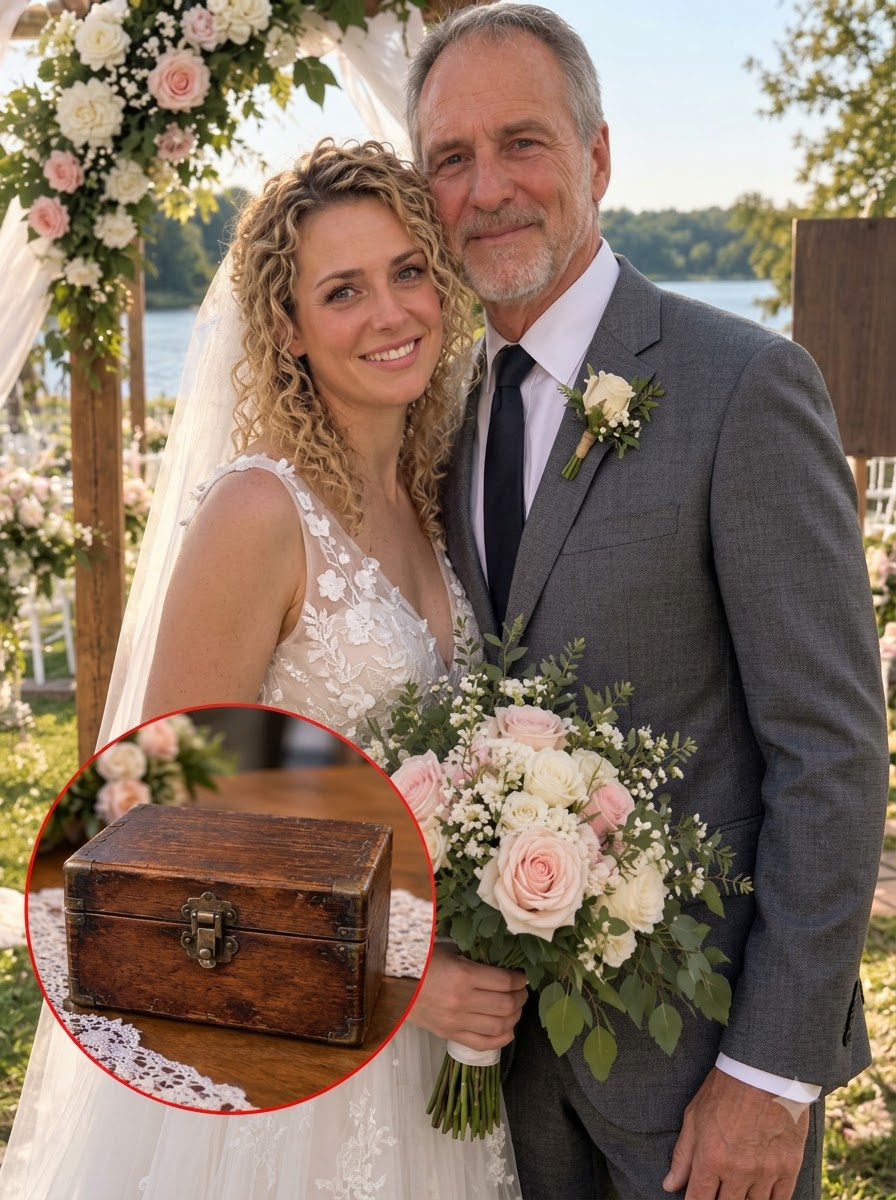
The wooden box sat between us like a quiet accusation. I stared at it, then at the lawyer, then at Russell’s daughter, Margaret, whose smile had already sharpened into something triumphant. Her brother, David, stood a half-step behind her, arms folded, as if he had already measured the room and decided it belonged to him.
“Go on,” Margaret said. “Open it. Let’s see what Father thought you deserved.”
My hands were steady until they weren’t. The lid lifted with a soft click. Inside, resting on a square of faded navy velvet, were three things: a single brass key, a folded letter written in Russell’s careful hand, and a small black notebook whose cover was worn at the edges from being opened often.
Margaret’s laugh died.
The lawyer cleared his throat. “Russell’s instructions were precise. The key opens a safety-deposit box at First National. The letter is to be read aloud in this room, in the presence of his children. The notebook is yours alone, Elena. He asked that no one else open it.”
David made a sound in his throat. “This is absurd.”
“It is what he asked,” the lawyer said.
I picked up the letter. The paper smelled faintly of the cedar chest in Russell’s study, the one he kept locked because he said old wood remembered things people tried to forget. My voice shook when I began.
“Elena,” I read, “if you are hearing this, then I am gone, and my children are waiting to see whether the girl who served champagne at a charity dinner has been reduced to what they always believed she was. I want you to know I saw you clearly from the first night. I saw the fear in the way you stood, the way you counted the hours until your shift ended. I saw the calculation when I asked your name. I am not a fool, and I was never so lonely that I mistook hunger for devotion.
“What I did not expect was the morning you stayed after the nurse left and sat with me while I tried, and failed, to drink water without choking. You did not speak. You simply held the cup and waited. That was the day I stopped wondering what you wanted and started wondering what I could still give.
“The key is to a box that contains the original will I signed six months after we married. It leaves the house, the accounts, and the residual estate to you, free and clear. Margaret and David receive the trusts I established for them years ago—generous, but not the whole. They will call it theft. They will say you poisoned me with kindness. Let them. I have already spoken with three physicians who will testify that my illness was not accelerated by anything but its own nature.
“If you open the notebook, you will find the dates and the small facts I wanted remembered. The night you fell asleep in the chair beside my bed and I watched the streetlight move across your face. The afternoon you argued with the landscaper because he wanted to cut the old maple I had planted with my first wife. You won. The tree is still there. I wanted you to have the record of those hours, not because they were grand, but because they were the ones that made the rest of my life feel less like an accounting.
“You married me for the fortune. I married you for the company. In the end, we both received more than we bargained for. That is what you deserved.”
The room was so quiet I could hear the radiator ticking. Margaret’s mouth had gone thin. David looked at the lawyer as if the man had personally forged the signature.
“That’s not possible,” Margaret said. “He would never—”
“The will is dated and witnessed,” the lawyer said. “Russell asked me to hold both versions until after the funeral so that the reading would not become a spectacle at the church. The earlier will, the one you both expected, is void. He was competent. He was deliberate.”
I folded the letter and set it down. The brass key felt heavier than it should have. David stepped forward.
“You planned this,” he said to me. “You waited until he was too weak to think.”
“I sat with him,” I said. The words came out smaller than I wanted. “That is all I did.”
Margaret turned on the lawyer. “We’ll contest it. We’ll say undue influence. We’ll say she isolated him.”
“You may try,” the lawyer answered. “Russell anticipated the attempt. He left a video statement, recorded in my presence three weeks before he died. In it he states, clearly, that he knew the circumstances of the marriage and that his decision was his own. He also left instructions that any legal challenge funded by the residual estate would be treated as a forfeiture of the trusts. I would advise you both to speak with your own counsel before you spend money you may not keep.”
David’s hands opened and closed at his sides. For a moment I thought he might reach for the box. Instead he looked at his sister. Something passed between them that I recognized from the weeks of Russell’s decline: the private arithmetic of people who had already decided what the dead owed them.
“This isn’t over,” Margaret said.
“It is for today,” the lawyer replied. “Elena, the bank closes at five. If you would like me to accompany you, I can.”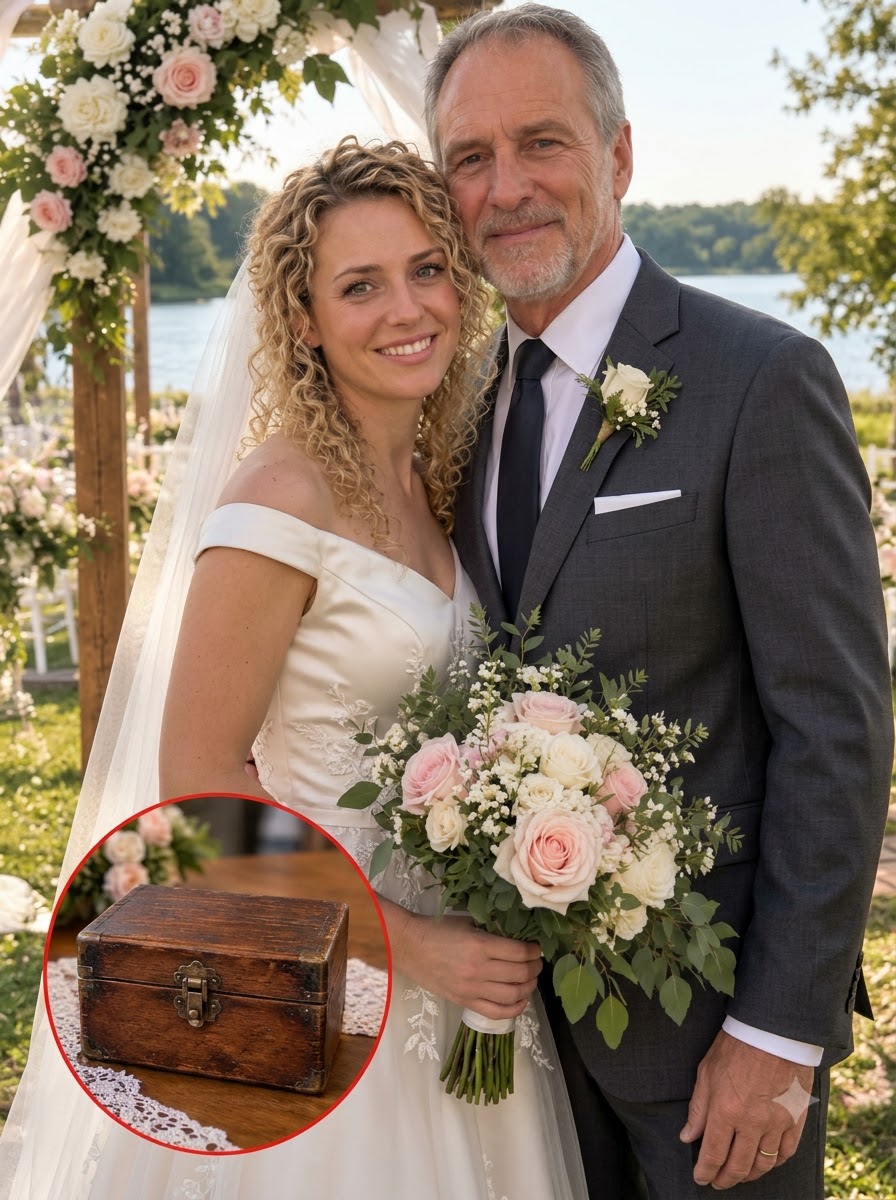
I nodded. The notebook stayed in my lap. I did not open it in front of them.
The drive to the bank was short. The lawyer waited in the lobby while I was escorted to the vault. Inside the deposit box lay a thick manila envelope and a smaller white one. The thick one contained the will, the video thumb drive, and a list of account numbers. The white one held a single photograph: Russell and me on the back steps of the house, six months after the wedding. He had his hand on the maple tree. I was looking at something just out of frame, smiling in a way I did not remember smiling. On the back he had written, in pencil, “She stayed.”
I sat in the car afterward with the notebook open on the passenger seat. The entries were brief, dated, almost clinical.
March 12. She bought the cheaper coffee and said the good beans were a waste when I could not taste them. I told her I could still smell them. She put the good beans back.
April 3. Fever. She read the newspaper aloud until her voice went hoarse. I pretended to sleep so she would stop. She did not stop.
PART 2
May 19. The children came. They stayed twenty minutes. After they left she stood at the sink and washed the same cup twice. I did not ask what they had said.
June 2. Diagnosis. She asked the doctor questions I had not thought to ask. Later she cried in the bathroom with the water running. I heard her anyway.
There were more. Dozens. Most of them were only a sentence or two. None of them accused. None of them forgave. They simply recorded.
I drove home. The house was already different. Margaret’s coat was gone from the hall closet; David had taken the silver tray from the dining room sideboard, the one their mother had used for Christmas. I did not call the police. Russell had told me, in the notebook, that small thefts were cheaper than large arguments.
That night I slept in the chair beside the empty bed because the mattress still held the shape of him and I was not ready to erase it. In the morning I opened the windows. The maple leaves had begun to turn. I made the expensive coffee and drank it on the steps, the way he used to, and tried to decide what a person did with a life that had been handed to her twice—once as a transaction, once as a gift.
The contest arrived by certified mail ten days later. Margaret’s lawyer used the words “undue influence” and “vulnerable adult.” I forwarded the letter to Russell’s counsel and then sat at the kitchen table with the notebook and the photograph and tried to remember the exact sound of his voice when he said my name. It had always been careful, as if he were afraid of spending it too quickly.
The hearing was set for November. In the weeks before it I learned the house the way a person learns a language she had only ever borrowed. I found the place where the floorboard creaked outside the study. I learned which window stuck in damp weather. I paid the landscaper to leave the maple alone and then paid him again when he tried, gently, to explain that the tree was old and would cost more to keep than to remove. “He planted it,” I said. The man nodded and did not argue further.
David called once. He did not apologize. He asked whether I would consider a settlement that returned the house to the family and left me “comfortable.” I told him I was already comfortable. He hung up.
Margaret did not call. She sent a single text the night before the hearing: You will not win. He was ours first.
I did not answer.
In the courtroom the video was played on a monitor no larger than a laptop screen. Russell looked thinner than I remembered and more certain than I had ever seen him. He stated his name, the date, and the names of the witnesses. He said he understood the nature of his illness. He said he had married me knowing the disparity in our ages and our circumstances. He said the decision to alter the will had been made after months of observation, not in a moment of weakness. When the recording ended, Margaret’s attorney asked for a continuance. It was denied.
The judge took the matter under advisement for six days. On the seventh, the clerk called to say the will would stand. Margaret’s trusts remained intact. The residual estate—the house, the investments, the quiet accumulation of a careful life—passed to me.
I drove home through rain that turned the maple leaves black against the sky. Inside, the house smelled of the coffee I had forgotten to turn off that morning. I poured it out, made a fresh pot, and carried a cup to the study. The notebook lay where I had left it. I opened it to the last page.
The final entry was dated three days before he died.
She asked if I was afraid. I said I was tired. She stayed until the light changed. I think that is enough.
I closed the book. Outside, the rain had stopped. Water dripped from the maple onto the steps in a slow, irregular rhythm. I listened to it for a long time, the way a person listens to a clock in a room where no one else is breathing, and tried to measure the distance between what I had come for and what I had been given.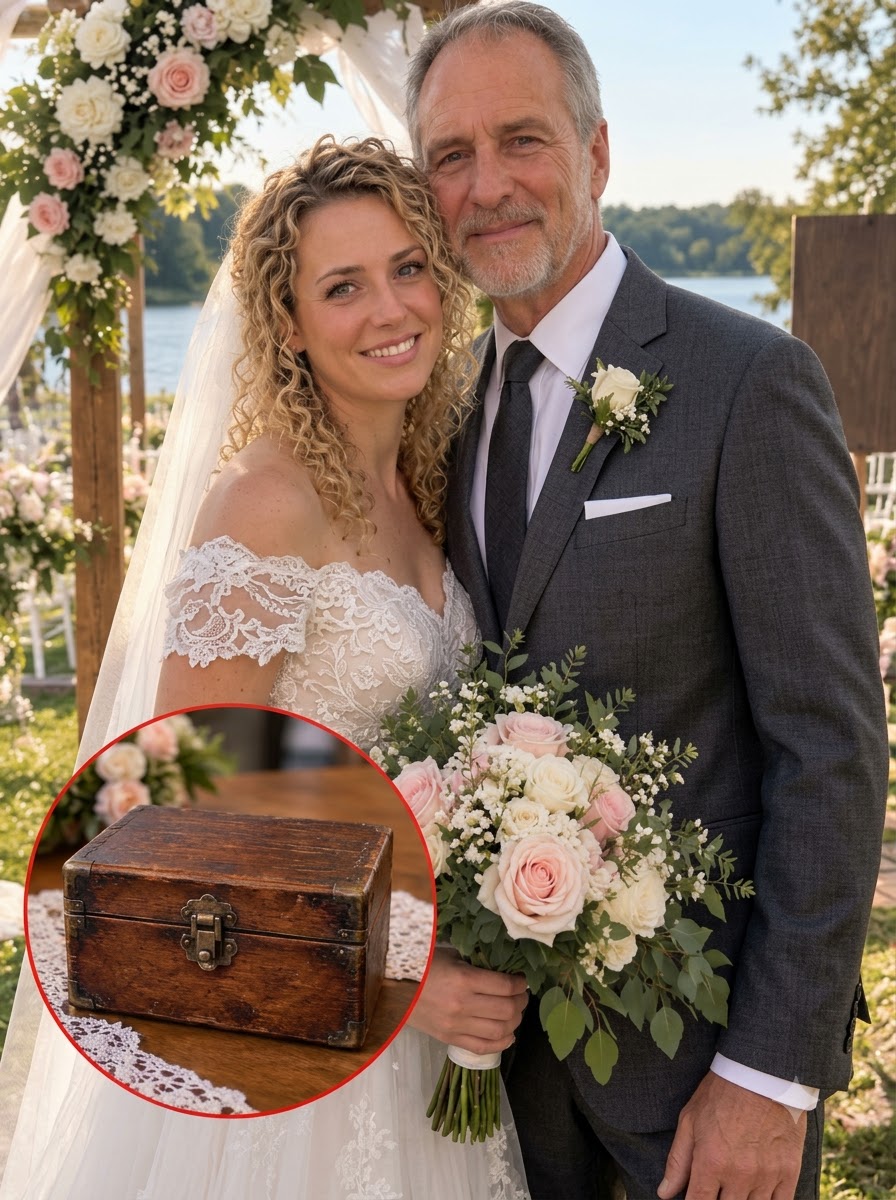
It was not forgiveness. It was not absolution. It was only the record of hours that had been spent, and the knowledge that someone had thought those hours worth writing down. The fortune was real. The house was real. The key still sat in the drawer of the desk where I had placed it. But the thing that kept me in the chair until the cup went cold was smaller and harder to name: the simple fact that he had seen me clearly, and had chosen, anyway, to leave the light on.
I stayed. The tree stayed. In the morning I would call the landscaper and ask him to check the roots before the frost. There would be other calls—accountants, insurers, the quiet machinery of a life that now belonged to me. None of them would erase the arithmetic Margaret and David had already completed in their heads. None of them needed to. The will had done its work. The notebook had done its quieter one.
I rinsed the cup and set it in the rack. The house was large and still and no longer waiting for anyone to come home. I turned off the kitchen light and stood for a moment in the doorway, listening to the last of the rain find its way down the trunk of the maple. Then I locked the door, the way Russell had always locked it, and went upstairs to sleep in the bed that no longer held his shape, because the shape was no longer required. What remained was the record, and the choice, and the ordinary morning that would follow both.
