

Part 1: A Pinky Promise Under the Bleachers, and a Phone Call Forty-One Years Later
At nineteen, my closest friend swore to me that if we both reached sixty without marrying, we would track each other down and finally become husband and wife. My sixtieth birthday came last Tuesday, and that night the landline I almost never used rang for the first time in months.
The voice on the other end didn’t belong to my best friend.
“My name is Lucas,” he said. “I’m Douglas’s son. My father is in the hospital, and he doesn’t have much time left.”
Then he passed the receiver to someone I hadn’t heard speak in forty-one years.
“Ruthie?”
My legs almost buckled beneath me.
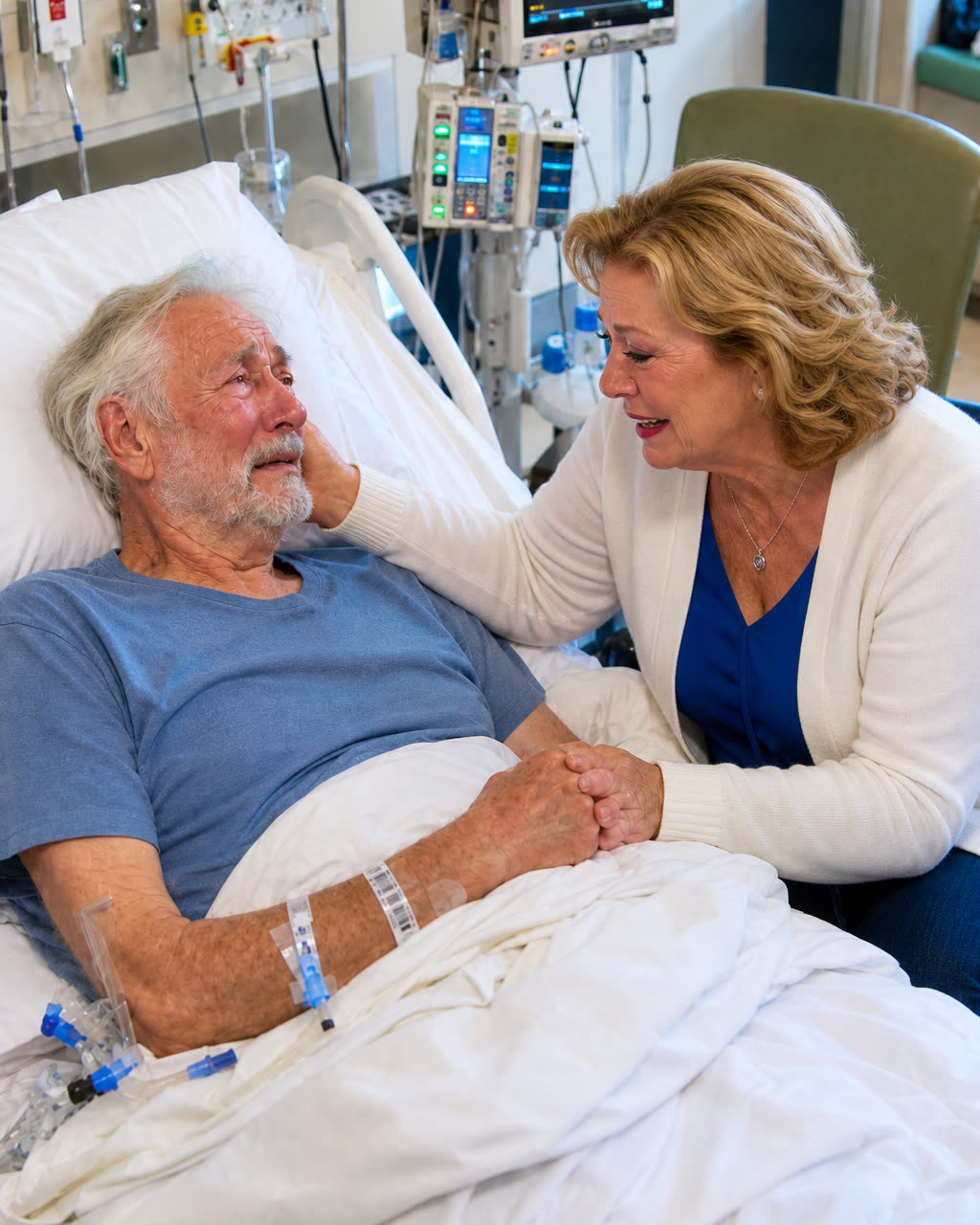
No one but Douglas had ever called me that. The sound of the old nickname dropped me straight back into being nineteen, standing under the football bleachers while his little finger curled around mine.
“You remembered,” I whispered.
“I remembered every birthday, Hannah.”
And then he started to weep.
We’d met at seventeen in a tiny Ohio town where nobody’s business stayed private for long. Within days we were joined at the hip, though we always swore up and down that we were only friends.
He took other girls out, and I went to prom on another boy’s arm. Whenever classmates joked that we’d end up married, we laughed it off, because neither of us wanted to gamble the friendship we already treasured.
Then came one summer night when we’d each survived an awful date, and Douglas offered his absurd proposal.
“If we’re both still single at sixty, we’ll stop being idiots and find each other.”
I linked my pinky through his.
“Deal.”
Two months on, he headed off to a college three states away. At first the letters flew back and forth, sometimes three in a single week, but slowly his answers thinned out.
By the time I realized I loved him, his letters had begun to mention another girl.
His last letter came in 1986.
In it he wrote that he was getting married and asked that I not reach out to him again.
I wept for weeks, then packed his letters into an old blue suitcase and tucked it away in my bedroom closet. In time I left town, built a career teaching literature, saw a good bit of the world, and created a life that was rich in plenty of ways.
I never married.
When people asked me why, I told them I’d simply never met the right person. That was easier than confessing I’d met him at seventeen and spent the next four decades wondering how things might have turned out.
And now, at sixty, I was hearing him fight for air over a phone line.
“Hannah,” Douglas whispered, “there’s something I need to tell you before I die.”
“What is it?”
“I was in love with you when we made that promise. I’d already bought a ring.”
I clapped a hand over my mouth.
“Then why did you marry someone else?”
His breath came in ragged pulls.
“Please come to the hospital. There’s something you need to see. Once you see it, you’ll understand why I walked away.”
Forty minutes later, I walked into his hospital room.
Under the white blanket Douglas looked painfully fragile, yet I knew his eyes the moment I saw them. They were the very same blue eyes that used to watch me sneak French fries off his plate when we were teenagers.
He stretched out his hand to me.
“You came.”
“Of course I came.”
His son was standing next to a chair by the window. Resting on the seat were an old blue suitcase, a little velvet ring box, and a photograph faded with age.
I knew that suitcase at once.
It was the very one where I’d hidden Douglas’s letters, the one I’d assumed was lost forever when my mother emptied out our family home.
“Where did you get that?” I asked.
Lucas said nothing. He simply handed me the photograph.
In it, my mother stood in a hospital room cradling a newborn swaddled in a pale yellow blanket. She seemed younger than I remembered her, and something in her face unsettled me.
I flipped the picture over.
A date had been written there in blue ink.
September 1987.
Underneath were two names.
Hannah and Douglas.
My gaze moved from the photograph to the dying man in the bed.
“Douglas, whose baby is this?”
Tears welled in his eyes.
Lucas drew out the chair next to me.
“Before Dad explains why you were separated,” he said quietly, “there’s something you need to understand about what your mother did.”
I dropped my gaze to the photograph once more.
All her life, my mother had insisted that Douglas had picked another woman.
Now, forty years later, I was starting to question whether she’d ever told me the truth about anything at all.
I settled into the chair beside Douglas’s bed with the photograph of my mother and the newborn in my hands. The date on the back read September 1987, and below it were two names that didn’t add up.
Hannah and Douglas.
“Lucas,” I asked, “why would my mother write our names on a photograph of someone else’s child?”
He looked over at his father before he answered.
“We don’t know who wrote those names. But we know your mother was hiding something.”
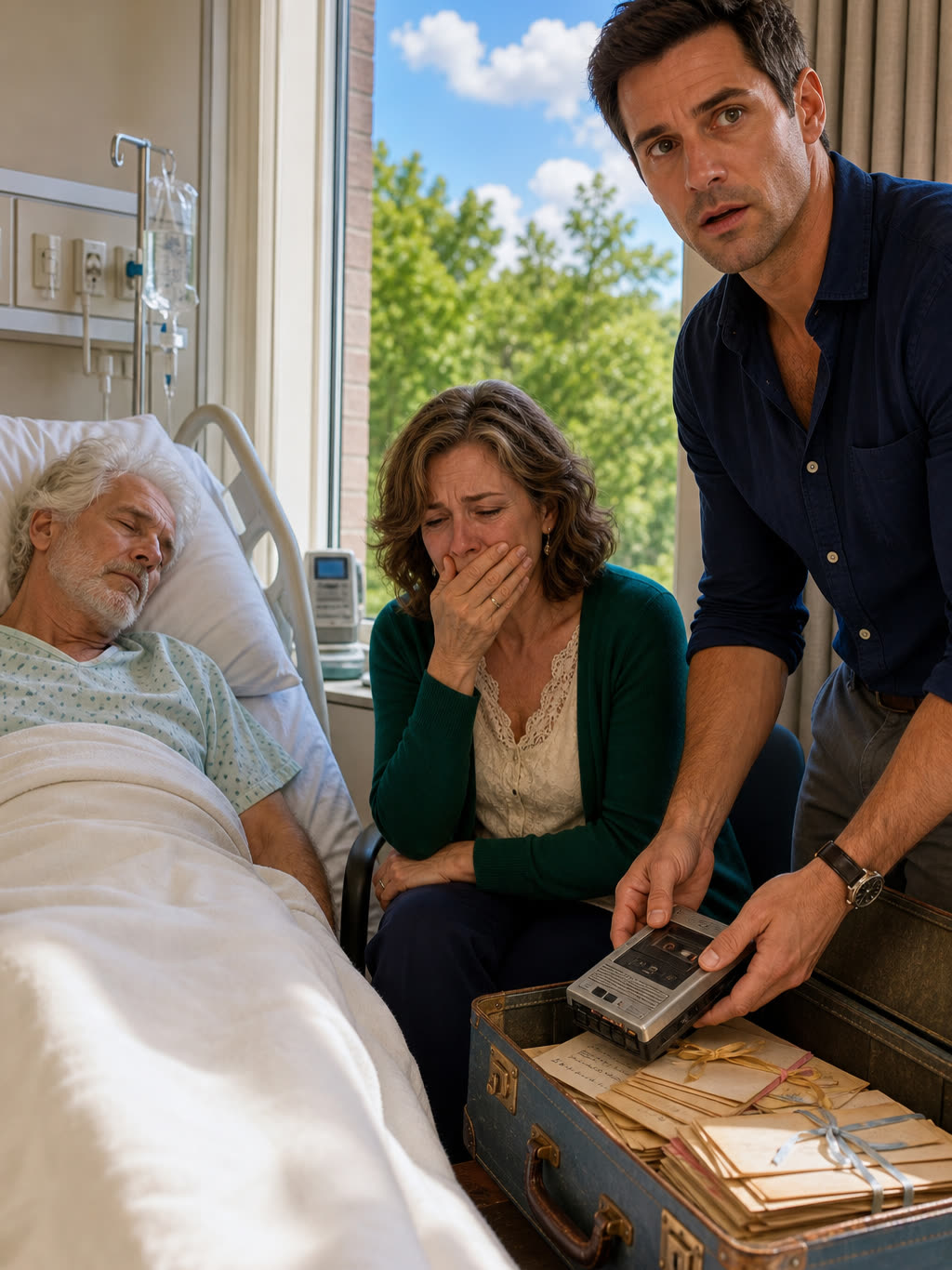
Douglas stretched a hand toward the old blue suitcase.
“Show her the letters.”
Lucas unlatched it and lifted out a thick stack bound with a faded ribbon. The handwriting on the top envelope was instantly familiar.
It was my own.
“Where did you find these?”
“Your mother gave them to my wife, Margaret, years after we married,” Douglas said.
I gaped at him.
“Your wife knew about me?”
“She knew I’d loved you. I told her when we first started dating.”
A faint smile crossed his face.
“Margaret said mentioning another woman on our third date was a terrible idea.”
In spite of everything, a laugh nearly escaped me.
Then Douglas’s face grew grave.
“She was a good woman, Hannah. We had a happy marriage, and we raised Lucas together. But she always knew there were questions about our past I couldn’t answer.”
Lucas passed me a yellowed letter addressed to Margaret.
I knew my mother’s handwriting before I’d even unfolded it.
In it she confessed to intercepting our letters after Douglas went off to college. She had hidden some, changed others, and purposely persuaded each of us that the other had moved on.
I read her confession a second time.
“She told me Douglas wanted me to stop contacting him,” I whispered.
Douglas shut his eyes.
“She told me you were engaged to someone else.”
A tightness gripped my chest.
For forty-one years, I’d believed Douglas had just stopped loving me. Now I was learning that the person I’d trusted above all others had helped pull us apart.
“Why would she do that?”
“She thought I wasn’t good enough for you,” Douglas replied. “My father worked at the mill, and I didn’t have much money.”
I recalled my mother’s endless warnings about marrying a man who could offer a comfortable life. She’d always treated Douglas courteously, but she’d never thought him driven enough for her daughter.
I looked down at her letter.
“She stole our chance to decide for ourselves.”
Douglas pressed my hand.
“I know.”
For a while, neither of us said a word.
Then the photograph came back to mind.
“But that doesn’t explain the baby.”
Lucas nodded.
“Margaret found that picture among the things your mother returned. She started investigating because she couldn’t understand why your names were written on it.”
He told me the hospital had shut down years ago, leaving its records full of gaps. An investigator eventually learned that my mother had volunteered there in 1987, supporting young women who needed help after giving birth.
“She never told me that,” I said.
“She apparently worked with a seventeen-year-old named Marianne Webb,” Lucas continued. “Marianne gave birth to a daughter and initially planned to place her for adoption.”
I searched the newborn’s tiny face.
“Is this Marianne’s baby?”
“That’s what Marianne told the investigator.”
“Then why did my mother have the photograph?”
“She was helping Marianne through the adoption process.”
That answer very nearly eased my mind.
My mother had been capable of remarkable kindness toward strangers, even while she made dreadful choices about my life. Maybe the photograph was simply one more piece of that complicated woman.
But Lucas had more to say.
“Marianne changed her mind about the adoption. She wanted to keep her daughter.”
“What happened?”
“According to Marianne, she went to sleep one evening expecting to take her baby home the next day.”
He paused.
“When she woke up, the child was gone.”
My eyes snapped to him.
“Gone?”
“The baby had disappeared, and your mother stopped coming to the hospital.”
I shook my head.
“My mother wouldn’t steal a child.”
“We don’t know that she did,” Douglas said quickly. “But she was involved somehow.”
Lucas drew another paper from the suitcase.
It was a photocopy of an old hospital admission form. The infant’s temporary name was recorded as Baby Hannah, and my mother was listed as the emergency contact.
Next to it rested a tiny hospital bracelet stamped with the initials D. Carter.
I gazed at the papers, struggling to fit the pieces together.
“Did anyone ever find Marianne’s daughter?”
“Not through the hospital records,” Lucas answered.
“Then why did your investigator keep searching?”
His eyes went to Douglas.
“Because Marianne eventually told Margaret about a man who visited the hospital shortly before the baby disappeared.”
My stomach knotted.
“Who was he?”
Lucas dropped his voice.
“Thomas Carter.”
My breath caught in my throat. It was my father’s name.
Part 2: Old Engagements, Stolen Letters, and a Tape Marked for Me Alone
My father had been a soft-spoken man who flipped pancakes every Saturday morning and nudged Douglas to tell me how he felt. He’d passed away years earlier and left me with nothing but fond memories.
I studied the photograph again.
“Why would my father visit a frightened teenage mother in the hospital?”
Douglas watched me closely.
“We’ve spent years trying to answer that question.”
Lucas reached into the suitcase and pulled out one last envelope.
“There’s something else, Hannah. Your father wasn’t the only person connected to Douglas’s family before you two met.”
He laid an old photograph in my palms.
It showed my father in his youth, standing beside a woman I recognized from Douglas’s childhood snapshots.
“That’s your mother,” I told Douglas.
He nodded.
Lucas spoke softly.
“Before your father married Evelyn, he was engaged to my grandmother.”
I stared at the picture, abruptly recalling how tense my mother always seemed whenever Douglas’s family came by.
Our parents hadn’t merely been acquainted.
They’d shared a past that neither of us had ever been told about.
And buried somewhere in that past was a missing child.
I gazed at the picture of my father next to Douglas’s mother. They looked scarcely twenty, beaming at each other as though their whole lives stretched out ahead of them.
“They were engaged?” I asked.
From the hospital bed, Douglas nodded.
“Before either of us was born. My mother ended it, but neither of them ever explained why.”
I thought back to how my father always urged Douglas to spend time at our house. My mother, on the other hand, always found some excuse to interrupt whenever the two of us were alone.
Until that evening, I’d assumed she simply didn’t like the idea of us becoming a couple.
Now I wondered what else had frightened her.
“Did my mother know about their engagement?”
“Yes,” Douglas answered. “Everyone in town knew.”
Lucas dipped into the blue suitcase and took out a newspaper clipping from September 1987. It pictured a charity fundraiser at the hospital where my mother had volunteered.
My mother was standing beside a table of homemade cupcakes. Next to her stood a young woman the caption named as Marianne Webb.
“The baby’s mother,” I whispered.
Lucas nodded.
“Margaret eventually found Marianne. She confirmed that she’d planned to give her daughter up for adoption but changed her mind.”
“Did she ever find the child?”
“Not then. She told Margaret that your father visited the hospital twice before the baby disappeared.”
I turned to Douglas.
“My father?”
“That’s what she said.”
I fought to square the accusation with the man who had raised me. He’d been tender and patient, the sort of father who showed up for every school performance and never once forgot my birthday.
“Did Marianne explain why he came?”
“No,” Lucas said. “She was frightened whenever Margaret asked about him.”
I set the photograph down in my lap.
“That doesn’t mean he did anything wrong.”
“I agree,” Douglas replied. “We never found proof that he harmed anyone.”
His words steadied me, though they did nothing to make the mystery easier to grasp.
Lucas opened another folder.
“Margaret kept investigating because your mother had written her a confession. She admitted separating you and Dad, but she also said she’d made another terrible decision in 1987.”
He passed me the letter.
I knew my mother’s careful, exact handwriting. In one passage, she wrote that she’d believed she was shielding me from an uncertain future with Douglas.
Then I came to a sentence that made my throat close.
I did not understand that choosing pain for another person was not the same as protecting them.
I pressed the letter flat against my lap.
For forty years, I’d held myself responsible for losing Douglas. I’d asked myself whether I should have sent one more letter, or gone to his college and demanded an explanation.
Now I knew both of us had been deceived.
“Why didn’t Margaret tell me?” I asked.
“She tried,” Douglas whispered.
Lucas brought out four envelopes addressed to my childhood home. Each bore the same handwritten words: RETURN TO SENDER.
Yet none of them carried a postal cancellation mark.
“Someone sent them back before they reached you,” Lucas explained.
I scrutinized the handwriting, trying to picture who could have intercepted letters after my mother was gone.
Then Lucas gave me a fifth envelope, far older than the rest.
It had been posted to my mother in July 1987. On the back, Marianne had written a warning.
Evelyn, Thomas cannot know where she is.
I lifted my eyes.
“Where who is?”
“We assumed Marianne meant the baby,” Lucas answered. “But we couldn’t confirm it.”
I looked back at the envelope.
Under the flap, nearly faded away, was a single word.
Ruth.
I stared at it.
Douglas had called me Ruthie ever since we were teenagers, but Ruth was also my middle name. I’d been named for my mother’s sister, who had supposedly died before I was born.
Suddenly I recalled an old photograph I’d stumbled upon as a girl: two young women who looked almost identical, standing shoulder to shoulder.
My mother had snatched it out of my hands before I could ask much of anything.
“Douglas,” I whispered, “I think my mother had a sister she never wanted me to know about.”
He looked startled.
“What’s her name?”
“Ruth.”
Lucas leaned in, but before he could say anything, Douglas broke into a fit of coughing. It drained him completely, and a nurse came in to check on him.
Once she’d gone, Lucas spoke in a hushed voice.
“There’s something else you should see.”
He passed me a recent laboratory report.
“After Mom died, I continued searching for the missing child. A genealogy database connected me to a thirty-nine-year-old man named Benjamin Hale.”
I frowned.
“But Marianne had a daughter.”
“That’s what we were told. Benjamin was adopted as an infant, and his family records are incomplete.”
“How is he related to you?”
Lucas faltered.
“The genetic results suggest he’s a close relative. A private test indicated he could be my uncle.”
I glanced at Douglas.
“Your brother?”
“Possibly,” Douglas answered. “But we haven’t established which side of Lucas’s family the connection comes from.”
Lucas told me that Benjamin’s adoptive parents had gotten him through a private attorney. An old ledger hinted that my father had helped set up the placement.
I sat frozen.
The vanished baby, my father’s hospital visits, and Douglas’s family were all bound together by documents none of us completely understood.
Then Lucas showed me a picture of the ledger.
There, beside an infant placement dated October 1987, was my father’s name.
Thomas Carter.
I’d come to the hospital hoping to reclaim a love I’d lost forty-one years earlier. Instead, I was uncovering an entire history my parents had buried, one involving a child who might still be alive.
I looked at Douglas, whose eyes were drifting shut with exhaustion.
For the first time, I grasped why he’d pleaded with me to come before it was too late.
He wasn’t only trying to explain why we’d been torn apart.
He was asking me to help unearth a secret that had shadowed both our families for nearly forty years.
Douglas was asleep when Lucas drew a small cassette tape out of the blue suitcase. His father had been fading all afternoon, and the nurse had asked us to let him rest.
“Where did you find that?” I asked.
“Among your mother’s belongings. There were six recordings, but this one was labeled specifically for you.”
He held the cassette up so I could see it.
Written in my mother’s unmistakable hand were two words.
HANNAH — ALONE.
I took it gently, remembering the sound of her voice. She’d been gone for years, and I’d never expected to hear her speak again.
“Have you listened to it?”
Lucas shook his head.
“Dad wanted you to decide when you were ready.”
I glanced toward Douglas. Forty-one years earlier, my mother had chosen which letters reached me and which truths I was permitted to know.
I refused to let her silence rule me any longer.
“Let’s play it.”
Lucas slipped the cassette into a portable recorder and pressed the button.
After a few seconds of static, my mother’s voice filled the room.
“Hannah, if you’re hearing this, I either found the courage to tell you the truth, or I died without doing so.”
Tears sprang to my eyes at once.
She confessed to intercepting our letters and to convincing Douglas I’d fallen in love with someone else. She said she’d thought we were too young to grasp what marriage demanded, but now understood that she’d taken a choice that belonged to us.
Then her voice wavered.
“But this recording isn’t only about Douglas. It’s about a child born in September 1987.”
Lucas edged closer.
My mother described how she’d helped a frightened young woman arrange an adoption. She’d known a married couple who longed for a baby and believed she could give the child a loving home.
“Douglas and Margaret,” I whispered.
On the tape, my mother confirmed it.
She had reached out to an attorney, helped set up the placement, and watched Douglas and Margaret carry the infant away.
Lucas pressed a hand to his mouth.
He’d known his whole life that he was adopted. What he hadn’t known was that the woman who kept his father from his first love had also helped bring him into the family.
My mother’s voice broke.
“I told myself the baby would be loved, and he was. But love does not make a lie harmless.”
I clutched the armrest.
She went on.
“I should have told Hannah who the child’s mother was. I should have explained why I was so afraid of the past returning.”
The tape hissed.
“I wrote the name down. I hid it somewhere Hannah would recognize, if she ever learned enough to look.”
“Where?” Lucas whispered.
My mother offered one last clue.
“The answer is in the summer we were happiest.”
And then the tape went silent.
Part 3: The Summer We Were Happiest
Douglas’s eyes fluttered open.
“Summer camp,” he murmured.
I turned to him.
“What?”
“The summer we met. You were seventeen.”
I thought of the old blue suitcase I’d carried to camp. My father had mended its torn lining the night before I left.
Lucas caught on right away.
We emptied the suitcase and inspected the fabric. Near the bottom, beneath a seam that had been neatly sewn shut, we found a slim, yellowed envelope.
Across the front, my mother had written:
THE SUMMER OF 1984 — ONLY HANNAH.
Inside lay a photograph and a folded document.
The photograph showed Douglas and me beside the lake at summer camp. We were laughing, his arm draped around my shoulders, with no idea how drastically our lives were about to change.
But someone else was standing with us.
A young woman with dark hair and a kind smile had one hand resting on my shoulder.
Douglas leaned in.
“I remember her. She worked at the camp.”
“Who was she?”
He studied the picture.
“Her name was Ruth.”
A chill ran through my hands.
“Ruth Bennett?”
Douglas looked at me.
“Yes. How did you know?”
Because Ruth Bennett was my mother’s sister.
She was the aunt I’d been told had died before I was born.
I examined the woman in the photograph again. She’d been alive in 1984, smiling next to two teenagers whose future my mother would later tear to pieces.
Lucas took the photograph from me.
“She looks familiar.”
He scrutinized her face, especially her eyes.
Then he glanced at his own reflection in the darkened hospital window.
I unfolded the document.
It was a birth certificate dated September 17, 1987.
Lucas’s birthday.
My eyes went to the line naming the child’s mother.
Ruth Elaine Bennett.
I raised my eyes to Lucas.
“Your birth mother was my aunt.”
He stared at me, speechless.
Douglas reached for his son’s hand, but I kept reading.
There was a second name on the certificate.
It was one that made the whole room seem to lurch.
I knew it instantly, because I’d printed it across Father’s Day cards all through my childhood.
The man named as Lucas’s biological father was Thomas Carter.
My father.
Slowly, I lowered the document.
The boy Douglas and Margaret had adopted wasn’t only my cousin through my mother’s missing sister.
According to that certificate, he was my half brother as well.
And all at once I understood why my mother had spent so many years terrified that our two families might compare what they knew.
Lucas stared at the birth certificate, his hands shaking as he read my father’s name. For nearly forty years, he’d assumed his biological parents were strangers who had simply chosen adoption.
Now he sat beside the father who had adopted him, learning that his birth father was the man who had raised me.
“Thomas Carter,” he whispered. “Your father?”
I nodded, barely able to speak.
“And Ruth Bennett was your mother’s sister?”
“Yes. Which means we’re related through both sides of my family.”
Douglas reached toward his son.
“Lucas, whatever that document says, I’m still your father.”
Lucas met his gaze, his eyes brimming.
“I know, Dad.”
He stepped to the bedside and hugged him gently. As I watched, I realized the truth about Lucas’s birth might reshape how he saw his family, but it could never erase the love that had shaped his life.
We spent the following hour going through the papers my mother had hidden. The birth certificate gave us names, but we knew it would take more records and genetic testing to confirm the whole history.
What we could already see hurt enough.
My mother had hidden her sister’s existence, helped arrange Lucas’s adoption, and then spent years keeping Douglas and me from comparing our memories. Her letters implied she’d believed that keeping everyone apart would shield the family from scandal.
Instead, she’d left us carrying questions we never knew we ought to ask.
“Did she know Lucas was my brother?” I asked Douglas.
“I believe she did. But I don’t know when she learned everything.”
I gazed at the photograph of Ruth standing beside us at summer camp.
As a child I’d believed my aunt had died before I was born. Yet she’d been alive when I was seventeen, near enough to lay her hand on my shoulder.
I wondered where she’d gone afterward, and whether she’d ever been permitted to see her son again.
Lucas studied the photograph alongside me.
“I want to find out what happened to her.”
“So do I,” I answered.
Douglas squeezed my fingers.
“Promise me something, both of you.”
We both turned toward him.
“Don’t let what happened forty years ago keep you from becoming a family now.”
Lucas nodded.
“I promise.”
I bent closer.
“You have my word.”
Over the next two days, Douglas weakened further. His doctors told us treatment could keep him comfortable, but his illness had progressed too far for recovery.
I stayed at the hospital, stepping away only long enough to shower and change clothes. Lucas and his wife, Elena, brought meals, and their two daughters came by with handmade cards for their grandfather.
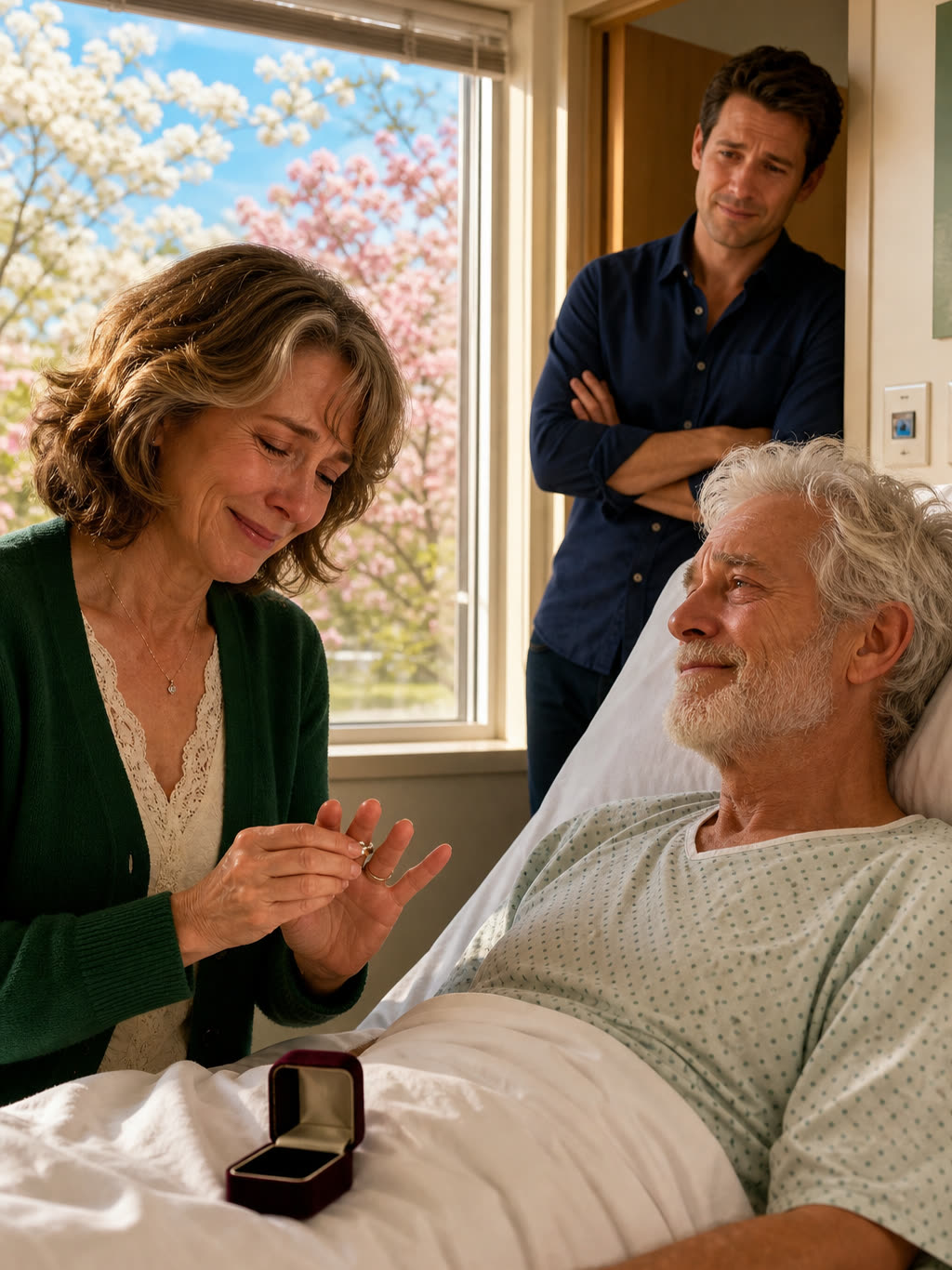
One afternoon, Douglas asked me to open the small velvet box once more.
Inside rested the plain gold ring he’d bought when we were nineteen.
“I wanted to give you that before I left for college,” he said.
“I know.”
“I imagined we’d get married, buy a house, and spend the rest of our lives arguing about everything.”
I smiled through my tears.
“We would have been very good at arguing.”
He let out a soft laugh.
Then his face turned serious.
“I loved Margaret, Hannah. I need you to know that.”
“I do.”
“She gave me a wonderful life. Lucas, our grandchildren, all those years together.”
I took his hand.
“I’m glad you were happy.”
He searched my face.
“But I never stopped wondering about you.”
“Neither did I.”
For a while we sat in silence, remembering the summers when we’d believed time was endless.
Then Douglas looked at the ring.
“You don’t have to wear it.”
I slid it onto my littlest finger.
“It isn’t a wedding ring,” I told him. “It’s a reminder that what we felt was real, even if we didn’t get the life we imagined.”
Tears filled his eyes.
Three mornings later, Douglas slipped away peacefully, with Lucas and me at his side.
At his funeral, I met people who had known him as an architect, a husband, a father, and a grandfather. They shared stories about his kindness, his dreadful cooking, and his habit of helping neighbors without ever expecting anything back.
I saw how much of his life I’d missed, but I was grateful that he’d been so loved.
A few weeks afterward, Lucas came to my house carrying a folder of family records. We’d begun working with an attorney to trace Ruth’s history and clarify the circumstances of his adoption.
Questions still remained, and I’d stopped expecting every answer to arrive in a tidy package.
But Lucas had become part of my life.
We shared Sunday dinners, traded childhood photographs, and gradually learned what it meant to be family after so many lost years.
One evening he brought his daughters along. The younger girl spotted the little gold ring on my finger and asked whether it belonged to someone special.
“Yes,” I told her. “Someone who kept a promise he made a very long time ago.”
After they’d gone, I stood at my kitchen window and looked out toward the old football field.
For forty-one years, I’d pictured that finding Douglas again would hand me the future I’d missed.
Instead, he’d given me something I hadn’t known was waiting for me: the truth about our past, a brother I’d never met, and a family I could still love.
There was no getting back the years we’d lost.
But at sixty, I finally understood that my life wasn’t over simply because the love story I’d dreamed of had ended differently.
There were still people to know, memories to make, and promises worth keeping.
