

Part 1
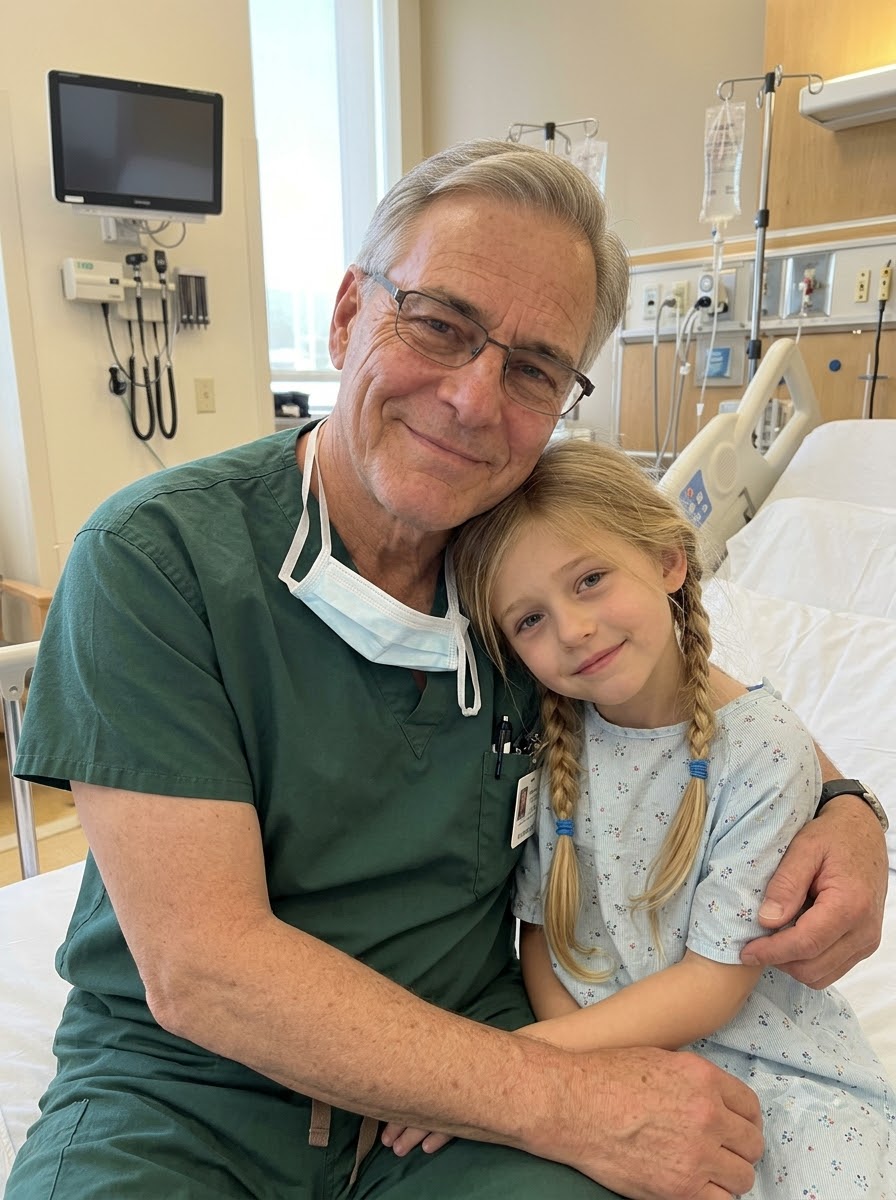
I spent thirty-five years saving the lives of strangers. But I never imagined that one little girl would lead me to a secret my late daughter had left behind.
“Dr. Miller, there’s something you need to see. It concerns the little girl you operated on.”
The man standing on my doorstep was dressed in an expensive suit. He held a leather folder beneath one arm, and a black sedan was parked along the curb behind him.
My heart immediately began to race.
“Is Sophie all right?” I asked.
“She’s stable, Doctor. I’m not here with bad news.”
“Then what is this about?”
He opened the folder and showed me a photograph of a smiling young woman.
There was something strangely familiar about her face, although I couldn’t understand why.
“Who is she?” I whispered.
The stranger hesitated before answering.
“Someone whose life your daughter changed. And there’s something she left behind that you deserve to know about.”
I stood frozen in the doorway.
My daughter had been dead for three years.
Until that morning, I had believed I knew everything about the life she had lived.
My name is Robert Miller. I am sixty-five years old, and for nearly thirty-five years, I have worked as an emergency trauma surgeon.
I have spent more nights than I can count inside operating rooms, helping patients and families through some of the most frightening hours of their lives.
I learned long ago how to remain calm when everything around me was falling apart.
But nothing in my medical training prepared me for what happened to my own family.
Three years earlier, my daughter Emily and my seven-year-old granddaughter Lucy were killed in a tragic car accident.
My wife, Milly, had passed away several years before them.
In the space of one terrible day, the last two people who made my house feel like a home were gone.
The silence afterward was unbearable.
There were no more Sunday dinners with Emily.
No birthday celebrations filled with laughter.
No small footsteps racing down the hallway.
No little girl appearing beside my chair, holding a broken toy and asking, “Grandpa, can you fix this?”
I kept Lucy’s toys exactly where she had left them for months.
Sometimes, when I came home late, I caught myself listening for her voice.
Then I would remember.
The house had become a place filled with memories but almost no living sounds.
So I began spending more time at the hospital.
I accepted additional shifts, volunteered to cover emergencies, and stayed long after my scheduled hours ended.
The hospital was exhausting, but at least there, people still needed me.
My colleague Paul noticed what I was doing.
One evening, after another long shift, he found me sitting alone in the staff lounge.
“Robert, you’ve spent your entire life helping other people. Don’t you think it’s time to rest?”
I gave him the answer I always gave.
“And do what, Paul? Sit alone in that empty house?”
He looked at me sadly.
For once, he had no response.
Neither did I.
Then, on a night that began like countless others, everything changed.
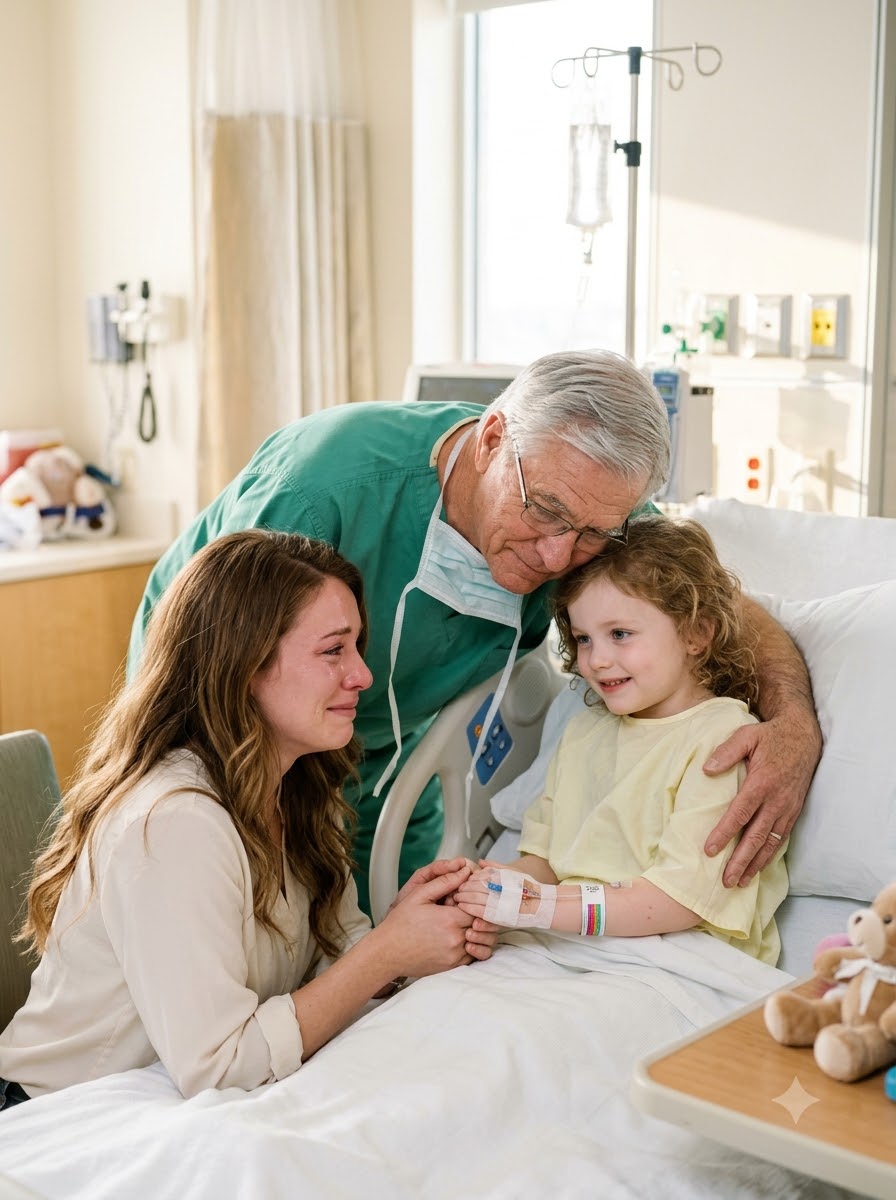
It was nearly midnight when an ambulance rushed into the emergency department carrying a five-year-old girl.
Her name was Sophie.
She had been seriously injured in a car accident and needed immediate medical attention.
When the team brought her into the trauma bay, I stepped forward to assess her condition.
Then I saw her face.
She had soft, curly brown hair, delicate features, and an expression that reminded me painfully of Lucy.
For one brief moment, I was no longer standing in a hospital.
I was remembering my granddaughter.
Her laughter.
Her small hands.
The way she used to look up at me whenever she wanted another bedtime story.
My chest tightened.
Paul noticed immediately.
“Robert, are you okay?”
I closed my eyes for a second and took a steady breath.
“Yes. Let’s help her.”
There was no time for anything else.
Our medical team moved quickly, examining Sophie, reviewing her injuries, and preparing the treatment she urgently needed.
Her condition was complicated.
Every decision required care, coordination, and the experience of the entire surgical team.
At one point, the resemblance to Lucy became so overwhelming that I briefly stepped aside to regain my focus while another surgeon continued the procedure.
I knew that Sophie deserved my complete attention.
She was not my granddaughter.
She was a frightened little girl with her own family, her own future, and people waiting desperately for her to survive.
When I returned, I was ready.
The hours passed slowly.
We worked through one challenge after another, making adjustments as her condition changed.
By the time the urgent procedures were completed, almost thirteen hours had passed.
My shoulders ached.
My hands felt heavy.
I was more exhausted than I had been in years.
But Sophie had survived surgery.
She remained seriously ill, and the next several days would be important.
Still, she was stable.
For the first time since the ambulance arrived, I allowed myself a quiet breath of relief.
When I stepped into the hallway, a young woman hurried toward me.
Her face was pale, and her eyes were swollen from crying.
“Doctor! Please, I’m Sophie’s mother. Is my daughter okay?”
I stopped in front of her.
“Your daughter has completed surgery. She’s in intensive care now, and our team is monitoring her closely.”
The woman covered her mouth with both hands.
“Oh, thank goodness!”
Tears rolled down her cheeks.
She reached for my hands and held them tightly.
“You have no idea what you’ve done for us. Thank you so much!”
I gently reassured her.
“Your daughter is a remarkable little girl. She’s receiving the care she needs.”
The woman nodded repeatedly, struggling to regain her composure.
Then she seemed to remember something.
“I’m sorry. I didn’t even ask your name.”
“Dr. Miller.”
She stopped moving.
“Miller?”
“Yes.”
Her expression changed.
“What’s your first name?”
“Robert.”
She stared at me.
“Robert Miller?”
I nodded, confused by her reaction.
For several seconds, she looked at me as though I were someone she had been searching for.
Or someone she had never expected to meet.
“Is something wrong?” I asked.
Before she could answer, a nurse approached with an update about Sophie.
The young woman thanked me again and hurried toward the intensive care unit.
I watched her leave.
I assumed she was simply overwhelmed by everything that had happened.
After such a frightening night, unusual reactions were understandable.
I had no idea how wrong that assumption was.
When my shift finally ended, I returned home and slept for most of the following day.
I woke to the sound of someone knocking on my front door.
At first, I thought it might be Paul checking on me.
Instead, I found the well-dressed stranger standing on my porch.
He introduced himself as Sebastian.
“My name is Sebastian,” he explained. “I direct a community organization that supports young families.”
I frowned.
“How did you find me?”
“Your daughter worked with us. You once made a memorial donation to our organization, and we still had your contact information.”
At the mention of Emily, something tightened inside my chest.
“You knew Emily?”
“Very well.”
“Then why are you here?”
“Because Sophie’s mother wants to show you something about your daughter.”
I stared at him.
The little girl from the hospital.
Her mother.
My daughter.
I could not understand how those three lives could possibly be connected.
Sebastian opened his leather folder again.
Inside was the photograph he had shown me.
“Who is that young woman?” I asked.
“Gianna. But there’s something about her story you need to hear directly.”
I recognized the name.
Gianna was Sophie’s mother.
I looked from the photograph to Sebastian.
“What does she have to do with Emily?”
His expression softened.
“More than you can imagine, Doctor.”
He explained that the community center was nearby and that Gianna was waiting there.
I hesitated.
I had spent three years carefully protecting myself from unexpected reminders of my daughter.
Even a familiar song or an old photograph could leave me unable to speak.
But Sebastian had known Emily.
And somehow, the child I had helped save was connected to her.
Eventually, I agreed to go.
During the short drive, Sebastian glanced toward me.
“Have you eaten breakfast?”
“No. You practically woke me up.”
He smiled.
“Emily would have scolded you for skipping breakfast.”
For the first time that morning, I almost laughed.
My daughter had said exactly that more times than I could count.
“She was an extraordinary woman,” Sebastian continued. “She helped more people than you probably realize.”
“What do you mean?”
He glanced at the leather folder resting beside him.
“I think Gianna should explain.”
We arrived at a modest brick building with a bright blue front door.
Inside were several offices, a comfortable reception area, and shelves filled with children’s books.
The building felt warm and welcoming.
Photographs covered one wall near the entrance.
I walked toward them without thinking.
Then I stopped.
There, among the smiling volunteers, was Emily.
My daughter.
She was standing with a group of people, her arm resting affectionately around the shoulders of a younger woman.
I had never seen that photograph before.
“That’s Emily,” I whispered.
Sebastian nodded.
“She helped establish our support program for young parents.”
I turned toward him.
“She told me she volunteered here. She never mentioned anything about establishing a program.”
“She didn’t like taking credit for her work.”
I lifted my hand and gently touched the edge of the photograph.
For a moment, I could almost hear her laughter.
It was as though a small part of the daughter I thought I had lost had suddenly returned.
Sebastian waited quietly.
Then he gestured toward a hallway.
“Gianna is waiting for you.”
I followed him into a small office.
The young mother from the hospital stood as soon as she saw me.
“Dr. Miller. Thank you for coming.”
I looked from her to Sebastian.
“Would somebody please tell me what’s happening?”
Gianna motioned toward a chair.
“First, I need to tell you something I couldn’t explain at the hospital.”
I sat down.
But before she could begin, I asked the only question that mattered to me.
“How’s Sophie?”
“She’s still receiving care, but her doctors are encouraged.”
I smiled with relief.
Then Gianna looked down at a photograph resting on her desk.
“Six years ago,” she began, “I was seventeen and expecting a baby.”
Her voice trembled.
“My parents weren’t supportive. I didn’t have a stable place to live, and I was afraid I’d have to leave school.”
She paused, gathering herself.
“Someone recommended this community center. That’s where I met Emily.”
My throat tightened.
“Emily helped you?”
Gianna nodded, tears shining in her eyes.
“She changed my entire future.”
Part 2
For several moments, I could only stare at Gianna.
I had come to the community center expecting to hear a small story about my daughter’s volunteer work.
Instead, I was discovering that Emily had been part of someone’s life in a way I had never understood.
Gianna took a breath and continued.
“When I first came here, I was terrified. I was seventeen, pregnant, and unsure whether I would have anywhere safe to stay.”
She looked toward Sebastian.
“I didn’t know whom to trust.”
Then she turned back to me.
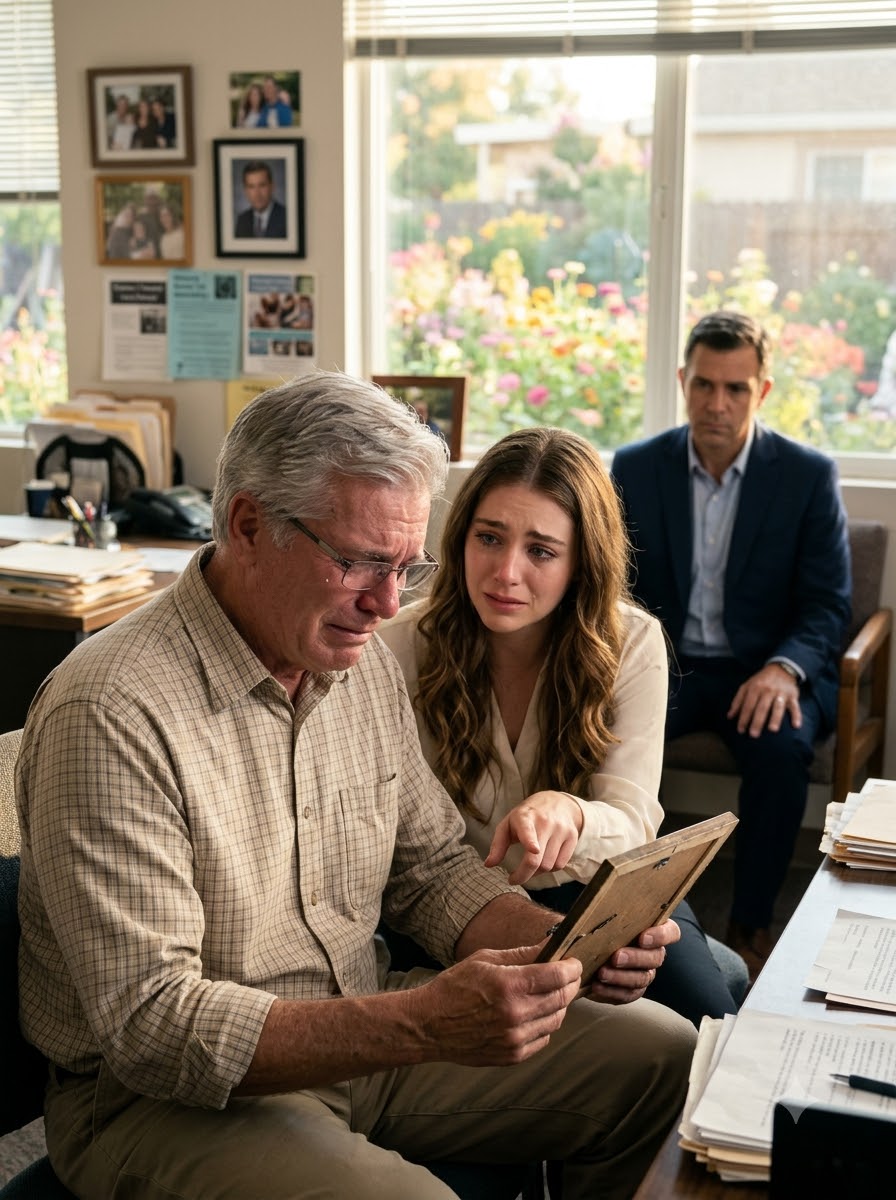
“Your daughter sat beside me for three hours. I kept apologizing for taking up her time.”
A faint smile appeared through her tears.
“Emily told me, ‘People are never a waste of time.’”
I closed my eyes.
Those words sounded exactly like Emily.
She had always been the kind of person who noticed when someone else was struggling.
Even as a teenager, she would stop to help a classmate who was having a difficult day or sit with someone who seemed lonely.
I had admired her kindness.
But I had never realized how far it reached.
Gianna continued.
“Emily helped me find temporary housing. She connected me with people who could help me finish school. Later, she showed me how to apply for childcare assistance.”
I shook my head slowly.
“She never told me any of this.”
“She wasn’t looking for praise,” Gianna answered. “She just wanted me to have an opportunity.”
I looked toward the photograph on her desk.
“What happened after that?”
“Things began getting better. I had somewhere safe to stay. I could continue my education. And for the first time, I started believing I might actually be able to raise my daughter.”
She opened a drawer.
Then she removed another photograph and placed it carefully in front of me.
Emily was holding a newborn baby.
Her face was filled with happiness.
I leaned forward.
“Who’s that?”
Gianna smiled.
“Sophie.”
My breath caught.
The little girl I had spent thirteen hours helping in the operating room had once been held in my daughter’s arms.
I stared at the photograph.
Emily was looking down at the baby with the same tenderness I remembered from the way she used to hold Lucy.
“Emily was there when Sophie was born,” Gianna explained. “I was nervous and didn’t have many people supporting me. Your daughter stayed with me.”
She gently touched the photograph.
“She was one of the first people to hold my baby.”
I could not speak.
For three years, I had looked through the same collection of family photographs.
Sometimes I studied Emily’s face because I was afraid that, as the years passed, I might begin forgetting the smallest details.
The way she smiled when she was genuinely happy.
The way she tilted her head when she listened.
The expression she wore when she held a child.
Now, sitting in a little office I had never visited before, I was seeing an entirely new moment from her life.
One I had not known existed.
Gianna leaned forward.
“There’s something else, Doctor. Emily used to talk about you.”
I looked up.
“About me?”
“All the time.”
I swallowed.
“What did she say?”
“She told me her father was a surgeon who helped people through the most difficult days of their lives.”
My eyes filled with tears.
“She said she was proud of you.”
Those words almost broke me.
Emily and I had argued more than once about my demanding work schedule.
I had missed birthdays.
I had missed family dinners.
I had promised to attend ordinary events, only to be called back to the hospital.
At the time, I told myself that I was doing important work.
But after losing Emily and Lucy, all those missed moments returned to haunt me.
I often wondered whether Emily had believed my career mattered more to me than my family.
I had never found the courage to ask her.
And now I never could.
But Gianna continued speaking.
“Emily once told me you taught her something important: helping someone isn’t always convenient, but that doesn’t mean you stop trying.”
I covered my face with my hands.
I had said those exact words to Emily when she was a teenager.
I remembered the conversation.
She had been frustrated about helping someone when she had other plans.
I had told her that kindness was not always easy or convenient.
I had forgotten the conversation years ago.
Emily had remembered it.
And she had carried it into her own life.
Gianna waited while I struggled to compose myself.
Then she placed another photograph on the desk.
This one showed Emily sitting beside Lucy.
My granddaughter was surrounded by children’s books.
I reached for the picture.
“Where was this taken?”
“Right here. Lucy came with her mother to help organize donations.”
I remembered that Saturday.
Lucy had returned home excited and proud of herself.
She had told me she had spent the afternoon sorting books into piles.
Animals.
Princesses.
Dinosaurs.
She had explained her system so seriously that I had laughed.
I had assumed she was helping Emily with a simple afternoon activity.
Now I understood that they had been helping families who needed those donations.
“Lucy helped prepare a package of baby supplies for us,” Gianna said softly.
The tears came before I could stop them.
I bent my head and cried.
I had spent three years believing that all the wonderful moments I had shared with Emily and Lucy were locked in the past.
But here was someone who remembered them in ways I never could.
Someone whose life still carried the evidence of their kindness.
Gianna let me cry without interrupting.
After a while, she explained that she had wanted to contact me following the accident.
She had written several letters.
But she had never sent them.
“I worried that reminding you of Emily might make things harder.”
I shook my head.
“Knowing this means more than I can explain.”
She gave me a gentle smile.
“When I heard your name at the hospital, I remembered everything Emily had told me about her father.”
I looked at her.
“So when you asked whether I was Robert Miller…”
“I realized you were the man Emily had spoken about so often.”
I glanced down at the photograph of Sophie as a newborn.
“And I had just operated on her.”
Gianna nodded.
“Your daughter helped us when Sophie’s life was beginning. And now you’ve helped us when we were afraid we might lose her.”
I stared at the two photographs lying beside each other.
Emily holding Sophie.
Emily sitting beside Lucy.
For the first time in years, my memories of my daughter were not only about the day I lost her.
They were about the life she had lived.
Gianna reached into her handbag.
“There’s one more thing.”
She placed a sealed envelope on the desk.
I recognized the handwriting immediately.
Emily’s handwriting.
My hands began trembling.
“Where did you get this?”
“Emily gave it to Sebastian before the accident. She wanted you to have it when the center’s expansion was completed.”
I looked at Sebastian.
He nodded quietly.
“The expansion was delayed. After we lost Emily, we wanted to make sure the letter reached you at the right time.”
I held the envelope carefully.
For three years, I had thought I would never receive another message from my daughter.
No new birthday card.
No unexpected note.
No cheerful reminder to eat breakfast or stop working so much.
Yet here, in my hands, was something she had written for me.
I opened the envelope slowly.
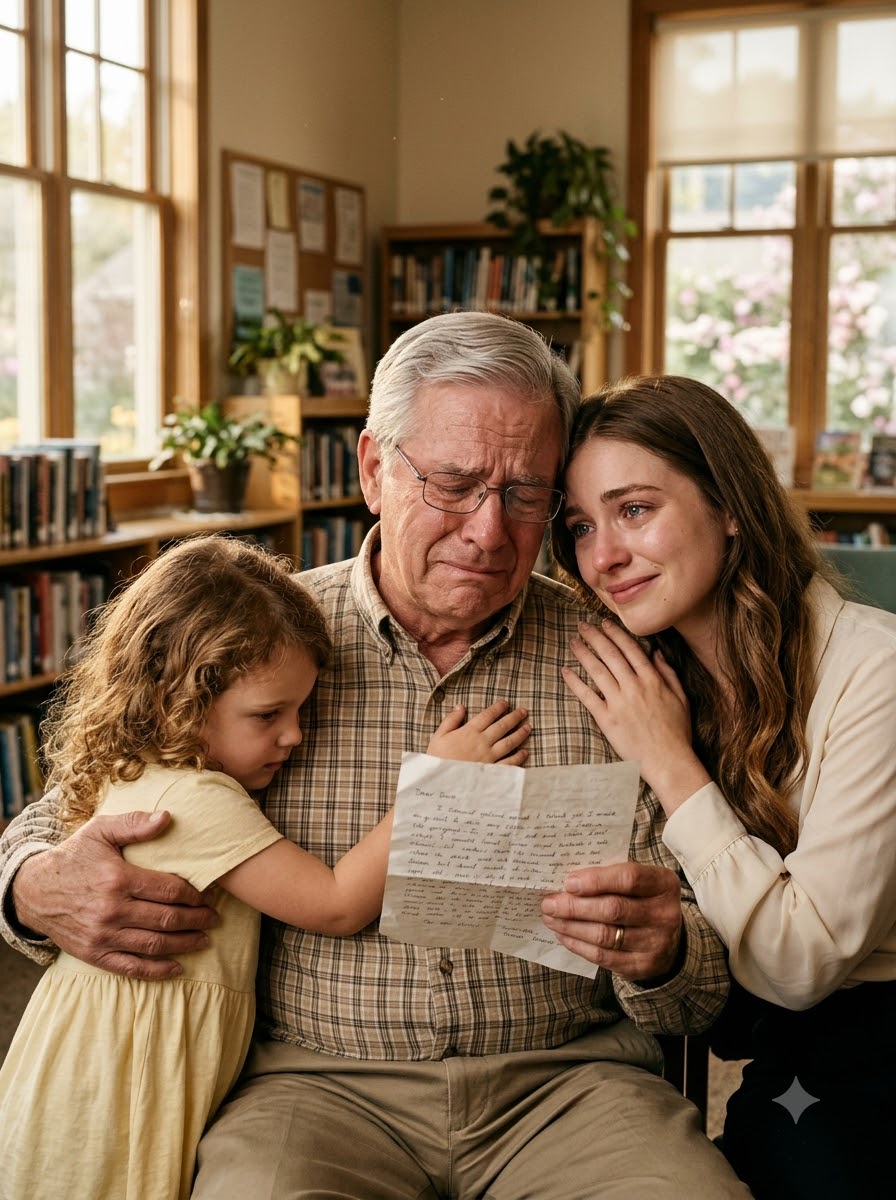
Inside was a handwritten letter.
Dad,
I know I sometimes complain about how much you work. But I hope you understand how proud I am of you.
My vision blurred.
I wiped my eyes and kept reading.
You taught me that helping someone doesn’t always happen inside an operating room.
Sometimes it means listening to a frightened person, helping someone find a safe place to stay, or reminding them that tomorrow can be better.
I paused.
I could almost hear Emily speaking those words.
They were so simple.
So completely hers.
Near the bottom of the page, she had written:
When you finally retire, maybe you could volunteer at the center with me. I think you’d be wonderful at it.
Love, Emily.
I stared at her signature.
Then, through my tears, I began to laugh.
“That girl was trying to recruit me.”
Gianna smiled.
“She talked about it all the time.”
I pressed the letter against my chest.
Emily had imagined a future in which we would work together.
A future where I would finally spend less time at the hospital.
A future where she would show me the work that mattered so deeply to her.
We would never have that future exactly as she imagined it.
But perhaps there was still a part of it waiting for me.
For years, I had believed Emily’s story ended on the day of the accident.
Now I understood something I had never allowed myself to see.
Her life had continued to affect people long after she was gone.
Her kindness had not disappeared.
It lived in the opportunities she had helped create.
In the young mother sitting across from me.
In the little girl recovering in a hospital bed.
And somehow, through a chain of events none of us could have predicted, that little girl had arrived in my operating room.
Gianna reached across the desk and gently took my hand.
“Your daughter helped Sophie have a good beginning in life. Yesterday, you helped give her the chance to have a future.”
I looked at her through tears.
There was nothing I could say that would fully express what those words meant to me.
I had spent three years asking myself why I had survived when the people I loved most had not.
For the first time, I began wondering whether the years ahead might still hold something meaningful.
Not because I could replace Emily or Lucy.
I never could.
But because perhaps there were still ways to honor the love they had given.
I looked once more at Emily’s letter.
Then at Sebastian.
“Tell me about the work you do here.”
He smiled.
And for the first time in three years, I found myself genuinely interested in a future that existed outside the hospital.
Part 3
Over the following weeks, Gianna and I stayed in touch.
I asked about Sophie regularly, although I was careful to respect her medical team’s responsibility for her care.
Her recovery was gradual.
There were difficult days, long periods of observation, and many small milestones that meant everything to her mother.
But slowly, Sophie began improving.
Each encouraging update brought me a quiet sense of relief.
I had treated thousands of children during my career.
I remembered many of them.
But Sophie had become connected to my life in a way I never could have anticipated.
She was not simply the little girl whose face reminded me of Lucy.
She was the child my daughter had once held.
The child whose mother Emily had helped when she was frightened and alone.
And every time I thought about that connection, I felt a little less isolated from the world.
Eventually, Sophie became well enough to receive visitors.
One afternoon, I stopped by her hospital room.
She was sitting upright in bed with a box of crayons beside her.
A sheet of paper rested on her lap.
When she noticed me, she looked up curiously.
“Are you the doctor who helped me?”
I smiled.
“One of them.”
She studied my face for a moment.
Then she lifted her drawing.
“That’s you!”
I leaned closer.
The picture showed a doctor standing beside a little girl.
The doctor had an enormous smile, long arms, and considerably more hair than I possessed.
I studied it with exaggerated seriousness.
“Well, you’ve made me look about thirty years younger.”
Sophie giggled.
It was a bright, joyful sound.
For a moment, I remembered Lucy laughing at one of my terrible jokes.
The memory still hurt.
But it did not overwhelm me in quite the same way.
I thanked Sophie for the drawing and promised to keep it somewhere special.
When I returned home, I placed it beside Lucy’s photograph.
I stood there for several minutes, looking at them together.
One picture reminded me of a child I had loved and lost.
The other reminded me of a child who had been given another chance.
For the first time, those two feelings could exist beside each other without one destroying the other.
A month later, I found Paul in the hospital staff lounge.
He was pouring himself a cup of coffee when I told him I had made a decision.
“I’m going to reduce my hours.”
He turned so quickly that he nearly spilled his drink.
“Robert Miller? Working less? Are you feeling all right?”
I laughed.
“Better than I have in years.”
Paul stared at me.
“You’re serious.”
“Completely.”
He set down his coffee.
“What changed?”
I thought about Emily’s letter.
About Gianna.
About Sophie’s drawing.
About the photographs I had discovered at the community center.
“A few people reminded me that life doesn’t begin and end at the hospital.”
Paul’s expression softened.
“I’m glad.”
“I’m not retiring completely.”
“I wouldn’t expect you to.”
“But I think it’s time I learned how to spend an afternoon somewhere other than an operating room.”
Paul smiled.
“I’ve been telling you that for years.”
“I know.”
“And you never listened.”
“I suppose I needed someone else to make the argument.”
He laughed.
“Whoever it was, tell them I owe them dinner.”
I thought of Emily.
For a moment, I wished I could tell her that her plan had finally worked.
Instead, I smiled.
“I will.”
Soon afterward, I began volunteering at the community center.
Sebastian introduced me to the staff and explained the different services they provided.
Some families needed help finding reliable medical information.
Others needed guidance understanding appointments, treatment instructions, or available community resources.
I began offering my time to help them navigate those questions.
It was very different from the work I had done for nearly thirty-five years.
There were no urgent calls summoning me into surgery.
No long nights beneath operating-room lights.
No constant pressure to make life-changing decisions within seconds.
Instead, I sat with people.
I listened.
I explained complicated information in words they could understand.
Sometimes I helped a worried parent prepare questions for a doctor.
Sometimes I directed a family toward a service that could provide the support they needed.
And sometimes the most useful thing I could do was simply remain in the room long enough for someone to feel heard.
I began to understand what Emily had meant in her letter.
Helping someone did not always require a surgical instrument.
Sometimes it required patience.
Sometimes it required attention.
Sometimes it meant reminding a frightened person that tomorrow could still be better.
There were days when I missed the intensity of the hospital.
I still loved my profession.
I still believed in the work.
But I no longer needed to fill every waking hour with it.
I began going home before midnight.
I started cooking actual meals instead of eating whatever was available in the staff cafeteria.
I opened curtains that had remained closed for years.
I even began sorting through some of the belongings I had been unable to touch since the accident.
I did not rush.
Some days, I could look through an entire album of family photographs.
Other days, I could barely manage one picture.
But I stopped treating grief as something I had to hide behind a busy schedule.
The house was still quiet.
Yet gradually, the silence began to feel different.
It no longer seemed like proof that my life had ended.
It became a place where I could remember the people I loved without feeling that I had to disappear with them.
One afternoon, Gianna arrived at the community center with Sophie.
The little girl was doing much better.
She walked beside her mother, holding a storybook tightly against her chest.
When she saw me, her face brightened.
“Dr. Miller!”
I looked up from the paperwork I had been reviewing.
“Well, hello there.”
Sophie hurried toward the chair beside mine.
She climbed onto it and opened her book.
“Dr. Miller, can you read this to me?”
For a moment, I could not answer.
I remembered Lucy sitting beside me with a storybook in her hands.
I remembered her asking for the same story again and again, even when she already knew every word.
I remembered pretending to be surprised by the ending just to make her laugh.
The memory rose so clearly that I almost expected to look up and see her standing in the doorway.
But then Sophie touched my arm.
“Please?”
I looked at her.
And instead of feeling only the familiar ache of loss, I found myself smiling.
“Of course, sweetheart.”
I opened the book.
Sophie leaned comfortably against my arm as I began reading.
Gianna sat nearby, watching us with a quiet smile.
The room was warm.
Sunlight fell across the pages.
Somewhere down the hallway, children were laughing.
And as I read, I realized that I had spent three years believing joy was something I had already used up.
I had thought that loving my family so deeply meant there could never be room for happiness again.
But I had been wrong.
I could miss Lucy and still smile at Sophie.
I could grieve for Emily and still continue the work she loved.
I could remember Milly and still find comfort in the ordinary moments of a new day.
Nothing about that diminished the people I had lost.
Love was not a limited space that became smaller whenever someone new entered it.
The people I loved would always have their place.
And there was still room for the life ahead of me.
After Sophie finished her story, she looked up.
“Can we read another one?”
I pretended to consider the request.
“Another one? That’s a very serious commitment.”
She giggled.
“Please?”
I smiled.
“All right. One more.”
Gianna laughed softly.
I turned the page.
For years, I had believed the hospital was the only place where I still belonged.
It was where I understood my purpose.
Where I knew what people expected from me.
Where I could concentrate on helping others instead of confronting my own loneliness.
But now I understood that being useful was not the same as being alive.
I had spent so much time saving other people that I had forgotten I was allowed to live, too.
Emily had known that.
She had tried to tell me.
She had even written it down, hoping that one day I would listen.
Her letter now rested in a frame on my desk at home.
Beside it were photographs of Milly, Emily, and Lucy.
And next to Lucy’s picture was Sophie’s drawing of the doctor with the enormous smile.
Sometimes, before leaving for the community center, I would pause in front of them.
I would read the final lines of Emily’s letter again.
When you finally retire, maybe you could volunteer at the center with me. I think you’d be wonderful at it.
Love, Emily.
I would smile and quietly answer her.
“You were right, sweetheart.”
I never stopped missing my wife.
I never stopped missing my daughter.
And there was not a single day when I did not think about my granddaughter.
Nothing could bring them back.
Nothing could replace the years we should have shared.
But their kindness had not disappeared when their lives ended.
It had continued through the people they had encouraged, supported, and loved.
It lived in Gianna’s determination to build a better life.
It lived in Sophie’s laughter.
It lived in the families who found help at the community center.
And now, in a small way, it lived in the work I was finally learning to do beyond the walls of a hospital.
There were still people who needed me.
There were still stories waiting to be read.
Still children who needed encouragement.
Still ordinary afternoons that could become precious memories.
For three years, I had feared the future because I believed it could offer me nothing except more days without the people I loved.
But one terrible accident had brought a little girl into my operating room.
And that little girl had led me back to a part of my daughter’s life I never knew existed.
Emily had left me more than a letter.
She had left me a way forward.
And thanks to Emily, Lucy, Gianna, and a brave little girl named Sophie, I finally found something I had not felt in a very long time.
A reason to look forward to tomorrow.
