

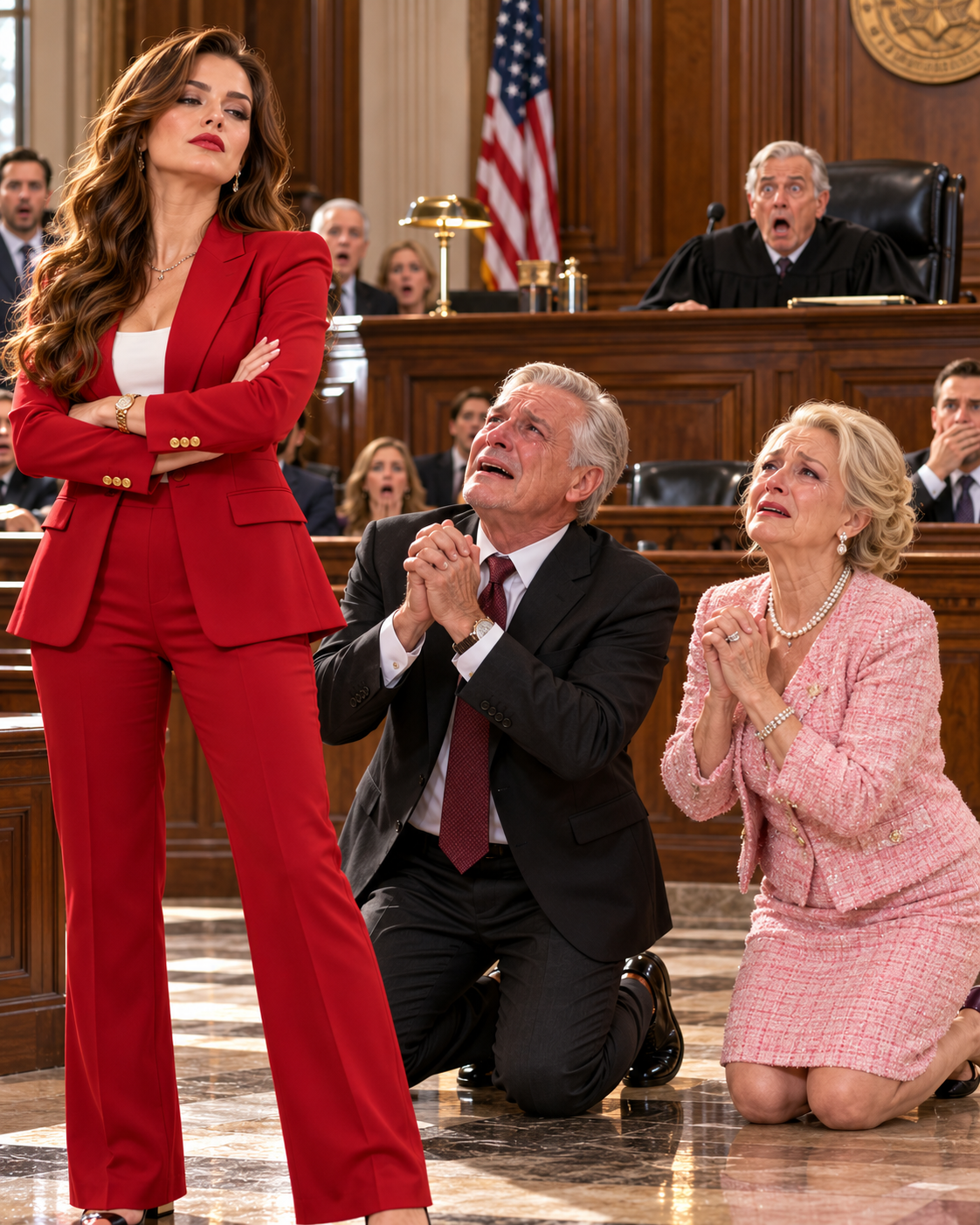
PART 1: The Granddaughter They Never Valued
Grandma Evelyn’s funeral felt less like a loving farewell and more like another carefully arranged performance designed to protect my mother’s social reputation.
A steady drizzle fell over the cemetery, turning the earth beneath our feet into thick, slippery mud. I stood near the back of the gathering beneath an ordinary black umbrella, wearing a worn wool coat that had seen better days.
At the front, my mother, Patricia, wore an expensive black fur coat. Every few minutes, she pressed a handkerchief against eyes that showed no actual tears, glancing discreetly around to see whether anyone influential was watching her display of grief.
My father, Michael, stood beside her, repeatedly checking his watch as though the burial were an inconvenient appointment keeping him from something more important.
Neither of them had visited Grandma Evelyn’s nursing home in years.
While she was alive, they treated her like an obligation. Now that she was gone, they appeared far more interested in what she might have left behind.
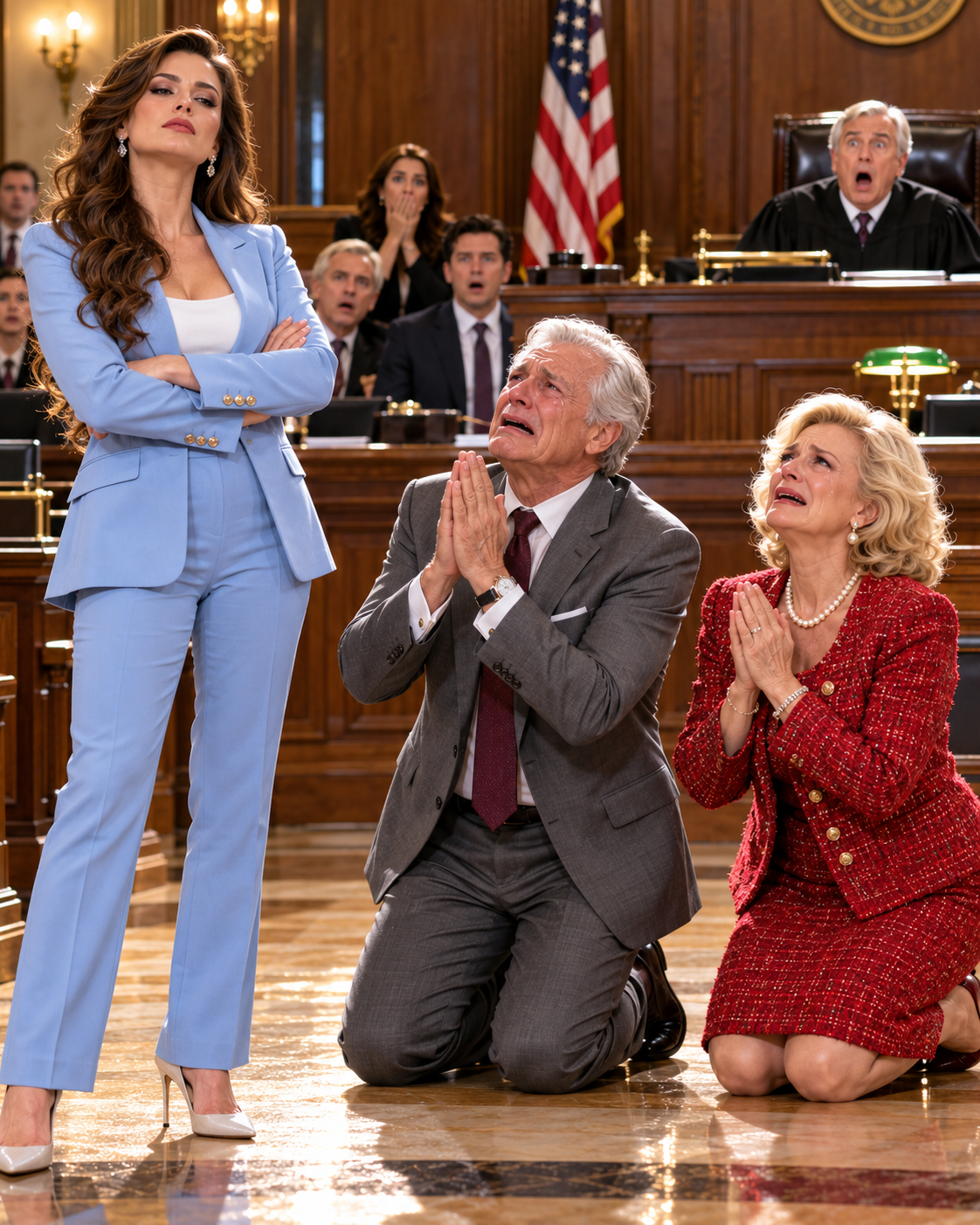
I felt her absence differently.
I missed the afternoons we spent playing chess, the stories she told about her younger years, and her wonderfully sharp sense of humor. Most of all, I missed the way she defended me whenever my parents criticized the choices I made.
She had always been the one person in my family who made me feel understood.
“She’s in a better place now,” my mother announced loudly as the casket was lowered.
I said nothing.
Privately, I thought that almost anywhere beyond my parents’ reach would have been a better place for Grandma.
Two days after the funeral, we met at the office of Mr. Parker, the attorney responsible for administering her estate.
My parents settled into their chairs with the relaxed confidence of people expecting a substantial financial reward.
I took a seat slightly apart from them.
That arrangement reflected our family dynamic perfectly.
I had always been the disappointing daughter. I had moved away, pursued a career they never bothered to understand, and refused to organize my life around their expectations.
To them, those decisions were evidence of failure.
Mr. Parker adjusted his papers and began reading Grandma Evelyn’s final will.
“To my son Michael and his wife Patricia, I leave the contents of my storage unit, including family photo albums and my porcelain cat collection.”
My father’s expression tightened.
“That’s all?”
“That is your inheritance,” Mr. Parker replied.
My mother leaned forward in disbelief.
“What about the investments? The property? The trust?”
Mr. Parker looked back at the document.
“To my granddaughter Claire Carter, I leave the remainder of my estate, including all property, investments, and liquid assets, totaling approximately four point seven million dollars.”
Silence filled the room.
For several seconds, neither of my parents seemed capable of processing what they had heard.
Then my father erupted.
“That’s impossible!” my father shouted. “She manipulated her!”
I remained seated.
“I visited Grandma every weekend,” I said calmly. “I just didn’t advertise it online.”
My mother pointed an accusing finger at me.
“You took advantage of a vulnerable old woman!”
Mr. Parker intervened immediately.
“Mrs. Carter was fully competent when she signed her will. The entire process was recorded.”
My father struck the desk with his palm.
“We’re her children! Claire deserves nothing!”
I watched them without responding.
Years of experience had taught me that arguments with my parents rarely accomplished anything. They had already decided what they wanted to believe, and evidence seldom changed their minds.
As we prepared to leave, Patricia turned toward me with an expression of pure resentment.
“We’ll take every penny back.”
I didn’t answer.
Three days later, a thick envelope containing legal documents arrived at my apartment.
My parents had filed a lawsuit challenging Grandma Evelyn’s will.
They accused me of fraud, undue influence, and exploiting an elderly woman who supposedly lacked the mental capacity to make her own decisions.
I read every page carefully.
Then I brewed a cup of coffee, opened my laptop, and created a new folder.
I named it Operation Inheritance.
I wasn’t frightened by their accusations.
I knew how carefully Grandma had prepared her estate documents, and I knew the allegations against me were false.
More importantly, my parents had absolutely no idea what I did for a living.
They had spent so many years dismissing my career that they had never once bothered to learn the truth.
When the hearing arrived, I entered the courthouse early.
I wore a simple gray suit and carried a thin folder containing the documents I intended to present.
My parents arrived dressed as though they were attending an exclusive social event.
Patricia wore expensive jewelry, while Michael walked with his usual exaggerated confidence.
Their attorney, Mr. Bennett, accompanied them.
He looked equally certain of victory.
My father approached me before the proceedings began.
“You can still settle,” my father said smugly. “Give us eighty percent and keep the rest.”
“I’ll pass,” I replied.
Mr. Bennett glanced at the folder in my hand.
“You’re representing yourself? That’s a mistake.”
I met his eyes.
“We’ll see.”
Inside the courtroom, Judge Whitmore took her seat.
Mr. Bennett began with a dramatic opening statement.
He described me as an unemployed drifter who had taken advantage of an elderly woman suffering from dementia.
According to his version of events, I had isolated Grandma Evelyn, manipulated her emotions, and pressured her into changing her will.
I listened without interrupting.
When the judge invited me to respond, I kept my statement brief.
I explained that Grandma’s will was legally valid and that the burden of proving otherwise rested with the plaintiffs.
Then I sat down.
My mother testified first.
She described a supposedly loving relationship with Grandma Evelyn, claiming she had remained closely involved in her care.
I knew those statements were false.
Patricia had barely visited the nursing home.
My father followed her onto the witness stand.
He claimed I had deliberately isolated Grandma from the family and even changed the facility’s locks to prevent them from visiting.
That accusation was also false.
The nursing home had changed its locks after my father behaved aggressively toward staff.
Then Mr. Bennett called a paid medical expert.
The expert suggested that someone of Grandma Evelyn’s age might have been vulnerable to outside influence.
His testimony relied on speculation rather than direct proof that she had lacked capacity when signing the will.
I took careful notes.
Each time Judge Whitmore offered me the opportunity to cross-examine a witness, I declined.
Confusion spread through the courtroom.
Mr. Bennett seemed increasingly pleased with himself.
My parents exchanged satisfied looks.
They apparently believed I was too intimidated to challenge their testimony.
But I had a different reason for remaining silent.
I wanted their accusations preserved in the official court record exactly as they had delivered them.
Every invented detail.
Every misleading statement.
Every confident declaration that I had been unemployed and financially desperate.
I let them finish.
Hours passed.
Finally, Mr. Bennett announced that the plaintiffs had rested their case.
Judge Whitmore turned toward me.
“Do you have anything at all?”
I rose slowly, holding my thin folder.
“One document, Your Honor.”
I handed it to the bailiff.
The judge opened the folder and began examining its contents.
Her expression changed almost immediately.
She looked up at me, then back at the document.
“This is a certified Department of Defense service record?”
“Yes, Your Honor.”
She turned another page.
“You’re stationed at Fort Liberty?”
“Yes.”
Then she looked at the next entry.
“And your rank is Major?”
“Yes, Your Honor.”
My father gave a nervous laugh.
“Major of what?”
Judge Whitmore ignored him.
She continued reading.
Then she raised her eyes toward me once more.
“You’re with the Judge Advocate General’s Corps?”
I straightened my shoulders.
“I am.”
The courtroom fell silent.
And for the first time in my life, my parents were about to discover exactly who their supposedly unsuccessful daughter really was.
PART 2: The Secret Behind the Gray Suit
I stood before Judge Whitmore while my parents stared at me from across the courtroom.
For years, they had treated my career as something insignificant, barely worth discussing.
Now the judge was examining an official military service record that contradicted nearly everything they had claimed about me.
I spoke clearly.
“I am Major Claire Carter, Senior Trial Counsel for the United States Army JAG Corps. I’ve practiced law for seven years and prosecute serious criminal and fraud cases.”
Mr. Bennett dropped his pen.
The sound seemed unusually loud in the quiet courtroom.
My father looked completely stunned.
My mother’s confident expression vanished.
I continued before either could interrupt.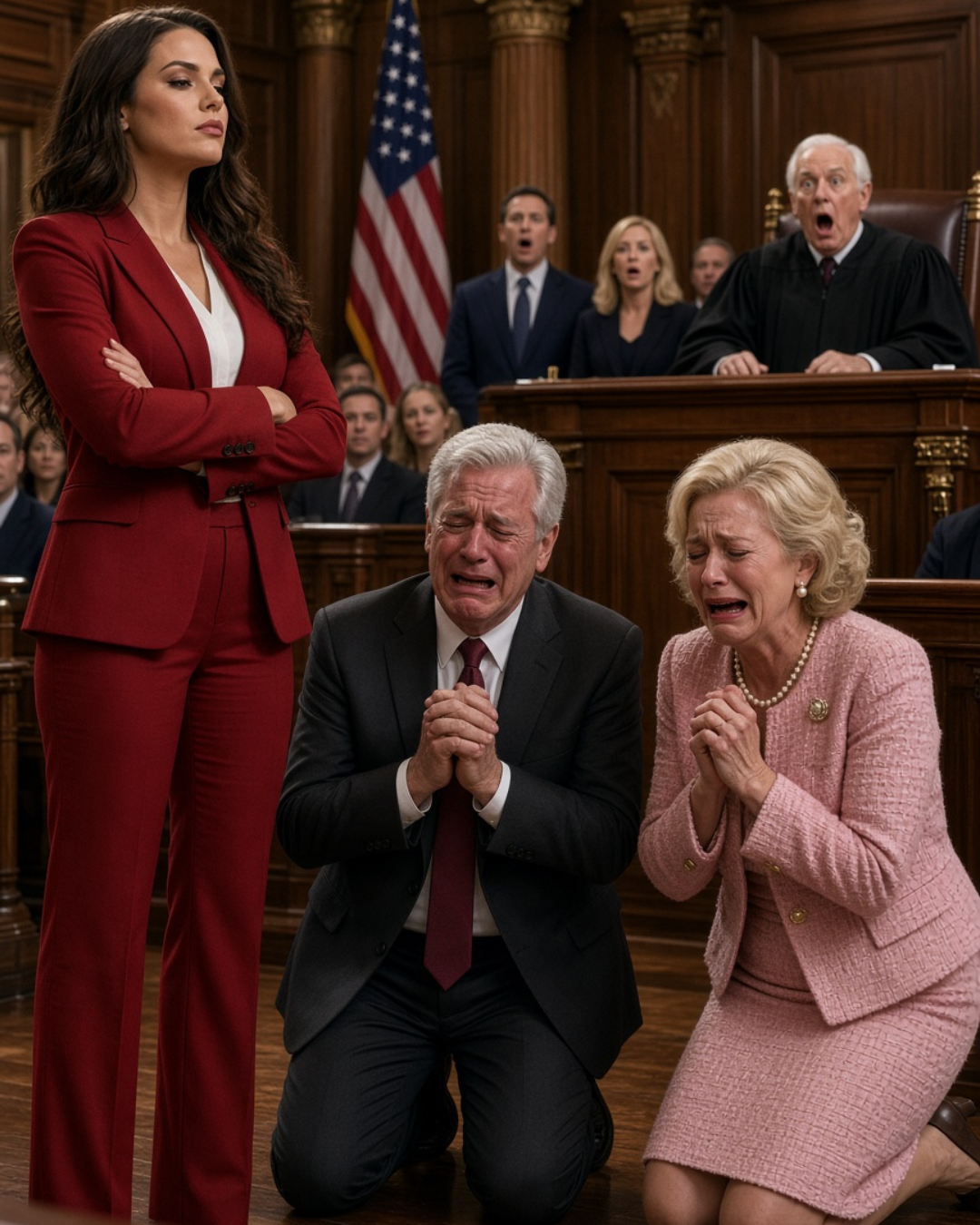
“I’ve never been unemployed. The periods my parents claim I disappeared were overseas deployments. The reason they know so little about my career is because they never cared enough to ask.”
Judge Whitmore looked sharply toward my parents.
Only minutes earlier, they had described me as a directionless woman without a stable career.
Now the court knew I was a military attorney with seven years of legal experience.
Their entire portrayal of my life had been based on assumptions they had never bothered to verify.
But my professional background was only the beginning.
I directed the court’s attention to my father’s testimony concerning the nursing home.
He had claimed I changed the locks to prevent him from visiting Grandma Evelyn.
That allegation was directly contradicted by a sworn affidavit from the nursing home’s director.
The director confirmed that the facility itself had changed the locks after my father behaved aggressively.
I submitted the affidavit for the court’s consideration.
I also presented documentation of my professional income.
The records contradicted my parents’ repeated suggestion that I had been unemployed and desperate for financial support.
I had a stable career.
I had earned my own money.
And I had never depended on Grandma Evelyn’s estate to survive.
Mr. Bennett’s earlier confidence had disappeared.
My parents sat rigidly beside him.
I then asked Judge Whitmore for permission to cross-examine my father.
The request was granted.
Michael returned to the witness stand.
His posture was noticeably different.
The man who had entered the courthouse demanding eighty percent of Grandma’s fortune now looked uncertain and uncomfortable.
I approached calmly.
“Mr. Carter,” I began, “you testified that this lawsuit is about preserving family legacy.”
“Yes.”
I paused.
Then I asked the question my father had never expected to hear in open court.
“Is it also true that you owe approximately two point one million dollars to casinos in Reno?”
The courtroom went still.
My father’s expression changed instantly.
Mr. Bennett objected, but Judge Whitmore overruled him.
Michael shifted in his chair.
He eventually acknowledged that he had substantial gambling debts.
I continued.
“Do you also have a second mortgage in default?”
He hesitated.
Then he admitted that the second mortgage was indeed in default.
I let his answers settle before explaining why they mattered.
Grandma Evelyn had known about his financial troubles.
Collection agencies had contacted her concerning his unpaid gambling obligations.
She understood that Michael was facing enormous debts and that any inheritance he received might quickly disappear.
Her decision to leave the estate to me had not been the result of manipulation.
It had been a deliberate attempt to protect what she had spent her life building.
I looked directly at my father.
“She left the estate to me because she wanted to protect it from you,” I said. “She knew it would disappear at gambling tables if you inherited it.”
His face crumpled.
For the first time during the hearing, he stopped trying to appear outraged.
“We needed the money,” he admitted quietly.
There it was.
The truth beneath the accusations.
The lawsuit had never truly been about honoring Grandma Evelyn or protecting her wishes.
It was about financial desperation.
My parents had expected to inherit millions.
When Grandma left the money to me instead, they tried to overturn her decision through allegations they could not substantiate.
Their lawyer had presented me as a manipulative, unemployed woman.
My parents had testified about their supposedly close relationship with Grandma.
And my father had invented a story about me changing locks to isolate her.
But the evidence told a very different story.
Grandma Evelyn had been competent when she signed her will.
The process had been recorded.
I had maintained a genuine relationship with her through regular visits.
My father had serious gambling debts.
And the money he desperately wanted was precisely the money Grandma had chosen to protect from him.
Judge Whitmore reviewed the documents and considered the testimony.
Then she delivered her ruling.
“The plaintiff’s case is entirely without merit. The will remains valid.”
My mother stared at the judge.
My father lowered his head.
The judge dismissed the lawsuit permanently and ordered my parents to pay the legal costs.
She also referred the matter for investigation into possible perjury and attempted fraud.
Mr. Bennett began gathering his papers without his earlier confidence.
My parents looked as though the entire world had shifted beneath them.
The fortune they had expected to seize was beyond their reach.
Their allegations had failed.
And the daughter they had dismissed for years had defended herself in court without hiring an attorney.
As I prepared to leave, Patricia hurried toward me.
Tears streamed down her face.
“We’re your parents!”
She reached for my arm.
I gently removed her hand.
“You chose money over your daughter.”
My father looked at me with bitterness.
He accused me of being cold.
I stopped near the courtroom doors and turned toward him.
“No, Dad. That’s discipline.”
Then I walked away.
I had spent most of my life trying to understand why my parents seemed incapable of treating me with the same affection they expected from me.
Grandma Evelyn had been different.
She never demanded that I become someone else to earn her love.
She listened when I talked about my work.
She encouraged me when my assignments were difficult.
She never treated my military service as an inconvenience or my career as a disappointment.
When I returned from overseas deployments, she wanted to hear about my experiences.
When I visited her nursing home, she cared more about whether I was happy than whether I had achieved some impressive social position.
Our weekends together had never been about money.
We played chess.
We shared stories.
Sometimes we simply sat together, enjoying each other’s company.
I had never asked her to leave me her fortune.
And I had never imagined that my parents would respond to her final wishes by dragging me into court.
But I understood why she had made her decision.
She trusted me.
Not because I wore a uniform or held the rank of major.
Not because I was an attorney.
She trusted me because she knew my character.
She had seen how I treated people who could offer me nothing in return.
She knew I would not squander her estate simply to maintain appearances.
As I left the courthouse, I began thinking about what that trust should mean in practice.
Four point seven million dollars could provide extraordinary comfort.
I could buy an enormous house.
I could purchase expensive cars or spend the rest of my life traveling.
But none of those possibilities felt like the right way to honor Grandma Evelyn.
Her greatest gift to me had never been financial.
It had been the feeling that someone believed in me.
I wanted her money to provide that same sense of protection to people who desperately needed it.
And I already knew who those people would be.
PART 3: The Grandma Evelyn Center for Justice
Six months after the court hearing, I stood inside a newly renovated wing of the city’s Veterans’ Legal Aid Clinic.
The building looked completely different from the last time I had visited.
Fresh paint brightened the walls.
The offices had been renovated.
The new space provided room for legal consultations and assistance to veterans and their families.
Near the entrance, a bronze plaque had been installed.
It read:
The Grandma Evelyn Center for Justice.
I stood before it for a long moment.
Seeing her name there meant more to me than any expensive monument or private memorial could have.
Grandma Evelyn had spent years defending me when my own parents refused to listen.
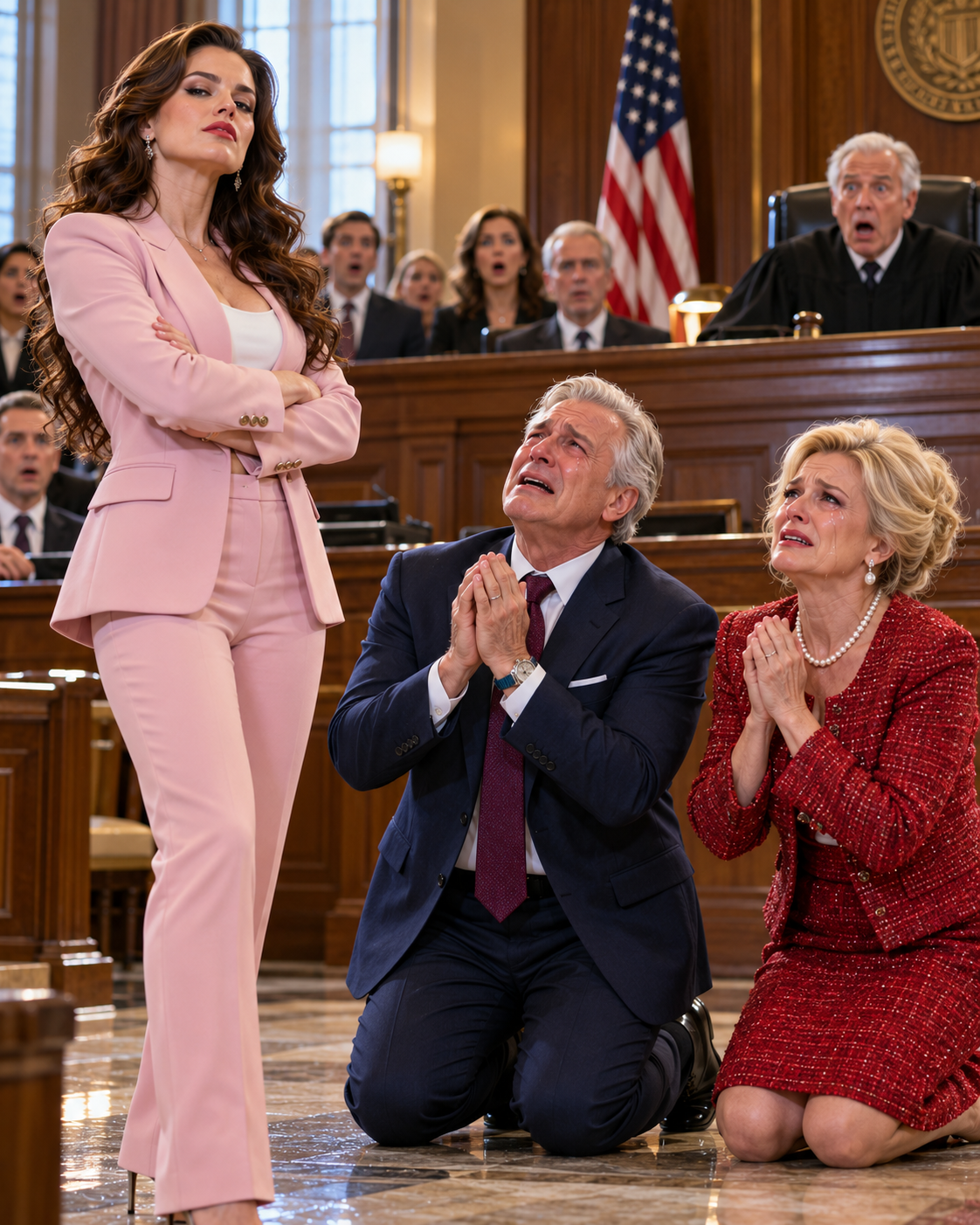
Now her legacy would help defend other people who were vulnerable to exploitation.
I had kept enough of the $4.7 million inheritance to pay off my student loans and purchase a modest home near my military base.
Nearly four million dollars had been donated to support elderly veterans and their spouses who had experienced fraud or abuse within their families.
It felt like the most meaningful use of the estate.
My parents had tried to exploit an elderly woman for financial gain.
Grandma’s money would now help protect other elderly people from similar treatment.
I walked through the clinic, watching the staff prepare for another busy day.
The work being done there was not glamorous.
It involved paperwork, legal consultations, complicated financial records, and people who often arrived frightened or exhausted.
But I understood how much those services mattered.
I had seen firsthand what could happen when someone used family relationships as a weapon.
I had also seen how damaging financial exploitation could become when victims lacked the resources to defend themselves.
Grandma Evelyn had been fortunate enough to plan carefully.
Her will was properly documented.
Her mental competence had been established.
And the legal process had ultimately respected her wishes.
Not every elderly person had those protections.
Some faced relatives who pressured them to transfer property.
Others struggled with fraud, intimidation, or financial abuse.
Veterans and surviving spouses could be especially vulnerable when they lacked access to reliable legal assistance.
The new center would help provide that support.
As I stood near the reception area, my phone began ringing.
The screen displayed a blocked number.
I knew who was calling.
My parents had continued trying to contact me after the lawsuit.
Their circumstances had deteriorated considerably.
They had lost their home.
My father had avoided imprisonment through a plea agreement connected to the investigation that followed the court proceedings.
My mother was living with relatives in Michigan.
Neither seemed interested in repairing our relationship.
Instead, they repeatedly called to ask for money.
I looked at the ringing phone.
For a moment, I remembered my childhood.
I remembered the times I had tried to share something important with them, only to be ignored.
I remembered how they dismissed my accomplishments.
I remembered the way they spoke about my career without knowing what it involved.
And I remembered the courtroom.
The false accusations.
The demand for eighty percent of Grandma’s estate.
The complete absence of concern for what Grandma had actually wanted.
Then I looked across the clinic.
A law student was sitting beside an elderly veteran, patiently helping him complete legal paperwork.
The older man’s eyes were filled with grateful tears.
He listened closely as the student explained the documents.
There was no judgment in their conversation.
No contempt.
No attempt to make him feel small.
Just someone helping another person navigate a difficult situation.
That was what Grandma Evelyn had taught me to value.
I looked down at my phone again.
Then I pressed Block Caller.
I did not owe my parents another opportunity to use guilt as a way of obtaining money.
They had made their choices.
I was finally free to make mine.
Grandma Evelyn had not left me her fortune because I manipulated her.
She had left it because she trusted me.
She knew I would treat her life’s work with care.
She believed I would use the inheritance responsibly and turn it into something that mattered.
Standing inside the clinic bearing her name, I felt certain that I had honored that trust.
The legal battle had ended.
The inheritance had been protected.
And the money was now supporting people who needed help rather than financing the debts and demands of those who had tried to take it.
I stepped outside into the afternoon sunshine.
A black sedan waited beside the curb.
The driver stood ready as I approached.
“Airport, Major?” the driver asked.
“Yes.”
A new fraud case awaited me in Wiesbaden.
I was serving as the lead prosecutor.
There were files to review, evidence to examine, and serious responsibilities waiting for my attention.
I settled into the back seat and opened my laptop.
As the sedan pulled away from the clinic and merged onto the highway, I thought about everything that had happened since Grandma Evelyn’s funeral.
My parents had believed I was an unsuccessful daughter who could easily be intimidated.
They had assumed their accusations would be enough to force me into surrendering the inheritance.
They had never imagined that the woman sitting quietly across from them was an experienced Army attorney.
But the courtroom revelation had never been the most important part of my story.
My rank had not made Grandma love me.
My legal experience had not earned her trust.
She had believed in me long before either achievement.
She had valued the person I was, even when my parents refused to see that person.
And because of her, I had learned that family was not defined solely by blood.
It was defined by loyalty, kindness, and the willingness to stand beside someone when they needed support.
Grandma Evelyn had given me those things throughout my life.
Now her name would be associated with giving them to others.
The city passed beyond the car windows.
I opened the documents for my next case and began reviewing them.
There was no need to revisit the courtroom confrontation.
No need to answer another desperate phone call.
No need to prove anything to people who had never wanted to understand me.
The family battle was finally over.
The work that truly mattered was waiting.
I logged in and got started.
THE END.
