

PART 1
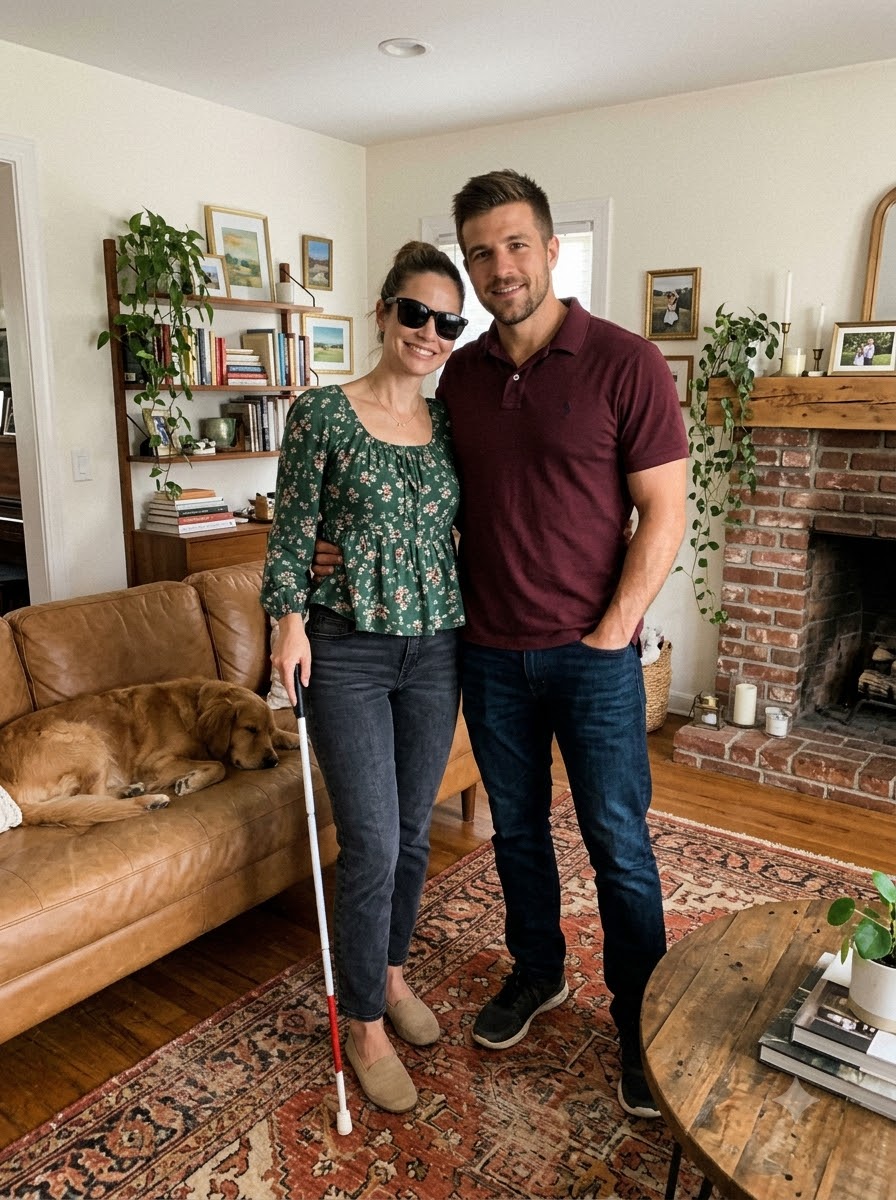
For two long years, I had imagined the moment I would finally be able to see my husband’s face again. After a terrible car accident left me blind, Ashton became the person I relied upon more than anyone else. When my eyesight unexpectedly began to return, I chose not to tell him immediately because I wanted to surprise him.
But one evening, I watched him quietly slide a suitcase beneath our bed. He had no idea that I could now see his movements.
The next morning, I opened the suitcase and found divorce documents, a puzzling letter addressed to a woman named Rebecca, and signs that Ashton had been concealing something significant from me.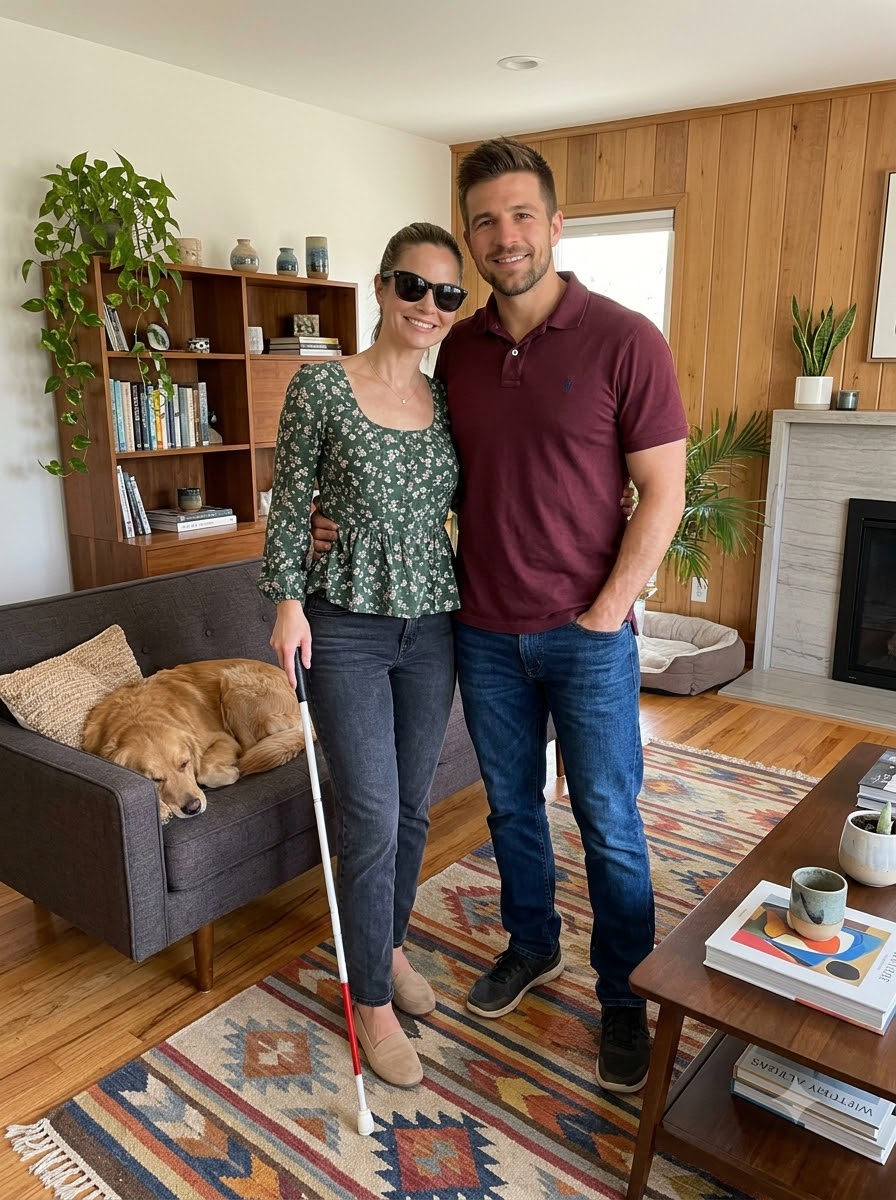
What I discovered forced me to reconsider everything I thought I knew about our marriage.
My name is Sutton. I’m thirty-three years old, and Ashton and I have been married for eight years.
Two years earlier, our entire world had changed without warning.
I had been seriously injured in a car accident that caused multiple fractures and other significant injuries. My recovery lasted for months as I struggled to regain comfortable movement and adapt to a life that suddenly felt completely unfamiliar.
But the most devastating consequence was the loss of my vision.
The doctors told me there was a chance my eyesight could eventually improve, although they couldn’t guarantee any recovery. They advised me to prepare myself for the possibility that I might never see again.
In the beginning, even the simplest everyday activities seemed impossibly difficult.
I could no longer recognize people’s faces, enjoy reading the books I loved, or look at my own reflection.
I had to develop entirely new ways of moving around our house and completing ordinary daily responsibilities.
There were moments when frustration overwhelmed me. I sometimes cried because I couldn’t locate something I had dropped or complete a task that had once required almost no effort.
During those difficult first months, Ashton showed remarkable patience.
He helped rearrange our home, organize my possessions, and establish routines that allowed me to regain some independence.
If I accidentally spilled a drink, he cleaned it without complaining.
Whenever I felt discouraged, he sat beside me until I found the confidence to try again.
I often wondered how I could possibly have survived those early months without his support.
One evening, I finally voiced a question I had been too frightened to ask.
“Ashton, do you ever wish you hadn’t married me?”
He immediately turned toward me.
“Why would you ask that?”
“Because our lives are so different now.”
He reached for my hands.
“Sutton, I married you because I love you. Your eyesight was never the reason.”
For a long time, I held on to those words whenever I needed reassurance.
But approximately six months ago, I began noticing a change in him.
Ashton frequently returned from work looking drained and irritable.
Conversations that had once flowed naturally became uncomfortable, and minor disagreements increasingly developed into arguments.
One evening, I accidentally tipped over a glass of water.
“Sutton, could you please pay more attention?” he snapped.
I went completely still.
He apologized almost at once.
Yet afterward, I couldn’t stop noticing other small changes.
When I requested help, he sometimes responded with a weary sigh. During dinner, he occasionally seemed preoccupied or emotionally distant.
I began to wonder whether the responsibilities he had assumed after my accident were finally overwhelming him.
That possibility terrified me.
I didn’t want Ashton to think of me as someone he was required to care for instead of the woman he had willingly chosen as his wife.
Then, two weeks before everything was revealed, something remarkable happened.
One morning, I woke and became aware of a faint area of light near our bedroom window.
Initially, I thought I must be imagining it.
But over the following days, the brightness became increasingly noticeable.
Soon, I could make out shadows.
Then vague shapes.
And eventually, movement.
I was almost too frightened to believe that what I was experiencing was real.
While Ashton was working, I arranged an appointment with my ophthalmologist, Dr. Morgan.
After conducting several examinations, the doctor smiled at me.
“Sutton, we’re seeing encouraging signs of improvement.”
I gripped the armrests of my chair.
“Does that mean my eyesight might actually come back?”
“Your vision is showing some recovery. We can’t predict how far it will progress, but this is a positive development.”
Tears gathered in my eyes.
For two years, I had been waiting desperately for even the smallest reason to hope.
My first impulse was to call Ashton and share the news.
But then I imagined the moment I could look directly at him and tell him that I was finally able to see his face again.
I wanted that memory to be unforgettable.
So I decided to keep my recovery a secret for the time being.
Over the next two weeks, my eyesight continued to improve little by little.
My surroundings were still indistinct, but I could recognize furniture, identify larger objects, and detect when someone walked across a room.
Then came the evening I noticed the suitcase.
Ashton arrived home in an unusually unpleasant mood.
I asked him what was wrong.
“Nothing, Sutton. I’m just tired.”
“You’ve been tired every night lately.”
He let out a sigh.
“Can we please not have another argument?”
“I’m not trying to argue. I’m worried about you.”
“Well, somehow every conversation turns into one.”
His response hurt deeply.
Finally, I asked the question that had been troubling me for weeks.
“Ashton, are you tired of being married to me?”
He said nothing.
Somehow, his silence was more painful than any answer he could have given.
I retreated to our bedroom, hoping that spending a little time apart would allow us both to calm down.
Several minutes later, Ashton came inside.
I expected him to apologize.
Instead, through my still-imperfect vision, I watched him kneel beside our bed and push something underneath it.
He glanced in my direction.
I immediately lowered my gaze.
“You okay?” he asked.
“I’m fine.”
“I’m going to take a shower.”
I nodded.
But my heart was racing.
What had he just concealed?
And how many other things had he done openly in front of me because he believed I was unable to see?
I hardly slept that night.
The next morning, Ashton departed for work at his usual hour.
As soon as I heard the front door close, I entered our bedroom.
I knelt beside the bed and reached underneath it.
My fingers encountered a large object.
Carefully, I pulled it into the open.
It was Ashton’s black travel suitcase.
The same suitcase he had used on business trips before my accident.
The zipper had been left partially open.
Inside, I discovered neatly folded clothing, toiletries, and a thick envelope.
My name was written on the front.
I opened it.
Several pages slipped into my hands.
I carried them into the living room, where the daylight made the print easier to distinguish.
Using the magnification function on my phone, I enlarged the words until I could read the heading.
Petition for Dissolution of Marriage.
I stared at the page.
Divorce papers.
Beneath the title were our names, home address, and details of our wedding.
The documents hadn’t been signed.
Nevertheless, they were genuine legal papers.
And Ashton had hidden them beneath the bed we shared.
I looked back toward the suitcase.
Was he preparing to abandon me?
Had he packed his clothes because he had already decided our marriage was over?
Then I spotted another folded sheet inside the envelope.
At the top was an unfamiliar name.
Rebecca.
I began reading.
“Rebecca, I’ve been thinking about everything we discussed, and I can’t continue pretending that my marriage is fine.”
My stomach twisted painfully.
Who was Rebecca?
Could my husband be involved with another woman?
Suddenly, I remembered his late-night telephone conversations, his distant expressions, and the way certain discussions seemed to end whenever I entered the room.
Only a week earlier, I had overheard him whispering into his phone.
“I’ll figure something out.”
At the time, I had assumed he was discussing a problem at work.
Now I wasn’t nearly so certain.
I called Megan, my closest friend.
She had stood beside me throughout my rehabilitation and understood how difficult the previous months had been.
After I explained what I had found, she fell silent.
“Sutton, have you actually asked Ashton about these papers?”
“Not yet.”
“Then you need to talk to him.”
“What possible explanation could he have for hiding divorce documents beneath our bed?”
“I don’t know. But imagining the worst won’t give you the truth.”
After our conversation ended, I went back to examine the suitcase.
Underneath Ashton’s shirts, I discovered a small notebook.
Its pages contained appointment dates, reminders, and personal thoughts written by hand.
Some entries dated back several months.
I enlarged the writing with my phone.
Feeling overwhelmed after work.
Having trouble sleeping.
Need to establish healthier boundaries.
Then I noticed one particular sentence.
Am I helping Sutton become more independent, or am I making her feel incapable?
I read those words twice.
Between two pages, I found a business card.
Rebecca — Licensed Marriage and Family Therapist.
I leaned back.
Rebecca wasn’t necessarily a woman with whom Ashton was romantically involved.
She was a therapist.
That discovery answered one of my questions.
But several more immediately took its place.
Why had Ashton been receiving therapy without telling me?
Why had he sought professional advice about our relationship?
And why was there a packed suitcase alongside unsigned divorce documents?
I placed everything neatly on the living room table and waited for him to come home.
Shortly after six o’clock, I heard Ashton drop his keys onto the kitchen counter.
“Sutton?”
“I’m in the living room.”
He appeared in the doorway.
Although his features were still indistinct, I could recognize the general outline of his face.
Then his attention shifted toward the suitcase.
He stopped moving.
“Where did you find that?”
“Under our bed.”
His shoulders became rigid.
I raised the envelope.
“Ashton, is there something you need to tell me?”
He slowly lowered himself into the chair across from mine.
“Sutton…”
“Please don’t lie to me.”
He nervously rubbed his hands together.
“How much have you read?”
“Enough to know you’ve been considering a divorce.”
My husband bowed his head.
Neither of us spoke for several seconds.
Then he answered in a whisper.
“Yes.”
That single word made it difficult to breathe.
“How long?”
“A few months.”
I swallowed hard.
“Is it because I can’t see?”
He immediately raised his head.
“No. Sutton, no.”
“Then why?”
He turned his face away.
“And who is Rebecca? Are you involved with her?”
“What? No! Absolutely not.”
“Then explain why you’ve been hiding all of this!”
Ashton covered his face with his hands.
“Because I was ashamed.”
“Of me?”
He shook his head.
“Of myself.”
I stared at him in confusion.
Finally, he began telling me the truth.
PART 2
Four months earlier, he had started seeing Rebecca because he was struggling with exhaustion, resentment, and overwhelming guilt.
He admitted that adjusting to our changed circumstances had been far more difficult than he had imagined.
It wasn’t because I had done anything wrong.
Instead, Ashton had convinced himself that being a good husband required him to solve every problem without anyone else’s assistance.
“I was constantly worried something might happen while I was at work,” he said.
“So you started treating me as though I couldn’t do anything independently?”
He nodded slowly.
“I know you’ve learned how to manage so much by yourself. But I kept worrying anyway.”
He explained that he had been sleeping badly and struggling to concentrate during the workday.
By the time he returned home each evening, he frequently felt emotionally exhausted.
Minor inconveniences began to frustrate him.
Then, afterward, he would feel terrible about his impatience.
“I’d spend hours thinking about how unfair I was being to you,” he admitted.
Tears rolled down my face.
“Why didn’t you tell me any of this?”
“Because I didn’t want you to believe your blindness had ruined my life.”
I shook my head.
“But that’s exactly what I started believing.”
His eyes filled with tears.
“Every time you sighed when I asked for something, I felt guilty. Every time you became upset, I wondered whether you still loved me.”
“Sutton, I never stopped loving you.”
I gestured toward the divorce papers.
“Then what are those?”
Ashton took a long breath.
“Rebecca encouraged me to think honestly about what I needed and understand the choices available to me. So I met with a lawyer.”
My chest tightened painfully.
“You actually went to a divorce attorney?”
“Once. He prepared those papers, but I never signed or filed them.”
“Why not?”
“Because when I thought seriously about ending our marriage, I realized that wasn’t what I wanted.”
I continued staring at him.
“Then why keep the documents?”
“I didn’t know what to do with them. I was embarrassed that I’d even considered leaving.”
“And the suitcase?”
He lowered his eyes.
“I packed it after our argument last night. I thought about staying with my brother for a few days so we could both have some space.”
“You were going to leave without talking to me?”
“No. That’s why I put it away. I wanted to discuss everything with you first.”
I wiped the tears from my cheeks.
“Ashton, while you were trying to protect me from difficult conversations, you were making me feel more alone than ever.”
He nodded.
“I know. I handled this badly.”
Then he glanced toward the papers I was holding.
His expression suddenly changed.
“Wait a minute…”
I froze.
“Sutton, how are you reading those?”
For a moment, I couldn’t answer.
Then I whispered the truth.
“Because my eyesight is coming back.”
He stared at me in disbelief.
“What?”
“Two weeks ago, I started noticing light again. I went to see Dr. Morgan, and he confirmed my vision is improving.”
Ashton looked utterly stunned.
“You can see?”
“Not clearly yet. But I can recognize shapes and some details.”
He stood abruptly, then sat down again.
“Why didn’t you tell me?”
I managed a small smile through my tears.
“I wanted to surprise you when I could finally see your face.”
His voice trembled.
“Can you see me right now?”
I nodded.
“Your face is still blurry.”
He raised a hand to cover his mouth.
“But I can tell you’re crying.”
For several seconds, he simply looked at me.
Then he began laughing through his tears.
“Sutton, I’ve been hoping for this for two years.”
He moved beside my chair and wrapped his arms around me.
We remained in each other’s embrace for a long time.
When he finally leaned back, I gently placed my hand against his cheek.
“You have more wrinkles than I remember.”
He laughed.
“Seriously?”
“And I think your hair’s gotten thinner.”
“Sutton, I missed your sense of humor, but I could have waited a little longer for that part.”
For the first time in months, we found ourselves laughing together.
Then his expression became serious again.
“There’s something else I want you to read.”
He picked up the letter addressed to Rebecca.
“I wrote this for my next therapy appointment.”
I hesitated briefly before accepting it.
With the help of my phone’s magnification feature, I resumed reading from the place where I had stopped.
The letter discussed the arguments we had been having.
Ashton described his constant fatigue, his fear that he would continue losing his patience, and the guilt he experienced afterward.
Then I reached a paragraph that brought fresh tears to my eyes.
I’ve considered leaving because I’m afraid my frustration will continue hurting Sutton emotionally. But when I imagine a future without her, I don’t feel relieved. I feel as though I’m losing my closest friend.
I looked toward Ashton.
He remained quiet.
I continued reading.
I don’t want to end my marriage. I want to stop treating my wife as someone I’m responsible for managing and start treating her as my equal partner again.
My hands began trembling.
The final paragraph affected me even more deeply.
Sutton deserves to feel loved and respected. I want to become the husband who helps her feel that way again.
I slowly lowered the letter.
“Why didn’t you tell me this?”
“Because I was afraid you’d only remember the part about wanting to leave.”
I glanced toward the divorce documents.
“Well, I found that part anyway.”
He gave me a sorrowful smile.
“I know.”
I reached across and took his hand.
“Ashton, I don’t expect you to pretend everything is fine when it isn’t.”
“And I need to stop believing I can handle every problem alone,” he replied.
We sat together in silence for a while.
Then I spoke again.
“We have to stop hiding important things from each other.”
He nodded in agreement.
“Agreed.”
That evening, we put the divorce documents away.
Not because every difficulty in our marriage had suddenly disappeared.
And certainly not because the improvement in my vision had miraculously repaired our relationship.
We put them away because, for the first time in months, we were finally being honest about what had gone wrong between us.
In the weeks that followed, Ashton continued his individual therapy sessions.
I continued attending my medical appointments.
We also started going to marriage counseling together.
Little by little, our home became a place where we could express frustration and discuss difficult feelings before they developed into bitterness.
Ashton stopped automatically taking over tasks I was perfectly capable of completing myself.
Instead, he began asking me a simple question.
“Would you like help with that?”
Sometimes my answer was yes.
Other times, I said no.
And he learned that both responses deserved equal respect.
Meanwhile, my eyesight continued recovering at its own gradual pace.
Some days brought more progress than others, but I slowly became able to distinguish increasingly familiar details in my surroundings.
One evening, I noticed Ashton’s black suitcase standing inside our closet.
It was completely empty.
He saw me looking at it.
“Want me to get rid of that thing?”
I shook my head.
“No. I have a better idea.”
“What?”
“Let’s use it.”
“For what?”
I smiled.
“A vacation.”
He raised an eyebrow.
“Where would you like to go?”
“Somewhere with a beautiful view.”
Three weeks later, we spent a peaceful weekend beside the coast.
Ashton stood next to me while the late-afternoon sunlight sparkled across the ocean’s surface.
The distant horizon remained indistinct, but I could make out the movement of the waves and the brightness of the sky above them.
And when I turned toward my husband, I could finally recognize the familiar outline of his smile.
“Is it beautiful?” he asked.
I slipped my hand into his.
“Yes,” I whispered. “It really is.”
For two years, I had dreamed of recovering my vision.
But standing beside the ocean that evening, I came to understand something I had never anticipated.
Regaining my eyesight had not been what saved our marriage.
What brought Ashton and me closer again was learning to acknowledge each other’s struggles, communicate honestly about painful emotions, and accept support instead of trying to carry every burden alone.
And this time, whatever difficulties the future might bring, we were determined to face them together.
