

Part 1 — The Christmas Gift Nobody Believed
What I remember most vividly is the laughter.
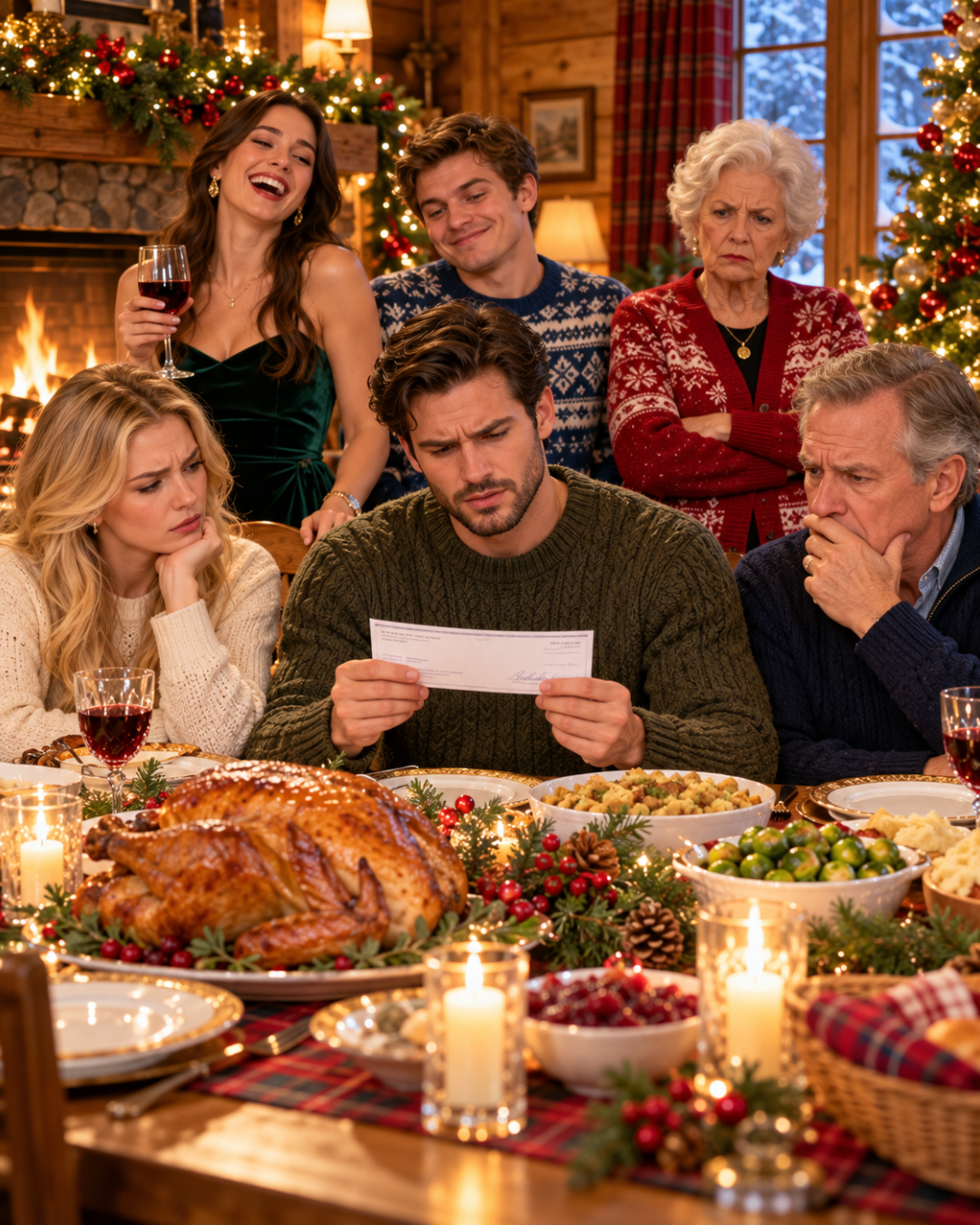
It was December 23, and our family had gathered around Grandma Evelyn’s dining table inside her small log cabin near Sheridan, Wyoming.
The candles had nearly burned down. The beef stew sat untouched and cold in its clay pot. Seven members of my family were laughing so uncontrollably that one of them had tears streaming down his cheeks.
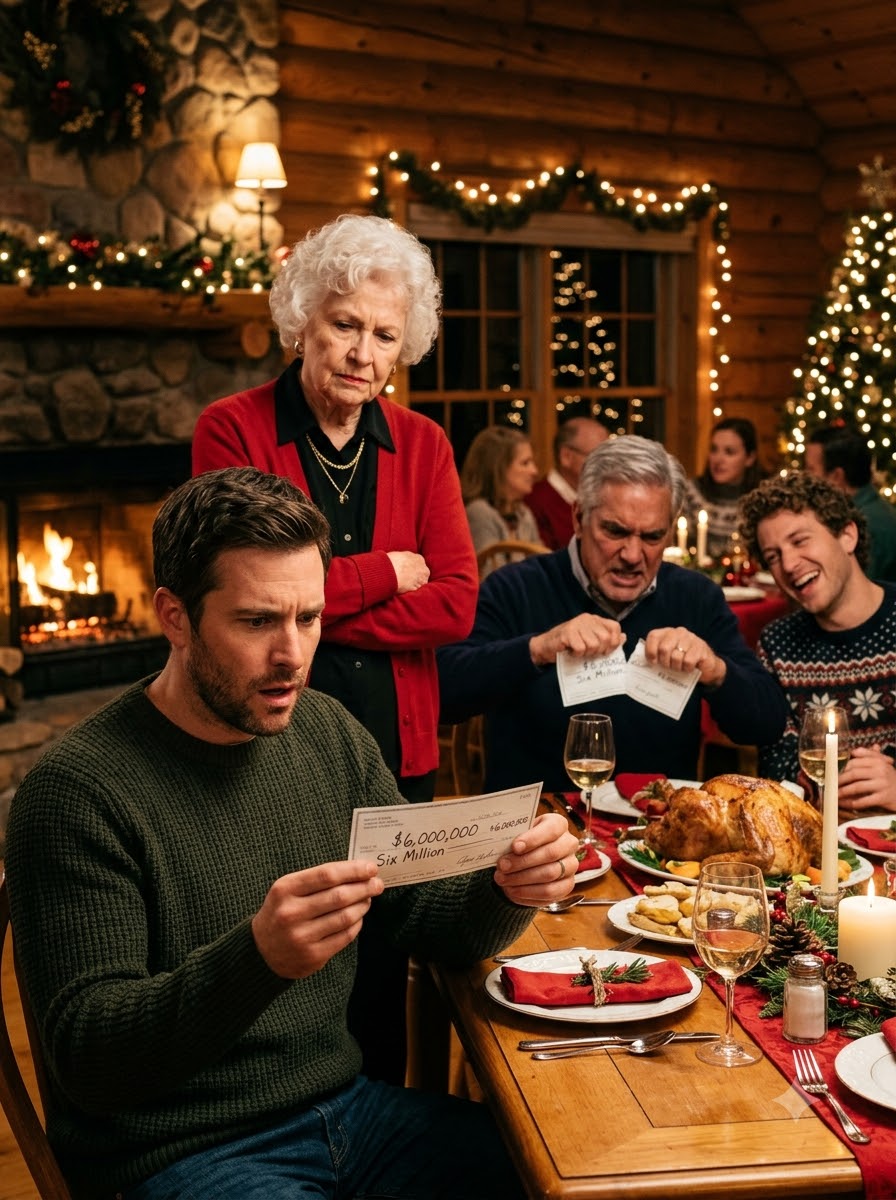
“Six million dollars!” my brother Eric wheezed, slapping the table. “Grandma, where did you print these? Did you hack a bank?”
My cousin Olivia raised her check toward the light and photographed it with her phone. The flash struck Grandma directly in the face.
“Grandma gave us fake checks for Christmas,” she said, thumbs flying across the screen. “Iconic. My friends are going to die.”
My father wasn’t laughing.
He studied the check in his hands, slowly shook his head, and ripped it in two. Then he tore those pieces again.
Four scraps of paper drifted onto the tablecloth.
“It’s fake,” he said. “Don’t be an idiot, Daniel. I drove seven hours for this?”
I remained silent.
My own check was still between my fingers. I kept running my thumb over the printed lettering.
Frontier Trust Bank.
Pay to the order of Daniel James Harper.
Six million dollars and zero cents.
At the bottom was Grandma’s signature, slightly unsteady but unmistakable, written in blue ink.
I lifted my eyes toward her.
She stood at the end of the table, her thin hands resting over her stomach. Her back curved slightly beneath the green sweater I’d given her earlier that afternoon.
She wasn’t laughing.
She wasn’t trying to defend herself.
She simply watched us.
And the expression in her eyes was unlike anything I’d ever seen.
It was a quiet, profound sadness that made my chest ache.
Even with everyone laughing around me, I understood one thing.
Grandma wasn’t playing a joke.
I didn’t understand what the checks meant, but I knew she was serious.
Without drawing attention to myself, I folded mine and slipped it into my wallet.
Nobody noticed.
To understand why that moment mattered, you need to know what happened before it.
My name is Daniel Harper.
That winter, I was thirty-four years old and taught high school literature in Boulder, Colorado.
I lived alone in a fourth-floor apartment with an unreliable heater and a view of the parking lot.
Five days before Christmas, Grandma called while I was grading student essays.
Seeing her name on my phone made me feel an unexpected sense of relief.
“Daniel, my dear grandson,” she said. Her voice was warm, the way it always was, but there was a tremble at the end that I had not heard before. “You have to come home for Christmas. You hear me?”
“I’ll be there, Grandma.”
“This year I have a special gift for the whole family. Everyone has to be here. No one can be missing. Do you understand?”
I promised I understood.
The gift wasn’t important to me.
I wanted to sit near her fireplace again, breathe in the scent of pine smoke and apple pie, and remember what it felt like to be a child in her home.
The journey from Boulder to Sheridan normally took about seven hours.
That year, snow followed me almost the entire way.
Highway 85 stretched through a pale, nearly deserted landscape, bordered by dark pine trees.
Twice, deer suddenly crossed in front of my headlights, forcing me to brake sharply.
I hadn’t visited Grandma in five months.
Five months filled with lesson planning, faculty meetings, grading, and lonely evenings in my apartment.
I’d been feeling strangely empty.
But as the mountains drew closer, that emptiness gradually gave way to anticipation.
When I finally reached the cabin, it looked almost exactly as it had throughout my childhood.
The old logs formed two sturdy stories beneath a red shingled roof covered in frost.
Smoke curled from the chimney.
Golden Christmas lights glowed on the little tree beside the porch.
The wooden ornaments Grandpa Walter had carved before I was born still hung where Grandma always placed them.
Surrounded by snow, the house resembled a tiny illuminated box.
I parked, grabbed my gift bag, and hurried up the porch steps.
The front door stood slightly open.
“Grandma? I’m home.”
Warmth and familiar smells greeted me.
Pine.
Slow-cooked meat.
Cinnamon.
For a moment, I nearly cried.
Grandma sat in her armchair beside the fire.
Her hands rested quietly in her lap.
She wore the same brown wool sweater I remembered from childhood.
Her hair had turned completely white, and she looked much thinner than during my previous visit.
But her green eyes were still bright.
“Daniel,” she said. “My grandson is home.”
I knelt in front of her and wrapped my arms around her.
She felt so fragile.
Even through her sweater, I could feel how thin she’d become.
The familiar lavender scent surrounding her carried me back to childhood afternoons when she brushed my hair and told stories about Grandpa.
“I’m sorry it’s been so long,” I said into her shoulder.
“It’s all right,” she said, stroking my hair. Her hand was cold and warm at the same time. “I can wait. Sit down, dear. Let me pour you some tea. That was a long drive, wasn’t it?”
The dining table was already prepared.
A white tablecloth.
Red candles.
The silverware Grandpa had purchased in 1985.
Stew steamed in its pot.
Grandma had done everything herself, probably starting preparations the previous evening.
I gave her the green sweater and wool scarf I’d brought.
She pressed the sweater against her chest as though it were something precious.
“It’s beautiful,” she said. “I’ll wear it tonight.” She kissed my forehead. “Thank you, my dear grandson.”
For about an hour, we had the house to ourselves.
She asked about my students.
I asked about the roof, the firewood, and whether Tom Harris, her neighbor, still helped her split logs.
Then a vehicle pulled into the yard.
My parents arrived first.
Dad, Frank, entered wearing an expensive fur-collared coat and immediately complained about the roads.
Mom, Linda, shook snow from her boots while describing how miserable the drive had been.
My twenty-eight-year-old brother Eric followed with earbuds in his ears and his attention fixed on his phone.
He muttered “Hey, Grandma” without looking at her, then dropped onto the sofa.
They hadn’t brought a present.
Not flowers.
Not even a meaningful hug.
Ten minutes later, Uncle Martin, Aunt Diane, and Olivia arrived.
Martin complained about the temperature.
Diane surveyed the cabin with an expression of disappointment.
Olivia went straight to the Christmas tree and began taking selfies.
She didn’t greet Grandma.
The atmosphere changed almost immediately.
Nobody seemed genuinely pleased to be there.
Nobody asked whether Grandma had been lonely or how she was managing the winter.
They simply settled in, waiting for dinner to end.
Grandma continued serving everyone.
She poured water and added extra portions of meat to their bowls.
She smiled patiently.
But whenever she thought nobody was watching, I saw the loneliness in her eyes.
Dinner consisted mostly of conversations about fuel prices and Uncle Martin’s upcoming cruise.
Nobody mentioned Grandpa, who had died nine years earlier.
Nobody asked about Grandma’s roof.
Eventually, she rose from her chair.
She walked to the sideboard and returned carrying several thick white envelopes.
Slowly, she circled the table.
One envelope for Dad.
One for Mom.
One for Uncle Martin.
One for Aunt Diane.
One for Eric.
One for Olivia.
And the last for me.
“Here are your Christmas gifts,” she said. Her voice was soft but very clear.
Eric exchanged a glance with Olivia.
“What is this?” he muttered.
I carefully opened my envelope.
Inside was a heavy, smooth sheet of paper.
A check for six million dollars.
And then the laughter began.
The scene I’d never forget.
My father’s torn check.
Olivia’s photograph.
Eric’s mocking laughter.
And Grandma standing silently at the head of the table.
Afterward, the others left quickly.
Dad was first to stand, claiming he wanted to avoid worsening road conditions.
Within fifteen minutes, every car had disappeared down the snowy trail.
Pieces of Dad’s check remained scattered across the table.
Aunt Diane had abandoned hers beneath a water glass.
Grandma began clearing the dishes without saying anything.
“Grandma,” I said. My voice cracked. “Can I stay a few days? I took an extra week off. I want to be with you.”
She stopped moving.
When she turned toward me, something changed in her face.
For the first time that evening, her eyes brightened with genuine happiness.
“Really, dear?”
“Really.”
She smiled.
“Of course you can stay. It’s been a long time since anyone stayed past Christmas.”
The following six days became some of the happiest days of my adult life.
I didn’t realize their importance at the time.
I do now.
Each morning, I woke early and made coffee while Grandma sat at the kitchen table drinking tea.
I washed the dishes and took care of the kitchen.
“Let me do it,” she said the first morning.
“No. Today I take care of you.”
I shoveled snow from the porch, the walkway, and the path leading toward the rose bushes she’d planted with Grandpa.
Grandma watched from the porch in her new green sweater, holding her tea.
“You’re so strong,” she said. “Your grandpa used to clear the snow just like that.”
I reorganized the firewood stacked beside the cabin.
She brought me Grandpa’s old wool mittens.
“Don’t let your hands freeze, grandson.”
When I climbed onto the roof to clear the thick snow, she stood below, visibly frightened.
“Come down, dear. It’s dangerous.”
“I’m fine, Grandma. I’ve done this before.”
I repaired the kitchen door hinge that had squeaked for years.
She sat nearby and handed me screws one by one.
Afterward, she made ginger tea so strong that it cleared my nose.
I changed a flickering lightbulb while she held the ladder.
When the kitchen pipe froze, I sat on the floor warming the copper with her old hair dryer.
Grandma sat beside me and offered a slice of apple pie.
“Eat this. Keep your belly warm.”
But the evenings were what I treasured most.
We moved our chairs closer to the fireplace.
She toasted bread over the flames using a long iron fork, then covered it with butter and wild honey.
I made vegetable soup from carrots, potatoes, and onions stored in her root cellar.
We ate at the little table beside the hearth.
And Grandma told stories.
“When you were tiny, you ran around this yard like a squirrel. Once you fell face first in the snow and wailed so loud I thought you’d broken something. I ran out to pick you up and I could barely stop laughing.”
“I used to wear a frying pan on my head and pretend I was an astronaut.”
“You did. And your grandpa took you fishing at the old lake and you both came back soaked to the bone with the smallest perch I ever saw, and you showed it to every neighbor on the road.” She laughed, that raspy laugh I loved. “He said, ‘This boy is going to do great things. Mark my words.’”
I couldn’t speak for a while.
Then her expression softened.
“What I remember most,” she said quietly, looking into the fire, “is standing on the porch every winter listening for cars. Sometimes it was just a neighbor. But I’d still go out and look. I know the sound of your engine, Daniel. I can tell from far away when it’s you.”
She placed a light hand on my shoulder.
“Now that you’re here, this house feels warm again.”
During those days, I also noticed how much her strength had faded.
On my previous visit, she’d still been climbing ladders to pick apples.
Now she sometimes steadied herself against the wall when walking between rooms.
Once, she began coughing so violently that I stood up in alarm.
She waved me back into my chair.
“Just old age. Winter cough.”
I accepted her explanation.
Perhaps because I desperately wanted it to be true.
We never discussed the checks.
Not once.
My envelope remained at the bottom of my suitcase, almost forgotten.
The money meant nothing to me.
Grandma was what mattered.
On Tuesday morning, the snow finally stopped.
The sky turned an extraordinary shade of blue.
I packed reluctantly.
Grandma had risen before dawn to prepare a crate of vegetables from her greenhouse.
Carrots.
Potatoes.
Onions.
A bundle of dried herbs tied with string.
“Take these back to the city and eat well. I grew them clean.”
On the porch, I held her for a long time.
Her green sweater and scarf stood out against the snow.
The wind lifted her white hair.
“I’ll be back soon. Next month. I promise.”
Her eyes were red, but she smiled.
“I’ll be waiting.”
I climbed into my car.
As I drove away, I watched her in the rearview mirror.
She stood on the porch, a small figure surrounded by winter, her scarf fluttering in the wind.
I kept watching until the trees hid her from sight.
I didn’t know that would be the last time I ever saw her standing there.
I reached Boulder late that afternoon.
Traffic, slush, and city noise welcomed me home.
I carried my suitcase upstairs, dropped it beside the sofa, and sent Grandma a message.
Home safe, Grandma. Miss you already.
She didn’t answer.
I assumed she’d left her phone somewhere in the kitchen.
That was typical of her.
The next several days passed quickly.
I returned to grading and schoolwork.
On Wednesday night, I finally opened my suitcase to do laundry.
Beneath my sweaters and socks lay the white envelope.
One corner had bent during the trip.
I sat beneath the lamp and took out the check.
Six million dollars.
The bank seal.
The account information.
Grandma’s signature.
I turned it over several times.
It looked remarkably authentic.
I laughed quietly to myself.
Then I remembered her expression at the Christmas table.
The sadness in her eyes.
Her silence.
The certainty I’d felt that she wasn’t joking.
“Why not,” I said out loud to the empty room. “What do I have to lose?”
The following morning, I visited the Wells Fargo branch near my school.
I waited in line feeling foolish.
A young teller wearing a name tag that read Tiffany greeted me.
“Hi, how can I help you today?”
I handed her the envelope.
“I’d like to deposit this.”
She opened it.
Her eyes moved across the check.
Then she looked sharply up at me.
She examined the paper again, much more carefully.
My face grew hot.
“Could you wait just a moment, sir?”
She disappeared through a door behind the counter.
Fifteen minutes passed.
People shifted impatiently behind me.
I began wishing I’d never entered the bank.
Finally, the door reopened.
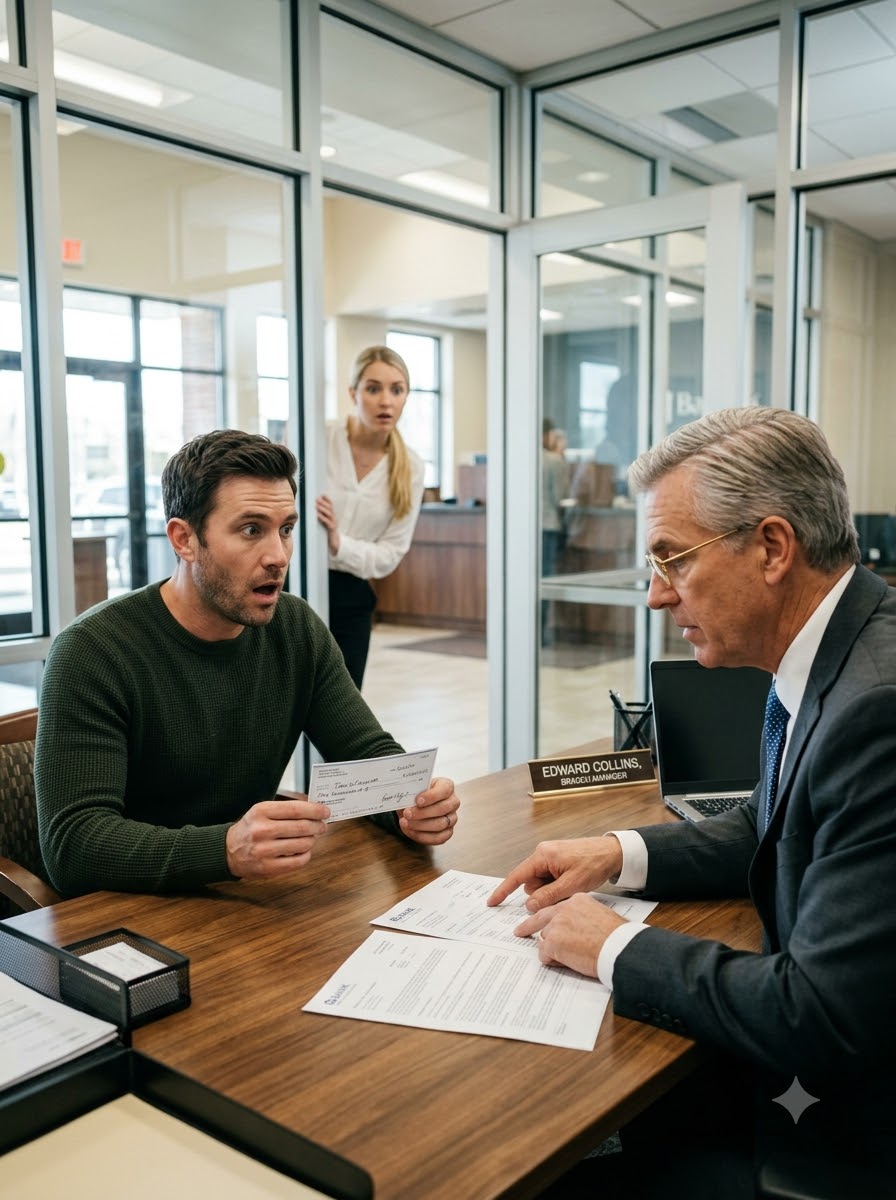
A man wearing a gray suit and gold-rimmed glasses emerged, holding my check carefully in both hands.
“Mr. Harper?” He smiled, but his eyes were not smiling. “I’m Edward Collins. I manage this branch. Would you step into my office, please?”
I followed him into a small, quiet office.
He closed the door and placed the check on his desk.
“Mr. Harper, this check appears to be valid.”
For several seconds, I couldn’t process what he’d said.
“It’s drawn on an account at Frontier Trust Bank. The routing numbers are correct. The signature matches what they have on file. We’ll need to hold it and run additional verification. For an amount this size, that takes two to five business days. But if everything clears, the funds will be in your account this week.”
I nodded repeatedly.
My mouth had gone dry.
“Yes. Thank you.”
I returned to my car and sat behind the steering wheel without starting the engine.
My hands were trembling.
On the drive home, I had to pull over twice.
Friday afternoon, I was grading quizzes in the teachers’ lounge when my phone vibrated.
I glanced at the notification.
Your account has been credited: $6,000,000.00.
I jumped up so abruptly that my chair toppled backward.
Everyone turned toward me.
I didn’t explain.
I walked into the hallway and opened my banking app.
There it was.
Six million dollars.
In my account.
Belonging to me.
Students moved around me as I stood frozen in the corridor.
Shock flooded through me.
Then excitement.
And beneath both, an uneasy feeling began creeping up my spine.
I hurried into the bathroom, locked myself inside a stall, and called Grandma.
The phone rang.
Nobody answered.
I tried again.
And again.
Still nothing.
I told myself she was outside.
Or sleeping.
Or had forgotten where she’d placed her phone.
Then I called Dad.
“Yeah, what?”
“Dad, I cashed Grandma’s check. It’s real. Six million dollars. It’s in my account right now.”
There was a moment of silence.
Then he laughed harshly.
“Stop it, Daniel. I tore mine up on Christmas. There’s no way she had six million dollars. You’re being childish.”
Mom took the phone.
“Daniel, are you dreaming? Stop making up stories for attention. I’m tired of this.”
I called Eric next.
“Eric, Grandma’s check. Do you still have it?”
“That thing? I threw it away. Why are you calling me?”
“I took mine to the bank. It cleared. Six million.”
He yawned.
“Real funny, man. Don’t bother me.”
He hung up.
Uncle Martin laughed when I told him.
“A Christmas fairy tale. Don’t make me laugh, kid.”
Aunt Diane sounded irritated.
“Daniel, stop bringing up that check to mess with us. We threw ours in the trash a week ago.”
Nobody believed me.
Finally, I called Olivia.
“Hey, cousin.” Her voice was syrupy. “Why are you calling so early?”
“Olivia, do you still have Grandma’s check?”
“Yeah, I kept it. It looked pretty legit, actually.”
“Take it to the bank. Try to cash it. Mine cleared. Six million just went into my account.”
She giggled.
“Are you pranking me? Gotta go. Bye.”
I expected her to ignore my advice.
But the following morning, at eight o’clock, my phone rang.
Olivia was screaming.
“Daniel, how dare you?”
“What?”
“I took that check to the bank this morning and they told me the account is empty. Empty! Do you think this is funny?”
My stomach dropped.
“Olivia, I’m not joking. I got the money. I can send you a screenshot right now.”
“Don’t lie to me. I hate you.”
The call ended.
I sat on my kitchen floor, staring at the phone.
The account was empty.
Grandma had written checks totaling six million dollars to each of us.
But only mine had cleared.
What did that mean?
I called Grandma.
No answer.
I tried again.
Ten times.
Twenty.
Every call went to voicemail.
Her familiar voice asked me to leave a message.
I looked at the clock.
9:12 a.m.
Grandma always woke before six to start the fire.
She hadn’t answered my messages or calls for days.
Suddenly, a terrible thought took hold.
I grabbed a backpack, stuffed clothes inside, snatched my keys, and rushed out without locking my apartment.
Snow began falling heavily as I drove north along Highway 85.
Wet flakes struck the windshield.
I drove faster than I should have.
The radio remained off.
Only the wipers and my pounding heart filled the car.
I kept calling Grandma.
I tried Tom Harris too.
Neither answered.
The seven-hour drive seemed endless.
I told myself Grandma had a cold.
That her phone had died.
That she was sleeping.
I repeated every reassuring explanation I could imagine.
But deep inside, I was already afraid I knew the truth.
By the time I turned onto the dirt road leading to the cabin, evening was falling.
My headlights swept across the snow and pine trees.
Then the house appeared.
The chimney was dark.
There were no lights in the windows.
The porch didn’t glow.
Everything was still.
I stopped the car and ran toward the door.
My feet slipped on the icy steps.
I dropped my keys and had to search for them in the snow with shaking hands.
Then I realized the door was unlocked.
I pushed it open.
Cold air surrounded me.
The cabin was freezing.
No fire had burned there for days.
“Grandma?”
My voice echoed through the silent rooms.
Nobody answered.
I walked toward her bedroom.
The door stood slightly open.
I pushed it gently.
Grandma lay in bed.
The blanket covered her chest.
Her hands rested over her stomach.
White hair spread across the pillow.
Her face looked peaceful.
A faint smile touched her lips.
For one beautiful, foolish moment, relief swept over me.
She was sleeping.
She was simply tired.
“Grandma,” I whispered.
I approached the bed and reached for the blanket, intending to pull it over her shoulders.
Then my fingers touched her hand.
It was cold.
Not the ordinary cold of winter.
Something far worse.
I touched her cheek.
Then placed my palm against her chest.
Nothing moved.
I lowered my ear toward her heart.
And heard nothing.
I don’t remember screaming.
But afterward, my throat hurt so badly that I knew I must have.
I remember holding her.
Kissing her forehead.
Crying against her face.
Begging her to wake up.
She remained still.
Peaceful.
As though she had been waiting until I went home before allowing herself to rest.
I barely remember calling 911.
I remember two emergency responders entering the bedroom.
One checked her pulse and shone a light into her eyes.
Then he placed his hand on my shoulder.
“I’m so sorry,” he said. “She’s been gone three or four days.”
Three or four days.
Almost since I’d driven away.
Since I’d hugged her on the porch.
Since I’d promised to return next month.
While I graded essays in Boulder, Grandma had been lying alone in her cold bedroom.
And I hadn’t known.
I sat on the floor beside her bed and held her hand until I couldn’t cry anymore.
Later, after they took her away, I wandered back into the living room.
The silence felt unbearable.
Then I noticed something on the dining table.
A white envelope.
Placed where Grandma usually sat while drinking tea.
My name was written on the front in her trembling handwriting.
For Daniel.
I picked it up.
Inside was a long handwritten letter.
I began reading.
My dearest Daniel,
By the time you read this, I’ll have gone to be with your grandfather. Please don’t cry too much, my sweet boy. I’ve lived a full life and I’m content.
The six million dollars you received is everything your grandfather and I saved and invested over our whole lives. The nights he stayed up studying stocks. The winters I mended clothes instead of buying new. The trips we never took so we could leave something behind.
This Christmas, I did it on purpose. I wanted to test everyone’s hearts. I knew I didn’t have much time, so I needed to see who still remembered family. Who still cherished me.
I wrote a check for each person. But the account held exactly six million. Enough for one check. Whoever took it seriously enough to cash it first would receive everything. Anyone who came after would be told there were no funds.
I knew you wouldn’t laugh. I knew you wouldn’t tear it up or throw it away. You’re the only one who still held on to family, and in the end, you were the first to try.
I’m so proud of you.
Use that money to live well, Daniel. Live for yourself. Don’t live to please others, and don’t let anyone force you to share if you don’t want to. You deserve it more than anyone.
My only regret is that I didn’t get to hug you one more time. But I’ll always be here. In this cabin. In the smell of apple pie. In the crackle of the fire. In the Wyoming wind.
I love you so much. Forever.
Your grandma, Evelyn.
I folded the letter and pressed it against my chest.
Then I sank to the kitchen floor and cried like a little boy.
I stayed there until darkness filled the cabin.
Finally, I picked up my phone.
I needed to tell my family.
Dad answered with his usual impatience.
“Yeah.”
“Mom. Dad. Grandma passed away.”
Silence.
Then Dad replied.
“Yeah.”
And immediately afterward:
“So is there a will? Did she leave anything?”
I ended the call.
I couldn’t breathe.
Eric reacted almost the same way.
“Oh.”
Then:
“So you really got the six million?”
Uncle Martin, Aunt Diane, and Olivia all asked about the inheritance.
The money.
The property.
The land.
Not one of them cried.
Not one asked how Grandma had died.
I put my phone facedown and sat in the darkness holding her letter.
I didn’t realize it then, but that was the last night I would ever truly consider those people my family.
And when they discovered that Grandma had left everything to me, their cruelty was only beginning.
Part 2 — The Family That Turned Against Me
Grandma’s funeral took place two days later.
It was a gray Wednesday morning in Sheridan, and heavy snow covered the cemetery behind the small Methodist church.
I arrived early wearing the only black suit I owned.
I stood near the entrance, shaking hands and accepting condolences.
I’d chosen a simple pine coffin because Grandma had always disliked unnecessary extravagance.
A modest arrangement of white flowers rested on top.
The number of neighbors who came surprised me.
Tom Harris arrived carrying wildflowers tied together with twine.
Caroline from the bakery hugged me and sobbed against my shoulder.
Women from Grandma’s quilting club filled several pews.
Members of the church congregation came.
People who had known Grandpa Walter came too.
They cried real tears.
They shared memories.
They spoke about Grandma as though losing her had left a hole in their lives.
My family arrived when the church bells struck ten.
Dad wore a gray suit and a perfectly arranged tie.
His expression was as emotionless as if he were attending a business meeting.
Mom wore oversized sunglasses despite the dark weather and carried an expensive Chanel bag.
Eric still had an earbud in one ear.
They nodded at me.
Nobody hugged me.
They went directly to the front row.
Uncle Martin and Aunt Diane arrived thirty minutes late.
Their black SUV stopped abruptly outside the church.
Diane wore a mink coat and silk scarf.
As she brushed snow from her shoes, she spoke to Martin without bothering to lower her voice.
“I wonder how much Mom actually left. Hopefully enough to cover my credit card.”
I heard every word.
My fingernails dug into my palms.
At that moment, I understood something I’d been resisting for years.
To them, Grandma wasn’t someone to love.
She was an inheritance they expected to collect.
The pastor read from Scripture.
Then it was my turn to speak.
I approached the pulpit carrying a crumpled sheet of paper.
I never looked at it.
“My grandmother was the most extraordinary woman I have ever known,” I said, and my voice broke on the first sentence. “She taught me what unconditional love looks like. In her last days, I got to light her fire and listen to her stories and see her smile. That was the greatest gift of my life.”
I spoke about the green sweater I’d given her.
The vegetable soup.
The toasted bread beside the fire.
Our final embrace on the porch.
People throughout the church wiped tears from their faces.
But in the family pew, Eric was checking his phone.
Uncle Martin leaned toward Dad and whispered something.
After the burial, the family was asked to gather in a small wooden hall behind the church.
The room smelled of pine boards and weak coffee.
Grandma’s attorney, Samuel Brooks, waited at a table.
He was in his sixties, with white hair and gold-framed glasses.
He opened a briefcase and removed a thick folder.
“As per the final wishes of Evelyn Harper, I will now read her last will and testament.”
Everyone became attentive.
Chairs shifted.
Bodies leaned forward.
Their eyes seemed to sharpen.
“All of Evelyn Harper’s assets, totaling exactly six million dollars, were transferred by her into a special account before Christmas. On Christmas night, she issued a check for six million dollars to each of her children and grandchildren. However, that account contained exactly six million. Only the first check presented for payment would receive the funds. Any subsequent checks would find the account empty.”
He stopped briefly.
Then looked around the table.
“According to my investigation, the first person to deposit their check was Mr. Daniel James Harper. Therefore, in accordance with Evelyn’s explicit wishes, the entire estate now belongs to Daniel.”
For three seconds, nobody spoke.
Then chaos erupted.
“No way.”
“What?”
“All of it? To him?”
“That little bastard tricked her.”
Dad jumped to his feet.
His face turned purple.
Uncle Martin slammed both hands against the table.
Mom and Aunt Diane began shouting.
Eric stared at me with an expression of pure hostility.
Olivia leaned forward.
“You cheating jerk,” she hissed.
Then everyone began advancing toward me.
Dad pointed a finger inches from my face.
“You brainwashed my mother!”
“Hand it over,” Uncle Martin growled. “That money belongs to the whole family.”
Aunt Diane grabbed my sleeve.
“Daniel, be a good boy,” Aunt Diane said, grabbing my sleeve. “Split it with your aunt and uncle. Half and half. That’s fair.”
Eric shouted over everyone.
“Do you know how much debt I’m in?” Eric shouted. “You selfish prick!”
I stood surrounded by them.
My heart raced.
But something inside me had become strangely still.
I looked at my parents.
My brother.
My aunt and uncle.
My cousin.
For the first time, they seemed like strangers.
Mr. Brooks tapped the table.
“Everyone. This is Evelyn’s clear, legal, notarized wish. It cannot be contested.”
Nobody listened.
They accused me of manipulating Grandma.
Pretending to be the devoted grandson.
Stealing what belonged to them.
I waited until there was a brief opening.
Then I spoke quietly.
“I received Grandma’s six million dollars, and I’m keeping every cent. I’m not giving a penny to any of you. That was her wish. She wrote it in the letter she left me. She chose me, not you, because I was the only one who still visited her. The only one who actually loved her.”
For one heartbeat, the room fell silent.
Then the shouting became even louder.
Dad cursed.
Uncle Martin threatened a lawsuit.
Mom began crying about everything she’d sacrificed while raising me.
Eric lunged forward, and Martin had to restrain him.
I didn’t wait for them to calm down.
I turned and walked out.
Snow continued falling across Grandma’s fresh grave.
I stood alone in the cemetery and tilted my face toward the sky.
Snowflakes melted against my cheeks.
“I’m sorry you had to see this, Grandma,” I whispered.
Then I got into my car and drove back to Boulder that night.
I believed the confrontation was finished.
I was wrong.
Three days later, my family began attacking me publicly.
Eric posted first.
Some people pretend to be the perfect grandson who visits all the time, but behind her back they manipulate a frail old woman to grab the whole inheritance. One greedy grandson just tore our family apart.
Then Mom posted.
I gave birth to you. I raised you. And this is how you repay your mother? Grandma dies and you keep every penny for yourself. Heaven has eyes, son.
Aunt Diane filled her social media stories with photographs of Grandma.
Grandma, can you see this? The favorite grandson you loved most just robbed all your grandchildren blind.
Uncle Martin tagged relatives in a lengthy accusation.
My mother was brainwashed by one grandson who forced her to sign papers before she died. Now he has all six million and won’t give anyone a cent. Where is the justice?
Then Dad posted a video recorded inside his car.
His face was red with anger.
“I never thought the son I raised would turn into a daylight robber. He exploited a weak elderly woman. My mother had severe Alzheimer’s and he hid it. He forced her to sign checks. Now she’s gone and he’s disappeared with the money. I will sue him to the end.”
The video was shared four hundred times in one night.
I sat in my dark apartment reading the comments.
People called me a thief.
A fraud.
An ungrateful grandson.
Strangers urged Dad to sue me.
Some tagged my school.
Others tagged colleagues and people I’d known in college.
The next morning, everything at work felt different.
Teachers who normally greeted me avoided eye contact.
In the lounge, I overheard someone say:
“They say Daniel stole his grandma’s entire inheritance. He seemed so nice. You really can’t trust anyone.”
During my third-period class, a senior raised his hand.
“Mr. Harper, is it true you stole all your grandma’s money?”
The students laughed.
I stood at the front of the room, unable to answer.
That afternoon, the principal asked me to visit her office.
She offered an uncomfortable smile.
“Daniel, I know you’re going through some family difficulties. The school doesn’t want to get involved. But several parents have messaged asking questions. Could you give me a brief explanation?”
I explained what had happened.
The checks.
Grandma’s letter.
Her final wishes.
My voice trembled throughout.
The principal listened sympathetically.
“Please understand. The school just wants everything calm.”
I left feeling as though I’d committed a crime.
The stress began affecting every part of my life.
I lost my appetite.
Sleep became difficult.
I woke in the middle of the night drenched in sweat.
Sometimes I imagined hearing Grandma calling my name outside the window.
I lost weight.
Dark circles formed beneath my eyes.
I stood in front of students and struggled to concentrate.
Meanwhile, the messages continued.
Eric wrote:
You dog. Drop dead.
Mom pleaded:
Son, please. Just give Mom a little. I’m drowning in debt.
Aunt Diane threatened:
Heaven will punish you. Just wait.
Dad sent:
I disown you.
They called late at night.
During meals.
While I drove.
Sometimes they begged.
Sometimes they cursed.
Sometimes they threatened me.
Then, one Friday evening, I returned home and found a thick golden envelope leaning against my apartment door.
A red wax seal marked the front.
I sat on the hallway floor and opened it.
Inside was a court summons.
Plaintiffs: Frank Harper and Martin Harper.
Defendant: Daniel James Harper.
The accusations filled several pages.
Fraudulent appropriation of inheritance.
Exploitation of a vulnerable elderly person.
Undue influence over someone allegedly lacking mental capacity.
Violation of family duty.
They demanded that the bank transfer be invalidated and Grandma’s money divided into eight equal portions.
One for each of them.
Including Olivia.
The documents slipped from my hands.
I remained on the cold hallway floor with my head lowered.
I couldn’t even cry.
My own father and uncle had signed legal documents accusing me of exploiting a woman they had barely visited.
They claimed Grandma had Alzheimer’s.
They claimed I’d forced her to sign checks.
Everything was a lie.
That night, I lay on my apartment floor holding Grandma’s letter.
I read it repeatedly until the paper softened along its folds.
Live for yourself.
Don’t let anyone force you.
By dawn, something inside me had changed.
I was no longer frightened.
I was angry at the thought of them using Grandma’s death to take what she had deliberately left behind.
I found a number in my contacts.
Jason.
My best friend from high school.
He was now a litigation attorney in Denver and specialized in difficult inheritance disputes.
I called him at five in the morning.
He answered almost immediately.
“Daniel? What’s wrong, brother?”
I told him everything.
The Christmas dinner.
The checks.
The six days with Grandma.
Finding her in the cabin.
Her letter.
The funeral.
The online accusations.
The lawsuit.
I left nothing out.
Jason remained silent for a while.
Then his voice hardened.
“I’m taking this. Not for money. Pro bono. And I’m going to make every one of them choke on every word they’ve said.”
We met three days later at a café near our old college.
Jason wore a dark coat.
He was tall and focused, with the same determined expression I remembered from our school debate tournaments.
I spread the evidence across the table.
Grandma’s letter.
The bank records.
A copy of the original check.
Mr. Brooks’s written confirmation of the account arrangement.
And several documents I’d recovered from the cabin.
Her November medical records showed that she had been mentally alert, with no signs of cognitive decline.
Her diary contained clear, dated entries continuing until the week before Christmas.
Tom Harris had also provided security camera footage from his property.
It showed Grandma outside in early December, splitting firewood and laughing as she called something across the fence.
Jason read Grandma’s letter first.
By the time he finished, his eyes were wet.
“Your grandma was an incredible woman,” he said quietly. “I’m going to make them regret ever touching her last wish.”
We began preparing our defense.
Jason filed counterclaims for defamation, slander, and intentional infliction of emotional distress.
We preserved every social media post.
Every threatening message.
Every voicemail.
Every public accusation.
We also documented the nine years after Grandpa died.
How often had each family member visited Grandma?
How often had they offered help?
Had they supported her financially?
Had they checked on her health?
The answers were devastating.
“This isn’t about the money anymore,” Jason said one night, surrounded by folders. “This is about the honor of a woman who spent her whole life loving people who didn’t deserve her.”
Outside, snow was beginning to fall again.
I looked toward the window.
In my thoughts, I made Grandma a promise.
I wouldn’t let them win.
The first hearing took place on a bitter April morning at the Sheridan County courthouse.
The old redbrick building still had patches of snow along its roof.
There were no reporters.
The dispute wasn’t important beyond our small community.
But the courtroom gallery was crowded.
My relatives had invited distant cousins, neighbors, and people who’d followed their accusations online.
They filled the benches behind the plaintiffs, whispering eagerly.
I sat beside Jason wearing the same black suit I’d worn to Grandma’s funeral.
Across the aisle sat my father.
His face was tense.
Uncle Martin sat beside him, looking exhausted and angry.
Mom wore sunglasses indoors and held a tissue.
Eric stared at me with open hostility.
Aunt Diane and Olivia whispered in the row behind them.
Then Judge Karen Mills entered.
She was in her mid-fifties, with short silver hair and a commanding voice.
One strike of her gavel silenced the room.
The plaintiffs’ attorney stood.
His name was Peter Nolan.
He was short and heavyset, perspiring despite the cold.
“Your Honor, my clients, the biological children and grandchildren of Evelyn Harper, were unjustly deprived of their rightful inheritance. The defendant exploited the trust of an elderly woman, manipulated her mentally, and coerced her into transferring her entire estate to himself through a fraudulent check scheme.”
He glanced toward me with exaggerated disgust.
“In her final stage of life, Evelyn Harper was not of sound mind. She suffered from severe Alzheimer’s. She confused the names of her own children. Issuing six-million-dollar checks to seven people was irrational behavior that clearly demonstrates both psychological influence and legal incapacity.”
His evidence consisted mainly of photographs showing Grandma looking frail.
Old family group messages.
And a sworn statement from Dad claiming she’d once called him Walter, Grandpa’s name.
Jason listened without interrupting.
He didn’t even take notes.
Once, he gave me a slight nod.
Then he stood.
“Your Honor, with the court’s permission, I will now demonstrate that every single accusation made by the plaintiffs is fabricated, defamatory, and a grave insult to the deceased.”
He placed a thick folder before the court.
First, he read Grandma’s letter aloud.
Every word.
When he reached the passage about me being the only person who still cared about family, the gallery fell completely silent.
Mom lowered her head.
Eric pressed his lips together.
Then Jason presented the video from Tom Harris’s security camera.
Grandma appeared on the courtroom screen.
Alive.
Smiling.
Splitting firewood in her yard.
Laughing toward the neighboring property.
My chest tightened at the sight of her.
Next came her medical records.
They confirmed that she had been cognitively healthy in November.
There was no medical evidence supporting the family’s claims of severe Alzheimer’s.
Then Mr. Brooks’s sworn statement.
He confirmed that Grandma had visited his office three times before Christmas.
She had driven herself.
She had clearly explained her intentions.
She had signed the documents voluntarily.
Finally, Jason presented the bank records.
One account.
Exactly six million dollars.
One successful deposit.
Mine.
It had been submitted before anyone else attempted to cash a check.
Jason closed the folder.
Then he addressed the judge.
“The plaintiffs have not produced one shred of evidence that the defendant coerced or manipulated Evelyn Harper. On the contrary, we have proven that during the nine years she lived alone, not one of the plaintiffs visited her more than twice a year. Not one sent financial support. Not one called to check on her health. The only person who regularly drove seven hours to repair her roof, split her firewood, cook her meals, and stay with her in her final days was the defendant. Daniel James Harper.”
Nobody moved.
The courtroom was so quiet that I could hear a watch ticking.
Judge Mills examined the documents.
Then she began reading her ruling.
“Having reviewed all documents and testimony, this court finds that the will and final wishes of Evelyn Harper were made while she was of completely sound mind. They are legally valid and binding. The bank transaction involving the check was lawful. There exists no credible evidence whatsoever that the defendant engaged in coercion or manipulation of any kind.”
She paused.
“Therefore, the court rules as follows. One, the plaintiffs’ lawsuit is dismissed with prejudice. Two, Daniel James Harper is recognized as the sole lawful heir to the six-million-dollar estate. Three, the plaintiffs shall bear all court costs and shall partially reimburse the defendant’s legal fees.”
The gavel struck.
For a moment, my family seemed unable to react.
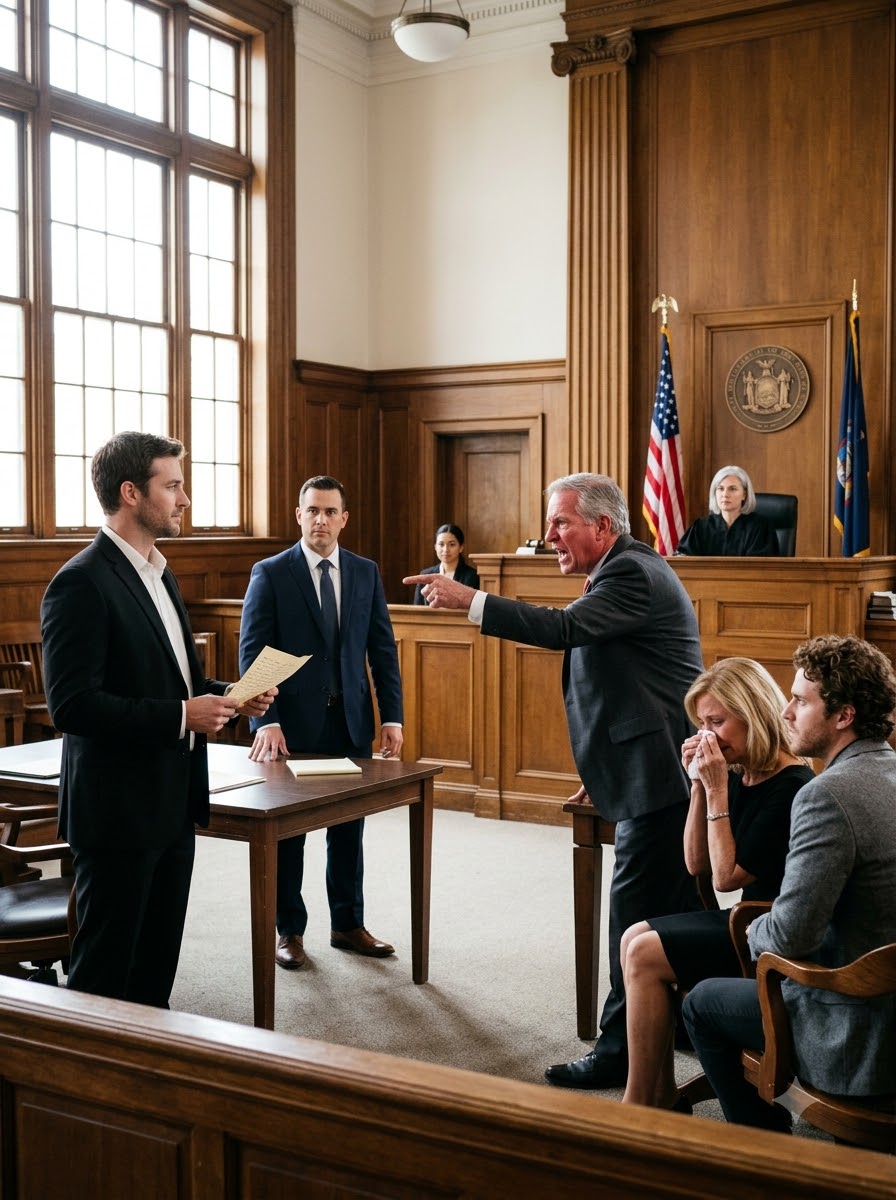
Then Dad leaped to his feet.
“You’ll regret this! You hear me? You’ll regret this!”
Uncle Martin slammed his hands onto the table.
A bailiff stepped forward.
Mom covered her face and cried.
Eric stood and left without saying anything.
I remained seated.
I didn’t smile.
I didn’t feel triumphant.
I felt exhausted.
And terribly sad.
Jason placed a hand on my shoulder.
“It’s over, brother. Your grandma is smiling right now.”
I nodded.
Then tears began running down my face.
Outside, the Wyoming wind cut through my suit as I stood on the courthouse steps.
I’d won the case.
Grandma’s final wishes had been upheld.
Her name had been defended.
The money remained mine.
But whatever family I’d once believed I had was gone.
The strangest part was that the loss no longer hurt in the same way.
There was simply an empty space where my affection for them used to be.
I drove out of Sheridan without looking back.
“Grandma,” I said into the empty car. “I won. Now I’ll live decently. Just like you told me to.”
I thought the courtroom victory would finally bring peace.
Instead, the consequences spread through the family, destroying relationships, reputations, and livelihoods.
And when they began asking me for forgiveness, I had to decide whether sharing blood was reason enough to let them back into my life.
Part 3 — The Life Grandma Wanted Me to Have
The consequences arrived much sooner than I expected.
A local newspaper published a brief article about the inheritance dispute.
The headline read:
Six Million Dollar Inheritance Dispute Ends. Court Dismisses Lawsuit, Upholds Deceased’s Will.
The article didn’t identify anyone by name.
But that didn’t matter.
Online, everyone knew exactly who had been involved.
My family’s old accusations resurfaced.
Only now, the reactions had changed.
People who had previously supported them began questioning their behavior.
Neighbors who had known Grandma expressed their disgust.
Others asked what kind of parents would sue their own son over his grandmother’s inheritance.
The public sympathy my family had enjoyed disappeared.
Dad began experiencing the consequences first.
His weekly golf group quietly stopped including him.
At the logistics company where he worked, his boss called him into the office to discuss the video he’d posted accusing me of exploiting Grandma.
A formal reprimand was added to his employment record.
Coworkers stopped joining him for lunch.
Mom was no longer invited to her Saturday church tea gatherings.
She worked as a bank teller, and even the woman at the neighboring counter stopped speaking to her.
People whispered about the mother who had sued her own son.
At home, their marriage became increasingly strained.
I heard through a cousin that they argued constantly.
Mom blamed Dad for insisting on the lawsuit.
Dad blamed me for everything.
He began drinking more.
Mom spent long hours sitting by the windows.
Uncle Martin suffered the greatest financial damage.
The court ordered him to pay thousands of dollars in costs and part of my legal expenses.
His auto repair shop depended heavily on local customers.
And Sheridan was a place where people talked.
Customers began avoiding his business.
A parts supplier suspended their partnership.
Three important contracts disappeared during the first week after the ruling.
Eventually, Martin sold his pickup to cover his financial obligations.
I imagined him sitting alone in his dark garage, holding a beer.
But the thought brought me no satisfaction.
I didn’t want him ruined.
I simply wanted him to leave me alone.
Aunt Diane lost something she valued even more than money.
Her social standing.
For years, she’d enjoyed being admired in school parent groups and charity circles.
She liked expensive clothes, prestigious invitations, and the appearance of belonging among important people.
After the court case, people began whispering whenever she appeared.
She was quietly asked to resign from a board.
At one banquet, a wealthy donor confronted her with a mocking smile.
Diane, I heard you sued your nephew for Grandma’s money. You really know how to keep up appearances.
The invitations gradually stopped.
Eric’s problems were different.
On the night of the ruling, he recorded a drunken video calling me names and accusing me of stealing everything.
Someone shared the recording.
His friends began distancing themselves.
Two weeks later, his girlfriend ended their relationship.
I can’t handle your family’s insane drama. Suing your own brother over Grandma’s money. Disgusting.
He sent me a few messages afterward.
Bro, I messed up. But you were harsh too.
Even then, he couldn’t fully admit what he’d done.
Olivia experienced fewer consequences.
Some college friends teased her about the situation.
She lost several friendships.
Her social media activity became quieter.
I sometimes wondered whether she had finally thought seriously about how she’d treated Grandma.
But I never asked.
Eventually, my relatives began blaming one another.
Dad and Mom accused Uncle Martin of encouraging the lawsuit.
Martin blamed Diane for demanding her share.
Diane accused the men of being weak.
Eric blamed the entire family for dragging him into the conflict.
Their group chats became endless arguments.
Then even those conversations stopped.
The family that had once gathered around Grandma’s Christmas table had completely fallen apart.
There would be no reunion that year.
And I knew there would never be another one.
For a while, they continued contacting me.
Their messages shifted between apologies, accusations, and requests for money.
Dad wrote:
Son, I was wrong. But think of your little brother too.
Mom sent:
Daniel, Mom misses you. Just a little to pay off the debts. Please.
Eric wrote:
You won. Happy now? I’m the one suffering.
Aunt Diane pleaded:
Nephew, I got carried away. But don’t you feel guilty keeping everything?
I read every message.
I answered none.
It wasn’t because I hated them.
The anger had already faded.
I was simply finished.
I blocked their numbers one by one.
I left the family group chats.
I removed their accounts from my social media.
Then I changed my phone number.
For the first time in months, the silence felt peaceful.
It was as though someone had finally loosened a rope that had been tightening around my neck.
But my life in Boulder had changed too much for me to remain there.
Even after the court ruled in my favor, people at school continued talking.
Some colleagues still whispered.
Students still asked about the inheritance.
Occasionally, someone would joke:
“Mr. Harper, is it true you’re rich now?”
I would smile and answer:
“Family stuff, guys. Let’s focus.”
Then I’d return to the lesson.
But teaching no longer felt the way it once had.
The classroom had been my refuge.
Now it reminded me of everything I’d endured.
Eventually, I submitted my resignation.
The principal accepted it with sadness.
She told me the school would miss me.
I finished grading my remaining assignments.
I encouraged my students to study hard and keep reading.
When one girl asked where I planned to go, I answered:
“Somewhere quieter.”
I packed my apartment into a handful of boxes.
Clothes.
Books.
Photographs of Grandma.
A few personal belongings.
I sold my Subaru and purchased a small used pickup truck.
I didn’t tell anyone where I was going.
I didn’t leave a forwarding note.
I simply locked the apartment door one last time and drove north.
Most of the six million dollars remained untouched.
I’d paid legal expenses and covered ordinary living costs.
But I hadn’t bought a luxury car.
I hadn’t taken an extravagant vacation.
I hadn’t rushed into risky investments.
Grandma and Grandpa had spent decades saving that money.
They had sacrificed things they wanted so that something would remain after they were gone.
I couldn’t imagine wasting it.
Grandma’s words stayed with me.
Live decently.
That was all I wanted.
I traveled through small towns.
Stayed in inexpensive motels.
Ate simple meals at roadside diners.
And spent long hours thinking.
Eventually, I found Pine Ridge, a quiet Montana town nestled against the Rocky Mountains.
There was a clear lake.
Endless pine trees.
Cold, clean air.
And a peacefulness that reminded me of Grandma’s cabin.
I knew almost immediately that I wanted to stay.
I bought a modest log house on the outskirts of town.
It had a red roof and a wide porch.
A small creek flowed behind the property, murmuring day and night.
Inside were three rooms, a wood stove, and a study with empty shelves.
Nothing extravagant.
Nothing impressive.
Just a place that felt like home.
I painted the walls myself.
Repaired the door hinges.
Planted wildflowers near the porch.
With every small task, I felt as though I was rebuilding something inside myself.
Pine Ridge High School needed teachers.
I applied.
The principal, Mark Bennett, interviewed me briefly.
He didn’t ask about my inheritance.
He didn’t mention the lawsuit.
He cared about my teaching experience.
“You taught literature in Colorado? Perfect. We need someone like you.”
He hired me.
And just like that, I became a teacher again.
The students at Pine Ridge asked about Shakespeare and Hemingway.
They wanted to understand novels.
Poetry.
Characters.
Stories.
They didn’t care how much money I had.
They cared whether I could explain something in a way that made sense.
One student told me:
“Mr. Harper tells the best stories.”
I felt a warmth in my chest that I hadn’t experienced in months.
My life gradually settled into a simple routine.
I woke at six each morning.
Made coffee in an old copper pot.
Sat on the porch and watched sunlight move across the mountains.
Instead of traffic and car horns, I heard birds.
The drive to school took ten minutes.
I taught three morning classes.
In the afternoons, I returned home and cooked.
Sometimes vegetable soup.
Sometimes toast with local honey.
Sometimes meals made from vegetables I’d grown myself.
In the evenings, I sat beside the wood stove with a book.
The Great Gatsby.
Walden.
Or my journal.
Sometimes I wrote letters to Grandma.
Letters I knew she would never read.
Grandma, I’m living decently now. I miss you so much.
On weekends, I went hiking.
My boots pressed into soft pine needles.
The air smelled clean and sharp.
I planted carrots and potatoes the way Grandma had taught me.
I bought bread from the local market and chatted with the elderly baker about the weather.
Nobody recognized me from the inheritance dispute.
Nobody cared about the money.
To them, I was simply the new literature teacher.
Quiet.
Friendly.
Ordinary.
And I liked being ordinary.
My neighbor Nancy was a widow in her sixties.
Every week, she left a basket of fresh eggs on my porch.
“Teacher Harper, eat up and stay strong.”
In return, I repaired her fence and helped her son with algebra.
We never discussed payment.
Nobody kept score.
That was simply how people treated one another in Pine Ridge.
Gradually, I began living the same way.
I stayed after school to help students who were struggling.
I never charged them.
When Principal Bennett became ill, I brought him homemade soup.
Grandma used to say:
“Kindness isn’t given to get something back. It’s given so your own heart feels lighter.”
I finally understood exactly what she meant.
The nightmares slowly disappeared.
For months, I’d dreamed about the courtroom.
Dad’s furious expression.
The hateful messages.
Grandma lying cold in her bedroom.
But those dreams began fading.
Others took their place.
Grandma sitting beside the fire.
Laughing at one of my childhood stories.
Me running through her snowy yard with a frying pan on my head.
Grandpa smiling as he watched.
The memories no longer hurt in quite the same way.
They still made me cry sometimes.
But there was comfort in them too.
The six million dollars remained mostly intact.
I’d placed much of it in a conservative investment fund, where it continued growing gradually.
I used some money to buy the house and truck.
I also established a small anonymous scholarship at Pine Ridge High for students who needed financial help.
The scholarship came from an unnamed friend.
I wanted the students to receive assistance without feeling indebted to me.
The remaining money stayed invested.
Perhaps I’d use it in retirement.
Perhaps one day I’d help someone facing a genuine hardship.
I didn’t know yet.
But I wanted to make those decisions carefully.
The way Grandma would have.
I often thought about the advice in her final letter.
Live for yourself.
At first, those words had seemed almost selfish.
But after everything I’d experienced, I understood that they meant something very different.
Living for yourself doesn’t mean refusing to care about other people.
It means refusing to spend your entire life trying to earn affection from people who only value what you can give them.
It means recognizing when love has become a transaction.
It means knowing that being related to someone doesn’t give them permission to destroy your peace.
And sometimes, it means walking away.
For years, I’d believed family was something you had to preserve at any cost.
I thought loyalty meant forgiving everything.
Making excuses.
Accepting hurt.
Keeping the peace.
But Grandma had shown me another kind of family.
The kind built through kindness.
Attention.
Shared meals.
Quiet conversations.
A warm fire.
A hand resting on your shoulder.
She hadn’t needed expensive gifts.
She hadn’t asked anyone to impress her.
All she’d wanted was someone who would come home and stay awhile.
Someone who would notice when the roof needed repairing.
Someone who would listen to her stories.
Someone who loved her while she was still alive.
Not someone who appeared after her death to ask how much money she’d left behind.
The real victory had never been the six million dollars.
Money removed one kind of worry.
It gave me financial security.
It gave me choices.
But it couldn’t bring Grandma back.
It couldn’t erase the pain of finding her alone in that freezing cabin.
It couldn’t turn my parents into the people I’d once believed they were.
And it couldn’t make my brother love me the way I had loved him.
The courtroom victory wasn’t the real victory either.
Winning the case had protected Grandma’s wishes.
It had exposed the lies.
It had stopped my family from taking the inheritance.
But it hadn’t healed my heart.
The real victory came afterward.
When I chose to leave.
When I stopped answering their messages.
When I walked away from the arguments, accusations, and endless demands.
When I chose a quiet house beside a creek instead of a family that treated me like a bank account.
That was when I finally began living.
One evening, after dinner, I sat beside the wood stove.
I’d grilled vegetables from my own garden.
The house smelled of pinewood and warm food.
Outside, the mountains were disappearing into the darkness.
I opened a brown leather journal I’d purchased at the local market.
The flames crackled softly.
For a moment, the sound reminded me of Grandma’s laugh.
I picked up my pen.
And slowly wrote a sentence I knew I’d remember for the rest of my life.
Grandma’s love saved my life. The real victory is not how much money you have. It is knowing how to live a decent, peaceful life that is true to your own heart.
I closed the journal.
Tears filled my eyes.
But they weren’t the same tears I’d cried in her bedroom.
Or at her funeral.
Or during the months when my family tried to destroy my reputation.
These tears came from gratitude.
I stepped onto the porch.
The Montana sky was filled with stars.
The wind carried the fresh scent of pine.
Behind the house, the creek continued flowing through the darkness.
I thought about Grandma.
About how she’d spent her entire life saving.
Not merely money.
But love.
Patience.
Kindness.
The kind of love that expected nothing in return.
She had given me that love when I was a child.
And she’d given it to me again during our final Christmas together.
I remembered her standing on the porch in the green sweater I’d bought her.
Her white hair moving in the wind.
Her scarf fluttering as she waved goodbye.
I remembered promising to return the following month.
And the way she’d smiled.
“I’ll be waiting.”
I couldn’t keep that promise.
That would always hurt.
But I could keep the promise hidden inside her final letter.
I could live well.
I could live peacefully.
I could help people who truly needed help.
I could stop seeking approval from people who had never understood love.
Some families teach us what unconditional love looks like.
Grandma did that.
Others teach us when it’s time to stand up and walk away.
My parents, brother, aunt, uncle, and cousin had taught me that lesson too.
Not in the way I would have chosen.
But I had learned it.
I looked up toward the stars.
And spoke aloud, just as I’d always spoken to Grandma whenever something important happened.
“Thank you, Grandma. I’m really living now.”
Then I went back inside.
I placed another log in the stove.
Sat down at my desk.
And began grading essays.
Just an ordinary teacher in an ordinary house.
Living the quiet, decent life Grandma had always wanted for me.
And for the first time in years, I was truly at peace.
