

PART 1
The grill was already blazing. Children raced across the lawn, laughing as they chased one another beneath the warm afternoon sun. For the Harris family, it was supposed to be an ordinary Saturday filled with good food, familiar faces, and the simple pleasure of being together.
Then a black car stopped outside their house.
A stern-looking woman emerged with a clipboard tucked beneath her arm. She claimed to represent the homeowners association, and according to her, the family’s celebration was a violation of neighborhood rules.
She intended to put an end to it.
What she didn’t realize was that the man standing behind the grill wasn’t merely another homeowner enjoying his weekend.
He was the mayor of the town.
And before the afternoon ended, Carol Mitchell would discover that the authority she believed she possessed was not nearly as absolute as she imagined.
Sunshine spilled across the Harris family’s backyard, illuminating the bright flowers bordering the fence and the freshly mowed grass beneath the picnic tables.
The scent of sizzling chicken filled the air.
Aaron Harris stood beside the barbecue grill, carefully turning pieces of meat coated in his own special mixture of spices. Every few moments, he glanced toward the table to make sure his guests had everything they needed.
He was tall, broad-shouldered, and carried himself with an easy confidence that made people feel comfortable around him.
His wife, Denise, arranged bowls of coleslaw and macaroni salad on the table. She smiled as she watched their children playing nearby.
Their teenage daughter was helping her younger brother chase a Frisbee across the grass. Their laughter mingled with the steady hum of summer cicadas.
Friends and relatives occupied the patio chairs, talking about work, school, and plans for the coming months.
There was no elaborate occasion to celebrate.
No graduation.
No birthday.
No anniversary.
The Harris family simply wanted to spend a beautiful weekend with the people they loved.
They had lived in the neighborhood for years and had always tried to be considerate neighbors.
Aaron took pride in maintaining their property. Denise frequently exchanged recipes and gardening advice with the families living nearby.
To them, their house represented the life they had worked hard to build.
That was why neither expected trouble when the sleek black vehicle appeared.
It rolled slowly along the street before stopping directly in front of their property.
A woman in her late fifties stepped out.
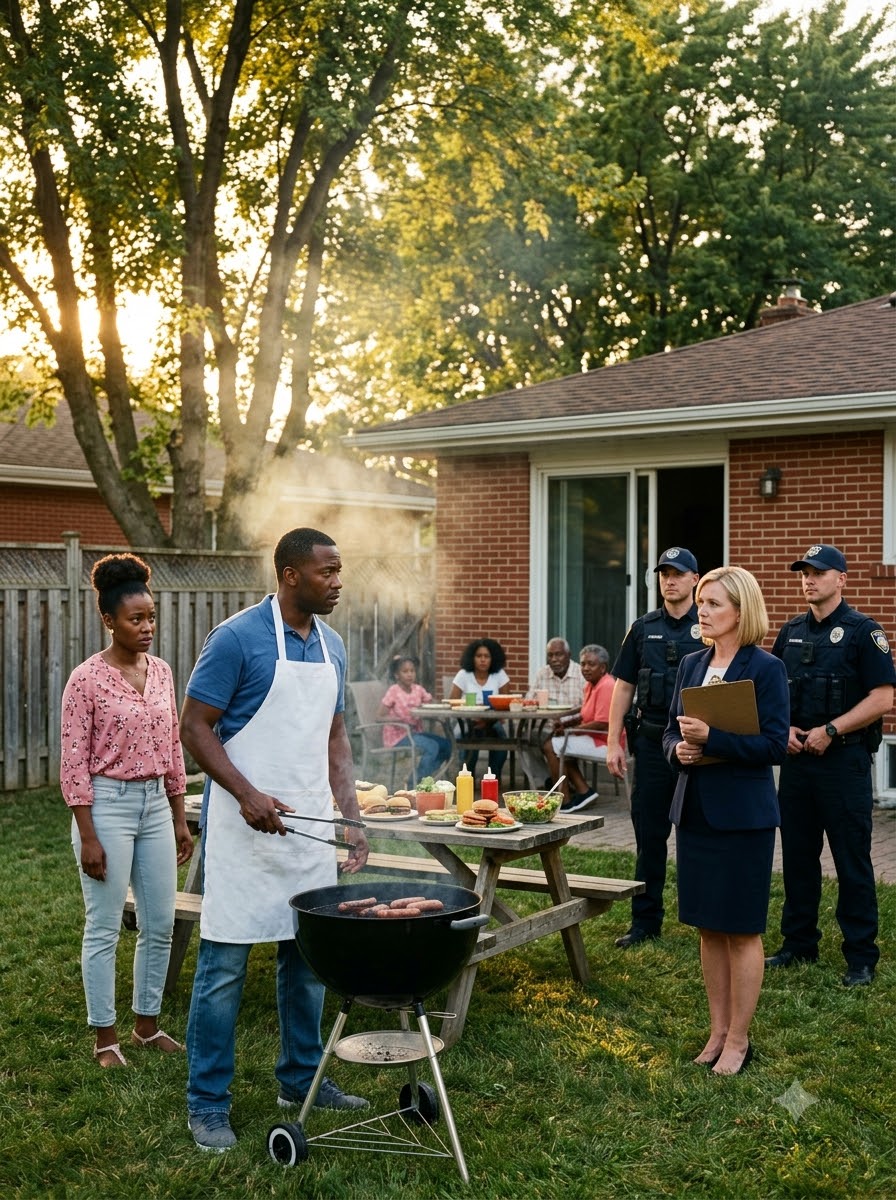
Her sharply tailored suit looked almost too formal for the summer heat. Her hair was carefully styled, and her expression suggested she had arrived expecting a confrontation.
Her name was Carol Mitchell.
Most residents knew her reputation.
She was closely associated with the homeowners association and was notorious for enforcing regulations with little patience for explanations or exceptions.
Some neighbors admired her insistence on order.
Others quietly resented the way she treated community guidelines as personal commands.
Carol closed her car door and approached the Harris property with purposeful steps.
Her gaze moved across the backyard.
She examined the food, the guests, the children, and the grill.
Her lips tightened.
The mood began changing before she said a word.
Conversations faded as guests noticed her.
Denise looked toward the front yard and saw the unfamiliar hostility in the woman’s expression.
She set down the serving spoon and approached politely.
“Can I help you?”
Carol glanced past her toward the picnic table.
“I’m here on behalf of the homeowners association,” she replied. “There’s been a complaint about your gathering.”
Denise blinked.
“A complaint?”
Carol lifted her clipboard slightly.
“Yes. Several residents have raised concerns.”
Aaron noticed the exchange and walked over, wiping his hands with a clean towel.
“What kind of complaint?” he asked.
Carol regarded him with a stern expression.
“Noise. Unapproved gatherings. It’s against the neighborhood rules to hold events like this without prior approval from the HOA.”
Denise frowned.
“We’ve lived here for years. This is a private family barbecue. No one’s causing a disturbance.”
Carol looked toward the neighboring houses.
Several curtains shifted behind closed windows.
“That’s not the impression I’ve received,” she said. “The HOA expects all residents to adhere to the community standards. If you want to continue, you’ll need to apply for a permit.”
The children had stopped playing.
Aaron’s younger son stood near the fence, holding the Frisbee against his chest.
He looked from his parents to Carol, unable to understand why an adult stranger was upset about their barbecue.
Aaron noticed the confusion on his son’s face.
He turned back toward Carol.
“I wasn’t aware such a permit was necessary for a family gathering,” he replied. “We’ve always respected the neighborhood and kept things reasonable.”
Carol’s expression grew colder.
“Respect means following the rules. It’s not about what you think is reasonable.”
Aaron remained composed.
He had spent enough years dealing with difficult people to know that responding angrily would only make the situation worse.
He folded the towel in his hands.
“We have every right to enjoy our property. I understand the HOA’s role, but this isn’t a commercial event or a public gathering.”
He gestured toward the backyard.
“It’s a family barbecue.”
Carol surveyed the guests again.
Her gaze lingered on the children and the plates of food.
“Rules are rules,” she said. “Everyone must follow them. No exceptions.”
Denise stepped beside her husband.
“We’re not trying to break any rules. We simply want to enjoy time together in our home.”
Carol straightened her shoulders.
“I’m just doing my duty to maintain the standards of this community.”
Aaron nodded slowly.
“And I respect that. But please understand, this is our home. We’re neighbors, and I hope we can all find a way to coexist without unnecessary conflict.”
For a moment, nobody spoke.
A breeze stirred the leaves along the fence.
Some of the guests exchanged uneasy glances.
Carol appeared irritated that Aaron wasn’t intimidated.
She had expected resistance, perhaps an argument, but not this quiet insistence on fairness.
Finally, she adjusted the clipboard beneath her arm.
“Very well, but I’ll be reporting this to the HOA. They will decide if further action is required.”
Aaron gave a small nod.
“That’s your decision.”
Carol turned toward her vehicle.
The black car eventually disappeared down the street.
But the disturbance remained.
The children were quieter now.
Several guests looked uncertain about whether they should stay.
Denise returned to the food table, although her earlier smile had faded.
Aaron looked around the backyard.
“Let’s not let this ruin our day,” he said softly. “We know who we are and what we’re doing here.”
Denise nodded.
“We’ll handle this together.”
The conversations gradually resumed.
Aaron returned to the grill.
His daughter picked up the Frisbee and encouraged her brother to continue playing.
Yet something about the afternoon had changed.
The Harris family had been reminded that even a peaceful gathering could become controversial when someone decided they didn’t belong.
And although Carol had temporarily withdrawn, the confrontation was far from finished.
The tension returned when Carol remained involved in the dispute and the conversation drew additional neighbors toward the property.
Several residents stood near their fences, watching.
Others stepped out onto their lawns.
Carol faced Aaron again, her arms folded tightly.
Her expression suggested she was unwilling to accept his explanation.
Aaron took a measured breath.
“Ms. Mitchell, I understand the concerns you’ve raised, but I want to assure you that this is a private, lawful event.”
He looked toward the guests.
“Our family gathers here regularly, and we’ve always been mindful of the neighborhood’s peace.”
Carol narrowed her eyes.
“That may be your perspective, but several neighbors have expressed discomfort. They say the noise levels are disruptive and that such gatherings should be subject to HOA approval.”
Denise spoke from beside him.
“We’ve done our best to keep the volume reasonable. The children’s laughter and the music are all part of a family gathering, nothing more.”
Carol pressed her lips together.
“Rules exist for a reason. The HOA is tasked with maintaining the community standards, and that includes regulating events that could disturb the neighborhood’s quiet.”
Aaron listened without interrupting.
“I appreciate the role of the HOA, but I also believe in mutual respect. Our intention is not to disturb anyone, but to celebrate with our family and friends.”
He glanced toward the barbecue.
“A barbecue is hardly an event that should warrant such concern.”
A few neighbors nodded.
Others remained silent.
Carol noticed their reactions.
Her expression tightened.
“Even so, these gatherings set a precedent. If one family can do this without approval, others might follow, leading to unchecked noise and disorder.”
Aaron answered calmly.
“We live here, too. We want nothing more than harmony in the neighborhood.”
He paused.
“But harmony shouldn’t come at the cost of excluding or silencing lawful expressions of family life.”
Carol’s fingers tapped impatiently against her forearm.
“You may see it that way, but the HOA’s rules are clear. Without prior approval, gatherings beyond immediate family are not permitted.”
Denise looked toward the guests whose smiles had disappeared.
“We understand the importance of rules, but we also hope for understanding.”
Her voice remained gentle.
“This is a moment of connection for us. A chance to build bonds, not break them.”
Aaron nodded.
“We’ve always respected this community, and we’re committed to doing so. But we ask for the same respect in return.”
Carol hesitated.
For the first time, uncertainty flickered across her face.
But she quickly regained her stern expression.
“I’m here to enforce the standards set by the HOA. If you wish to continue, you must comply with the rules.”
Aaron met her gaze.
“We will consider what you’ve said, but please understand that we have every right to enjoy our home.”
Then another voice entered the conversation.
“I’ve lived here for over thirty years.”
Everyone turned.
Mr. Jacobs, an elderly neighbor known for his thoughtful nature, had stepped forward.
He looked directly at Carol.
“I’ve seen many families come and go, and the Harris family has always been respectful and considerate. This gathering is no different.”
Carol faced him.
“Respect is not subjective. It’s about following the guidelines agreed upon by the community.”
Aaron replied gently.
“Guidelines are important, but so is the spirit in which they’re applied. We want to contribute positively, not cause division.”
Denise moved toward their daughter, who had retreated beside the picnic table.
The girl looked confused and upset.
Denise wrapped an arm around her shoulders.
“It’s okay,” she whispered. “We’re doing the right thing.”
Aaron looked back toward Carol.
“I hope this conversation opens a door to dialogue rather than discord.”
Carol’s face hardened.
“I will report this incident to the HOA board. They will determine if further action is necessary.”
The neighbors began whispering again.
Aaron drew his family closer.
“Let’s remember who we are and what we stand for. We won’t let this divide us.”
Denise squeezed his hand.
“We’ll face whatever comes next together.”
But Aaron understood that the argument had reached a point where another polite explanation might not be enough.
There was something Carol—and several of the people watching—didn’t know about him.
And he was finally ready to tell them.
PART 2
The afternoon sunlight stretched across the Harris family’s lawn as Aaron stepped away from the grill.
The guests had grown quiet.
Carol Mitchell remained near the front of the property, holding her clipboard with an expression of rigid certainty.
She had repeatedly insisted that the homeowners association possessed the authority to control the family’s gathering.
Aaron had answered every accusation respectfully.
He had explained that the event was private.
He had reminded her that his family lived there and had the same right to enjoy their property as anyone else.
Yet Carol continued treating the barbecue as a threat to the neighborhood.
Now Aaron decided the conversation needed to change.
He looked toward the small group of neighbors gathered nearby.
“Before this conversation moves any further,” he began, “there’s something I think everyone here should know.”
His voice was calm.
But something about his tone made everyone pay attention.
Carol narrowed her eyes.
“And what would that be?”
Aaron looked directly at her.
“I am the mayor of this town.”
The silence was immediate.
Several neighbors stared at him.
A few whispered in disbelief.
Denise placed her hand gently on his arm.
She had always known her husband preferred being treated like an ordinary neighbor when he was at home.
On weekends, he wanted to be a father and husband, not a public official.
He enjoyed cooking, gardening, and spending time with his children.
He rarely mentioned his position unless it was relevant.
But today, Carol had forced him to address a larger issue.
The same man she had treated as an irresponsible homeowner was the town’s highest elected official.
Carol’s posture shifted.
Her grip on the clipboard loosened slightly.
For the first time since arriving, she seemed unsure what to say.
Aaron continued.
“I’ve lived here for many years, just like all of you.”
He looked around at the familiar faces.
“I’ve served this community because I believe in fairness, respect, and inclusion.”
His gaze returned to Carol.
“This gathering today is no different from the many family events that take place throughout our town.”
The neighbors exchanged glances.
Some appeared embarrassed by how quickly they had accepted Carol’s complaints.
Others nodded in agreement.
Aaron’s position had surprised them, but he wasn’t asking anyone to treat him differently because of it.
Instead, he was making a point about the standards everyone deserved.
“Rules should protect people,” he said. “They should not be used to make families feel unwelcome in their own homes.”
Carol swallowed.
“I—I was only following protocol.”
Aaron nodded.
“I understand that, but protocol must be applied with wisdom and fairness.”
He gestured toward the neighborhood.
“The spirit of our community is built on trust and respect, not fear or division.”
Denise stepped forward.
“We’ve always wanted to be part of this neighborhood, to build connections, not walls.”
She looked toward the picnic tables.
“Today was meant to be a celebration of family and friendship.”
A few neighbors moved closer.
Mr. Jacobs nodded.
“Mayor Harris is right. This family has done nothing but contribute positively to our community.”
Carol glanced around.
The support she had expected was fading.
Her complaint had been framed as a matter of maintaining order, but now people were questioning whether she had applied the rules fairly.
Aaron spoke again.
“I’m sorry if my actions caused any offense, but I must emphasize the importance of not letting rules become weapons of exclusion.”
He paused.
“Prejudice disguised as regulation can fracture the very communities we strive to build.”
Carol lowered her eyes briefly.
She had arrived believing that her position gave her the right to dictate what happened in the Harris family’s backyard.
Now she was being asked to explain why an ordinary barbecue had become a matter of official concern.
The question was uncomfortable.
And the neighbors were listening.
“I didn’t intend to cause a problem,” she said.
Aaron regarded her patiently.
“Then this is an opportunity to make sure we don’t create one.”
Carol looked toward Denise and the children.
The younger boy was still holding his Frisbee.
The teenage daughter stood beside her mother.
The food remained spread across the table, untouched during the confrontation.
Nothing about the gathering resembled the disorder Carol had described.
She drew a slow breath.
“I apologize for any trouble I have caused,” she said quietly. “I did not mean to disrupt a peaceful gathering.”
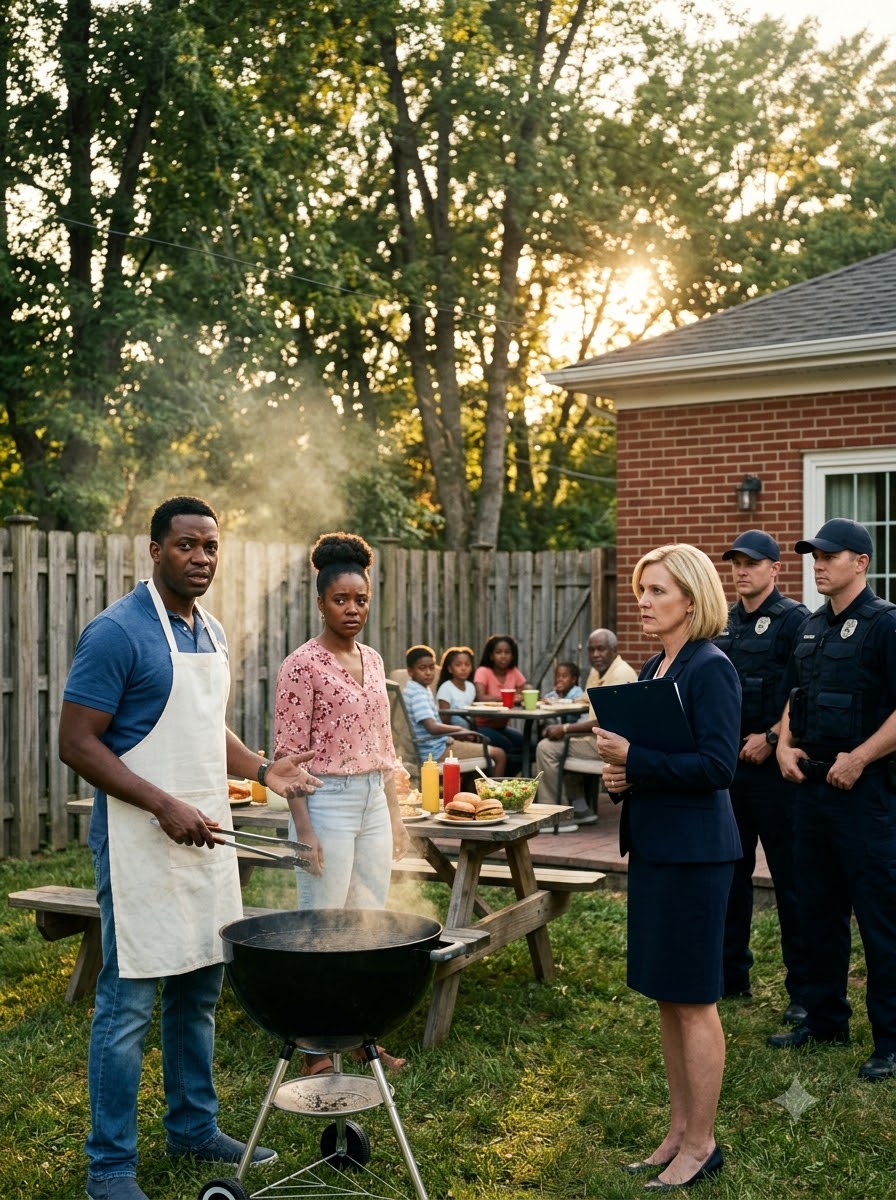
Aaron nodded.
“Thank you, Carol. Apologies are a step toward understanding.”
His expression softened.
“I hope we can all learn from this and work together to foster a welcoming community.”
The atmosphere began to change.
Neighbors who had been watching from a distance approached the Harris family.
Some offered tentative smiles.
Others started conversations with the guests.
The sharp division created by Carol’s arrival gradually eased.
An additional HOA representative who had been present approached Aaron.
“I apologize for the misunderstanding,” she said. “We will review the situation carefully before taking any further action.”
Aaron smiled.
“That’s all I ask, fairness and consideration.”
Carol returned to her black car.
She no longer carried herself with the same certainty.
The engine started.
Moments later, the vehicle pulled away.
For several seconds, Aaron stood watching it disappear.
Then he turned toward his family.
Denise smiled at him.
Their daughter moved closer.
His younger son finally relaxed his grip on the Frisbee.
Aaron looked around at the guests.
“Today was a reminder,” he said softly, “that true leadership is about standing for what is right, even when it’s difficult.”
Denise rested her hand on his arm.
“And about teaching others the value of respect and inclusion.”
Mr. Jacobs smiled.
Several guests began applauding quietly.
The applause wasn’t for Aaron’s title.
It was for the way he had refused to let a family gathering become an excuse for unfair treatment.
Aaron returned to the grill.
He lifted the lid.
A fresh cloud of fragrant smoke rose into the air.
“Now,” he said with a small smile, “who’s ready to eat?”
The response was immediate.
Laughter returned.
Children hurried toward the table.
Denise began serving food again.
The backyard slowly regained the cheerful atmosphere it had held before Carol arrived.
But the conversation had left an impression on everyone.
Some neighbors remained to share a meal.
Others returned home thinking about what they had witnessed.
The encounter had exposed something uncomfortable about the community.
It was easy to praise fairness when nobody was being challenged.
It was much harder to defend it when a neighbor was being singled out.
Aaron had reminded them that dignity wasn’t a privilege granted by a title.
It was something every resident deserved.
As the sun lowered toward the horizon, he watched his children laughing together.
He knew the afternoon could have ended very differently.
He could have responded with anger.
He could have demanded special treatment because he was mayor.
He could have turned the disagreement into a public humiliation.
Instead, he had tried to make the confrontation an opportunity for reflection.
He hoped the lesson would last longer than the barbecue itself.
Yet he also understood that an apology made under public scrutiny was only the beginning.
Real change would depend on what Carol and the neighborhood chose to do afterward.
PART 3
In the days after the confrontation, the neighborhood seemed quieter than usual.
Residents still walked their dogs along the sidewalks.
Children still played outside.
Cars still pulled into familiar driveways each evening.
But the way people greeted one another had changed.
The Harris family’s barbecue had become a subject of conversation throughout the community.
Some neighbors admitted they had been uncomfortable with Carol Mitchell’s behavior.
Others wondered why they hadn’t spoken up when she first confronted Aaron and Denise.
A few reflected on how easily they had accepted the suggestion that a family gathering needed special scrutiny.
For Carol, the days were particularly difficult.
She had spent years presenting herself as someone who protected neighborhood standards.
Her strict approach had once earned her admiration from residents who valued order.
Now people viewed her differently.
Some avoided eye contact when she passed.
Others stopped inviting her into casual conversations.
The polite smiles she was accustomed to receiving became noticeably less frequent.
Carol felt the distance.
At first, she was tempted to blame Aaron for revealing his position as mayor.
But the more she thought about the confrontation, the harder it became to ignore her own behavior.
She remembered the children’s confused faces.
She remembered Denise calmly explaining that the barbecue was simply a family gathering.
She remembered Mr. Jacobs defending the Harris family’s character.
Most of all, she remembered Aaron’s words about rules becoming weapons of exclusion.
She had insisted she was only following protocol.
But had she really considered whether the complaint was fair?
Had she investigated the supposed disturbance before arriving?
Had she treated the Harris family with the same patience she might have shown other homeowners?
Those questions stayed with her.
One afternoon, Carol walked toward the Harris residence.
She stopped at the edge of the front yard.
For several moments, she hesitated.
Aaron was tending a flower bed near the porch.
He wore casual clothes and gardening gloves.
When he noticed her, he stood and offered a welcoming smile.
“Good afternoon, Carol.”
Denise appeared near the front door.
She recognized the visitor immediately.
Her expression was polite, though cautious.
Carol cleared her throat.
“Aaron, Denise, I wanted to apologize for my actions.”
She paused.
“I realize now that my complaint was misguided, and I’m sorry for the disruption I caused.”
Aaron removed his gardening gloves and set them beside his tools.
He approached her.
“Thank you, Carol. Apology accepted.”
His voice was sincere.
“It takes courage to acknowledge mistakes, and we appreciate your willingness to reach out.”
Denise nodded.
“We all want to live in a community where everyone feels welcome and respected.”
She smiled gently.
“Hopefully, this is a step toward that.”
Carol’s shoulders relaxed.
“I hope so, too. I want to do better.”
For the first time, the conversation between them wasn’t about authority or regulations.
It was about understanding.
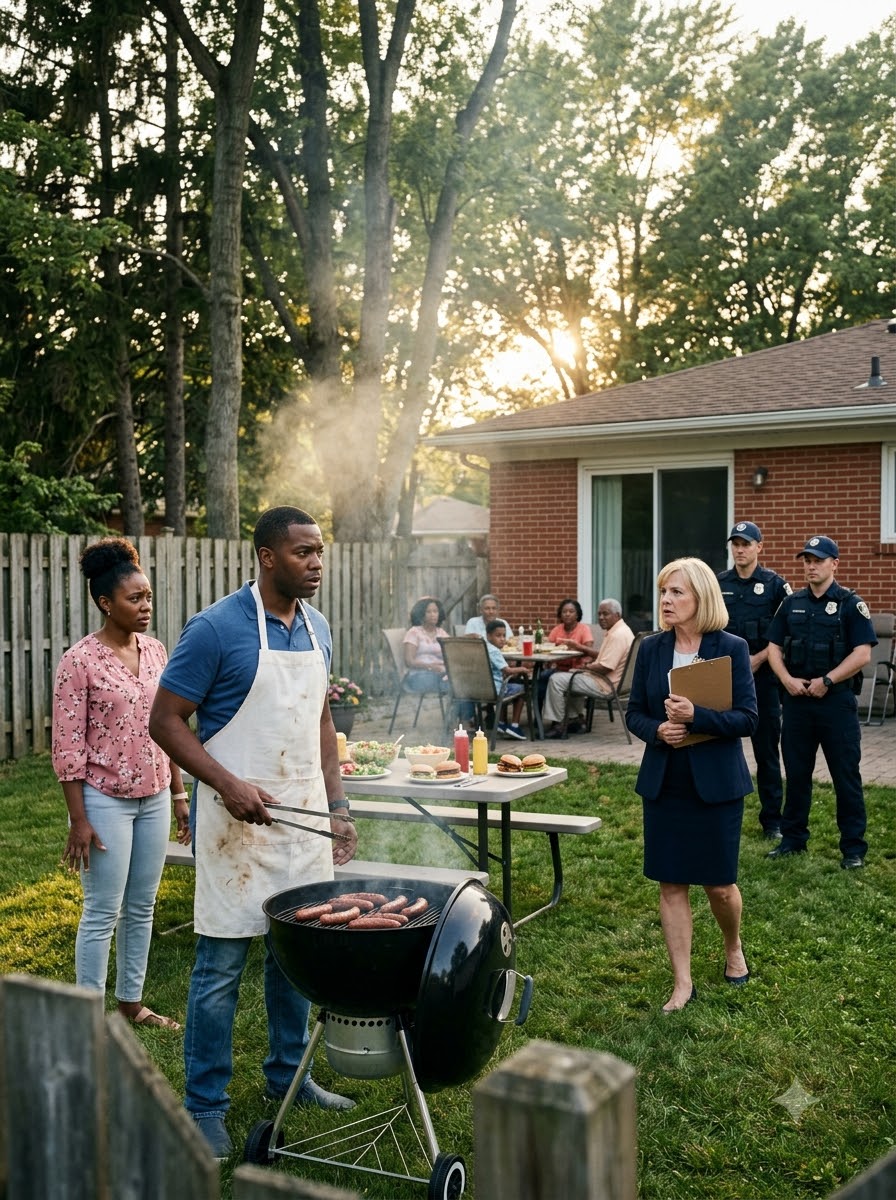
Aaron didn’t demand that Carol publicly humiliate herself.
Denise didn’t pretend the incident had been harmless.
They accepted the apology while making clear that fairness needed to guide future decisions.
Carol left feeling that the conversation had given her something she hadn’t expected.
A chance to change.
News of her visit gradually spread.
Some neighbors were surprised.
Others welcomed the gesture.
A few remained skeptical, believing that Carol would need to demonstrate through her actions that she truly understood the harm she had caused.
But the apology opened the door to further conversations.
Residents began discussing how HOA rules were interpreted and enforced.
Several homeowners questioned whether the existing process allowed too much room for personal judgment.
Others suggested that complaints should be reviewed carefully before anyone was confronted or threatened with penalties.
The Harris family had not set out to start a neighborhood debate.
They had simply wanted to enjoy a barbecue.
Yet the incident encouraged people to think more seriously about what kind of community they wanted to build.
One evening, Aaron and Denise sat together on their porch.
The sun was setting behind the houses.
A gentle breeze moved through the garden.
For a while, they watched their children playing without speaking.
Then Aaron leaned back in his chair.
“This has been a lesson in patience and leadership,” he said thoughtfully.
Denise turned toward him.
“In what way?”
Aaron considered his answer.
“Sometimes standing firm with dignity is the best way to open hearts and minds.”
He looked toward the street.
“I could have reacted differently when Carol arrived. I was frustrated. I didn’t like the way she spoke to you or looked at the children.”
Denise nodded.
“I know.”
“But I kept thinking about what I wanted our children to learn from the moment.”
He paused.
“That being treated unfairly doesn’t mean you have to abandon your principles.”
Denise smiled.
“And it reminds us that real change comes from understanding, not anger.”
Aaron reached for her hand.
“Exactly.”
They sat quietly for a while.
Then Denise glanced toward the backyard.
“You know what I think we should do?”
Aaron smiled.
“What?”
“Have another barbecue.”
He laughed softly.
“After everything that happened?”
“Especially after everything that happened.”
Denise looked toward the neighboring houses.
“This time, let’s invite more people. Not just our usual friends and family.”
Aaron considered the idea.
“You want to invite the whole neighborhood?”
“Why not?”
She smiled.
“Maybe people need an opportunity to meet one another without complaints or arguments.”
Aaron nodded slowly.
“That sounds like a good idea.”
Denise squeezed his hand.
“Then let’s do it.”
Over the following days, the Harris family began preparing for another gathering.
They contacted friends and relatives.
They spoke with neighbors they had known for years.
They also invited residents who had rarely visited their home.
Some people accepted immediately.
Others seemed surprised by the invitation.
A few admitted they had wanted to apologize for remaining silent during Carol’s confrontation.
Denise reassured them that the gathering wasn’t intended to reopen the dispute.
It was meant to bring people together.
Aaron agreed.
He didn’t want the neighborhood to become divided into those who had supported his family and those who hadn’t.
He wanted people to have the opportunity to know one another beyond assumptions and rumors.
The invitations were simple.
There would be food.
Music.
Games for the children.
And plenty of room for anyone who wanted to stop by.
Mr. Jacobs promised to attend.
Several families offered to bring side dishes.
Parents volunteered to organize activities for the younger children.
By the time the weekend approached, the response had exceeded the Harris family’s expectations.
What had begun as another small barbecue was turning into a neighborhood gathering.
Denise looked over the list of guests.
“I think we’re going to need more chairs.”
Aaron laughed.
“And a lot more chicken.”
Their teenage daughter offered to help decorate the backyard.
Their younger son wanted to organize a Frisbee game.
The family spent the evening preparing.
As Aaron cleaned the grill, he thought about how different this weekend might feel from the last.
The previous barbecue had been interrupted by suspicion.
This one would begin with an invitation.
And perhaps that difference would be enough to help the neighborhood move forward.
PART 4
The following Saturday arrived with clear skies and warm sunshine.
By early afternoon, the Harris family’s backyard was filled with the familiar scent of grilled food.
But this gathering was larger than the previous one.
More tables had been arranged across the lawn.
Additional chairs lined the patio.
Bowls of salads, vegetables, and homemade desserts covered the serving tables.
Neighbors arrived carrying food, drinks, and small gifts.
Some were longtime friends of the Harris family.
Others were visiting their home for the first time.
The atmosphere was lively and welcoming.
Children hurried between the tables and the garden.
Teenagers organized games on the grass.
Adults stood in small groups, introducing themselves and sharing stories.
Aaron moved between the grill and the guests.
He wore a casual shirt and an apron, smiling as he turned pieces of chicken over the heat.
Although everyone now knew he was the town’s mayor, he seemed happiest doing the same thing he had been doing before the confrontation.
Cooking for the people he cared about.
Denise coordinated the side dishes with several neighbors.
Her eyes shone as she watched people who had barely spoken before laughing together.
Mr. Jacobs arrived carrying a homemade dish.
He stopped beside Aaron.
“Looks like you’ve got quite a crowd today.”
Aaron smiled.
“More than I expected.”
Mr. Jacobs surveyed the backyard.
“That’s a good thing.”
He nodded toward the children.
“This is what a neighborhood ought to look like.”
Aaron followed his gaze.
Children from different families were playing together without concern for the arguments that had occupied the adults only days earlier.
Their laughter rose above the conversations.
“You’re right,” Aaron said.
Mr. Jacobs placed his dish on the table.
“And for what it’s worth, I’m glad you stood your ground.”
Aaron nodded appreciatively.
“Thank you.”
The afternoon continued.
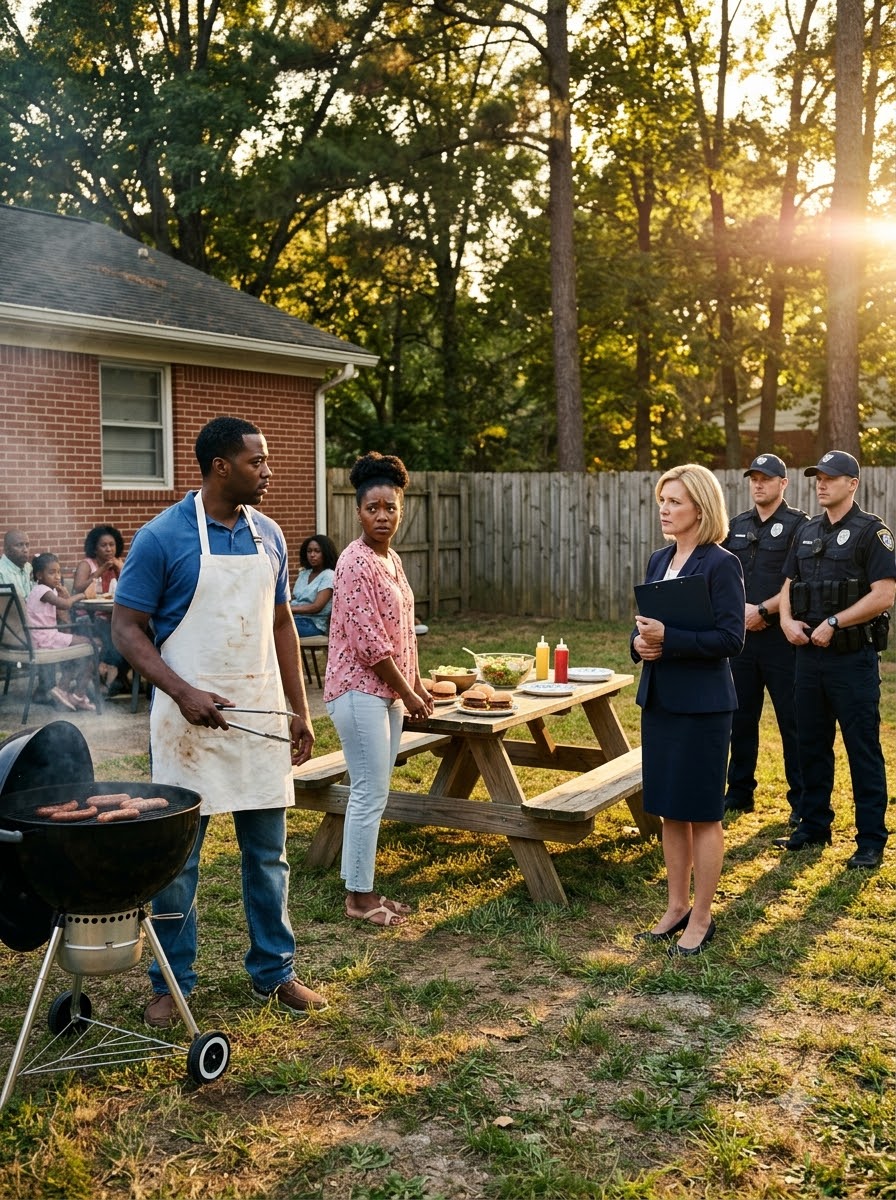
New friendships began forming.
People exchanged phone numbers.
Parents discussed school activities.
Neighbors offered to help one another with gardening and household projects.
Some residents spoke about the recent HOA controversy.
But the conversations were no longer dominated by anger.
Instead, people discussed what could be improved.
They talked about clearer procedures for reviewing complaints.
They considered how neighborhood rules could be applied consistently.
They agreed that homeowners deserved an opportunity to explain their circumstances before being accused of violations.
Aaron listened whenever someone raised a concern.
He reminded them that maintaining a peaceful neighborhood and respecting individual families were not opposing goals.
Both were possible when people acted with fairness.
As the afternoon progressed, Denise approached him.
“Look around,” she said softly.
Aaron glanced across the yard.
“What am I looking for?”
“Just look.”
He saw his daughter laughing with several teenagers near the fence.
His younger son was chasing a Frisbee with children he had barely known before.
Mr. Jacobs was speaking with a family that had recently moved into the neighborhood.
Two women who had once watched the Harris barbecue from behind their curtains were now helping serve food.
Denise smiled.
“This is what I wanted.”
Aaron looked at her.
“Me, too.”
They stood together for a moment, watching the gathering unfold.
The earlier confrontation had left them hurt and frustrated.
But it had also revealed how many people wanted a more welcoming community.
The neighborhood wasn’t perfect.
There would still be disagreements.
There would still be rules to discuss and decisions to make.
But people were beginning to recognize that respect had to be part of every conversation.
Later in the evening, Aaron took a short break from the grill.
He stood near the edge of the patio, watching the sun move lower in the sky.
Golden light spread across the grass.
The children were still playing.
Music drifted softly through the backyard.
The tables were crowded with plates, cups, and dishes brought by neighbors.
Denise joined him.
“Tired?”
“A little.”
She laughed.
“You’ve been standing beside that grill all afternoon.”
Aaron smiled.
“Wouldn’t have it any other way.”
He looked around again.
“It’s amazing how much can change in a short time.”
Denise nodded.
“Sometimes all it takes is one difficult conversation.”
“And people willing to listen afterward,” Aaron added.
She rested her hand on his arm.
“I’m proud of how you handled everything.”
Aaron looked at her.
“We handled it together.”
Denise smiled.
The gathering continued into the evening.
Neighbors who had once kept their distance were now sitting at the same tables.
Children who had barely known one another were planning to play together again.
The warmth of the occasion seemed to soften the divisions that had existed before.
Aaron moved among the guests, sharing stories and laughter.
He answered questions about the town when people asked, but he never allowed his position to overshadow the gathering.
Today, he was simply Aaron Harris.
A husband.
A father.
A neighbor.
And a man who believed everyone deserved to feel welcome in their own home.
As the sun approached the horizon, he paused near the grill.
He remembered the previous Saturday.
Carol Mitchell standing in the yard with her clipboard.
The sudden silence.
His son’s confused expression.
Denise trying to explain that they were only enjoying time with family.
The uncomfortable realization that some neighbors had been willing to treat their celebration as a problem.
Then he looked at the gathering before him.
The same backyard was now filled with people who had come together willingly.
Nobody had been forced to attend.
Nobody had been threatened into participating.
They were there because they wanted to be.
And that mattered more than any official title.
Aaron understood that his position as mayor had changed the direction of the confrontation.
But he also knew something important.
The family’s right to enjoy a peaceful gathering should never have depended on who he was.
If he had been an ordinary resident with no public office, the same principles of fairness and respect should have applied.
That was the lesson he hoped the neighborhood would remember.
Community standards were supposed to support the people who lived there.
They were not meant to become instruments of suspicion or exclusion.
Leadership wasn’t measured by how forcefully someone could enforce a rule.
It was measured by whether they treated others with dignity, especially when disagreements arose.
Denise approached with two plates of food.
“You’re thinking again,” she teased.
Aaron laughed.
“Just reflecting.”
“On what?”
He looked toward the families gathered around the tables.
“On how much stronger a community becomes when people stop seeing one another as problems and start seeing one another as neighbors.”
Denise handed him a plate.
“Then I’d say today has been a success.”
Aaron nodded.
“I’d say so.”
They joined the guests.
As darkness slowly settled over the neighborhood, porch lights and garden lamps began to glow.
Conversations continued.
Laughter floated through the warm evening air.
Children begged for a few more minutes of play before going home.
The Harris family stood at the center of it all, grateful that a difficult experience had become an opportunity for connection.
The memory of Carol’s confrontation had not disappeared.
But it no longer defined the neighborhood.
Instead, the community was beginning to define itself through understanding, accountability, and a willingness to change.
Aaron looked around one final time.
He had spent years serving the town because he believed people deserved to live with dignity.
That belief had been tested in his own backyard.
And he had learned that the principles he defended in public life mattered just as much at home.
The barbecue had started as an ordinary family gathering.
It had become a confrontation over belonging.
And now it had helped bring neighbors together.
As the evening drew to a close, the Harris family watched their guests exchange warm farewells and promises to visit again.
Aaron stood beside Denise, their children nearby.
The last traces of sunlight disappeared behind the houses.
The grill finally cooled.
The laughter softened.
And the neighborhood settled into a peaceful night.
What remained was more meaningful than a successful party.
It was the beginning of a community where differences didn’t have to create division, where rules could coexist with compassion, and where every family deserved the same respect.
Because a neighborhood isn’t made strong by perfect lawns, strict regulations, or the authority of those who enforce them.
It’s made strong by the people willing to stand beside one another.
And sometimes, all it takes to remind everyone of that truth is one family refusing to let someone else decide whether they belong.
