

PART 1
Agent James Cole knew something was wrong the moment Officer Dawson smiled at him.
The black SUV sat beside pump number four at a small rural gas station outside Pine Hollow, Georgia. Heat shimmered over the asphalt while the afternoon sunlight bounced off the convenience store windows. A line of pine trees stood dark and motionless in the distance, and a faint breeze carried the smell of gasoline, scorching rubber, and fried food drifting from inside the store.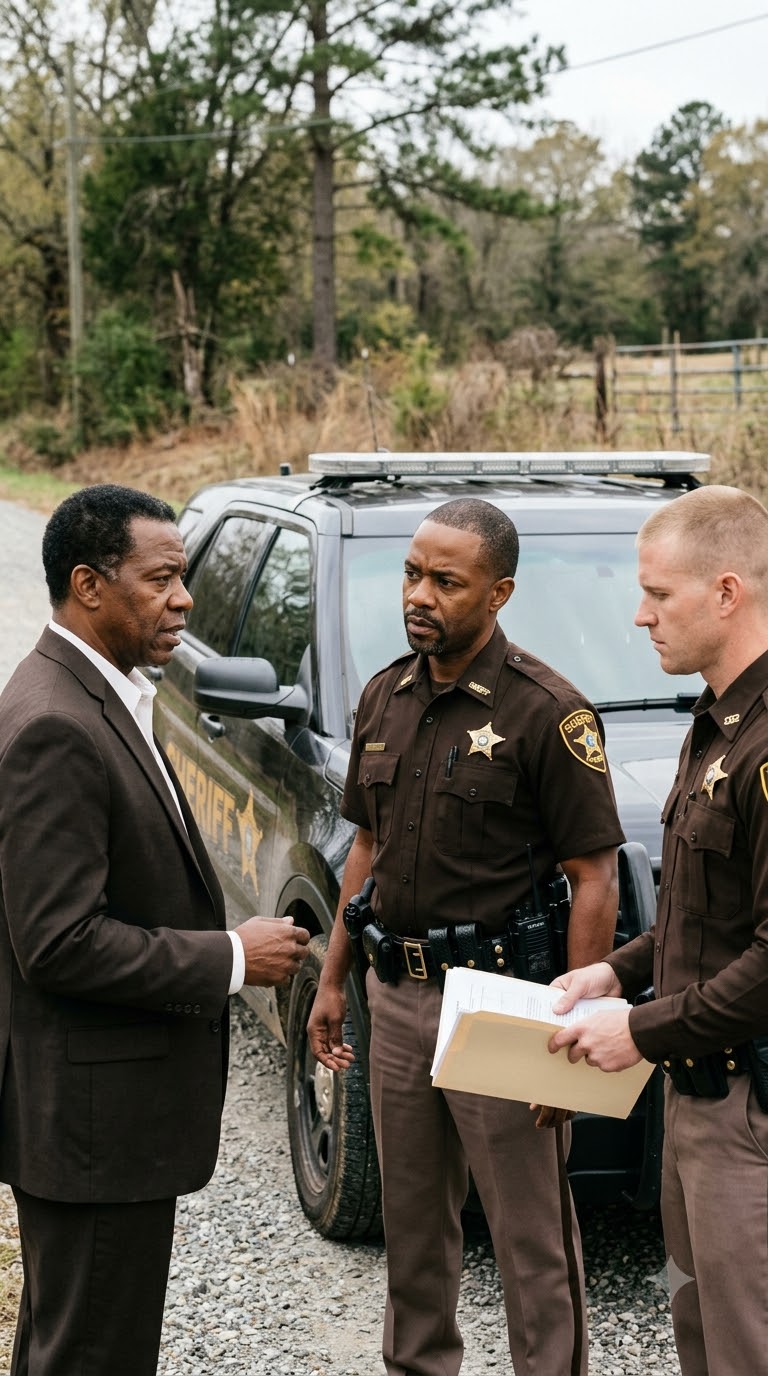
James had stopped to refuel before completing the final leg of his journey to Macon, where he was scheduled to deliver a locked black hard-shell case to an Assistant U.S. Attorney. The case looked ordinary enough, but its contents carried a different kind of weight—the sort that didn’t explode but could destroy careers and bring powerful people to their knees. Inside were documents, digital records, and sworn statements connected to a corruption investigation that had been quietly closing in on several officials throughout central Georgia for nearly a year.
At forty-two, James was clean-shaven, composed, and dressed in a charcoal suit that tended to draw attention in places like Pine Hollow, whether he wanted it or not. He had learned long ago that some people looked at a Black man in a suit and saw evidence of achievement, while others saw a challenge to their assumptions. He had also learned that staying calm unsettled the second group far more effectively than anger ever could.
So when the first patrol car entered the lot, its blue lights flashing across the fuel pump, James simply turned around, kept his hands visible, and waited to see what kind of authority was about to approach him.
Officer Dawson exited the cruiser first. Broad-shouldered and in his early thirties, he sported a blond crew cut and a navy uniform pressed so sharply it looked brand-new. His arrogant smirk suggested that he enjoyed arriving at a scene already convinced he was right.
A second patrol unit pulled in behind him. Sergeant Reed stepped out more slowly. He was an older Black officer with tired eyes, a short beard, and the cautious seriousness of someone who had spent years cleaning up after younger officers’ mistakes.
The two officers crossed the lot together. Inside the convenience store, a pair of customers drifted toward the window to watch.
“Step away from the vehicle,” Dawson ordered.
James complied without hesitation. “Afternoon, officers.”
“We had a report of suspicious activity,” Dawson replied. “License and registration.”
James handed over the requested documents. The registration was legitimate. The SUV belonged to the government, although it carried no identifying markings. Dispatch reported no alarms, outstanding warrants, or stolen-vehicle alerts.
Reed glanced into the vehicle and then toward the rear, while Dawson spent considerably more time studying James’s face than examining the paperwork.
That was when James understood that the encounter had stopped being about the original complaint. Whatever had brought the officers to the gas station, Dawson now seemed more interested in demonstrating his authority than determining whether anything was wrong.
“You in town for business?” Reed asked.
“Yes.”
“What kind?”
“Federal.”
That answer should have ended the encounter. With Reed, it nearly did. With Dawson, it only made the smirk spread wider.
“Federal, huh?” Dawson said. “Nice suit. Whose car did you take?”
The words hung in the scorching air between them.
Reed briefly glanced at his partner, a small movement that revealed more than he probably intended. James met Dawson’s eyes and answered in a voice so calm it almost sounded indifferent.
“Mine. Check my jacket.”
Dawson let out a quiet laugh, treating the response as a joke instead of an opportunity to avoid further embarrassment.
“You giving instructions now?”
“I’m helping you shorten your day.”
Dawson stepped closer.
“Turn around.”
James offered no resistance when Dawson grabbed one of his arms. Reed, following procedure rather than his instincts, took the other.
Standing on either side of him, the two officers escorted James toward the SUV. From the convenience store window, the scene looked unmistakable: a Black man in an expensive suit being marched toward a black vehicle while two uniformed officers held his arms.
James kept his breathing steady. Humiliation gained its power most quickly when it found panic to exploit. He had no intention of giving the situation that advantage.
The trunk release clicked, and Reed lifted the lid.
The locked black hard-shell case sat inside.
“Well now,” Dawson said with a low laugh. “What do we have here?”
“Don’t touch it,” James said.
Dawson reached toward it anyway.
“Let’s see what’s in the box.”
James turned his attention to Reed.
“My credentials are in the inside left pocket of my jacket.”
Something in James’s voice made Reed hesitate. He released James’s arm, carefully reached inside the charcoal jacket, and retrieved a black leather wallet.
For several seconds, the world seemed to narrow to the wallet, the bright sunlight, and the distant rumble of a truck passing along the highway.
Then Reed opened it.
Gold flashed.
The polished federal badge caught the sunlight so intensely that even Dawson blinked. There was no dramatic announcement, no raised voice, and no lengthy explanation. There was simply the immediate, undeniable truth of what Reed held in his hands.
His eyes widened.
When he spoke, his voice had dropped almost to a whisper.
“Dawson,” he said, “he’s a federal agent.”
Dawson froze, his fingers still resting against the edge of the hard case. He pulled his hand away as though the object had burned him. The smug expression vanished completely.
Once Reed released him, James straightened his jacket.
“That case is evidence,” James said coldly. “You just touched it.”
For the first time since stepping out of his patrol car, Dawson looked uncertain. He swallowed, and the color drained from his face beneath the Georgia sun.
Reed immediately returned the credential wallet.
“I didn’t know,” Dawson muttered.
“That has never been the defense you think it is,” James replied.
From that moment forward, the afternoon changed direction. The officers were no longer in control of the encounter.
Before making any calls, James photographed the SUV, the case, the officers, and their patrol unit numbers. He documented the position of every person and recorded the condition of the trunk and its contents. Then he contacted his federal supervisor.
Within minutes, the incident began moving through a chain of command Dawson had probably never imagined would take an interest in his roadside display of authority.
Reed remained quiet as James reported the detention, the attempted access to the trunk, and the physical contact with sealed evidence. Dawson shifted uneasily from one foot to the other, caught between wounded pride and growing fear. Meanwhile, the customers watching through the convenience store window pretended they weren’t paying attention.
Fifteen minutes later, Lieutenant Mark Halpern arrived in a county Tahoe.
He stepped out wearing the polished smile of a man accustomed to smoothing over problems before they became official paperwork. In his fifties, broad around the middle, and dressed in an immaculate uniform, Halpern carried himself with the practiced confidence of someone who believed reassurance could solve almost anything.
He extended his hand toward James, but James did not accept it.
“Agent Cole,” Halpern said, “I understand there’s been a misunderstanding.”
“Did Dawson call it that?” James asked.
Halpern’s smile tightened, although it remained in place.
“I’m here to resolve the situation.”
“Good,” James said. “Tell your officer to stop touching things he has no authority to touch.”
Halpern looked at Dawson, then Reed, and finally toward the open trunk.
“I’m sure we can handle this internally.”
That single sentence told James nearly everything he needed to know.
Supervisors who wanted the truth began by asking questions. Those who wanted to protect themselves began by searching for ways to contain the damage.
James glanced at the lieutenant, then at the hard-shell case in the trunk.
“Lieutenant, I want to be very clear about what happens next. This vehicle and its contents are connected to an active federal investigation. Your officer detained me, handled my person, and attempted to access a sealed evidence container without establishing a lawful basis for doing so. I’ve documented the encounter and notified my supervisor.”
Halpern lowered his hand.
“Agent Cole, I appreciate that you’re upset, but there’s no need to turn this into something bigger than it is.”
“I’m not upset,” James replied. “I’m documenting what happened.”
“Officer Dawson was responding to a report.”
“Then I suggest you obtain the original report, preserve the dispatch recording, and find out exactly what the caller said. You may also want to determine why your officer continued escalating the encounter after I identified my business as federal.”
Halpern’s smile finally disappeared.
“Are you accusing my officer of misconduct?”
“I’m telling you what happened. Whether it constitutes misconduct is a question for the appropriate investigators.”
The lieutenant looked toward Dawson.
“Tell me what happened.”
Dawson straightened immediately, apparently relieved to have the opportunity to shape the narrative.
“We received a call about a suspicious vehicle. The subject was evasive, refused to explain his business, and became confrontational. I detained him for everyone’s safety. When we found the case, I was trying to determine whether it contained anything dangerous.”
James slowly turned his head toward him.
“I answered every question you asked. I gave you my identification and registration. I told you my business was federal. And when you ordered me to turn around, I complied.”
Dawson’s jaw tightened.
“You were acting suspicious.”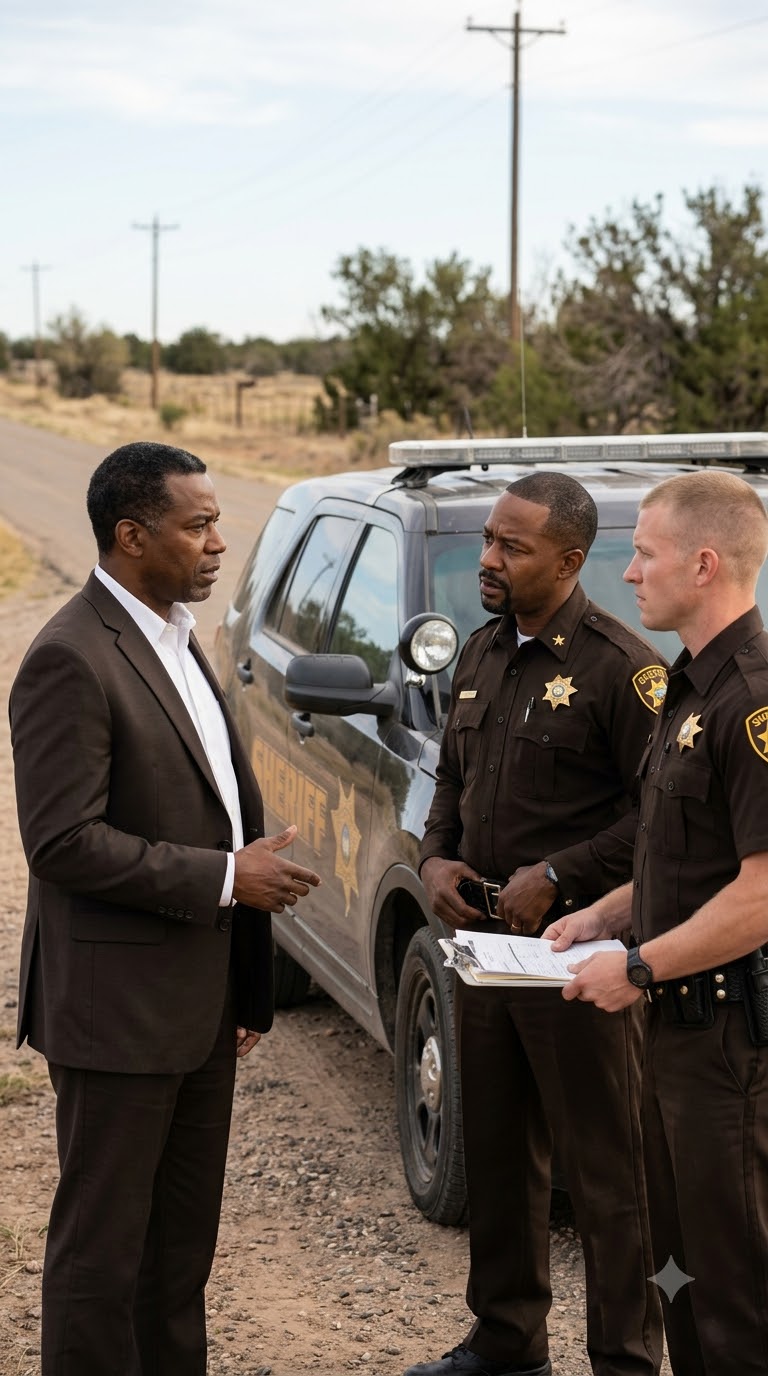
“By what standard?”
“Your attitude.”
“My attitude?”
“You were being difficult.”
James looked at Halpern.
“Is that the standard your department uses? A citizen’s tone of voice?”
Halpern didn’t answer immediately.
The silence stretched long enough for Reed to shift his weight.
“Lieutenant,” Reed said quietly, “Agent Cole cooperated with every request. I saw no reason to escalate the stop.”
Dawson turned sharply toward him.
“Whose side are you on?”
Reed met his stare.
“The truth’s.”
For a moment, nobody spoke.
The remark landed harder than a shouted accusation because Reed had said it without anger. He was not trying to embarrass Dawson. He was simply refusing to lie for him.
Halpern looked irritated.
“Sergeant, I didn’t ask for commentary.”
“You asked what happened,” Reed replied. “I told you.”
James watched the exchange without interrupting. He knew better than to mistake a single honest statement for proof that an entire department was corrupt. He also knew that one officer’s willingness to tell the truth could be the difference between a credible investigation and an elaborate cover-up.
His phone vibrated.
The message came from his supervisor, Special Agent in Charge Eleanor Brooks.
Preserve everything. Do not release the case. Our team is en route.
James read it once, then slipped the phone into his pocket.
Halpern noticed.
“Your supervisor?”
“Yes.”
“Perhaps we could speak privately while our officers sort this out.”
“No.”
The lieutenant blinked.
“Excuse me?”
“I won’t discuss an evidence-related incident privately while the officers involved are standing here. Anything relevant to the encounter can be said in front of the people who witnessed it.”
Halpern’s cheeks darkened.
“You seem to be making this unnecessarily difficult.”
“I’m making it transparent.”
A pickup truck pulled into the gas station, slowed near the pumps, and stopped beside the convenience store. The driver looked toward the gathering of uniforms, then parked farther away.
Inside the store, one of the customers raised a phone and appeared to be recording.
Dawson noticed.
“Put that phone down!” he shouted toward the window.
The customer immediately stepped back.
James turned toward Dawson.
“Leave the witness alone.”
“I wasn’t talking to you.”
“And I wasn’t asking.”
For an instant, Dawson seemed ready to move toward the store. Then he glanced at James’s badge, remembered the hard case, and remained where he was.
Halpern took a slow breath.
“Agent Cole, I understand that you have a job to do. We have a job to do as well. We cannot ignore suspicious activity simply because someone claims to work for the government.”
“That’s correct,” James replied. “Your department can investigate suspicious activity. But an officer’s authority isn’t unlimited, and a badge doesn’t excuse misconduct. The question is whether your officer had a legitimate reason for his actions and whether he followed the law.”
He paused.
“That’s what the investigation will determine.”
Halpern looked toward the open trunk again.
“Then let’s close the vehicle, get you on your way, and let everyone move past this.”
“No one is closing anything until my team arrives and documents the scene.”
“This is a county jurisdiction.”
“And this is a federal evidence matter.”
The words settled between them like a locked door.
For the next several minutes, the lieutenant made no further attempt to take charge of the case. He ordered Dawson to step away from the SUV and instructed Reed to remain available for questions. James kept his position beside the vehicle, watching carefully as the officers moved.
He had seen this pattern before.
The initial abuse of authority was often only the beginning. Once someone realized the consequences might reach beyond the immediate scene, the explanations began. A suspicious subject became a dangerous one. A routine stop became a safety concern. An officer who had acted aggressively suddenly claimed that everything had been a misunderstanding.
And if the people responsible could not erase the event, they might try to control the story.
James intended to make that impossible.
PART 2
At 2:58 p.m., two black SUVs turned off the highway and entered the gas station.
They moved smoothly across the lot, one following the other, and stopped behind James’s vehicle. Their dark windows reflected the afternoon sunlight.
Several doors opened.
A woman in her late forties stepped out of the first SUV. She wore a dark blue suit, carried a slim leather folder, and moved with the brisk confidence of someone who had spent years entering rooms where other people were accustomed to giving orders.
Special Agent in Charge Eleanor Brooks.
Two agents followed her, one carrying a camera and the other a sealed evidence kit. From the second SUV, another federal investigator emerged with a portable documentation case.
Halpern’s posture changed immediately.
“Special Agent Brooks,” he said, approaching with a strained smile. “I’m Lieutenant Halpern. I was just working to resolve an unfortunate misunderstanding.”
Brooks barely glanced at him.
“Where is Agent Cole?”
“Here,” James answered.
She walked directly to him.
“Are you injured?”
“No.”
“Did anyone open the case?”
“No. Dawson attempted to handle it, but I stopped him. Reed and I both witnessed the contact.”
Brooks looked at the open trunk, then at the officers.
“Who touched the case?”
Dawson hesitated.
“I did, ma’am, but I didn’t open it.”
“Did you have authorization to handle it?”
“No, ma’am.”
“Did you know what it contained?”
“No.”
“Then why did you touch it?”
Dawson opened his mouth, but no answer came.
Brooks turned toward the agent carrying the evidence kit.
“Photograph the case in place. Document every visible contact point. Then record the chain of custody from the moment Agent Cole took possession of it this morning.”
The agent immediately began working.
Brooks addressed James again.
“Walk me through the encounter from the beginning. Include the exact sequence of events, the officers’ instructions, and every action involving the vehicle.”
James gave his account calmly and precisely. He explained the initial stop, the request for identification, Dawson’s comments, the detention, the attempted access to the trunk, and the moment Reed opened the credential wallet.
He did not embellish anything. He did not speculate about motives he could not prove. He distinguished between what he had witnessed and what he suspected.
When he finished, Brooks turned toward Sergeant Reed.
“Sergeant, I need your independent account.”
Reed stood straighter.
“Yes, ma’am.”
Halpern stepped forward.
“Before we proceed, I want to make sure everyone understands that this is still a local matter. We have policies for handling complaints involving our personnel.”
Brooks looked at him.
“Your department may conduct its own administrative review. That does not prevent a federal inquiry into conduct affecting a federal agent or potentially compromising federal evidence.”
“I wasn’t suggesting that it did.”
“You just described this as a local matter.”
Halpern’s mouth tightened.
“I’m simply trying to avoid unnecessary confusion.”
“Then cooperation should be straightforward.”
Brooks turned back to Reed.
“Please continue.”
Reed described the encounter almost exactly as James had. He acknowledged that the original call had mentioned a suspicious vehicle, but he could not identify any additional information that justified Dawson’s behavior. He admitted that he had taken James’s other arm because he believed Dawson was carrying out a lawful detention, not because he had independently established a reason for doing so.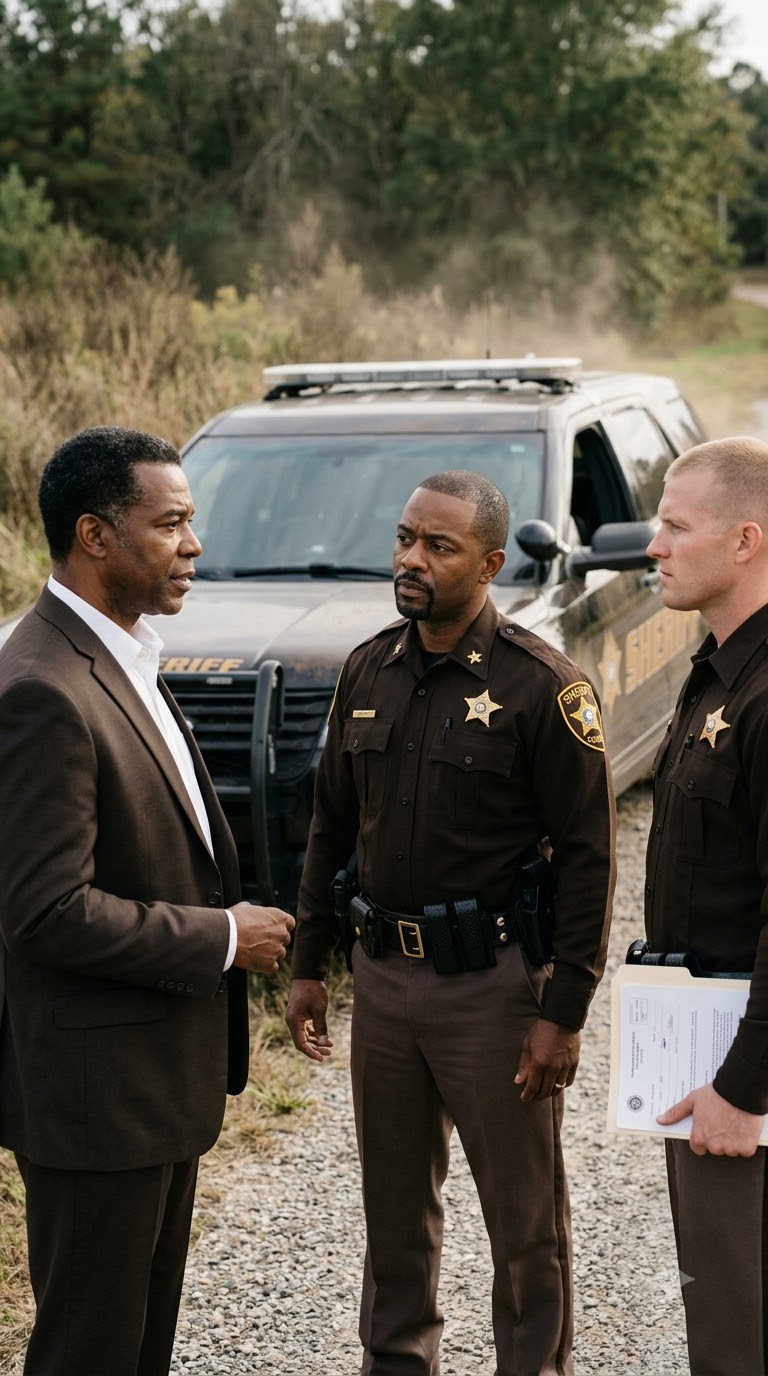
He also acknowledged that James had remained calm throughout the encounter.
When Reed finished, Brooks nodded once.
“Thank you. Remain available for a follow-up interview.”
Dawson’s face had grown pale.
“Am I being accused of something?” he asked.
Brooks regarded him steadily.
“No determination has been made. Your actions will be reviewed, the available evidence will be preserved, and the appropriate authorities will decide what follows.”
“But I was just doing my job.”
“Then your report should accurately explain what you did and why.”
Dawson looked toward Halpern, hoping for support.
The lieutenant offered none.
Instead, he asked Brooks whether the department could receive a copy of the preliminary findings once the investigation began.
“Any information that can properly be shared will be handled through official channels,” Brooks replied. “For now, we need the original dispatch recording, the incident log, the patrol vehicle’s available camera footage, the officers’ body-camera recordings, and any written or electronic communications concerning the call.”
Halpern nodded reluctantly.
“I’ll arrange for those records to be preserved.”
“Please do. And make sure no one edits, deletes, overwrites, or informally transfers anything related to this incident.”
Her tone remained professional, but the warning was unmistakable.
One of the federal agents approached Brooks with a tablet.
“We have a preliminary note from dispatch,” he said. “The original call came through at 2:31 p.m. The caller reported a black SUV parked at pump four and said the driver appeared to be watching the road.”
Brooks read the note.
“Anything else?”
“The initial entry doesn’t mention a crime, a threat, a weapon, or an attempt to enter another vehicle. We’re requesting the complete recording.”
James felt a familiar tightening in his chest.
The report sounded vague, but vague reports were not automatically false. Someone might genuinely have felt uncomfortable and asked for assistance. The important question was what the officers had done with the information they received.
Brooks handed the tablet back.
“Get the full recording. We need the caller’s exact words, not someone’s summary.”
Halpern folded his arms.
“People call in suspicious behavior all the time. Our officers can’t know what they’re dealing with until they investigate.”
“That’s true,” Brooks replied. “But an investigation should be guided by facts, not assumptions about who belongs in a particular place.”
Her gaze briefly shifted toward Dawson.
No one missed the meaning.
James turned to the federal agent who had been photographing the scene.
“Make sure the pump number and the store entrance are visible in the photographs. The window may provide a clear view of the detention.”
“We’re documenting everything,” the agent replied.
The customer inside the store had continued recording. When Brooks learned of the recording, she asked the agent to identify the person as a potential witness, without pressuring them to surrender the phone.
A few minutes later, the customer stepped outside.
He was a middle-aged white man wearing a faded baseball cap and a work shirt. He glanced nervously at the officers before approaching Brooks.
“I recorded some of it,” he said. “Not everything. I started when the officer grabbed him.”
Brooks introduced herself and explained that the recording might help establish the sequence of events. She asked whether he would be willing to preserve it and provide a copy through an appropriate channel.
The man nodded.
“Yeah. I didn’t like how that officer was treating him. The guy wasn’t doing anything.”
James thanked him.
The witness looked at James’s suit, then at the federal agents.
“I figured you had some kind of official business. Didn’t think it was going to turn into all this.”
“Neither did I,” James said.
The man gave a small, uneasy laugh.
“Well, I guess that’s why people need to pay attention.”
He provided his contact information to the investigators and returned to the store.
Dawson watched him go.
“You’re turning a routine stop into a circus,” he muttered.
Brooks heard him.
“No, Officer. The witnesses and the evidence are documenting what happened. That is not the same thing as creating a problem.”
Dawson looked away.
By late afternoon, the scene had been documented, the relevant evidence had been secured, and James’s vehicle was ready to move. The hard-shell case remained locked and intact. The federal team verified its identifying marks and recorded the custody transfer before arranging for it to continue to Macon under controlled conditions.
James would not be delivering it himself.
Brooks had reassigned the delivery to another agent so James could remain available for the investigation into the roadside encounter.
He accepted the decision without protest.
The original corruption case was too important to risk unnecessary delays, but the incident at Pine Hollow had now become a separate matter requiring its own careful attention.
As the federal agents prepared to leave, Halpern approached James one last time.
“Agent Cole, I want you to know that our department takes these matters seriously.”
James studied him.
“Then make sure the investigation is allowed to proceed without interference.”
“Of course.”
“And don’t describe what happened today as a misunderstanding before you’ve reviewed the evidence.”
Halpern’s expression stiffened.
“I think we can agree that emotions were running high.”
“No,” James said. “We can agree that the facts haven’t changed. I was getting fuel. Your officer approached me. I cooperated. He detained me, made assumptions about me, and attempted to access evidence he had no authority to handle. That’s the sequence of events.”
He paused.
“Whether you find that embarrassing is irrelevant.”
For several seconds, Halpern said nothing.
Then he nodded once and walked back toward his Tahoe.
James watched him go before turning to Brooks.
“You think the department will cooperate?”
“I think we’ll find out,” she replied. “Some people cooperate because they believe in accountability. Others cooperate because they realize the evidence will eventually speak for itself. Either way, we preserve the evidence and follow the facts.”
James allowed himself a brief, tired smile.
“Fair enough.”
Brooks looked toward the highway.
“Let’s get you back to Macon.”
The federal vehicles departed the gas station in a measured procession. Behind them, the county officers remained beside their cruisers, their afternoon transformed by an encounter that had lasted less than half an hour.
But the real consequences were only beginning.
Three days later, James sat in a conference room at the federal building in Macon.
The room had pale walls, a long table, and no windows facing the street. A recorder sat in the middle of the table beside a stack of documents. Brooks occupied the chair across from him, while an investigator from the appropriate oversight office reviewed the preliminary report.
The investigation had uncovered no evidence that James had committed a crime at the gas station. His vehicle registration was valid, his route was documented, and the original complaint contained no specific allegation of criminal conduct.
The body-camera footage provided a clearer account of the encounter.
It showed James complying with the initial instructions. It captured Dawson’s comments about the vehicle and the suit. It recorded James identifying his business as federal and offering to have his credentials checked.
It also captured the moment Dawson ordered him to turn around.
The footage did not resolve every legal question by itself, but it provided an objective record that could be compared with the officers’ written statements.
The convenience store recording offered a second perspective. Although it began after the encounter was already underway, it showed the detention near the open trunk and captured Dawson reaching toward the hard-shell case.
The witness’s account was consistent with the visible sequence.
The dispatch recording was equally important.
The caller had reported a black SUV and expressed concern because the driver appeared to be observing traffic. The caller had not alleged that James threatened anyone, attempted to enter another vehicle, or committed a specific offense.
That did not automatically establish that the initial approach was improper. It did, however, raise questions about how the information had been interpreted and whether Dawson had escalated the encounter beyond what the circumstances reasonably supported.
The investigators were careful not to confuse those questions with proof of a broader conspiracy.
A single troubling encounter could reveal misconduct without establishing that everyone involved was corrupt.
But James had not forgotten Halpern’s immediate attempt to frame the incident as a misunderstanding. He wanted to know whether that instinct to minimize the problem had affected other cases.
The oversight investigator placed a document on the table.
“We’ve received the department’s initial incident report,” she said. “It differs from the footage in several places.”
James leaned forward.
PART 3
“How?”
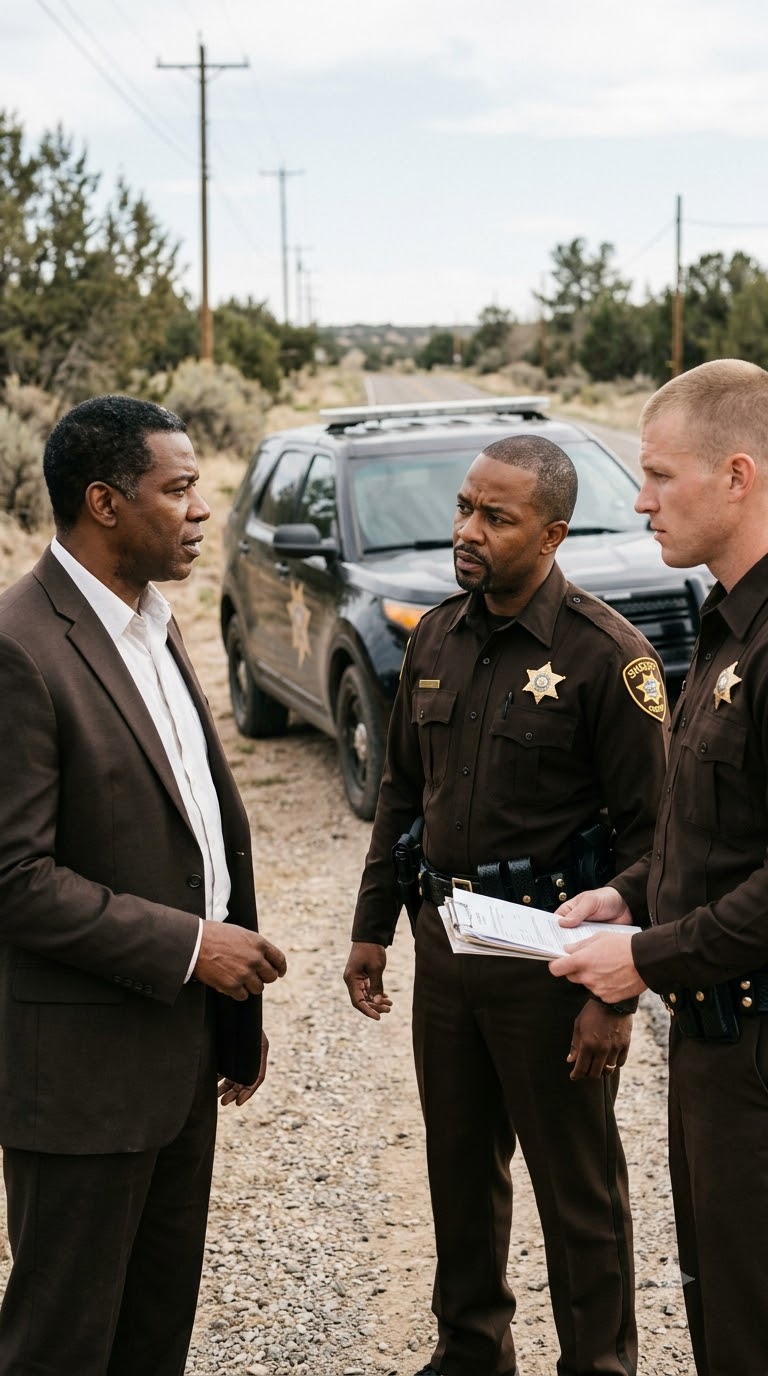
“The report describes you as verbally confrontational and suggests you refused to explain your business. The recording shows that you answered the questions asked, although you declined to provide additional information beyond what you considered necessary.”
“Did the report mention the attempt to access the case?”
“It says the officer inspected the trunk area during the investigation. It doesn’t describe his hand making contact with the case.”
Brooks exchanged a glance with the investigator.
“That omission matters,” she said.
“Yes,” the investigator replied. “We’re examining whether the report was merely incomplete or whether the language was deliberately misleading. We won’t reach a conclusion until we’ve interviewed the officers and reviewed any relevant communications.”
James nodded.
That was the distinction he wanted the investigation to maintain.
Accountability was not supposed to mean deciding guilt in advance. It meant refusing to ignore evidence simply because the truth might be uncomfortable.
“What about the lieutenant?” he asked.
“We’re reviewing his statements and the department’s response after the incident. We also requested records concerning the original dispatch, the officers’ assignments, and any communications about the stop.”
“Anything unusual?”
“Not enough to draw a conclusion yet.”
Brooks closed the folder.
“Then we keep working.”
Over the following weeks, investigators interviewed Dawson, Reed, Halpern, the dispatcher, and several other department employees. They examined available footage, compared written reports, and checked the timeline against dispatch records.
The findings began to take shape.
Dawson had not documented a specific criminal offense before detaining James. His account of James’s alleged evasiveness was inconsistent with the recordings. His written report also failed to accurately describe the full extent of his interaction with the evidence case.
Investigators found no basis to conclude that the case had been opened or that its contents had been compromised. The federal evidence remained secure.
That was a relief, but it did not erase the incident.
The investigation also found that Reed’s initial decision to take James’s other arm had been based largely on Dawson’s actions rather than an independent assessment of the circumstances. Reed acknowledged that he should have questioned the detention sooner.
He did not attempt to excuse himself.
During a follow-up interview, he explained that he had seen similar situations develop before and had sometimes hesitated to challenge a partner in the middle of an encounter.
“I thought I was keeping things calm,” he said. “I told myself I would correct it if it went too far. But by then, I was already part of it.”
The investigator asked what he would do differently.
“I’d ask the questions before putting my hands on somebody. And if an officer couldn’t explain the reason for a detention, I’d say so immediately. Not afterward.”
It was not a grand declaration, but it was an honest one.
James learned about Reed’s statement through the appropriate investigative channel. He respected the sergeant’s willingness to acknowledge his mistake, although he understood that accountability required more than a sincere interview.
Reed still had to accept the consequences of his decisions.
The department’s internal review eventually concluded that Dawson’s conduct violated policy regarding professional interactions, accurate reporting, and the handling of property during an investigation. The department initiated disciplinary proceedings and referred the matter for any further review warranted by the evidence.
The findings concerning Halpern were more complicated.
Investigators could not establish that he had ordered anyone to destroy evidence or deliberately altered an official record. They did, however, find that his initial response had prioritized minimizing the incident before he had gathered sufficient information.
The department’s leadership required additional supervisory training and revised its procedures for preserving records and reporting allegations involving officers.
Those changes did not transform the department overnight. They were only the beginning of a longer process, and James knew that written policies meant little unless people were willing to enforce them.
Dawson, meanwhile, faced consequences through the department’s formal disciplinary process. He was removed from active patrol duties while the review proceeded, and his future assignment was left to the department’s final determination.
There was no dramatic courtroom scene in which he confessed to every accusation or admitted that prejudice had driven every decision.
Real accountability was rarely that neat.
What the evidence established was enough: he had escalated an encounter without adequately grounding his actions in the facts, treated a cooperative person with unnecessary hostility, attempted to handle sensitive evidence, and failed to provide a fully accurate account afterward.
Those were serious failures even without a confession about his motives.
For James, the outcome mattered less as a personal victory than as a record that could not easily be dismissed.
A badge had stopped the encounter from continuing in the same way, but the badge alone had not corrected the underlying behavior.
Documentation, witnesses, independent review, and the willingness of people to tell the truth had done the work.
Nearly two months after the gas station incident, James returned to Pine Hollow.
He was not there to confront Dawson or demand an apology. The corruption investigation had required him to revisit several locations throughout central Georgia, and his schedule placed him near the same highway.
He stopped at the gas station just before noon.
The pumps had been repainted. A new advertisement stood near the entrance, and the convenience store windows reflected the midday sun. From a distance, the place looked exactly as it had on the afternoon of the encounter.
James parked away from pump number four and went inside for coffee.
The man behind the counter recognized him after a moment.
“You’re the fellow from that police incident, aren’t you?”
James gave a small nod.
“That’s me.”
“I wondered if you’d come back.”
“Passing through.”
The man poured the coffee and set it on the counter.
“I heard the department had to investigate what happened. People around here were talking about it for weeks.”
“Did anything change?”
The cashier considered the question.
“Some things. They had a meeting at the community center. A few people complained about other stops they’d experienced. Some of the complaints turned out to be misunderstandings. Others deserved a closer look.”
James listened without interrupting.
“The sheriff’s office said they were reviewing their procedures,” the cashier continued. “I guess we’ll see if they follow through.”
“That’s the important part,” James said.
The cashier looked toward the pumps.
“You know, when that happened, I thought the officer had every right to do whatever he wanted. He was wearing the uniform. I figured there must have been a reason.”
“And now?”
“Now I think the uniform means people should expect more from him, not less.”
James lifted his coffee.
“That sounds like a reasonable place to start.”
As he turned toward the door, he noticed a young Black man standing near the register. The man wore a work uniform and held a set of keys in one hand. He had been listening quietly.
“Excuse me,” the young man said. “Can I ask you something?”
“Sure.”
“Were you scared when the officers grabbed you?”
James took a moment before answering.
“Yes.”
The young man seemed surprised.
“But you looked calm.”
“Those are two different things.”
James set his coffee on the counter.
“You can be afraid and still think clearly. You can be angry and still choose your words carefully. Staying calm doesn’t mean you’re accepting what someone is doing to you. Sometimes it means you’re protecting yourself while you work out what to do next.”
The young man nodded slowly.
“Did you know your badge would make them stop?”
“I knew it would establish who I was. I didn’t know what they would do after that.”
“But once they saw it, everything changed.”
“Yes.”
“That’s what bothers me,” the young man admitted. “What if you hadn’t had that badge?”
James looked at him for a long moment.
“Then the situation would still have needed to be handled lawfully. My job doesn’t make me more deserving of dignity than you. The fact that I had credentials should not have been the difference between being treated fairly and being treated badly.”
The young man lowered his eyes toward his keys.
“People don’t always see it that way.”
“I know.”
James picked up his coffee again.
“That’s why the record matters. That’s why witnesses matter. And that’s why people with authority have to be held to the standards they’re supposed to enforce.”
The young man thanked him.
James walked outside and stood for a moment beneath the bright Georgia sky.
The same highway stretched beyond the gas station. Cars passed in both directions, carrying people whose destinations and worries were invisible to anyone watching from the roadside.
He thought about the hard-shell case that had brought him there in the first place. Its contents had helped expose a network of corruption, but the evidence had never depended on a dramatic confrontation or a powerful person’s sudden realization that someone important was watching.
It depended on records, corroboration, and the painstaking work of establishing what had happened.
The roadside incident had been no different.
The gold badge had changed Dawson’s expression. It had forced Reed to reconsider the situation. It had made Halpern understand that the encounter might carry consequences beyond his department.
But the badge had not made James’s account true.
The evidence had.
James finished his coffee, disposed of the cup, and returned to his SUV.
Before getting in, he looked once more toward pump number four.
He could still picture Dawson’s fingers resting against the hard case, the sudden hesitation when the gold flashed in the sunlight, and the fear that replaced his earlier arrogance.
For a moment, James had been tempted to take satisfaction in that reversal.
Then he remembered the young man’s question.
What if you hadn’t had that badge?
That was the question worth carrying forward.
A society could not depend on every person subjected to an unjustified detention having the right credentials, the right connections, or the right supervisor waiting at the other end of a phone call.
The standards had to apply before anyone knew who was standing in front of them.
James climbed into the SUV and started the engine.
His phone vibrated with a message from Brooks confirming the next stage of the federal investigation. The larger case was moving forward, and several important interviews had been scheduled.
He read the message, placed the phone in its holder, and pulled away from the pump.
The road toward Macon stretched ahead.
This time, no patrol car followed him out of the lot.
Several months later, James received a formal summary of the findings concerning the Pine Hollow encounter.
The document did not promise that every problem had been solved. It did not claim that one disciplinary proceeding had eliminated bias or guaranteed that no other person would experience an unjustified stop.
Instead, it recorded what had been established, identified the policy violations, described the department’s corrective measures, and outlined the steps required to preserve evidence and review future complaints.
Dawson had been disciplined through the department’s established process. The department had also strengthened its requirements for documenting the basis of a detention and accurately reporting interactions involving property or evidence.
Halpern remained under scrutiny regarding his supervisory decisions, while Reed was required to complete additional training and demonstrate compliance with revised procedures.
The final report made no sweeping claims about their character. It addressed their conduct.
James found that distinction important.
People could learn, change, and make different decisions in the future. But the possibility of change did not require pretending that a harmful act had never occurred.
Nor did accountability require turning every failure into a story of absolute villains and flawless heroes.
Reed had made a mistake and admitted it. Halpern had responded defensively and had to answer questions about his leadership. Dawson’s actions had been documented, examined, and judged through the appropriate process.
The record would remain.
James filed the summary with the other materials related to the incident and returned to his work.
The corruption case continued to move through the legal system. Evidence was reviewed, witnesses were interviewed, and decisions were made based on what could be proved. There were setbacks, difficult negotiations, and days when progress seemed painfully slow.
No single moment resolved everything.
But the work continued.
And whenever James thought back to the gas station outside Pine Hollow, he remembered that the most important part of the encounter had not been the flash of gold in the sunlight.
It had been what happened afterward.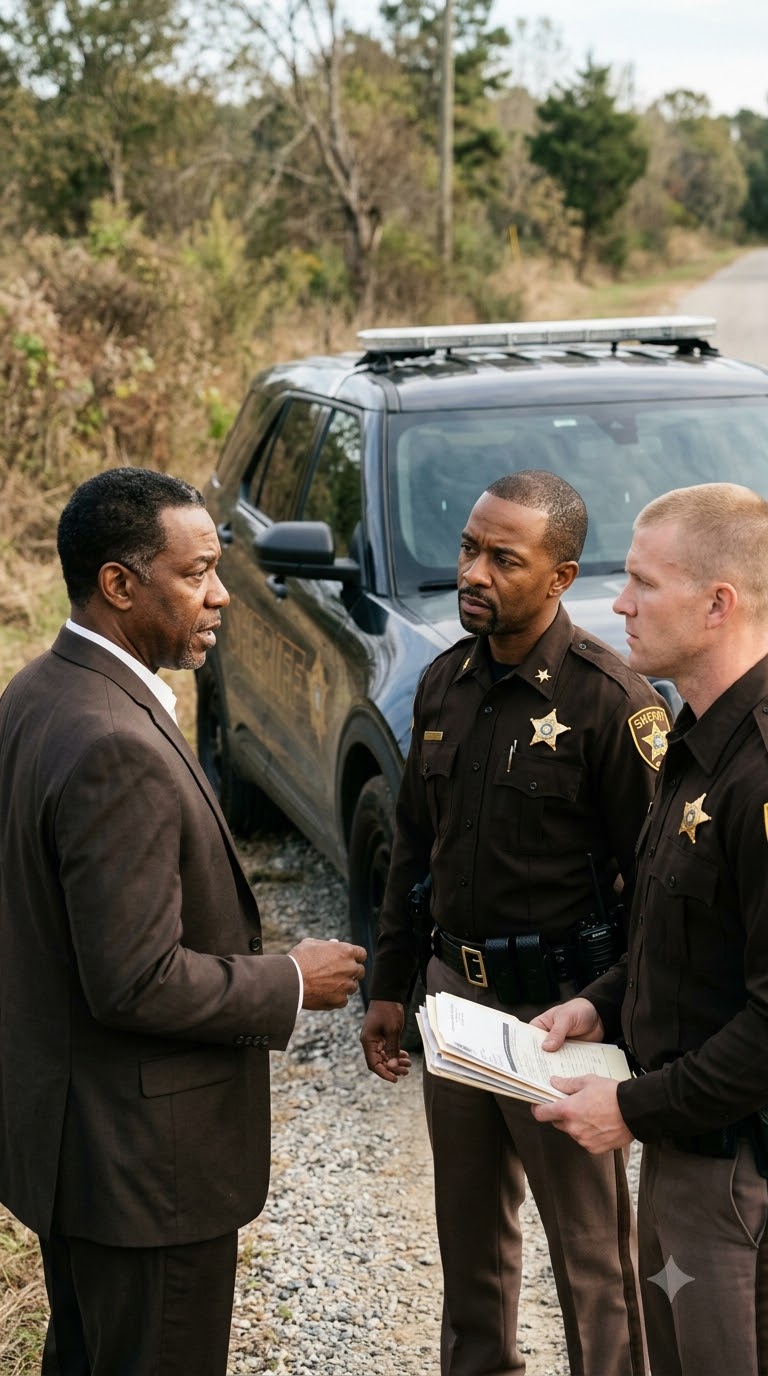
The officers could have relied on their uniforms and expected the incident to disappear. The lieutenant could have dismissed the complaint as an unfortunate misunderstanding. The witnesses could have looked away and told themselves it was none of their business.
Instead, the encounter was documented. The recordings were preserved. The witnesses spoke. An independent review examined the evidence, and the people involved had to answer for their decisions.
That was how a moment of intimidation became a record of accountability.
James had never needed the badge to make him worthy of respect.
He had carried it because his work required it.
The difference mattered.
A badge could identify authority, but it could not create integrity. A uniform could grant responsibility, but it could not excuse misconduct. And power, no matter how confidently it was exercised, did not become justice simply because the person wielding it expected obedience.
The afternoon at pump number four had begun with a routine stop for fuel.
It ended with a reminder that authority was never supposed to be a license to humiliate people, silence witnesses, or bend the facts to protect someone’s pride.
The gold badge had flashed in the sun, and the officer who had grabbed James Cole had finally understood that he had made a serious mistake.
But the lasting lesson was not that he had grabbed the wrong man.
It was that he should never have treated anyone that way in the first place.
