

PART 1
In structural engineering, there is a frightening concept called catastrophic failure. It describes the moment when a supporting column finally gives way beneath a load it was never intended to carry, bringing enormous quantities of concrete, glass, and steel crashing down in seconds.
Yet experienced engineers understand that such disasters rarely begin with one sudden impact. More often, they develop through years of tiny fractures, neglected repairs, overlooked warnings, and the dangerous belief that something will continue standing simply because it always has.
For thirty-one years, I had been that supporting column in my family.
I absorbed the consequences of my mother Beatrice’s reckless spending. I financed the extravagant lifestyle my sister Brittany pretended she could afford. I supplied the money that allowed my husband Preston to present himself as a successful Wall Street financier.
I believed family and marriage were foundations strong enough to justify every sacrifice.
I was wrong.
And an engineer who discovers that a structure is beyond repair does not waste time pretending the damage can be reversed. She secures the area, evaluates the danger, and prepares for demolition.
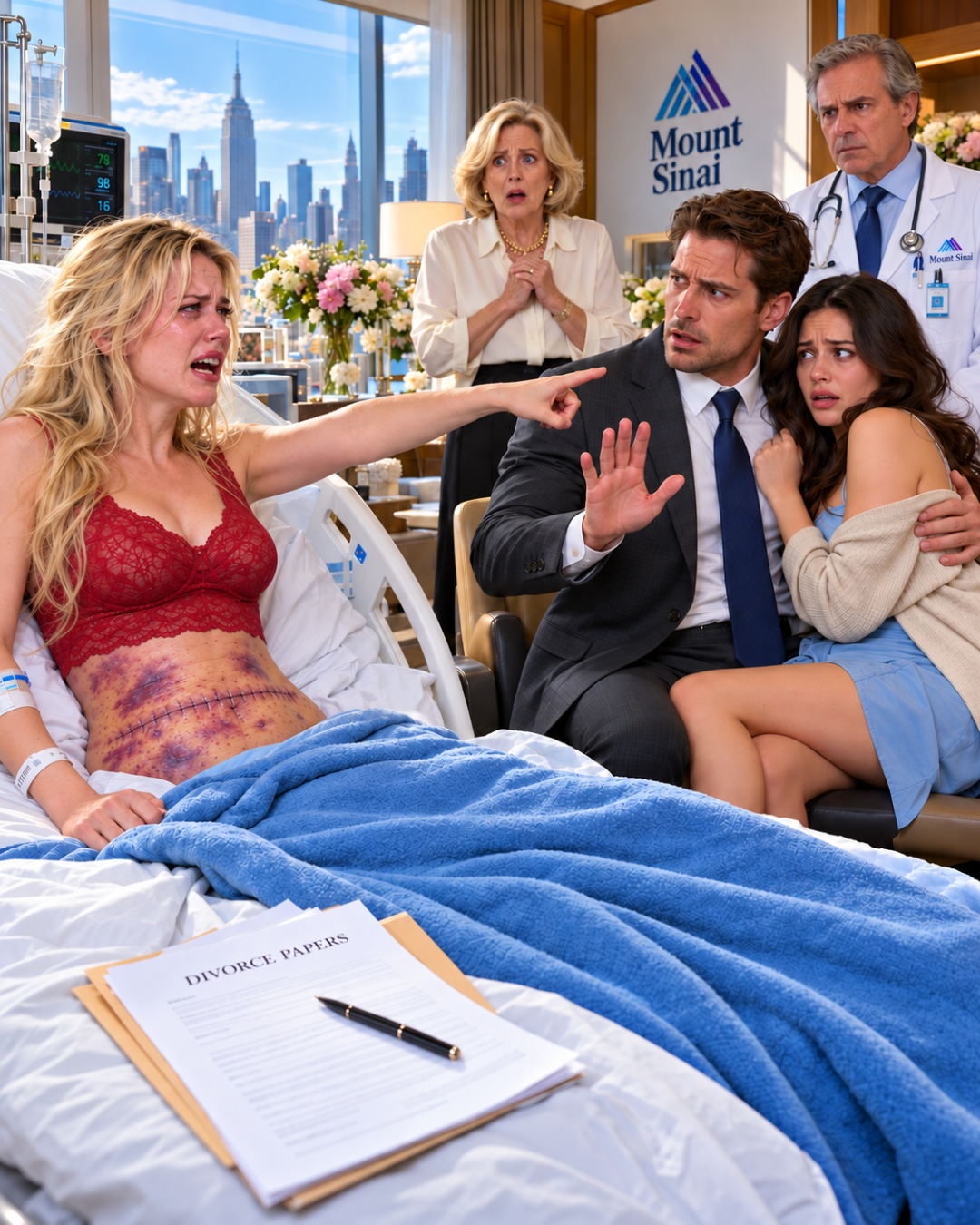
My breaking point arrived inside a private VIP recovery suite at Mount Sinai Hospital, twelve hours after surgeons removed sixty percent of my liver.
I had donated it to my ten-year-old nephew, Hudson.
His biliary system was deteriorating rapidly, and without a living-donor transplant, he had only weeks left. When doctors discovered that I was compatible, I agreed immediately.
I wanted that little boy to live long enough to celebrate his eleventh birthday.
Now I lay in a hospital bed, barely able to move.
Every breath sent burning pain through the incision across my abdomen. Surgical drains extended from my side into clear collection bulbs. Monitors sounded steadily beside me, while powerful medication left my thoughts slow and my throat painfully dry.
When the heavy door opened, I expected a nurse.
Instead, Preston entered with Brittany and Beatrice.
There were no flowers, cards, or expressions of relief.
Preston locked the door behind them.
He wore a tailored charcoal suit purchased with money I had provided. Brittany followed in a cashmere shawl that had cost me two thousand dollars only three days earlier.
Without hesitation, she crossed the room, settled onto Preston’s lap, wrapped her arms around his neck, and kissed him.
My heart monitor began sounding faster.
“What are you doing?” I rasped, my vocal cords grinding like dry rust, a cold sweat breaking across my hairline. I tried to push myself up, but the fire in my abdomen pinned me to the mattress. “Preston?”
Brittany finally pulled away, resting her chin against his shoulder.
Her smile was triumphant.
“You deserve to know the truth, Victoria,” she purred, her voice dripping with the kind of venom usually reserved for rival socialites fighting over a Hamptons country club seat. “Now that the surgery is finished and my son is safe in the pediatric ICU, we don’t have to play this pathetic little domestic game anymore. Preston didn’t stay with you for five years because of your charming personality or your architectural blueprints. He stayed because he is Hudson’s biological father. Conceived a decade ago while you were slaving away on that high-rise contract in Dubai. We have been a real family from day one—sharing your penthouse, your bank accounts, and now, your internal organs.”
I turned toward Beatrice.
Some desperate part of me expected her to be horrified.
Instead, my mother straightened Preston’s jacket with unmistakable satisfaction.
“Don’t look so scandalized, Victoria,” Beatrice said, looking down at me as if I were a stain on expensive upholstery. “You were always emotionally sterile. Too rigid. Too busy drawing industrial steel columns while your sister possessed the grace to carry life into this world. You should be honored that your flesh is finally serving a purpose that elevates our true family.”
The truth struck harder than the surgery.
My marriage had been a deception. The rent, business investments, school fees, and countless expenses I had paid for Brittany were all part of an arrangement that had exploited me for years.
And now they had taken part of my liver.
Preston removed a thick folder from his briefcase and dropped it directly onto my abdomen.
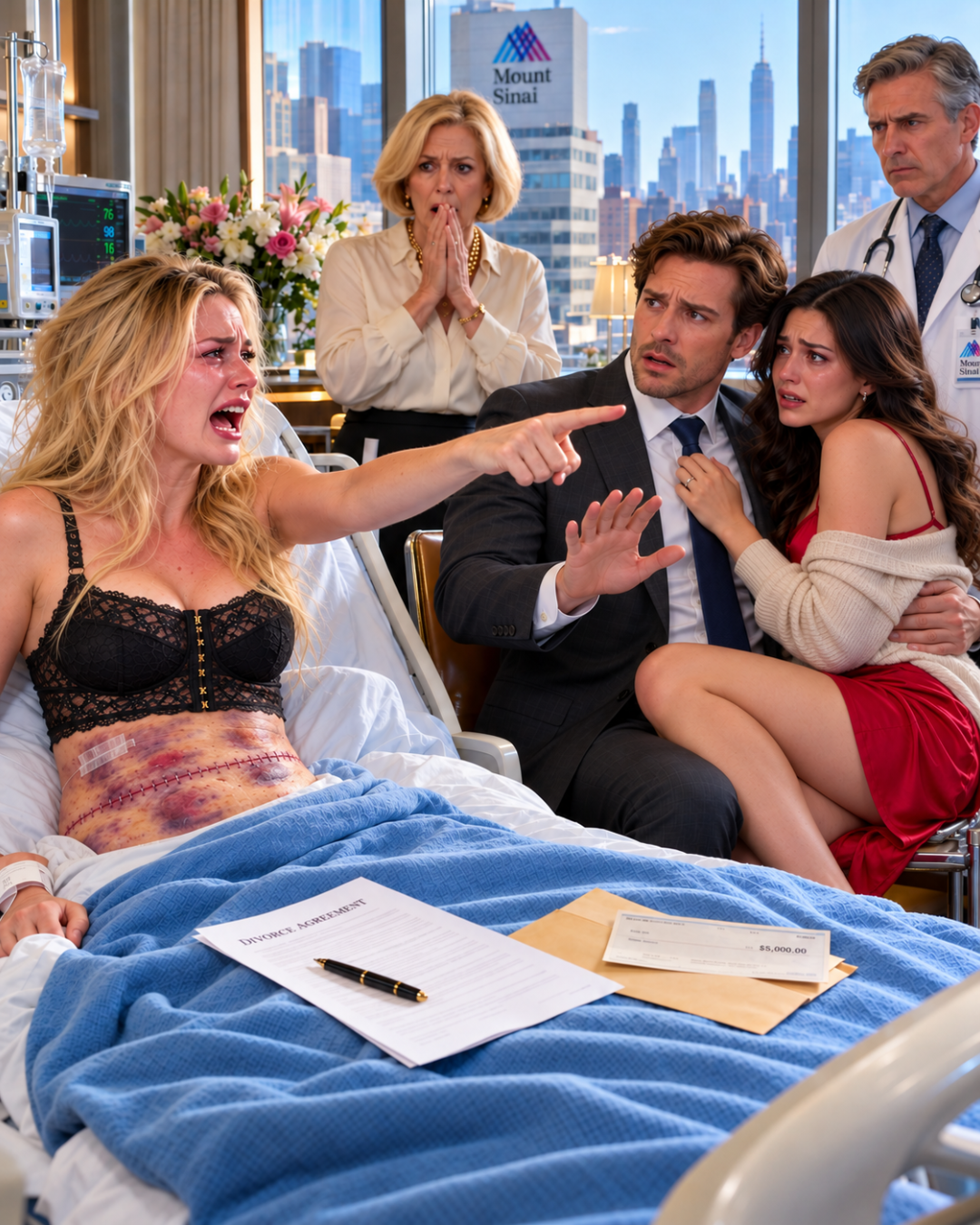
Pain tore through the incision. I gasped as blood began staining the dressing beneath the papers.
“Uncontested divorce agreement, Victoria,” Preston commanded, leaning over the bed rail with the cold authority of a man who believed he held all the leverage in the universe. “You waive all claims to our marital assets, the hedge fund distributions, and the Upper East Side penthouse. Inside is a five-thousand-dollar cashier’s check. That should get you a modest studio in Queens. You have forty-eight hours after hospital discharge to clear your clothes, or the building staff will toss them into the dumpster.”
Brittany held a pen above my trembling hand.
“Sign it, Vicky. Or we’ll make the legal battle bleed you dry while you’re still on bed rest.”
For several seconds, I stared at them.
Then something inside me became remarkably still.
I had spent my career studying how structures behave under pressure. I knew the difference between a temporary strain and an irreversible failure.
This was irreversible.
I pressed the red nursing call button beside my bed.
Then I picked up my phone.
I had started recording when Preston locked the door, a precaution I had developed through years of difficult contractor negotiations.
A call was already connected through my firm’s direct line.
“Winston?” I said into the speaker, my voice dropping the rasp and adopting the chilling, authoritative cadence I used to fire incompetent site managers.
Winston Carmichael, my corporate and family trust attorney, answered immediately.
“I heard every single word through the live feed, Victoria. The audio file is secured on our cloud servers.”
I kept my eyes on Preston.
“Execute Clause Nine of the prenuptial agreement immediately,” I instructed, keeping my eyes fixed unwaveringly on Preston’s suddenly hollow face. “Moral turpitude, intentional infliction of emotional distress, and material fraud. Change the digital access codes to the 72nd Street penthouse within the hour. Freeze all secondary corporate cards under Preston’s name. Terminate the Park Avenue lease I co-signed for Brittany. And notify the Manhattan District Attorney’s financial crimes bureau—we are filing formal charges against Brittany Vance for grand larceny and fraudulent medical trust claims.”
Preston’s expression changed instantly.
“Victoria… wait. You can’t do that. The penthouse is our home.”
“The penthouse was purchased under my pre-marital LLC using funds from my father’s commercial infrastructure patents,” I replied, each word landing like a dropped iron girder. “You do not own a single square inch of the hardwood under your feet. Your five-thousand-dollar eviction notice is a mathematically absurd piece of scrap paper. You have exactly forty-eight hours to collect your tailored suits from the lobby before the building superintendent puts them on the curb.”
Before he could respond, someone forced open the locked door.
Dr. Alistair Harrison, Mount Sinai’s Chief of Surgery, stood in the doorway.
His expression was furious.
Two charge nurses and an administrative liaison accompanied him.
His eyes moved immediately to the blood spreading across my surgical dressing.
In his hand was a blue medical binder.
“Step away from my patient,” Dr. Harrison commanded, his grip tightening on the binder. “Before I show you exactly what kind of fool you truly are.”
Preston barely acknowledged the warning.
“You’re interrupting a private family legal conference, Doctor. Step out. My wife is signing our divorce settlement. Give us five minutes to conclude our business.”
Dr. Harrison approached my bed and carefully removed the divorce documents from my incision.
He passed them to a nurse.
“Adjust Victoria’s dressing immediately,” Dr. Harrison ordered the nurse in a voice dangerously low and resonant. “Check the staple line for integrity. If she has popped a single staple because of this garbage, I want an operating theater prepped in three minutes.”
Preston stepped forward angrily.
“Hey! That’s private legal property!” Preston barked, his face flushing with indignation as he rose from the chair, pushing Brittany aside. “You have no right to touch those documents! I know the hospital board! I will have your medical license for this!”
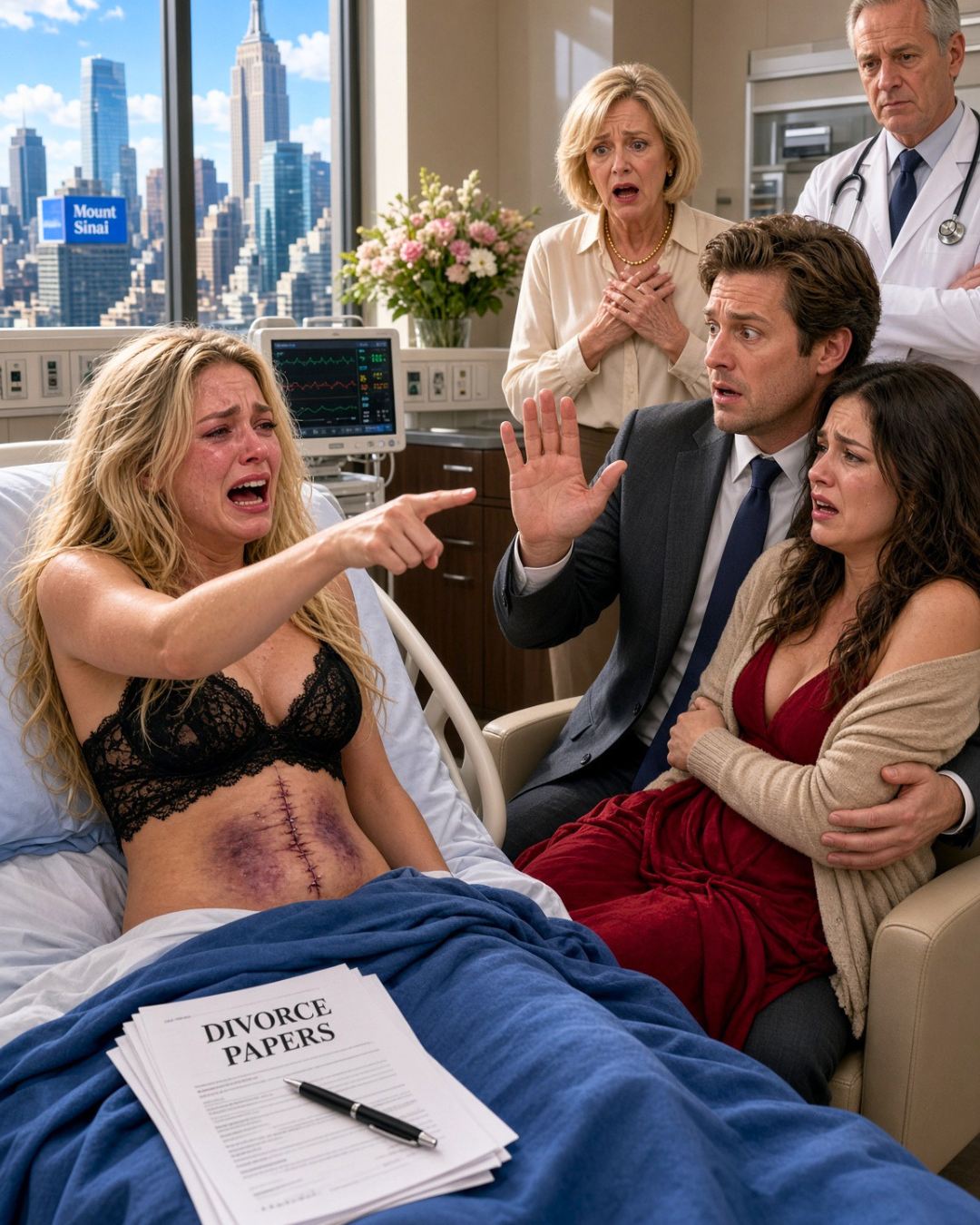
The surgeon opened the binder.
“Before you attempt to force your heavily sedated wife to sign away her life’s work, Mr. Sterling,” Dr. Harrison said, his words cutting through the sterile air like a surgical blade, “and before you continue this disgraceful spectacle in my postoperative recovery unit, you need to look at page three of this pediatric compatibility profile.”
Preston folded his arms.
“What could an organ donor report possibly tell me that I don’t already know? I gave my son half his genetic material. I’m the biological father. We don’t need another tedious medical lecture from you.”
Dr. Harrison turned the third page toward him.
“What this report tells you, Mr. Sterling, is that you did not give that young boy a single chromosome. Not one.”
Preston stopped smiling.
The room went completely silent.
And I watched my husband realize that the betrayal he had just celebrated might have destroyed his entire life.
