

Part 1: The Night I Finally Walked Away
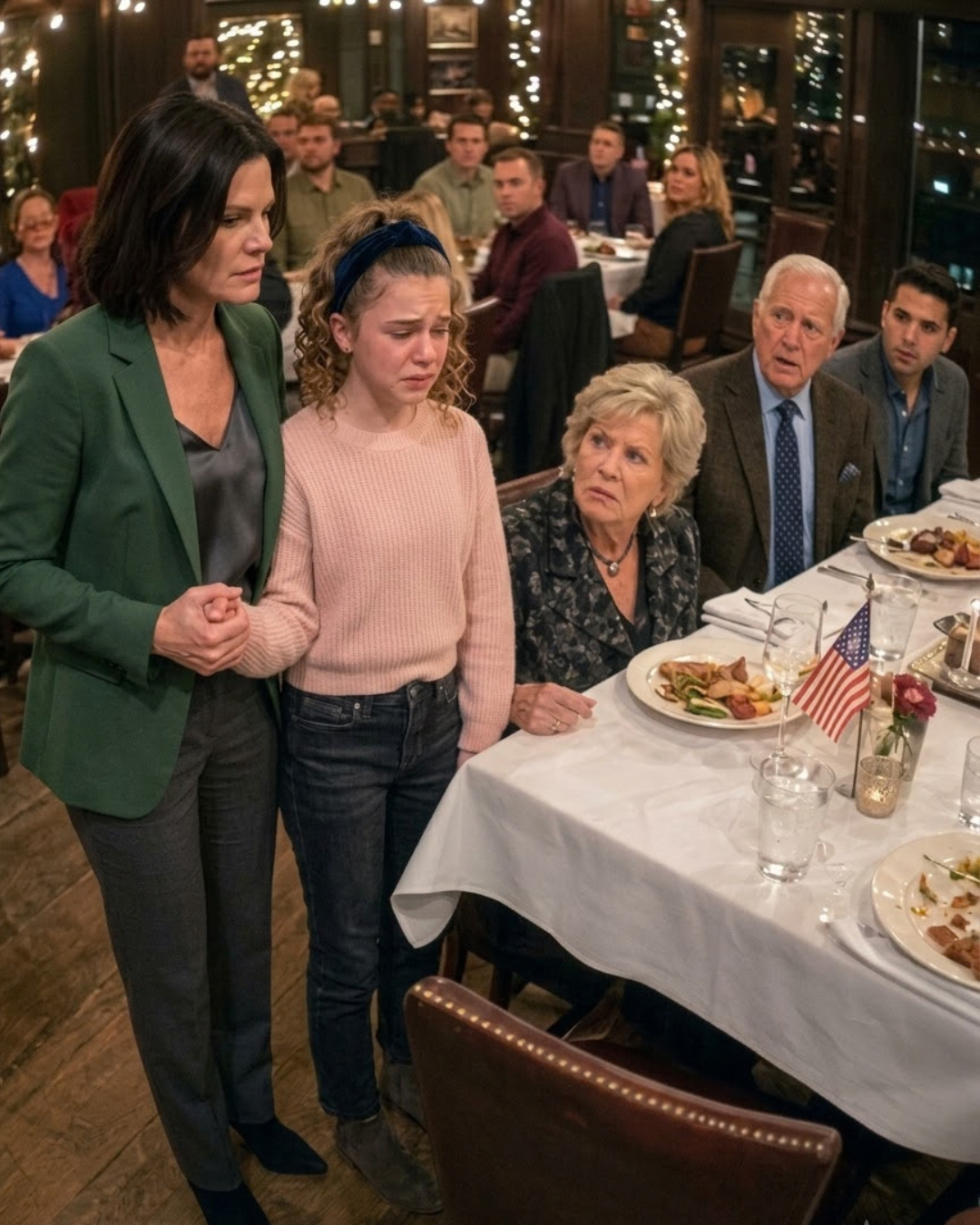
My mother looked directly at my thirteen-year-old daughter and whispered, “we don’t sit with mistakes.”
A moment later, I took my daughter’s hand and walked out of the restaurant.
That night, my father texted to ask whether I was still paying his car loan.
By sunrise, every dollar of financial support I had been giving my family was gone.
But it was what I discovered on my daughter’s phone that finally revealed how much damage they had done.
My name is Marlo.
This is the story of the evening my family showed me exactly who they were—and the morning I finally chose to believe them.
There is something about family that people rarely acknowledge.
The deepest wounds don’t always come from one terrible confrontation.
Sometimes they accumulate quietly.
A forgotten birthday.
A gift that clearly required no thought.
A careless remark disguised as concern.
A question that sounds innocent until you recognize the judgment hidden beneath it.
By the time someone finally says something openly cruel, the truth usually isn’t surprising.
Some part of you already knew.
You simply kept hoping you were mistaken.
I had been hoping for years.
I adopted my daughter, Sole, when she was seven.
Before the adoption became official, she had lived with me as a foster child for exactly eleven months.
During those months, I learned the small details that made her who she was.
Her favorite cereal.
Her fear of thunderstorms.
The way she laughed with her entire face whenever something genuinely delighted her.
By the time the county finalized the adoption and her new last name appeared on her school records, Sole already knew the sound of my car pulling into the driveway.
She knew how I drank my coffee.
She knew which kitchen drawer contained the Band-Aids.
She belonged with me.
Not almost.
Not temporarily.
Not merely in the sentimental sense people sometimes use when they want to suggest that biological relationships are somehow more legitimate.
She was my daughter.
Completely.
Legally.
Emotionally.
In every way that mattered.
Adopting Sole was the best decision I had ever made.
My parents never accepted it.
They weren’t openly cruel people in public.
My mother prepared casseroles for church fundraisers.
My father spent fifteen years coaching Little League.
In family photographs, they looked like the kind of grandparents everyone would want.
But inside our family, they measured people differently.
Bloodlines mattered.
Appearances mattered.
Being useful mattered.
And from the moment Sole came home with me, they treated her as someone who didn’t quite belong.
It began with little things.
Mom forgot Sole’s birthday during her first year with us.
I told myself she needed time to adjust.
The following year, she sent birthday checks to my brother Chris’s sons but nothing to Sole.
When I asked why, she sighed and claimed she didn’t know what my daughter liked.
Sole was eight.
She loved art supplies, mystery books, and movies about animals.
I had told Mom that repeatedly.
My father sometimes referred to her as “that girl.”
He usually avoided doing it in front of me.
But once, when Sole was nine, she overheard him.
Later that evening, she approached me quietly.
“Does Grandpa know my name?”
I told her, “Of course he does.”
I wish I had answered differently.
I wish I had recognized that a child should never have to ask that question about someone who claims to be her grandfather.
Christmas was another reminder.
My nephews received carefully chosen presents with their names embroidered on them.
Their gifts reflected their interests and personalities.
Sole received whatever appeared to have been purchased at the last minute.
One year, a soap set.
Another year, a candle.
She never complained.
Instead, she wrote thank-you notes.
She thanked my parents for every gift, even when it was obvious they hadn’t considered what a child her age might enjoy.
They never wrote back.
Then there were the questions.
They usually came while Sole was somewhere else.
My mother would lean across the kitchen table and ask something in a voice filled with manufactured concern.
“Does trauma stick with kids like her?”
Or:
“Do children from those situations really attach the way regular children do?”
Sometimes she went further.
“Have you thought about what you’ve given up, Marlo? A real family? A real life?”
Whenever I objected, I was accused of being overly sensitive.
Whenever I reduced our visits, they claimed I was keeping them from their granddaughter.
And because I wanted to believe my family could become better, I kept giving them another chance.
I loved the idea of family.
I believed people could recognize their mistakes and change.
So I kept returning.
About a month before the dinner, I finally confronted my mother.
We sat across from each other in her kitchen.
I looked directly at her and said, “One more cruel thing toward Sole. One more. And we are done. Not a break. Not a cooling-off period. Done.”
Mom stirred her coffee.
Then she nodded as though I had mentioned something ordinary.
I don’t think she believed me.
Neither did Dad.
People become accustomed to the person who always shows up.
The person who pays the bills.
The person who forgives.
The person who smooths over arguments and makes excuses.
They begin to assume that person will never leave.
The dinner took place at a restaurant in town.
It was one of those comfortable places with warm string lights, familiar music, and an atmosphere that made everything appear pleasant.
The hostess seated us near the front window.
Dad had already complained about his drink before anyone opened a menu.
Mom kept adjusting her silverware.
Chris sat across from me, smiling at messages on his phone.
Sole sat beside me wearing a cream blouse.
Her back was straight.
Her napkin was folded neatly in her lap.
She was trying so hard to behave perfectly that looking at her hurt.
She always did that around my family.
She became careful.
Quiet.
Almost invisible.
At home, Sole was completely different.
She left her shoes in the middle of the floor.
She sang off-key while doing homework.
She fell asleep on the couch with an open book covering her face.
At home, she was comfortable enough to be herself.
Around my parents, she seemed to shrink.
For years, I had called it shyness.
Now I know better.
Dinner continued with the usual small talk.
Then the waiter brought the dessert menus.
Mom leaned toward Sole.
Her expression was almost gentle.
Her voice dropped low enough to sound private, but everyone at the table could hear her.
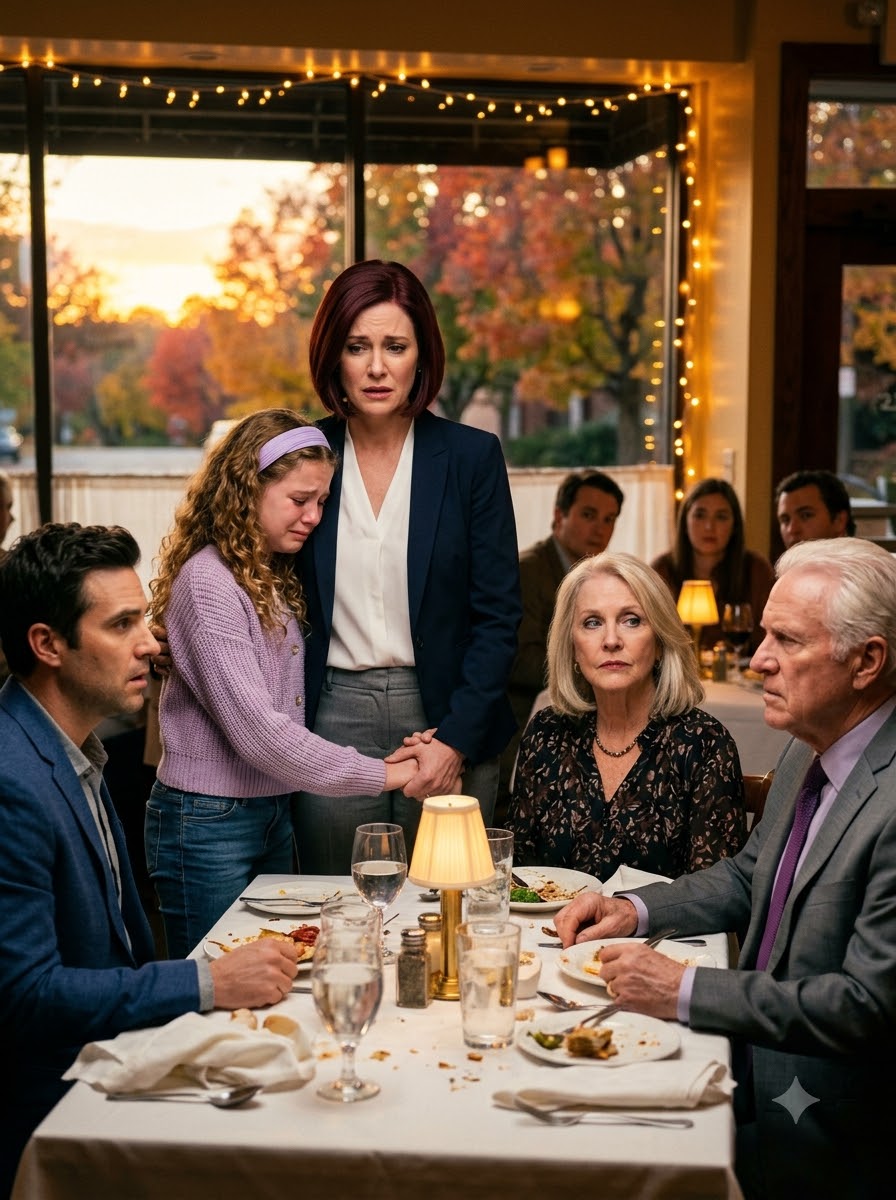
“We don’t sit with mistakes.”
Silence fell.
Sole’s fingers tightened around her spoon.
It clicked against her bowl.
Her shoulders curled inward.
She lowered her eyes so quickly that it felt as though someone had switched off a light inside her.
My hand tightened around my water glass.
For one long moment, I wanted to make Mom repeat herself.
Loudly.
I wanted everyone in the restaurant to hear exactly what she had said.
I wanted her to face the ugliness of her own words.
But I didn’t.
I set down my glass.
I stood.
Then I reached for Sole’s trembling hand.
“We’re leaving.”
Chairs scraped behind us.
Dad looked offended.
Chris finally put down his phone.
Mom stared at me as though I had committed some terrible breach of manners.
“Don’t be dramatic,” she said.
I looked directly at her.
“You just called my daughter a mistake.”
“She knows what I meant.”
“No,” I said. “You know what you meant.”
Then I walked Sole out of the restaurant.
We passed the other tables, the hostess stand, and the holiday decorations beside the entrance.
I could feel people watching.
I didn’t care.
Outside, the cold air struck my face.
Sole climbed into the passenger seat and fastened her seat belt.
She sat perfectly still.
It was the kind of stillness children use when they are trying desperately not to cry.
I got behind the wheel.
For a while, neither of us spoke.
Then she whispered, “Am I?”
I turned toward her.
“Are you what?”
“A mistake?”
My heart broke.
“No,” I said. “Never. Not for one second. You are the best decision I have ever made.”
Her mouth trembled.
I reached across the console and took her hand.
“They are wrong,” I told her. “And they do not get to decide who you are.”
That was when she finally began to cry.
I held her hand until she could breathe steadily again.
And somewhere in that silence, I knew we would never return to that table.
