

Part 1: The Witness Above My Bookshelf
At three in the morning, my bedroom door slammed against the wall hard enough to wake me instantly. Before I could understand what was happening, my brother, Aaron, stepped across the room and grabbed my hair.
He pulled me out of bed as I tried to catch his wrist. My shoulder struck the nightstand, sending the lamp crashing down, while my legs tangled in the blanket.
“Get up.” “Aaron, stop. Please.”
He continued dragging me toward the hallway. When I looked up, I saw my father, Douglas Kensington, standing in his pajamas with one hand resting against the doorframe.
He watched instead of coming to help. Then he laughed, and the look on his face frightened me almost as much as Aaron’s grip.
“Look at Madison. Always the victim.”
My name is Madison Kensington, and I had heard versions of that accusation for years. Whenever Aaron hurt me, Dad always found some explanation for why I had caused it or exaggerated what had happened.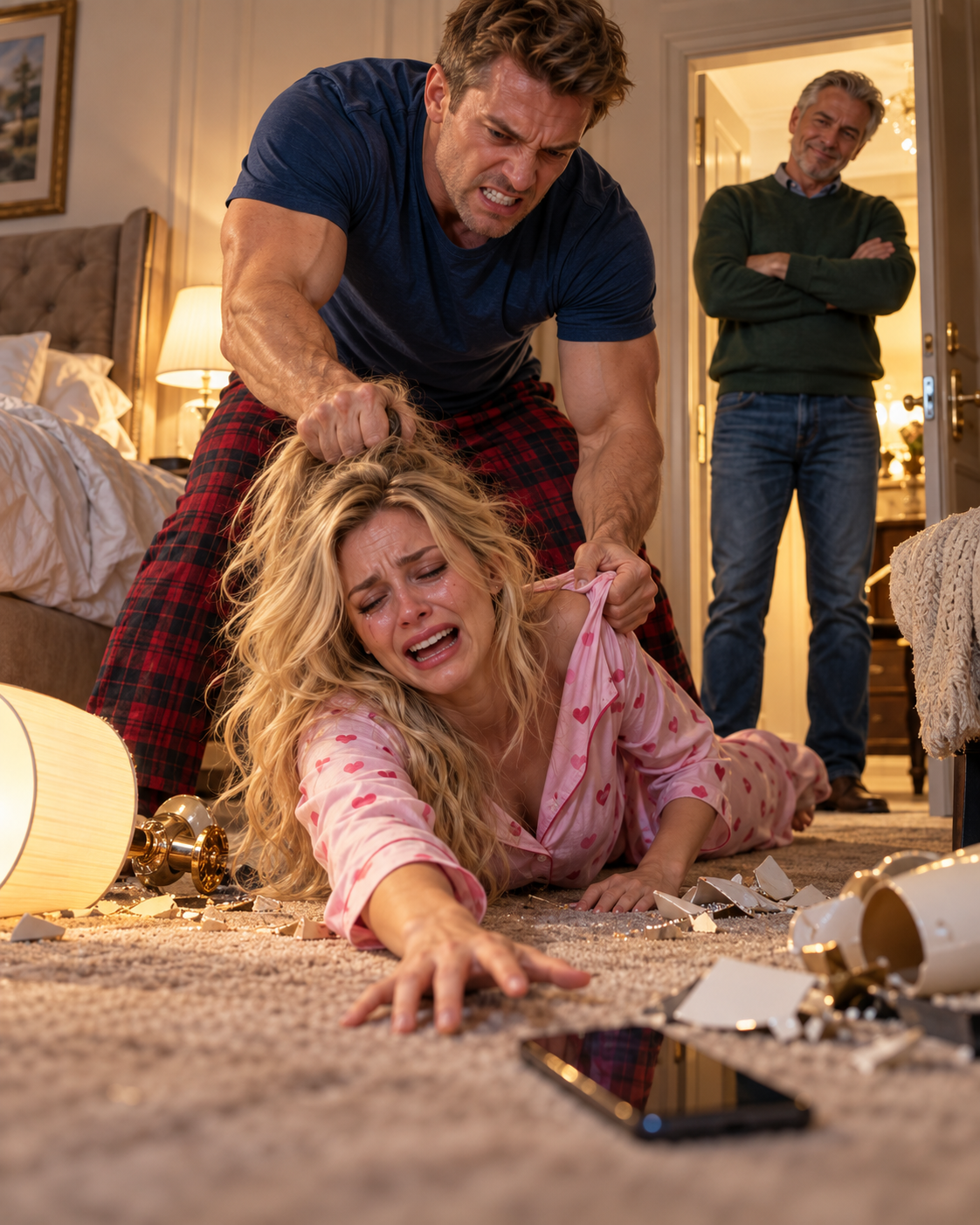
When I was ten, Aaron shoved me down the back steps, and Dad called me dramatic. At fourteen, my brother locked me outside in winter, and my father said I must have provoked him.
Once, when my mother noticed marks on my arm, Dad stepped in before she could ask what happened. He said I was clumsy, and the conversation became about whether I could be trusted to describe my own life.
That night, Aaron pushed me against the hallway wall and demanded an apology. My cheek struck the drywall, and I struggled to keep my focus.
“For what?”
He gave no answer. Instead, he dragged me into the living room, where my hip struck the coffee table and knocked my phone onto the floor.
Aaron noticed it beside my hand and smiled. He had seen our father dismiss me so many times that the idea of someone else believing me seemed to entertain him.
“Call someone. Let’s see who believes you this time.”
I reached for the phone and managed to dial 911 with shaking fingers. When the operator answered, her calm voice gave me something to hold on to.
“My brother is attacking me. Please send someone.”
Aaron grabbed my wrist before I could say anything else. The phone slipped beneath the coffee table, but the call stayed connected.
I could hear the operator asking questions while Dad began explaining the situation to no one in particular. He said I always did this for attention, already preparing the version of events he would give the police.
But there was something neither of them knew. Three weeks earlier, after Aaron searched my room for money he accused me of stealing, I had bought a tiny camera and hidden it inside the smoke detector above my bookshelf.
I had told no one because I was afraid someone would convince me to take it down. Now, as my vision began to darken, I tried to tell the operator where to look, but I could not get the words out.
When I regained consciousness, two officers were standing in the living room. Aaron was speaking quietly, while Dad had taken on the patient manner he always used around strangers.
One officer questioned them about the damaged doorframe and the phone beneath the table. The other returned from my bedroom, looked toward the ceiling, and asked who had installed the smoke detector.
“I did.”
He asked whether it recorded, and I whispered that I thought it did. As he reached toward it, Aaron stopped talking, and my father stared at the ceiling with an expression I had never seen him show in front of a witness.
Part 2: Before the Door Hit the Wall
My father regained his composure almost immediately. He had spent years making his explanations sound reasonable, and having two officers there brought that familiar voice back.
“She gets confused,” he told them.
Aaron nodded from the opposite end of the sofa. He looked offended by the questions rather than concerned about what had happened to me.
“She came at me. I was trying to stop her from hurting herself.”
The officer beside me looked at the fallen lamp, the damaged frame, and the phone underneath the coffee table. He did not challenge Aaron directly; instead, he asked him to explain how each object had ended up where it was.
Aaron claimed I had slammed the door and thrown the phone. I listened as he described things I had never done, afraid that speaking too urgently would only support their claim that I was unstable.
Then the other officer asked about the camera. For a moment, Dad could not hide his reaction, and I saw the officer notice it.
Three weeks earlier, I had watched Aaron yank drawers from my dresser and scatter my belongings across the floor. He opened books and threw laundry around while insisting that I had taken his money.
Dad stood outside the room the entire time. When I protested, he told me to stop making Aaron feel like a criminal. That sentence stayed with me after they left. By morning, I had ordered the smallest camera I could find, even though part of me still worried that buying it meant I was overreacting.
I installed it with trembling hands and kept it hidden even from my mother. I needed evidence that would remain unchanged once my father started explaining what he claimed had happened.
Now an officer removed the memory card and connected it to a screen. Aaron watched without moving, while Dad stared at the device as if he could somehow stop it from working. The recording opened on my dark bedroom. My bed and a narrow strip of hallway light came into view, followed by Aaron standing in the doorway.
He wasn’t responding to an emergency. His shoulders were tense, and he paused before coming toward me.
Behind him, partially visible in the hallway, stood my father. He had been awake and waiting before the door hit the wall.
Then his voice came through the recording.
“Make it look like she started it.”
I looked at Dad, but he remained focused on the screen. For years, I had believed he simply refused to understand what Aaron did; now I was hearing him direct my brother before it even began.
The video continued as Aaron approached me. My half-asleep voice asked what he was doing, and the lamp fell when he pulled me from the bed.
Dad tried to interrupt, but the officer lifted one hand without taking his eyes from the screen. My father stopped talking, and the recording continued until the moment I lost consciousness.
I watched the screen, knowing the camera had recorded what I couldn’t remember. Beside me, Aaron shifted forward as his recorded voice began asking our father a question.
Part 3: What They Said After I Went Quiet
The recording continued with the sounds of Aaron pulling me from the bedroom. My father’s laughter followed, along with his accusation that I was always making myself the victim.
Hearing it again while officers listened felt different from hearing it on the floor. This time, Dad couldn’t interrupt me, challenge my memory, or convince everyone that his version was the calmer one.
The emergency call could be heard faintly in the background. Then the recording reached the part of the night I had no memory of.
Aaron stepped back after I lost consciousness. For the first time, his voice sounded uncertain.
“What do I say?”
My father answered immediately.
“Say she went crazy. Say she came at you first. I’ll handle the rest.”
I stared at the screen as the officer beside me swallowed and glanced toward his partner. The explanation Aaron had just given them was right there in the recording, supplied before they even arrived.
For years, I had known their stories were false. Still, hearing someone else uncover the truth left me shaking harder than I expected.
The older officer shut off the screen after reviewing enough to understand what had happened. Aaron suddenly stood and looked toward the hallway.
“That isn’t the whole story.”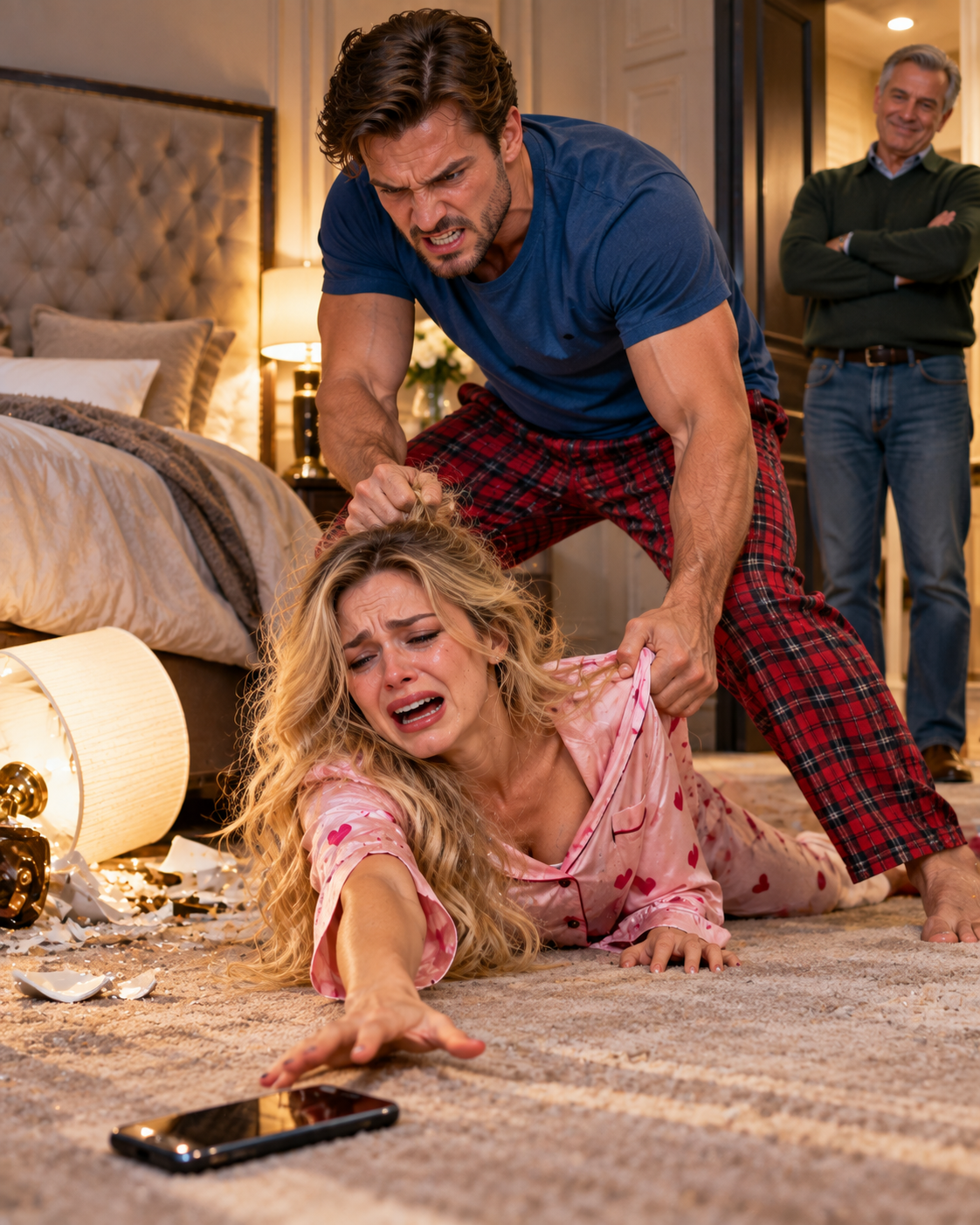
The officer moved before he could leave. I watched him turn my brother around, and for once, Aaron’s insistence didn’t make everyone stop what they were doing.
Then Dad said my name in a voice that almost sounded affectionate. I recognized that change, and I knew how often it had pulled me back into explaining myself.
“Madison, you don’t understand how this looks.”
I looked at the damaged picture frame on the floor. Inside it was a photograph of all of us smiling together, taken in a house where I had learned to be afraid without admitting it.
“I understand exactly how it looks.”
I didn’t offer another explanation or ask him to admit what he had done. The officers had heard him, and I no longer needed to convince him to repeat the truth.
Aaron was taken outside in handcuffs, demanding a lawyer. Dad followed the officers onto the porch, still speaking in the reasonable tone he believed could make everything disappear.
I stayed inside, looking around the room. The broken objects, the emergency call, and the camera footage all existed independently of whatever my father said next.
That was what I had never had before. I could tell my story without being the only person who had witnessed it.
In the days that followed, relatives began calling with questions they should have asked years earlier. Some apologized, while others tried to explain Dad’s behavior through his past, as though understanding his history could change what he had chosen to do. Then my mother called and cried so hard that I almost found myself comforting her. I could hear myself getting ready to reassure everyone again, just as I always had whenever our family became uncomfortable.
Before I said anything, I remembered Dad laughing while I was on the floor. With my mother still on the line, I realized how easily I could be drawn back into protecting them from the consequences of what they had done to me.
Part 4: The Questions They Should Have Asked
I listened as my mother cried, but I didn’t turn the conversation into an attempt to make her feel better. For once, I allowed what had happened to remain frightening without trying to make it easier for someone else. I remembered the times she had noticed marks and started asking questions. Dad had answered before I could, and eventually everyone accepted his explanation.
Now relatives wanted to know how things had reached that night. I could tell them, but I couldn’t pretend the warning signs had only appeared when the police arrived.
Some apologies admitted that people had believed my father without checking. Others came with explanations about his temperament or the pressure he had faced, leaving me with the familiar responsibility of deciding how much blame everyone believed he should carry.
I wasn’t willing to do that anymore. Whatever difficulties existed in his past, the recording showed him telling Aaron how to conceal what he was about to do.
I gave my statement and handed over the footage. The emergency call preserved what had been said after my phone slipped beneath the table, including Dad dismissing my request for help as attention seeking.
Each record preserved something the others couldn’t. Together, they made it much harder to replace that night with the version my father had prepared.
For years, I had tried to remember every detail clearly enough to withstand his questions. I knew how quickly a pause could become evidence, in his version, that I was confused.
The recordings didn’t have that weakness. My father could lower his voice, point to his experience, or insist that he knew his daughter better than anyone, but none of that changed what the recordings contained.
That didn’t make the days that followed easy. People were finally talking about what had happened, while I was still carrying an experience they had only just begun to understand.
Weeks later, I returned to the house with an officer and a friend to collect the rest of my belongings. I wanted to take what belonged to me without ending up alone in another conversation my father could control.
The hallway wall had been repaired where I had struck it. The broken photograph was gone, and the house looked more orderly than it had when the officers first arrived.
Dad wouldn’t look at me, and Aaron wasn’t there. I walked toward my bedroom, remembering how often that same path had meant preparing myself for whatever mood awaited me.
Inside, the room smelled of dust and cardboard. The old fear returned before I could remind myself that I was there to leave.
Then I looked above the bookshelf. The smoke detector had been removed, leaving a pale circle on the ceiling, and I stood beneath it, wondering whether its absence would make me feel unsafe again.
Part 5: The Last Time I Needed a Witness
I stared at the empty circle above the bookshelf and expected to feel exposed. Instead, I felt a surprising sense of relief.
The camera was gone, but its absence couldn’t erase what it had captured. I no longer needed it watching over that room because I was gathering my belongings and leaving.
I remembered installing it three weeks before the attack. My hands had trembled as I worked, and I kept wondering whether needing proof meant I had become the unreasonable person Dad always described.
Now I understood why I had wanted it there. Whenever I tried to explain what Aaron had done, someone else decided which parts were believable before I could finish speaking.
The camera gave the officers a record they could examine without my father speaking for me. It captured more than the attack; it recorded him preparing the explanation that would make me responsible for what happened.
That was what I couldn’t stop thinking about. Aaron’s behavior had frightened me for years, but I had kept hoping Dad would understand if I found the right words.
I had mistaken his refusal to believe me for a failure I could somehow fix. The footage showed that he already knew what was happening and was helping Aaron conceal it.
I thought about the arguments that somehow became my fault, the injuries explained as clumsiness, and the apologies I was expected to give before anyone named what I had supposedly done. They no longer felt like separate misunderstandings I had failed to resolve.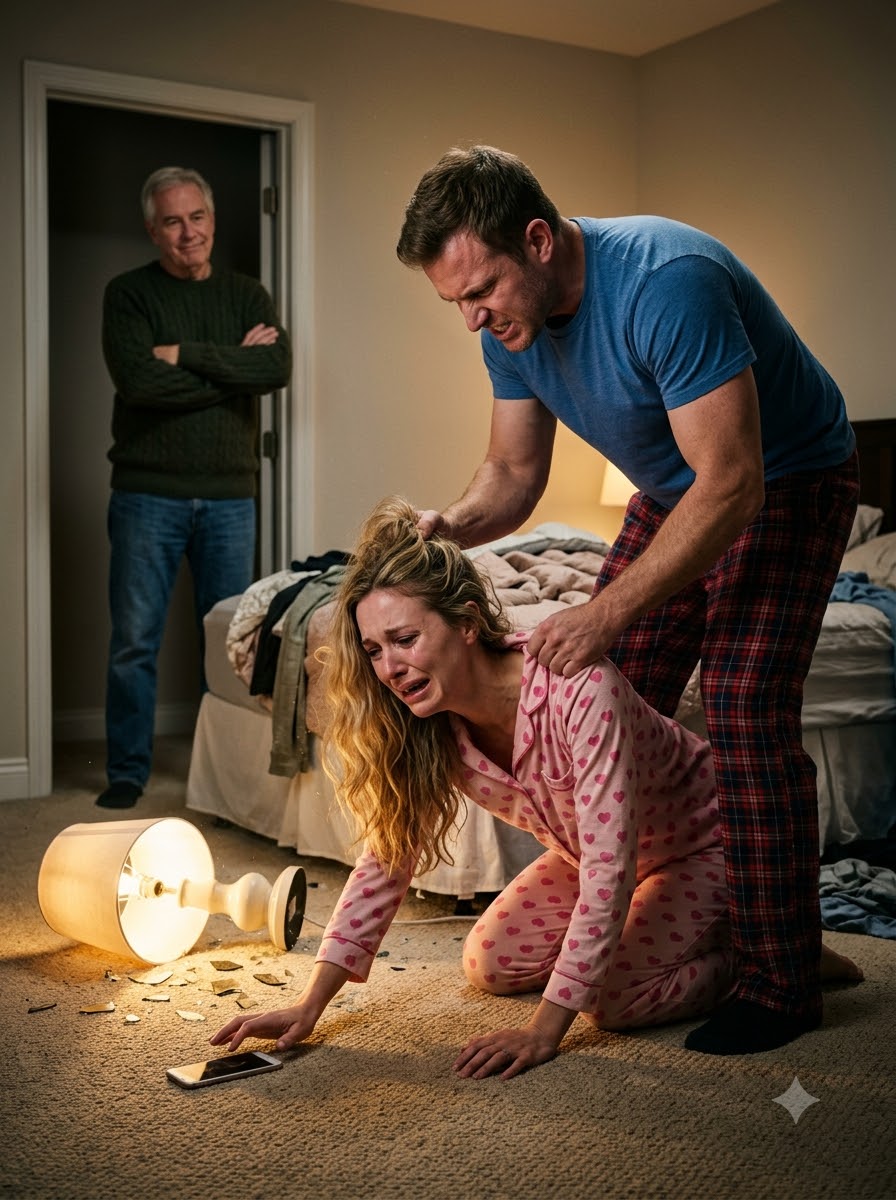
Standing in my bedroom, I could finally stop searching for an explanation that made my father less responsible. His own words had already given me the answer.
There was no satisfaction in discovering it. I had wanted a father who would protect me, and proof couldn’t give me that person.
What it gave me was the ability to stop waiting for his agreement before allowing myself to leave. I didn’t need him to admit that the house had been unsafe.
With an officer and my friend nearby, I gathered the belongings I had returned for. Dad remained unable to meet my eyes, and I didn’t try to pull him into one final conversation.
For years, I had imagined that being believed would require a perfect explanation. In the end, the truth had been recorded while I was too frightened—and later too hurt—to explain anything at all.
When I walked out of the Kensington house for the last time, I didn’t slam the door. I simply left without apologizing, carrying my belongings instead of another responsibility to protect the people who had hurt me.
The footage couldn’t change my childhood or undo that night. But it ended the argument over whether I was allowed to trust my own experience, and I no longer needed to stay where I had spent years begging to be believed.
