

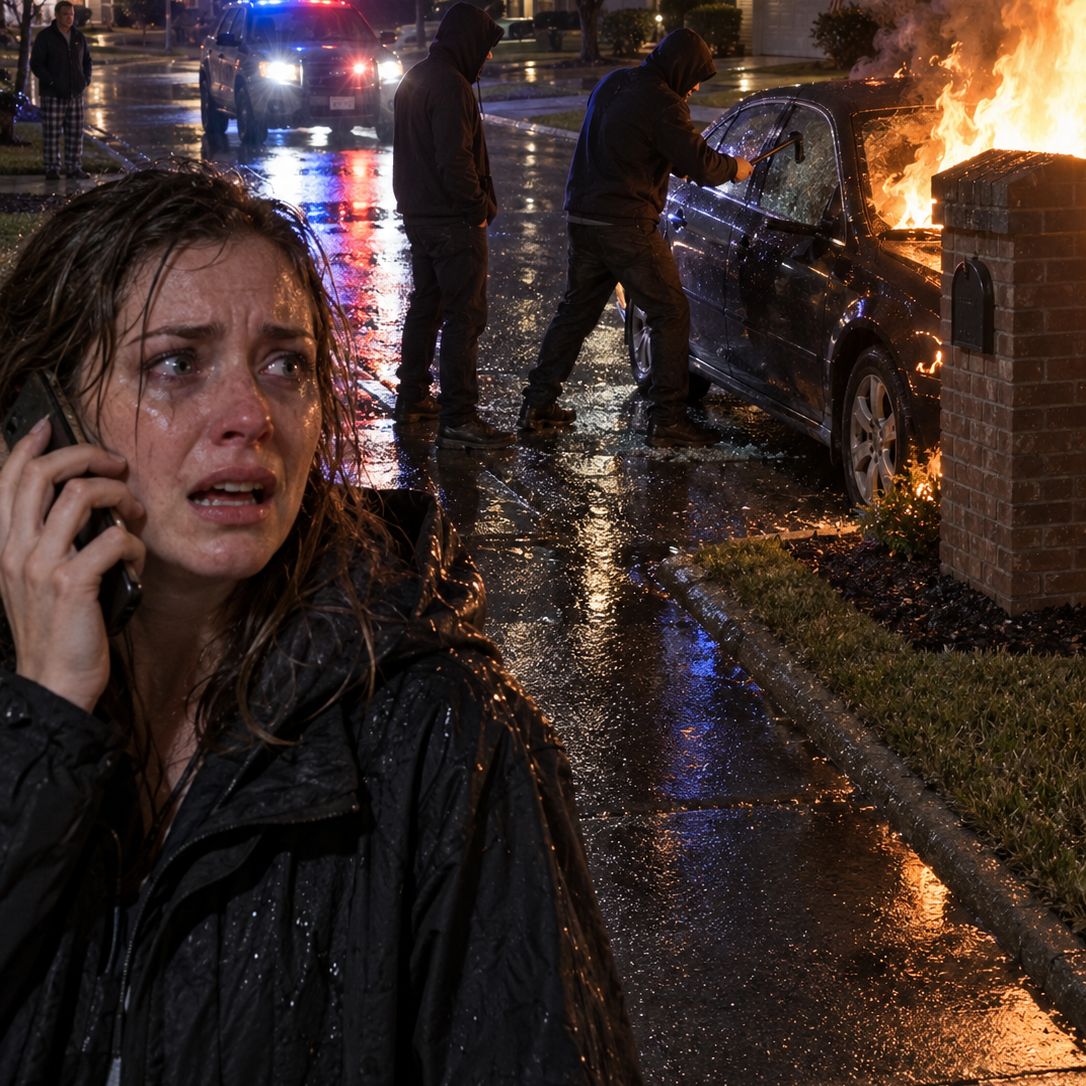
I had spent years cautioning my sister, but she’d only offer that same smile and say, “They’re only kids.” Kids don’t break windows, torch mailboxes, and giggle while a whole street falls into panic. Tonight, when her son fixed his eyes on mine and murmured, “What are you gonna do about it?”—I did the one thing she never thought I’d do: I phoned the police. But once the sirens died down… something far worse began.
For years, I kept trying to caution my sister, Melissa, but she always met me with that same tired smile and the same feeble excuse. “They’re only kids, Lauren.” That line might have held up when Ethan and Caleb were eight, swiping candy bars from gas stations. It stopped holding up once they turned into sixteen- and seventeen-year-old boys, brimming with arrogance, short on discipline, raised by a mother who brushed off every offense as though it were nothing.
My name is Lauren Hayes, and I live three blocks from Melissa, in a peaceful neighborhood just outside Columbus, Ohio. Peaceful, anyway, until my nephews decided the whole area belonged to them. It began with graffiti scrawled on fences. Then porch lights busted out. Then ruined Halloween decorations, tipped-over trash cans, and packages that vanished from doorsteps. Whenever a neighbor spoke up, Melissa always had a ready reply. “You don’t know it was them.” “Boys act out.” “People around here are too sensitive.”
What made it worse was that the boys were aware she’d always shelter them. Ethan, the elder, wore that smug, unsettling look that made my skin crawl. Caleb usually trailed behind him, but he quickly caught on that nothing happened to them at home. Melissa made excuses for them, lied on their behalf, even paid off a family after the boys busted their car window with a bat. Rather than discipline them, she treated them to burgers and called it “a phase.”
That “phase” spiraled quickly.
Over the past month, someone had been setting off firecrackers inside mailboxes and igniting small fires in the trash bins behind the townhouses on Maple Street. The neighborhood Facebook group filled up with grainy doorbell footage and furious comments. Everyone suspected Ethan and Caleb, though no one had solid proof. I warned Melissa she needed to rein them in before they wrecked their own futures—or somebody else’s. She only rolled her eyes and said, “You always act like you’re better than me.”
Then tonight arrived.
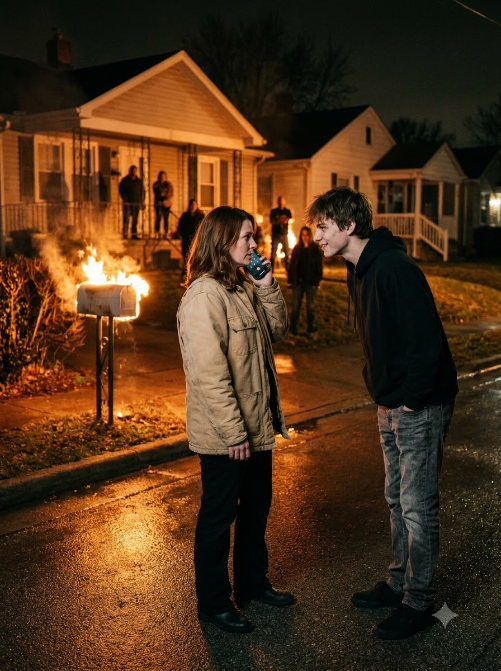
I was driving home from work when I noticed smoke curling up near old Mr. Brennan’s house. Three boys stood in his yard, laughing as flames licked out of his mailbox. Two bolted the moment they spotted me. Ethan didn’t move. He stood there in the flickering orange light, hands tucked in his hoodie pocket, staring at me as though I were nothing.
Then he leaned in and said, almost calmly, “What are you gonna do about it?”
So I took out my phone, dialed 911, and held his gaze the whole time….
Part 2
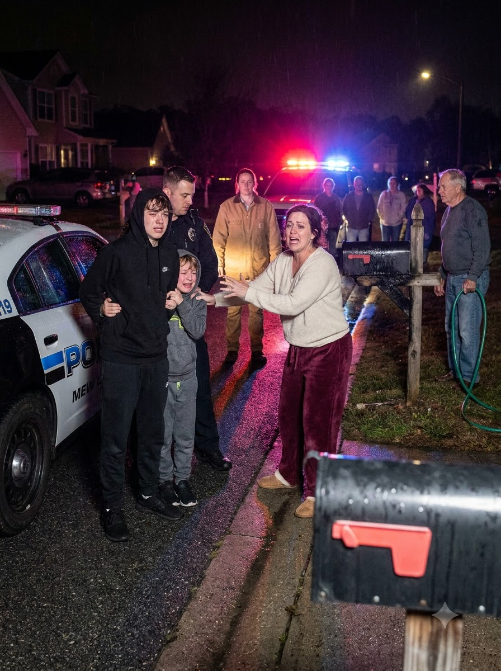
The police arrived in under ten minutes, but the harm was already done. Mr. Brennan’s mailbox was reduced to a melted husk, his hedges still smoldering, and half the block had gathered outside in coats and slippers, watching the Hayes family the way you’d watch a storm finally break where everyone always knew it would.
The moment Ethan heard the sirens, his expression shifted. His confidence shattered instantly. He bolted, but two officers caught him before he reached the corner. Caleb, who’d been crouched behind a parked truck, was pulled out sobbing, suddenly reminded of just how young he was once the cuffs came out. Melissa came sprinting down the street in pajama pants and sandals, already screaming before she even grasped what was happening.
“Take those cuffs off my sons!”
An officer attempted to explain, but she wouldn’t hear it. She shoved past him, seized Caleb’s arm, and yelled, “Lauren, tell them this is a misunderstanding!”
I said nothing.
That’s when it hit her—I was the one who’d called. Her whole expression shifted. Not simply shock—something colder. Betrayal. Fury. The kind that surfaces in someone so accustomed to being shielded by family that being held accountable feels like a betrayal itself.
“You called the cops on your own nephews?” she shrieked.
“No,” I said. “I called the cops on two people committing crimes.”
The whole street went quiet.
Mr. Brennan, seventy-three and still shaking after trying to douse the fire with a garden hose, stepped forward. “She did the right thing,” he said. Then Mrs. Alvarez chimed in, “About time somebody did.” One after another, neighbors began to speak up. Shattered windows. Missing bikes. Threats hollered from passing cars. Camera footage that had been saved but never turned in because no one wanted the hassle. Melissa had spent years guilting anyone who dared speak the truth—and now that truth stood right in front of her.
The officers gathered statements. Ethan wouldn’t say a word. Caleb sobbed harder. Melissa kept raving about lawsuits, harassment, and how the neighborhood had “always judged” her boys. But the proof was undeniable—witnesses, footage, damaged property. Arson, even on a small scale, wasn’t something the officers could overlook.
I assumed that would be the end of it.
I was mistaken.
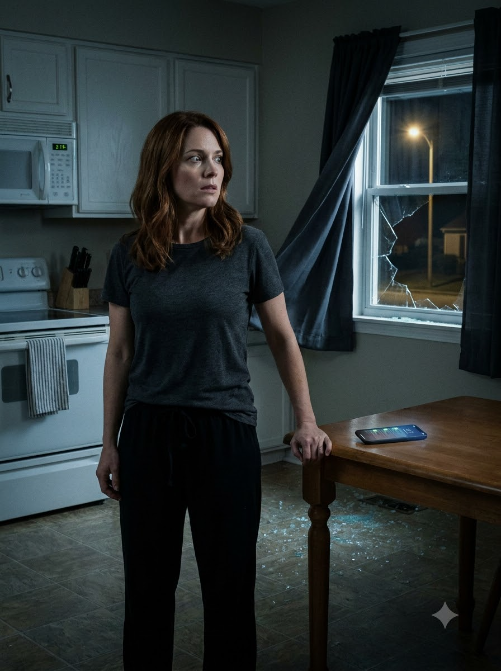
Around midnight, once the patrol cars had gone and the street had emptied out, I got home, locked my doors, and sat at my kitchen table with my hands still trembling. Then my phone began buzzing. One text from Melissa. Then another. Then five more. By 1 a.m., she’d sent twenty-three messages, each one crueler than the last.
You ruined my family.
You’ve always hated my kids.
If anything happens to Ethan because of this, it’s on you.
I silenced the thread, switched off the lamp, and tried to fall asleep.
At 3:17 a.m., I woke to the sound of glass shattering.
