

I believed my sister had welcomed a child into her life because she wanted to give a little girl the family she desperately needed. Then I overheard one sentence that made me question whether there was more behind her act of kindness than I understood.
Sunday dinners at my parents’ house always included roasted chicken and the lemon candles my mom insisted on lighting, even though no one ever asked her to. That particular Sunday, a few months earlier, began just like all the others.
Then my older sister, Ellie, placed her fork down, looked over at her husband, Henry, and cleared her throat in the same way she always did before giving a school presentation.
“So,” she said, “Henry and I have been talking. We want to adopt.”
For a moment, the entire table went silent.
“Henry and I have been talking.”
Our mom, Veronica, covered her mouth with her hand. Dad reached over and gently squeezed Ellie’s wrist.
I just stared at her because my 40-year-old sister had spent the past ten years telling everyone who would listen that having children was never part of their future plans.
“Are you serious?” I finally asked.
“Completely,” Henry said, giving that quiet, shy smile of his.
“Are you serious?”
Mom immediately started crying happy tears, the kind she usually only shed at weddings and graduations.
She kept repeating, “Oh, sweetheart, oh, sweetheart,” like the words were trapped and she couldn’t stop saying them.
I remember feeling so incredibly proud of my sister that I could barely take another bite of my dinner.
Ellie had always been the fearless one. If she had decided to do something like this, I knew she meant it.
Mom started crying.
A few months later, Ellie brought the little girl to our house so we could finally meet her.
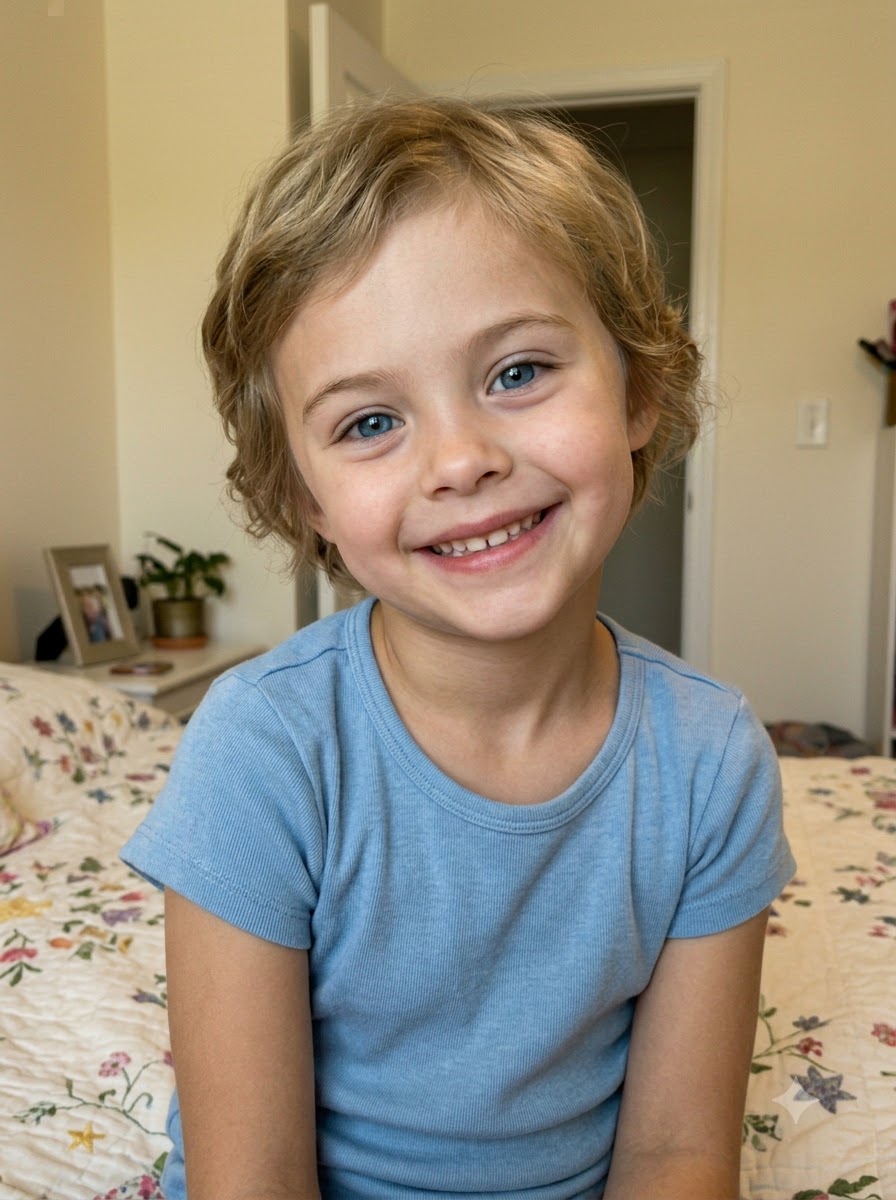
Her name was Gabriella. She was five years old, delicate and fragile, and she held a stuffed rabbit against her chest like she was afraid it might disappear.
Her cheeks had the same sunken appearance I had only ever noticed in hospital pamphlets. She looked exhausted.
But when Mom lowered herself down and greeted her, little Gabriella gave the smallest, sweetest smile.
She held the stuffed rabbit tightly.
“Hi, sweetheart,” Mom said, her voice breaking. “Aren’t you the prettiest thing?”
Gabriella immediately buried her face into the rabbit.
Ellie watched her quietly for a moment before looking back at all of us with an expression I had never seen before.
“There’s something you should know,” she said softly. “Gabriella has stage 4 cancer. The doctors have given her about a year. Even with treatment.”
Ellie watched her for a long moment.
Dad slowly placed his coffee cup down, and I could hear the ceramic touch the wooden table.
“Ellie,” Mom whispered.
My sister only smiled.
Before I even realized what I was doing, I stood up and pulled my sister into the hallway.
“El,” I said as soon as we were far enough away, “why her? Out of every child in the system, why did you and Henry choose a little girl who’s…”
I couldn’t finish what I was saying. I didn’t need to.
I pulled my sister into the hallway.
Ellie looked directly at me, completely calm in a way I had never seen before.
“She just happened to be the child my husband and I chose,” she said. “And we’re going to fight for her life.”
“El, that’s a year. Maybe.”
“Then we fight for the year.”
I had no response. I just wrapped my arms around her and held on because whatever strength I thought I had in my 32-year-old body, my sister had at least ten times more.
“Then we fight for the year.”
“You’re the bravest person I know,” I told her.
“I’m not brave,” Ellie said against my shoulder. “I’m just doing what I should.”
I didn’t understand what she meant. I assumed she was exhausted and pushed the thought away.
When we returned to the living room, Mom was sitting on the couch with Gabriella resting against her chest. She held that little girl so tightly and protectively that Gabriella’s rabbit was pressed sideways between them.
“I’m just doing what I should.”
And Mom’s eyes weren’t filled with the same happy tears from Sunday dinner.
They looked different. Glassy. Distant.
Almost like she was somewhere far away.
Like she was looking at Gabriella and seeing someone who wasn’t actually there.
I forced the thought aside. I told myself it was just emotion. Too much emotion at once.
I had no idea what my family had already begun.
They were glassy.
The weeks after that first meeting blended together into a routine I never expected our lives to become.
Ellie’s kitchen table transformed into a mission center, covered with notebooks, printed documents, and business cards from oncologists whose names I had never heard before.
I took Gabriella to appointments whenever my sister couldn’t.
I sat beside her in waiting rooms with a coloring book in my hands and a five-year-old resting against my shoulder.
I drove Gabriella to appointments.
Gabriella weighed almost nothing.
She would tuck her stuffed rabbit beneath her chin and quietly hum little songs.
I had to turn toward the window sometimes so she wouldn’t notice my eyes filling with tears.
Ellie never stopped fighting. She called hospitals in Boston, Houston, and Seattle searching for more opinions. She emailed researchers at strange hours and created a spreadsheet listing every specialist who had turned her away.
Ellie was relentless.
“There has to be someone,” my sister kept saying.
“You’ve contacted half the country, El.”
“Then I’ll contact the other half.”
I had never seen my sister this way.
Ellie had always been the composed one, the realistic one, the sister who avoided unnecessary drama.
But now she was someone driven by a force I couldn’t explain.
Still, there were small things I couldn’t ignore.
“There has to be someone.”
Mom came to visit her granddaughter almost every day.
But she didn’t hold Gabriella the way I expected a grandmother would. Instead, she watched.
Our mom would sit across the room and stare at that little girl with an expression I couldn’t understand. It wasn’t exactly affection. It felt like something much heavier.
One afternoon, I came inside from the garage and saw Mom whispering urgently to Ellie near the kitchen sink. The second they noticed me, both of them stopped.
She didn’t hold Gabriella.
“Everything okay?” I asked.
“Fine,” Ellie answered too quickly.
“Just tired, honey,” Mom added, touching my arm before walking past me.
I ignored their strange behavior.
Ellie was exhausted. Mom was devastated over her granddaughter’s illness. Of course they were struggling.
That was the explanation I gave myself.
Then yesterday happened.
“Everything okay?”
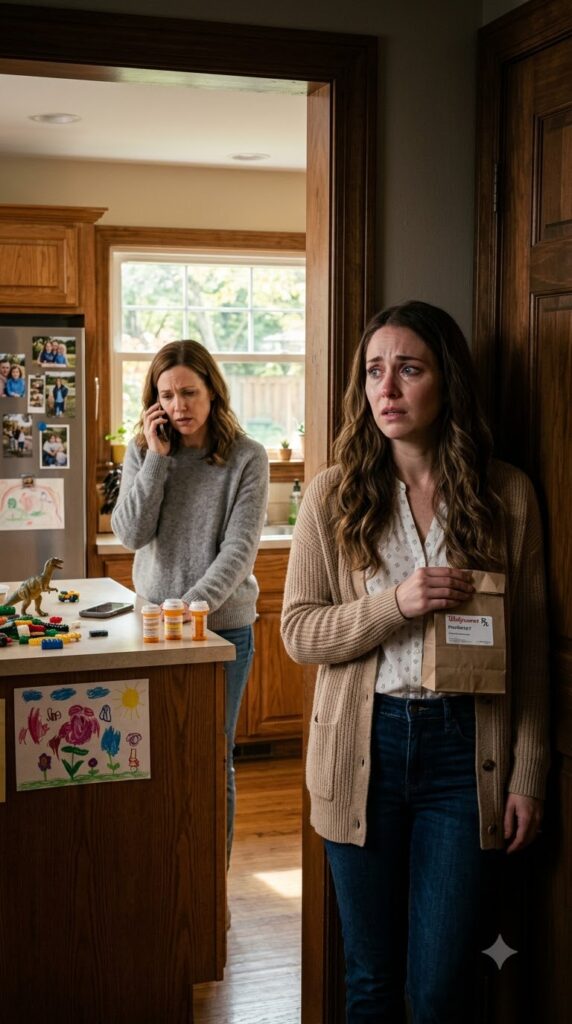
I’d stopped by the pharmacy to pick up Gabriella’s anti-nausea medication, then went over to Ellie’s house to drop it off.
My sister had given me the spare key weeks earlier, and I unlocked the door and walked in like I always did.
The house was silent. I removed my shoes near the entrance and walked toward the kitchen, planning to leave the paper bag on the counter and let Ellie sleep if she happened to be resting.
That’s when I heard her voice.
I had already let myself in.
Ellie was talking on the phone.
Her voice was quiet and sharp, and something about the way she sounded made me stop three steps away from the kitchen.
I pressed my back against the hallway wall.
“Mom, please calm down.”
There was a pause. Through the phone, I could hear our mom’s voice, trembling and raised, though I couldn’t understand the words.
“No one can ever know why I really adopted Gabriella.”
Her voice was quiet.
My grip tightened around the pharmacy bag until the paper folded and crackled. I stopped breathing.
“No, she doesn’t suspect anything. Neither does my husband.”
I stayed completely still.
My sister fell silent for a long moment. When she finally spoke again, her voice was even softer, almost a whisper, carrying a tired sadness I had never heard from her before.
“She doesn’t suspect anything.”
“You know what happened back then, Mom. I’ll never forget that rainy night 25 years ago.”
A chill ran through me.
“I’m not doing this to hurt you, Mom,” Ellie said. “I’m doing this because it’s the only thing that will help.”
Another pause.
“Just, please. Don’t call Henry or Hilda. Let me handle it.”
I heard her place the phone down on the kitchen counter. Then came her long, unsteady breath, the kind someone lets out after holding everything together for far too long.
“I’m not doing this to hurt you.”
I slowly moved away from the wall, taking one careful step after another.
My socks made no sound against the wooden floor.
I walked all the way back to the entrance. With hands that barely listened to me, I slipped my shoes back on, held the pharmacy bag beneath my arm, and gently opened the front door.
I shut it behind me without making a sound.
Outside, the afternoon sunlight felt strangely harsh.
I walked away.
I sat inside my car with both hands resting on the steering wheel, staring ahead without really seeing anything.
A rainy night. Twenty-five years ago. I would’ve only been seven.
I couldn’t remember a single rainy evening from my childhood that felt significant. But something had happened, something my mother and sister had kept buried for 25 years.
And somehow, a five-year-old girl battling cancer was connected to it.
But something had happened.
I started the car and drove home slowly, wondering what my family had gotten themselves involved in.
I didn’t sleep that night.
I sat on the edge of my bed with my phone turned face down beside me, replaying Ellie’s voice over and over until every word felt permanently burned into my mind.
Rainy night. Twenty-five years ago. No one can ever find out.
By morning, my imagination had created a version of the truth that I hated.
I didn’t sleep that night.
Maybe Henry had a secret from his past, and Gabriella was actually his biological daughter. Maybe there had been another woman, some hidden situation, and my sister had spent months pretending to be selfless while fixing someone else’s mistake.
But none of those possibilities explained the rainy night 25 years ago that Ellie mentioned.
I drove to my parents’ house before I had time to convince myself not to.
Those possibilities didn’t explain the rainy night.
Mom was standing in her robe with a cup of coffee when she opened the door. The second she saw me, her expression changed.
“Mom, please sit down,” I said.
“Hilda, honey, what are you doing here? It’s early.”
“I heard Ellie on the phone yesterday. She said no one could ever find out the truth about why she adopted Gabriella. She said you know what happened back then. What happened back then, Mom?”
“What are you doing here?”
Mom’s hand shook around her mug. She quickly placed it down before it spilled.
“That isn’t my story to tell you,” she whispered.
“Then whose is it?”
“Ellie’s. Please. Go talk to your sister.”
She refused to meet my eyes. Instead, she kept touching the collar of her robe, almost like she was trying to calm herself.
That was when I stopped questioning her.
I returned to my car.
“Then whose is it?”
Ellie answered the door wearing an old cardigan, a laundry basket balanced against her hip.
Gabriella was sleeping on the couch beneath a blanket, her stuffed rabbit resting under her chin.
“Hilly? I wasn’t expecting you.”
“We need to talk.”
She looked toward Gabriella, then motioned for me to follow her into the kitchen. She continued folding tiny leggings and tiny socks, her hands moving constantly like stopping would make everything collapse.
“We need to talk.”
“I was here yesterday,” I said. “I let myself in. I heard you on the phone with Mom.”
My sister’s hands froze.
“I heard you say no one could find out why you adopted Gabriella. I heard you talking about a rainy night. Ellie, I’ve spent the entire night imagining things I don’t want to imagine. Please, just tell me.”
“Hilda, don’t…”
“Is she Henry’s? Did something happen? I need to know what my family is caught up in.”
“Please, just tell me.”
Ellie slowly lowered herself into a chair. She placed both hands flat on the table.
“It isn’t what you think,” she said. “It isn’t anything close to what you think.”
“Then tell me.”
My sister looked toward the living room, toward the small chest rising and falling beneath the blanket, and tears filled her eyes.
“It isn’t what you think.”
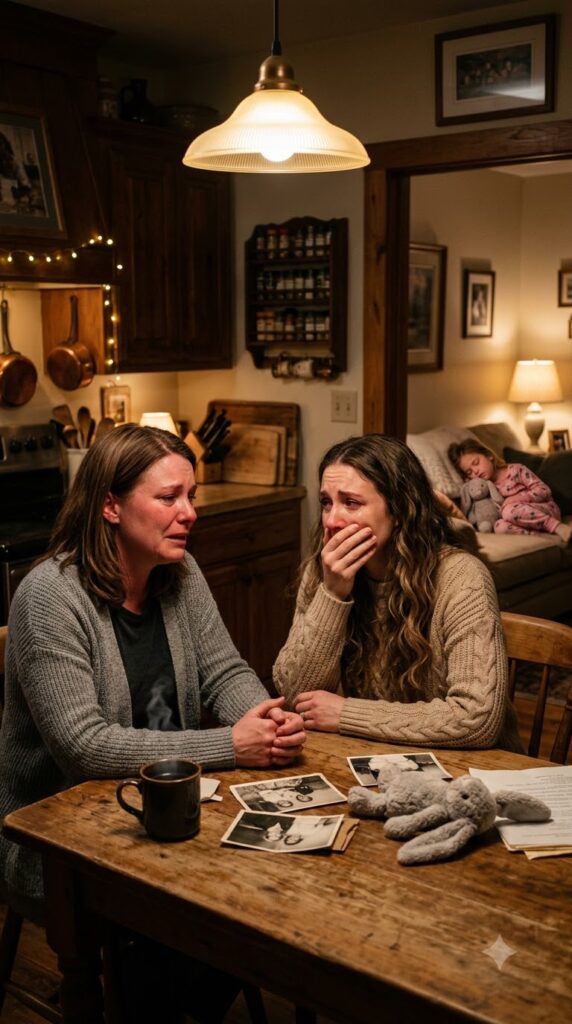
“You were seven years old,” she began. “I was 15. Mom was driving me home from piano lessons. It was pouring. A young woman stepped off a curb, and Mom couldn’t stop in time.”
My stomach twisted.
“She died?”
“Right there. Cameras helped rule it unavoidable. Mom was never charged. But Hilda, she was never the same either. You were too little to remember, but I watched her fall apart for years. She’d cry at stoplights. She’d stop breathing when it rained.”
“Mom couldn’t stop in time.”
“Mom killed someone?”
“Mom was in an accident,” Ellie said. “There’s a difference. It wasn’t her fault. But she never believed that.”
“What does this have to do with Gabriella?”
Ellie wiped her cheek with the back of her hand.
“She never believed that.”
“That young woman had a baby daughter. That daughter grew up. She had a child of her own. I’d been quietly keeping track of that family for years, Hilda, from a distance, just making sure they were okay. Then last year Gabriella’s mother got sick and passed away, and Gabriella went into foster care with a stage 4 diagnosis and no one to fight for her.”
I couldn’t say a word.
“When I saw her file, and I saw her face, I knew it was time.”
“Ellie…”
I couldn’t speak.
“I didn’t do it out of pity. I didn’t do it to trade one debt for another. I did it because that little girl deserved a mother who would go to war for her, and the world had already taken her matriarchs away twice.”
“Why didn’t you tell Henry?”
“Because I wanted him to love her for who she was. Not for a story. Not for something we owed.”
“And me?”
She reached across the table.
“Why didn’t you tell Henry?”
“Because you never asked to carry any of this. You were a little child. You’ve had a clean version of Mom your whole life. Why would I hand you a stain that isn’t yours?”
I looked past her toward Gabriella sleeping peacefully with her rabbit, and I finally understood that everything I believed I had discovered was completely wrong.
Not a scandal. A quiet, determined act of love.
“You were a little child.”
And I realized my sister had been carrying that burden alone for much too long.
I spent the entire next day thinking about everything Ellie had told me before I returned to her house.
I couldn’t get the image of Gabriella sleeping on the couch, her stuffed rabbit tucked beneath one arm, out of my mind.
When my sister opened the door, I didn’t bother with small talk.
I came straight back to her house.
“You can’t keep carrying this by yourself,” I said. “Henry deserves to know, so you’re not alone in it.”
Ellie’s shoulders lowered.
“I’m scared he’ll look at her differently.”
“He won’t. But he might look at you differently if he finds out some other way.”
She stayed quiet for a long moment before finally nodding.
“You can’t keep carrying this.”
That night, I sat beside Ellie on the couch while she told her husband everything.
Henry didn’t say anything for what seemed like forever. He only looked down at his hands.
Then he reached over and held Ellie’s fingers.
“The reason doesn’t change what she already is,” he said softly. “She’s our daughter. That’s it.”
My sister broke down, and I quietly stepped into the hallway to give them privacy.
Henry didn’t speak.
Three weeks later, a specialist from a hospital two states away called Ellie back. Gabriella had been accepted into a clinical trial.
Months went by. Gabriella started gaining weight. Her laughter became louder.
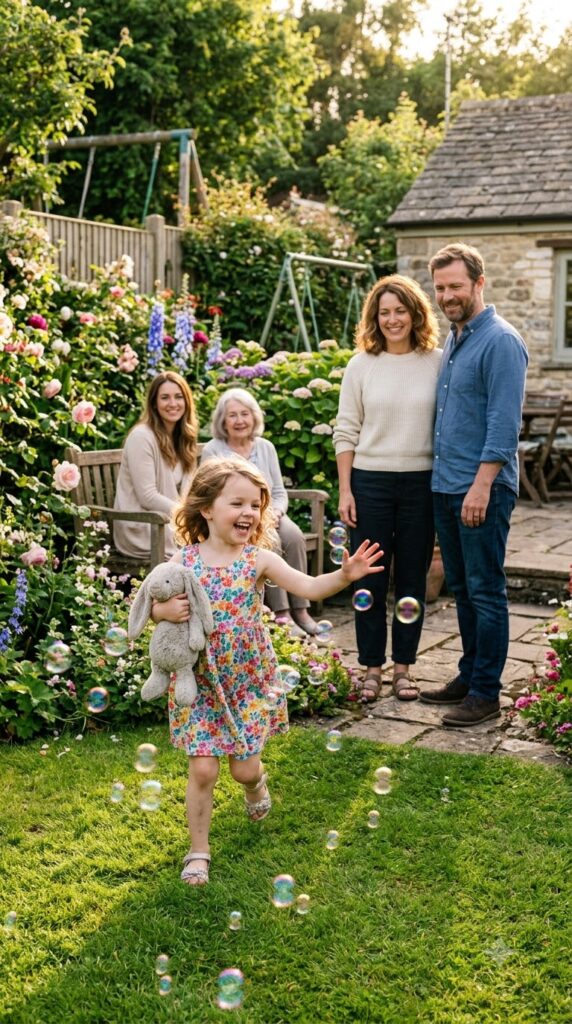
One afternoon, she chased bubbles around the backyard while Mom watched from the porch, and I saw something on my mother’s face that I hadn’t seen in years.
She looked free.
Her laughter grew louder.
“She loves it here,” Mom whispered when I sat beside her.
“She’s home,” I answered.
Ellie came outside with lemonade and sat on the step below us. None of us spoke for a while.
We didn’t need to.
My sister hadn’t adopted Gabriella to hide a secret.
She adopted her to give a little girl back the mother the world had taken away, and somehow, she gave all of us the chance to finally breathe again.
