

The darkness of that luxurious mansion smothered any trace of life. In the vast gray bedroom on the second floor, Mr. Aluísio sat propped against silk pillows that felt colder than the marble floors below. His white hair lay disheveled against the headboard. His gaze, once sharp enough to close million-dollar deals with a single glance, now rested vacant on the window that overlooked the manicured gardens. The wall clock chimed the hour with a soft, merciless precision, each note echoing the solitude that had settled after Berenice’s departure. She had been gone eight months, yet the house still held its breath as if expecting her return.
Aluísio refused food. He refused the carefully measured doses of medicine the nurses left on the nightstand. Renowned doctors came and went, their expensive prescriptions useless against the true diagnosis: the emotional abandonment that was slowly consuming him. Not even the immense fortune he had built over a lifetime could soothe the hollow space in his chest. The mansion, once filled with the scent of her perfume and the low hum of her favorite records, now felt like a museum of absence.
Through the service entrance at the back of the residence, Julia arrived on a gray Tuesday morning. She was young, fair-skinned, with hands already calloused from years of work. She wore a simple apron over a modest dress and carried nothing more than a small bag and the quiet teaching her late mother had left her: affection heals. She paused for a moment in the narrow corridor that led to the kitchen, taking in the cold silence of the place. Somewhere deeper in the house, Dona Zuleica, the housekeeper of firm posture and maternal gaze who had dedicated thirty years to the family, was trying once again to restore order to the emotional chaos that money could not touch.
Meanwhile, in a glass-walled office in the city center, Bento reviewed spreadsheets with compulsive precision. He was a practical man in an impeccable suit, his face marked by the kind of exhaustion that comes from trying to manage grief through numbers. Unable to sit with his father’s pain, Bento had chosen the only language he trusted: bank transfers. He hired the best doctors, the most expensive nurses, and now a cook. He believed that if the food was perfect and the care professional, the crisis would eventually resolve itself.
Julia entered Aluísio’s quarters that first afternoon carrying a silver tray. The elderly man looked at her with immediate rejection. His voice, though weakened, still carried the authority of a man who had once commanded rooms.
“I do not need expensive banquets bought by my son’s absence,” he said, the words trembling with indignation. “I need someone who truly cares about this pain. Not another paid stranger.”
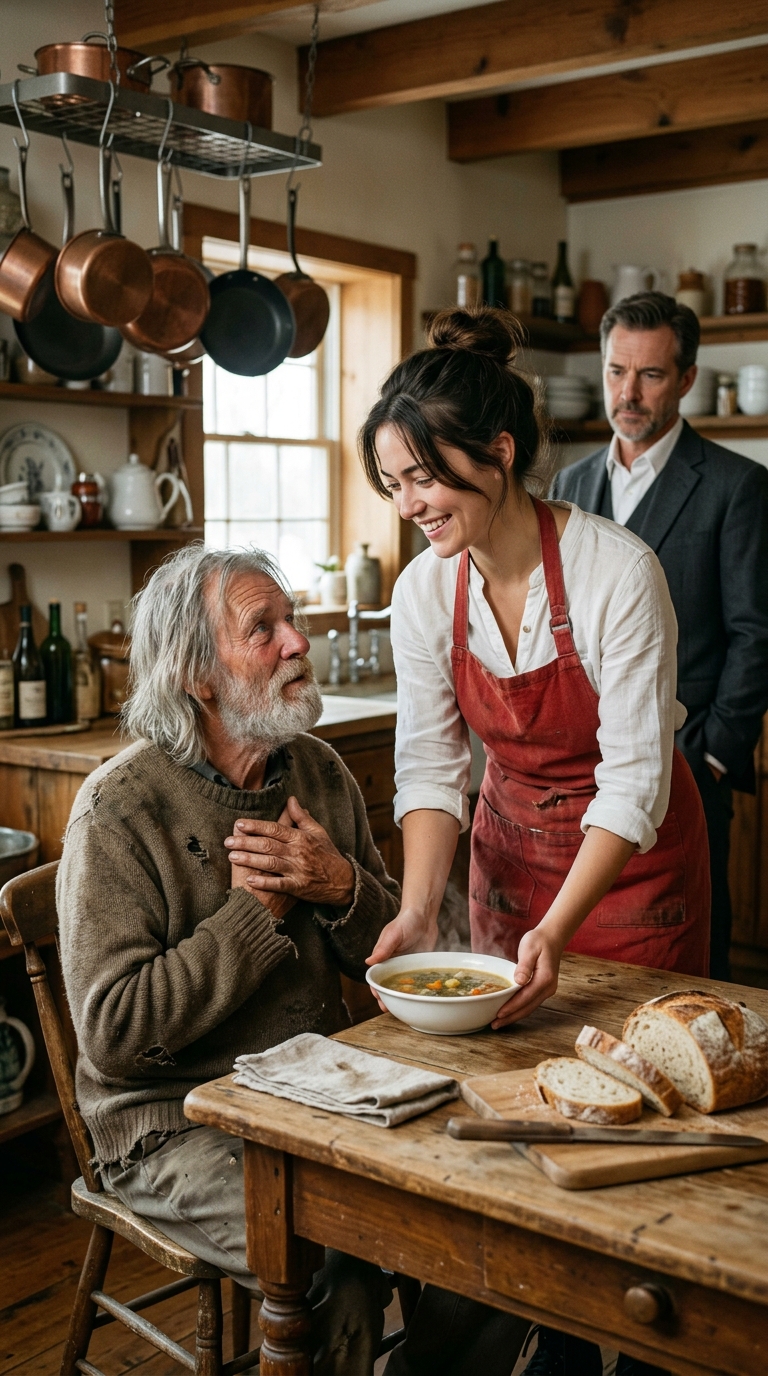
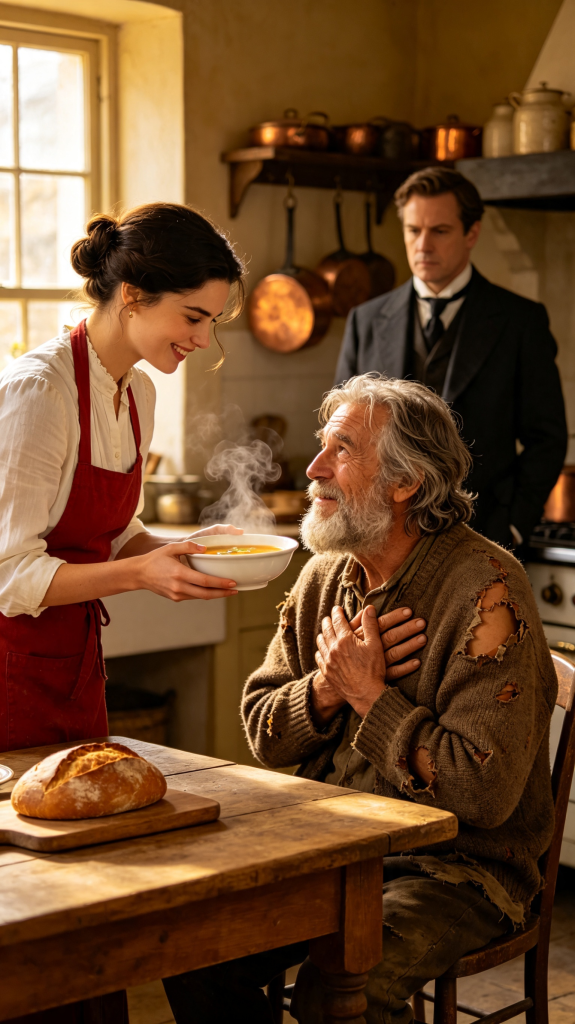
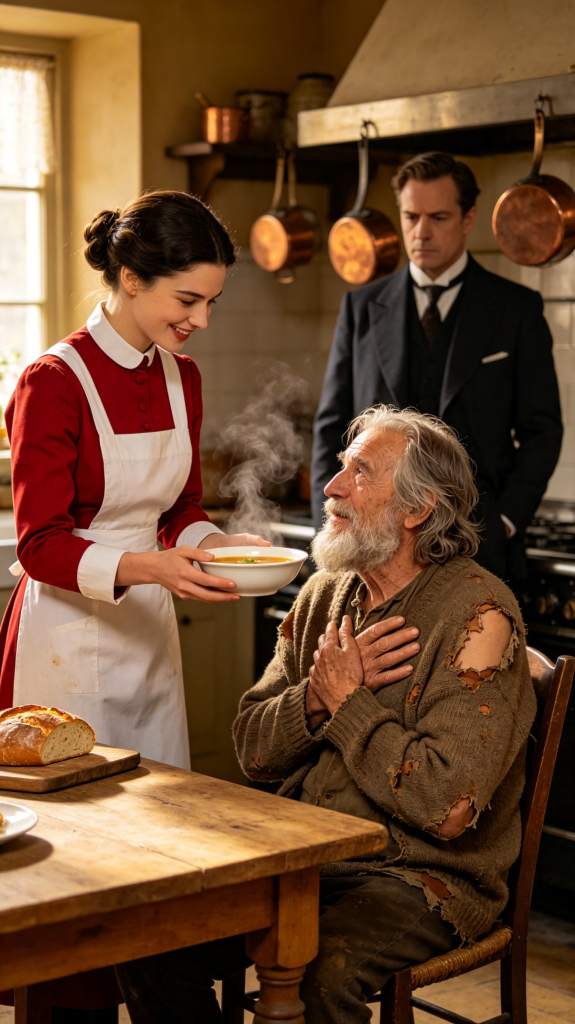
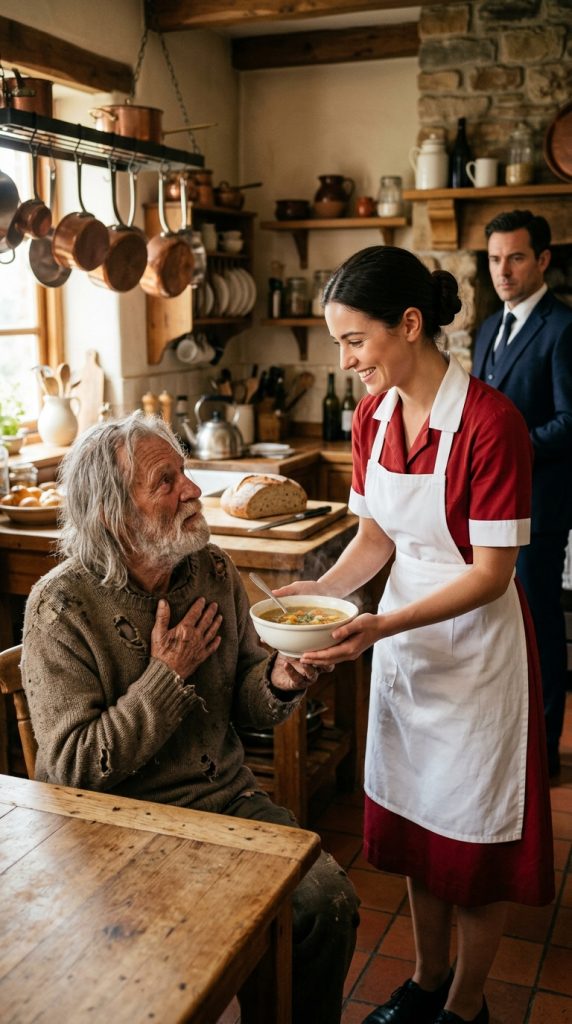
Julia did not answer with words. She simply inclined her head, set the tray down carefully, and left the room in silence. Downstairs, in the large kitchen that had not known real cooking in months, she opened the back door and stepped into the small kitchen garden. She picked fresh herbs—parsley, thyme, a few leaves of mint—and returned to prepare a simple homemade soup. No rare ingredients. No elaborate presentation. Just vegetables, a light broth, and the quiet intention of someone who understood that food could carry more than flavor.
The welcoming aroma drifted through the cold corridors. When Julia returned with the bowl, Aluísio stared at it for a long time. Then, almost against his will, he accepted a spoonful. The golden broth was warm, honest, and somehow familiar. Something in the seasoning reached a place the doctors’ medicines never had. Tears slipped down his face in silence. He did not speak, but he finished the bowl.
Bento observed the changes from a distance with extreme skepticism. He saw the way Julia lingered near his father’s door, the way the old man began accepting small spoonfuls of food again. To Bento, the growing closeness looked like unnecessary audacity. Affection, in his mind, was dangerous when it came from someone outside the carefully controlled circle of professionals he paid.
In the following weeks, the mansion began to gain new colors. Aluísio returned to the breakfast table. Some mornings he even asked for a second cup of coffee. Beside Julia, he found space to speak of Berenice—her songs, the way she used to hum while arranging flowers, the stories she told about their early years together. The complicity between the elderly man and the young cook deepened when they discovered they shared a quieter grief: both had lost their mothers too early. Julia spoke of the small kitchen where her mother had taught her to cook with whatever they had. Aluísio listened, and for the first time in months, the weight on his chest seemed to ease.
Even Bento noticed. One evening he arrived home earlier than usual and found his father smiling at something Julia had said. The businessman sat down at the table. The meal was simple, but the atmosphere was different. Conversation, hesitant at first, began to flow. Bento found himself watching the cook more closely—the careful way she moved, the quiet dignity she carried, the way his father’s eyes softened in her presence. Something subtle and unexpected began to stir between them, though neither named it yet.
The fragile harmony was broken by Carmem.
An old family acquaintance with a history of inserting herself into the Hales’ affairs, Carmem arrived one afternoon with an air of concern that barely masked her envy. She had watched the growing warmth in the house and felt displaced. Quietly, methodically, she began digging into Julia’s past. Within days she presented Bento with a carefully constructed story: an alleged financial scandal at the restaurant where Julia had previously worked. Missing funds. Accusations of dishonesty. Nothing concrete enough for a court, but enough to plant poison in a man already primed for doubt.
Bento, fearing for his father’s safety and unable to distinguish genuine concern from manipulation, confronted Julia in the kitchen. His voice was cold, formal, the voice of a man protecting an asset rather than a human being. Julia listened without interruption. When he finished, she simply nodded, gathered her few belongings, and left with a dignity that made the silence afterward feel heavier than before.
The sepulchral quiet returned to the mansion the moment the service door closed behind her. Aluísio, deeply disappointed by his son’s attitude, isolated himself once more in the dark bedroom. He refused food. He refused conversation. The light that had begun to return to the house vanished as quickly as it had come.
Despair took hold of Bento. For the first time he understood the devastating mistake of prioritizing doubt over the affection he had witnessed with his own eyes. He paced the glass office at night, the city lights below offering no comfort. The turning point arrived in the form of a thick envelope delivered by Dário, Julia’s protective older brother. Inside were official documents from the restaurant’s previous ownership, bank statements, and signed testimonies. The dossier proved Julia’s complete innocence. More than that, it revealed that Carmem herself had been involved in the sabotage of the old restaurant—fabricating the accusations out of pure vanity and a desire to see the young woman fall.
Confronted in the living room in front of Aluísio and Dona Zuleica, Carmem’s carefully maintained composure crumbled. There was no defense left. She was permanently expelled from the property.
Consumed by remorse, Bento drove through the city until he found the modest house where Julia lived with her brother. He stood at the door with nothing but sincerity and the knowledge that he had nearly destroyed the one person who had managed to reach his father. Julia listened. The hurt was still visible in her eyes, yet she heard the truth in his voice. For Aluísio’s sake—and perhaps for something quieter that had begun between them—she agreed to return.
Her return restored light to the home. The elderly man regained his strength with surprising speed. Color returned to his face. He began walking the gardens again, sometimes with Julia, sometimes with his son. In the quiet evenings he shared valuable lessons with Bento about marriage, about presence, about the wounds that money could never close. Old tensions between father and son softened under the steady influence of shared meals and honest conversation.
One afternoon Aluísio gathered them all—Bento, Julia, Dona Zuleica—in the dining room. He held a small stack of letters written in his careful hand. Letters of gratitude. Letters that spoke of second chances. And one letter, read aloud with a voice that no longer trembled, in which he openly blessed the feeling that was blossoming between his son and the young woman who had brought warmth back into their lives.
That evening they sat at the long table and celebrated with Berenice’s handwritten recipe—the same simple dish she had once prepared for Aluísio on ordinary weeknights when the fortune was still new and the house still felt like a home. The aroma filled the corridors once more. Laughter, soft and real, rose between the courses.
Love and forgiveness had finally transformed that cold mansion into something true and welcoming. The darkness that had once smothered every trace of life had given way to the quiet, steady light of people choosing one another again.
