

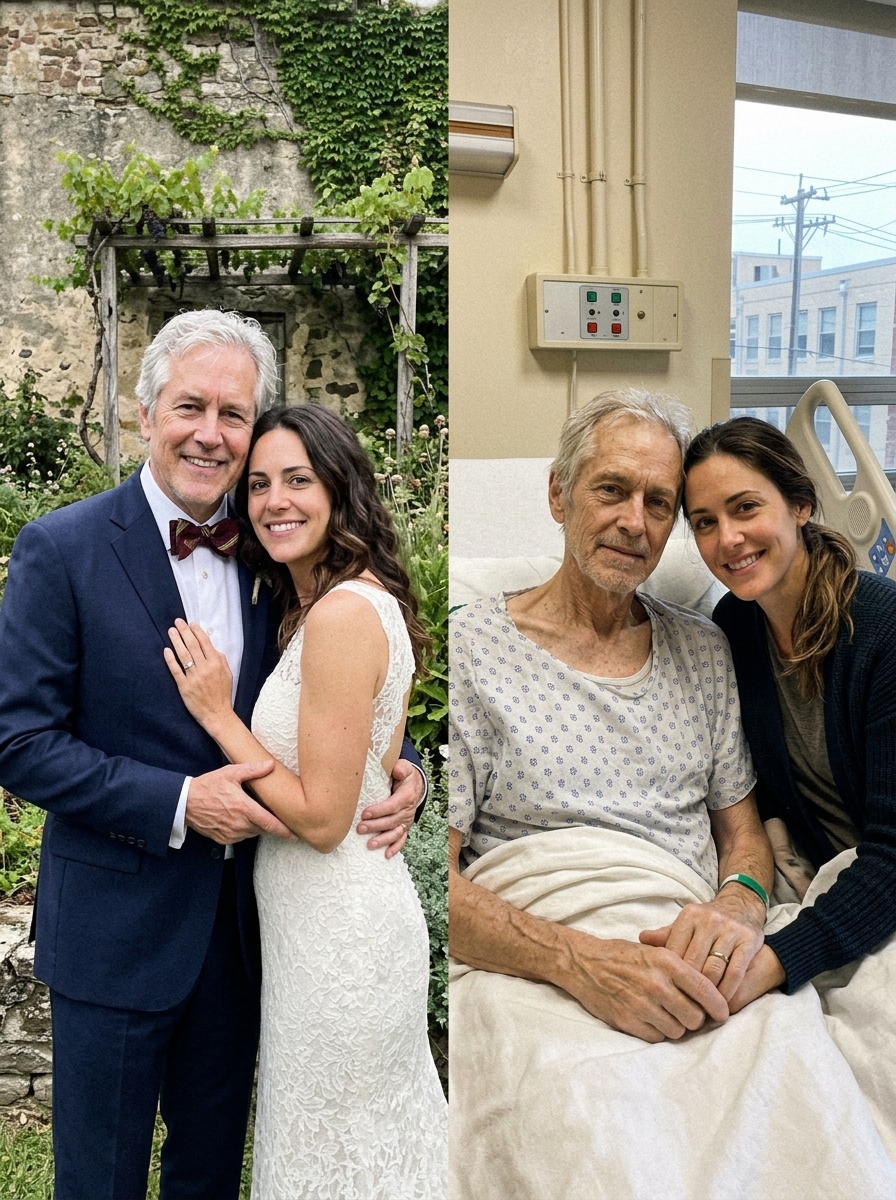
A struggling waitress believed she had finally found security when a wealthy widower offered her a life beyond overdue bills and endless exhaustion. But inside his magnificent home, not everyone thought she belonged, and one sentence from her new husband would stay with her long after the wedding day.
The apartment smelled like cheap noodles and rain leaking through a window that never properly closed.
I sat on the bed sorting my tips into small piles across the blanket: rent, electricity, groceries.
The grocery pile was always the smallest.
My feet ached inside socks I had worn for twelve hours, and at thirty-two years old, I was still surviving one month at a time, still feeling like I was barely staying above water.
The charity dinner had been a last-minute shift: black pants, a white shirt, and a tray of champagne glasses balanced carefully against my arm.
I had skipped both lunch and dinner to fit the uniform, and the lights from the chandeliers above kept blurring.
That was where Russell noticed me.
Silver touched his temples. His suit probably cost more than my entire car.
He picked up a glass, paused, and asked my name.
When I told him, he did not look past me the way many people looked past servers.
He asked if my feet hurt.
I almost dropped the tray.
Then he caught the catering captain’s attention from across the ballroom and quietly arranged a chair behind a column where I could sit without drawing attention.
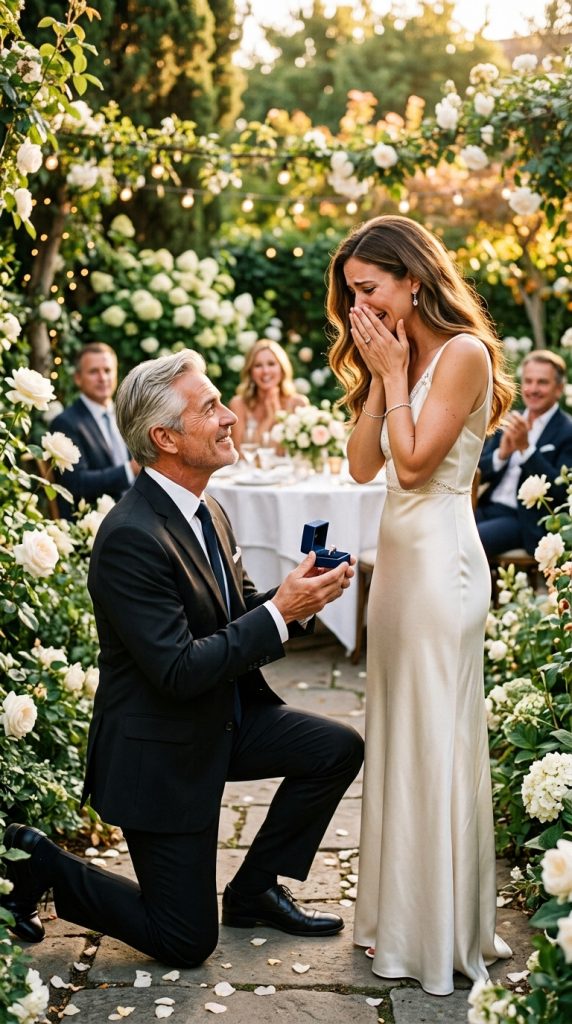
We talked about ordinary things: his late wife’s garden, the book I had been reading on the bus, and how he had not eaten a homemade meal in three years even though his kitchen was larger than my apartment.
He called the next morning.
Then he called every morning after that.
Always gentle.
Always on time.
As if kindness was something he had decided to practice every day.
Three months later, in a small restaurant where the staff already knew him, Russell placed a ring on the table.
He said he was not asking me to love him.
He only wanted me to allow him to care for me.
I told myself I was making the practical choice.
Anyone who was drowning would reach for a hand.
I said yes.
Some friends called me reckless.
His children attended the engagement gathering.
His daughter, Marlene, did not shake my hand.
She looked at me as though I had walked into her home carrying dirt across a priceless floor.
“So you’re the new project,” she said.
I forced a smile.
“It’s nice to meet you too.”
The entire evening, she studied me from across the room.
After the wedding, Russell held my hand and guided me through his front door.
Marble floors.
Towering ceilings.
A staircase that curved like something from a movie.
“Welcome home,” he whispered.
Later, after the reception at the house had nearly ended, I went searching for water.
From the upper landing, Marlene watched me with an expression so emotionless it looked carved into her face.
She stopped me near the staircase, one polished hand resting on the railing.
Her smile never reached her eyes.
“You think you’re getting the house?” she whispered. “You’ll get nothing.”
Russell appeared behind her, his bow tie loosened and his champagne forgotten in his hand.
He had heard everything.
His shoulders straightened, but his voice remained calm.
“She’ll get exactly what she deserves,” he said.
Marlene smiled as though he had just guaranteed her victory.
I carried those words home like a bruise.
The months afterward were much quieter than I expected.
Russell remembered peppermint tea after difficult nights.
He left the curtains slightly open because complete darkness made it hard for me to sleep.
One morning, when I pushed my toast away, he looked at me with a kindness I did not understand.
“You don’t have to earn your coffee,” he said.
I laughed nervously.
I had spent my entire life earning every small kindness.
Somewhere between the tea, the curtains, and a Tuesday in October when he reached for my hand at a traffic light, I stopped pretending.
Maybe I had accepted his proposal because I was tired of struggling.
But I stayed because I loved him.
After that, love appeared in simple moments.
Russell learned which bus stop I used before I admitted I still took the bus when the driver was unavailable.
He once left money in my coat, and I returned it to his desk with a note saying I wanted a partner, not someone to save me.
He never did it again.
Instead, he asked what food I liked, whether I missed my old neighborhood, and whether the quiet inside his house ever frightened me.
Sometimes it did.
Sometimes I missed the broken window and loud pipes because they had belonged to me.
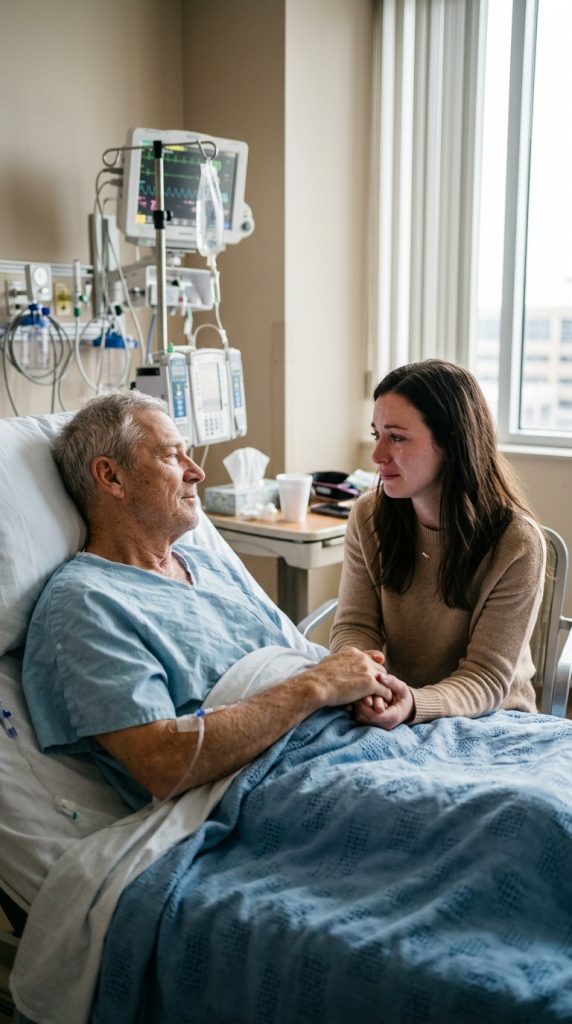
The diagnosis came in November.
Six weeks.
That was all we were given.
The hospital hallway smelled like disinfectant and lilies.
Marlene stopped me three doors away from his room.
“He’s resting,” she said. “He doesn’t need a scene.”
I could have walked around her.
I was his wife.
But her hand was shaking, nurses were watching, and I thought about Russell hearing an argument from the other side of the wall.
I sat in the hallway for three hours.
When she went to get coffee, I entered his room.
Russell looked smaller than before.
Paler than the sheets.
He squeezed my hand.
“Don’t fight them,” he whispered. “Just trust me.”
I told him I did not care about the house.
For one moment, she looked less heartless and more exhausted.
“I know,” he said. “That’s why.”
I thought I would have time to ask what he meant.
I did not.
The day before he died, he asked for the blue blanket from home.
I brought it folded over my arm and found Marlene arranging flowers near the sink, throwing away lilies before they bloomed.
For one second, she looked less cruel than tired.
Then she noticed me and became cold again.
Russell slept through most of that afternoon.
I sat beside him, counting his breaths instead of my tips, wishing for any bargain that could buy us another month.
When he woke, he only touched my wrist, as if reminding himself I was still there.
At the funeral, his three children stood across from me in matching black coats, like a barrier.
People offered sympathy, then slowly moved toward them.
I stood alone beside the casket and cried because I had loved him.
And because nobody there believed that I had.
After the final guest left, the lawyer touched my arm.
“Elena,” he said, “Russell left instructions.”
They had to be delivered in person, with the children present.
“Tomorrow morning,” he said. “My office, nine.”
Then his voice softened.
“He asked me to repeat his last instruction. Trust him.”
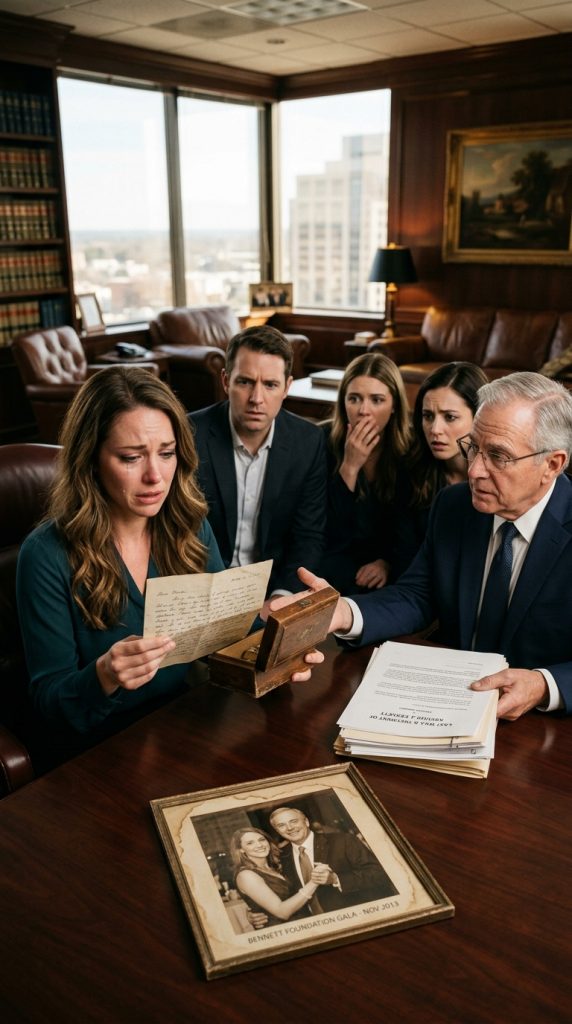
The coldness of the funeral still followed me when I sat in the lawyer’s office the next morning.
The lawyer adjusted his glasses and looked between us.
Marlene and her brothers were already waiting there, sitting together like a panel of judges. She crossed her legs and looked at me with a tilted smile.
“How generous of you to come,” Marlene said. “When do you plan to leave our father’s house?”
I folded my hands tightly to stop them from trembling.
A small wooden box rested on the desk.
There was no will in sight.
The lawyer adjusted his glasses and looked between all of us.
“Russell asked that I follow his instructions in order.”
Marlene gave a quiet laugh.
“The serving girl gets a souvenir.”
The lawyer pushed the box toward me.
“He wanted you to receive this first.”
Inside there were no keys.
No money.
No jewelry.
Only a folded letter and an old photograph.
Marlene scoffed.
“There it is. Daddy’s last little joke.”
I lifted the photograph.
It showed me at the charity dinner, holding a tray and laughing.
I did not remember anyone taking the picture, but the charity logo was faintly printed in the corner.
The letter was written in Russell’s careful handwriting.
I unfolded it slowly with both hands.
“What does it say?” Marlene demanded.
I continued reading.
My vision became blurry.
“What does it say?” she repeated, reaching across the desk.
The lawyer stopped her calmly.
“The letter is private. Your father was clear.”
“Then read the real will.”
The lawyer opened a sealed envelope.
Marlene’s confident expression weakened.
He turned one page.
Then another.
Her anger slowly shifted into uncertainty.
The brothers leaned forward.
He read in an even voice, but I could barely concentrate.
My eyes kept returning to the photograph.
To the woman in it who never knew someone across the room had truly noticed her.
“Skip ahead,” Marlene snapped. “Who gets the house?”
The lawyer turned another page.
Then another.
Her expression changed completely.
“This cannot be right.”
He looked up.
“It is exactly right. Your father reviewed every line, completed a competency evaluation before signing, and expected objections.”
Marlene’s brother reached toward her arm.
She pulled away.
The lawyer’s tone became firmer.
“He knew what each of you was capable of.”
As he continued reading, I discovered the things Russell had quietly arranged without telling anyone, even me.
The company shares came with advisors assigned for a year.
The trust funds covered education, housing, and medical needs, but not legal battles, intimidation, or public attacks.
The house could not be sold while my child was a minor.
There was even a clause naming guardians in case grief or outside pressure became too much for me.
It was not a punishment created out of anger.
It was a careful plan from a man who understood he would not be there to guide me himself.
He cleared his throat and continued.
“The house, the estate, and controlling interest in my company go to my wife. My children will receive trust allowances, contingent on the conditions outlined. Any contest forfeits the share entirely.”
Marlene stood so suddenly that her chair hit the wall.
“She manipulated him. He was sick, lonely, and she crawled into his life.”
For the first time, I did not lower my eyes.
“Maybe I said yes because I was tired of drowning,” I said. “But I would have stayed if he had lost everything. The box was the gift.”
Marlene laughed, but there was no confidence left in it.
“You expect us to believe that?”
I opened Russell’s letter and read one line aloud.
“I watched you refuse my check the night before the doctor called. You said you needed only me. You did not know you were carrying our child. I guessed after the toast, the tea, the mornings you went pale. I booked the appointment so you would be cared for.”
The entire room became silent.
Marlene’s mouth opened.
Then closed.
Then opened again.
Her brothers looked down at the floor.
The lawyer moved the page toward her, but she did not reach for it.
“That proves it,” she said, although her voice had weakened. “She trapped him. A baby, at his age.”
“He knew before I did,” I replied. “He wrote it before he died. Read the date.”
The lawyer placed the page forward again.
“You’re pregnant,” one of her brothers whispered.
“Yes.”
The lawyer placed the envelope down and gave me a small nod, the same kind Russell used to give me across the breakfast table.
I picked up the box, the letter, and my coat.
Nobody stopped me.
Outside, the air carried the smell of rain.
I held the box against my chest the way I once held my final paycheck, like something precious that could disappear if I loosened my grip.
For a while, I expected winning to feel brighter.
It did not.
The first weeks were filled with paperwork, sickness, and rooms that felt too empty without him.
Marlene sent one letter through her attorney.
Then nothing.
Her brothers accepted their trust payments and kept their distance.
I kept the charity photograph on the dresser.
Not because I looked beautiful in it.
But because I looked unguarded.
Some nights, I spoke to Russell as if he were still downstairs.
As if he were making tea.
As if he were about to ask whether I had eaten.
I told him I was trying.
I told him the baby moved whenever rain touched the windows.
Months later, I stood in the kitchen of the house Russell had built.
Sunlight stretched across the floor in soft lines.
One hand rested on my stomach.
The other held his letter, worn thin from being folded and unfolded.
“Exactly what you deserve,” I whispered.
Finally, I understood.
It was never the money.
Never the marble floors.
It was being seen completely and loved without conditions.
I placed the letter down and walked toward the window, ready for whatever came next.
For the first time in years, the quiet did not feel threatening.
That evening, I opened the old kitchen windows as wide as they would go.
They closed perfectly, but I wanted the scent of rain inside.
I made peppermint tea and placed a second cup across from mine.
It was foolish.
And comforting.
Then I counted nothing.
Not bills.
Not debts.
Not the people who doubted me.
For the first time in years, the silence was not something I feared.
It was room to breathe.
I placed my hand over my belly and promised our child a different beginning.
One filled with honesty, warmth, and a home where love would never need to prove it deserved to enter.
Outside, thunder rolled softly.
And I imagined Russell smiling somewhere beyond the glass.
Patient as always.
Certain that I would finally understand what he had known all along.
