

PART 1
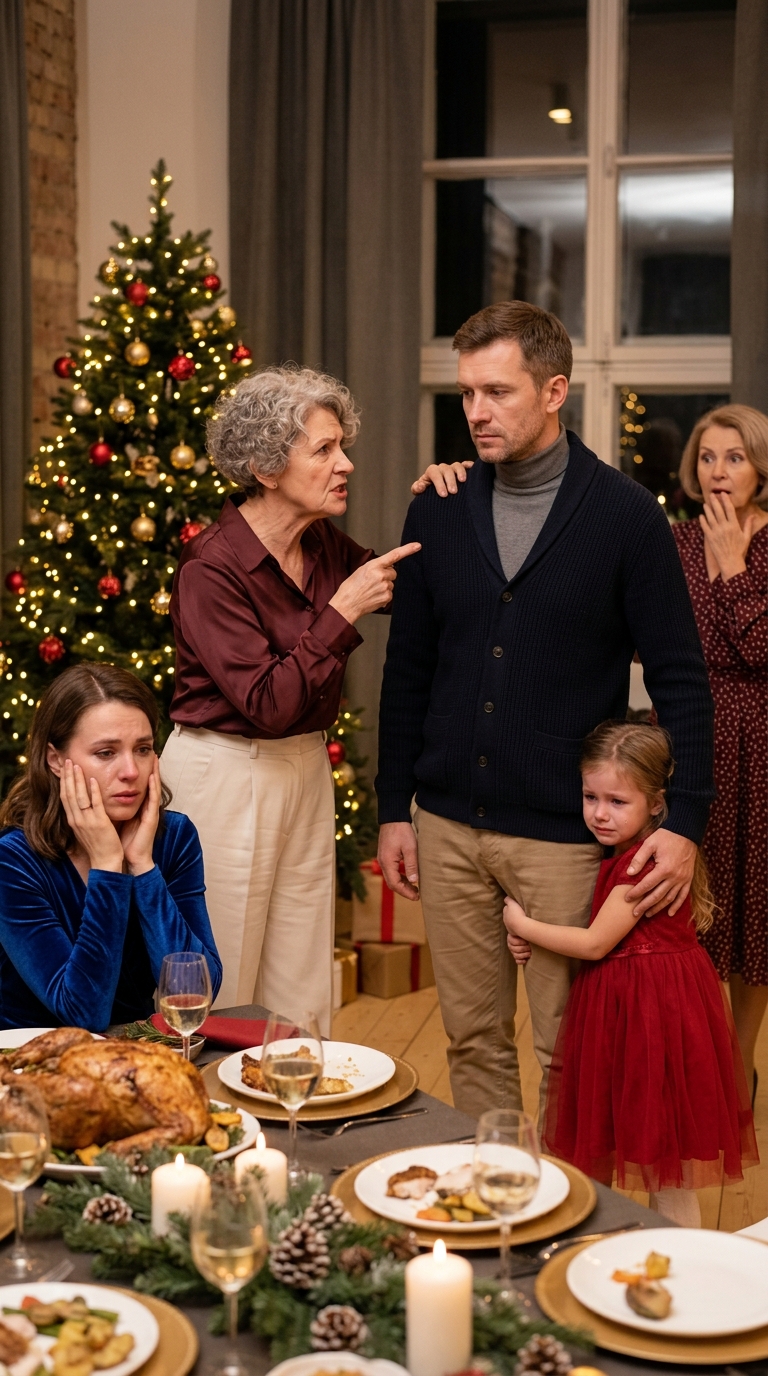
During Christmas dinner, my wife and sister-in-law ended up in a fight over something that should have stayed in the kitchen with the burned green bean casserole.
My sister-in-law, Vanessa, had a way of tearing people down without ever raising her voice. She was thirty-eight, sophisticated, married to a dentist, and seemed to dislike anyone who proved that money had nothing to do with being a good person.
My wife, Emily, had spent six years pretending Vanessa’s constant little remarks never hurt her.
“You always make everything so dramatic,” Vanessa said, slowly swirling her wine. “Some of us didn’t grow up learning how to survive on coupons and resentment.”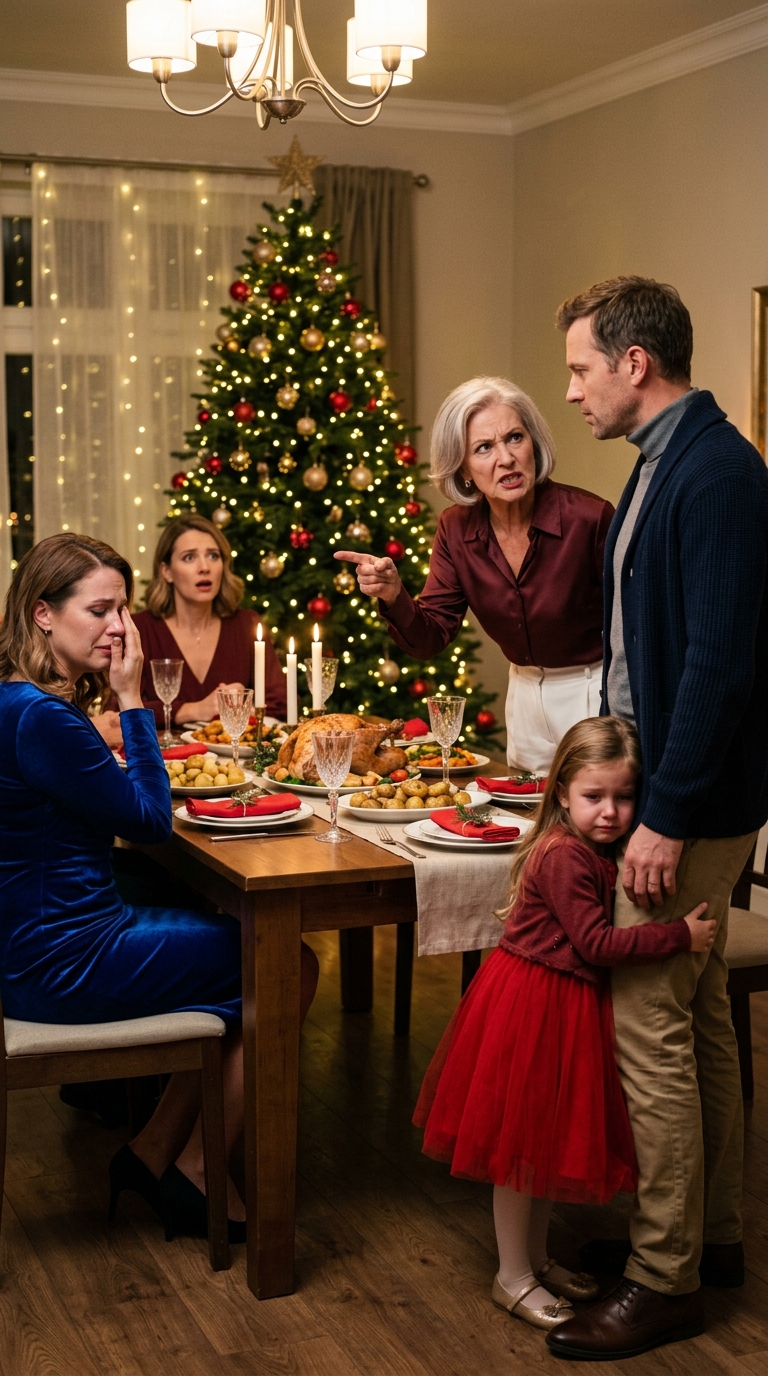
The dining room went completely silent.
Emily’s expression changed first.
Not into anger, but into complete exhaustion.
“Say what you mean, Vanessa,” she said.
My mother, Margaret, placed her fork down on the table.
“Emily, don’t start.”
“I didn’t start this,” Emily replied. “But I’m finished pretending to smile while she insults me in front of my daughter.”
Our seven-year-old daughter, Lily, sat beside me in her red Christmas dress, holding her glass of milk with both hands. Her eyes moved between every face, searching for an adult who still felt safe.
Vanessa smirked.
“Oh, please. Your daughter hears worse at school.”
Emily stood from her chair.
“No. She hears worse here.”
That was when my mother got up.
She had never needed to raise her voice to control a room. Silence had always been enough.
But that night, something in her expression changed into someone I barely recognized.
She stepped toward Emily and slapped her so hard that the crystal chandelier above us seemed to shake.
Lily gasped.
A red mark appeared across Emily’s cheek.
Then Mom whispered the words:
“You’ll always be trailer trash. Take your daughter and get out.”
For a long moment, the entire room stood frozen.
I looked at my mother.
Then at Emily, standing still with tears in her eyes but her dignity untouched.
Then I looked at Lily, whose tiny hands were trembling.
I didn’t argue.
I didn’t defend anyone.
I didn’t ask my mother how she could say those things to the woman who helped rebuild my life after Dad passed away, or to the mother of her only granddaughter.
I stood from my chair.
“Lily,” I said quietly, “get your coat.”
Mom stared at me.
“Daniel—”
I looked directly at her.
“No.”
That one word carried more weight than any scream could have.
While Emily comforted Lily in the guest room, I packed our bags.
My brother, Mark, came upstairs and quietly said, “Don’t turn this into something bigger.”
I closed the suitcase.
“She hit my wife.”
“She’s Mom.”
“Emily is my family.”
Snow fell past the porch lights as we walked out the front door.
Nobody tried to stop us.
The next morning, Mom called me crying.
PART 2
I watched my phone vibrate across the motel nightstand.
Emily was asleep on her side, with Lily curled up beside her. The room smelled of bleach, old carpet, and the cinnamon rolls the front desk had placed out for breakfast. Outside, tires moved quietly through the gray slush along the highway.
Mom’s name appeared again.
I let the call go unanswered.
A voicemail arrived.
Then another call.
Then a text.
Daniel, please answer. I need to explain.
I sat on the edge of the bed with my feet resting on the cold, thin carpet and felt an old instinct return.
It wasn’t exactly guilt.
It was conditioning.
When Dad died, I was twenty-four. Mom fell apart, and I became the person who handled everything. I managed the insurance paperwork, cleaned the gutters, drove her to appointments, calmed her after arguments she had caused, apologized to relatives she offended, and convinced myself that loyalty meant accepting every burden without complaint.
Then I met Emily.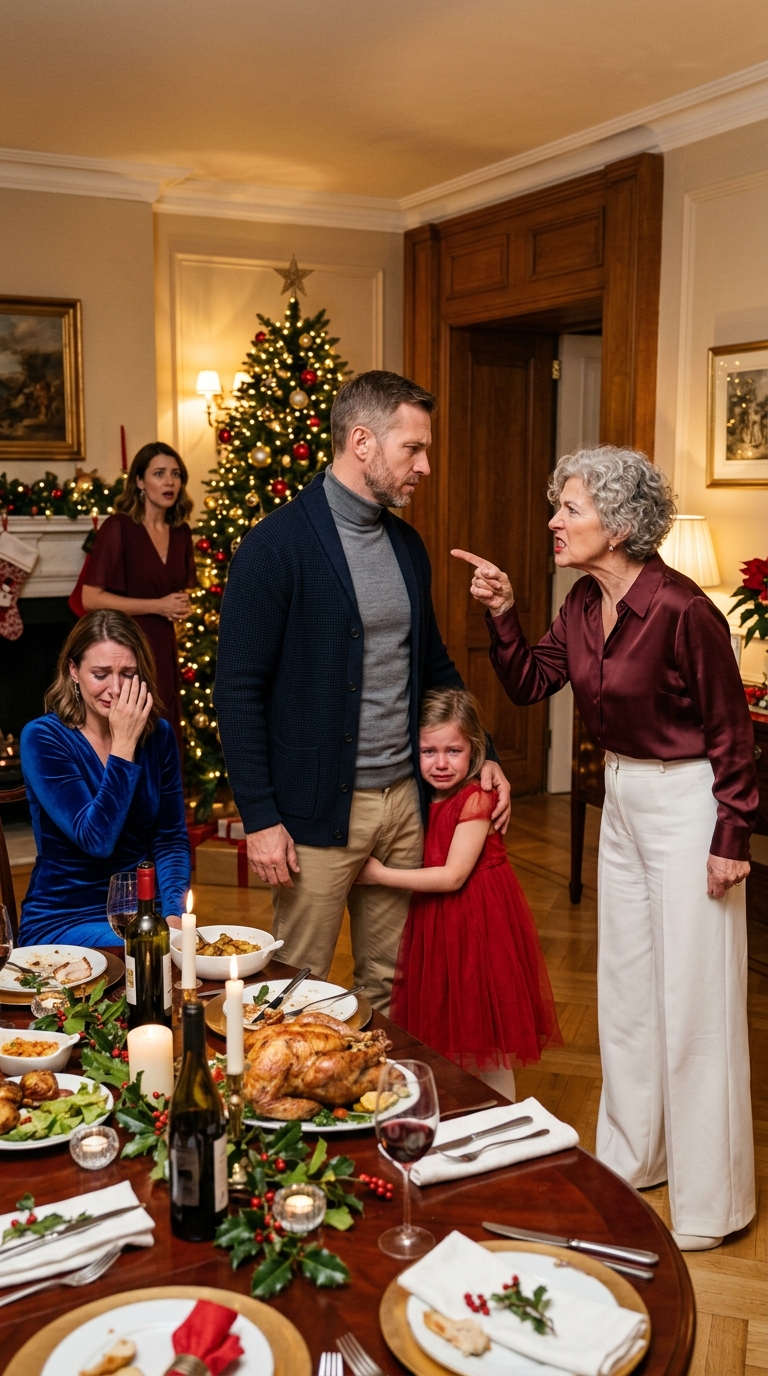
She worked double shifts at a diner while completing nursing school. She drove a fifteen-year-old Honda with a cracked side mirror and always kept emergency granola bars in her purse. She had grown up in a trailer outside Tulsa with a mother who disappeared for weeks at a time and a stepfather who gambled away the rent. She never tried to hide any of it.
She wore survival the way people wear old denim—simple, worn, and practical.
Mom never accepted that part of her.
At first, the insults were disguised behind polite manners.
“Oh, Emily, we use cloth napkins here.”
“Did no one teach you how to pronounce that?”
“Daniel always wanted someone ambitious. But I suppose kind is enough.”
Emily gave them more kindness than they deserved.
She brought casseroles, sent birthday cards, drove Mom to physical therapy after her hip surgery, and attended every one of Lily’s school performances.
None of it was ever enough.
I opened the voicemail.
Mom’s voice filled the quiet motel room, trembling and covered in tears.
“Daniel, sweetheart, I’m so sorry. I didn’t sleep. I don’t know what came over me. Vanessa pushed me, and everyone was tense, and Emily was being disrespectful. But I should not have slapped her. Please call me. Christmas can’t end like this.”
I listened to it twice.
Not because I needed to hear it again, but because I wanted to understand what those words truly meant.
There it was.
I’m sorry, but.
Emily was disrespectful.
Christmas can’t end like this.
She never said Emily’s name without adding some kind of blame.
Emily shifted behind me.
“Was it her?”
I nodded.
“What did she say?”
I handed her the phone.
She listened without showing any reaction. When it ended, she gave it back and stared toward the window.
Morning sunlight touched the bruise beginning to form along her cheekbone.
My stomach tightened.
“I’m not going back there,” she said.
“You’re not.”
“And Lily isn’t either.”
“No.”
She studied my face, searching for the old Daniel—the one who kept the peace by giving away pieces of himself to whoever demanded them.
I reached for her hand.
“I should have stopped this years ago.”
Her expression softened, but she didn’t protect me from the truth.
“Yes,” she said. “You should have.”
It hurt.
But it also made everything clear.
By nine in the morning, Mom had called six more times.
Vanessa sent one text.
You’re seriously punishing Mom on Christmas because Emily can’t take a joke?
I deleted it.
A few minutes later, Mark called.
“Daniel,” he said, “Mom’s falling apart.”
“Good morning to you too.”
“Don’t be sarcastic. She knows she screwed up.”
“Does she?”
“She was embarrassed.”
“She assaulted my wife in front of my daughter.”
He sighed as if I were the one causing the problem.
“You know Mom. She gets emotional.”
“Lily gets emotional when she drops her ice cream. She doesn’t slap people.”
“Come on. It’s Christmas.”
“That stopped being a valid excuse last night.”
Silence.
Then Mark lowered his voice.
“Are you really choosing Emily over Mom?”
I looked at my wife and daughter sleeping in a motel because my own family had made them feel unsafe inside a home decorated with wreaths and candles.
“I’m choosing the family I’m responsible for,” I said.
Mark ended the call.
Around noon, I sent Mom one message.
Do not call Emily. Do not call Lily. I will contact you when I am ready. Before any conversation, you owe Emily a direct apology with no excuses. You also owe Lily an apology for what she witnessed. Until then, we need space.
She responded almost immediately.
I’m your mother.
I replied with one sentence.
And Emily is my wife.
Then I turned my phone off.
That afternoon, we checked out of the motel and drove home through the falling snow.
Lily slept through almost the entire drive with Emily’s scarf tucked beneath her chin. Emily quietly watched the road through the passenger window.
When we arrived at our driveway, our small house felt warmer than it ever had before.
The porch light was glowing.
Lily’s paper snowflakes still covered the front window.
The plastic reindeer leaned slightly to one side because I had never fixed its stake.
Inside, we made grilled cheese sandwiches with tomato soup and watched an animated movie.
Lily sat between us under a blanket, and halfway through she quietly asked,
“Is Grandma mad at me?”
Emily closed her eyes.
I paused the movie and knelt in front of Lily.
“No, sweetheart,” I said. “Grandma did something wrong. That is not your fault. Adults are responsible for their own actions.”
“She told Mommy to leave.”
“I know.”
