


My mother called me at 2 a.m. and told me I could attend my brother’s fiancée’s family dinner—but only if I stayed silent. She warned me that her father was a decorated colonel. But the moment I stepped through the door, he looked at me as though he had been waiting for me for years.
My mother called at exactly 2:07 a.m., which usually meant someone in the family had either died, lied, or needed me to pretend both were true.
“Grace,” she whispered, despite the fact that she had just woken me. “Your brother’s fiancée’s family dinner is tomorrow. You’re allowed to come.”
I sat upright in bed, the blue glow of my alarm clock stretching across the wall.
“Allowed?”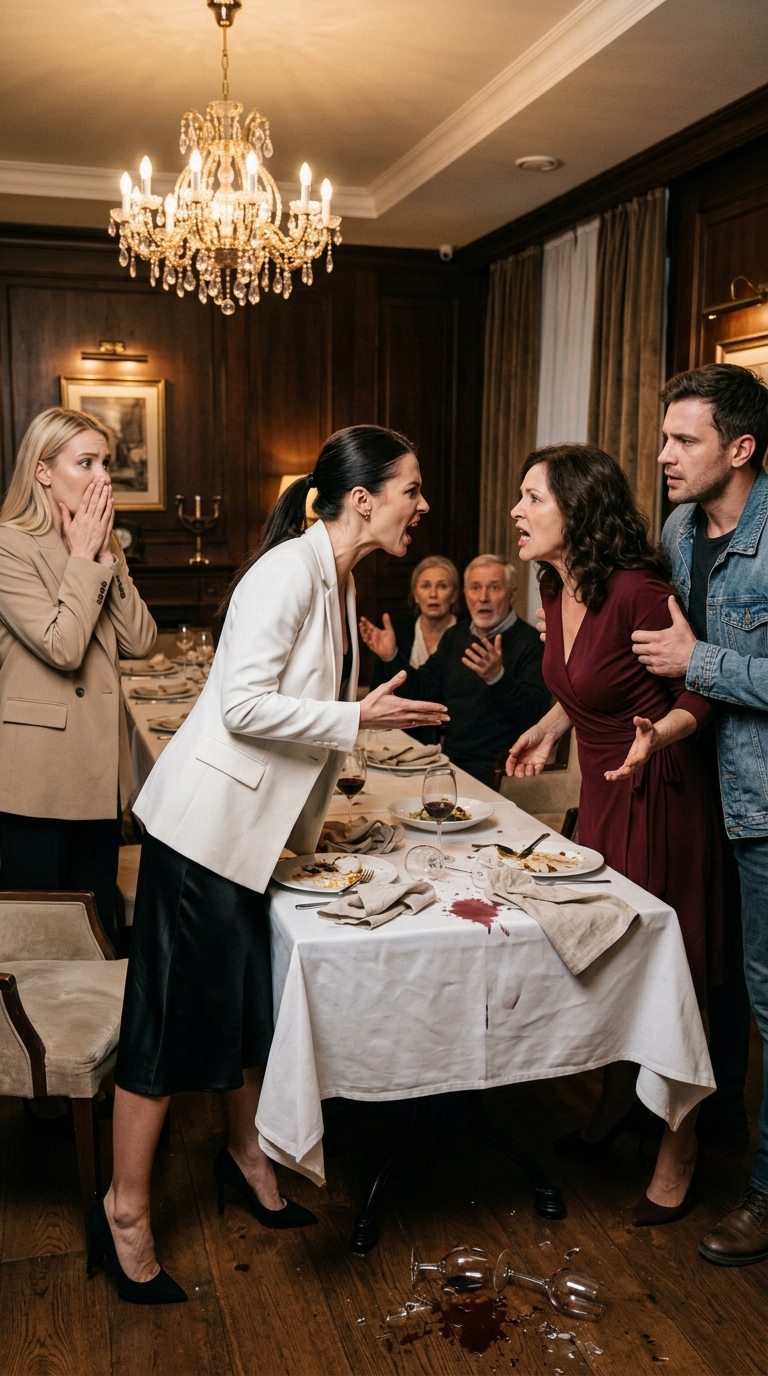
There was a brief silence before her voice became firm.
“Only if you keep your mouth shut.”
That was my invitation.
My younger brother, Ethan, was engaged to Cassandra Whitaker, a graceful woman from a polished family with polished silverware, polished manners, and polished stories about how respectable people behaved. Her father, my mother explained, was “a decorated colonel,” and the way she said it made him sound less like a man and more like a statue outside a courthouse.
“Colonel Thomas Whitaker doesn’t tolerate drama,” Mom said. “This dinner is important to Ethan.”
“What exactly am I supposed to stay quiet about?”
“Your job. Your past. Your attitude. The lawsuits. The interviews. All of it.”
My eyes drifted to the framed certificate resting against my dresser, still waiting to be hung three months after I moved into my new apartment.
Department of Justice Civil Rights Division – Special Commendation.
Beneath it sat a photograph taken when I was twenty-two—paler, thinner, standing outside a military hospital with a bandage across my temple and one hand gripping a folder capable of destroying a powerful man.
My mother had never once asked what had been inside that folder.
She only accepted what the family had decided.
Grace Mercer was difficult.
Grace embarrassed people.
Grace asked questions in places where women were expected to smile.
“Fine,” I said.
“Grace.”
“I said fine.”
The following evening at six, I stood inside the Whitakers’ foyer wearing a black dress my mother had approved by text message and shoes that pinched with every step.
Ethan hugged me a little too tightly, his smile silently begging me not to cause trouble.
Cassandra greeted me with a careful kiss on the cheek.
My parents lingered nearby, tense as though I had arrived carrying gasoline.
Then Colonel Thomas Whitaker entered the room.
Tall.
Silver-haired.
Straight-backed.
His medals weren’t pinned to his jacket, yet they seemed present in every movement he made.
My mother smiled brightly.
“Colonel, this is our daughter, Grace.”
He stopped walking.
For one long second, his expression didn’t change.
Then every trace of color disappeared from his face.
His wife noticed.
Cassandra noticed.
Ethan noticed.
So did I.
Colonel Whitaker stared at me as though a locked door had suddenly opened by itself.
Then, almost under his breath, he said,
“Grace Mercer.”
My mother laughed nervously.
“Oh, have you two met?”
The colonel never took his eyes off me.
“Yes,” he replied. “She saved my career.”
I folded my hands calmly in front of me.
“No, Colonel,” I said. “I saved the truth from being buried.”
The dining room fell completely silent before dinner had even begun.
PART 2
No one moved.
The Whitakers’ dining room looked like it belonged in a magazine. A long mahogany table. White taper candles. Crystal glasses. Ivory china trimmed with gold. Every object seemed expensive enough to make honesty feel inappropriate.
My mother’s smile twitched.
Ethan looked from me to Colonel Whitaker, confusion written across his face.
Cassandra instinctively gripped his sleeve.
The colonel recovered first.
Men like him usually did.
He inhaled slowly, straightened his shoulders, and gestured toward the table.
“We should sit.”
His wife, Margaret, a slender woman with ash-blonde hair and pearls around her neck, let out a brittle laugh.
“Yes, of course. Dinner will get cold.”
But nothing about that room felt warm anymore.
My assigned seat was near the far end beside my father.
As soon as we sat, he leaned closer.
“What did you do?” he hissed.
I kept my eyes on the neatly folded napkin resting in my lap.
“You heard him. I saved his career.”
Dad clenched his jaw.
“Grace, not tonight.”
That had always been my family’s favorite sentence.
Not tonight.
Not here.
Not in front of people.
Not when it matters.
They never explained when telling the truth would finally become acceptable.
The first course arrived.
Roasted squash soup was poured from a silver tureen by a housekeeper pretending not to notice the silence hanging over the room.
Spoons tapped gently against porcelain.
Cassandra finally tried to rescue the evening.
“Dad,” she asked carefully, “how exactly do you know Grace?”
Colonel Whitaker paused with his spoon halfway to his mouth.
My mother answered before he could.
“Oh, I’m sure it was something work-related. Grace has had several positions.”
Several positions.
I smiled faintly.
“I was an investigative attorney assigned to a military contracting fraud case five years ago.”
Ethan raised his eyebrows.
“You never told me that.”
“You were busy not answering my calls.”
His face reddened.
Colonel Whitaker quietly set his spoon down.
“Ms. Mercer was part of a federal review team.”
“Part of?” I repeated.
His eyes met mine.
A warning.
I had been invited under one condition.
Keep my mouth shut.
But the colonel had made one mistake.
He had spoken my name first.
He had reopened the grave.
I turned toward Cassandra.
“Your father commanded a logistics oversight unit connected to a defense supply chain operation in Virginia. One contractor within that chain billed the government for medical transport equipment that never existed.”
Margaret stiffened.
“This hardly seems appropriate dinner conversation.”
“No,” I agreed. “Fraud rarely pairs well with wine.”
My mother whispered my name like a warning.
Cassandra’s voice shook.
“Dad?”
The colonel suddenly looked years older.
Not weak.
Just trapped inside a past he had hoped everyone had forgotten.
“I was cleared,” he said.
“Yes,” I replied. “Eventually.”
Ethan stared at me.
“What does that mean?”
“It means,” I explained, “that when the scandal first broke, every report suggested Colonel Whitaker had approved fraudulent invoices and signed off on equipment that never existed. His signature appeared everywhere.”
Cassandra’s lips slowly parted.
The colonel’s fingers tightened around his water glass until his knuckles turned white.
“But those signatures had been copied,” I continued. “Someone inside his office reused old authorization scans. Three witnesses were prepared to testify against him because they had been threatened. One of them came to me.”
My mother blinked.
She had expected shame.
She hadn’t expected evidence.
I looked back at the colonel.
“And then, two days before the hearing, that witness disappeared.”
Margaret pushed her chair back.
“That’s enough.”
But Cassandra never looked away from me.
“Disappeared?”
I nodded.
“Transferred overnight. Records changed. Phone disconnected. Apartment emptied.”
Ethan whispered,
“Jesus.”
Colonel Whitaker slowly closed his eyes.
“I found her,” I said. “In Maryland. Terrified. Injured. Ready to disappear forever.”
My father stared at me like I had become a stranger sitting at his table.
The truth was, I had always been this person.
“I brought her testimony forward,” I continued. “It cleared Colonel Whitaker. It also exposed the contractor, two civilian supervisors, and a lieutenant colonel who later pleaded guilty.”
Cassandra looked toward her father.
“Why didn’t you ever tell us?”
The colonel opened his eyes and met mine.
“Because,” he said, “Grace Mercer paid for it.”
PART 3
For the first time that evening, no one interrupted.
Even my mother—who had spent most of my adult life treating silence as a family virtue and honesty as a social disease—sat frozen with her untouched spoon beside her bowl.
Colonel Whitaker spoke quietly.
His voice remained controlled, but the polished formality he had worn earlier was gone.
“She was twenty-seven,” he said. “Not much older than Cassandra is now. She had no rank, no influential family, no military protection, and no reason to risk herself for me.”
“That isn’t true,” I replied.
He looked at me.
“I had a reason,” I continued. “A woman was being threatened. Evidence was being buried. You were being framed. That was enough.”
The colonel pressed his lips together as though my answer hurt him more than any accusation ever could.
Cassandra slowly turned toward me.
“What happened to you?” I could have cleaned up the story. I could have called it professional retaliation—the kind of phrase people use when they want suffering to sound like paperwork. I could have said my career became complicated. I could have said nothing at all.
But my mother had called me at two in the morning and told me to keep my mouth shut.
So I didn’t.
“The people behind the fraud had powerful friends,” I said. “Not only inside the contracting company. Inside government offices. Inside private security firms. They knew when I found the witness. They knew which motel I hid her in. They knew what rental car I was driving.”
Ethan leaned forward, his face pale.
“Grace.”
I looked at him.
“You want to know why I missed your graduation dinner?”
His mouth opened, but no words came out.
“I was lying in a hospital in Arlington with a concussion and three cracked ribs.”
My father’s chair shifted slightly across the floor.
“We were told you had a work conflict.”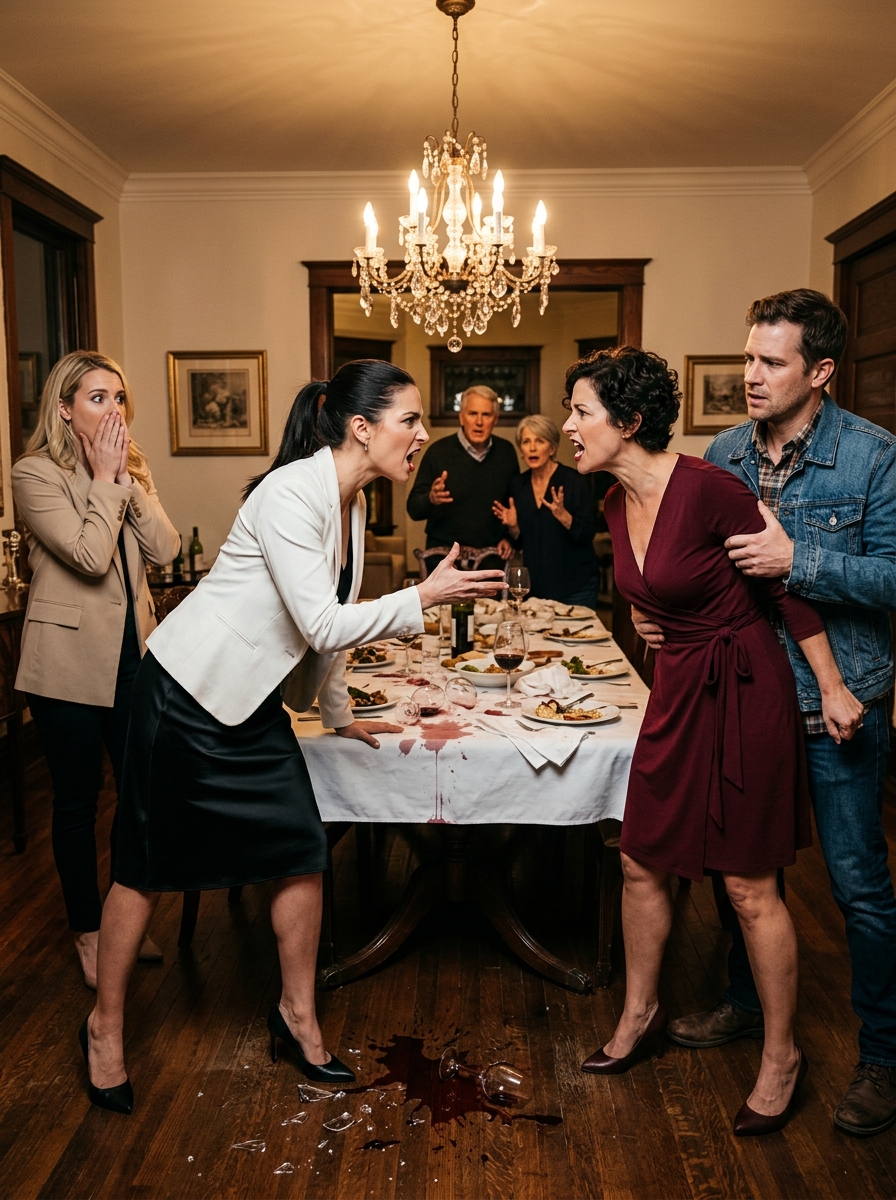
“No,” I replied. “You were told that because Mom said she didn’t want to upset Grandma.”
My mother’s cheeks flushed red.
“That was not the time to frighten everyone.”
I almost laughed.
“I was the one bleeding.”
Colonel Whitaker lowered his head.
The housekeeper entered carrying the next course, took one look around the table, and quietly backed out with the platter still in her hands.
Margaret Whitaker rose from her chair.
“Thomas, this is humiliating.”
He turned toward her.
“Sit down, Margaret.”
He didn’t raise his voice.
That somehow made it even worse.
She stared at him in disbelief.
Perhaps he had never spoken to her that way in front of guests.
Or perhaps he had—and everyone had simply agreed to pretend otherwise.
Slowly, Margaret sat back down.
The colonel looked at his daughter.
“I should have told you years ago.”
Cassandra’s voice was barely above a whisper.
“Why didn’t you?”
“Because I was ashamed.”
“Of being framed?”
“No.”
He glanced at me.
“Of allowing a young woman to bear the consequences of a war I should have recognized sooner.”
I didn’t like the sympathy slowly filling the room.
Late sympathy always made me uncomfortable.
It felt like someone handing you an umbrella after the flood had already washed away your house.
“You didn’t make me do anything,” I said. “I made my own choices.”
“Yes,” he replied. “And after you made them, men twice your age with ten times your power tried to destroy you for it.”
My mother folded her arms.
“Grace has always had a talent for attracting conflict.”
The words landed exactly as they always did.
My mother never needed to shout to wound me.
She preferred a precise blade.
Cassandra stared at her.
So did Ethan.
Colonel Whitaker’s eyes hardened.
“Mrs. Mercer,” he said, “your daughter did not attract conflict. She walked into it because everyone else was too frightened to.”
My mother pressed her lips together.
Dad cleared his throat.
“Colonel, with all due respect, we didn’t know the full story.”
I turned toward him.
“You didn’t want to.”
This silence felt different.
It wasn’t shock anymore.
It was recognition.
Slow.
Uncomfortable.
Impossible to ignore.
Ethan rubbed both hands over his face.
“Grace, I called you dramatic.”
“Yes.”
“I told Cassandra you liked making yourself the victim.”
“Yes.”
His eyes glistened.
“I didn’t know.”
“You didn’t ask.”
He flinched.
Cassandra quietly pulled her hand away from his sleeve.
It was a tiny movement.
Everyone noticed.
“Cass,” Ethan whispered.
She looked at him—not with cruelty, not for dramatic effect, but with the clear expression of someone reevaluating the person sitting beside her.
“You told me your sister was bitter,” she said.
Ethan swallowed.
“That’s what Mom always said.”
“And you repeated it.”
He had no answer.
Colonel Whitaker gently pushed away his untouched bowl of soup.
“There’s more.”
I looked at him sharply.
“Colonel.”
“No,” he said. “You’ve protected enough people tonight.”
Margaret’s expression changed.
For the first time all evening…
She looked afraid.
Cassandra noticed immediately.
“Mom?”
The colonel turned toward his wife.
“When the investigation ended, I wanted to contact Grace. I wanted to thank her publicly. I wanted every report that restored my name to include hers as well.”
A knot tightened in my stomach.
He continued.
“I was advised not to.”
Margaret remained silent.
Cassandra frowned.
“Advised by who?”
“By legal counsel at first,” he answered. “Then by your mother.”
Margaret lifted her chin, her pearl necklace shifting slightly.
“I protected this family.”
“No,” he replied. “You protected an image.”
She let out a cold laugh.
“And what image would you have preferred? Our daughter applying to college while newspapers printed that her father had nearly been indicted? Reporters digging through every corner of our lives? Grace Mercer becoming some tragic heroine forever tied to our family name?”
I sat perfectly still.
There it was.
Not hatred.
Not exactly.
Something colder.
Inconvenience.
Margaret looked at me as though I were no longer a guest…
But a stain that refused to disappear.
“You survived,” she said. “Thomas survived. The guilty people were punished. There was no reason to keep dragging it all back into the light.”
Cassandra stood so abruptly that her chair nearly tipped over.
“Mom.”
Margaret turned toward her.
“Sit down.”
“No.”
The single word sliced through the room.
Cassandra had spent the entire evening being polite.
Graceful.
Composed.
A daughter raised in the same school of appearances my mother had attended in spirit, if not in reality.
But now her expression had changed.
The polish had cracked.
Underneath it was anger.
“You knew?” Cassandra asked.
Margaret exhaled impatiently.
“I knew enough.” “You knew Grace had been attacked?” Margaret’s eyes shifted toward me.
“I knew there had been an incident.”
“An incident?” Cassandra echoed.
I could feel Ethan staring at me, but I didn’t look back.
Colonel Whitaker’s voice turned heavy.
“Your mother also received a letter.”
“Thomas,” Margaret snapped.
“What letter?” Cassandra asked.
The colonel looked at me.
“Grace wrote to me six months after the hearing.”
My throat tightened.
I couldn’t remember every word anymore, but I remembered writing it—sitting alone in my old apartment with my left wrist still stiff from physical therapy, typing with only two fingers because the others cramped after ten minutes.
I had written one letter.
Not to ask for money.
Not to ask for recognition.
I had simply asked for a statement confirming that my role in the case had been authorized and significant.
A straightforward professional letter could have helped while I was quietly being pushed aside, when major cases stopped coming my way, when colleagues stopped inviting me into the rooms where decisions were made.
I never got a reply.
The colonel reached into the inside pocket of his jacket and removed a folded sheet of paper.
It was old.
Deeply creased.
Clearly handled many times.
Margaret’s face drained of color.
Cassandra whispered,
“Dad?”
“I found it three years later,” he said. “Inside a box of household files after we moved from Virginia. It had already been opened. Not by me.”
He laid it gently on the table.
No one reached for it.
I didn’t need to read it.
I recognized my own desperation just by looking at it.
“My wife intercepted it,” he said.
Margaret stood again.
“I will not be put on trial in my own dining room.”
“You’re not being put on trial,” he answered calmly. “You’re being seen.”
Her lips trembled—not with regret, but with anger.
Then, unbelievably, my mother chose that exact moment to speak.
“Families deal with these things privately,” she said. “That’s all Margaret was trying to do.”
I turned toward her.
“Of course you believe that.”
“Grace, don’t use that tone with me.”
“What tone should I use for the woman who told everyone I was unstable because it was easier than admitting I had been hurt?”
My father murmured,
“Enough.”
“No,” Ethan said.
Every head turned toward him.
He slowly rose to his feet, pale but determined.
“No, Dad. Not enough.”
He looked directly at our mother.
“You told me Grace skipped my graduation because she resented me. You said she missed Christmas because she wanted attention. You told me not to call her after she left the DOJ because she needed to ‘learn consequences.’”
Mom’s eyes filled with tears, but she kept her posture rigid.
“I was trying to keep this family together.”
“You kept us away from her.”
His voice shook as the words left him.
For the first time, I didn’t see my brother as the golden child who had accepted every convenient lie.
I saw a man realizing the foundation beneath his life had been built crooked.
Cassandra stepped away from Ethan and walked toward me.
“I’m sorry,” she said.
It was simple.
No performance.
No attempt to make me comfort her afterward.
That made it easier to accept.
I gave a single nod.
Ethan looked at me.
“Grace, I’m sorry too.”
I didn’t rush to forgive him.
People always wanted forgiveness delivered like room service—the moment guilt became uncomfortable.
“I hear you,” I said.
His expression fell.
But he accepted my answer.
Colonel Whitaker picked up the letter and extended it toward me.
“This belongs to you.”
I took it.
The paper felt thinner than my memory of it.
Margaret let out a short, humorless laugh.
“So what happens now? Everyone applauds Grace? We rewrite history over dinner?”
“No,” I said.
Every eye turned toward me.
I folded the letter and placed it beside my plate.
“Now Cassandra decides whether she wants to marry into a family where silence is mistaken for loyalty. Ethan decides whether he wants to keep being protected from truths that make him uncomfortable. And my parents decide whether their reputation is still worth more than their daughter.”
My mother’s tears finally spilled over.
“That’s unfair.”
I looked at her.
For once, I felt no need to soften my pain just to make it easier for her to hear.
“No,” I said. “It’s late.”
The colonel’s mouth twitched into something almost resembling a smile.
There was no humor in it.
Cassandra slowly removed her engagement ring.
Ethan stared at it as though it had come alive.
“Cass,” he said, his voice breaking.
She held the ring in her palm without returning it.
“I’m not ending this tonight,” she said. “But I’m not moving forward tonight either.”
He nodded, devastated.
It was the most honest thing he had done all evening.
Margaret turned away from the table, one hand gripping the back of her chair.
My mother cried quietly.
My father looked exhausted—older than when he had arrived.
Colonel Whitaker still sat perfectly straight, but the military mask he had worn all night had finally disappeared.
As for me…
I stood.
The black dress my mother had approved suddenly felt like a costume I no longer had any reason to wear.
“Thank you for dinner,” I said.
Cassandra let out a small laugh through her tears.
“We never ate.”
“No,” I replied. “But everyone got served.”
I walked out before anyone could stop me.
Ethan followed me into the foyer.
“Grace.”
I paused with my hand resting on the front door.
He stood beneath the chandelier, looking far younger than thirty-one, his eyes red.
“I don’t know how to fix this.”
“You start by not asking me to teach you how.”
He nodded slowly.
“Okay.”
“And Ethan?”
“Yeah?”
“Don’t marry Cassandra unless you’re ready to tell the truth when it costs you something.”
He glanced back toward the dining room, where Cassandra stood silently in the doorway watching him.
“I know,” he said.
Outside, the night air felt crisp and clean.
I walked alone toward my car, my heels echoing across the stone driveway.
Behind me, the Whitaker house still looked flawless from the outside.
But inside…
For the first time…
Its walls had heard the truth.
And this time, no one could tell me to keep my mouth shut.
