

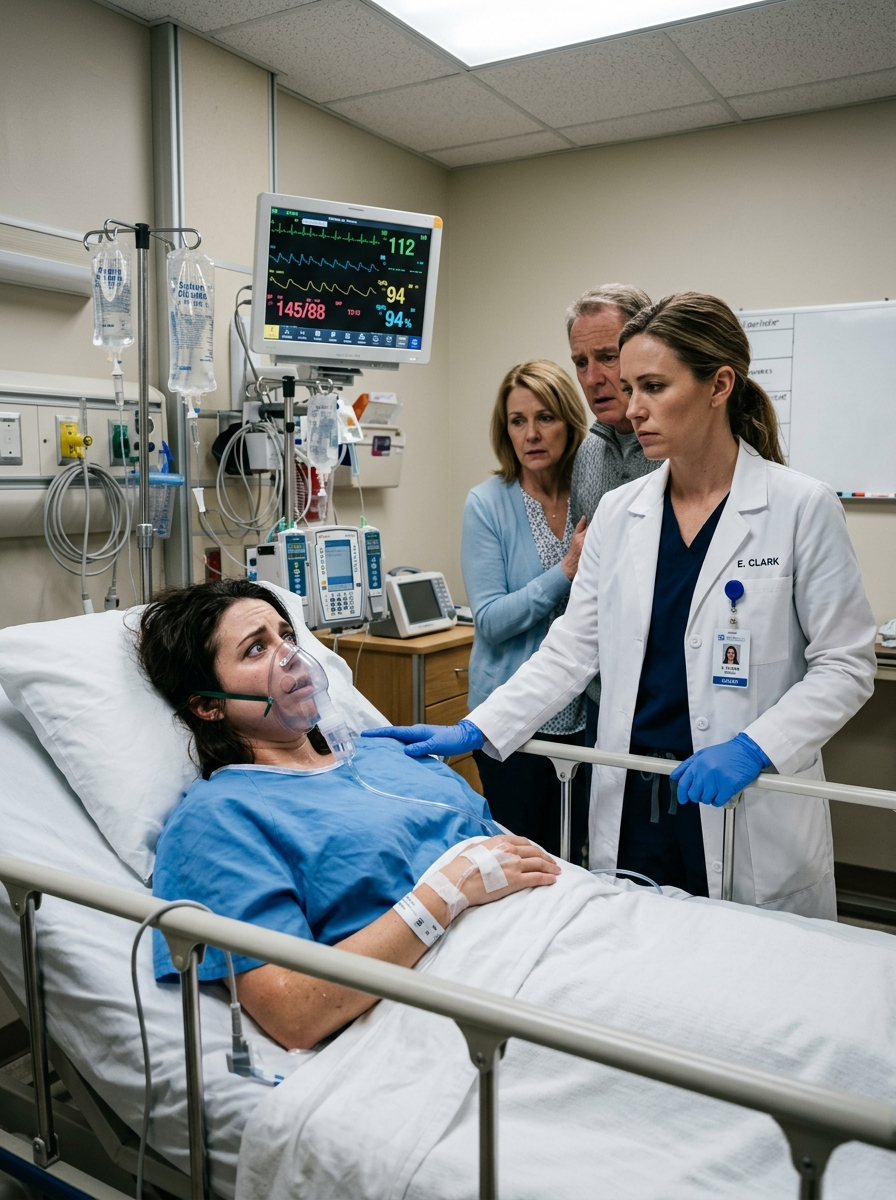
My sister told our parents I had left medical school—a lie that caused them to cut contact with me for five years. They did not attend my residency graduation or my wedding. Last month, she was rushed into the ER. When her attending physician walked in, my mother clutched my father’s arm so tightly it left bruises.
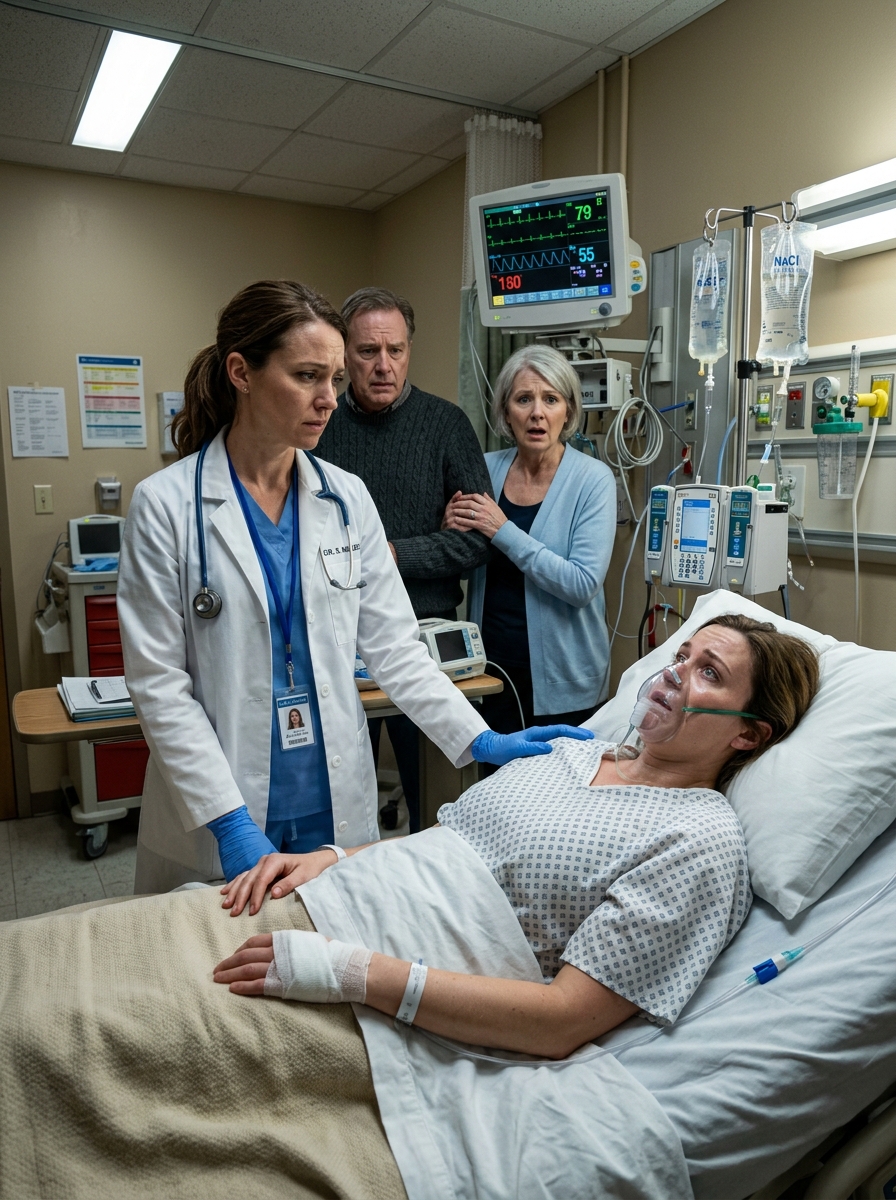
The first time my mother saw me again in five years, I was under the harsh lights of the emergency room with her favorite daughter’s blood on my gloves. She gripped my father’s arm so hard that purple marks formed before either of them could even speak my name.
“Dr. Bennett?” the trauma nurse asked.
I kept my eyes on the chart. “Thirty-two-year-old female, abdominal pain, syncope, hypotension. Prepare OR.”
My sister, Claire, was curled on the stretcher, face gray and damp with sweat. Even behind the oxygen mask, she recognized me instantly.
“Emily?” she whispered.
I had imagined this moment through every lonely holiday and every night shift, every family photo I was excluded from. In my mind, I delivered a perfect speech and watched Claire’s confidence collapse.
Real life did not allow speeches.
“Possible ruptured ectopic pregnancy,” I said. “Ultrasound now.”
Five years earlier, Claire called our parents while I was studying for my second-year pathology exam. She claimed I had dropped out of medical school, accumulated gambling debts, and misused tuition money on a married professor.
None of it was true.
My father called once. “Tell me she’s lying.”
“I can prove it,” I said. “Call the dean. Check my tuition records. Please.”
Claire cried in the background. My mother called me manipulative. My father said, “We didn’t raise a liar,” and by midnight they cut off my tuition, rent, and insurance.
I sent transcripts, enrollment records, and exam results. Claire intercepted the certified mail, claiming she was “helping” with correspondence. She blocked my number, then showed them fabricated messages where I supposedly demanded money.
They believed her because Claire had always been the favored daughter—soft, gentle, and excused.
I survived on loans, tutoring, and sleep-deprived shifts. I finished medical school without them. I completed residency without them. At my wedding, two front-row seats stayed empty until the venue quietly removed them. GRADUATIONGIFTS
My husband, Daniel, a civil-rights attorney, never pressured me to forgive people who never sought the truth. Instead, he helped me preserve every returned letter, tuition record, blocked call log, and suspicious trust notice that appeared later.
The trust notice mattered most. My grandfather had created equal education funds for both of us, but mine showed withdrawals I never authorized. Daniel had already hired a forensic accountant. We were waiting for one final document before filing suit. Claire mistook my silence for surrender. It was preparation.
Now my mother stared at the embroidery on my white coat.
EMILY BENNETT, MD
ATTENDING PHYSICIAN
“You’re a doctor,” she whispered.
At last, I looked at her.
“Yes,” I said. “And Claire is bleeding internally.”
PART 2
The ultrasound confirmed it. Claire needed emergency surgery, and the on-call gynecologic surgeon was still minutes away.
My father stepped forward, pale. “Emily, save your sister.”
Those words struck harder than any apology. He had never once asked if I needed saving.
“I am treating my patient,” I said. “Nothing more, nothing less.”
Claire’s blood pressure dropped. I ordered blood, activated the OR, and stabilized her until surgery arrived. When they wheeled her away, my mother reached for me.
I stepped back. “Do not touch me while I’m working.”
Her hand fell. For the first time, she obeyed.
Claire survived. Fifteen more minutes could have killed her. I documented everything, transferred care, and formally stepped off the case due to conflict.
Only then did I enter the consultation room.
My parents sat together, smaller than I remembered. Daniel stood by the window with a black case.
My mother looked at him. “Who is that?”
“My husband.”
Her lips parted.
My father said, “You got married?”
“Three years ago. You returned the invitation unopened.”
“We never received it,” my mother said.
Daniel placed postal records on the table. “Someone at your address signed for it.”
Then he opened the case.
Documents covered the table: forged trust withdrawals, bank transfers to Claire’s business, tuition records confirming I never left school, and metadata from a fake email account used to impersonate me.
Claire had stolen $184,000 from my education trust.
My father’s hands trembled. “This cannot be real.”
“The bank kept originals,” Daniel said.
My mother shook her head. “Claire said Emily threatened her. She showed us messages.”
“From an address one letter off mine,” I said.
Daniel slid forward the forensic report.
The worst detail: Claire used my tuition withdrawal as startup capital for the office my parents praised as her success. My father stared at the date—my GRADUATION day.
The door opened.
Claire stood there in a hospital gown, pale and furious, gripping her IV pole while a nurse followed. She saw the documents and froze.
“You went through my accounts?” she snapped.
My mother’s expression changed.
Claire understood what she had just admitted.
My father lifted a forged request. “Did you do this?”
Claire laughed sharply. “You had already chosen her. I just made sure she stayed gone.”
Daniel pointed to the recorder on the table. “Choose your words carefully.”
But Claire had spent five years believing consequences did not apply to her.
She admitted intercepting letters, fabricating screenshots, blocking my number, and diverting trust funds. She called our parents “too stupid to verify anything” and said I deserved exile because I made her feel ordinary.
The nurse stood frozen.
When she finished, my father covered his face.
My mother whispered, “Why?”
Claire stared at me with hatred.
“Because she was always going to become someone,” she said. “And I couldn’t let her.”
PART 3
Claire’s confession was only the final piece in a case already built from bank records, metadata, postal scans, and notarized trust documents.
Two weeks after discharge, we filed a civil fraud suit and forwarded evidence to the district attorney.
“She almost died,” my mother said on the phone.
“So did our relationship,” I replied. “You never called for help then.”
My father met me in the hospital cafeteria with my unopened WEDDING invitation and a box of letters.
“We found them in Claire’s desk,” he said. “I should have called. I should have come.”
“Yes.”
“I failed you.”
“Yes.”
He flinched. I did not soften it.
My revenge was not cruelty. It was refusing to shield people from consequences they chose with comfort.
Claire’s business collapsed when vendors discovered stolen trust funds. The court froze her accounts. She pleaded guilty to forgery, identity theft, and theft, receiving eighteen months, restitution, and probation.
My parents sold the lake house to restore the trust after investigators found they had signed documents without reading them. No charges were filed, but the truth spread. PARENTING
At restitution court, Claire wore beige jail clothing.
“You ruined my life,” she hissed.
I stood beside Daniel, steady.
“No, Claire. I stopped you from financing your life with mine.”
The judge ordered full repayment with interest and fees.
Outside, my mother handed me a childhood photo.
“I want my daughter back,” she said.
“You want relief from guilt.”
“I love you.”
“You loved a version of me that never challenged Claire.”
They both went quiet.
I told them reconciliation would require therapy, accountability, and time without expectations. No surprise visits. No pressure. No using Claire’s punishment as proof of healing.
For once, they accepted.
Eight months later, I became director of emergency medicine. Daniel and I bought a house by the river, with a small room painted pale green after I learned I was pregnant.
My father sent monthly letters. My mother worked with a scholarship fund for estranged students and quietly repaid my loans.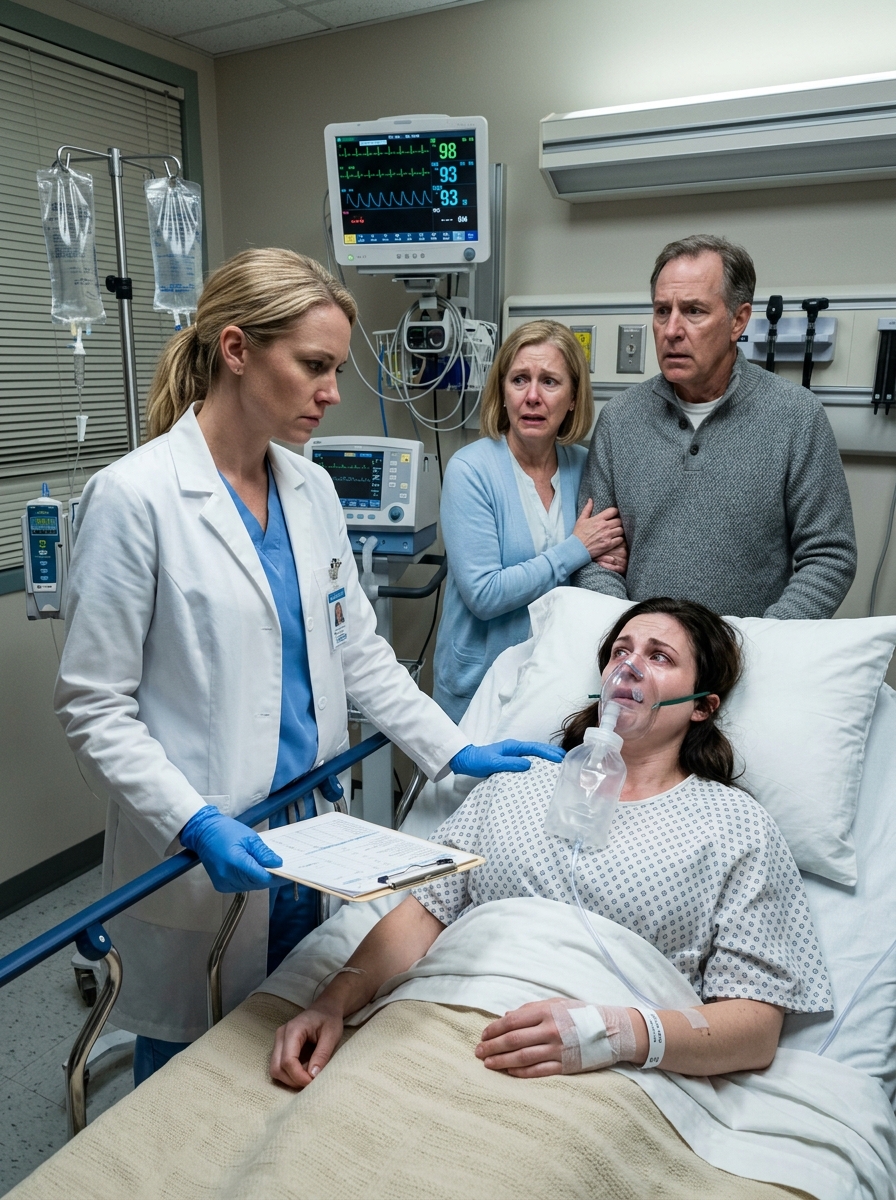
Claire served her sentence. Her messages shifted from anger to excuses, then stopped.
After my promotion ceremony, I saw my residency photo on the mantel. I stood alone in my white coat, smiling despite empty seats.
Daniel touched my hand. “Still hurts?”
“Sometimes.”
Outside, the river reflected city lights.
I used to think revenge was making them feel what they made me feel. I was wrong.
Revenge was becoming someone they could no longer erase.
I turned the photo toward the home we built, switched off the light, and walked into our future with Daniel.
