

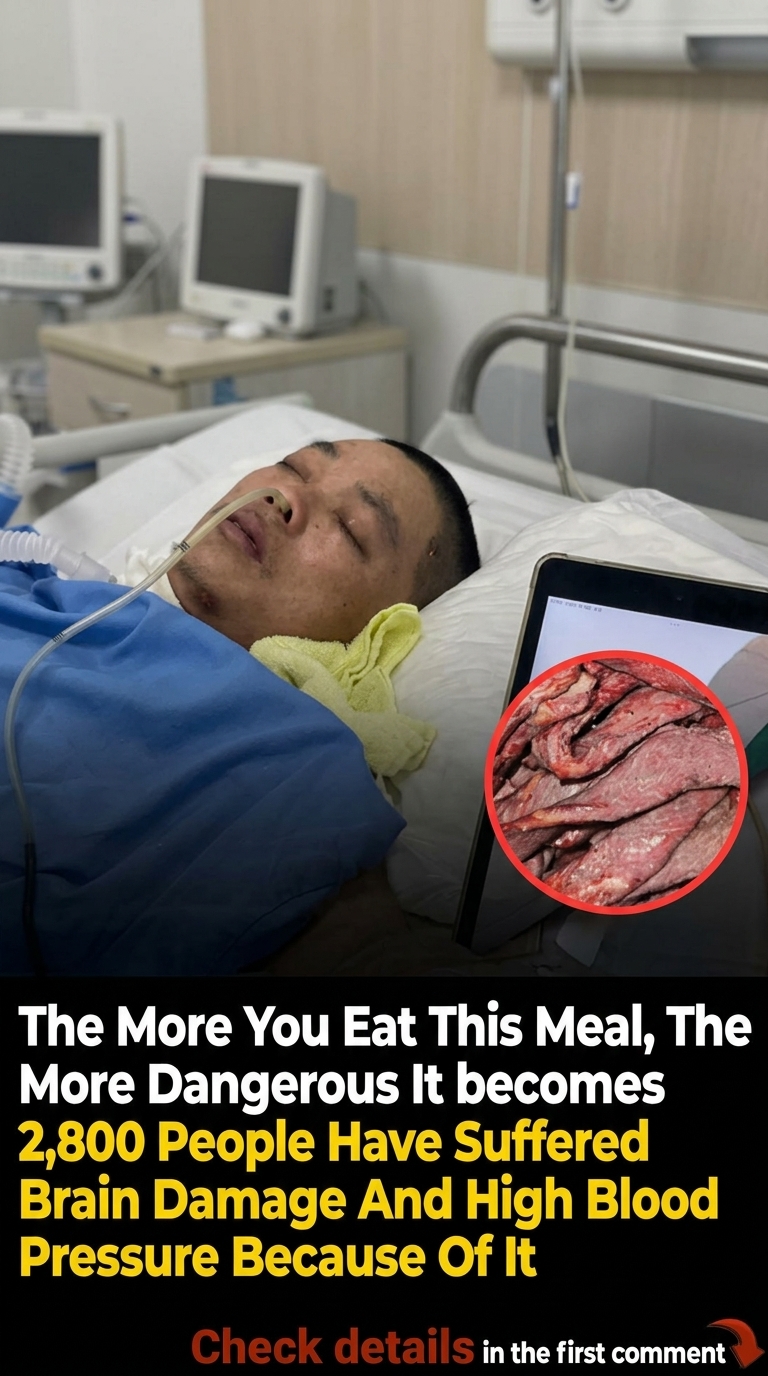
WHY EATING MORE PROCESSED MEAT INCREASES YOUR RISK FOR SERIOUS HEALTH PROBLEMS
Processed meat is designed for convenience.
It’s salty, shelf-stable, and engineered to maintain strong flavor even after weeks in the refrigerator. However, the same processing methods also change what the body is exposed to. Over time, regular consumption of these foods has been associated with increased risks of colorectal cancer, heart disease, and type 2 diabetes.
The aim is not to create fear or insist on perfect diets, but to clarify what current evidence suggests, how these risks may develop, and how simple substitutions can reduce intake without making eating difficult. Meat& Seafood
What “Processed Meat” Actually Means
The term “processed” is often used broadly, but in nutrition science it has a specific definition. Processed meat refers to meat preserved in ways that extend shelf life and enhance flavor.
These techniques include curing, smoking, salting, or adding chemical preservatives. This distinction matters because, across many large-scale studies, the health risks linked to processed meat are stronger than those associated with fresh, unprocessed meat.
Researchers at the Harvard School of Public Health define processed meat as any meat preserved through smoking, curing, salting, or the addition of chemical preservatives.
This includes foods such as bacon, ham, hot dogs, sausages, salami, and many deli meats. These products generally contain higher amounts of sodium, stabilizers, and curing agents than fresh meat. In daily life, processed meat often appears in small amounts that gradually become habitual.
A few slices in a sandwich can become a daily lunch routine. A breakfast sausage can turn into a regular weekend habit.
The health impact usually reflects long-term repeated intake rather than occasional consumption. Understanding what qualifies as processed meat makes it easier to recognize how frequently it appears during the week, including in mixed dishes like pizza, pies, and ready meals. Food
The Can.cer Link Is Not a Rumor, It Is a Formal Classification
The strongest public health warning about processed meat comes from cancer research. After reviewing extensive scientific evidence, the International Agency for Research on Cancer, part of the World Health Organization, classified processed meat as carcinogenic to humans.
This classification reflects the strength and consistency of evidence, not a certainty that every person who eats bacon will develop cancer.
As the World Health Organization states clearly, “In the case of processed meat, this classification is based on sufficient evidence from epidemiological studies that eating processed meat causes colorectal cancer.”
This conclusion carries significant weight. It is based on large population studies tracking dietary patterns over time and comparing cancer rates across different levels of intake while adjusting for other risk factors. The WHO also clarifies a common misconception: when people hear “Group 1,” they sometimes assume the risk is equivalent to smoking.
In reality, the classification reflects the strength of evidence, not identical risk levels across exposures. Even so, the message is straightforward.
When a widely consumed food category reaches “sufficient evidence” for causing colorectal cancer, the most reasonable approach is moderation—especially when it has become a frequent part of the diet. Food
Nitrates, Nitrites, and N-Nitroso Compounds in the Gut
Many processed meats use curing agents such as nitrate and nitrite compounds to inhibit bacterial growth, preserve color, and create the characteristic cured taste.
Once inside the body, these compounds can undergo reactions that produce N-nitroso compounds. Researchers focus on these substances because several are carcinogenic in animal studies, and human research links conditions that increase their formation with higher cancer risk.
The National Cancer Institute’s Cancer Trends Progress Report highlights this concern, stating: “Studies have shown increased risks of colon, kidney, and stomach cancer among people with higher ingestion of water nitrate and higher meat intake compared with low intakes of both, a dietary pattern that results in increased NOC formation.” This statement connects exposure, dietary patterns, and a plausible biological mechanism, which is why it often appears in scientific reviews.
It does not imply that all nitrates behave in the same way. Vegetables also contain nitrates, but they are accompanied by vitamin C, polyphenols, and fiber that may help reduce harmful nitrosation reactions. Processed meat differs because curing agents are combined with heme iron, high-temperature cooking, and low-fiber diets that can influence gut chemistry.
The risk is not caused by a single ingredient, but by a combination of factors that commonly accompany processed meat, especially when it replaces fiber-rich foods over time. Science
SODIUM LOAD, BLOOD PRESSURE, AND VASCULAR STRAIN
Processed meat is one of the easiest ways to consume far more sodium than most people realize. The salt is not simply added on the surface—it is incorporated into the product for preservation and taste, and it accumulates quickly through sandwiches, snacks, and convenience foods.
For many individuals, high sodium intake raises blood pressure, and elevated blood pressure increases the risk of heart disease and stroke.
The U.S. Food and Drug Administration highlights a fact that surprises many consumers: “More than 70% of the sodium people eat comes from packaged and prepared foods.” Processed meat fits directly into this category and is often consumed alongside other salty items such as bread, cheese, sauces, and chips.
Together, these foods can easily push daily sodium intake beyond recommended levels—even when meals do not taste especially salty.
The Centers for Disease Control and Prevention links sodium intake to well-established health outcomes, noting that excess sodium raises blood pressure and increases the risk of heart disease and stroke.
Damage from high blood pressure builds gradually, eventually leading to stiffened arteries, enlarged heart muscle, and a higher likelihood of serious cardiovascular events. For people with hypertension, kidney disease, or a family history of stroke, processed meat is best viewed as an occasional food rather than a daily habit.
HEART DISEASE RISK AND WHAT THE LONG STUDIES SHOW
Beyond its impact on blood pressure, large-scale studies consistently associate higher processed meat consumption with worse cardiovascular outcomes.
While observational research cannot prove cause and effect as definitively as clinical trials, the repeated findings across different populations, countries, and study designs make the association difficult to ignore. This consistency is why many dietary guidelines advise limiting processed meat as part of a heart-healthy pattern.
An American Heart Association report summarizing data from the Cardiovascular Health Study states: “Eating more meat—especially red meat and processed meat—was associated with a higher risk for atherosclerotic cardiovascular disease.” Meat& Seafood
In this research, older adults were followed over many years, with scientists tracking dietary patterns alongside blood markers.
This combination helps connect food intake with biological changes that may contribute to arterial damage. The same report also contextualizes the risk, noting that “the risk was 22% higher for about every daily serving.” A single serving may seem small, but it can be a hot dog, a few slices of bacon, or a modest portion of deli meat.
This is why daily habits matter more than occasional choices. Over time, small repeated exposures can gradually increase risk, eventually contributing to heart attacks, stent procedures, or bypass surgery later in life.
TYPE 2 DIABETES RISK IS NOT JUST ABOUT SUGAR
Many people still view diabetes as purely a sugar-related condition, but nutrition science presents a broader picture.
Processed meat may increase diabetes risk through multiple pathways, including weight gain, chronic inflammation, metabolic effects linked to additives, and overall dietary quality.
It also frequently replaces foods that improve insulin sensitivity, such as legumes, whole grains, and minimally processed proteins. In 2010, researchers at the Harvard School of Public Health reported a strong association in a meta-analysis, finding that processed meat consumption was linked to a 42% higher risk of heart disease and a 19% higher risk of type 2 diabetes. Meat& Seafood
The authors also noted that processed meats contain significantly more sodium and nitrate preservatives than unprocessed meat, reinforcing the idea of a combined “risk package.”
More recently, scientists at Harvard T.H. Chan School of Public Health analyzed data from 216,695 participants in the Nurses’ Health Study, NHS II, and the Health Professionals Follow-up Study, with dietary data updated every two to four years over as many as 36 years.
Their finding was striking: “Each additional daily serving of processed red meat was associated with a 46% higher risk of developing type 2 diabetes.” This result does not rely on extreme intake; it highlights the effect of consistent daily consumption.
BRAIN HEALTH AND DEMENTIA RISK SIGNALS ARE EMERGING
Research on brain health in this area is still developing, but emerging findings reflect what cardiometabolic research has long suggested.
Vascular health, inflammation, and metabolic stress all affect brain function, and dietary patterns associated with cardiovascular risk often show similar links to dementia. At the 2024 Alzheimer’s Association International Conference, researchers presented long-term cohort findings, including data from the Nurses’ Health Study and the Health Professionals Follow-up Study.
These studies followed dietary habits for up to 43 years and recorded 11,173 dementia cases. Their conclusion was clear: “Consuming about two servings per week of processed red meat was associated with a 14% higher risk of dementia compared with eating less than roughly three servings per month.” Health
This represents an association rather than confirmed causation, but the magnitude of the finding is notable. The Alzheimer’s Association also emphasized prevention, with Heather M. Snyder, Ph.D., highlighting dementia risk reduction as a key priority. The findings reinforce that no single food prevents dementia, but overall dietary patterns play an important role. Practically, this adds another reason to limit processed meat, especially for individuals with cardiovascular risk factors, diabetes, or a family history of cognitive decline.
WHAT “LESS PROCESSED MEAT” LOOKS LIKE IN REAL MEALS
Advice to “cut back on processed meat” becomes more useful when translated into practical steps. A simple strategy is to identify meals where processed meat appears most often and gradually replace them one at a time.
This avoids strict all-or-nothing thinking that is difficult to maintain long term. It also reduces intake while keeping meals satisfying. A Harvard Gazette report offers a realistic benchmark from lead author Renata Micha: “Based on our findings, eating one serving per week or less would be associated with relatively small risk.” Meat& Seafood
For someone eating processed meat multiple times per week, reducing to once weekly represents a meaningful improvement.
Substitution is another effective approach. Research from Harvard T.H. Chan School of Public Health shows lower diabetes risk when red and processed meat is replaced with plant-based proteins such as nuts and legumes. Similar findings from the Alzheimer’s Association suggest reduced dementia risk when processed red meat is swapped for beans, nuts, or tofu. Substitution works because it both reduces harmful exposure and improves dietary quality simultaneously.
CONCLUSION
Processed meat sits in a complex space between convenience and health risk. The evidence linking it to cancer is well established and widely accepted. Cardiometabolic research consistently shows associations supported by biological mechanisms.
Emerging brain health research aligns with these patterns. While this does not justify alarm, it does support informed awareness of long-term effects. As the American Cancer Society notes: “IARC considers there to be strong evidence that both tobacco smoking and eating processed meat can cause cancer.” Meat& Seafood
The ACS also emphasizes an important distinction: smoking carries a far higher level of risk, even though both fall under the same evidence category. This nuance helps prevent exaggeration while preserving the main message.
Reducing processed meat intake is a practical, low-regret decision for many people. A straightforward approach is moderation—treat processed meat as an occasional food rather than a daily default. Build most meals around minimally processed options such as fish, eggs, dairy, legumes, tofu, and fresh meats if desired. Pay attention to sodium content on labels and how quickly it accumulates throughout the day. Over time, these small consistent choices can reduce exposure to curing agents and excess salt while improving overall diet quality, gradually shifting long-term health risk in a more favorable directio
