

The Birthday Party That Showed Me Who Truly Shows Up for a Child
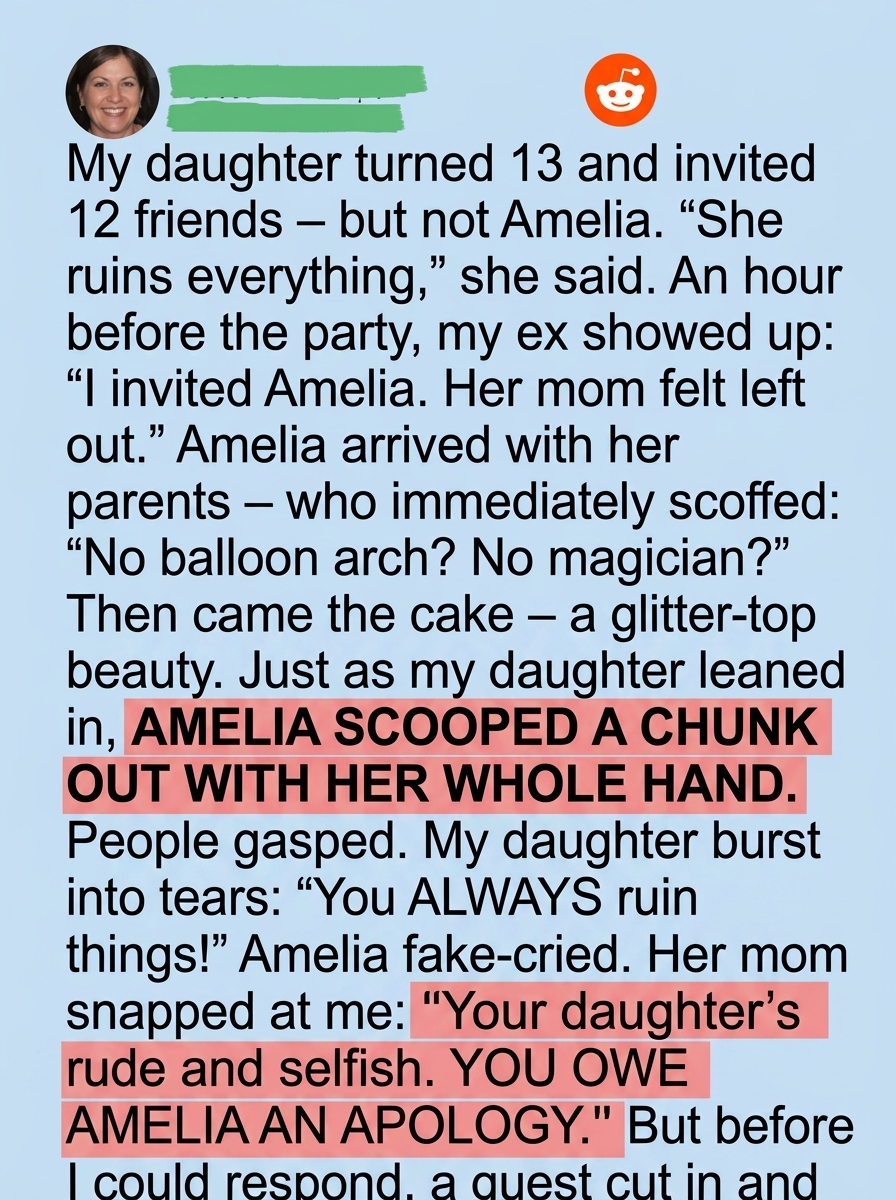
I believed I had carefully planned the perfect thirteenth birthday celebration for my daughter, Lily.
She has always been kindhearted—sometimes so kind that she finds it difficult to recognize when others are taking advantage of her. When we discussed the guest list, she clearly asked that a specific classmate, Amelia, not be invited. There had been enough uncomfortable history between them that Lily wanted her birthday surrounded only by people who made her feel safe, happy, and appreciated. I respected that choice.
For two weeks, I focused entirely on preparing the celebration. Pink and gold decorations filled the house, activities were set up, and a rich chocolate cake waited in the dining room. My ex-husband, Mark, and I were no longer together, but we both loved our daughter deeply, and I expected the day to remain centered on her.
For a while, it did.
Lily laughed with her closest friends, and everything felt warm and joyful. Then the front door opened, and the atmosphere shifted instantly.
Mark arrived—not alone—but with Amelia and her parents, Karen and Tom.
When I looked at him in surprise, he explained that he had met them and extended an invitation without checking with me first. I was disappointed, but I forced myself to stay calm for Lily’s sake.
Unfortunately, things only grew more uncomfortable from there.
Karen and Tom quickly began criticizing small details about the party. What should have remained a joyful celebration slowly turned tense. Still, I hoped the afternoon could recover.
The turning point came when it was time for cake.
As everyone gathered around the table, Amelia suddenly reached forward and grabbed a large handful of frosting from the cake with her bare hand. The room went silent. Before anyone could react, Lily’s face crumpled, and she ran upstairs crying.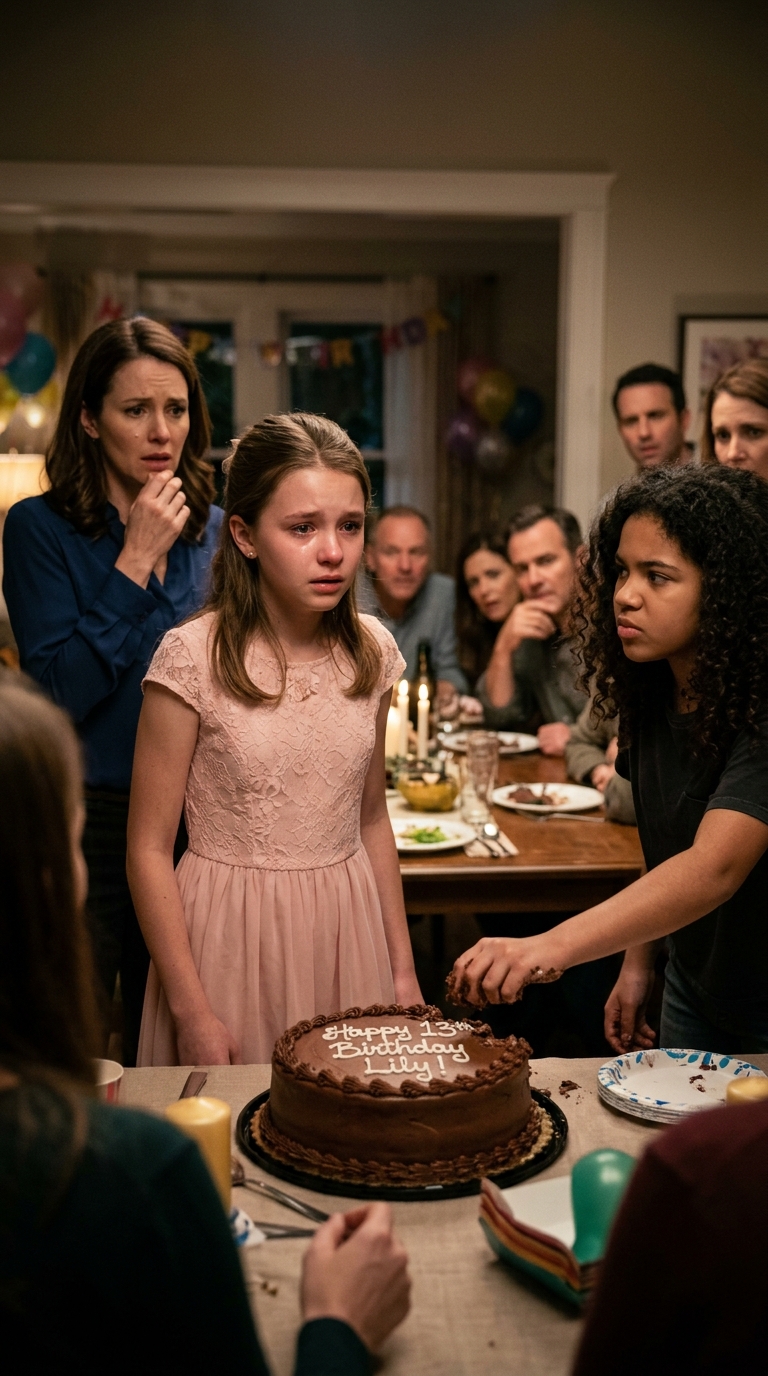
My heart shattered for her.
What hurt even more was what followed.
Instead of guiding their daughter to understand why her behavior was wrong, Karen and Tom immediately moved to defend her. Emotions escalated quickly, and the situation became strained. In moments like that, adults often become more focused on being right than on helping children learn accountability. Thankfully, others in the room chose differently.
Several parents gently but firmly spoke up. They reminded everyone that the focus should remain on Lily’s birthday and that respect must come first. It was uncomfortable, but sometimes boundaries are necessary for children to learn what is acceptable.
Eventually, Karen and Tom left with Amelia. Shortly after, Mark also left.
The house fell quiet.
For a moment, I feared the day was ruined.
I was wrong.
Almost immediately, the remaining parents stepped in to help. One called a local bakery. Others cleaned and reset the dining area. The children worked together on a handmade birthday banner while I went to pick up a replacement cake.
When we finally called Lily back downstairs, she paused at the bottom step and looked around the room. What she saw wasn’t perfection.
She saw people who cared.
She saw friends who stayed.
She saw adults who chose kindness over conflict.
And slowly, her smile returned.
The rest of the afternoon wasn’t memorable because everything went perfectly. It was memorable because when things fell apart, people came together to fix them.
Looking back, that is the lesson I carried with me.
We cannot control who disappoints us. We cannot prevent every difficult moment. But we can notice who responds with kindness, respect, and generosity when things go wrong.
The birthday cake was replaced.
The decorations stayed up. The games continued.
But the greatest gift Lily received that day was something far more lasting: the understanding that she was surrounded by people who would stand with her when it mattered most.
And in the end, that meant far more than a perfect party ever could.
