

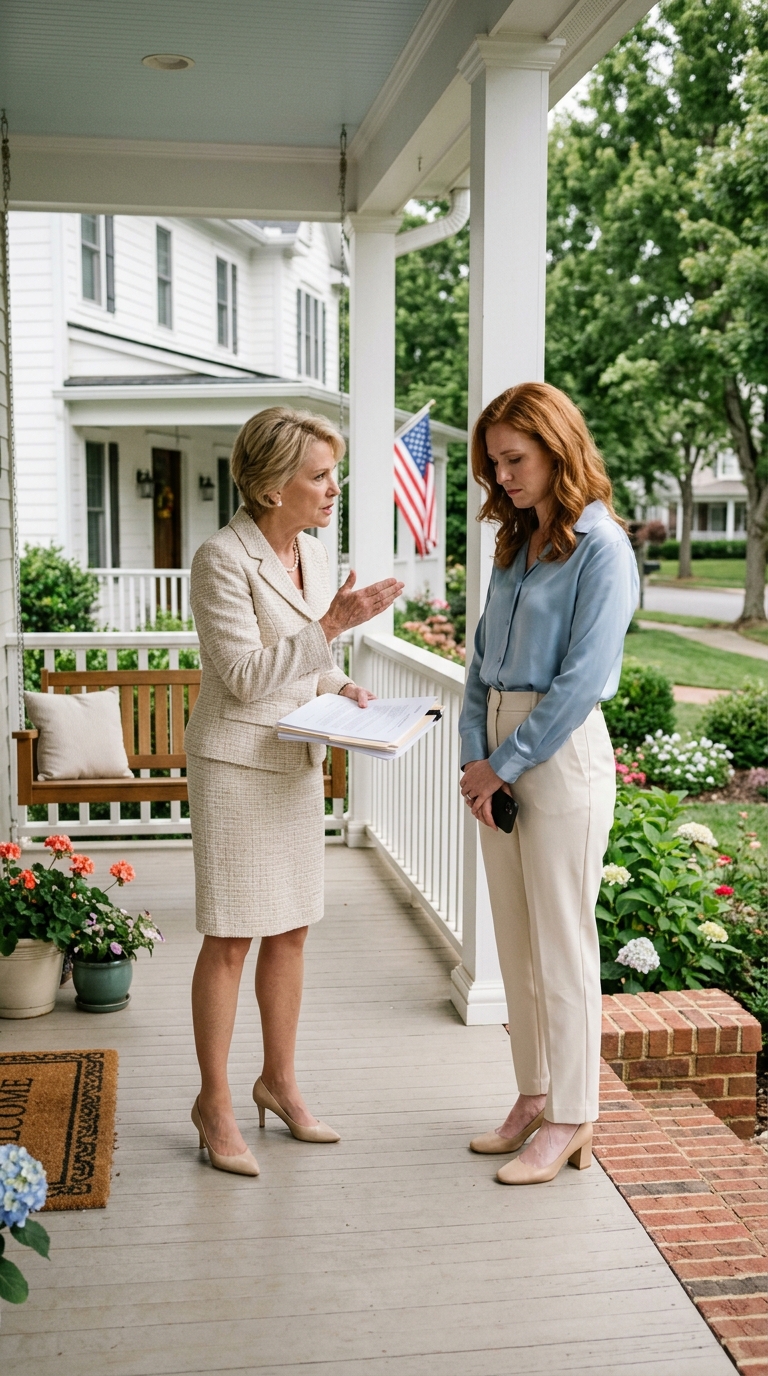
The call came on a quiet Tuesday morning, cutting through my routine of strong coffee and early emails. I was seated at the oak kitchen table in my father’s old estate, sunlight spilling across the worn surface in bright bands, when Meredith’s name lit up my phone.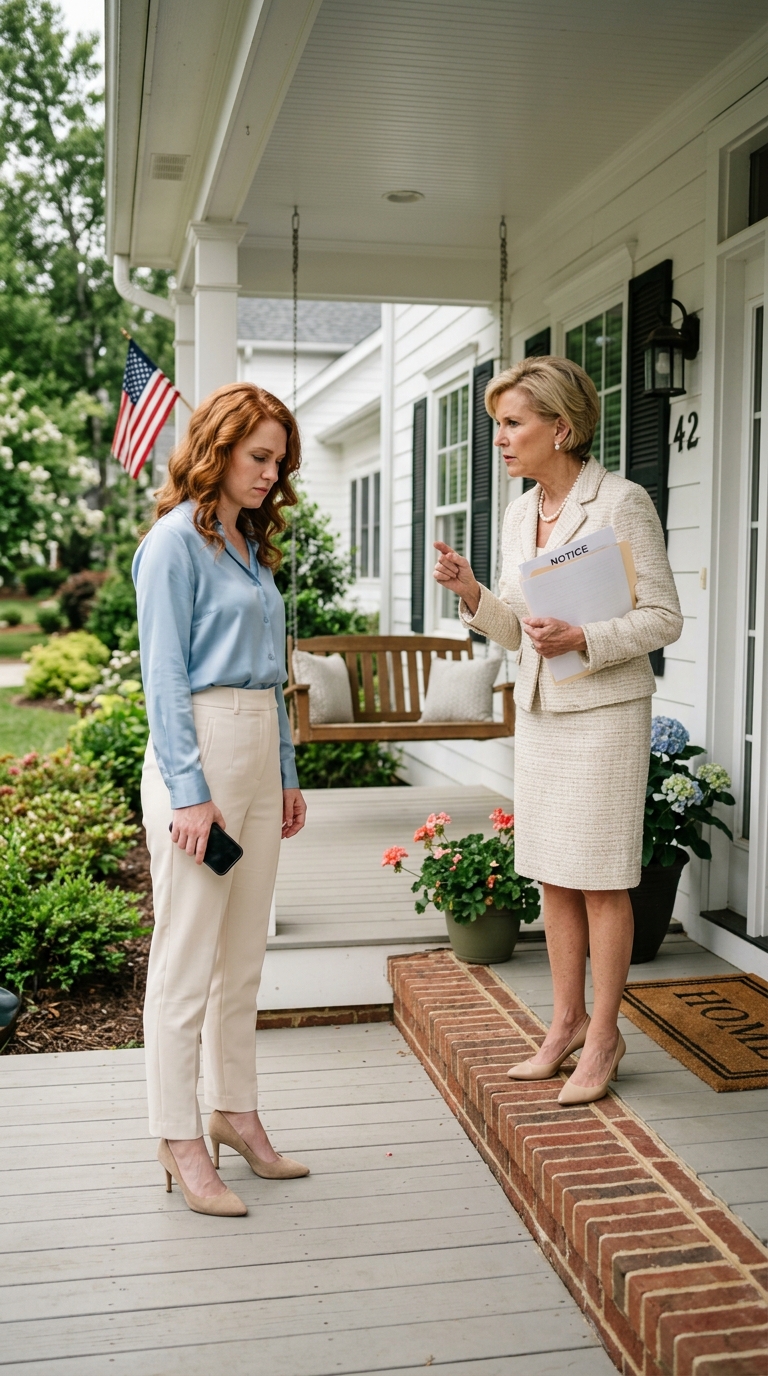
I let it vibrate for a few seconds, taking a slow sip before answering in a deliberately neutral tone. Nothing good ever came from Meredith—she didn’t call to connect, only to remind people she held control.
“Hello, Meredith,” I said evenly.
“I have sold the property,” she announced without greeting. Her voice carried that familiar polished satisfaction, and I could almost picture her smile as she waited for me to break.
“The papers are signed, and the new owners take possession next week,” she continued, pride sharpening her tone. “I hope you’ve finally learned respect for your elders,” she added.
I stayed silent for a moment, absorbing the arrogance. I’m Joanna Lawson, and the house she was casually disposing of was where I grew up.
A beautiful home with a wraparound porch, a stained-glass window on the landing, and an old claw-foot tub my father called a masterpiece. The place where I learned to read, and once hid under the dining table during a storm while he told me the sky was just rearranging furniture.
“The house?” I finally asked, carefully keeping amusement out of my voice. “You mean my father’s house, Meredith?”
“Don’t play games with me, Joanna. You know exactly what property I mean,” she snapped. “You’ve been living there rent-free since your father died, but that ends next Friday.”
I took another slow sip as she continued, my thoughts already drifting back to a private meeting with my father’s lawyer just days after the funeral. Meredith had no idea it ever happened—or about the trust my father had set up long before she entered our lives.
“That’s certainly interesting,” I said, looking out at the garden. “Are you completely certain this is legal?”
She scoffed, pacing somewhere on her end. “Of course it’s legal. I’m his widow and the house was in his name.”
“You may have been his favorite daughter, but I have rights you can’t ignore,” she added. “Maybe next time you’ll think before stopping me from remodeling the foyer.”
Her real motive surfaced then, tied to the time I blocked her from destroying the house’s historic features. She had wanted to rip out hand-carved banisters, replace the hardwood with cheap laminate, and remove the stained glass my father had restored.
“I see,” I said, glancing at the table’s wood grain. “I hope you got a good price for it.”
“Don’t worry about the price, Joanna,” she said sharply. “Just be gone by next week. The buyers are eager to start renovations.”
Her smugness practically dripped through the line, imagining me panicking. “Thanks for letting me know, Meredith,” I said, then ended the call.
I gave a quiet laugh at how confidently she had stepped into a trap she didn’t see. She had always underestimated me—and more importantly, my father.
He had been a quiet man, and quiet men are often mistaken for harmless by those who only understand loud power. I called Bob Abernathy, who answered on the second ring.
“Joanna,” he said warmly. “I was wondering when she’d make her move.”
“She did it, Bob,” I said, walking toward the window. “She actually tried to sell the house.”
A dry chuckle came through. “Did she? Then things are about to get interesting.”
“Shall I proceed?” he asked.
“Yes,” I said. “And please make sure the buyers understand they were misled. I don’t want them punished for her greed.”
“I already anticipated that,” he replied. “I’ll handle it.”
After we hung up, I walked through the house, letting my fingers trace walls my father had painted himself. Every room held him—the reading nook, the kitchen island where he taught me bread-making, the garden beyond.
Meredith had married him when I was twenty-three. At first, she was all warmth and charm—calling me sweetheart, bringing lemon bars, playing the perfect wife.
But after the wedding, cracks formed. Subtle remarks about my closeness with my father. Suggestions that I should build a life away from the house.
My father noticed everything, even if he didn’t confront it right away. In his final months, he called me into his study while Meredith was out, the scent of cedar and old books surrounding us.
“Jo, trust me,” he said quietly. “I’ve made arrangements for you.”
“When the time comes, see Bob Abernathy,” he added. “He’ll explain everything.”
Two weeks later, he was gone, and Meredith moved fast—taking control, storing his things, redecorating without care.
What she didn’t know was that the house was in a trust. And I was the sole beneficiary.
Her next message arrived: keys by Thursday. “Don’t make this difficult, Joanna.”
I replied calmly, “Don’t worry, Meredith. Everything will work out exactly as it should.”
She mistook my calm for surrender. She always did.
I spent the morning sorting through photographs—my father and me covered in paint, standing among his roses. Meredith had once called them outdated and wanted gravel instead. I stopped her. Now they bloomed freely.
By afternoon, Bob called again.
“It’s moving fast,” he said. “The buyers’ attorney has been notified of the true ownership.”
“They’re upset, but relieved we caught it early,” he added. “Meredith will hear soon.”
“Do you want me there when it happens?” he asked.
“No,” I said. “Let her face it alone.”
“As you wish,” he warned. “She won’t take it well.”
He was right.
By mid-afternoon, my phone exploded with calls and messages.
“What have you done, Joanna?” one read.
I muted it and walked into the garden.
That’s when I heard the car.
Gravel scattering. Engine cutting hard.
Meredith stormed toward me, hair undone, a crumpled paper in her hand.
“You conniving little brat!” she shouted. “You planned this behind my back!”
I stayed seated. “Planned what, Meredith?”
She shoved the paper at me. “You and Bob set me up.”
“Actually,” I said, standing, “my father and Bob arranged everything years ago. I just followed instructions.”
Her expression faltered. She stepped back slightly.
“Your father would never do this,” she whispered.
“My father did it to protect me—and the house,” I said.
“That’s impossible,” she insisted. “He loved me.”
“Did he?” I asked softly.
Silence stretched. Her certainty cracked.
“The house was never yours to sell,” I continued. “It was in a trust long before you arrived. I’m the only one with authority.”
“You’re lying,” she said weakly.
“Check the records.”
Her hands trembled. “The buyers are threatening to sue me,” she said, panic rising. “Do you understand how humiliating this is?”
“About as humiliating as evicting me from my childhood home,” I replied. “Or pretending love to take ownership.”
She flinched.
“I know about the money,” I added. “And the men you met while he was sick.”
Her eyes widened. “He knew?”
“He saw everything,” I said. “And he made sure you’d never get the house.”
“This isn’t over,” she said, voice hollow.
“It is,” I said, lifting my phone. “I recorded this.”
She froze.
“Leave. Leave me. And never speak my father’s name again.”
Her mouth tightened. “You wouldn’t dare expose this—it would damage his reputation.”
That almost made me smile. “His reputation is fine. Yours isn’t.”
She stared, searching for control and finding none. Then she turned and walked away.
When she was gone, I smoothed the crumpled letter and read the legal confirmation again. No claim. No leverage. No victory.
Bob texted: “How did she take it?”
“As expected,” I replied. “She knows she’s lost.”
“Your father would be proud,” he wrote.
I stood in the garden for a long time.
Over the next weeks, the house changed. It felt lighter. I restored what she had altered, brought back furniture, rehung my father’s paintings.
Then one rainy afternoon, I found an envelope hidden in his study.
“My dearest Jo…”
My hands shook as I read.
He had known everything. About Meredith. About the manipulation. About the poisoning he suspected but tolerated while building protections for me.
He had evidence hidden behind a loose brick in the fireplace.
Inside: a USB drive.
I found footage—Meredith near his tea, something in her hand. Calls discussing selling the house. Everything.
I called Bob.
“Do you want to go to the authorities?” he asked.
“Not yet,” I said. “It’s enough to hold.”
He understood.
The next day, Meredith’s lawyer sent a document: she relinquished all claims and left the state.
A note inside read, I lost. Just don’t use what you have.
She was gone.
For the first time, the house was truly mine.
I spent a year restoring it, filling it again with life and laughter. I never used the USB. I didn’t need to. Knowing was enough.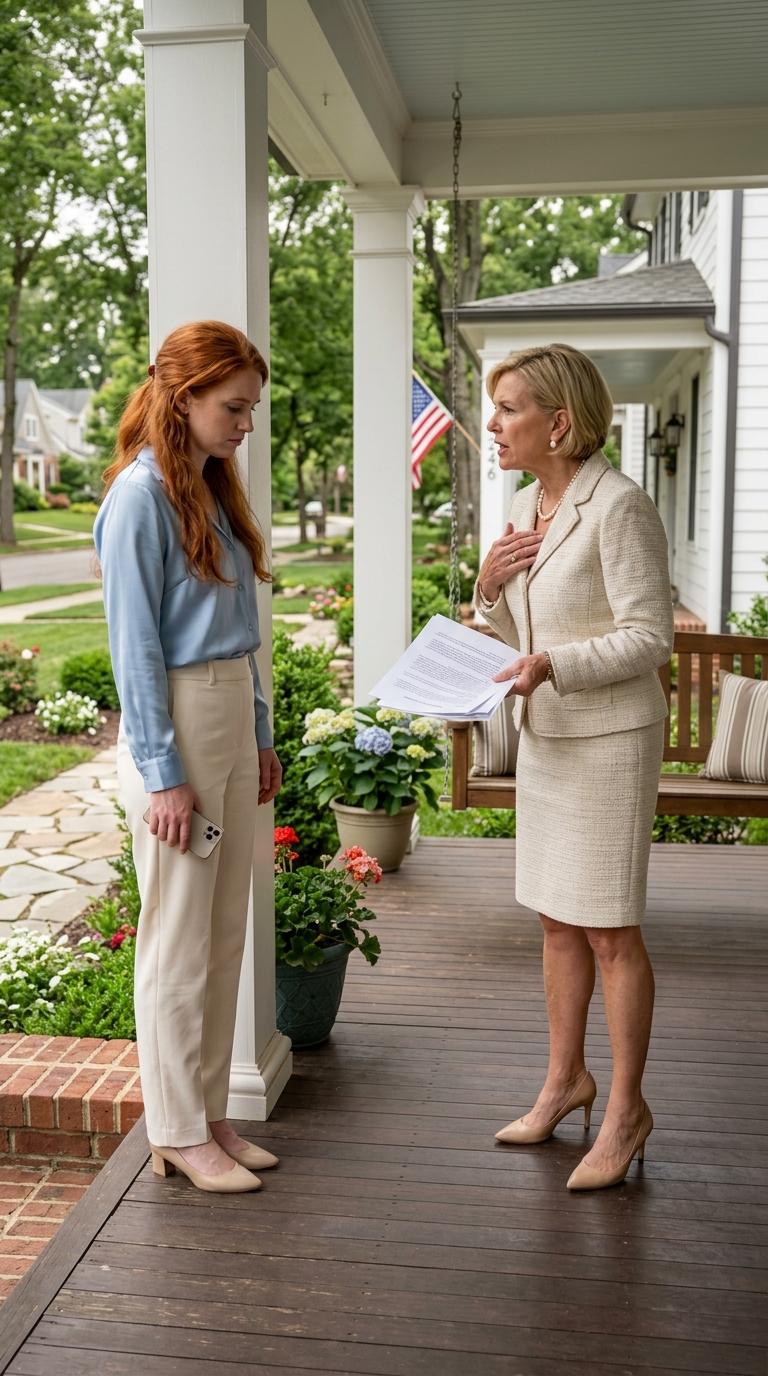
Now I sit on the porch each evening, coffee in hand, watching Vermont sunsets.
The roses still bloom.
And I understand what my father meant.
Strength isn’t loud.
It’s patient.
And sometimes, it waits until the exact moment truth can no longer be stopped.
