

Part 1
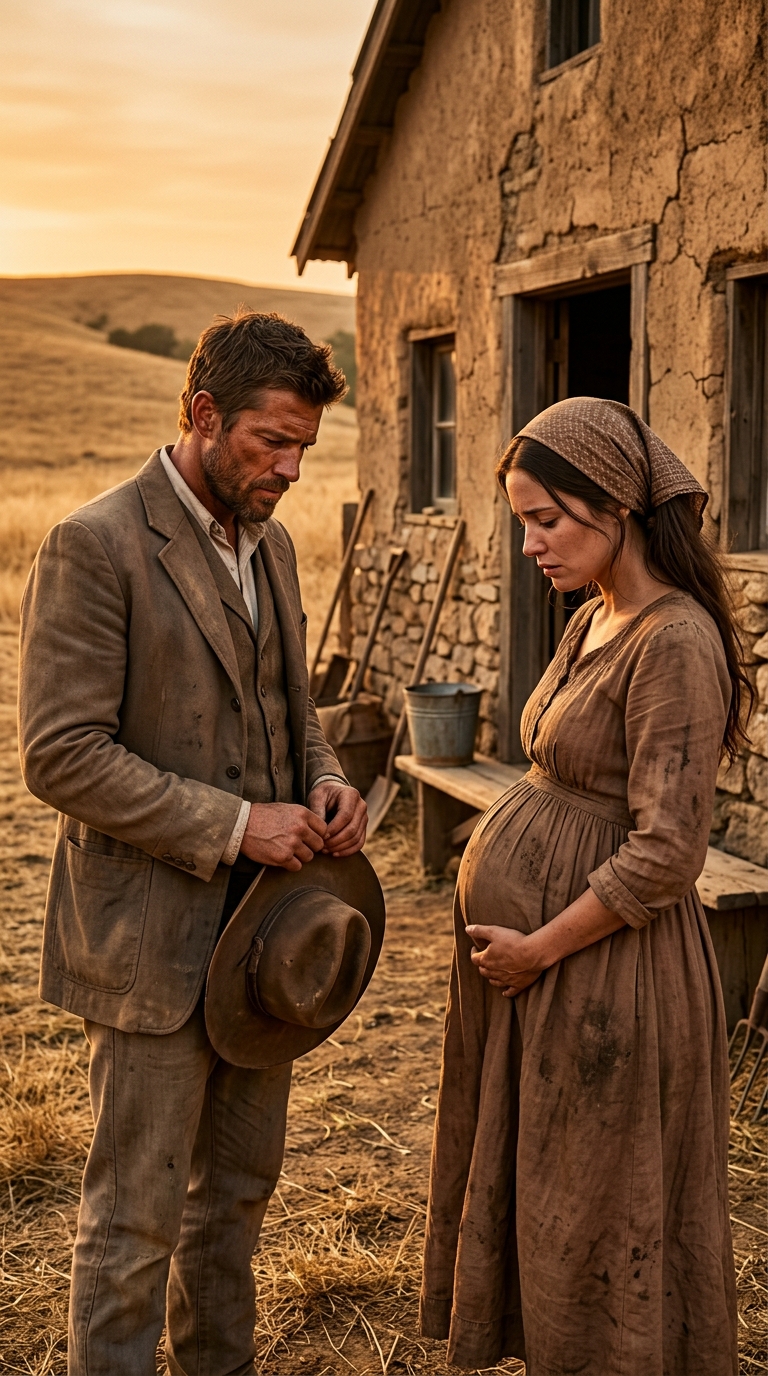
The horse stopped before Gabriel Arriaga saw the girl. It was a blazing afternoon on the outskirts of Durango, when the sun beat down on the dry earth like a white sheet and Hacienda San Miguel seemed to sleep under the dust. Gabriel was riding Sombra, his old horse, checking the boundary lines where no one had lived for years. As he passed the adobe shack his father had built long ago, he saw something that didn’t belong to that abandonment: a washed dress hanging on a twisted wire. He dismounted slowly, hand on his hat. He pushed the half-fallen door and froze. Inside, sitting against the wall, was a very pregnant young woman, barefoot, with her black hair undone and both hands protecting her belly as if the whole world wanted to tear it away from her. She looked at him in terror. Gabriel felt something old crack open in his chest. Eleven years earlier he had let his daughter Lucerito go without a fight, after his wife Rosario’s death, and ever since then the guilt had lived with him like another guest in the house. That trembling girl on the floor was not his daughter, but sometimes God doesn’t send answers: He sends similar wounds to see if this time you learn how to heal them.
“I’m not going to hurt you,” Gabriel said, raising his hands. “This land is mine, but you don’t have to leave.”
The young woman didn’t answer. She only tightened her arms around her belly even more.
“I have a house nearby. There’s food, clean water, a bed. You can come if you want.”
She finally spoke, her voice dry:
“I don’t want to.”
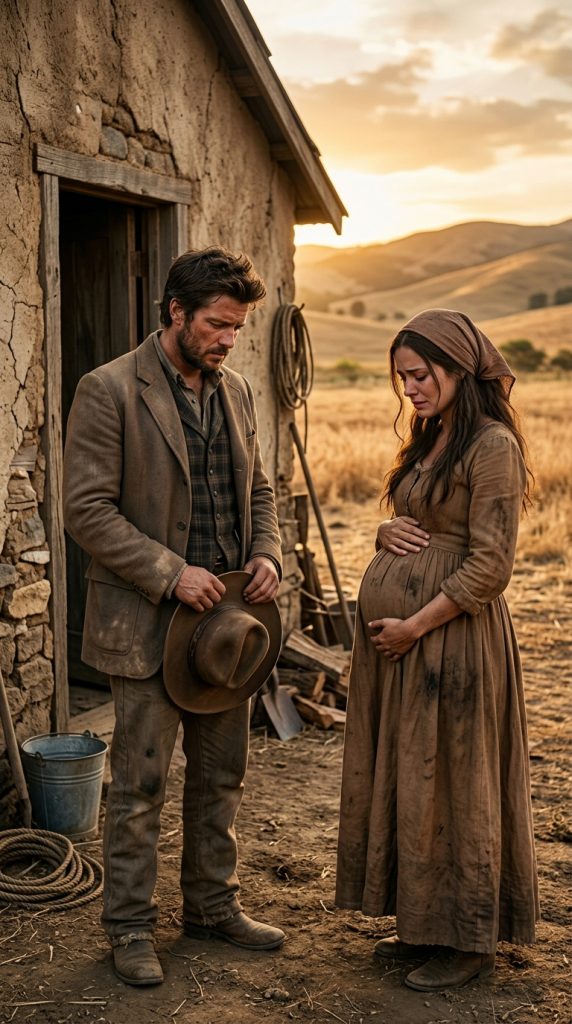
Gabriel didn’t insist. He knew that kind of “no.” It wasn’t rudeness; it was a wall. He took off his hat, nodded, and left. But that night he couldn’t sleep. He thought about her frightened eyes, the broken roof of the shack, the hard tortillas he had seen on a cloth. He thought about Lucerito, the little girl who had left with her grandmother for the city because he, shattered by Rosario’s death, hadn’t known how to hold her when she needed it most. The next morning, before dawn, he filled a basket with beans, tortillas, milk, fresh cheese, and a serape. He rode to the shack, left everything at the door, knocked twice, and left. The following day he returned. The basket was empty and clean.
Two weeks passed like that. Gabriel left food without asking for anything. The girl accepted it without thanking him out loud. Don Jacinto, the old foreman of the hacienda, watched him from the porch one afternoon.
“Who are you carrying your soul to in that basket, boss?”
Gabriel told him.
Don Jacinto listened without judging.
“A wounded animal doesn’t eat from your hand the first day. First you have to let it know you’re not holding a rope.”
From then on, Gabriel changed his routine. He left the basket and sat fifteen paces from the shack, looking at the sierra, without speaking. On the fourth day, the door opened just a crack. On the fifth, she came out and sat far away.
“My name is Soledad,” she said.
Gabriel didn’t smile, so as not to scare that small miracle.
“I’m Gabriel.”
And he said nothing more.
Part 2
Soledad had come to the shack fleeing from Hacienda La Cumbre, the property of Don Máximo Rivas, a rich man who treated his workers like furniture. She had worked in the kitchen there since she was seventeen, after becoming an orphan. The boss’s son, Ignacio Rivas, had courted her with sweet words, promises hidden behind the storeroom, and gifts that, to a lonely girl, seemed like affection. When Soledad became pregnant, Ignacio denied everything. Don Máximo threw her out before nightfall and warned her that if she spoke, no one in Durango would ever give her shelter again. Soledad walked for weeks along dusty roads, slept in abandoned chapels, and ate prickly pears and pieces of bread that some women gave her out of pity. When she found Gabriel’s shack, she decided to stay there even if the roof fell in, because at least no one could throw her out again.
Gabriel didn’t know the whole story, but he guessed it from the way she shrank back at any sudden movement. That was why he never asked about the baby’s father, never wanted to know where she came from, and never opened a door she hadn’t opened first. Soledad began visiting the porch of the hacienda. She would sit on a bench that Don Jacinto had placed “by chance” in the shade. Sometimes she drank coffee. Sometimes she listened to Gabriel talk about the cattle, the clouds, the earth that smelled different when rain was coming. Little by little, the house stopped feeling like a tomb.
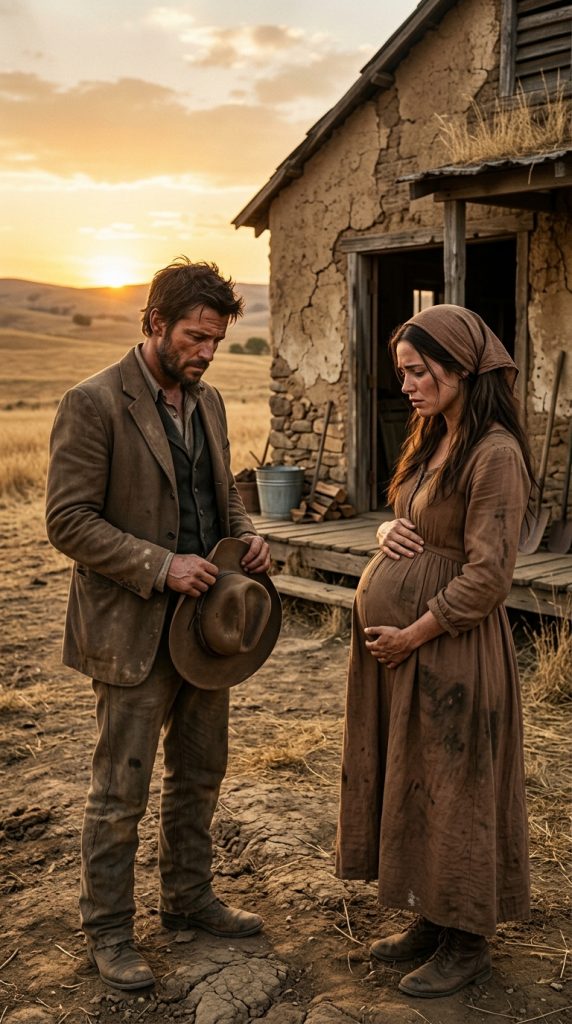
One morning, Gabriel arrived at the shack and found her pale, one hand pressed against her belly.
“It’s been hurting since dawn,” she admitted. “I’m scared.”
Gabriel’s blood ran cold.
“I’ll take you to the hacienda. Just until it passes. You have my word.”
Soledad looked at him for a long time. Then she nodded.
He walked beside the horse for nearly an hour, holding the reins, watching every stone on the path. Don Jacinto was already waiting. He prepared the guest room, hot water, and sent for Doña Petra, the town midwife. The woman examined Soledad and said the baby was strong, but she needed to rest and eat better.
That night, a storm struck the hacienda. Soledad woke up frightened by the thunder and went out to the corridor. She saw Gabriel in the kitchen, with his back to her, making atole. He didn’t know she was watching. The lamplight outlined the dark circles under his eyes, his tired shoulders, an old sadness that seemed stuck to his bones.
“A stormy night calls for hot atole,” he said when he noticed her.
Soledad sat at the kitchen table for the first time. They drank in silence. Then, without him asking, she told him everything: Ignacio, the humiliation, Don Máximo’s threat, the road, the hunger, the fear. Gabriel listened without interrupting. When she finished, he only said:
“I’m very sorry.”
Two simple words. No promises of revenge, no pitying her like a beggar. And precisely because of that, Soledad felt something inside her break.
Days later, Gabriel finally opened Lucerito’s closed room. There was the cradle he had carved when Rosario was expecting their daughter, a rag doll, a little dress, eleven years of dust on memories he had never dared touch. He sat on the cradle and cried like he hadn’t cried since he watched his little girl leave. At dawn, he brought out white paint, cleaned the walls, washed the curtains, and prepared the room for Soledad’s baby. While he painted, Don Jacinto told him:
“You’re not just fixing a room, boss. You’re opening a door.”
Gabriel understood that it was true.
But the peace didn’t last long. One afternoon, three armed men arrived at the hacienda. Leading them was Ignacio Rivas, elegant and perfumed, with the rage of someone who believes everything belongs to him.
“I’ve come for that woman,” he said. “My father doesn’t want any scandals.”
Soledad appeared in the corridor, white as chalk.
Gabriel stepped in front of her.
“In my house, no one takes anyone by force.”
Ignacio laughed.
“So now the widower is playing savior? That child isn’t even yours.”
The words ignited something fierce in Gabriel.
“Being a father isn’t about planting fear and then denying the harvest.”
Ignacio drew a pistol. Don Jacinto raised his shotgun from the porch.
“Lower the weapon, boy. Cowards don’t give orders here.”
At that moment, Soledad screamed. Not from fear. From pain. The labor had begun.
Part 3
The storm returned as if the sky wanted to split open over the hacienda. Doña Petra arrived wrapped in a soaked shawl, pushed everyone out of the room, and took charge like a war general.
“Hot water. Clean sheets. And you, Don Gabriel, if you’re going to tremble, tremble while you work.”
Ignacio tried to stay, but Don Jacinto aimed the shotgun at him.
“You’ve already done enough damage.”
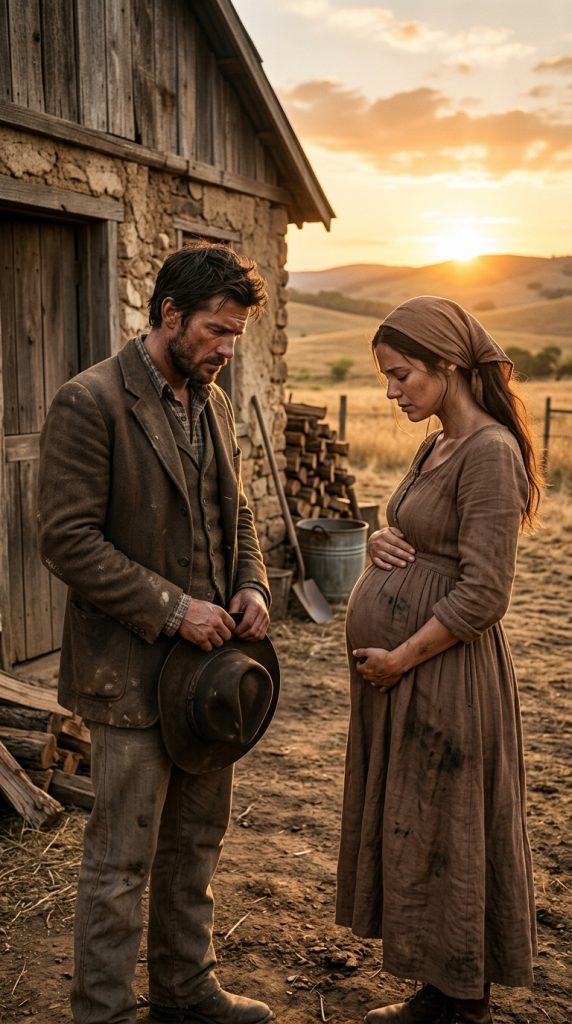
Rivas’s men fled when they heard Gabriel’s workers coming from the corral with machetes and lanterns. Ignacio left swearing he would return with his father and the law. But that night no threat entered the house. There were only Soledad’s cries, Doña Petra’s prayers, and Gabriel in the corridor, hat in his hands, begging the Virgin of Guadalupe not to make that girl pay for the sins of others.
At dawn a big, dark-skinned boy was born, with a strong cry that rang through the hacienda like a bell. Doña Petra opened the door and looked at Gabriel.
“Are you the father?”
Gabriel looked at Soledad. She, exhausted, holding the baby in her arms, did not lower her eyes.
“If he wants to be,” she whispered.
Gabriel felt that life was offering him a chance he didn’t deserve, but one he had to honor.
“Yes,” he said, his voice breaking. “I am his father.”
Soledad named the boy Mateo.
The following days brought trouble. Don Máximo Rivas filed a false complaint claiming Gabriel had hidden a thieving maid. But the town already knew the Rivas family’s abuses too well. Doña Petra spoke. Don Jacinto spoke. Several women from La Cumbre, upon learning that Soledad had survived, dared to tell their own stories. Ignacio was forced to acknowledge his guilt before the agrarian authorities, and Don Máximo lost power when his own workers refused to stay silent any longer.
Meanwhile, Gabriel did what he should have done years earlier: he wrote a letter to Lucerito. He didn’t ask for forgiveness with fancy words. He told her the truth. That he had been a coward. That he had confused her with the pain of losing her mother. That no grief justified abandoning a daughter. That if one day she wanted to see him, the door would be open. And if she didn’t, he would accept that sentence.
The answer came a month later. The handwriting was fine, that of a young woman.
“Dad: I don’t know if I can forgive you yet. But I do want to meet the boy. And I want to see if the hacienda still smells of bougainvillea like when I was little.”
Gabriel cried with the letter in his hands.
Lucerito arrived on a Sunday with a clear sky. She was no longer a child. She was nineteen years old, with the same tilt of the head as Rosario, the same dark braid, but a hardness of her own in her eyes. Gabriel wanted to hug her, but he stopped. She looked at him, saw Soledad on the porch with Mateo in her arms, saw the open room, the freshly painted walls, the living bougainvillea.
“I thought you had forgotten me,” she said.
Gabriel took off his hat.
“I remembered you every day. What I didn’t have was the courage.”
Lucerito cried first. Then he did. The hug came slowly, awkwardly, but it came.
With time, Soledad stopped walking pressed against the walls. She began to plant herbs in cans, to cook with dried chili, to laugh when Mateo spilled milk on the table. Lucerito returned every month, then every week, until one day she stayed longer than planned. Not everything healed at once. There are wounds that don’t disappear; they only learn not to rule over life. But Hacienda San Miguel once again had the sound of footsteps, the smell of coffee, laundry hanging, and a child’s cry.
A year later, under the jacaranda tree where Rosario rested, Gabriel placed a new bench. There he sat with Soledad, Mateo sleeping between them and Lucerito leaning on his shoulder.
“Do you think my mom would be angry?” Lucerito asked.
Gabriel looked at the purple flowers falling onto the earth.
“No. Your mother always knew how to turn ruins into a home.”
Soledad took his hand. Lucerito took the other.
And Gabriel finally understood that a happy ending wasn’t about erasing the past. It was having the courage to open the door, let the light in, and this time truly take care of those life had placed under his roof.
